
You know summertime has arrived in Israel when the temperature starts to climb and you see your neighbors headed to their cars with towels, chairs, grills, inner tubes and fishing equipment. Yes, most communities have swimming pools, but the locals have their favorite, ‘secret’ spots. The ma’ayanot…natural springs. Swimming holes.
The places to swim are as varied as the individuals. Some are very small and secluded, well off the beaten path. To get to them you first: have to know exactly where you are going; and second: be willing to hike to the spot. Some are more primitive, in a natural state. Others have been blocked or bricked in. For these types, a pipe is inserted into the source of a natural spring and the water diverted into a pool that is surrounded by a natural stone border to create a true swimming hole. The fresh water, circulates through it, flowing through another outlet back to its original course. The new, man-made feature now has continuously flowing natural spring water. It’s quite ingenious.
We have discovered quite a few places, some by word of mouth. Northern Israel has both rushing rivers and smaller creeks formed by the melting snowpack on Mount Hermon and its underground aquifers. The depth of the waters vary, and that seems to be the determining factor for families. Adjacent to Kibbutz Snir, are more shallow creeks under the cover of lots of shade trees. It’s a popular place for families to spend the day, grilling, fishing, and wading in the cold water. Nearby, the Dan River has stronger currents, but is still shallow. We’ve seen young boys catching trout here barehanded.

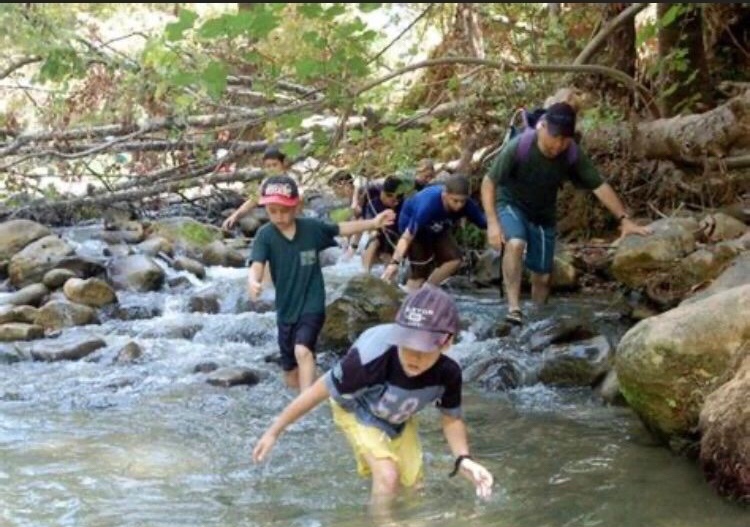
People visit the streams, bringing tents, both for shade during the day, and for overnight camping. Most natural springs and ponds are full of fish- trout, bass, St. Peter’s fish, amnon, levrak, and other species we had never heard of before living here. The men set up their portable grills and by mid-afternoon, the smells of shishlik and kebabim fill the air. Inner tubing and rafting down the Jordan River is another popular pastime for Israelis on hot, summer days.


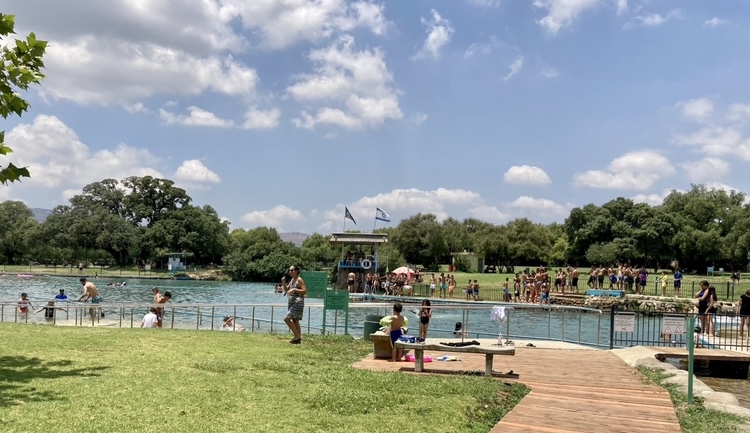
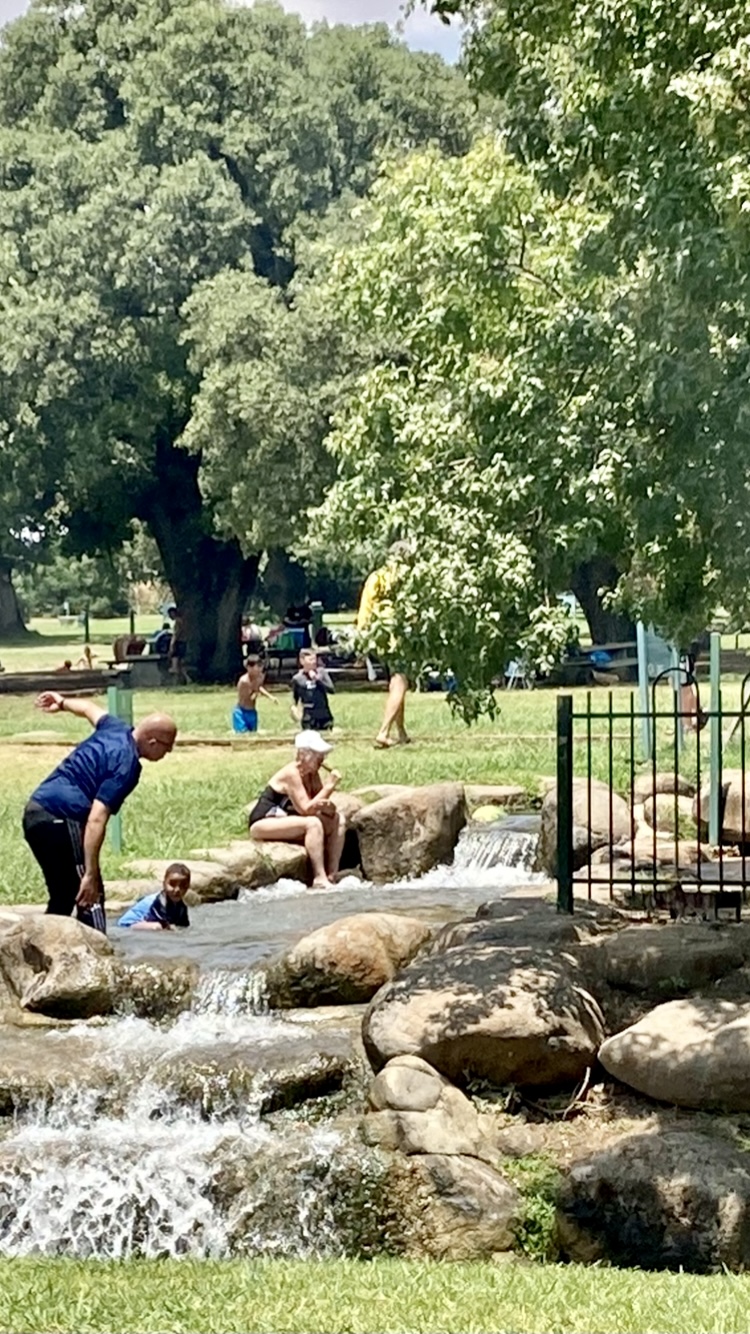
A few miles to the south of Kibbutz Snir, at the north end of the Hula Valley, is Horshat Tal Nature Reserve with tributaries from the Dan River forming large, deep pools. Several of the little lakes are large enough to have lifeguard stations and they get incredibly crowded with swimmers in the heat of the summer. The pools are connected by streams and people stake out picnic tables early in the day, moving them into the flowing streams.

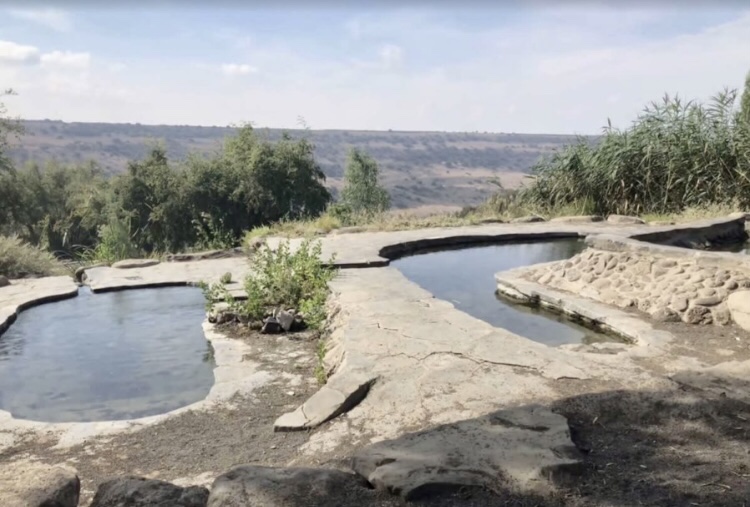
There are several, smaller, more-hidden swimming holes not far away, in the Golan. Just two weeks ago, we saw one at Deir Aziz. Up in the mountains of the Lower Golan, are the ruins of a second century synagogue/basilica. At the foot of the ruins are ancient springs, still flowing. They were once used as mikva’ot, ritual baths, for religious purification. Today, Orthodox Jews still come to immerse in the natural ‘baths’ and they have been bricked in giving more definition. Two of the pools still have their original seven steps hewn from the rock leading into the water
Further to the South, near the city of Beit She’an, is Sachne, or Gan haShloshah Water Park. Here there are natural, deep canals for inner-tubing and swimming; fishing holes; beautifully maintained streams for wading, and many landscaped and manicured pools to cool off in. This well-known park gets super crowded in the summer. There is a snack bar with a full line of refreshments, a gift shop case you forgot to bring your hat or sunscreen and golf carts for rental to travel from one pond to another. For those interested in Biblical history, this park is at the foot of Mt. Gilboa, so it is most likely the place where David and Jonathan and the armies of Israel would come for recreation.

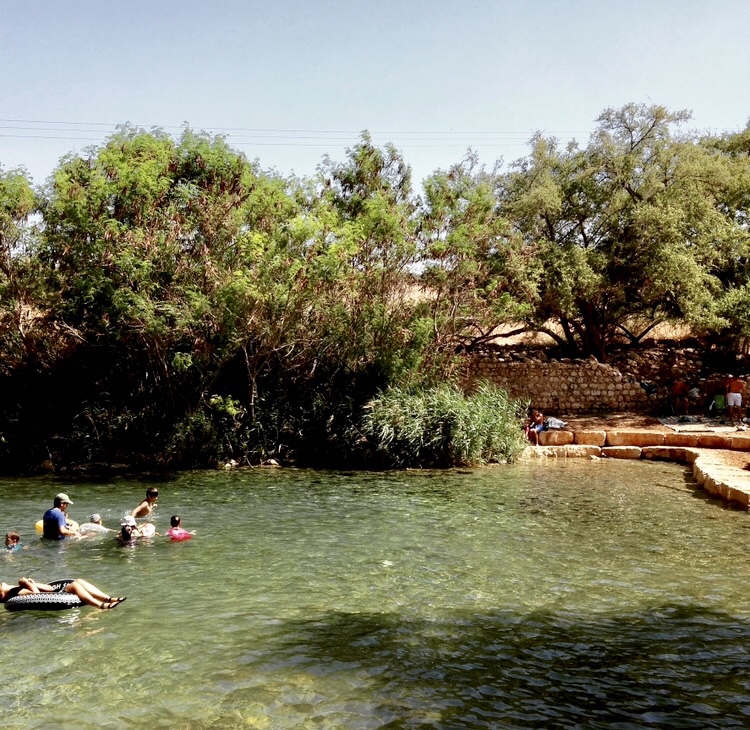

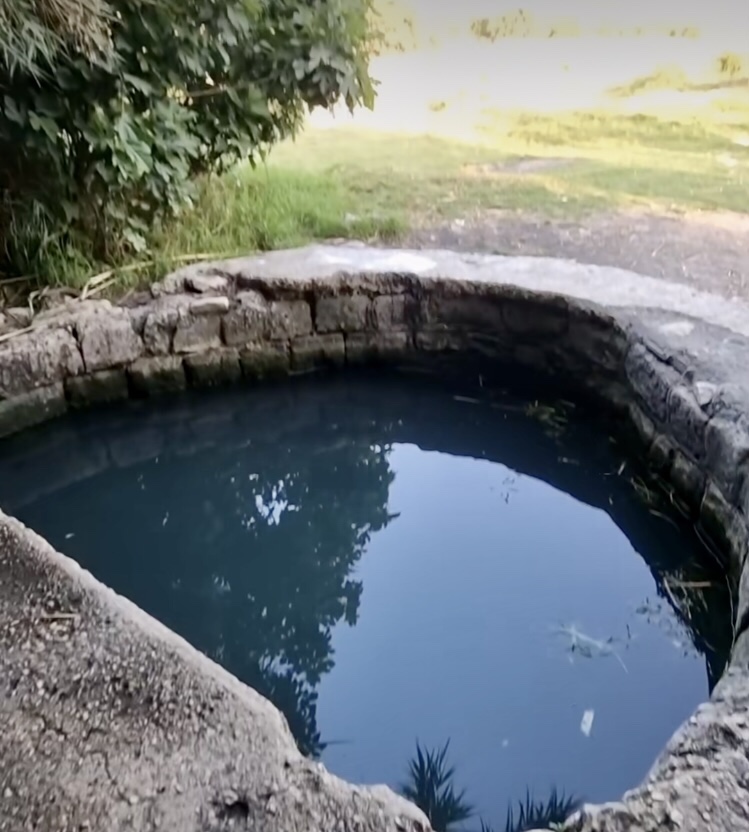
Ma’ayanot can be found throughout Samaria and Judaea (also known as the West Bank). Some of them (if they are close to an Orthodox Jewish village) have certain times when women can use them or men can go. Sexes are separate for modesty reasons. Most are small, deep natural springs that have been bricked to provide sure boundaries. Some have improvised diving boards. Others, tire or rope swings for taking the plunge. Most of these are word-of-mouth springs. Many are named with the Hebrew word Ein, pronounced ‘ayn’ meaning well, as in Ein Oz (Well of Strength), Ein Nov (Well with a View), or Ein Shoko (Shoko’s Well).



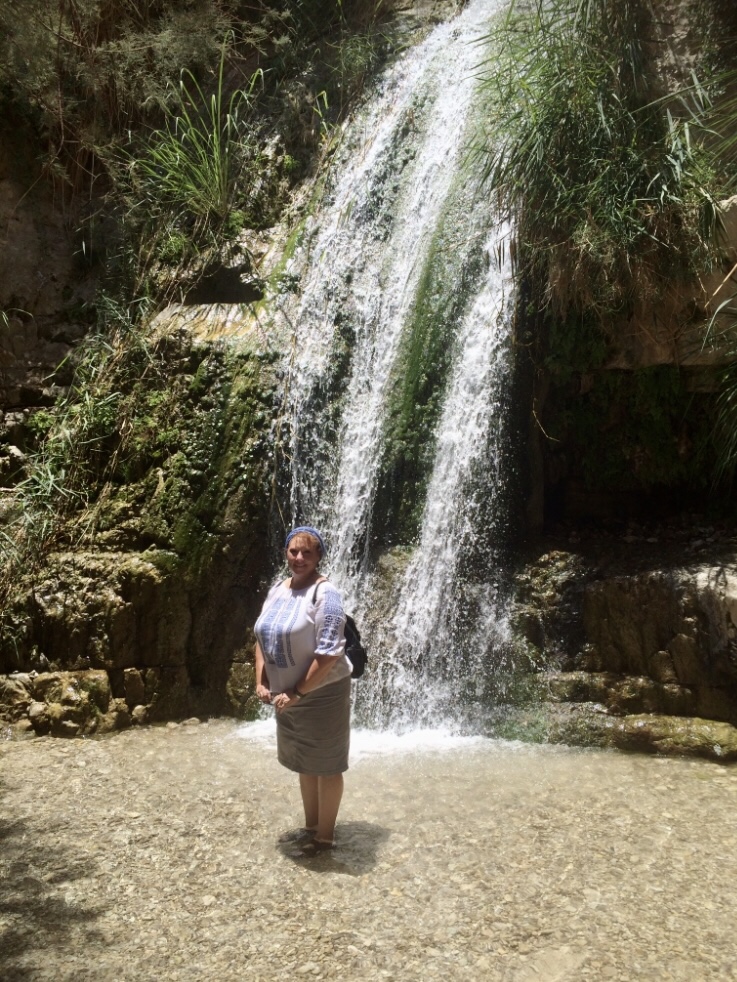
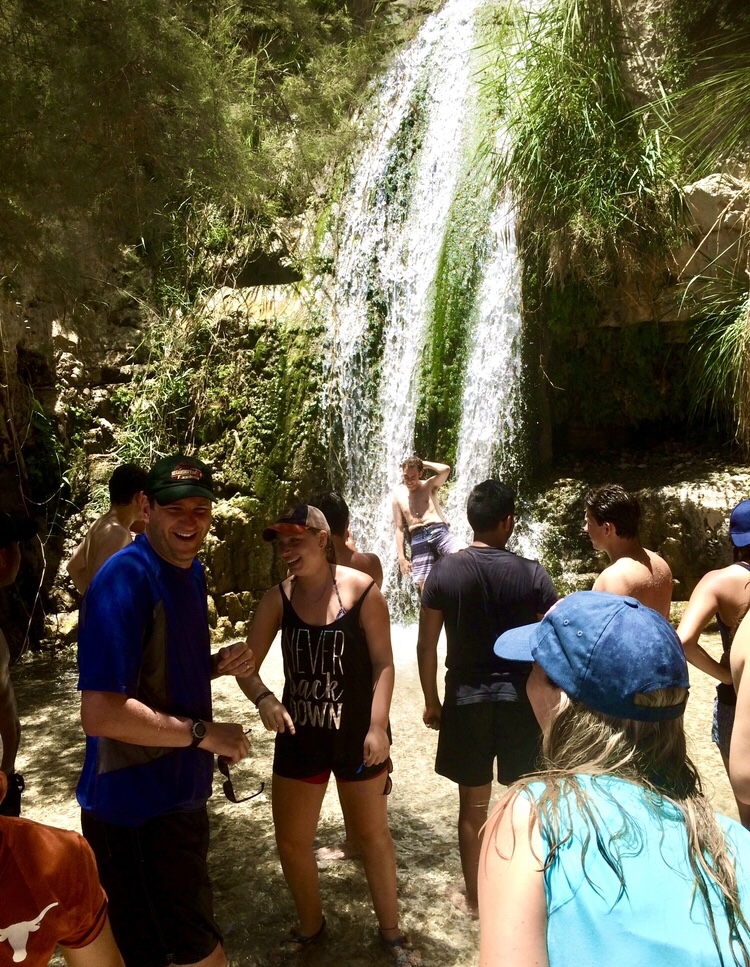
Do you recall the Bible story of David, running from the mad King Saul? The King believed David to be conspiring to assassinate him and take the throne, so Saul and his army followed David out of Jerusalem, into the wilderness. At the mountain oasis of Ein Gedi in the desert, David hid out. Amid the sandstone cliffs and jutting rocks are waterfalls from the seasonal “David River.” The water cascades down the mountain into natural pools. Springs feed the existing ponds, and it is a popular place for tourists. Just the idea of standing under a waterfall or taking shade in a cave where David, Jonathan and Saul were, brings the Bible to life. It’s very exciting. From the cliffs of Ein Gedi, you can look out over the Dead Sea to the east and the Arava Desert to the south. The views are absolutely breathtaking!



According to the Jewish oral tradition which goes into further detail on the stories found in the Torah, the Children of Israel wandered in the desert with Moses, Aaron and Miriam as their leaders. It is said, that everywhere they camped, there was an oasis or ma’ayan found for them by Miriam, Moses’ older sister. They enjoyed quail and manna and had fresh springs of water in the desert. And some of them still exist! Driving in the Negev, you can find signs for “Miriam’s Wells,” take an off-road drive and a short hike and voilà! They are very seasonal, so winter and early spring are the best times to find them.

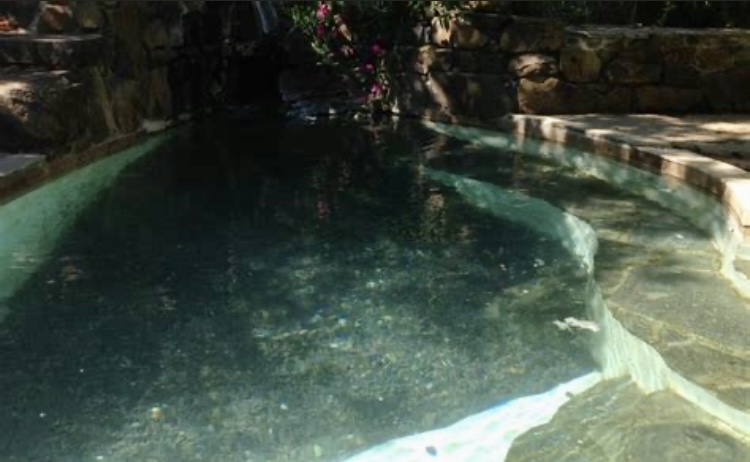

For the locals, summer is a fun time. Schools are out. The temperature climbs and the humidity rolls in. Life slows down to a snail’s pace as people seek ways to cool down. There are the beaches of the Mediterranean or Lake Kinneret (the Sea of Galilee), although they can be almost unbearable during the day. These are best enjoyed late afternoon/evening. Shade. Seek shade! And cold water. And that means tree-lined, cold water streams. And hidden swimming holes. They can be found throughout the Land. Just ask a young person their personal favorite spot.
 Israel Dreams
What a fabulous post! I had to go look at it on my laptop instead of my phone. Great photos !?
It helps that my name is Miriam named after my grandmother. OBM I now truly must go to Israel and visit these wells that bear my name.!
PS i’m a friend of Lynn Geraci
LikeLike
Interesting post, but the Balfour Declaration provided support for a Jewish homeland, not necessarily a sovereign state.
LikeLike
Thanks for your readership, Allan. You are correct. The Balfour was merely a letter or declaration of the necessity of a Jewish homeland, giving credence or support to the idea in an area in or around Palestine (Uganda anyone?). The big one was the San Remo Conference in 1920 (post WWI), a first step for the League of Nations and creating the Mandates, one of which was the British Mandate for Palestine… until an established government could take over-also Mandates for Syria, Lebanon, etc. The mandates used the Balfour Declaration to establish the precedence of the mandate being for some form of government to create a Jewish and and Arab homeland. Something to appease both sides. The UN in 1947 voted on the Partition Plan which went into effect once the British left in ‘48. The Jews accepted the plan creating the Jewish State, but the Arabs rejected it, declaring war on Israel. So in a nutshell, that it the basic history of a still very, very complicated matter.
Again, thanks for reading. It’s much appreciated!
LikeLike