War Stories Day 108. 22 January, 2024

And…. A BIBLICAL FEAST!

We survived a bit of a scare attack over the weekend. Psy-ops? I don’t know? Grounded in some reality? Perhaps…

Last week there were several ‘direct hits’ in Gaza, Lebanon, Syria and Iran. Several key players, masterminds of the Islamic terror world were eliminated by direct drone and missile attacks. Even this morning there was a huge explosion at a missile launching site in Iran.

We do not know who is taking out these key members. Some say it’s Israel and Mossad. Others the US. There have been many retaliatory attacks on US bases throughout the Middle East lately. There are rumors that in Iran it’s an internal job. Whatever the case there is more and more pressure on Israel, especially in the North.

On Friday, we received news that the mayor of a Haifa suburb had told all his residents to invest in a generator and to have enough food, water and necessities to last at least a week. The military would be so overwhelmed it might be more expedient to rely on yourself. This, after two Hizbulla missiles were shot down over Haifa on Friday. It turned out to be ‘misinformation.’

In the meantime Israel has set a deadline of the end of January for an agreement being led by a multinational group to try to force Hizbulla to move away from the Israeli border. The agreement seems less likely as the days go by and it looks more threatening because Hizbulla forces refuse to move back.

The Lebanese Patriarch of the Maronite Catholic Church, Beshsra Al-Rahi, called for the removal of every rocket launchpad between every home; the removal of all missiles from homes and schools; UNFIL to enforce resolution 1701 pushing all Hizbulla troops off the Israeli border fence, back 2 km (no man’s land) and away from the Lebanese border. Nasralla has said no such. So it looks like there might be a showdown starting next week. The thought of 150,000 missiles pointed directly at us is a wee bit daunting-

At present 72,000 Israelis have been displaced from their homes in the North alone. Since there are no tourists, many citizens who lack family or friends who will shelter them, have been put up in hotels along the Sea of Galilee. Makeshift schools have been set up for the children. Some are being squeezed into the schools in Tiberias and the local communities.

Hizbulla in the North is a proxy for Iran, just as the Houthis in Yemen South Red Sea and Hamas in Gaza. Of the three, Hizbulla is much more greatly funded, trained, weaponized and numerous. Last week, in his latest trip to Israel, US Secretary of State, Antony Blinken, was assured that “ Israel would not surprise the United States by an attack on Hizbulla without prior notification.”

So we are now waiting…. You would never know as people go on with their daily lives here as best as possible. Stores and schools and services are open. There is plenty of traffic and people seem busy.

Yesterday we went to visit an Arab Christian friend who lives in the Galilee. She has two Maronite Christian families from Metulla living in the two apartments underneath hers. They were empty apartments and the landlord let the displaced famI lied live there temporarily. Claudia is a tour guide. She has so much knowledge and understanding of the history of Israel from many different perspectives. We have gone so many places with her. As during COVID, she again has no business.

Claudia also teaches classes on Israeli cooking, Biblical cooking and culture. We took a long walk with her into the fields adjacent to her apartment.

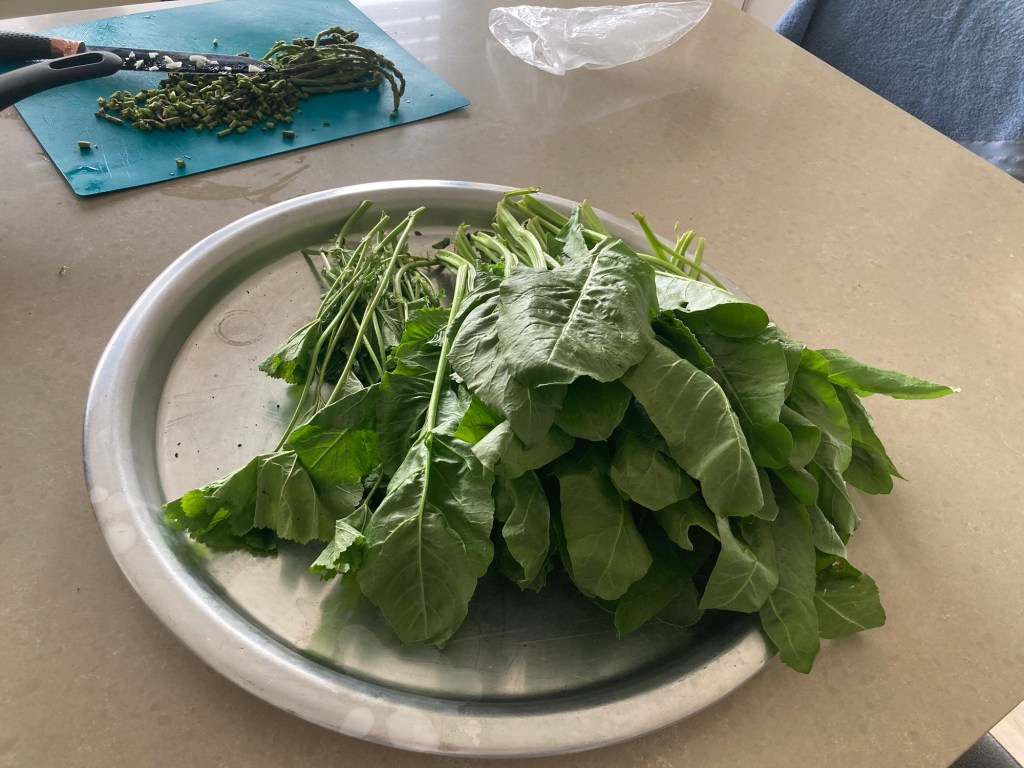
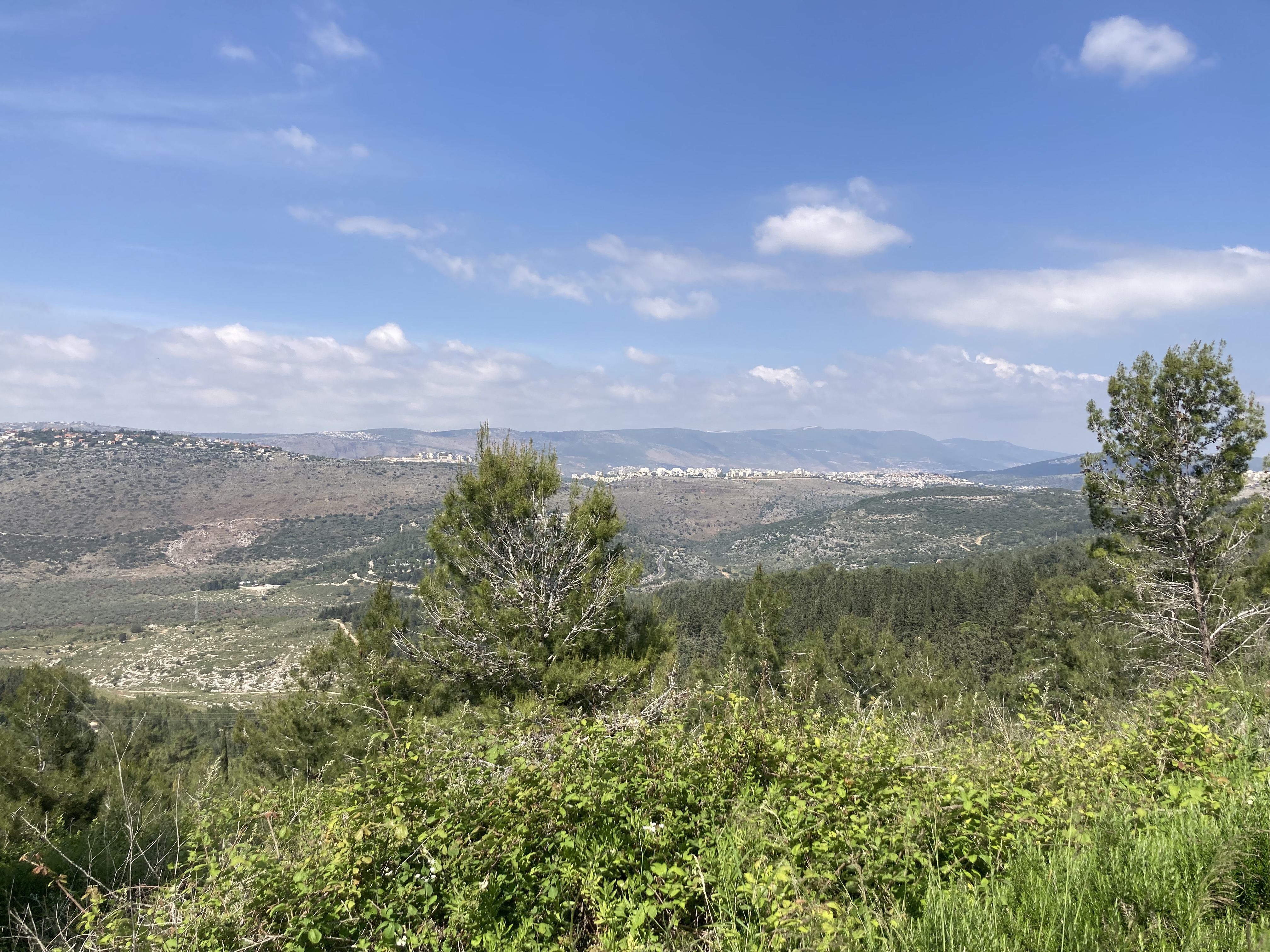
Look closely at the pictures above. What do you see? A field? Yes. What else? Grasses and weeds? Perhaps. But they hold a hidden treasure, for now that the rains have come everything had begun to sprout and turn green. All of these ‘weeds’ are edible!!!! The wild asparagus and celery. The dandelions and lettuces. The loof. And most have medicinal properties known by people in Biblical times and passed down through the generations to today.

Wild celery

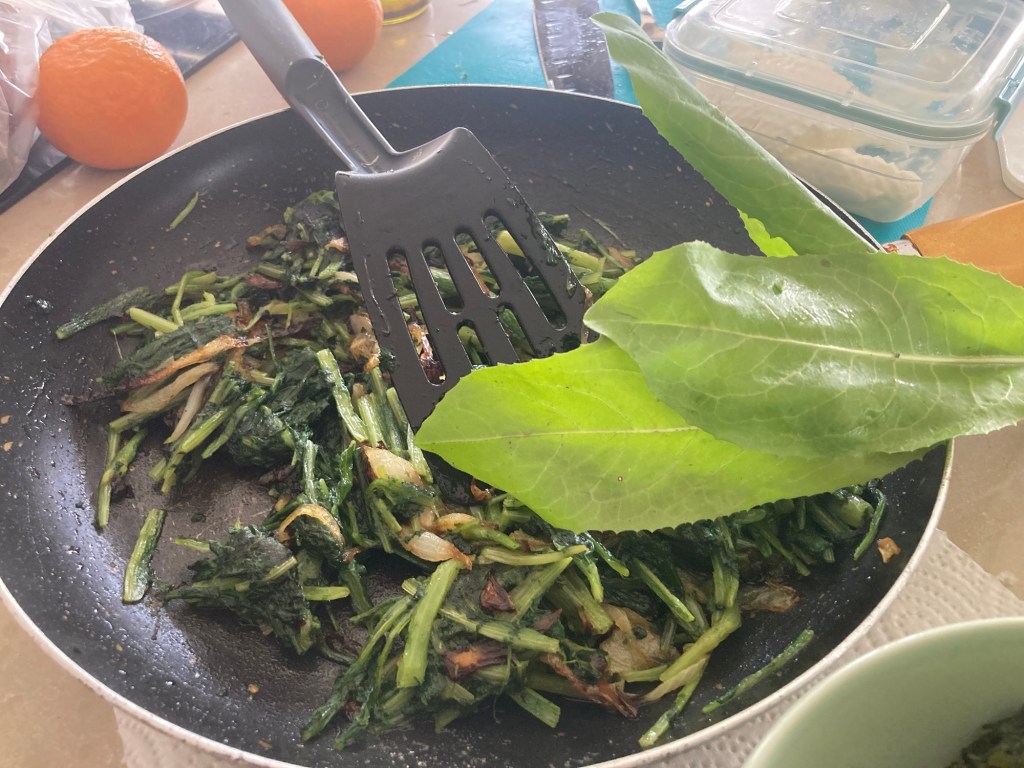
When we returned to Claudia’s, she gave us a little class on how to prepare each. Some were sautéed. Some would be dried (hyssop) to make zataar, the herb that is used in many foods here. Other plants would be boiled first, then wrung out (to remove any bitterness) and then sautéed.

During the winter months, you see older women…Bedouin and Druze, mostly, out in the fields foraging. The women are everywhere along the country roads, stooped over with their aprons and plastic bags. Wild mustards are prevalent and are a special delicacy. Some leaves (loof) are large. These are destemmed, steamed and then stuffed with rice, onions, lentils and herbs, rolled up and then steamed again.

Loof grows in rocky places. It has a huge purple Jack-in-the-pulpit type flower.

We feasted on homemade labaneh, a cultured dairy product made with the goat milk Claudia got from a lady down the street. She had made pita bread in her tabun (outdoor metal oven) the day before. We had a type of feta cheese. The greens and dairy were drizzled with fresh Galilee olive oil. We had olives and homemade humus from her store of dried chickpeas. On some of the greens, Claudia cracked eggs and let them steam- a green shakshuka. On top of this she put a dollop of Zhug, a very very spicy hot pepper and herb mixture. It was all quite delicious. All homemade with fresh, local ingredients.

If you come to Israel in the winter months, not only could Claudia give an amazing tour, but you could also take a cooking class from her. Hopefully you won’t have to dodge missiles.

War Stories Day 108. 22 January, 2024

And…. A BIBLICAL FEAST!

We survived a bit of a scare attack over the weekend. Psy-ops? I don’t know? Grounded in some reality? Perhaps…

Last week there were several ‘direct hits’ in Gaza, Lebanon, Syria and Iran. Several key players, masterminds of the Islamic terror world were eliminated by direct drone and missile attacks. Even this morning there was a huge explosion at a missile launching site in Iran.

We do not know who is taking out these key members. Some say it’s Israel and Mossad. Others the US. There have been many retaliatory attacks on US bases throughout the Middle East lately. There are rumors that in Iran it’s an internal job. Whatever the case there is more and more pressure on Israel, especially in the North.

On Friday, we received news that the mayor of a Haifa suburb had told all his residents to invest in a generator and to have enough food, water and necessities to last at least a week. The military would be so overwhelmed it might be more expedient to rely on yourself. This, after two Hizbulla missiles were shot down over Haifa on Friday. It turned out to be ‘misinformation.’

In the meantime Israel has set a deadline of the end of January for an agreement being led by a multinational group to try to force Hizbulla to move away from the Israeli border. The agreement seems less likely as the days go by and it looks more threatening because Hizbulla forces refuse to move back.

The Lebanese Patriarch of the Maronite Catholic Church, Beshsra Al-Rahi, called for the removal of every rocket launchpad between every home; the removal of all missiles from homes and schools; UNFIL to enforce resolution 1701 pushing all Hizbulla troops off the Israeli border fence, back 2 km (no man’s land) and away from the Lebanese border. Nasralla has said no such. So it looks like there might be a showdown starting next week. The thought of 150,000 missiles pointed directly at us is a wee bit daunting-

At present 72,000 Israelis have been displaced from their homes in the North alone. Since there are no tourists, many citizens who lack family or friends who will shelter them, have been put up in hotels along the Sea of Galilee. Makeshift schools have been set up for the children. Some are being squeezed into the schools in Tiberias and the local communities.

Hizbulla in the North is a proxy for Iran, just as the Houthis in Yemen South Red Sea and Hamas in Gaza. Of the three, Hizbulla is much more greatly funded, trained, weaponized and numerous. Last week, in his latest trip to Israel, US Secretary of State, Antony Blinken, was assured that “ Israel would not surprise the United States by an attack on Hizbulla without prior notification.”

So we are now waiting…. You would never know as people go on with their daily lives here as best as possible. Stores and schools and services are open. There is plenty of traffic and people seem busy.

Yesterday we went to visit an Arab Christian friend who lives in the Galilee. She has two Maronite Christian families from Metulla living in the two apartments underneath hers. They were empty apartments and the landlord let the displaced famI lied live there temporarily. Claudia is a tour guide. She has so much knowledge and understanding of the history of Israel from many different perspectives. We have gone so many places with her. As during COVID, she again has no business.

Claudia also teaches classes on Israeli cooking, Biblical cooking and culture. We took a long walk with her into the fields adjacent to her apartment.

Look closely at the pictures above. What do you see? A field? Yes. What else? Grasses and weeds? Perhaps. But they hold a hidden treasure, for now that the rains have come everything had begun to sprout and turn green. All of these ‘weeds’ are edible!!!! The wild asparagus and celery. The dandelions and lettuces. The loof. And most have medicinal properties known by people in Biblical times and passed down through the generations to today.

Wild celery

When we returned to Claudia’s, she gave us a little class on how to prepare each. Some were sautéed. Some would be dried (hyssop) to make zataar, the herb that is used in many foods here. Other plants would be boiled first, then wrung out (to remove any bitterness) and then sautéed.

During the winter months, you see older women…Bedouin and Druze, mostly, out in the fields foraging. The women are everywhere along the country roads, stooped over with their aprons and plastic bags. Wild mustards are prevalent and are a special delicacy. Some leaves (loof) are large. These are destemmed, steamed and then stuffed with rice, onions, lentils and herbs, rolled up and then steamed again.

Loof grows in rocky places. It has a huge purple Jack-in-the-pulpit type flower.

We feasted on homemade labaneh, a cultured dairy product made with the goat milk Claudia got from a lady down the street. She had made pita bread in her tabun (outdoor metal oven) the day before. We had a type of feta cheese. The greens and dairy were drizzled with fresh Galilee olive oil. We had olives and homemade humus from her store of dried chickpeas. On some of the greens, Claudia cracked eggs and let them steam- a green shakshuka. On top of this she put a dollop of Zhug, a very very spicy hot pepper and herb mixture. It was all quite delicious. All homemade with fresh, local ingredients.

If you come to Israel in the winter months, not only could Claudia give an amazing tour, but you could also take a cooking class from her. Hopefully you won’t have to dodge missiles.

War Stories Day 108. 22 January, 2024

And…. A BIBLICAL FEAST!

We survived a bit of a scare attack over the weekend. Psy-ops? I don’t know? Grounded in some reality? Perhaps…

Last week there were several ‘direct hits’ in Gaza, Lebanon, Syria and Iran. Several key players, masterminds of the Islamic terror world were eliminated by direct drone and missile attacks. Even this morning there was a huge explosion at a missile launching site in Iran.

We do not know who is taking out these key members. Some say it’s Israel and Mossad. Others the US. There have been many retaliatory attacks on US bases throughout the Middle East lately. There are rumors that in Iran it’s an internal job. Whatever the case there is more and more pressure on Israel, especially in the North.

On Friday, we received news that the mayor of a Haifa suburb had told all his residents to invest in a generator and to have enough food, water and necessities to last at least a week. The military would be so overwhelmed it might be more expedient to rely on yourself. This, after two Hizbulla missiles were shot down over Haifa on Friday. It turned out to be ‘misinformation.’

In the meantime Israel has set a deadline of the end of January for an agreement being led by a multinational group to try to force Hizbulla to move away from the Israeli border. The agreement seems less likely as the days go by and it looks more threatening because Hizbulla forces refuse to move back.

The Lebanese Patriarch of the Maronite Catholic Church, Beshsra Al-Rahi, called for the removal of every rocket launchpad between every home; the removal of all missiles from homes and schools; UNFIL to enforce resolution 1701 pushing all Hizbulla troops off the Israeli border fence, back 2 km (no man’s land) and away from the Lebanese border. Nasralla has said no such. So it looks like there might be a showdown starting next week. The thought of 150,000 missiles pointed directly at us is a wee bit daunting-

At present 72,000 Israelis have been displaced from their homes in the North alone. Since there are no tourists, many citizens who lack family or friends who will shelter them, have been put up in hotels along the Sea of Galilee. Makeshift schools have been set up for the children. Some are being squeezed into the schools in Tiberias and the local communities.

Hizbulla in the North is a proxy for Iran, just as the Houthis in Yemen South Red Sea and Hamas in Gaza. Of the three, Hizbulla is much more greatly funded, trained, weaponized and numerous. Last week, in his latest trip to Israel, US Secretary of State, Antony Blinken, was assured that “ Israel would not surprise the United States by an attack on Hizbulla without prior notification.”

So we are now waiting…. You would never know as people go on with their daily lives here as best as possible. Stores and schools and services are open. There is plenty of traffic and people seem busy.

Yesterday we went to visit an Arab Christian friend who lives in the Galilee. She has two Maronite Christian families from Metulla living in the two apartments underneath hers. They were empty apartments and the landlord let the displaced famI lied live there temporarily. Claudia is a tour guide. She has so much knowledge and understanding of the history of Israel from many different perspectives. We have gone so many places with her. As during COVID, she again has no business.

Claudia also teaches classes on Israeli cooking, Biblical cooking and culture. We took a long walk with her into the fields adjacent to her apartment.

Look closely at the pictures above. What do you see? A field? Yes. What else? Grasses and weeds? Perhaps. But they hold a hidden treasure, for now that the rains have come everything had begun to sprout and turn green. All of these ‘weeds’ are edible!!!! The wild asparagus and celery. The dandelions and lettuces. The loof. And most have medicinal properties known by people in Biblical times and passed down through the generations to today.

Wild celery

When we returned to Claudia’s, she gave us a little class on how to prepare each. Some were sautéed. Some would be dried (hyssop) to make zataar, the herb that is used in many foods here. Other plants would be boiled first, then wrung out (to remove any bitterness) and then sautéed.

During the winter months, you see older women…Bedouin and Druze, mostly, out in the fields foraging. The women are everywhere along the country roads, stooped over with their aprons and plastic bags. Wild mustards are prevalent and are a special delicacy. Some leaves (loof) are large. These are destemmed, steamed and then stuffed with rice, onions, lentils and herbs, rolled up and then steamed again.

Loof grows in rocky places. It has a huge purple Jack-in-the-pulpit type flower.

We feasted on homemade labaneh, a cultured dairy product made with the goat milk Claudia got from a lady down the street. She had made pita bread in her tabun (outdoor metal oven) the day before. We had a type of feta cheese. The greens and dairy were drizzled with fresh Galilee olive oil. We had olives and homemade humus from her store of dried chickpeas. On some of the greens, Claudia cracked eggs and let them steam- a green shakshuka. On top of this she put a dollop of Zhug, a very very spicy hot pepper and herb mixture. It was all quite delicious. All homemade with fresh, local ingredients.

If you come to Israel in the winter months, not only could Claudia give an amazing tour, but you could also take a cooking class from her. Hopefully you won’t have to dodge missiles.

Serendipity!

Serendipity: an unplanned fortunate discovery; a common occurrence throughout the history of product invention and scientific discovery; finding valuable or agreeable things not sought for.

Since moving to the beautiful, diverse, completely random Land of Israel 8 years ago, John and I have learned to flow serendipitously. Around every corner we have found the unexpected… a glorious treasure of a tiny moshav (village) that used to be an art center, abandoned but with the ‘goods’ left behind; a little village that sells fresh goat milk products; secret swimming holes; archaeological and historical sites; an Olympic ice skating center on the Lebanese border; friendly and inviting people who grow organic products or make their own beauty products; beekeepers…. and winemakers.

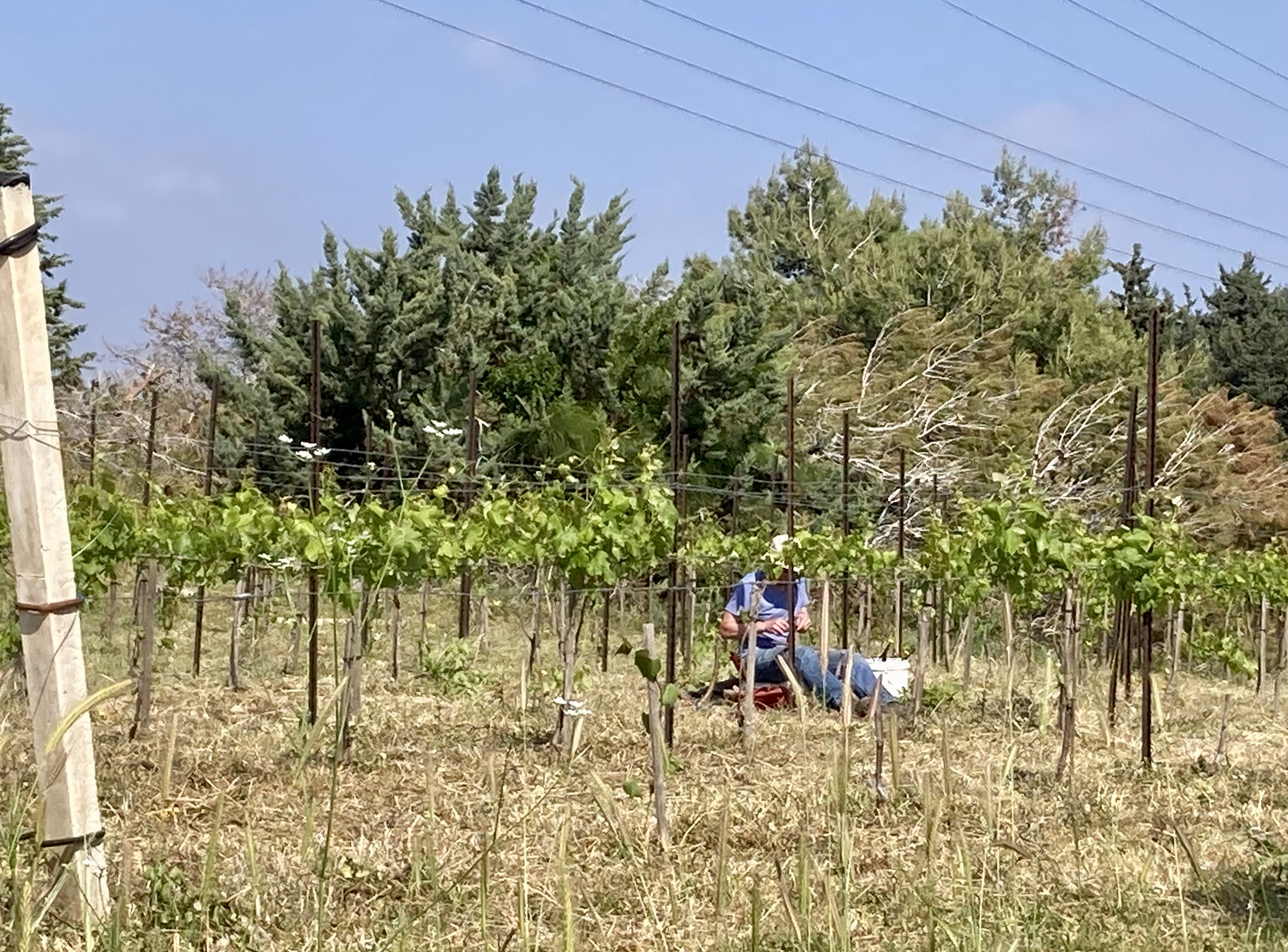
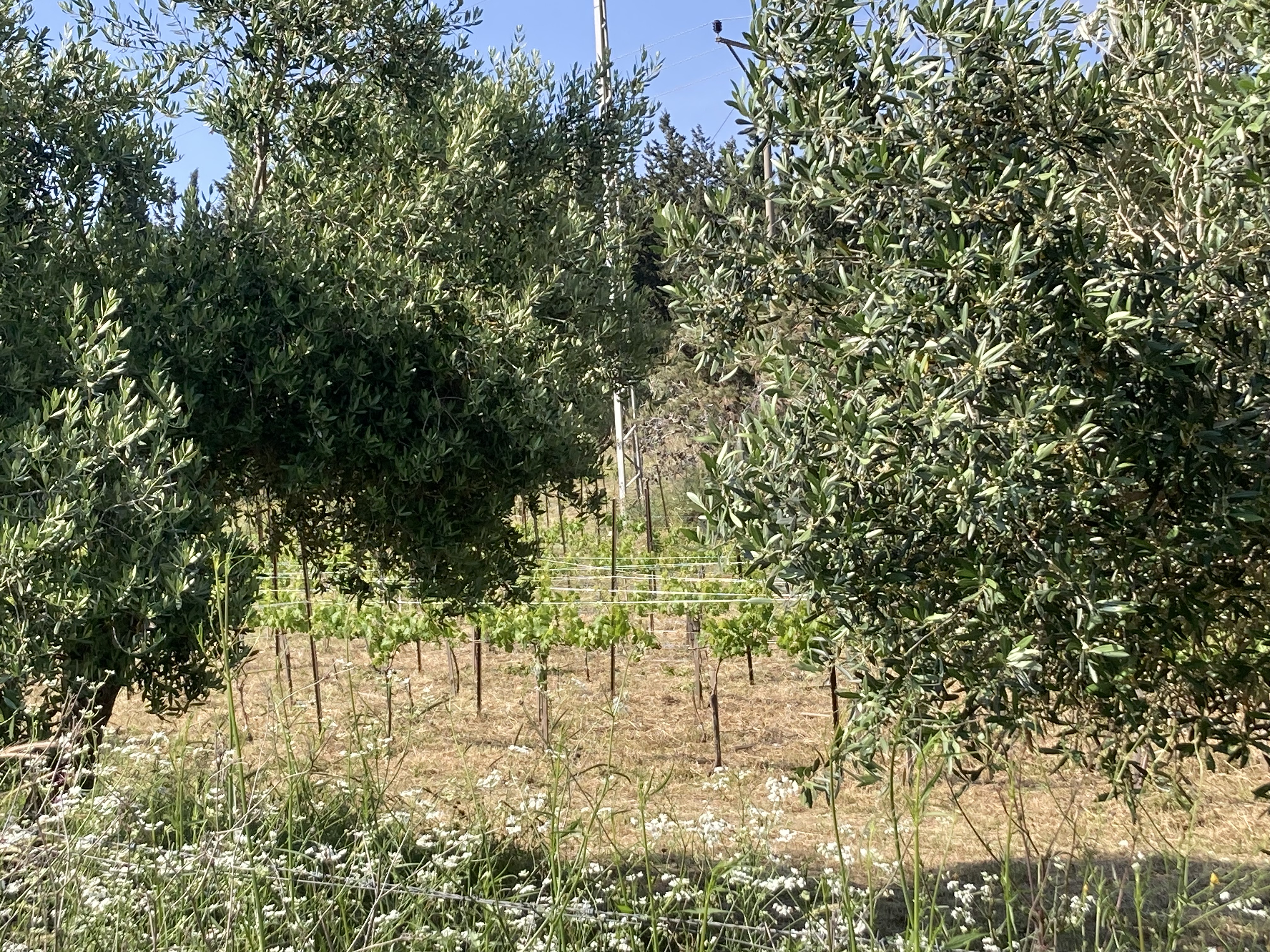
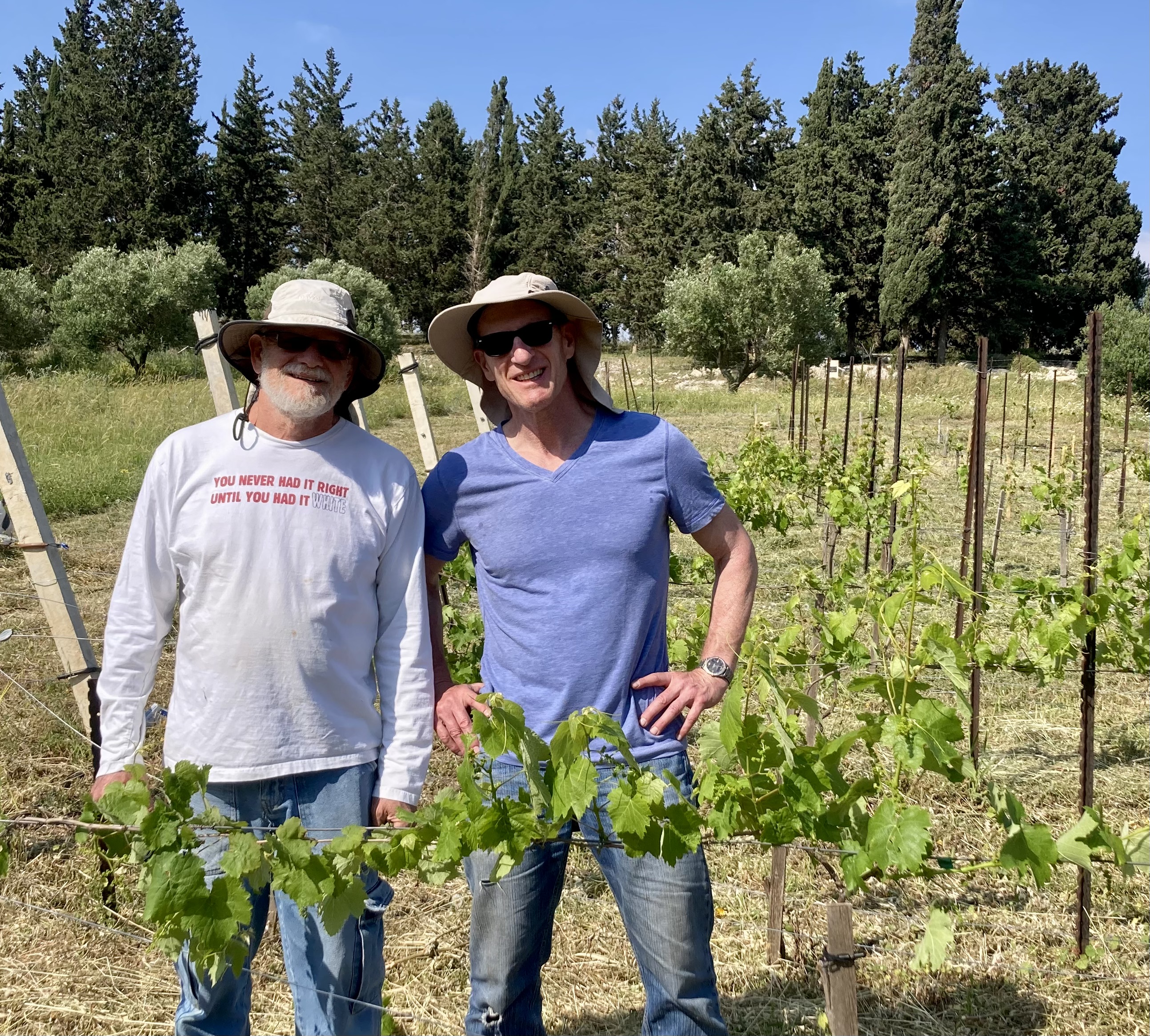
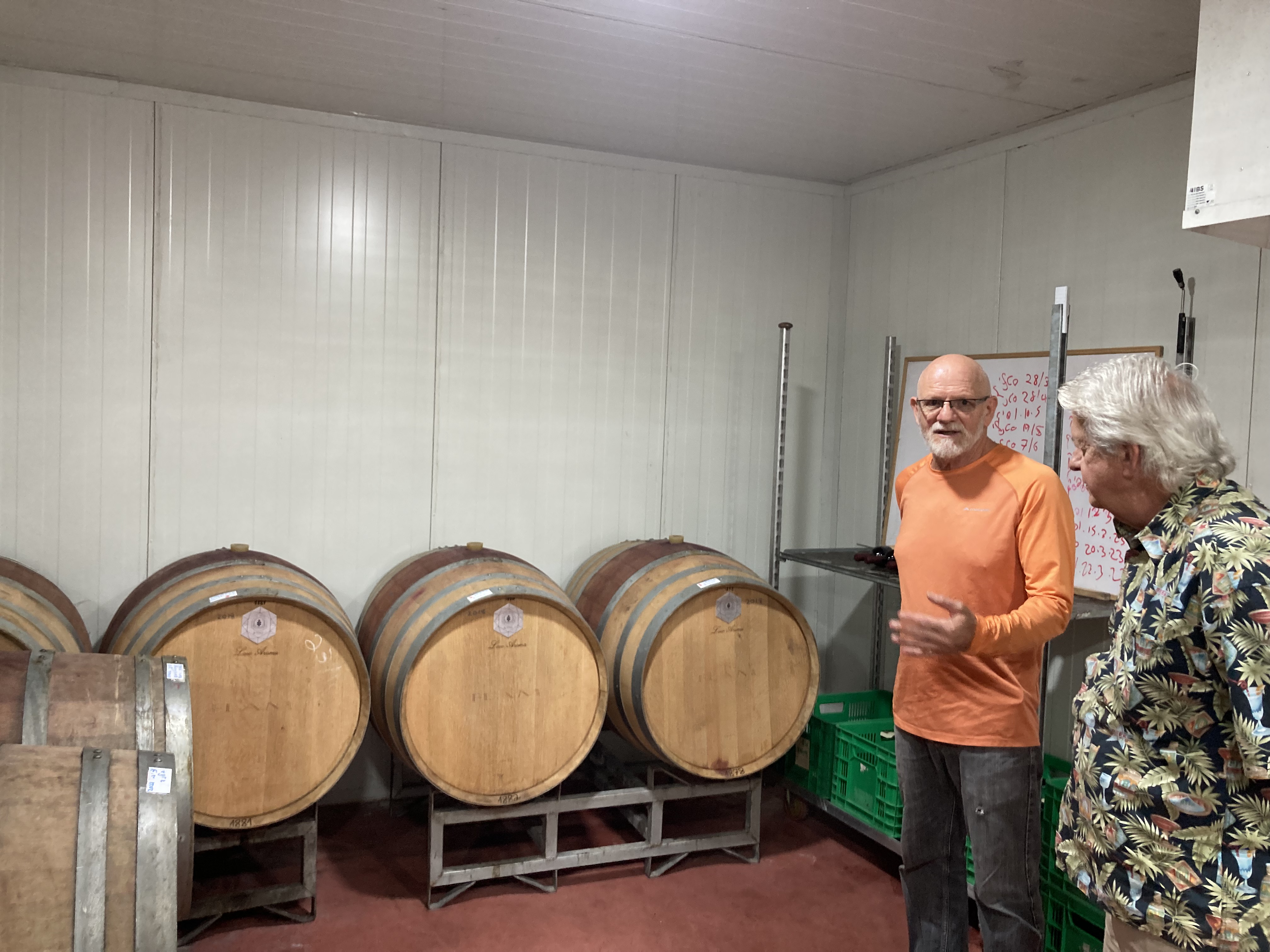
Of course, I called to them in Hebrew… and of course, they answered back in English. They were Stanley Levin and Joey Fisch – grafting new vines onto their rootstock. Stanley, from South Africa; Joey from Chicago. Both had lived right here in the Galilee for ages. They invited us to walk the vineyards and take a look. Marselan, Petit Verdot, Grenache, and other beautiful, green vines. Theirs was a garage winery, Segev Winery, producing under 5000 bottles a year. I had to find out more, so arranged a time when we could go to their yekev, production/tasting cellar.

Both Stanley and Joey started out in the high tech industry. Joey had been growing grapes and making wines “since he was a teen.” Joey worked at Intel in business development, but always kept winemaking in reserve as a hobby. His wife, Gilat, worked at SAP Software with Stanley. On the weekends, Joey and Gilat hosted wine parties in Ya’ad, which is where Stanley and Joey first met. Ya’ad, founded in 1979 as Israel’s first technical moshav, had been allotted some small acreage by KKL/JNF. These were sprinkled throughout the surrounding forested areas and set aside for agricultural use.

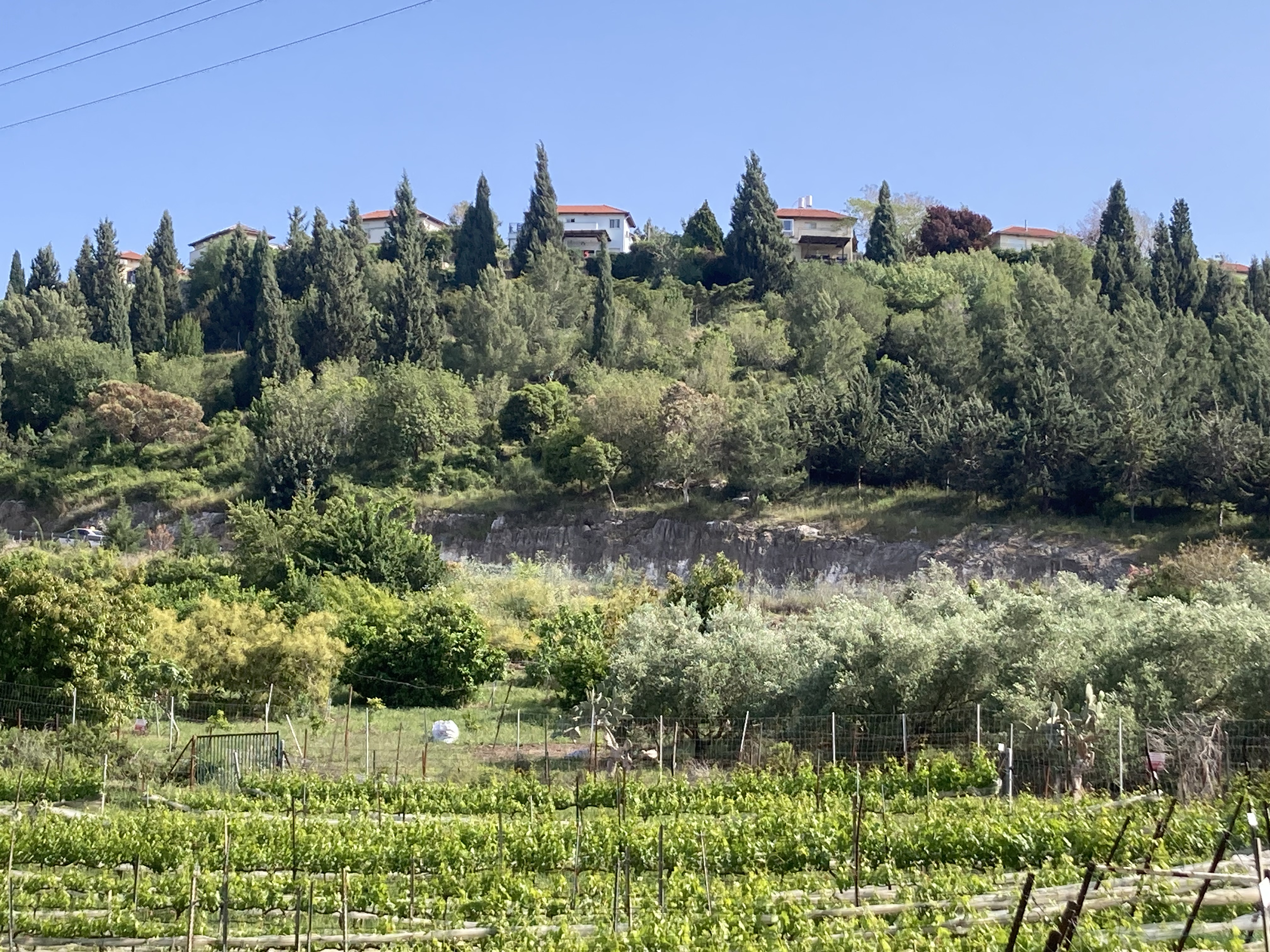
In 2010, the JNF saw that much of their land had not been developed. The residents of Ya’ad faced an ultimatum: put the land to use or have it taken back. At the moshav community meeting, Joey and his brother-in-law volunteered to take one parcel or 10 dunam, which is 2 1/2 acres. It was serendipity. They were leased the land and split the property between them, planting olives and grapes. The little mountainside was absolutely perfect for growing grapes. It has deep, rich soil and a great climate. Joey began planting any grape he could find: Petit Verdot, Grenache, Mourvèdre. Because Joey was working full time in high tech, he could only spend vineyard time early mornings and on weekends (which here is just part of Friday and Saturday). He was getting a mere 20-25% yield, throwing away too many unused grapes and lacking in both time and man-power. He needed a partner.

Enter Stanley. He was working in nearby Karmi’el when SAP shut down their branch in 2013, throwing him into early retirement. Serendipity! Stanley decided that “now is the time,” and beside working for a Danish firm part time, he made the switch to winemaking. So he went to Ohalo in the Upper Golan Heights to study the craft for 2 years.

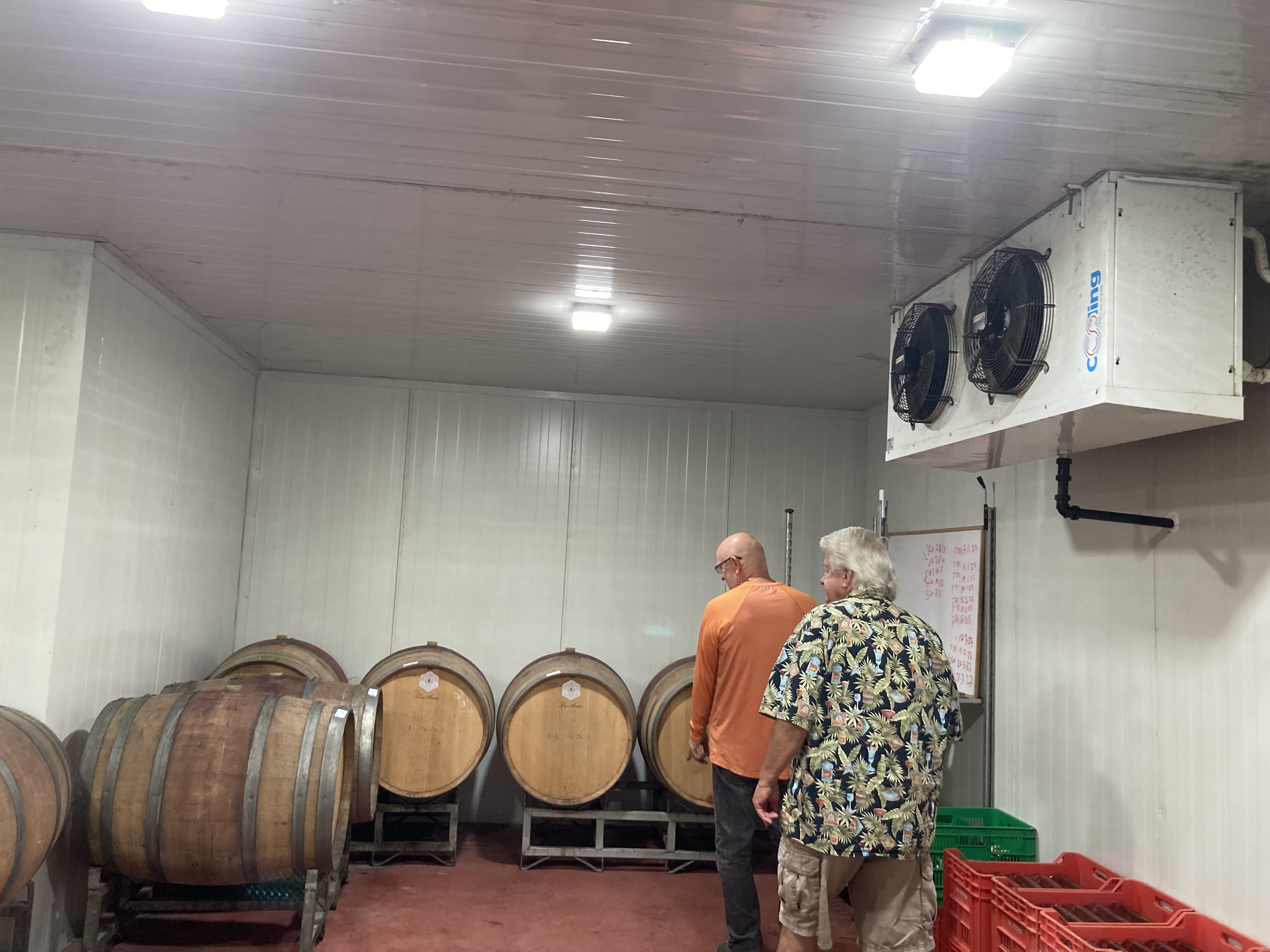
Joey Fisch and Stanley Levin, the two vintners, together began to grow more profusely. In 2014 an entire vineyard of the Marselan grape was planted. They were studying and learning from their mistakes and from experience, gradually becoming more sustainable in their farming. They stopped turning the soil. And they began letting cover crops (weeds) grow, dry out and be cut down but not removed. In this way, a natural type of mulching was established. This led to less drying out of the soil underneath and more nutrients going into the soil. It also added to an increase in good bacteria, resulting in much less use of any chemicals. The first years of production were good ones. All of the processing, the crushing, the aging in stainless steel and the transfer to French Oak barrels was done on site at their small, in-house facility.

Unexpectedly, in 2018, Joey moved to Germany, accepting a full-time position with Deutsche Telecom. He kept his house in Ya’ad, and is still involved in every single operation of the vineyard, just remotely. He returns to Israel for the harvest and at other times during the year. And it was serendipity that we ran into them both a few weeks back.

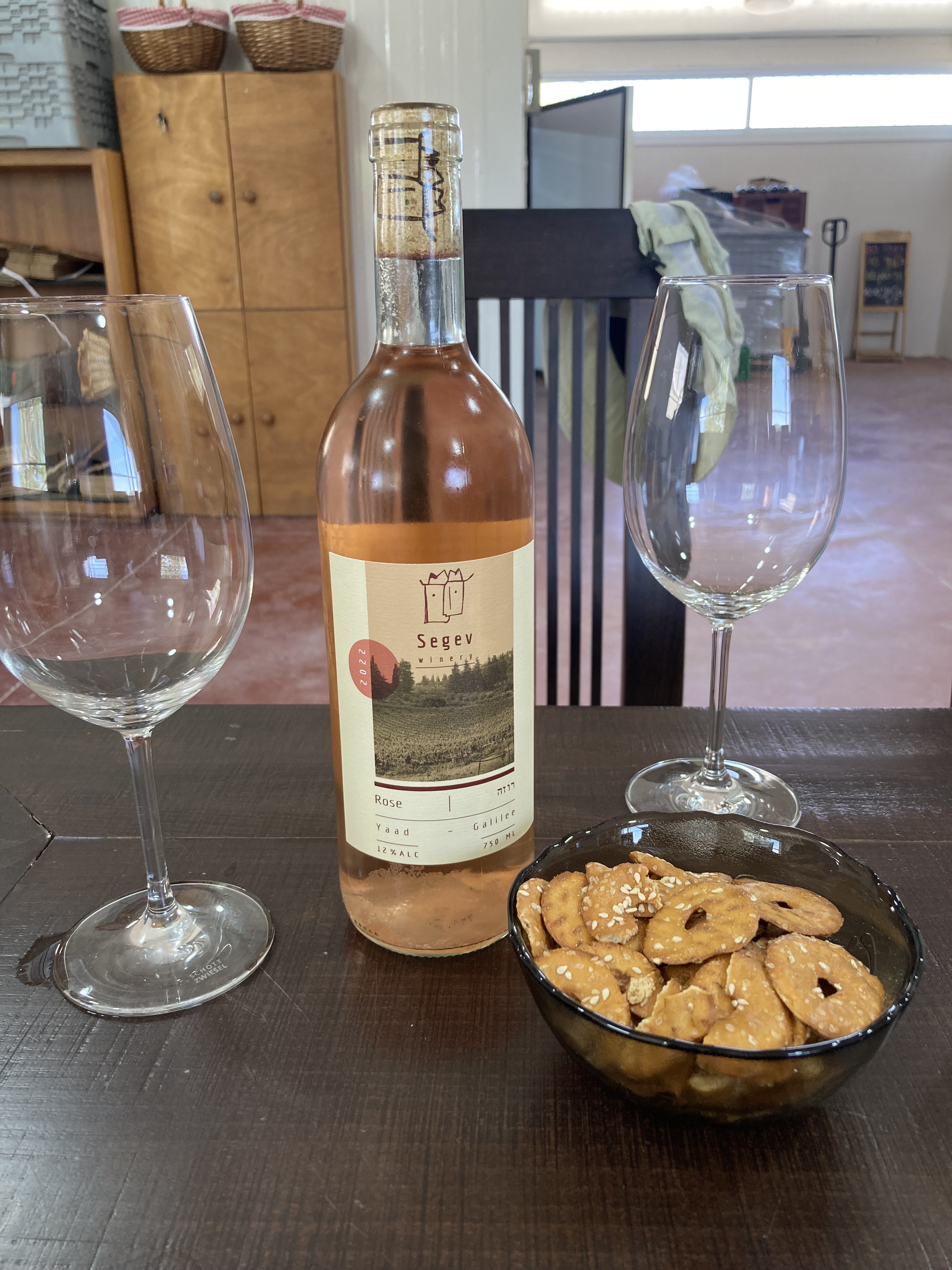
When John and I returned to find out about Segev Winery, Stanley met us and started the pour with a ‘22 Rosé from Grenache grapes. We finally found the summer wine we had been searching for! A beautiful shade of peachy pink, the Rosé has a nose with citrus and tropical notes, and was fruity, yet crisp and dry. I got a distinct cherry finish on the palette. Only 800 bottles were produced, so at 80 shekel a bottle, we bought 3. It’s a nice wine with salmon or grilled chicken, a great picnic wine or a bottle for just sitting on the porch sipping.

The next wine was their 2019 Vineyard Red Blend. A very deep purple/red wine with a jammy nose, this one was very fruit forward. With overtones of very ripe cherries, it was surprisingly quite light, however had a slightly rough finish… a bit of a sour bite at the end. The Vineyard Blend might become better with a little more age, and was only 70 shekel per bottle. This would be a good one to serve with pasta and mushrooms or lamb.

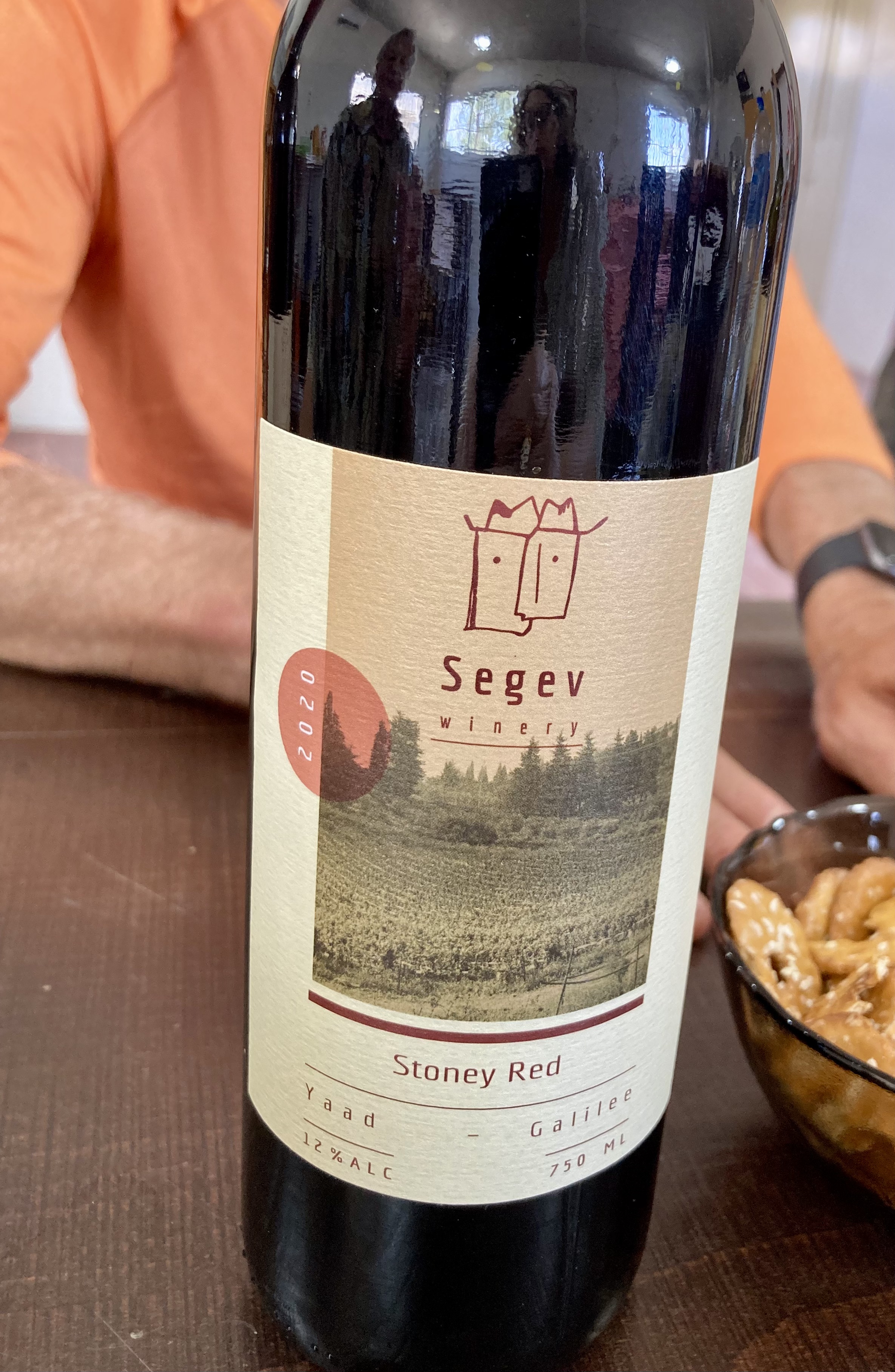
We moved on to the 2020 Stoney Red. In 2020, Joey and Stanley bought 500 kg of Cabernet Sauvignon grapes from a vineyard near Dalton, on the Lebanese border. Their friend, Gil Schatzberg from Recanati Wines sold them the grapes. Joey was in Germany when the Covid lockdowns went into full force, and Stanley had to isolate due to an exposure to the virus just when harvest was getting under way. So all the picking was done by family and friends while Stanley watched and supervised the entire operation remotely by camera. Schatzberg helped with the fermentation process and production. 40% Cabernet, 40% Marselan and 20% Petite Verdot makes this ruby red gem a well-balanced, very drinkable wine now. With a nose of ripe forest fruits, and a surprising hint of cinnamon at the finish, this is an amazingly good wine. It is absolutely beautifully balanced: 12% alcohol, only 2000 bottles were produced: the price coming in at 100 shekel a bottle. We bought one to add to the collection (but plan to return for more of this one- we have a feeling it will age quite beautifully).

Of course the best is always saved for last. The ‘21 Marselan is a deep crimson, leggy red wine. Redolent of blackberries and a slight bit of chocolate, it is pleasing on the palette leaving a mouth of ripe fruit and slight mint/sage. A great wine with a steak or red meat, it was only 85 shekel a bottle. This wine is sure to get better with age. We bought 2 bottles.

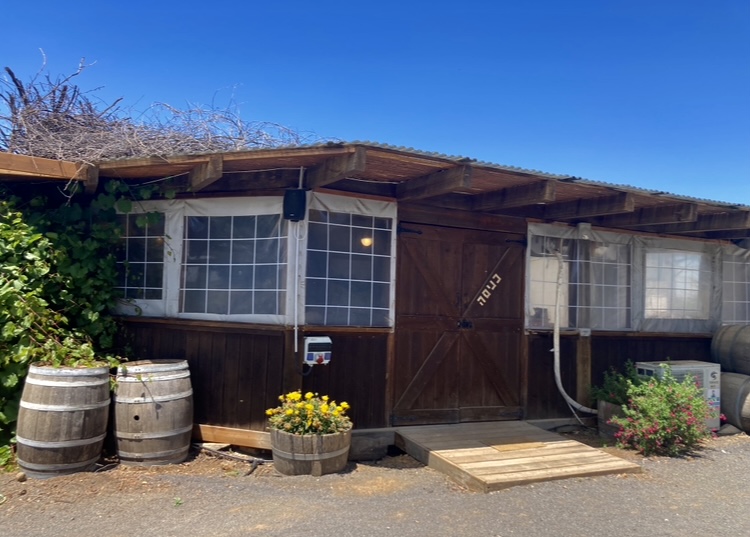
Segev wines are sold locally at their winecellar in Ya’ad (Misgav Regional Council), a few small stores local to Misgav and a few restaurants, including one in Tel Aviv. It was such a pleasure chatting over the wines with Stanley Levin, a great host. We will most definitely go back again!


I jump at any opportunity to make a drive to the wild, pristine Golan Heights. It’s one of our favorite places. Last month we were taking my son to his reserve duty. After we dropped him off we made the short, incredibly scenic drive to Azizo Lavender Farms (see two posts back). As we were leaving Moshav Kanaf, we spotted a large red barnlike structure and a sign for Terra Nova Vineyards. Again, serendipity. It was midweek and still early for Israelis, so when we walked in, we had the entire venue to ourselves.

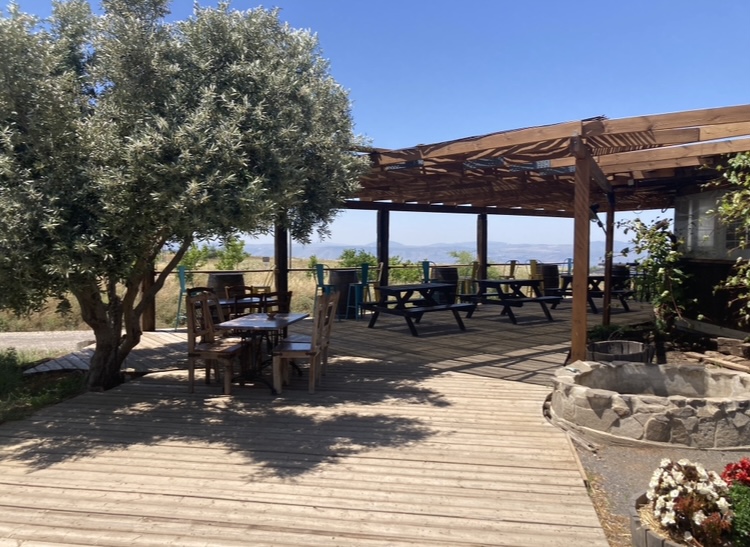
There was a wide sweeping terrace surrounding the building. The views from the top of the plateau overlooking the Sea of Galilee, the Hula Valley, and mountains to the snow capped Mt. Hermon were reason enough to sit back and relax. What a spectacular place for a party! A wedding, birthday or Bar Mitzvah here would be perfect. Adjacent to the terrace was a large covered pavilion ready to barbecue the fresh Angus beef the Golan is famous for. There was plenty of room for a band and dancing.

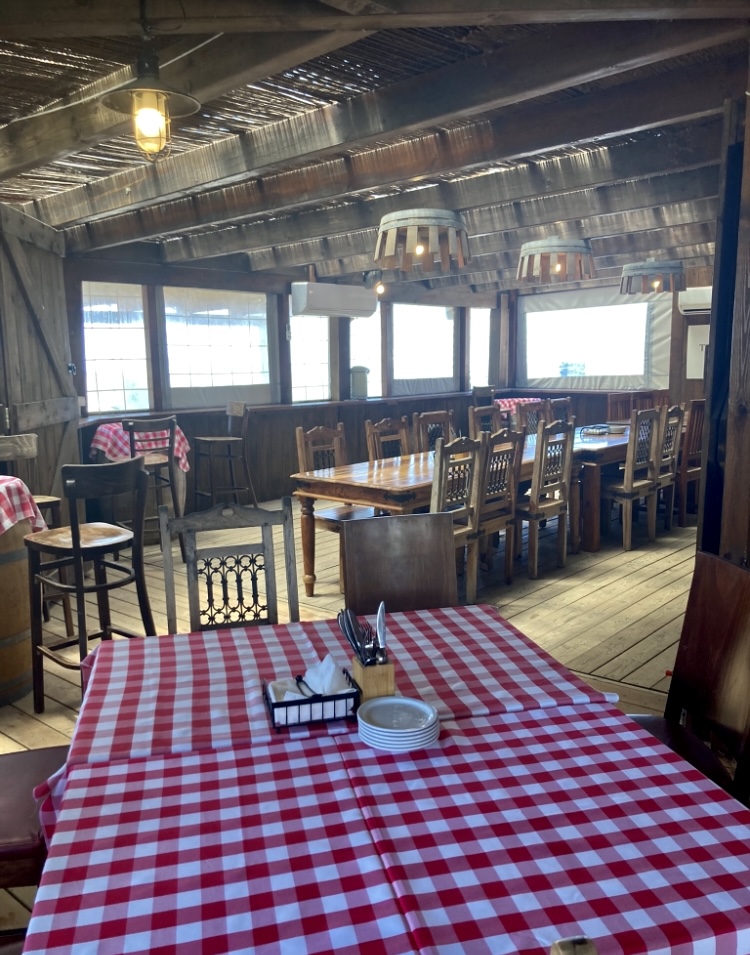
Inside were two spacious dining rooms, with rustic, ranch vibes, a large wine bar, and a shop that sells local products: the Terra Nova Wines, olives and olive oils, local honey, soaps, jams and spreads. The menu included wines, cheeses, olives, and all sorts of light fare like quiche. Catering is available for special occasions. It actually felt like we had arrived at a winery in Texas – or California.

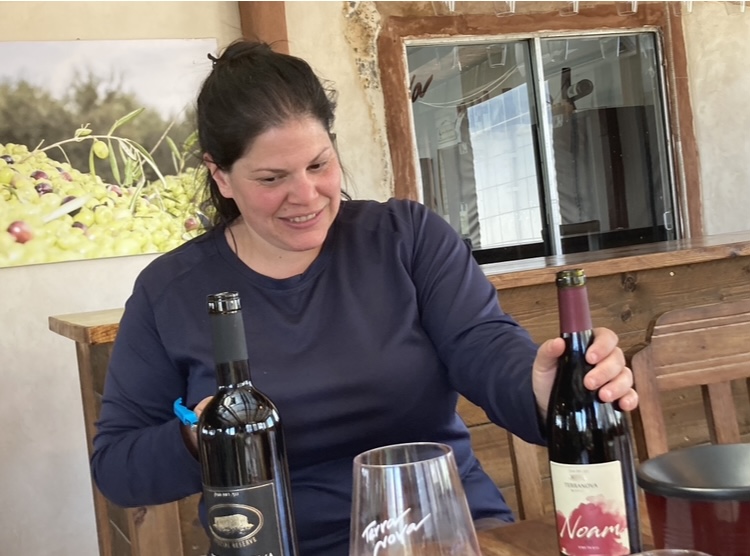
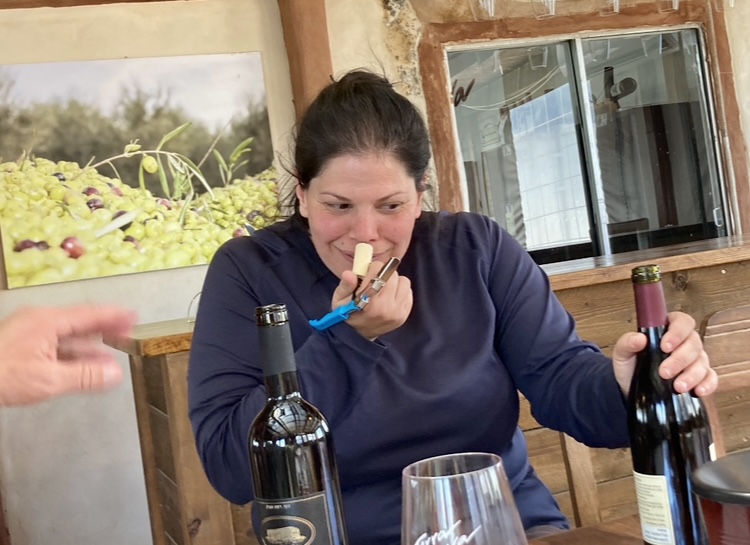
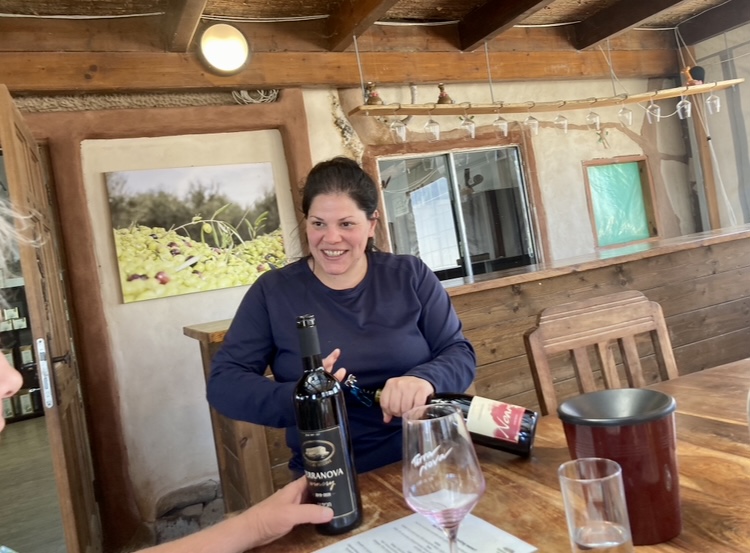
John and I got a table and ordered a wine flight and a cheese and olive platter. We asked our server auto tell us about the wines we had ordered and he called Roni to come in from the fields. Completely unasked. Completely unexpected that the vintner himself would take time out of his work to come talk to us. Completely Israeli. So it was a total surprise when a while later, a lovely young girl strided in confidently and pulled up a chair. In perfect American English, she exuberantly welcomed us to her winery. Ah!!! So this was Roni!

We were so taken with it all. And here is where serendipity, those truly chance occurrences steps in. John commented on her completely American accent, and asked if she was from the States. Roni Cohen-Arazia was born in Israel. Her parents were Israeli, but traveled the world and she with them. Roni, age 31, was completely Israeli, grew up outside of TelAviv, but had gone to boarding school in Switzerland. She would visit her parents who lived in Camarillo, California. Her father, Effie Cohen, worked at Amgen in Thousand Oaks!! Oh my goodness, what a small world! We explained that’s where we’re from. My husband worked directly across the barrenca from Amgen. We had many of the same friends it turns out. Who’da guessed??

After high school and IDF service, Roni received her biomedical engineering degree from Tel Aviv University, but found it boring. “I found myself a lot in wine bars and wineries to lift my spirits, and worked through uni in restaurants and wine bars where I learned a lot,” she explained. “I wanted to see the production side, study the fermentation and chemistry of it all. So I went to wine school here in Israel. In Katzrin in the Golan at Tel Hai’s 2 year viticulture program.”

She told us that there were 3 partners at the agricultural co-op in Kanaf. These men, residents of the moshav, had a large dairy farm; grew olives and had berry fields. They had 20 dunams – and in the perfect volcanic Golani soil, with its hot days and cold nights, is perfect for growing grapes. especially Cabernet Sauvignon, Merlot and Shiraz. They later purchased another 11 dunams nearby where Carignon and Vigonier are grown. Roni started working for them at Terra Nova, a boutique winery with a 15,000 bottle a year output, in March of 2021, and in 2022, the original vintner left the entire production line to her! Now that’s serendipity!

Roni poured generously for us as we chatted. We started with their B’reshit, appropriately named… in Hebrew, ‘in the beginning.’ It was a heavy, jammy fruit-forward nose, nice and leggy on the glass. Aged in French oak barrels, B’reshit is a red blend of Shiraz (50%),Merlot (30%)and Cabernet (20%) – 13% alcohol, at 100 shekel a bottle. It had a forest fruit taste with a hint of bell pepper and was surprisingly light and refreshing. It’s a great wine to serve with cheese and olives and would go really well with Italian food. We bought 5 bottles.

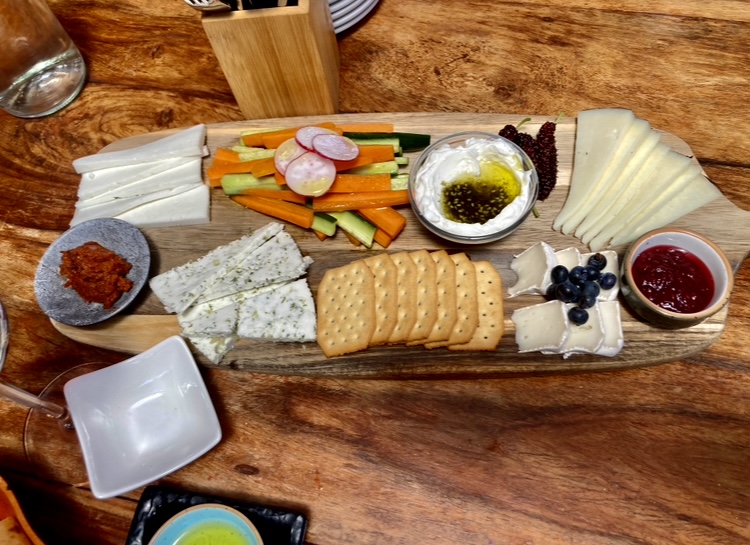
The olives, grown and cured right there at the Golan property, were amazing. It was wonderful to be able to sample the different varieties of olives and the olive oils (both a Spanish and a Greek stock). The accompanying cheese and veggie platter was more than generous for all of us to share. Even though it seemed we were drinking a lot, the food and the very long conversation tempered the alcohol. All of the cheeses were made from local goat and cow milk. I am currently working on making the most delicious herbed goat cheese from the recipe Roni got for me. Everything comes from Moshav Kanaf. There was labaneh, humus, and a delicate raspberry jam as well with fresh blueberries and mulberries(tree strawberries) on the side.

We tried a 2020 Terra Nova Winery Special Edition with minty, sage overtones to the nose. I got a nice, subtle smokiness from swirling it and smelling. This wine too, was a leggy red – a blend of Shiraz, Cab, and Merlot. Heavier than the B’reshit with a deep cherry finish, slightly oaky. A great wine with barbecued or smoked meats. We got 4 bottles.

We tried their Barrel 14, another special edition red, very heavy with some intense tannins at the end. The 2020 Carignon smelled of blackberries, but I was also getting hints of peppery spice and olives. It was spicy but with a smoky finish and a bite.

The Noam was absolutely delightful… berries and flowers to the scent. a bright honey taste, but not at all too sweet. For a red, it was bright and flavorful, great with lamb or to serve alongside either a cheese or charcuterie platter. The Noam was a well-balanced very drinkable wine. It is a very different Cabernet, Shiraz blend with a splash of Vigonier (white wine)and we bought 3 bottles.

The wines Roni has blended are all still in barrels aging, so are not ready for tasting yet. This is all fine and good as we can’t wait to go back. The wines do not have Kosher certification. Terra Nova offers a membership club to those who sign up with a very nice discount to members. They sell to private consumers only and will deliver to door in the Golan/Galilee area. This offer includes not only wines, but olives, olive oils and fresh-picked berries.

Recipes & Ideas for the Fall Feasts

IMG_2596

It’s a few days after the observance of Rosh HaShannah, the Jewish New Year – and I’m finally beginning to catch my breath. John & I had just returned from two weeks in Europe, and I was having five extra guests plus my son (on army leave) over for dinner. I wanted a really pretty table and menu with a minimum amount of hardship. Plus, we would be celebrating a traditional New Year Seder here in Israel.

For the centerpiece, I used my Rosh HaShannah seder plate which I got at Shalom House in Tarzana, California. Underneath I laid (silk) fall leaves with grapes and chestnuts (I picked off the ground in Geneva & will cook later) surrounding the plate. I decided to use my autumn colors tablecloth so I didn’t have to iron my good white damask one. Gold trimmed placemats, my autumn (meat dishes) china, and we were almost good to go. Hollowing out a few tiny acorn squash and inserting a tea light in each one was inexpensive, easy, and really lovely.  I put a hostess sized Tamar Gourmet Preserves or Chutney at each of the guests’ plates.

Now for the traditional foods and their meanings: the Seder Plate contains nine symbolic items, each associated with a blessing. The first is a pomegranate. I discussed the symbolism of the pomegranate in my last blog post. May the 613 arils remind us of the commandments in the Torah, so we  can have a holy year. Scallions or leeks are used to remind us of the whips of taskmasters and oppressors. May we never come under the rule of oppressive dictators and Pharaohs again. Amen! A gourd: may our good deeds in the coming year be as numerous as seeds of the pumpkin. The head of a fish (I use a paper one) so that we may always be the head and not the tail in the year ahead. A beet or carrot. Some of the words in Hebrew form the meanings or word play for the symbolism. They just don’t translate into English well. Also, each community has their own tradition – go with me on these. The beet (or carrot). May G-d in His mercy keep our enemies far away from us. A double Amen as we live in a very uncertain world these days. Black eyed peas: a few traditions on this food. One is that our enemies will be turned back; another is that the eyes of G-d, the angels and holy ones watch over us to guard us and guide us throughout the year. Dates. I discussed the significance of the date palm (tamar) last post, but may we bend under troubles and not break, as other less supple trees during storms.

I really love these sticky, sweet fruits for so many reasons. As an object lesson, think on the date palm. They bend: they give when pressure is applied. When an intense wind storm hits, they drop their fruits. I like to think of myself as being especially fruitful during a hard situation. Yes, sometimes I lash out and can be pretty miserable; but like the date palm, that’s when I want to be spreading the most help, the most cheer, the most optimism to others. Going with the flow, accepting what I have no control over, and being as positive as possible.

The next food, perhaps the most famous combo associated with Rosh HaShannah is apples and honey. May we have a sweet year. A year of health!!! A year of joy!!! A holy year. A year of prosperity. A year of peace!!! And lastly, the wine and the challah. From Rosh HaShannah through Simchat Torah we use a round bread, not the traditional braided one. The roundness is to remind us of many things – the cycle of the year and the cycle of life. The fact that G-d has no beginning or end. He was in the beginning, is now, and ever shall be. Also, the rounded loaf looks like a crown. During this season we crown Him King of our Lives.

I love the new round challah cover I just bought for the holidays in Budapest last week. It was made by a 93 year old woman who somehow survived during the Holocaust and now works at the Dohany St. Synagogue. She’s a lively, chatty old soul – but has had to slow down over the years due to her failing eyesight. She now uses a machine instead of sewing by hand, but either way, this is a beautiful piece I’ll treasure always. It says in Hebrew “Sabbath Peace and Holiday Happiness.”

During, the holidays, I try to keep to a healthy diet, using as many of the fall fruits and veggies – Israel’s Seven Species, and incorporating as many of the symbolic foods as possible. Because there is so much cooking this time of year, I also try to make things as simple as possible. Hope you can try a few of these as well during your fall feasts.

BLACK-EYED PEA SALAD, ITALIAN STYLE                      parve, serves 8

IMG_2599

Ingredients:

  • 2 cups uncooked black-eyed peas or 1 large package frozen peas
  • 1 red bell pepper
  • 1 orange bell pepper
  • 1 yellow bell pepper
  • 1 green bell pepper
  • 2 large stalk celery (or 6 tiny Israeli stalks)
  • 6 large scallions (green onions)
  • 1 small bunch flat, Italian parsley, minced
  • salt & pepper to taste
  •  Italian dressing (I make my own using 4 Tbsp red wine vinegar; 1/3 cup extra virgin olive oil; 1/4; 4 cloves smashed garlic; 1 tsp oregano; 1/4 tsp freshly ground black pepper; 1 tsp sea salt)

Soak the dried peas overnight, covering with boiling water. Drain, rinse, then cook in salted boiling water 15 minutes. Let simmer for 1-2 hours or until softened. Drain & rinse well. Drain again.                                        You can save yourself all the extra trouble by using defrosted frozen or drained & rinsed canned black eyed peas, if available.  Place peas in a large bowl. Cut up veggies into a small dice. Add to bowl. Pour the Italian dressing over top. Before serving, mix in the minced parsley leaves. Garnish with parsley leaf and the top of a pepper. Refrigerates and keeps well for leftovers. Can be served as a hearty salad lunch or as a side with either meat or dairy. Protein packed!!!

HARVEST QUINOA SALAD                                         parve   serves 6-8

I love quinoa. It’s gluten free and great for special needs diets; so versatile and easy to prepare!

IMG_2594

Ingredients:

  • 2 cups cooked, fluffed quinoa (cook according to package directions)
  • 1/3 cup dried sweet pitted cherries
  • 1/3 cup dried cranberries
  • 1/4 cup thinly sliced green onions (scallions)
  • 1’4 cup sliced almond pieces
  • 1/2 cup roasted butternut squash or pumpkin cubes
  • 1/2 cup dressing (if in US, Brianna’s Blush Wine Vinaigrette is amazing!!!!! If not, recipe follows…

Cook the quinoa according to package directions to yield 2 cups. Fluff and set aside to cool in large bowl. Halve and de-seed a butternut squash or small pumpkin. Place on baking sheet, drizzle with olive oil, salt & pepper. In  220*C/450 *F oven, roast the gourd for about 15-20 minutes until tender. Let cool. Add dried fruits, sliced scallions and almonds to quinoa. Mix gently to incorporate. Cube the flesh of the squash/pumpkin into small bite sized chunks and add to quinoa bowl. Mix gently. Pour dressing over top, and mix in. Can be served room temp or refrigerated. This makes tasty leftovers – if there are any!!!

Dressing: Blend well-

  • 1/4 cup canola oil
  • 1/4 cup water
  • 1/3 cup blush or rose wine
  • 2 Tbsp red onion juice (I use my garlic squeezer to juice my onion) and remaining pulp
  • 1/2 tsp salt
  • 1 tsp ground black pepper
  • 1 Tbsp honey or sugar
  • 1 tsp ginger juice (squeeze fresh) – optional
  • 1/4 tsp freshly grated nutmeg -optional


              ROASTED FIGS ON BABY GREENS                    parve      serves 6

Another easy one, that is raving delicious! I cook the figs with all the other items I’m roasting that day, running the oven only once….

On a foil-lined cookie sheet, halve washed figs. Drizzle with small amount of olive oil, salt & pepper. You can also add a tiny bit of balsamic vinegar, but only if it’s sweet (3-5 coins on packaging). Roast at 220*C/450*F oven for 10 minutes.  In large bowl, put pre-washed mesclun or baby green salad mix. Lay the roasted figs on top SAVE THE JUICE!!!!!! Add a few thinly sliced purple onions to the top, and sprinkle on some candied pecans.

Dressing: pour the reserved fig juice into a small bowl. Add a bit of olive oil, salt & pepper. Squeeze in 2 Tbsp onion juice (I use my garlic press) and pulp. Blend well & pour over salad just prior to serving.

SHOESTRING VEGGIES SALAD

This is also quick and easy. It’s very colorful and oh so good for you. Can be served at any meal. The veggies can be bought pre-prepared and mixed or you can run the fresh veggies through a food processor. I use my mandoline slicer –

IMG_2620


  • 3 medium red beets, peeled, raw, and julienned
  • 2 large carrots, peeled, raw, julienned
  • 1 large kohlrabi or jicama, peeled, raw, juilienned
  • 1/3 cup Brianna’s Blush Wine Salad Dressing if in the US. If not see recipe for the dressing above in the Quinoa Salad.

Enjoy, my friends. I hope your Fall Feasts are sweet – filled with family, friends, good food & good music. And in this holy season of introspection before Yom Kippur, the Day of Atoning:

IMG_2613

Food, Fall & Feasts

When I lived in California, I always had a big, beautiful and very productive garden in which I grew organic, heirloom vegetables. Our fruit trees provided us with plums, peaches, citrus, cherries and figs. It seemed sensible with five children and one steady income to supplement our grocery bill with healthy, garden-fresh produce. With super abundant yields, I learned home canning and preserving, making sauces, pickles, chutneys and jams to last us into winter. Living in earthquake country, it also seemed wise to have a store of food on hand in the event of emergency. And when I needed holiday or hostess gifts, I used what I had made to create some pretty fabulous gift baskets. There was always enough at hand to give to a new neighbor or friend in need.

Coming to Israel, not only was continuing an organic garden important to me, but making my (award winning in California) lines of preserves, chutneys, relishes and pickles would become my business – Tamar Gourmet. We were so blessed to rent a home with huge concrete planter boxes outside every window and surrounding our upstairs balcony. The first thing I did when we moved here was to plant.

IMG_1162

Herbs grow outside my kitchen window

IMG_1116

Red, Choggia & Golden Beets

images-1

Peach Blow Tomatoes

40d307e24b50e42c13608fa1a48b0f9b--patio-tomatoes-brandywine-tomato

Brandywines on the balcony

From the beginning of our Israeli adventure, the realization that there was more to Jewishness than the narrow Ashkenaz (European Jewish) culture than that which I was brought up in. This place is diverse in its mix of Jews from all over the world: the Spanish Sephardim, the Middle Eastern Mizrachi; the Ethiopian, Ugandan and Indian. They have all come here with their own palates creating a taste explosion of spices and food preparation styles, each with their own contribution to this remarkable land. What fun it’s been to get a sampling and learn from the different cultures!!! And for me, experimenting to create a fusion of the different flavors has been challenging, and many times yielding amazing results.

This time of year, late summer, is especially wonderful here, as everyone seems to be preparing for the great Fall Feasts!! From Rosh HaShannah, the Jewish New Year – to Yom Kippur, the Day of Atonement, Mercy & Forgiveness – to Sukkot, the Feast of the Harvest where we dwell for a week in tabernacles – to Simchat Torah, the rejoicing over the Five Books of Moses given to the Jewish people by G-d. And each holiday comes with its traditional foods (yes, even Yom Kippur, a fasting day, starts with a heavy meal before and ends in a sumptuous break fast).

I’d like to share with you some recipes incorporating these different cultures and traditions.

                     SWEET PEAR PICKLES                    

IMG_1462

I guess home preserving runs deep in my blood, because I remember my parents making pickled pears every year before Rosh HaShannah. Last year, I was going through some boxes and came across my dad’s recipe! So, I’m glad to be able to continue the family tradition. Totally Ashkenaz!

As my parents did, I use the tiny, brown Sekel pears. They are hard and sweet and stand up well to pickling, retaining their firmness without any mushiness. They keep really well for a year, and are delicious as a side dish or sliced up in a salad with blue cheese crumbles and walnuts. I’ve also used them on top of a cake with my Tamar Gourmet Vanilla Pear Conserves as a filling for the middle layers. Absolute heaven!


Ingredients: (makes 8 pints/4 quarts)

5 pounds Sekel Pears (2 1/2 kg)                             2 Tbsp freshly squeezed lemon juice                 3 cups spring water                                                  1 cup apple cider vinegar                                     2 cups sugar                                                               4 sticks cinnamon (broken in half for pint jars)                                                                               whole cloves                                                              24 whole peppercorns

Thoroughly wash the jars and lids. Submerge  them in a large pot filled with water so that they are completely covered. I use a wire rack underneath to insure water circulation. (If using Mason, Kerr, or Ball jars, sterilize lids only, not screw bands). Bring to boiling and let boil for 20 minutes while you prepare the pears and syrup.

Wash the pears and cut in half. No need to peel them. Core out the seeds. Place in large bowl of ice water with lemon juice to prevent browning.

For liquid –  Add vinegar, sugar and 3 cups spring water to a pot and heat on stove until sugar dissolves, stirring occasionally. Set aside.

Remove jars from water bath. Add 1/2 stick cinnamon, 8 cloves & 4 peppercorns to each PINT jar. Add 1 cinnamon stick, 16 cloves, 8 peppercorns to the QUART size.  Firmly pack in the halved pears. Ladle syrup over the top until there is 1/4 inch headspace. Place lids on top. Screw on the bands.

Place filled jars back into hot water bath and process (bring to boil) for 10 minutes to insure any germs are gone. Take out of bath and let cool on clean towel. The lids will make a slight popping sound as they seal, and should not feel springy when pressed on with finger. This could take up to half an hour. Store when room temperature. Refrigerate after opening.

                              CHUTNEYS

IMG_7803

Chutneys give limitless opportunity for experimentation. I make several varieties and use them on sandwiches, as part of an hors-d’oeuvre board with crackers and cheese, and even mixed into cooked rice as an accompaniment to meats. Especially yummy on burgers or with spices Indian food! I’ve  developed my own basic recipe, but really enjoy playing around with different veggie, fruit and spice combos to create the ultimate, perfectly balanced pickle.

The British set seem raving mad about their chutneys, each having their own opinion on the perfect combo. I’ve learned a few new twists from my Indian friends from B’nei Menashe. But ultimately, I rely on what I have at hand and my family’s taste preferences.

I start with a kilo (about 2 pounds) of vegetable – my last endeavor used up the beets in my garden. Sooo yummy! You can try cauliflower, eggplant, carrots, tomatoes, peppers… Into a very large pot, cut peeled veg into bite sized pieces. I always add 1 whole, peeled purple onion, cut up. Then add your fresh fruit: 2 cups cut up pears or apples, apricots, peaches, mangos, pineapple. Mix in a cup of dried fruit such as dates, raisins, cranberries, cherries, Add 1 cup apple cider vinegar to the mixture in the pot. Next stir in your sweetener, if you need it (to your taste. Often I leave out the sweetener as the fruits make it rich enough). You can add honey, brown sugar, silan – date syrup- or maple syrup. The spices can be as conventional or exotic as you wish. Powdered cloves, ginger, cardamom, pepper, nutmeg, cumin, curries, allspice, turmeric, chili, even espresso powder in small amounts or horseradish are interesting additions. Use the spices that best suit your flavor palate. Add a little at first and increase very, very gradually. The chutney flavors tend to intensify during cooking and in the week after. After bringing up the heat on the stove to a near-boil, I let the mixture simmer for a few hours, until the fruits and veggies are soft, and the fragrance in the house becomes irresistible. (Works great in a crock pot too!) Then I ladle the hot chutney mixture into sterilized jars, sealing the lids, and processing for 10 minutes in a boiling hot water bath. The chutney keeps for a year unopened, but can be stored in fridge for up to a month after opening.

PICKLED BEETS

IMG_1452

IMG_1460

My Choggia Beet harvest was pretty sweet last fall, so I made the most delicious – and easy pickled beets. They are soooo beautiful!! If Choggias aren’t available, golden or red beets will work as well. They’re pretty tempting straight from the jar, but my favorite is to place them on a bed of mixed greens with my pickled onions and feta cheese. I use a little of the juice as a dressing. Pretty amazing!!

Ingredients:   (3-4 pint jars)                                                         2 pounds (1 kilo) beets, peeled & sliced into circles                                                                           1/2 cup white (or champagne!!!!) vinegar         1  cup spring water                                            1/4 cup sugar                                                           1 /2 cinnamon stick per jar                                   8 whole cloves per jar                                             4 peppercorns per jar

Sterilize the jars and lids in boiling water bath 20 minutes. In large bowl, mix the vinegar, water & sugar, stirring until sugar is completely dissolved. Add the cloves and whole peppercorns to each jar. Pack in beet slices. Pour liquid over top. Add the cinnamon stick. Seal with lid and process in boiling water bath 10 minutes. Keeps for up to one year. Refrigerate after opening.

This summer, my basil has been out-of-control outrageous! I’ve trimmed it up numerous times for Caprese Salad (sliced tomatoes, fresh mozzarella slices, drizzled olive oil, balsamic, salt, pepper & basil leaves). It’s a tremendous add to my spaghetti sauces, pizzas and panzanella (stale bread cubes, tomato pieces, red onion cubes, and basil with an Italian dressing poured overtop).Lately, I’ve been making pesto, canning much, freezing some in ice cube trays, and stirring it into a 15% cream sauce with some grated Parmesan and Pecorino-Romano to serve atop pasta. Really delicious! So – here’s an easy Pesto Recipe that’s sure to delight! Pour it over roasted chicken for an awesome change of pace.

  PESTO

IMG_1160

3 cups fresh, washed basil leaves                       1/2 cup extra virgin olive oil                                    4 nice big pieces garlic                                          1/4 teaspoon sea salt

Place all of the ingredients in food processor or cup of an immersion blender and process until a thick paste forms. Can be used immediately; refrigerated; frozen in ice cube trays (stored in freezer baggies); or processed in glass canning jars.

Pickles are all very popular here in Israel – the Yemenite and Mizrachi Middle Eastern Variety. Pickled eggplants done up many ways, pickled cauliflower, turnips, olives, cucumbers, green tomato, carrots. Most are very vinegary and most are harif – very, very spicy for my family’s tastes. You will not find the usual Kosher, half, sour garlic dills here (although I have an old New York deli recipe that I’ve played around with). These assorted pickles can be found at any falafel stand and are often served at table before a meal.

Here, I will present 4 versions of pickled carrots, each representing the different cultures.

          SHABTAI’S CARROTS (HARIF!!!!!)

images-2

These are sure to knock your socks off!! Please adjust to your own taste-

Ingredients:

2 pounds very fresh, hard carrots, peeled & sliced into rounds (1 kilo)                                     5-10 small, green chilis, sliced into rounds (please don’t rub your eyes – and wear gloves. I did this with him, and it burned my skin for hours!!!!)                                                                  1 white or yellow onion, sliced and quartered                                                                1/2 Tbsp cumin seeds                                             1/2 Tbsp coriander seeds                                     1 tsp carraway seeds                                                  3 cups white vinegar                                                 1 cup water                                                             3/4 cup sugar                                                          1/4 cup salt

Shabtai didn’t bottle to sterilize his jars (I would). He recycled old mayo jars (I wouldn’t). I guess the peppers will kill almost anything…

In large bowl combine the veggies.

Toast the seeds over medium heat for 1-2 minutes to release fragrance. The seeds should just start popping, but not turn brown.

In another bowl add vinegar, water, sugar & salt. Mix well for sugar & salt to dissolve as much as possible. Pour over veggie mix and let sit for an hour. Ladle into jars. Put in fridge.

     ROLA’S EEMAH’S CARROT PICKLES

This is a Mizrachi family recipe. It’s more than possible that it came from the Persian Jews who immigrated to Israel to escape persecution and genocide in the 1970s, as did Rola and her parents.

Ingredients:

2 pounds fresh, hard carrots, scrubbed & sliced into strips                                                        1 small head cauliflower, washed, cut into bite sized pieces                                                     1 red bell pepper, washed, seeded & cut into thin strips                                                                1 Tbsp mustard seeds                                                1 Tbsp coriander seeds                                            1 Tbsp cumin seeds                                                 1 Tbsp whole cloves                                               1 Tbsp whole peppercorns                                   1 large bay leaf, crumbled                                   1/2 tsp curcuma (tumeric powder)                     10 cloves garlic, peeled, whole                                600 ml (2 1/2  cups) white wine vinegar              100 grams (1/2 cup) white sugar                         1 tsp salt for each jar made.

Cook the carrots and cauliflower in very salted boiling water 5 minutes to soften. Drain.  Toast seeds and bay leaf in large pot until it releases it’s fragrance, about 1-2 minutes on medium heat. To this, add vinegar and sugar and bring to a boil.

Arrange veggies and divided garlic cloves to each clean (sterilized) jar. Pour pickling liquid over top to cover the veggies completely. Add 1 tsp salt to each jar before sealing. I would place this in a boiling water bath for 10 minutes for safety reasons, but Rosa didn’t seem concerned. Let it sit for 2 weeks before serving at room temp.

               URI’S PICKLED CARROTS                          I really like Uri’s carrots. I  stayed with Uri during my pilot trip, and after a long day, I would come back and devour a bowl of these light and tasty carrots! He was born in Israel to Holocaust survivors of Eastern Europe. Uri fought in the 1967 War, and is an amazing vegan chef who still practices yoga and goes for long bike rides. This is his own recipe ( I added the sugar just to balance the tartness).

1 kilo (2 pounds) peeled carrots, sliced into rounds                                                                       3 green onions, cut into bits                                 1/2 tsp dry mustard powder                                 1/2 cup white vinegar                                               1/4 cup sugar                                                           1/2 tsp salt                                                              2-3 fresh dill sprigs

Cook the carrots in boiling, salted water for a few minutes to soften. Drain. Combine rest of the ingredients, minus green onions and mix well to dissolve. Pour over carrots. Stir in green onion. Place dill sprigs on top. Cover and refrigerate.

MY MOM’S  “COPPER PENNIES”IMG_4353-525x700

OK, so this was a staple in my house when I was growing up. My mother would give them out to friends and neighbors at holidays. Today, they remain a favorite item. John & the kids use the sauce to spoon over backed chicken or roast beef. They’re a  Shabbat table regular at our house. Years ago I “stole” her original clip out recipe… if she were alive today, I hope she’d feel honored…thanks, Mom!

copperpenny

(Note: here in Israel, I haven’t been able to find canned soups, so I’ve learned to make and store jars of my own – even tomato!!!!)

Next week’s post will have recipes using the Seven Species of produce grown here in Israel and their significance, both spiritually and culinary…. stay tuned!