Finally…An Uplifting Story!!!

The longer we live in Israel, the more reasons John and I find to fall in love with this country. I always thought Americans were unparalleled in their giving….and they ARE! But the Israelis!!! For good reasons, native Israelis are called sabras, or cacti. The cactus is rough and prickly on the outside. If anyone has ever accidentally rubbed up against a cactus…ouch!! Watch out! But inside the flat green plates and the purple fruits is luscious juicy sweetness that just drips out. Israelis are much the same way: abrasive and tough on first encounter, but with hearts of pure gold. The entire story of Yad Sarah is a prime example. But first, a little backstory-

O.K. So I am now using crutches or walking sticks as my back, hips and knees are at the crumbling stage. No biggie. My crutches help when I really need them and absolutely nothing will stop me. When we were in Venice in October, I propped my crutches up on a balustrade over one of the canals to take the most gorgeous selfie of John and myself. And that’s when it happened. One of my rather expensive sticks slipped into the canal. It floated on the surface for about four seconds, as if it was waiting to see if my dear husband would jump in and rescue it – and then, glug glug glug, sunk down to the bottom of the Venetian canal.

Two weeks ago, I visited our local Yad Sarah. I’ve seen the signs pointing to their branches in various cities, and have heard many people talk about using their services, but never really paid much attention to this most amazing organization. Yad Sarah is a non-government, non-profit volunteer service. They have offices in almost every Israeli city, many Arab villages, and in the larger kibbutzim and moshavim.

In Jerusalem, 1976, a rabbi and high school teacher, Uri Lupolianskineeded a vaporizer for his sick child. He searched drug stores and medical supply stores throughout Jerusalem, eventually finding one to borrow from a neighbor who had immigrated from the States. Seeing an immediate need, with a large vision and a small amount of seed money, Lupolianski started Yad Sarah in memory of his Grandma Sarah who had died I the Shoah. He started by procuring and lending small home medical equipment to those in need: wheelchairs, crutches, vaporizers, oxygen tanks, etc.

Today, Yad Sarah is the largest volunteer organization in the country, with over 9,000 volunteers. It has grown exponentially over the past decades, allowing patients to rehab in home, thereby staying out of the hospital and long term care centers. Every one of two families has been helped by Yad Sarah in some way. The branches provide everything from hospital beds to apnea monitors; breast pumps to nebulizers; shower chairs, toilet lifts, and post-surgical walking boots. Lent for free to the poor, home bound and elderly, this saves the country over $350 million annually in medical costs.

As if this was not enough (Illu!), students do internships and residencies for university credit, helping in the fields of occupational and physical therapy, child development, gerontology, social services, psychological services, and even legal work. The larger Yad Sarah centers offer help in preparing advanced medical directives and wills. There are counselors who advise the elderly and poor on their medical rights and with contracts.

Professionally trained volunteers at many Yad Sarah centers work with children ages 3-12 who have developmental issues, autism, ADD and other problems. They offer art and music therapy and even provide parenting classes for free or a nominal cost. There are day centers I Jerusalem, Tel Aviv, Renaana, and Netanya that service disabled and challenged of all ages. They offer everything from volunteer organized and staffed yoga, art, music, dance and exercise, and even horticulture classes. The various services offered are truly amazing! Complete courses in computer skills and basic programming are offered to the disabled so they can enter the workforce as well as interface online.

Some of the larger cities have Yad Sarah offshoots. Gil Zahav is one of them. In Hebrew, senior citizens are called Gil Zahav, or Golden Agers. Seeing the need for the expanding older population, Yad Sarah established centrally located spaces where the seniors can meet for classes and social events. There are lectures and activities, field trips planned, movies and concerts shown and beauty (hair, manicures) and light medical services (podiatry days, dermatology days) provided for very low cost. All Gil Zahav places offer light snacks and meals, some are even equipped with cafeterias.
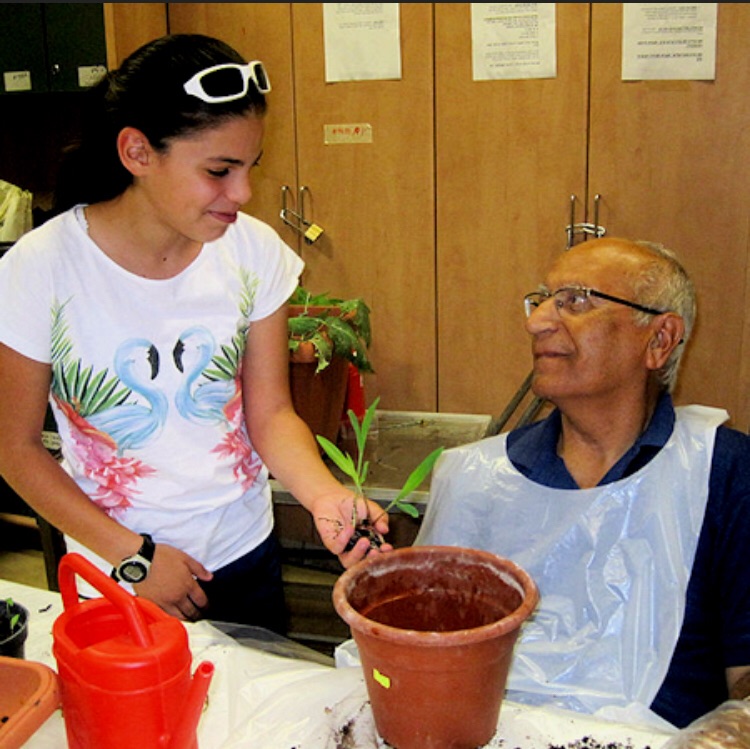
Horticulture class at Gil Zahav center

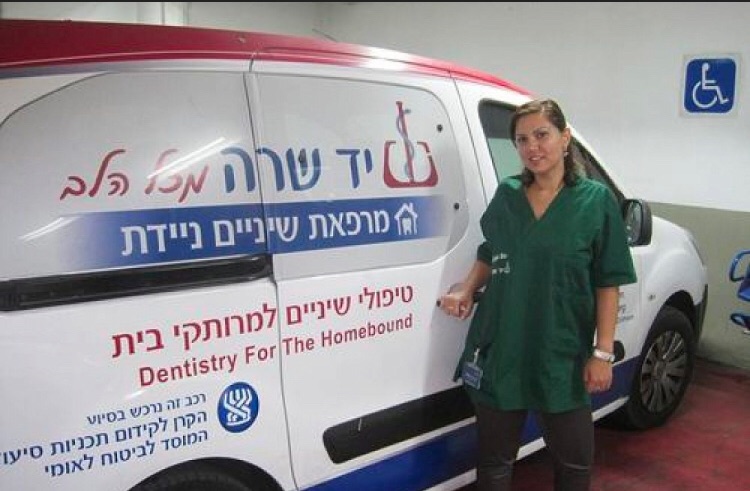
Also available for the elderly are geriatric dental services. This even includes a mobile dentistry unit that travels to more out-of-the-way locations. Dentists and hygienists volunteer one day a month to keep this service running. Volunteers from Yad Sarah drive shuttles that are specially equipped for disabled. They provide rides to and from clinics, shopping centers and grocery stores and even airport shuttle services. There are also special programs for shuttling disabled tourists, everything being arranged in advanced from the main center in Jerusalem.
“Help! I’ve fallen and I can’t get up!!!” If you are from the United States, you will easily recognize this commercial for home medical alert systems. The system was developed by Yad Sarah volunteers here in Israel. A need was recognized and solved and wall-mounted and wrist-worn medical alerts were provided for a small fee. The alarm system once activated goes to a central 24-hour YadSarah control which is then immediately routed to United Hatzalah (motorcycle paramedics), Magen David Adom (ambulance), police, or other necessary unit. As an extension, the Azakah Gan, or kindergarten alarm was installed in every kindergarten as an alarm in the event of a terror attack, G-d forbid.

The services just go on and on and on. We spoke with Alan, one of our local Yad Sarah volunteer staff, who gave us an extensive list of all their services. There are people, who, for a nominal charge, will pick up soiled linens from the home bound, wash and return them within two days. There is a meal delivery service, which for a small monthly fee, provides hot Kosher meals daily. This is contracted out to a local catering service and is much like a meals on wheels program. On staff here are four gentlemen who donate some of their time as shiputzniks, or handy men. They will go to the apartment or home of an elderly or home bound person and offer small fix-it and plumbing jobs at no cost. It’s considered a mitzvah, a good deed to a fellow human being.

All the equipment that is lent out (larger or more expensive items are loaned for a small, refundable security deposit for a renewable period of three months) is either donated new or refurbished. All items are cleaned and sterilized by an all-volunteer staff. The items are inventoried in centrally located warehouses, labeled and sent out again. A brand new six month training course offered to new immigrants (in the Tel Aviv and Jerusalem areas) by Yad Sarah certifies them to correctly assemble and package medical equipment. This provides these usually low-income, lower skill set people from countries like Ethiopia and the former Soviet Union with future employment opportunities. It also gives them a way to integrate fully into their new country. What a great idea!!

Especially during this time in our country, Yad Sarah offers Rehab Centers and services for wounded soldiers. Not only are they helping with physical therapy but also emotional and psychological therapy is provided to soldier with PTSD. And now, services have been extended to all those affected by the trauma of war. As if all this was not enough, Yad Sarah also provides a myriad of service to victims of domestic abuse. In women’s restroom stalls throughout the country, there are stickers notifying victims of abuse of how and where to receive help.

An injured soldier receives help

Yad Sarah has won many awards for service and charity including the Israel Award and recognition by the UN (really!). This organization has expanded its training modules to underserved countries throughout Africa and into Asia. Effective, accessible and affordable medical services in order to raise the dignity and worth of every individual is their primary mission.

Yad Sarah is the most amazing organization I’ve ever encountered. Yes, their central offices in Jerusalem are staffed with paid employees. But most of the medical equipment and service vans are provided by generous donations from both within Israel and abroad. Local and international charity drives are often held. When renting a medical device, if the person is able, small extra monetary donations are gladly welcomed. Tax deductible receipts for all donations are given. This is one group we will gladly support, both monetarily and with our time.

If you are within Israel, reading about this for the first time and are I need, contact *6444. Someone will be available to answer your questions in Hebrew, Russian, English, Arabic, Spanish, French or Amharic. There are fundraising branches for Yad Sarah set up in The UK, US, and Canada. To be added to their mailing list or to make a charitable, tax-deductible donation, go to Friendsofyadsarah.org.

Repost of my July, 2017 feature on The Druze of Israel

I wrote this feature seven years ago, before Hizbulla was truly a threat, in the days when one could actually reach the border fence. Today it is a huge wall of block, metal and razor wire. Because it is right up against Lebanon, most of Hurfeish has been evacuated except for a few Druze men who guard the homes against enemy invasion. Unfortunately, over the years we have lost contact with our friends, Rami and Dalia. I hope they are well….

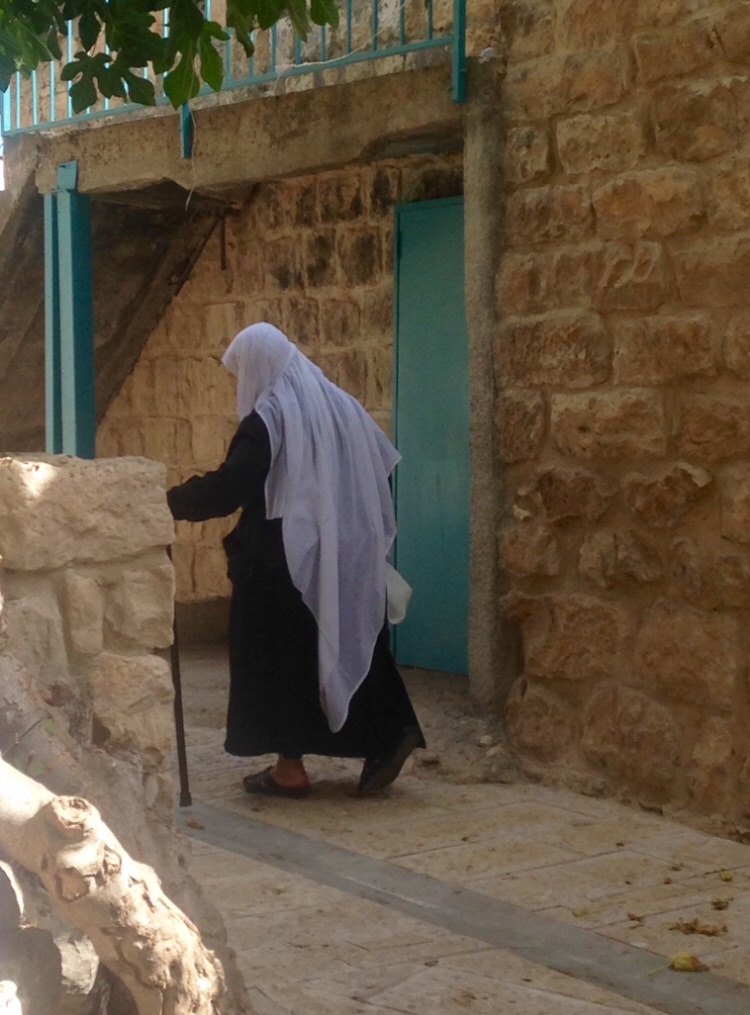
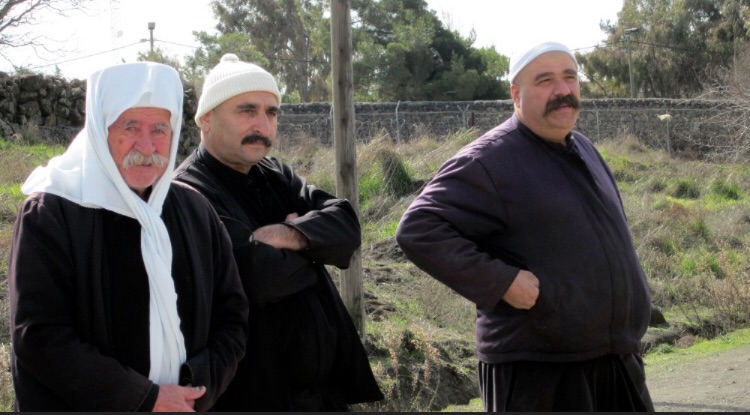
 When I made my pilot trip to Israel three years ago, I first encountered differently dressed people shopping in the Karmiel mall. I had no idea who they were, but I was quite intrigued by them. The women were all dressed in black with perfectly pressed, white headscarves trimmed in lace. The mustachioed men (think Sam Elliott, actor) also were dressed in black with wide-crotched pantaloons and white knit beanies (Amame) on their heads. 

     After moving to the North of Israel, I’ve begun to learn more about the Druze. The women set up long tables at the local malls on Thursday and Friday mornings selling food. I have never bought any, but it looks and smells delicious! And I’ve asked these women about their cooking –

A few weeks ago John and I had the unexpected opportunity to meet a Druze man. John and another friend stepped in to intercede in a small, but decidedly racist altercation between a Druze and another man. After the situation was diffused, Rami thanked us heartily for clarifying what had been misconstrued, and invited us to his town, Hurfeish on the Northern border with Lebanon. What a great opportunity! So, to prepare myself, I started studying up on these people and their culture.

The Druze are a people, a culture, and a monotheistic religion. Around 1000 AD, in Egypt, two men, Hamza and Darzi, felt that the Muslim religion had strayed too far from its basic tenets and its emphasis on violence and inequality and needed major reform. They formed their faith upon Abraham, Jethro (father-in-law of Moses and their great patriarch), and the Prophets of the Old Testament as well as Jesus, El Hakim, the Greek philosophers, and various teachings of Hinduism. The religion was called Al Tawheed. It was a Gnostic religion, with only a few having access to the complete knowledge of the writings. Open to adherents for only fifty years, the religion became closed. There are no converts. One has to be born into the Druze faith. They believe in theophany, or the transmigration of souls – not reincarnation. When a Druze person dies, they believe after a very short period, the soul of the deceased  enters into the body of a newborn baby Druze. They have no set houses of worship, but rather, holy sites on mountaintops, usually at the tombs of their prophets. After a period of intense persecution by the Muslims in Egypt at the beginning of their formation, they fled to the mountains of the Galilee in Israel, on Mount Carmel near Haifa,  and to the mountains of Lebanon and Syria.

The Darzi, or Druze, are centralized and organized into large family units. They are monogamous, with the women held in high esteem in their society. Very seldom is there divorce, and in the event of a couple who feel they are unable to live together, the husband and wife appear before a panel of elders who try to settle and make amends in the family. In the rare circumstance of infidelity or completely irreconcilable differences, the marriage is annulled – the man must move to another community, the women always maintains custody of the home and children and receives support from the husband. Neither are allowed to remarry. All of the Druze follow a strict moral and ethical code. They do not drink alcohol and follow the Scriptural Levitical food laws forbidding the consumption of unclean animals (pork, shellfish…). They are people of their word. They do not gossip and strive to tell the truth at all times. Their word is their bond.

Having faced tremendous persecution in Syria and Lebanon in recent years, many have escaped to refuge in Israel. The Druze are a noble warrior culture in the absolute sense. They only fight in defense of their country. There are many communities of Druzim scattered across Northern Israel. They are absolutely Zionistic, believing that G-d has given this land to the Jewish people, and that they have the right to return to their homeland. They enjoy full rights of citizenship here in Israel. Many Druze communities are right upon the borders of Lebanon and Syria forming a first line of defense for us. They have sworn an allegiance to defend the land of Israel, and most Druze men serve in the Israeli Defense Forces. They have risen to the highest ranks of command, and after their service, many Druze work as guards in our schools, banks, public institutions, synagogues, and even as guards for members of Knesset.

Despite their strong agrarian ties to the land, many are highly educated, and are doctors, pharmacists, judges, members of parliament, and other professionals. So it was with a great sense of honor and pleasure that we joined Rami one afternoon for a tour of his town. Druze take pride of ownership. Their villages are well kept and very clean, with lots of greenery and flowers everywhere. They are proud to hang their multi-colored flag along side the Israeli blue and white.

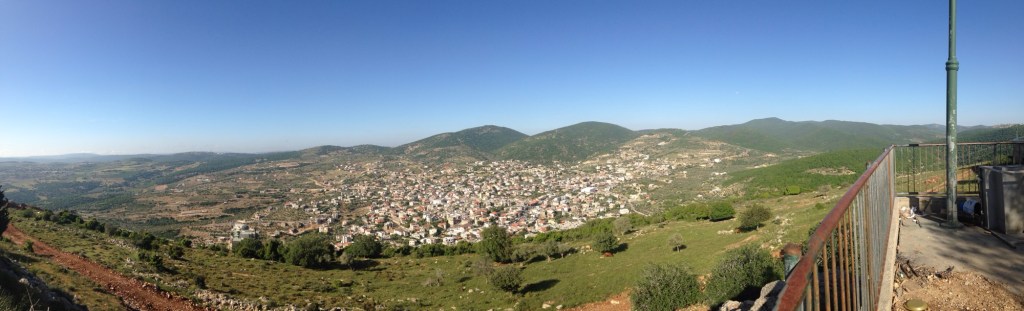
We met Rami at one of their holy sites, the mountaintop grave of Nebbe Sabalon (their prophet, Zebulon, founder of one of the tribes of Israel). From the top of the mountain, we could see all the North from the Mediterranean to the mountains of the Golan, and into Lebanon to the North. It was breathtakingly gorgeous, but for me, quite sad, as just a few miles to the North between two mountain peaks, I could see Ayta alShab, the Lebanese town where Michael Levin, a Lone Soldier for the IDF from Philadelphia, was killed by Hizbollah forces in the Second Lebanese War (2006).

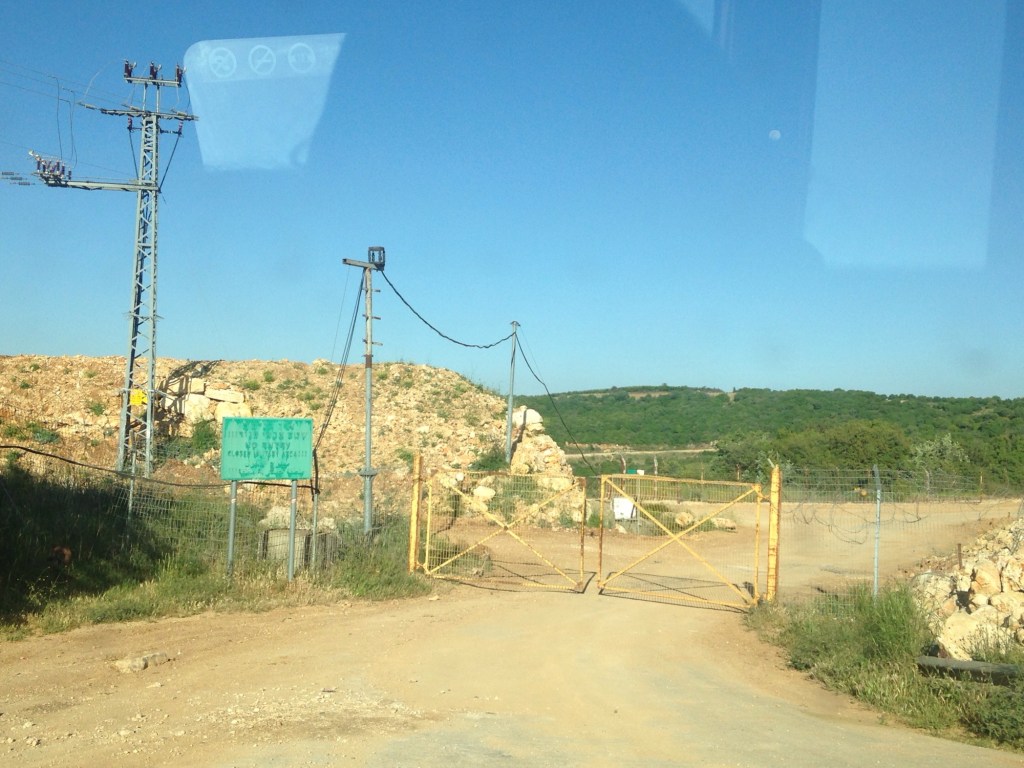
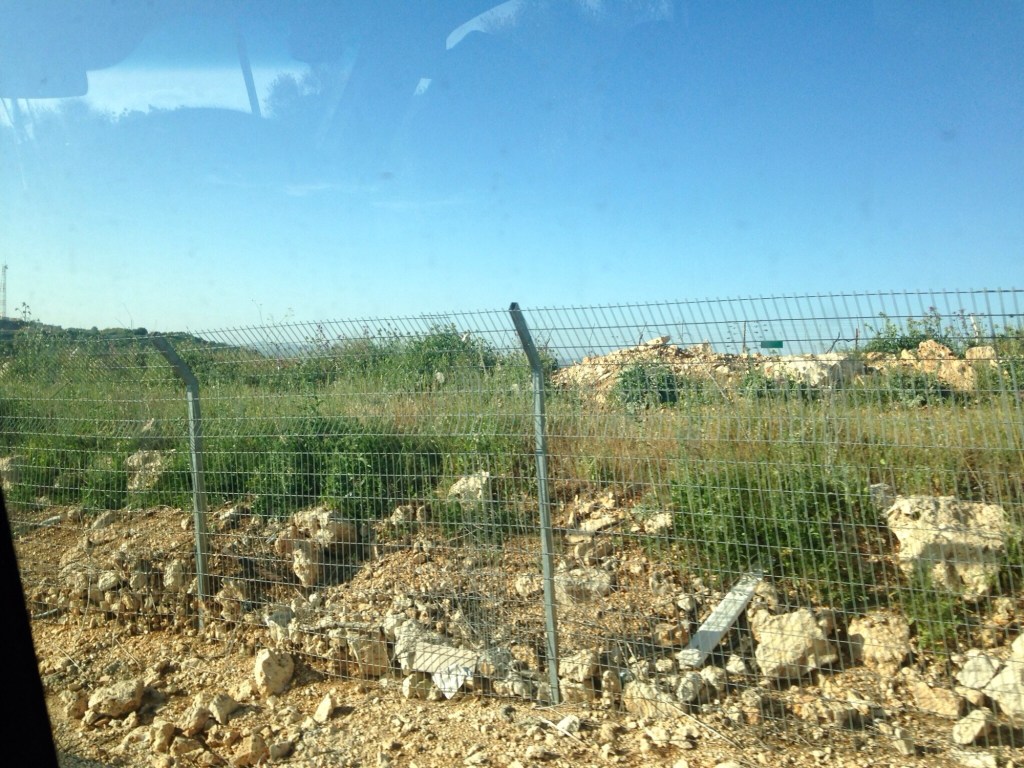
After taking in the view, Rami drove us through his town of Hurfeish, pointing out the home where his grandparents and parents were born, and showing us other various landmarks. We then made our way up the hill and onto a dirt road where we saw his brother’s chicken farm, and family fields of olives, pomegranates, goats and cows. The spring day was beautiful and the trees were abloom with pink, white and yellow. Fields full of flowers with the fragrance of Spanish broom and sages hung heavy in the air. We had made it to a military service road on the border. “Do you see the fence? That’s the border of Israel. See the outposts? And the military bases? And that fence over there? Right past that fence is Lebanon. The dirt was piled up to keep stray bullets from hitting us on the road here…”  Never did I dream that he would nonchalantly take us right up to the border. The place where Hizbollah has its arms build up. Yet the day was so peaceful – the only sounds were the breeze and the twittering of songbirds. When we turned around, Rami pointed out the tracks of tank treads in the dirt. Haunting.
We were then privileged enough to merit a visit to Rami’s family museum in Hurfeish. A war memorial to his cousin, Nabi Meri. In 1972, Meri joined the IDF with hopes of becoming one of the elite paratroopers. At that time, the Druze were put into a special minorities brigade, but with the help of Moshe Dayan, Defense Minister, and David Elazar, Commander of Forces, he was able to realize his dream. After fighting in the Sinai during the Yom Kippur War, Nabi Meri became commander of Herev, the minorities units, lobbying to change the name to generate more pride. By 1978, he had become Deputy Commander of the elite Givati Fighting Brigade; then as full colonel, headed up the Arava Battalion – all while getting married, having a family, and receiving bachelors and masters degrees in Political Science and National Security. After serving as Commander of the Northern Gaza Brigade, he was promoted to Brigadier General Commander of the Gaza Division. I 1996, Nabi Meri, age 42, was killed in action by a Hamas sniper while trying to give support to his soldiers during a Palestinian attack. His younger brother showed us the museum in the first floor of his home. It was filled with memorabilia, including pictures of Meri with many Israeli and foreign officials – prime ministers, diplomats, generals – as well as his weapons, flags and uniforms from his various posts, and the bulletproof vest he was wearing when he was killed. The bullet hole was a mere 2mm from the ceramic deflectors on his breast.
It was late in the afternoon, and Rami drove us up to his home to meet his wife and family. Such a gracious, kindhearted gentleman. When we arrived, his lovely wife, Dahlia, had fixed us a Druze platter – all homegrown and homemade. Olives, humus, vegetables, goat cheese, pickles, tabbouleh, labane cheese with olive oil and the herb blend, zata’ar (she gave me her recipe and a huge jar full of this AMAZING blend of hyssop, roasted sesame seeds, lemon salt, and sumac. It would have been an insult to their hospitality to say no, so we sampled a bit of each of the delicious and healthy goodies. Dahlia made sure to tell me she had honored all the Kosher laws and there was no meat or anything that was unclean. It was so nice of her to think of honoring us in this way. She had made wonderful cookies filled with cinnamon and dates, and the signature Druze soft flatbread. Their specialty is coffee – home roasted over an open fire. Strong, but very delicious.

We ate on the patio in front of their house under the shade of a tree that held a “shrine” – a remnant of a Lebanese-fired Katusha rocket that had come down next to their home and split the branch of a tree in 2006. Afterwards, the couple warmly invited us into their home. It was lovely. Dahlia had her own very feminine parlor, with the first wall-to-wall carpeting I’ve seen in Israel. Their main living area had intricately carved wooden beams across the ceiling, and low sofas lined with pillows against the walls. We sat and talked for quite a while, listening to their history and promising to get together soon. We have since hosted them in our home, and have formed what I hope will be a strong and lasting friendship. They are lovely and gracious people – we have been invited to their extremely handsome son’s wedding when he finishes his IDF service next fall. His fiancee is equally gorgeous and is in university studying urban planning and architecture. We are so blessed to have been given the opportunity to experience a new culture first hand and to have been given this gift of friendship.  

War Stories. Day 289.

A Jewel Among Women

I have had the incredible honor to meet quite a few truly amazing people living here in Israel since we first made Aliyah in 2015. This country is made up of so many dedicated, resilient and caring individuals. Every time I interview somebody, the first words out of their mouth is an apology for not being able to do enough to help. For just being a small cog in a larger machine. And to thank me (who really am not doing much but raising awareness) for my contribution. Honestly, I have never ever experienced anything like this. John and I were struck by this willingness to share, to be hospitable, and to reach beyond one’s comfort zone the first time we visited this land in 2011.

This is my last in a series of people making a difference to help out during the war. After finding out some of our own donations were not being used as justly to help people directly (skimming off the top or huge salaries to the organizers/CEO), I went on a quest to find truly honest people giving of their time and effort and even pursestrings to help those most needed. To those of you who asked where they can donate, these are three that we fully endorse…

A Ray of Light

In Hebrew, “or” means light. And here in Israel parents take their baby names more than seriously. This feature article is the third in a series of feature articles about people making a difference. Meet Or Avni-Aharoni.

For some unknown reason – perhaps just to cut the seriousness of the constant flow of bad news- I decided to scroll Etsy a few weeks ago. Not intending to buy anything, I came across this online shop that sold Judaica. A lovely bracelet caught my eye and nearly brought me to tears. Those words!!!! It spoke to my heart, was just what I needed to remind me – the people of Israel live – עם ישראל חי and I had to have it. And so the story begins.

I know there are many ways to spend your money. I know there are many stores out there, both brick and mortar and online. And I know there are many ways to support Israel: small business owners, soldiers, wives of soldiers. But this is a story set apart.

Or Aharoni kept in touch with me from ten minutes after my order was placed. At first the rose gold metal for my bracelet was unavailable, but Or fulfilled and then expedited my handcrafted order, which I was shocked to receive within ten days. It came so beautifully packaged. A blue wax seal said “The people of Israel live” in Hebrew. But there here was another smaller box with a seal.

There must be a mistake, because I had only bought the bracelet. The bracelet was even nicer than I expected. But inside the small box, was a little gold necklace with a tiny charm….absolutely perfect for gifting my granddaughter. But this is not supposed to be a buyer’s testimony. Still, I was shocked to receive a note (Or speaks and writes perfect English) thanking me for my purchase, explaining how this sale actually helps the people of Israel (story follows below).

John and I had an upcoming engagement party and I wanted to get a meaningful gift for the couple. I already knew that Or’s shop, Jewselry, had housewares, clothes and gifts that were unique and well-priced. I called her up and we talked on the phone for quite a while.Things clicked between us immediately. And I knew instantly that I had to share her story with you, because Or truly is a ray of light in this dark world.

Or is a young wife of a firefighter and reservist. She is a mother to three little children. A graphic designer and maker of jewelry as well as a small business owner, she has a heart of gold. She started out designing and selling her products a little over a year ago on various platforms and had instant positive response, and then 7 October rocked everything and everyone in this country.

“ All I wanted to do was to take something horrifying and turn it into good,” she shared with me.

Or grew up in a very secular Israeli family. Her grandparents made Aliyah in 1948 from Romania. Everything changed for Or in 2015, when she met her bashert, the one that was “meant tobe.” David and his family were fairly religious Jews. A large modern Orthodox Jewish family, they took delight in celebrating the Shabbat with big meals and holiday get-togethers. It was so beautiful, but very different from Or’s upbringing.
After she and David married, Or, too, wanted to host these wonderful family Shabbat gatherings, but she didn’t have any of the accoutrements, nor did she feel she knew the proper blessings. Even living in Israel, this was all so unfamiliar to her. Or searched for, but couldn’t find anything she liked that would start off a person new to G-d, new to religion and new to observance. She saw a need and decided to remedy her problem. As an artist, Or designed and made little cards, magnets and signs for the home with Shabbat candle blessings, grace over meals, prayers and home blessings. They were not only functional, but pretty.

Her friends saw them, and they, too wanted Jewish related products for their homes. And thus, Jewselry was born. It was the beginning of a journey. Jewselry is more than just a store for buying Judaica and Israeli merchandise – it’s a celebration of joy. It’s a way Or, inspired by a love for traditions and beauty, brings life to all her contemporary creations. It’s a celebration of the vibrancy of Israel and her people. It’s about passion.

Or decided upon the name Jewselry as a play on words. The Children of Israel in the Bible are called Am s’gulah. They are each individual jewels in the eyes of G-d. Each different, but with its own beauty, light and potential. Each has the opportunity to be a great gift. name, so are Or’s products.

The Inside-Out

Life was going more than wonderful for the Aharoni family. Then 7 October came and the world turned inside out. David was away on duty and the missiles were flying regularly from Gaza into central Israel. Or could not sleep. She was continually having to wake up her children in the middle of the night or grab them during the day to get them all to the bomb shelter. The business became her sanity. All too soon things got worse on so many different levels as she found herself on the front lines of confronting Israel hatred and pro-Palestinian attempts to hurt Jewselry.

Whether Etsy or Amazon, Israeli products were being taken down, scratched from the internet. Amidst a frenzy of antisemitism, there were complaints that the Israeli flag, the map of Israel, the word “Zionist” were threatening and hateful. On Israeli Independence Day, sixty plus products were pulled from Or’s Etsy shop because they contained the Hebrew words “Am Yisrael Chai” or “the people of Israel live.” Someone had made the claim that they owned the rights to those words, the anthem of the Jewish people for generations.

Fighting Hatred With Love

Or would not be swayed. With Israeli chutzpah she decided to fight hatred with love. After petitioning to have her products returned to her site, she came up with two incredible ways to help others directly affected by the war. She saw all of her neighbors making meals for soldiers, gathering up equipment. Visiting the wounded in hospitals. But how could she help? Or saw this as her chance to do her small part to rectify this complicated situation here in Israel.

At the beginning, the economy was hit as so many reservists had to leave behind their small businesses. Being called up for duty meant they had no way to attend to their online presence. Israeli artists could no longer create, much less advertise, sell or ship their products. Her idea started with a friend from Sderot who made mezzuzot (the boxes you attach to the doorposts in your home. They contain a parchment with Deuteronomy 6:4-9). She got his permission to upload his products onto her site at no charge. She has since begun selling for more and more Israeli vendors, picking up their products in Tel Aviv and packing and shipping them both locally and abroad, with ALL proceeds going to the soldiers. Or says, “This way I save their livelihoods as they concentrate on saving us.” At Jewselry, she provides an online platform for Israeli soldiers who are business owners to sell their products worldwide.

This extreme act of kindness was not enough. She wanted to do more, but how? Her own sales had been impacted, so not only did she reduce her prices, so more people could support Israel by buying Israeli products, she had another idea. For every hand designed, gold-filled or 925 necklace bought, she would gift one to the mother or wife of a soldier. She has a list of women to whom she can donate on behalf of the buyer. The recipient can choose her own necklace from several options. Each beautifully boxed necklace comes with a personalized thank you note to the buyer telling them that

“Thanks to you for donating a necklace to ‘Daniella’ the wife of ‘Avi’ who is currently serving as a tank driver in Battalion 279 in Gaza.”

Also, the recipient gets a beautifully personalized letter with her gift.

“This necklace is a gift from …. in …..who is thinking of you and appreciates your sacrifice for the people of Israel. Together we will win.”

It’s a moving experience for all involved. Not only that, but Or donates a portion of her revenue to a family of a hostage still in captivity by the Hamas terrorists.

Your support counts too

By supporting Or, everyone wins. Businesses are helped in their fight to stay open. Reservists are helped to support their families. Wives and mothers of soldiers are appreciated for their sacrifice. Hostage families are remembered. And you get a high quality, unique product. Plus, you can especially show your support of Israel by wearing a cute t-shirt or beautiful piece of jewelry that is sure to get compliments. You don’t have to be Jewish. And the products are really inexpensive without compromising quality.

Jewselry has a presence on Etsy, Amazon and on Or’s own website, www.jewselry.com. It is also on Instagram @jewselry_world where Or offers specials, giveaways and shares recipes and insights on Scripture. Currently, there are great sales going on, so it’s fairly easy to show your support for Israel. The store gets 5 star ratings and rave reviews from the customers.

It’s the little things done by ordinary people with great love that will turn the darkness into light. Or says, “ I’m not just doing this for myself, but for Ha Shem (G-d) and for my children. They need to see the acts of kindness and to believe in the good. It’s for their future that I do this. And I hope they will have a beautiful future.” What an example!

Sliding into the Weekend

First, I want to thank you, my dear readers. You are the best!! I collected several heartfelt notes and letters both in my messages and direct email for our neighbors, the Aviv family. They lost their son, a beautiful peaceful windsurfer, who fell while on reserve duty in Gaza. I took them in a lovely ribbon-tied envelope last week. Emmi, Ido’s mom, was overwhelmed to tears. Both Emmi and Mark were absolutely shocked to know that people across the globe stand with them and support Israel. Every single Israeli I’m talking with feels so alone now. We all cried and I hugged both Emmi and Dasha (Ido’s fiancée- the wedding was supposed to be next month). We held each other close for a long while. I’ll be taking them another meal next Thursday, so your letters of comfort and encouragement are still wanted.

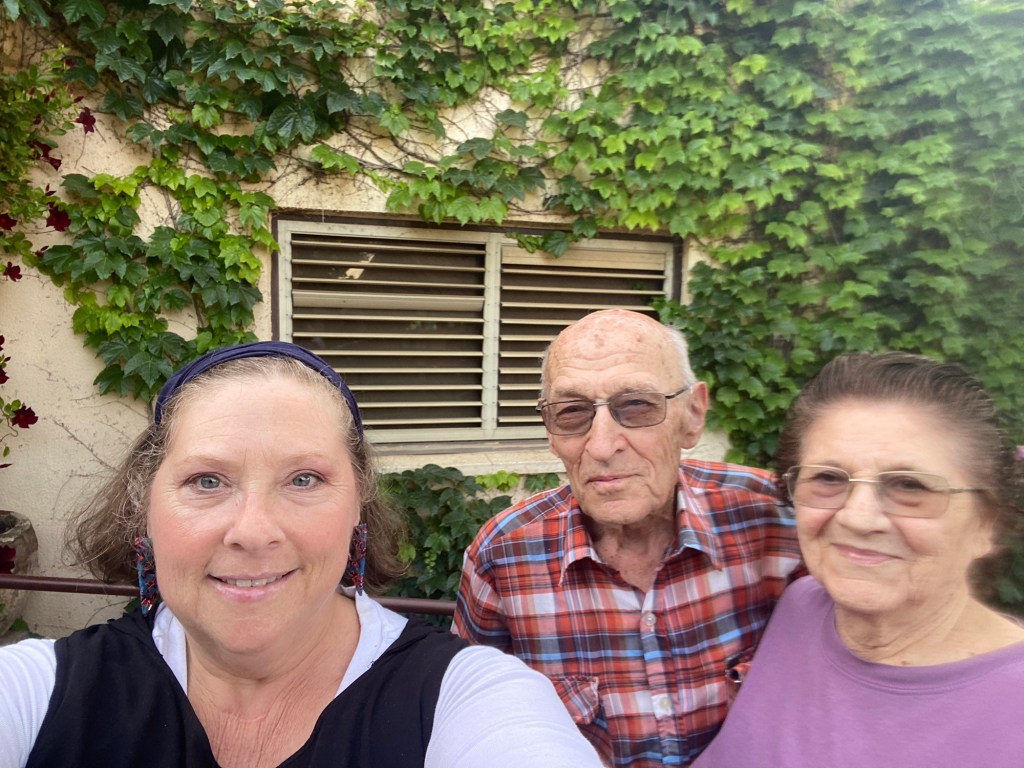
Speaking of neighbors: it’s time you met a few of my neighbors. Aryeh and Leah are 94 and 92 years old. They were born here and their passports and documents from pre-1948 label them as Palestinians. They were born under British mandated Palestine and their families have been here since the 1800s. They have been married 73 years. Every evening, Aryeh and Leah go on a long neighborhood walk, which is how we first met them.

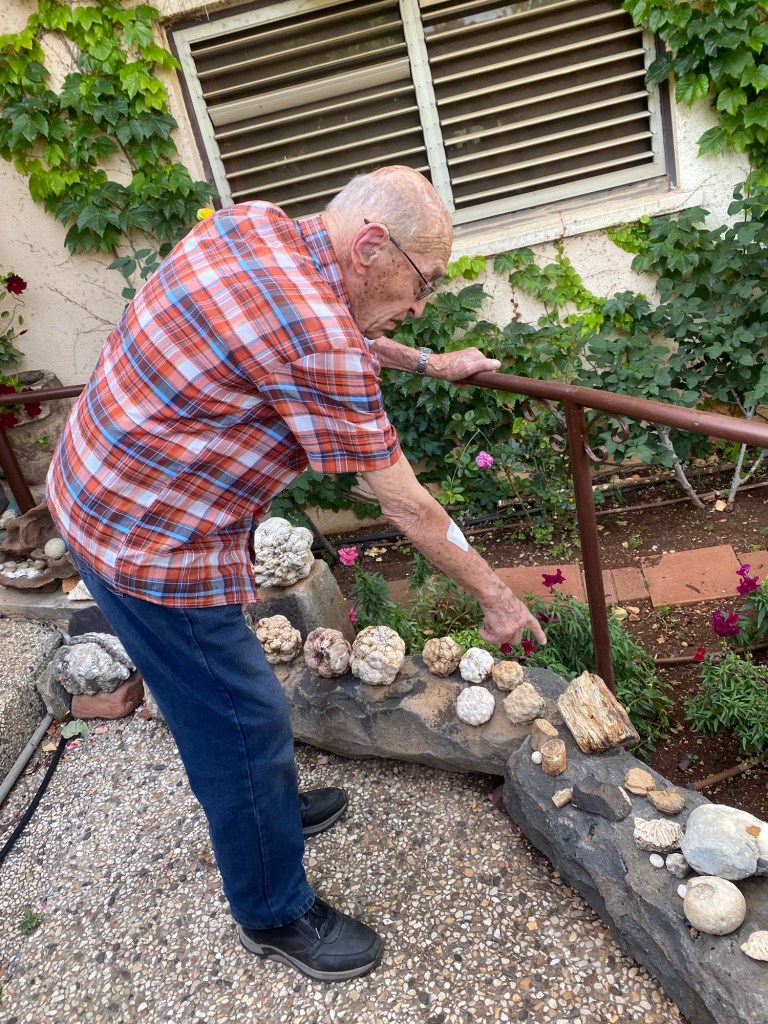
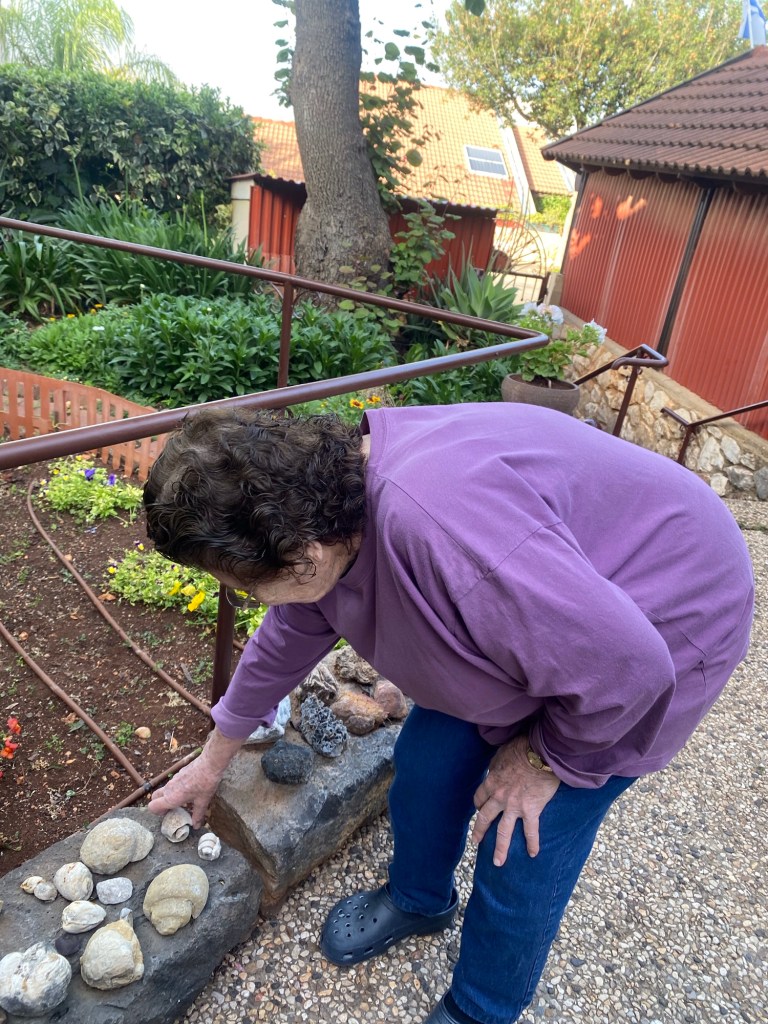
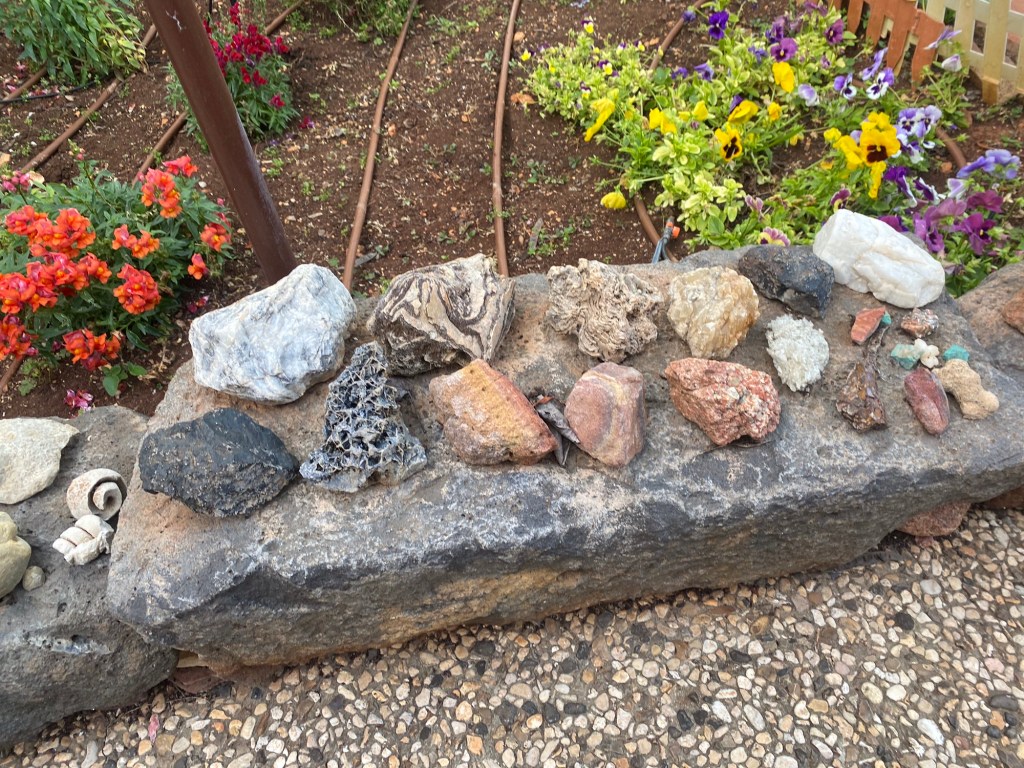
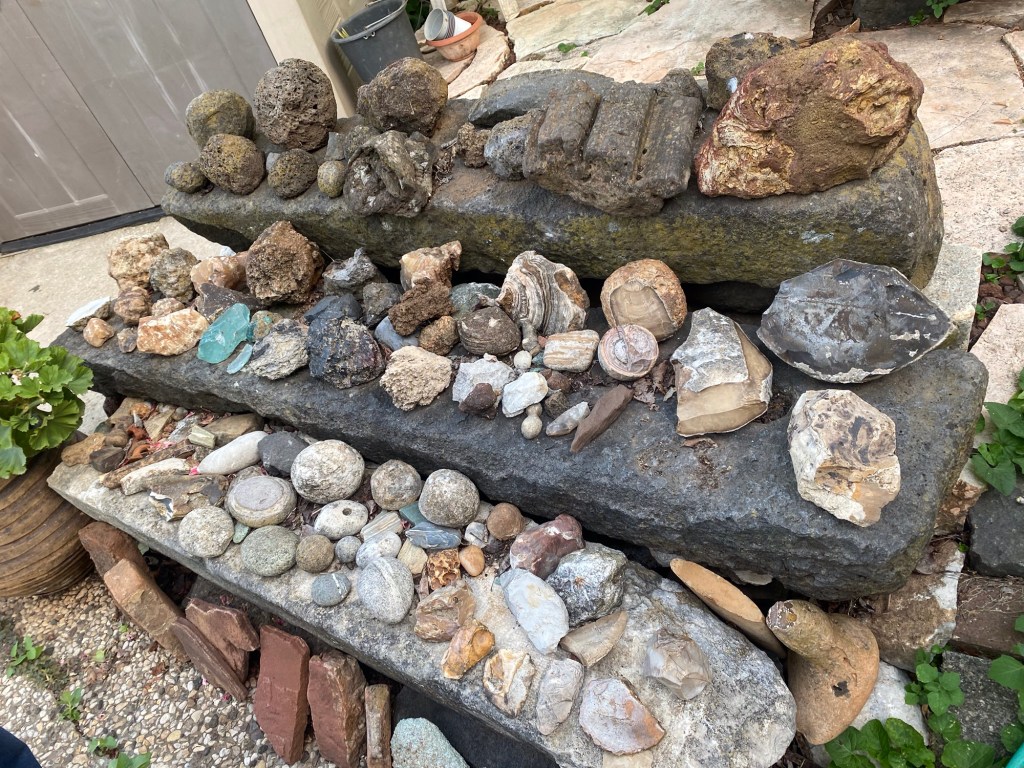
Leah loved my hollyhocks, so I gave her some seeds. She gave me a gorgeous red amaryllis. I shared my baby Italian and Native American tomato plants with her. Turns out Aryeh was an engineer just like my husband and he worked for years at Raphael, which is very much like Teledyne where John worked. Leah was a school teacher for decades. They are still avid hikers, and have traveled the world with their children and grandchildren. And…… they, too, are “collectors of found objects.”

It’s been a hobby/obsession of mine to pick things up from our travels and walks: flowers to press, shells from the beach, coral (leading to my arrest here the first year), pinecones, fossils and rocks. My kids used to make fun of me. John has gotten used to it and has become a pretty good “picker” himself. So, last week when we visited our neighbors, we were amazed. Geodes, rocks, fossils – each from a special place with a unique history and a story.

This past weekend was the Jewish holiday of Lag b’Omer, a celebration of the Light of Creation, holy Light, the Light of the World through the Scriptures, which is sometimes compared to fire. It also commemorates the life of Rabbi Shimon bar Yochai (Rashbi) and the miracles associated with him. Lag b’Omer is always a huge holiday here in Israel. Whether religious or secular, it’s a fun family festival where huge bonfires are lit. Kids sing and dance around the bonfires and families roast potatoes and eggs and meat wrapped in foil in the hot coals. The ultra religious make a pilgrimage to Mt. Meron, Rashbi’s tomb. This year, because of the war, everything was cancelled. No bonfires. No large gatherings. Especially Meron, which is a closed military area. It’s quite depressing.

Wednesday, John and I decided to drive up to Tsfat, about 30 minutes away. Nestled at the top of a mountain, it’s one of my favorite cities. This is the usually-busy tourist season. We would be having guests and taking them there this time of year. Big Bar Mitzvah and wedding parties would, in normal circumstances, be processing with musical fanfare down the already bustling cobblestones alleyways. Tsfat – sometimes transliterated Safed or Tzfat or Zefat, dates from Biblical times and is one of Israel’s four Holy Cities.

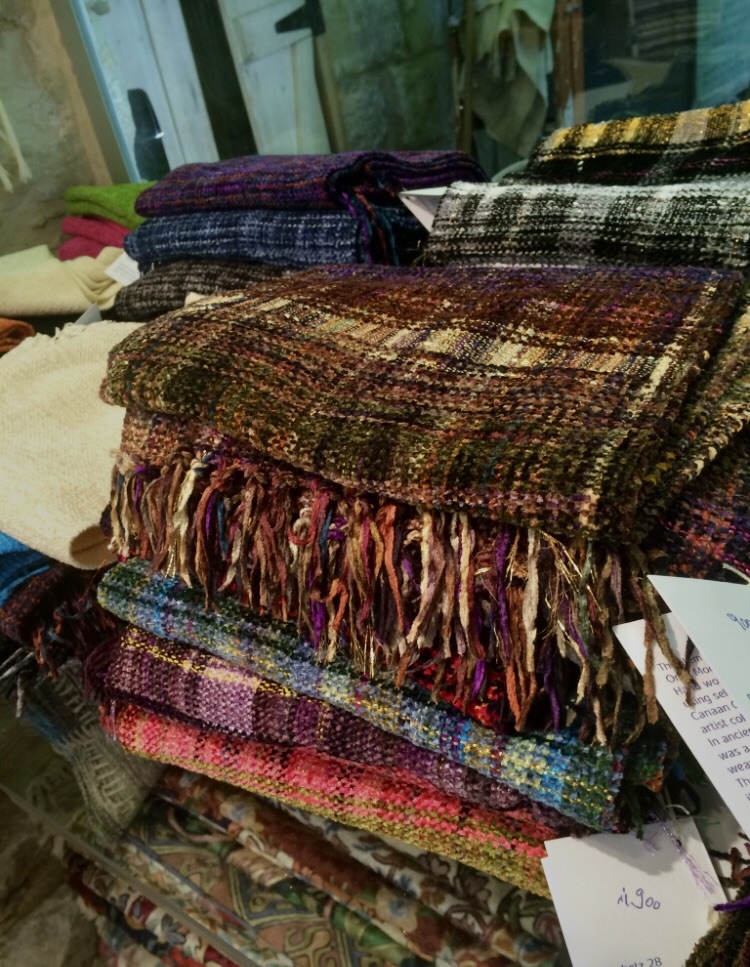
Tsfat was the home of the mystics and kabbalists. Today there are still many ultra Orthodox, but also there the hipsters, the hippies and the artists. Galleries line the streets of the Old City displaying high quality professional artwork like weaving, sculpture, painting, incredible jewelry and various crafts. They are known for their pieces of Judaica. And it’s a great place to shop for presents. We had an engagement party coming up and two weddings, and an anniversary.

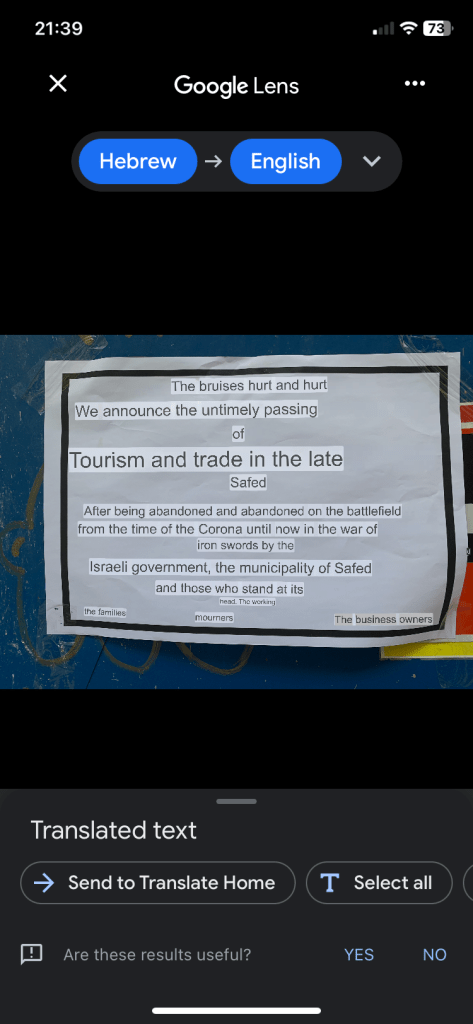
The drive up, although always gorgeous scenery-wise, was somber. Much of the area is so close to the border, people are not traveling there. We get drones and missile attacks from Lebanon several times a day. The city was a ghost town. No tourists. Empty streets. Most shops are closed. In Israel, when a person dies, a black and white notice goes up informing the public of who died, where the funeral and where/when house of mourning will be held. This time in Tsfat, posters were plastered throughout the city. Death notices. A sad but also clever way of saying the city and its businesses had died.

Luckily, the candle shop was open. Safed Candles are amazing handmade, all-beeswax candles…for Shabbat, Havdalah, Chanukah and every day use. Plus this business, open for over 50 years, has lots of other beautiful Judaica. And now, because there is no business, everything was on sale. To fulfill a request from my oldest daughter I bought 6 pairs of long golden beeswax tapers for only about $15. She’ll be delighted. Plus I scored a few other colorful handmade gifts. One other gallery was open. We felt so sorry for the shop owner who had four small kids and no income for nearly eight months. So we bought a few items: Roman glass earrings for my daughters, an engagement gift and anniversary gift.

all-beeswax candles…for Shabbat, Havdalah, Chanukah and every day use. Plus this business, open for over 50 years, has lots of other beautiful Judaica. And now, because there is no business, everything was on sale. To fulfill a request from my oldest daughter I bought 6 pairs of long golden beeswax tapers for only about $15. She’ll be delighted. Plus I scored a few other colorful handmade gifts. One other gallery was open. We felt so sorry for the shop owner who had four small kids and no income for nearly eight months. So we bought a few items: Roman glass earrings for my daughters, an engagement gift and anniversary gift.

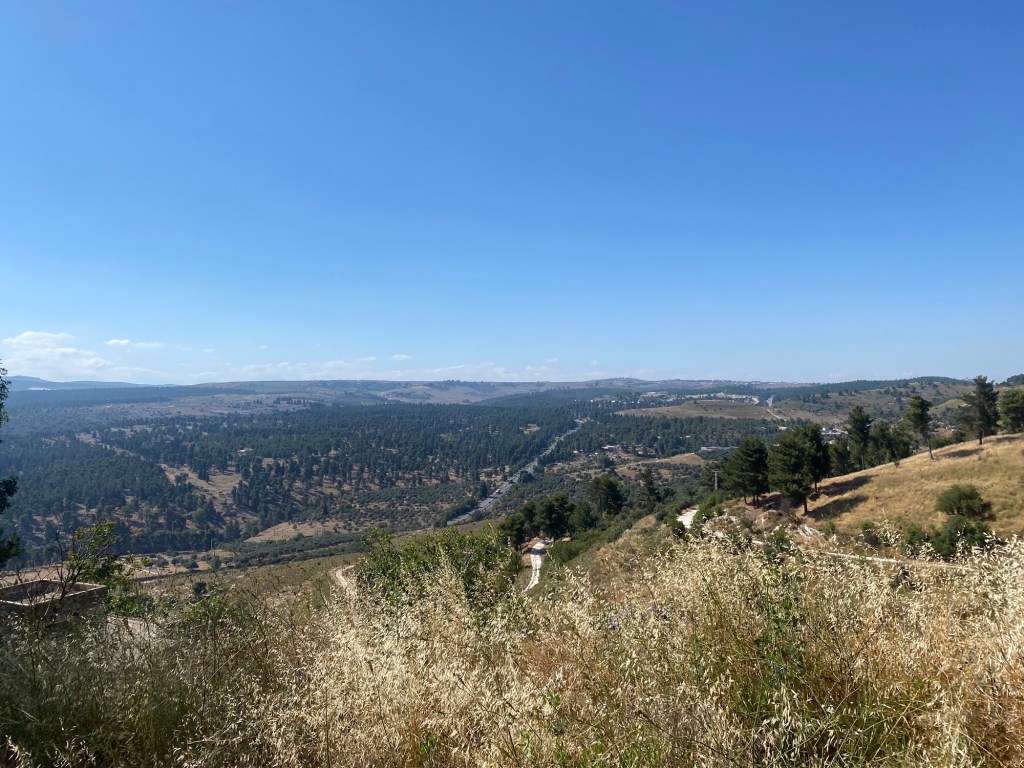
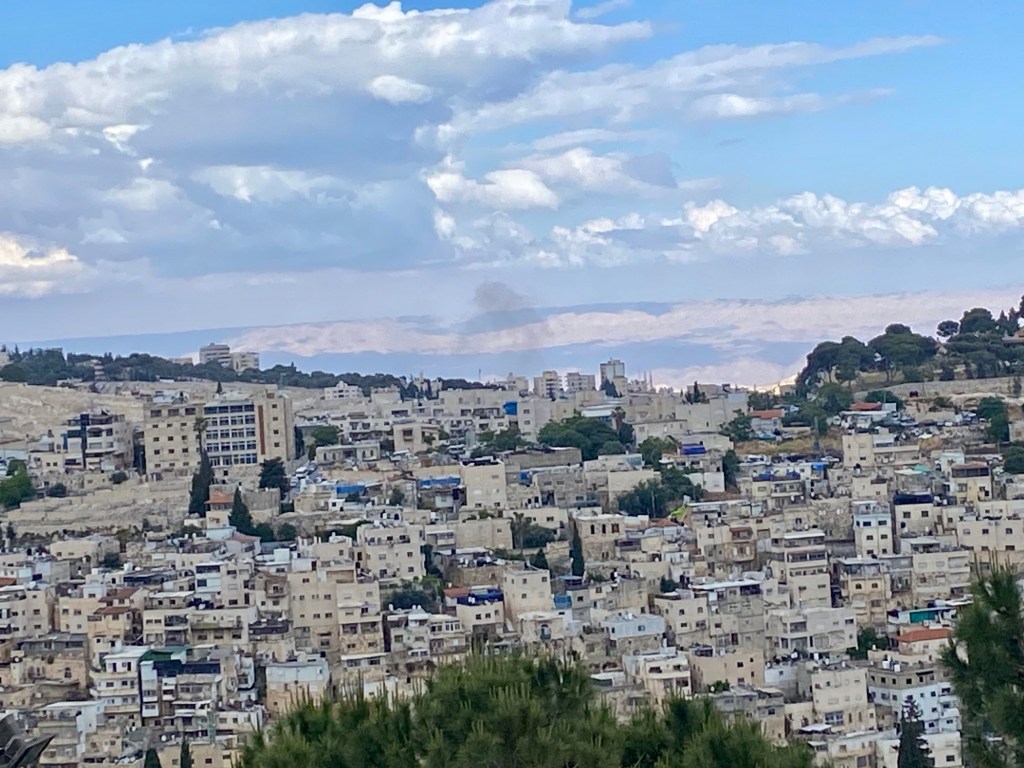
We stopped to admire the views from Tsfat. Mount Meron, which has been shelled daily (it’s a high point, literally, and a military intelligence installation. The day was so clear, there was no trouble at all seeing directly over the mountains into Lebanon – now all Hizbulla. Thankfully, there was no action, but John couldn’t leave quickly enough.

The highlight of our week happened last night. We were invited to an irusim, an engagement party. John had coached Pri’el in baseball as a kid and now he’s marrying his sweetheart, Bat’El. The cutest couple! But I’d never been to this type of party. The bride is from a Mizrachi Jewish family (Mid Eastern) and they have their own traditions. I was expecting a short, informal religious ritual where a rabbi blesses the newly engaged couple, basically a formal betrothal. I was totally wrong. No ceremony. No religious service.

Once again, most of the women were dressed fairly elegantly. Nope, not me. I kinda stuck out like an American sore thumb… and John in a short sleeve Hawaiian shirt. What were we thinking? We’ve been to funerals and weddings where people wore jeans, but the Mizrachi are different. Or rather we were- the men wore jackets, the women nice dresses. The young friends of Pri’El…. very casual, several in army uniforms.

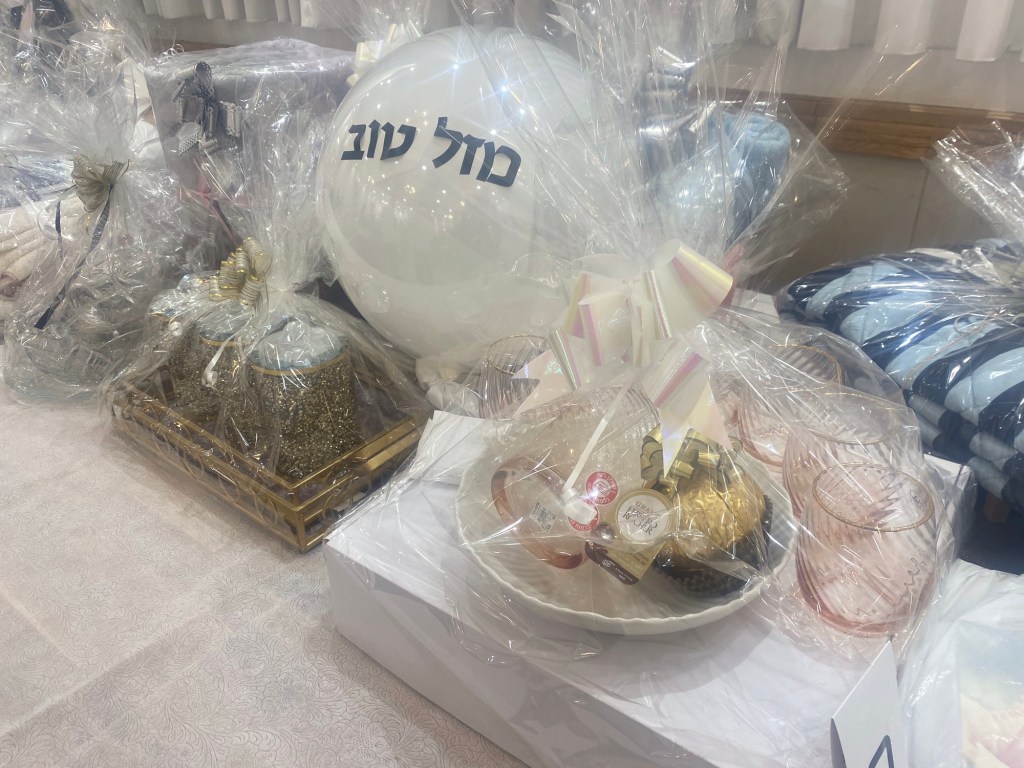
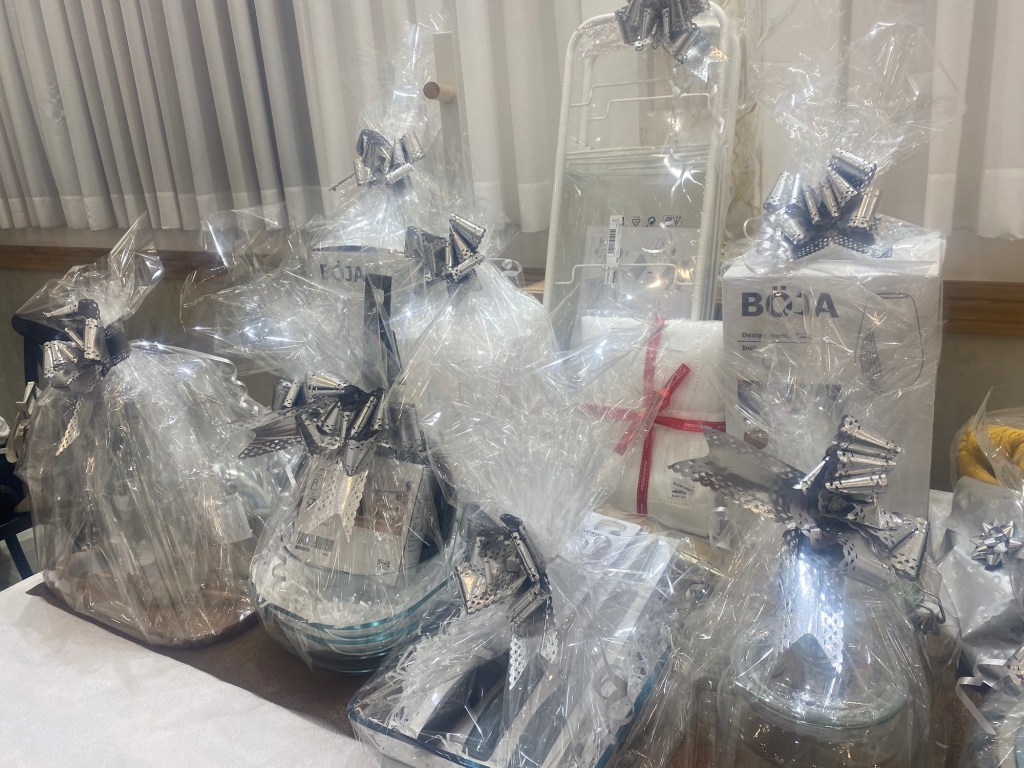
The bride’s dowry and a gift table was set up for everyone to see. Gifts from the bride’s parents. All beautiful housewares – in white and black and gold. All wrapped beautifully in cellophane with silver or black ribbon. And my rainbow colored gift bag from America that said congratulations with the colorful tissue paper tucked inside. Totally out of place.

The music! Live DJ, drummers, guys singing these melodiously Arabic sounding Hebrew songs. The bride and groom-to-be wore all white. And the food! Hors-doeuvres, salads of the Middle Eastern variety (Baba ganoush, dolma, tabbouleh, humous, lox, pickled fish, cabbage salads, lentil salad….). Then the first course- skewered salmon grilled over a fire. Wow. Then the large platters of meat – kabobs, sausages, brisket, steak pieces). So the party was at 7:30. And I had made dinner and we ate beforehand. Oooopps!

And of course, the dancing. The guys all dancing separately from the girls in circles. The joy. Spontaneous eruptions in different places. And then the young couple and friends sneaking out into the courtyard for a dance together…but never touching. All so pure, and innocent, beautiful and joyful.

After all the food and dance, the father of the bride-to-be presented his future son-in-law with a magnificent gold watch. Rolex??? Then our good friends, the parents of the groom presented Bat’El with gold earrings, a necklace, bracelet and ankle bracelet. It is a tradition in the Mizrachi culture to give gifts of gold.

Then came the next high point. The engaged couple paraded through the room like prince and princess with families behind. Then the bride’s mom and the Kallah instructor (the bride has a special female escort and instructor of the laws of family purity…well save that one for another time) handed a crystal bowl filled with chocolate pudding??? and two candles to Bat’El. They each lit a candle. They then took the bowl of pudding???? with the lite candles and proceeded to wave it in circles over the heads of the engaged couple. So weird. While the chazzan chanted and the people clapped along. PriEl’s friends were dancing on the chairs – it was very very cool.

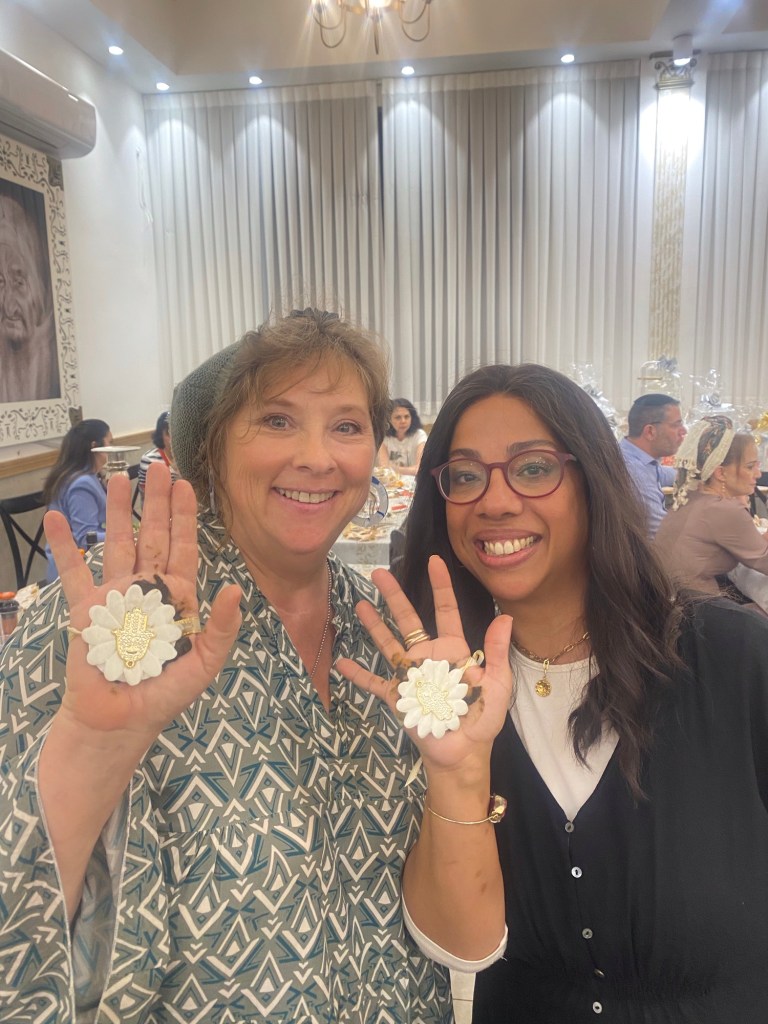
O.K. So I found out it wasn’t pudding. Or mud. Or a bowl of poo. It was Hannah. And now the ceremony begins as the bride’s mother and grandmother henna’d the palms of the engaged couple. And put a cool seal on to, tying it behind the hand. And next all the women line up to get their hands henna’d too.

By this time, it was getting on to midnight, and the desserts and rest of the festivities were going strong. We were beyond exhausted so John and I took our leave. It was quite the cultural experience- and a lot of fun. But now, preparations for Shabbat begin in earnest, so…more news next week.

Please, if you haven’t already done so, I ask you to write little notes of comfort for and solidarity with the grieving Aviv family. I will present them next Thursday. I can’t tell you how much a little note means to these people. To know they are not alone. Just put them in the comments section. And have a peaceful, relaxing weekend.

Taking the World by Storm

So for today’s post I could write about the constant intrusions and rockets from Hizbulla…. or the way the IDF set up over 450,000 tents and shelters with cots, cookstoves ( no, the innocent Gazans are not reporting to wood and trash fires to cook), water and medical attention. 8 hospitals have been fully staffed with doctors and medical personnel not associated with Hamas. They are for the Gazan civilians in need. There is also a special women’s center set up for maternity and OB/GYN needs. The staff is all women-

I could write about how Israel was not even included in the last round of hostages talks: the one where Hamas accepted a deal. Only they had changed it so radically and by then it was too late as every effort had been made to negotiate. Or how the IDF withdrew troops down to two battalions and put any attempts to enter Rafah on the Egyptian border and clear it of Hamas.

I was going to write about how the IDF did start to invade Rafah on Sunday night with surgical precision; how Hamas responded with rocket barrages into Israel; how in the morning, Hamas rockets landed on the Kerem Shalom Border Crossing. How 5 Israeli soldiers inspecting humanitarian aid shipments were killed, 4 injured, 3 trucks, and over a ton of food marked for entry into Gaza destroyed.

But no. Today I’m writing about a phenomenon that has swept all of Europe…and Israel. When I went to England, everyone was talking about (and my son-in-law’s sister’s husband was a respected commentator) who would win. Here, in Israel it’s reached a fever pitch. And no. It’s not Football/soccer.

It’s Eurovision!!!! Usually, we are not sucked in, but this year. Both my husband and I have been listening to all the entries and the pundits’ and social media influencers’ reviews of the 39 contestants. We listened to all of the first half of the entries Tuesday night. Tonight are the performances of the last 20.

I know Americans have The Voice and American Idol. But this is waaaay bigger. And this year there is major controversy. You see Israel (always a major contender and who has won four times, I believe), was not allowed to join at first because of the Israel-Gaza War. There were protests, petitions and threats to keep Israel out of the competition, but the Eurovision Committee decided at last to let Israel in.

The song to be entered was reviewed by the committee and rejected as being too political and too controversial in the midst of a humanitarian crisis in Gaza. It was titled October Rain. The song was reworked and resubmitted under the name Hurricane, with female vocalist Eden Golan singing. 20 year old Eden has recently immigrated to Israel from Russia, where she had won several vocal competitions. This is her big international debut.

I really was marginally interested until I heard the commentators from other countries’ reactions. Everyone was blown away and moved to absolute tears. Two anti-Israel people completely changed their bias and said they now understand where Israelis are coming from because of 7 October.

“We can bring everything we’re feeling and everything the country is going through in these three minutes,” stated Golan. It is a powerful song of loss and redemption, of strength in tough times. Compared with all the other entries, Eden Golan’s range, her emotion, her dramatic pauses put her in a league way above everyone else. Listen:

https://youtu.be/lJYn09tuPw4?si=pp6vaaUUWpS-NIYU

I’m so deeply moved by this song. We will definitely be watching tonight, hoping the politics are placed aside and that Israel comes across strongly enough to make it to the finals Saturday night. There are a couple countries that give stiff competition, but we shall see how the live performances go. Of course, we will be rooting for Eden Golan!

A Breath of Fresh Air

First: a HUGE thank you to all my readers who have sent in notes of comfort and support to the grieving Aviv family. (See last post). Please keep them coming, as I will present the letters along with the JNF memorial certificates and FIDF donation certificates to them on Memorial Day next Monday. So you have through the weekend. Please don’t delay.

John and I just returned from a few days in Jerusalem and Tel Aviv. He had a doctor’s appointment and we really needed a change of scenery. I hadn’t been down to Jerusalem since the pandemic, and once again there are no tourists.All the streets, holy sites, and tourist spots are completely empty. It’s a totally different vibe than when there are thousands of tourist groups, lines to enter a building, crowds jostling. It’s lonely, but also beautiful. To be able to enjoy sacred silence.

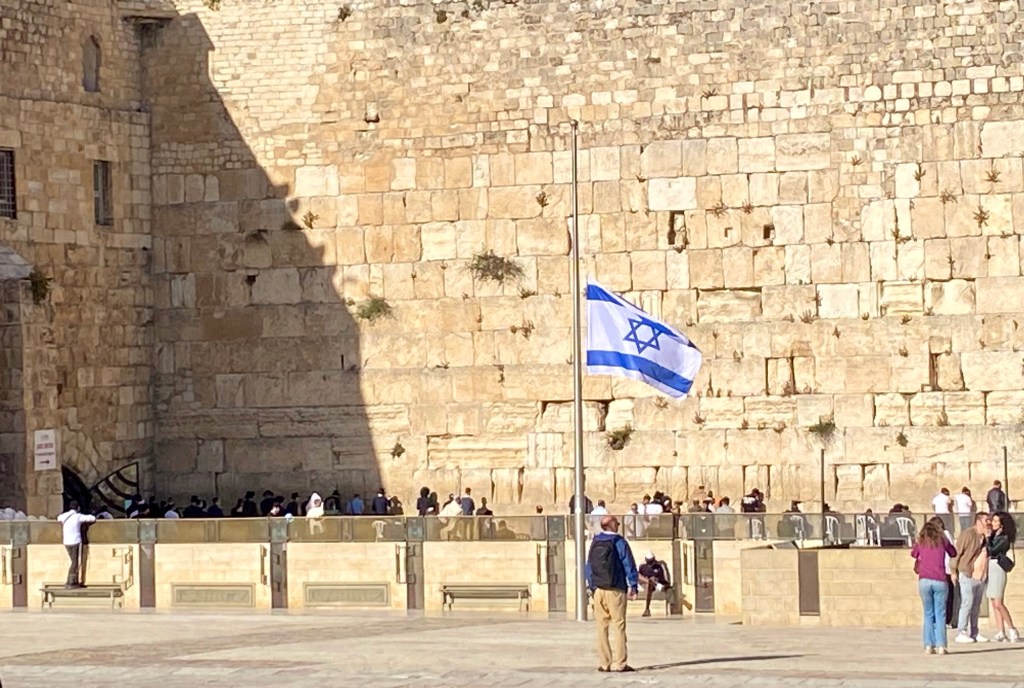
We visited King David’s tomb. We went to the Cenacle just upstairs in the same building. We walked the empty cardo, the excavated Roman Main Street that ran the width of the Old City through the marketplace and to the second Holy Temple. There was only the chiseling and hammering sounds of archaeology in progress. The stalls of the vendors were open despite the few customers. The cries in Hebrew, English, Russian, Arabic for tourists to come and buy. Only now there were few visitors. Still, the fragrance of nard and sandalwood hung heavy in the air. The colors of the fabric hanging and the brass and silver gleaming were just as vibrant. John and I went to the Sepulchre. The Orthodox Christians had just celebrated their Easter the day before. The miracle of the Holy Flame, the oldest continual miracle, had occurred the Saturday night previous. And of course, we made our stop at the Kotel, the Western Wall.

Flags were flying half mast for the five soldiers who were killed by missile fire as they unloaded humanitarian aid at the Kerem Shalom crossing on Sunday. It was quiet. Very quiet there. No groups singing, dancing, praying at the Kotel Plaza. No bands of soldiers. Only a few seminary girls in their long skirts and mothers with young children. A few men praying at the wall. It was easy to get a chair and bring it right up against the cold stones.

I really thought the floodgates of my tears would open up. I told John I might be a couple hours. I had a whole pack of tissue and my Scriptures. I’ve been holding space for so many people and so much over the past six months, there is barely enough room to hold any more. Every time I go to the Wall, unexpectedly, I sob until I cannot cry any more. Sometimes, it’s for certain people; other times it’s because I feel such connection with my past (family, ancestors who either visited or long to come to this very spot); sometimes it’s for the state of the world. This time, fully expecting…. again the unexpected. For the first time, I just could not cry. Nothing would come up – or out.

I prayed. I prayed a lot. But I could not grieve. Not yet at least. I gave thanks for the new lives in our family and our circle of friends. For. G-d’s protection. For all the blessings we’ve received just in this past year alone. But I could not cry.

Jerusalem in the spring is a place of incredible beauty. The wisteria is in full bloom and just climbs over the old buildings. The fresh mountain air is still crisp and cold and the surrounding Judaean hills are still green.

We really needed this breath of fresh air. In the morning, we headed out for breakfast at a sabich place. Oh my goodness!!!! If you have never had a sabich, are you in for a taste explosion when you come here. I’d never had one of these Middle Eastern delights until I came here, and this place was the absolute best. So what is a sabich (pronounced sah bikh with that gargling sound at the end)? You take a big fluffy as a cloud pita, smear the inside with humus; put in some hot fried potato slices; a sliced hard boiled egg; some pickles, fried eddplant; amba (the most incredible pickled mango sauce); some schkoog (hot!!!!!!) for the adventurous; more eggplant -crispy outside, soft inside- techineh, cucumber, tomato, onions, more amba and humus. It sounds wild and IS WILD!!!! Fairly healthy, incredibly filling. All together delicious and wholly satisfying.

Which brings me to a recipe: When we were in England, our daughter made a deconstructed sabich salad for dinner one night. She served it with leftover roasted chicken and it was quite marvellous! So much so, I took pictures, asked her for permission and voila!

Elizabeth’s Sabich Salad

Serves 4. Pareve. (Vegetarian/neither dairy nor meat)

Ingredients:

  • 1 head romaine lettuce, cut up
  • 1 small English cucumber, sliced
  • 4 hard boiled eggs, sliced
  • 1/3 cup sweet pickles (gerkinns), chopped
  • 1 small purple eggplant, sliced
  • 1 small sweet potato, peeled & sliced
  • 1/2 tsp paprika
  • 1/4 cup pomegranate arils
  • Dressing: 1/4 cup olive oil, juice of 1/2 lemon, salt & pepper

Sauté the sliced eggplant and sweet potato in very hot olive oil until soft and golden brown on outside. Let cool. Arrange rest of salad…lettuce, cucumber, pickles, eggs. Add in eggplant and sweet potato. Sprinkle with paprika and pomegranate. Dress with lemon/oil.

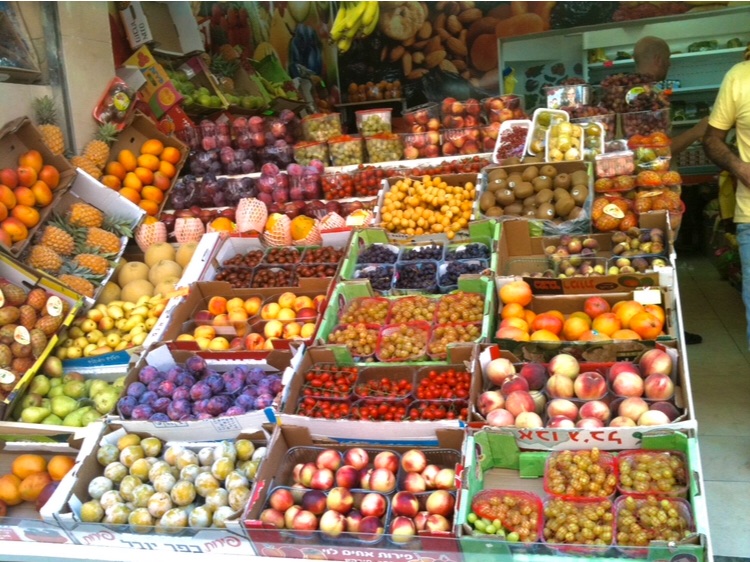
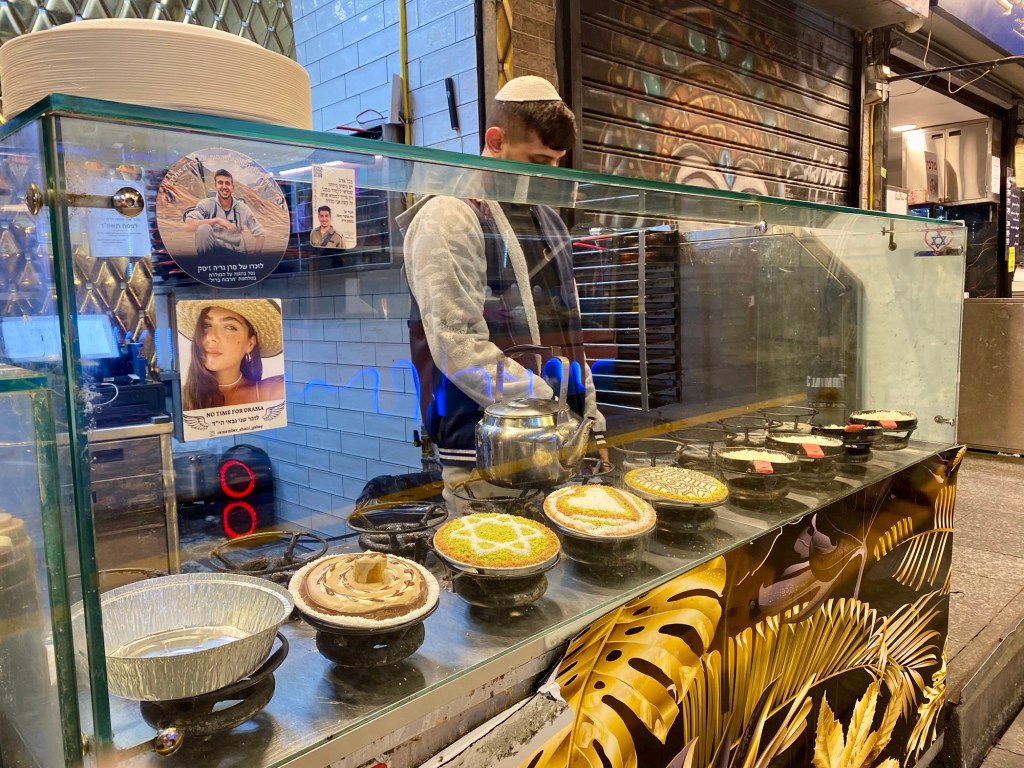
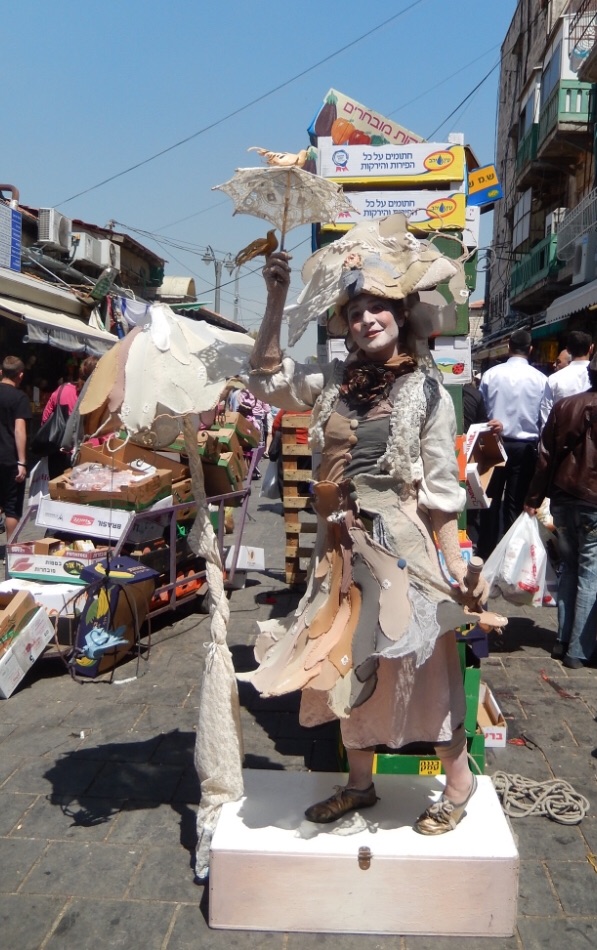
After breakfast, we went to Machaneh Yehuda Market, an entire covered square block of vendors and stalls selling produce, fish, meats, candy, baked goods, fresh squeezed juices, teas, spices, flowers, eggs, cheese, halvah, nuts, sweets, herbs, coffees, and everything else edible, gourmet and mundane. I did my shopping for the week, getting fresh figs!!!!! among other great things. (At night the stalls close up and the nightclubs and restaurants take their place… it becomes quite the hopping place for the younger crowd). But this morning, there were the usual rabbis, old ladies and beggars asking for spare change to feed the hungry; the guys playing guitar and hand drum and the Rastafarian dude with the steel marimba and the mime. The beautiful mime with her handmade outfit and props. She was standing there at one of the entrance on her little box platform, with her bird in its cage. Just standing, parasol in hand. Just standing.

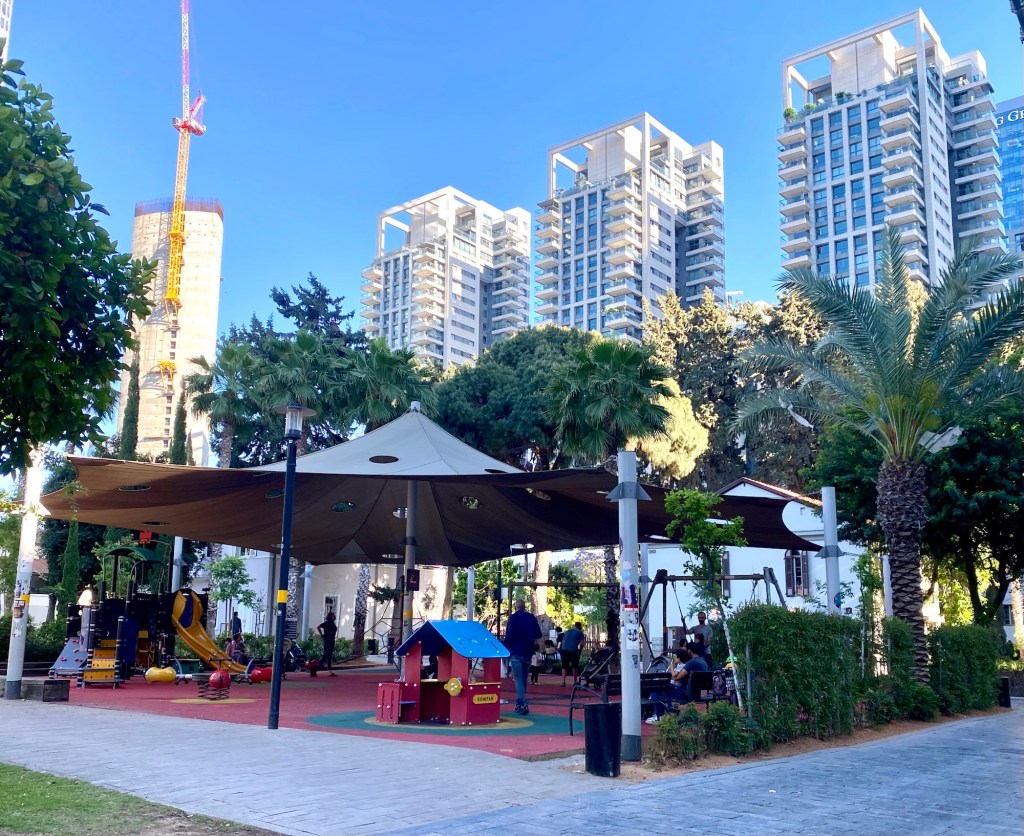
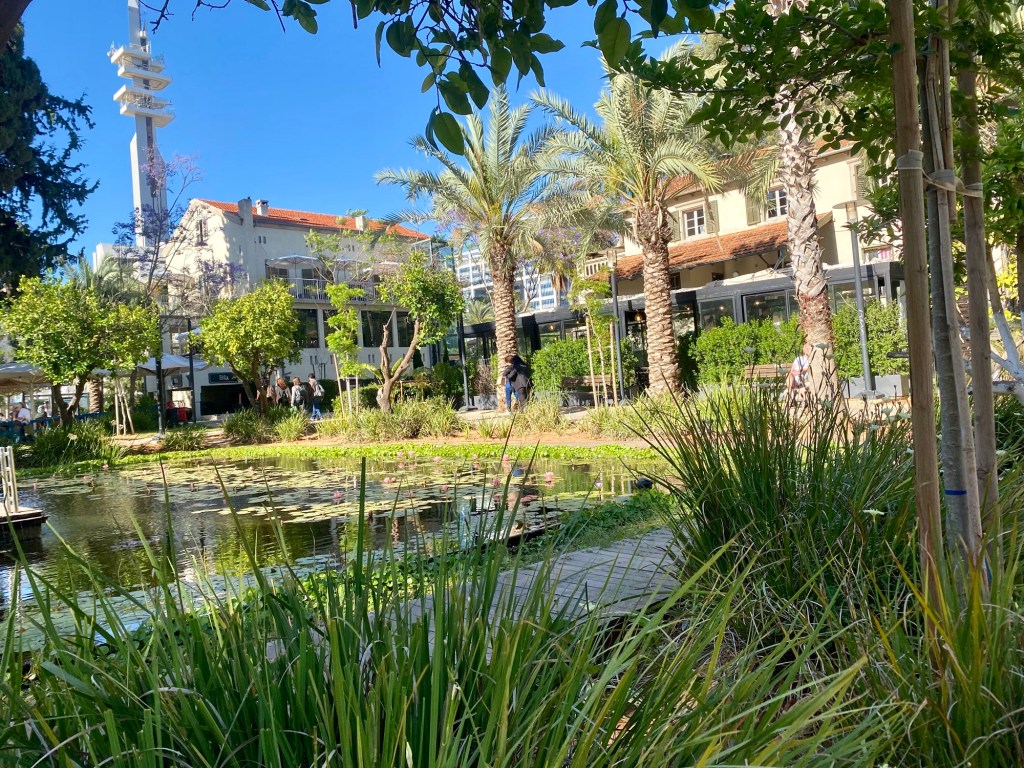
On to Tel Aviv. Take in a couple museums. Feel the vibrancy of this bustling city. Marvel at all the gorgeous and innovative high rises continually being constructed. Yet the city, as is typical of most Israeli cities, never loses its greenways and parks. Urban gardens and jungles. Children’s play places. Tree-lined promenades. Delivery guys on motorbikes. Crazy drivers (everywhere here) with horns honking. High fashion alongside black denim and black tee shirts. Lots and lots of people walking dogs. Gun-carrying soldiers. Moms with strollers. Lots of moms. More pregnant women than I could count….and the gorgeous beach with the bikini clad, sunkissed babes and the men playing motkot (paddle ball) on the hard sand.

We met my son and a good friend we hadn’t seen in like forever for dinner. we had planned to spend about two hours, but it quickly turned into five hours. I love so much about Israel, one of which is the restaurant service. You are not expected to vacate your table right after you eat. They expect you to take your time, to sit and talk and enjoy the company. We had decided upon an outdoor table at a Sarona Market restaurant.

The Sarona area of Tel Aviv, like the community in Jerusalem and Haifa, was first settled in the early 1900s by Germans. They were a resurrected Templar group. Messianic Lutherans…. expecting that if they settled the Holy Land it would hasten the coming of the Messiah. It turned out they were Nazis..Really. They became Nazis in league with Hitler and were expelled from the country by the British in the early 1940s. But they built the cutest, quaintest neighborhoods. The houses are all intact, now turned into posh and artsy shops and cafes – surrounded oh all sides by skyscrapers. I love the juxtaposition.

Yet, despite the respite, everywhere were posters of the abducted. Banners and displays to bring home the hostages. Pictures of the faces of young girls, elderly men, and little children. Young concertgoers in their prime. It reminded me of New York after 9/11. All in all, it was a wonderful getaway. Hopefully, it won’t be another three years before we return.

War Stories Day 108. 22 January, 2024

And…. A BIBLICAL FEAST!

We survived a bit of a scare attack over the weekend. Psy-ops? I don’t know? Grounded in some reality? Perhaps…

Last week there were several ‘direct hits’ in Gaza, Lebanon, Syria and Iran. Several key players, masterminds of the Islamic terror world were eliminated by direct drone and missile attacks. Even this morning there was a huge explosion at a missile launching site in Iran.

We do not know who is taking out these key members. Some say it’s Israel and Mossad. Others the US. There have been many retaliatory attacks on US bases throughout the Middle East lately. There are rumors that in Iran it’s an internal job. Whatever the case there is more and more pressure on Israel, especially in the North.

On Friday, we received news that the mayor of a Haifa suburb had told all his residents to invest in a generator and to have enough food, water and necessities to last at least a week. The military would be so overwhelmed it might be more expedient to rely on yourself. This, after two Hizbulla missiles were shot down over Haifa on Friday. It turned out to be ‘misinformation.’

In the meantime Israel has set a deadline of the end of January for an agreement being led by a multinational group to try to force Hizbulla to move away from the Israeli border. The agreement seems less likely as the days go by and it looks more threatening because Hizbulla forces refuse to move back.

The Lebanese Patriarch of the Maronite Catholic Church, Beshsra Al-Rahi, called for the removal of every rocket launchpad between every home; the removal of all missiles from homes and schools; UNFIL to enforce resolution 1701 pushing all Hizbulla troops off the Israeli border fence, back 2 km (no man’s land) and away from the Lebanese border. Nasralla has said no such. So it looks like there might be a showdown starting next week. The thought of 150,000 missiles pointed directly at us is a wee bit daunting-

At present 72,000 Israelis have been displaced from their homes in the North alone. Since there are no tourists, many citizens who lack family or friends who will shelter them, have been put up in hotels along the Sea of Galilee. Makeshift schools have been set up for the children. Some are being squeezed into the schools in Tiberias and the local communities.

Hizbulla in the North is a proxy for Iran, just as the Houthis in Yemen South Red Sea and Hamas in Gaza. Of the three, Hizbulla is much more greatly funded, trained, weaponized and numerous. Last week, in his latest trip to Israel, US Secretary of State, Antony Blinken, was assured that “ Israel would not surprise the United States by an attack on Hizbulla without prior notification.”

So we are now waiting…. You would never know as people go on with their daily lives here as best as possible. Stores and schools and services are open. There is plenty of traffic and people seem busy.

Yesterday we went to visit an Arab Christian friend who lives in the Galilee. She has two Maronite Christian families from Metulla living in the two apartments underneath hers. They were empty apartments and the landlord let the displaced famI lied live there temporarily. Claudia is a tour guide. She has so much knowledge and understanding of the history of Israel from many different perspectives. We have gone so many places with her. As during COVID, she again has no business.

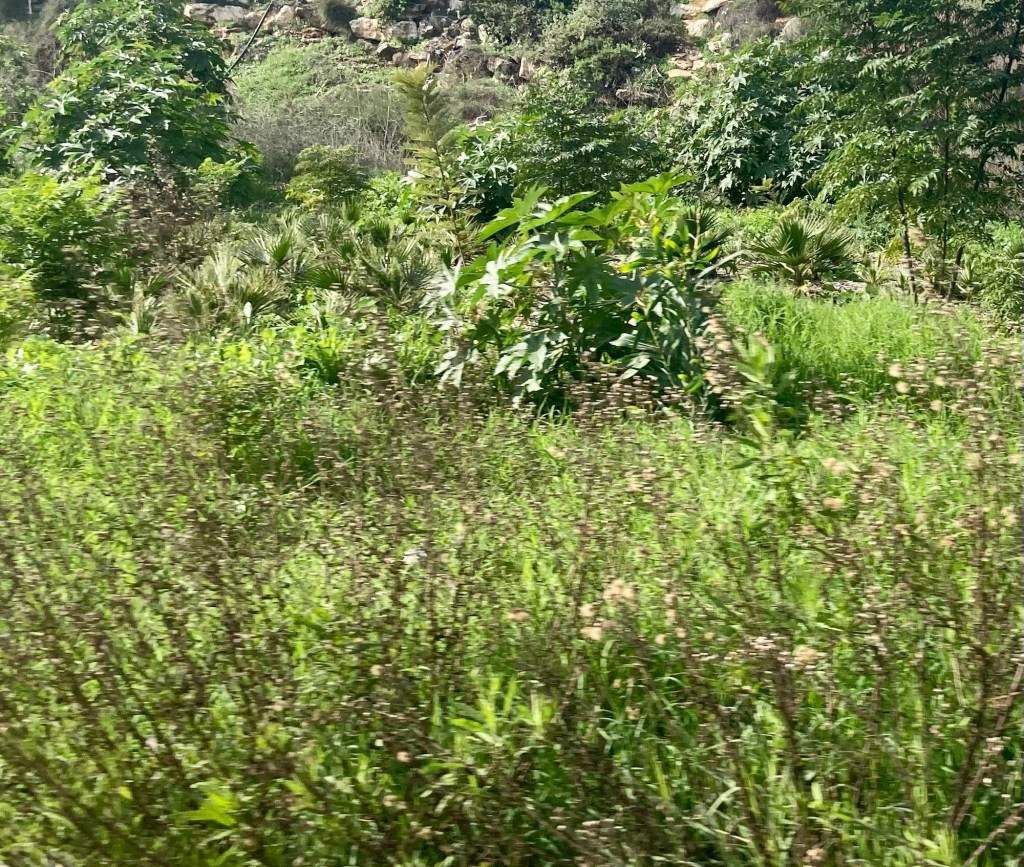
Claudia also teaches classes on Israeli cooking, Biblical cooking and culture. We took a long walk with her into the fields adjacent to her apartment.

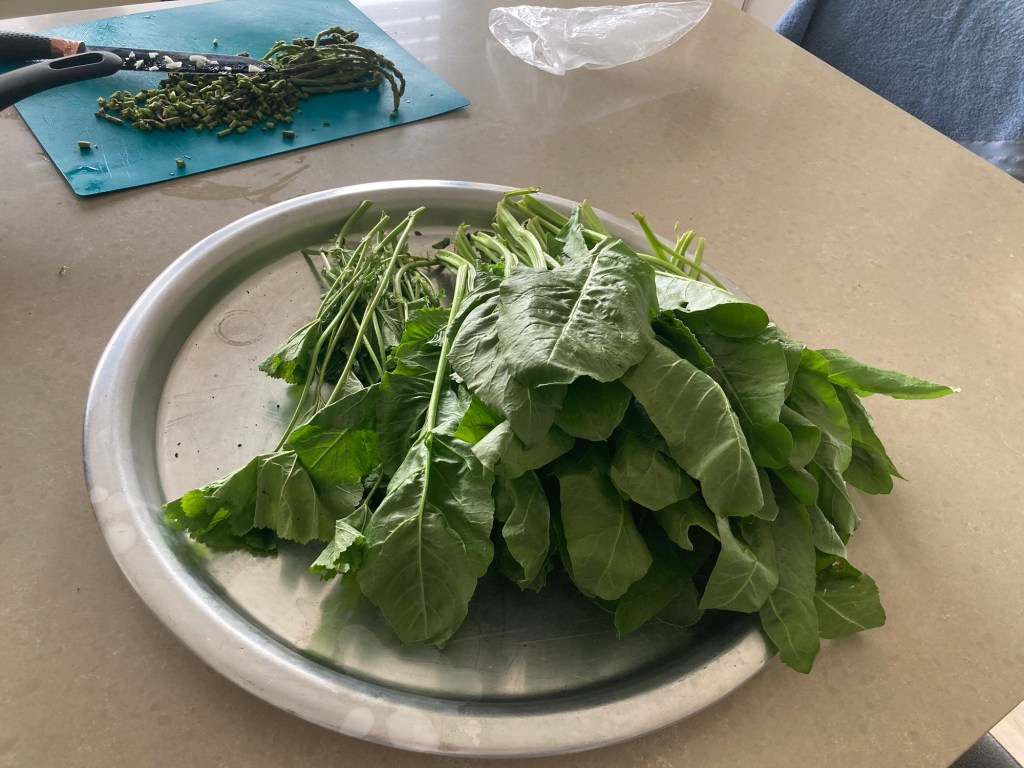
Look closely at the pictures above. What do you see? A field? Yes. What else? Grasses and weeds? Perhaps. But they hold a hidden treasure, for now that the rains have come everything had begun to sprout and turn green. All of these ‘weeds’ are edible!!!! The wild asparagus and celery. The dandelions and lettuces. The loof. And most have medicinal properties known by people in Biblical times and passed down through the generations to today.

Wild celery

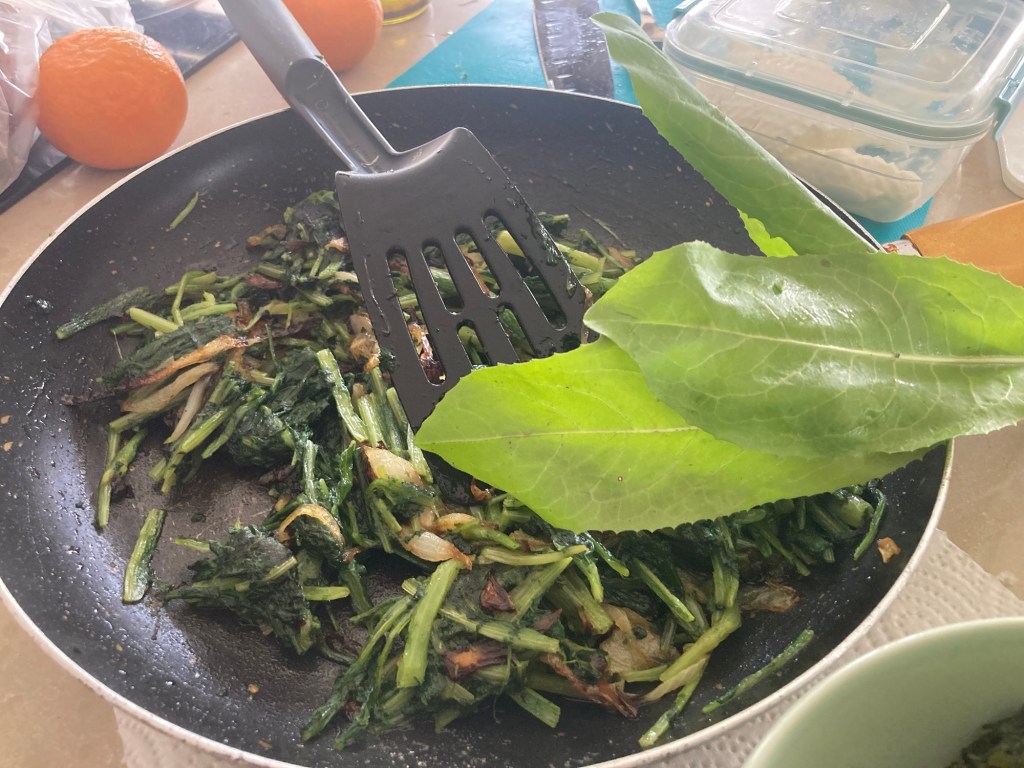
When we returned to Claudia’s, she gave us a little class on how to prepare each. Some were sautéed. Some would be dried (hyssop) to make zataar, the herb that is used in many foods here. Other plants would be boiled first, then wrung out (to remove any bitterness) and then sautéed.

During the winter months, you see older women…Bedouin and Druze, mostly, out in the fields foraging. The women are everywhere along the country roads, stooped over with their aprons and plastic bags. Wild mustards are prevalent and are a special delicacy. Some leaves (loof) are large. These are destemmed, steamed and then stuffed with rice, onions, lentils and herbs, rolled up and then steamed again.

Loof grows in rocky places. It has a huge purple Jack-in-the-pulpit type flower.

We feasted on homemade labaneh, a cultured dairy product made with the goat milk Claudia got from a lady down the street. She had made pita bread in her tabun (outdoor metal oven) the day before. We had a type of feta cheese. The greens and dairy were drizzled with fresh Galilee olive oil. We had olives and homemade humus from her store of dried chickpeas. On some of the greens, Claudia cracked eggs and let them steam- a green shakshuka. On top of this she put a dollop of Zhug, a very very spicy hot pepper and herb mixture. It was all quite delicious. All homemade with fresh, local ingredients.

If you come to Israel in the winter months, not only could Claudia give an amazing tour, but you could also take a cooking class from her. Hopefully you won’t have to dodge missiles.

War Stories Day 108. 22 January, 2024

And…. A BIBLICAL FEAST!

We survived a bit of a scare attack over the weekend. Psy-ops? I don’t know? Grounded in some reality? Perhaps…

Last week there were several ‘direct hits’ in Gaza, Lebanon, Syria and Iran. Several key players, masterminds of the Islamic terror world were eliminated by direct drone and missile attacks. Even this morning there was a huge explosion at a missile launching site in Iran.

We do not know who is taking out these key members. Some say it’s Israel and Mossad. Others the US. There have been many retaliatory attacks on US bases throughout the Middle East lately. There are rumors that in Iran it’s an internal job. Whatever the case there is more and more pressure on Israel, especially in the North.

On Friday, we received news that the mayor of a Haifa suburb had told all his residents to invest in a generator and to have enough food, water and necessities to last at least a week. The military would be so overwhelmed it might be more expedient to rely on yourself. This, after two Hizbulla missiles were shot down over Haifa on Friday. It turned out to be ‘misinformation.’

In the meantime Israel has set a deadline of the end of January for an agreement being led by a multinational group to try to force Hizbulla to move away from the Israeli border. The agreement seems less likely as the days go by and it looks more threatening because Hizbulla forces refuse to move back.

The Lebanese Patriarch of the Maronite Catholic Church, Beshsra Al-Rahi, called for the removal of every rocket launchpad between every home; the removal of all missiles from homes and schools; UNFIL to enforce resolution 1701 pushing all Hizbulla troops off the Israeli border fence, back 2 km (no man’s land) and away from the Lebanese border. Nasralla has said no such. So it looks like there might be a showdown starting next week. The thought of 150,000 missiles pointed directly at us is a wee bit daunting-

At present 72,000 Israelis have been displaced from their homes in the North alone. Since there are no tourists, many citizens who lack family or friends who will shelter them, have been put up in hotels along the Sea of Galilee. Makeshift schools have been set up for the children. Some are being squeezed into the schools in Tiberias and the local communities.

Hizbulla in the North is a proxy for Iran, just as the Houthis in Yemen South Red Sea and Hamas in Gaza. Of the three, Hizbulla is much more greatly funded, trained, weaponized and numerous. Last week, in his latest trip to Israel, US Secretary of State, Antony Blinken, was assured that “ Israel would not surprise the United States by an attack on Hizbulla without prior notification.”

So we are now waiting…. You would never know as people go on with their daily lives here as best as possible. Stores and schools and services are open. There is plenty of traffic and people seem busy.

Yesterday we went to visit an Arab Christian friend who lives in the Galilee. She has two Maronite Christian families from Metulla living in the two apartments underneath hers. They were empty apartments and the landlord let the displaced famI lied live there temporarily. Claudia is a tour guide. She has so much knowledge and understanding of the history of Israel from many different perspectives. We have gone so many places with her. As during COVID, she again has no business.

Claudia also teaches classes on Israeli cooking, Biblical cooking and culture. We took a long walk with her into the fields adjacent to her apartment.

Look closely at the pictures above. What do you see? A field? Yes. What else? Grasses and weeds? Perhaps. But they hold a hidden treasure, for now that the rains have come everything had begun to sprout and turn green. All of these ‘weeds’ are edible!!!! The wild asparagus and celery. The dandelions and lettuces. The loof. And most have medicinal properties known by people in Biblical times and passed down through the generations to today.

Wild celery

When we returned to Claudia’s, she gave us a little class on how to prepare each. Some were sautéed. Some would be dried (hyssop) to make zataar, the herb that is used in many foods here. Other plants would be boiled first, then wrung out (to remove any bitterness) and then sautéed.

During the winter months, you see older women…Bedouin and Druze, mostly, out in the fields foraging. The women are everywhere along the country roads, stooped over with their aprons and plastic bags. Wild mustards are prevalent and are a special delicacy. Some leaves (loof) are large. These are destemmed, steamed and then stuffed with rice, onions, lentils and herbs, rolled up and then steamed again.

Loof grows in rocky places. It has a huge purple Jack-in-the-pulpit type flower.

We feasted on homemade labaneh, a cultured dairy product made with the goat milk Claudia got from a lady down the street. She had made pita bread in her tabun (outdoor metal oven) the day before. We had a type of feta cheese. The greens and dairy were drizzled with fresh Galilee olive oil. We had olives and homemade humus from her store of dried chickpeas. On some of the greens, Claudia cracked eggs and let them steam- a green shakshuka. On top of this she put a dollop of Zhug, a very very spicy hot pepper and herb mixture. It was all quite delicious. All homemade with fresh, local ingredients.

If you come to Israel in the winter months, not only could Claudia give an amazing tour, but you could also take a cooking class from her. Hopefully you won’t have to dodge missiles.

War Stories Day 108. 22 January, 2024

And…. A BIBLICAL FEAST!

We survived a bit of a scare attack over the weekend. Psy-ops? I don’t know? Grounded in some reality? Perhaps…

Last week there were several ‘direct hits’ in Gaza, Lebanon, Syria and Iran. Several key players, masterminds of the Islamic terror world were eliminated by direct drone and missile attacks. Even this morning there was a huge explosion at a missile launching site in Iran.

We do not know who is taking out these key members. Some say it’s Israel and Mossad. Others the US. There have been many retaliatory attacks on US bases throughout the Middle East lately. There are rumors that in Iran it’s an internal job. Whatever the case there is more and more pressure on Israel, especially in the North.

On Friday, we received news that the mayor of a Haifa suburb had told all his residents to invest in a generator and to have enough food, water and necessities to last at least a week. The military would be so overwhelmed it might be more expedient to rely on yourself. This, after two Hizbulla missiles were shot down over Haifa on Friday. It turned out to be ‘misinformation.’

In the meantime Israel has set a deadline of the end of January for an agreement being led by a multinational group to try to force Hizbulla to move away from the Israeli border. The agreement seems less likely as the days go by and it looks more threatening because Hizbulla forces refuse to move back.

The Lebanese Patriarch of the Maronite Catholic Church, Beshsra Al-Rahi, called for the removal of every rocket launchpad between every home; the removal of all missiles from homes and schools; UNFIL to enforce resolution 1701 pushing all Hizbulla troops off the Israeli border fence, back 2 km (no man’s land) and away from the Lebanese border. Nasralla has said no such. So it looks like there might be a showdown starting next week. The thought of 150,000 missiles pointed directly at us is a wee bit daunting-

At present 72,000 Israelis have been displaced from their homes in the North alone. Since there are no tourists, many citizens who lack family or friends who will shelter them, have been put up in hotels along the Sea of Galilee. Makeshift schools have been set up for the children. Some are being squeezed into the schools in Tiberias and the local communities.

Hizbulla in the North is a proxy for Iran, just as the Houthis in Yemen South Red Sea and Hamas in Gaza. Of the three, Hizbulla is much more greatly funded, trained, weaponized and numerous. Last week, in his latest trip to Israel, US Secretary of State, Antony Blinken, was assured that “ Israel would not surprise the United States by an attack on Hizbulla without prior notification.”

So we are now waiting…. You would never know as people go on with their daily lives here as best as possible. Stores and schools and services are open. There is plenty of traffic and people seem busy.

Yesterday we went to visit an Arab Christian friend who lives in the Galilee. She has two Maronite Christian families from Metulla living in the two apartments underneath hers. They were empty apartments and the landlord let the displaced famI lied live there temporarily. Claudia is a tour guide. She has so much knowledge and understanding of the history of Israel from many different perspectives. We have gone so many places with her. As during COVID, she again has no business.

Claudia also teaches classes on Israeli cooking, Biblical cooking and culture. We took a long walk with her into the fields adjacent to her apartment.

Look closely at the pictures above. What do you see? A field? Yes. What else? Grasses and weeds? Perhaps. But they hold a hidden treasure, for now that the rains have come everything had begun to sprout and turn green. All of these ‘weeds’ are edible!!!! The wild asparagus and celery. The dandelions and lettuces. The loof. And most have medicinal properties known by people in Biblical times and passed down through the generations to today.

Wild celery

When we returned to Claudia’s, she gave us a little class on how to prepare each. Some were sautéed. Some would be dried (hyssop) to make zataar, the herb that is used in many foods here. Other plants would be boiled first, then wrung out (to remove any bitterness) and then sautéed.

During the winter months, you see older women…Bedouin and Druze, mostly, out in the fields foraging. The women are everywhere along the country roads, stooped over with their aprons and plastic bags. Wild mustards are prevalent and are a special delicacy. Some leaves (loof) are large. These are destemmed, steamed and then stuffed with rice, onions, lentils and herbs, rolled up and then steamed again.

Loof grows in rocky places. It has a huge purple Jack-in-the-pulpit type flower.

We feasted on homemade labaneh, a cultured dairy product made with the goat milk Claudia got from a lady down the street. She had made pita bread in her tabun (outdoor metal oven) the day before. We had a type of feta cheese. The greens and dairy were drizzled with fresh Galilee olive oil. We had olives and homemade humus from her store of dried chickpeas. On some of the greens, Claudia cracked eggs and let them steam- a green shakshuka. On top of this she put a dollop of Zhug, a very very spicy hot pepper and herb mixture. It was all quite delicious. All homemade with fresh, local ingredients.

If you come to Israel in the winter months, not only could Claudia give an amazing tour, but you could also take a cooking class from her. Hopefully you won’t have to dodge missiles.

A Tale of Two Religions

This past weekend, the citizens of Israel celebrated the last of the Spring holidays. Besides Holocaust Memorial Day, Remembrance of Fallen Soldiers and Victims of Terror Day, Independence Day, and Jerusalem Day, there were the religious festivals. For the Jews there was Pesach with its grand Seder meals; the campfires of Lag b’Omer; the counting of the Omer from Passover to Shavuot and Shavuot, the Feast of Weeks and Spring harvest. The Christians celebrated Holy Week culminating with Easter Sunday, Ascension Sunday and Pentecost. And we all celebrated in our individual villages and cities without too many clashes. Despite what one hears and reads, most Israelis, regardless of their differences, really do want to live quiet, peaceful lives of coexistence.

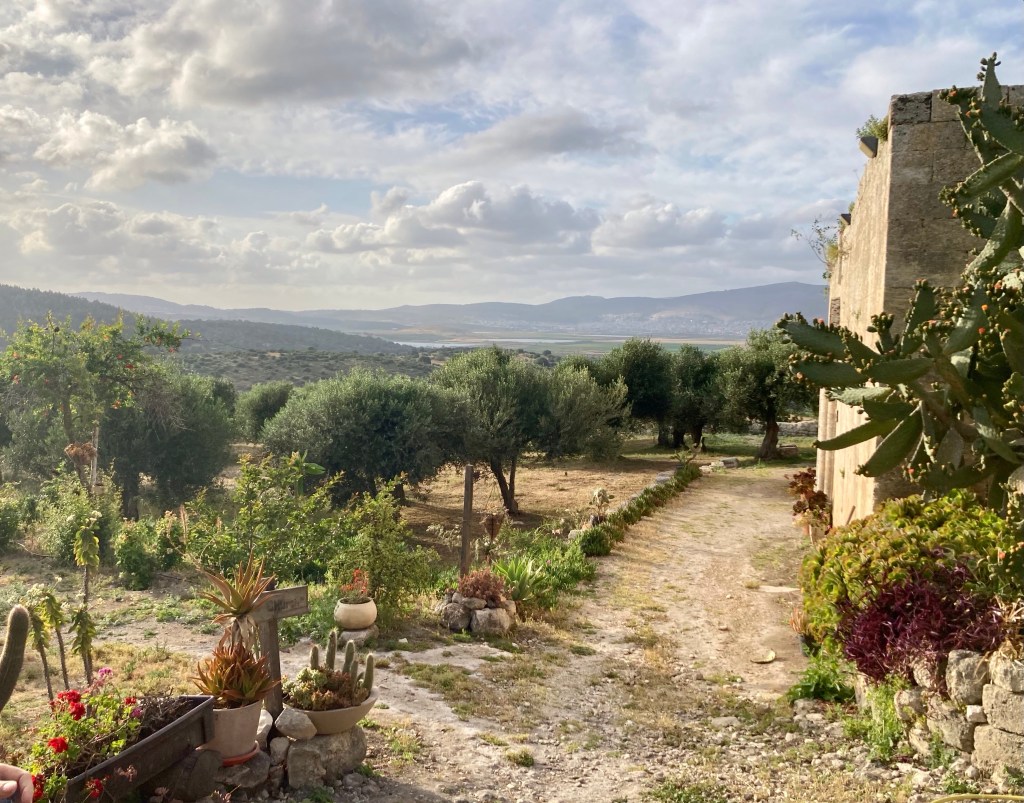
The Galilee region of Israel is made up of rolling hills, not quite big enough to be called mountains, but beautiful nonetheless. The word Galilee comes from the Hebrew gal, or wave  and the landscape is, in fact like the swelling of waves on the ocean. The Galil is indeed a holy land to both Jews and Christians. Much of the combined history interweaves and overlaps in this small strip of land. The Northern Kingdom of Israel; battlefields of Joshua; tombs and burial caves of prophets, martyrs (Channah and her seven sons) and great rabbis; the meeting place and codification of the Mishna; the home of the Blessed Virgin Mary, the Holy Family, the Disciples of Yeshua; Mary of Magdala; the place where Yeshua taught, healed and preached; the mountain where He was transfigured; the place where Mattityahu Ben Yosef/Josephus Flavius was governor and general. It is all here….and more!

On a small ridge, the next hill over from Nazareth, is Tsippori, also known as Sephoris. (I wrote an entire blog on this magnificent site 29 August, 2022) Perched at the top, the ‘Pearl of the Galilee,’ was an ancient First Century city. It was an exceptional place of co-existence, and the capital of the Galil during the Roman occupation. Tsippori was one of the few cities in the Galilee that was not razed by the Romans during their March to Jerusalem in 68 CE. It was a Jewish city, with mikvaot(Jewish ritual baths for purity), synagogues and Jewish homes. But it was also a Roman city, complete with amphitheater, Roman style villas, and a Roman street plan. Built during the last decades BCE, and the first decades CE, Tsippori is about a 45 minute walk from Nazareth. It is also a long morning’s walk to the Sea of Galilee, so it is most likely that Joseph the carpenter (mason) and Jesus were laborers here building the city. After the destruction of the Temple in Jerusalem, 70 CE, many members of the Jewish Sanhedrin and great sages of the Talmud made the Tsippori area their home. Today, the ruins of this large ancient city are preserved under the auspices of the Israeli National Parks. We have visited many times.

I had heard that there was an old church and monastery somewhere on the mountain, uninhabited, in disrepair, long abandoned. John and I had stumbled upon it once, not knowing its amazing history. It just seemed like an old, uninhabited place… and there are so many of those around. We ‘discover’ places in remote areas but have no idea what they are or the significance they held.

A new family of Olim (immigrants) recently moved to our neighborhood. They are an intermarried couple from Argentina. Daniel is a Conservative Jewish man and his wife, Rosa, is a practicing Catholic. In the short time they have lived here, Rosa has gotten to know all the priests and Catholic holy sites in the Galilee. Many of the priests here speak Spanish, so that has been extremely helpful to her. Last week, Rosa told me of a special discovery she made and she wanted to share it with me. She knows we are into history and that I have a blog, so this could be a potential story. It was quite the adventure!

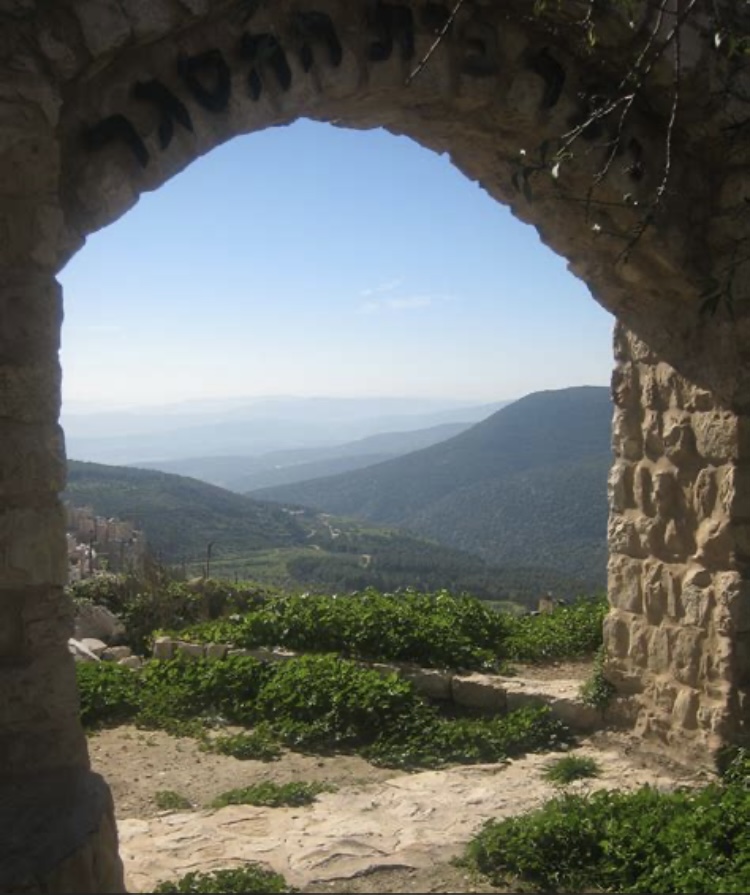
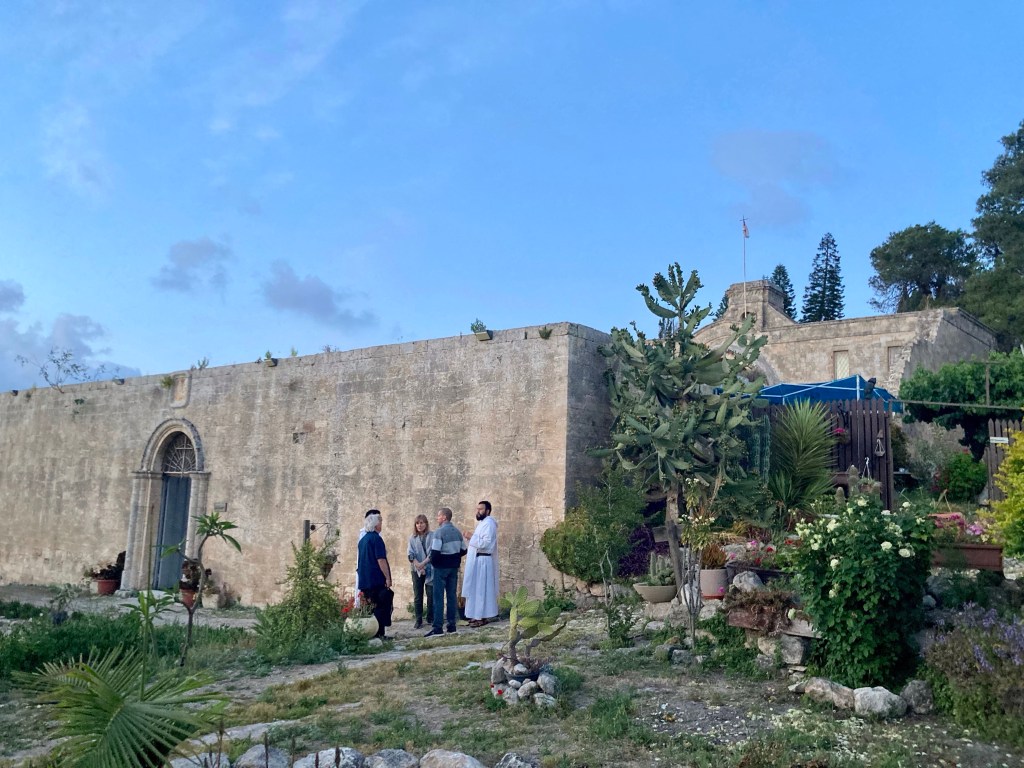
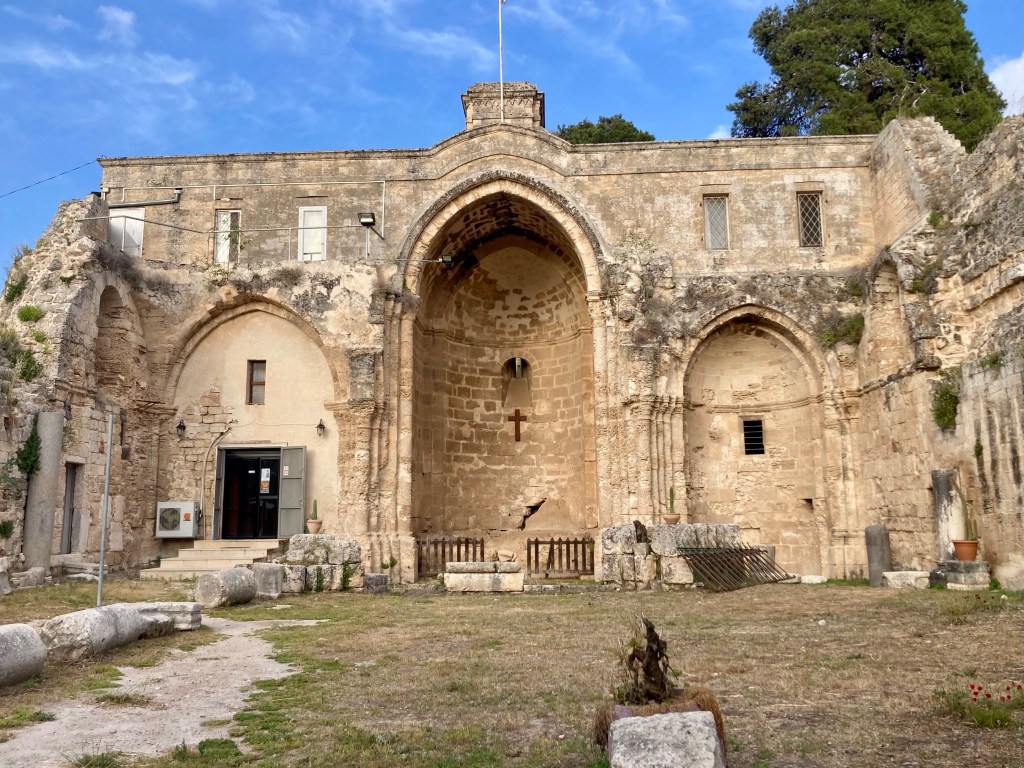
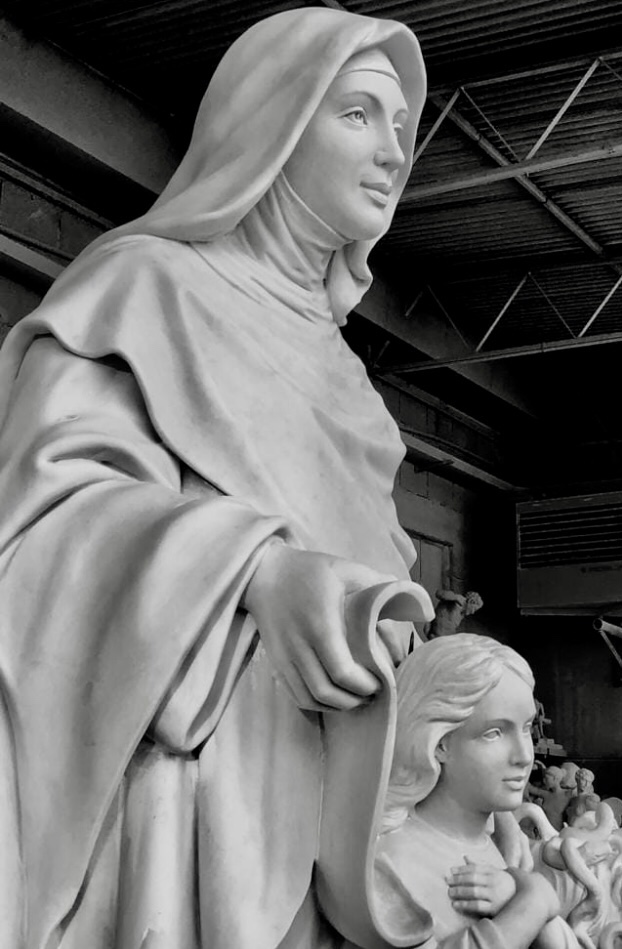
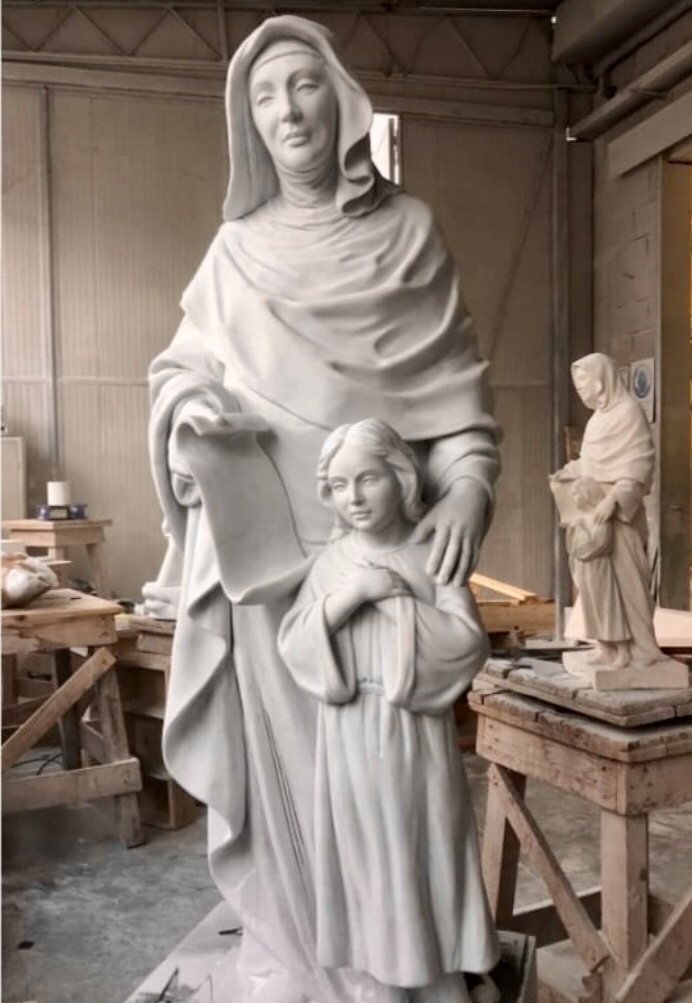
On the back side of the mountain ridge of Tsippori, on a small road that wound through a tiny Jewish village just outside the W fact that St. Joseph was from Nazareth and the Holy Family lived just a short walk away gave this place credence. The basilica was built on the foundation of the home of St. Anne, and was the largest church in that entire vicinity during that time. The dimensions of the church were unusually large, as typical Byzantine churches in the Galilee were quite small, so it must have held a special significance for the early Christians living there. It is exactly proportional in size and orientation to the grand Church of St. Anne in Jerusalem, also built in the 4th century, but intact and still in use today. At the basilica in Tsippori, the roof has long since collapsed, as well as the columns. The mosaic floor is barely visible. It is now mostly grass. Most of the church is now ‘outdoors.’ Behind the altar of the three-arched apse is the foundation of St Anne & St Joachim’s home. As the story goes, it was possibly the birthplace of Mary before they moved to Nazareth.

During the early-mid 1100s, the Crusaders took over St. Anne’s and rebuilt the surrounding walls. The Crusaders held the Holy Family and the Virgin Mary in very high esteem, so they would have revered Mary’s parents as well. They made additions to the Church with vaulted ceilings and more columns on the side apses. A monastery was added to the back, the monastery of Anna. Because this Crusader church was so close to the ‘Horns of Hattin,’ the great battlefield and final conquest of Saladin over the Christians in 1187, this was most likely where the knights would have celebrated their final Mass together. The large Crusader army met their defeat only three miles to the northeast. The church, and all else in the Levantine fell under control of the Ottomans.

The grand church eventually fell to ruins over the centuries. Then in the mid 1800s, the Franciscans, under the Custos of the Holy Land, bought the property (from Arab Bedouins) along with many other sites in Israel, and the remains of St. Anne Church came under their guardianship. Some minor repairs were done to the property in 1859, and a memorial plaque installed, but it was largely left uninhabited except for a few nuns who lived in the monastery for several years in the early 1900s. In 1973, the property was closed due to its dilapidated state and lack of resources. There were so many other holy sites in the Galilee that needed attention. When the new Custos, Pierbatista Pizzaballa (now Latin Patriarchate of the Holy Land), was put in charge of all the properties in 2006, he gave what was left of St. Anne to a newly formed order from Argentina. It was the Order of the Institute of the Word Incarnate (IVE), which “draws its spirituality on the Incarnation and the Consecration to the Blessed Virgin Mary.” It was through this Argentinian tie that Rosa found Fr. Jason and the basilica ruins.

Rosa had pre-arranged for me to do an interview, and we were warmly welcomed by Fr. Jason. Speaking in broken English and Hebrew with some Spanish thrown in and Rosa translating, Fr Jason told us of the priests’ personal history living in Israel at St. Anne. When the Institute of the Word Incarnate was granted custody of the property in 2006, the two priests and a seminarian who had traveled to Israel from Argentina found it in complete and utter disrepair. It was absolutely overgrown with weeds and downed tree limbs. The church was crumbling. Part of the old monastery in back of the church was in shambles. One large house in the back was now a Muslim orphanage.

The first stage of their mission was literally to rescue the church, to save it from total decay and to preserve what was left. That took the three men labored nonstop over ten years. The second stage was to prepare it for the arrival of pilgrims: to put in public bathrooms; to create places of quiet meditation with wayside shrines; to study the Hebrew language to communicate with the locals and to educate local tour guides about the place. They have just begun to advertise on social media that this holy site is again open and active. Today St. Anne is a working Latin Rite Catholic church. Masses are at 5pm in Spanish every Saturday. There is Eucharistic Adoration followed by a Rosary in Spanish every Thursday from 4-7 pm. A celebration is being planned for the feast of Sts. Anne & Joaquin on July 26. This last stage complete, it is now an official pilgrimage site.

Since the first days the priests arrived, they have worked hard to partially restore the property, clearing the basilica of old fallen stones; moving fallen columns, weeding and clearing the olive grove adjacent and making gardens. They put in electricity and water and built a little indoor chapel and rectory adjacent to the apse. The indoor chapel has been completely restored. It is tiny, holding only 20 people maximum, but it is beautiful inside. Bounded by high sandstone block walls with a vaulted ceiling reminiscent of the Crusader era, I immediately felt drawn back in time. The scent of incense hung heavy in the air, and the chapel was lit by the pink rays of the setting sun and candlelight. A large golden monstrance was placed front and center on the altar, and Diego, a young seminarian, knelt in silent worship. The most intriguing mosaic plaque, found in situ, hangs on one wall of the chapel and bears a Hebrew inscription. A remnant from the Byzantine era, it is only a fragment and missing tesserae. It was most likely a dedication plaque or a funerary marker from a burial site nearby.

During good weather, Masses are held outdoors in what was once the grand basilica. The old stone door which used to be the entrance to the basilica is now the outdoor altar. It is a most dramatic backdrop and scene for Church services. The priests are hopeful that they can garner enough interest to hold Classical music concerts here summer evenings. Until then people are encouraged to visit, to take in the holy silence, to stroll through the garden and olive grove and to attend Adoration.

Recently, the priests received a gift from a gentleman in Italy of a beautiful Carrera marble statue of St. Anne & the young girl, Mary. It was delivered to the church last week and left in its crate near the outer wall. Funds are currently being raised to pay for a base for the statue and for a contractor to crane it into the church and to install it. These are photos Fr Jason sent of the life size statue when it was still in Italy:

We walked with Fr. Jason and Br. Diego through the newly tended olive grove. They wanted us to look out at the majestic view of the Netofa Valley. Not 100 meters down the hill I spotted it: the blue dome of a building. Living in Israel, I have learned that this can only mean one thing: the tomb of a tzaddik, a great prophet, rabbi or holy person. Orthodox Jews go to the burial sites of the holy tzaddikim to light candles (yarzeit candles) and to pray. It is believed that the prayers made in the vicinity of a holy one and in the merit of that tzaddik, gives the prayers ‘wings,’ so to speak. I inquired from Fr Jason as to who that was, and was told, “It is the tomb of Yehuda haNassi.” I knew this could not be correct because one of the greatest rabbis of all time, Judah the Prince (Yehuda haNassi) was buried not far from there, in Beit Shearim. Yehuda haNassi lived in the 2nd century, CE, A grandson of the teacher, Gamaliel. Yehuda haNassi was also a great teacher and became head of the Sanhedrin (the Jewish Council of 70 elders) when it fled from Jerusalem to the Galilee after the Roman destruction of the Temple. Not only was he sought after for his wise judgements in legal matters within the remaining Jewish community in Israel, but he was also revered as an important sage in Rome. haNassi was most famous for editing and codifying (putting into writing) the Mishna, the books of Oral Law, the traditions and history of the Jewish people that had been handed down throughout the generations verbatim since the time of Moses. Besides the Tanach, (Jewish Scripture), the Oral Law is perhaps the most holy. Yehuda haNassi died in Sephoris in 217 CE. This was definitely not he.

So who was it in the mausoleum below? It had to be someone important from the looks of things. The tomb belonged to Yehuda haNassi’s grandson, Yehuda Nessia, an important man in his own right. He was the last head of the Sanhedrin, the last ‘Prince’ of a long line of rabbis.

After visiting St. Anne’s, we made a little visit to the tomb below before it grew too dark

The grandson, Yehuda was nothing like his grandfather in scholarship or behavior. The great Resh Lakish befriended him and over a period of years tried to inspire Yehuda. There is written history of a dialogue between Yehuda Nessia and Origen at Caesaria (if only I could have been there at that time to overhear!!!) Nessia is known for two religious ordinances: reforming divorce law and allowing the use of liturgical oil prepared by Christians to the Jewish specifications. He did, however, hold firm, and would not allow the use of bread prepared by Christians to be used by Jewish people in any way.

So here we found ourselves at yet another place of coexistence in the Holy Land. A ancient city, Sephoris, shared by Jews and Romans and by Jews and Christians. A Byzantine church next to the final resting place of the last rabbi in a long line of Sanhedrin. Their lives definitely mixed in the Galilee. A few friendships were formed. Heated discussions were a part of life here at times. There seemed to be a “live and let live” policy as long as laws, religious or political, were respected and not violated, the land could be shared. It is that way today in this region. A place Jews, Christians, Arabs and people from all nations call home.