
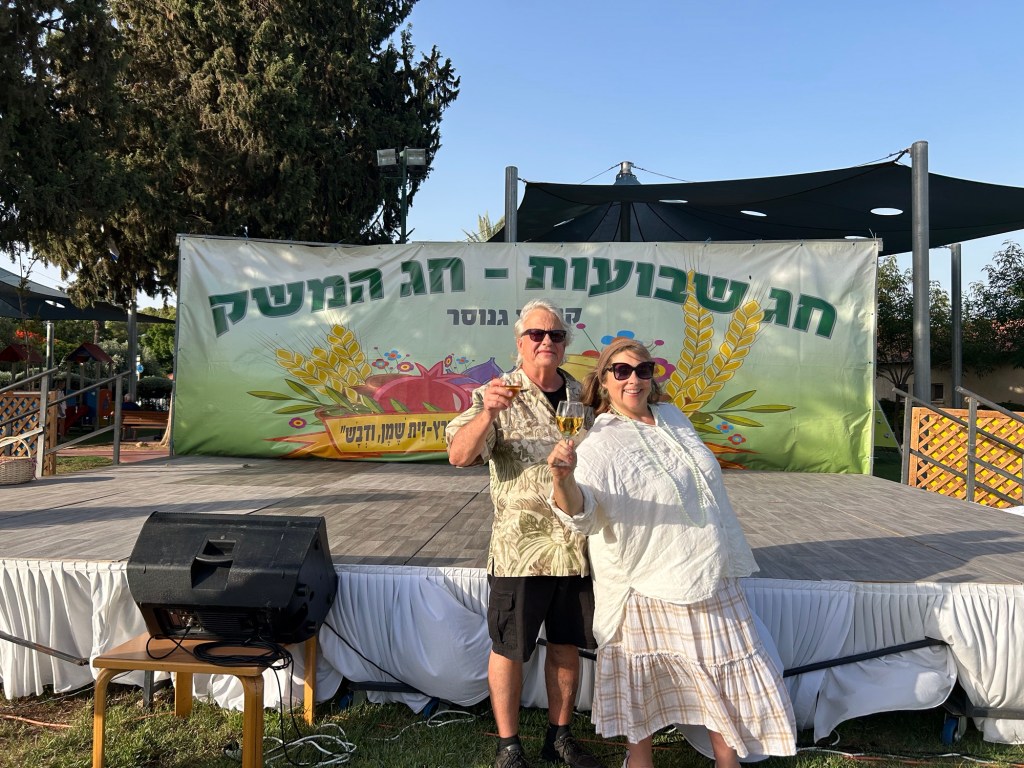
The religious Jewish people count the days between Passover and Shavuot, the Feast of Weeks. It’s a Biblical mandate in Leviticus and Deuteronomy. Seven weeks of seven days of the Children of Israel traveling from Egyptian liberation under Pharaoh until the entire entourage arrived at the foot of Mt. Sinai. There, on Day Fifty, Moses received the Ten Commandments from G-d.
Every evening after sunset the count is called out. A blessing is said. Each day there is a meditation on a virtue like kindness or patience or wisdom. During the time of the counting of the Omer (a measurement of barley), there are no marriages. It is a time of seriousness, like the Christian Lenten season, in a way. No parties. No haircuts. No frivolity.
In Israel, for Shavuot, the more Orthodox visit the Kotel, the Western Wall in Jerusalem. A visit to the tomb of King David is part of the tradition. People stay up all night (Jewish people all over the world) studying Scripture. The reading of the book of Ruth is a custom as it takes place during the barley harvest. And in synagogue, the Ten Commandments are read. Oh, and people gorgeous themselves on dairy products.
Yes. Dairy. For the observant Jews, the Bible or the Torah is compared with dairy or milk which nourishes infants. Also Israel is the Land of Milk and Honey. For the more secular, Shavuot is the beginning of summer. The farm animals have had their baby lambs and kids and calves and the milk is literally flowing. And the harvest has just come in. Barley. Fruits. Vegetables. In Biblical times, Shavuot was a mandatory pilgrimage holiday when all the people were required to bring in their tithes to the Temple in Jerusalem. This is a huge agricultural festival, the First Fruits, or Bikkurim.
I am currently studying Scripture each week through Partners in Torah. Can’t speak highly enough about this organization. My partner, Shari, and I meet weekly by FaceTime. She’s in New York City, and I like her so so much. She challenges me often. And I rose to her Shavuot challenge. I’d always wanted to spend Shavuot at an agricultural kibbutz. It’s one of the most incredible truly Israeli experiences, or so we had heard. So I did something quite presumptuous.
Sunday morning, I called up a friend from Kibbutz Ginosar (Genesseret) on Lake Kinneret (Sea of Galilee) and asked her what she was doing; the kibbutz activities; and swiftly inserted myself into the middle of her family. In other words, I invited myself and John at the very last minute. Complete Chutzpah for this reserved American. “Evelyn, I’ll even bring a huge dairy savory cheesecake with vegetables. Anything.”
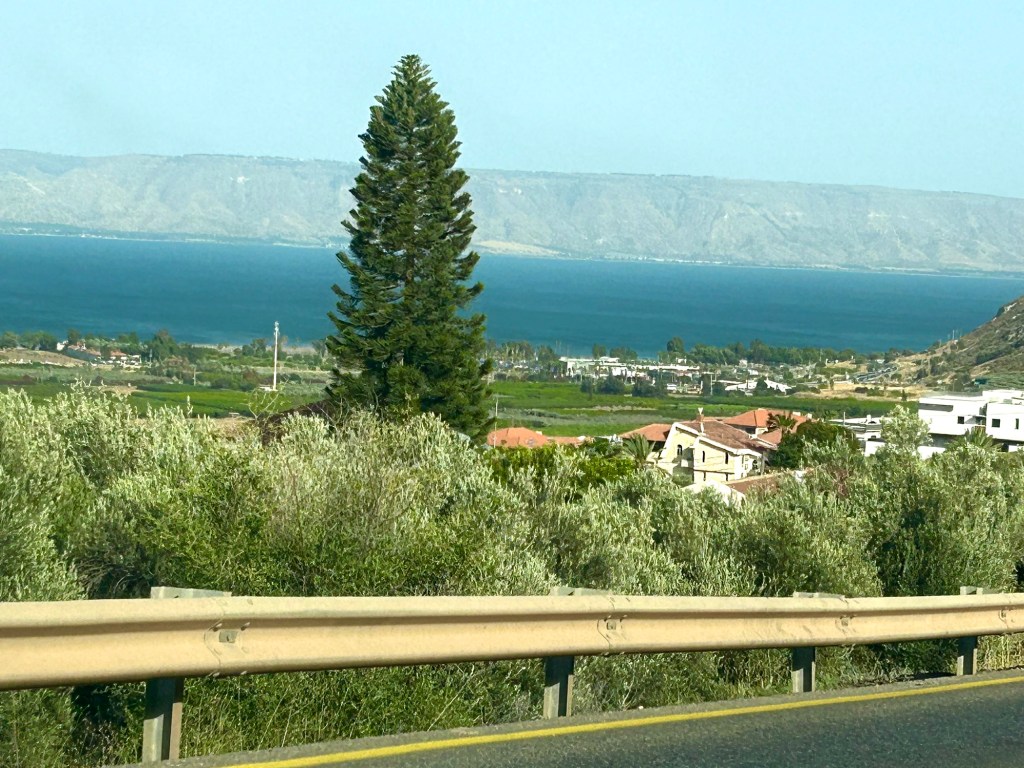
We drove down to the lake Sunday afternoon. It was absolutely gorgeous and very peaceful, as usual. Ginosar is one of the older kibbutzim, celebrating 88 years this year. It’s moderately sized, mostly agricultural, but they also run a large resort hotel on the side. The families are all very close and everyone knows everybody else.
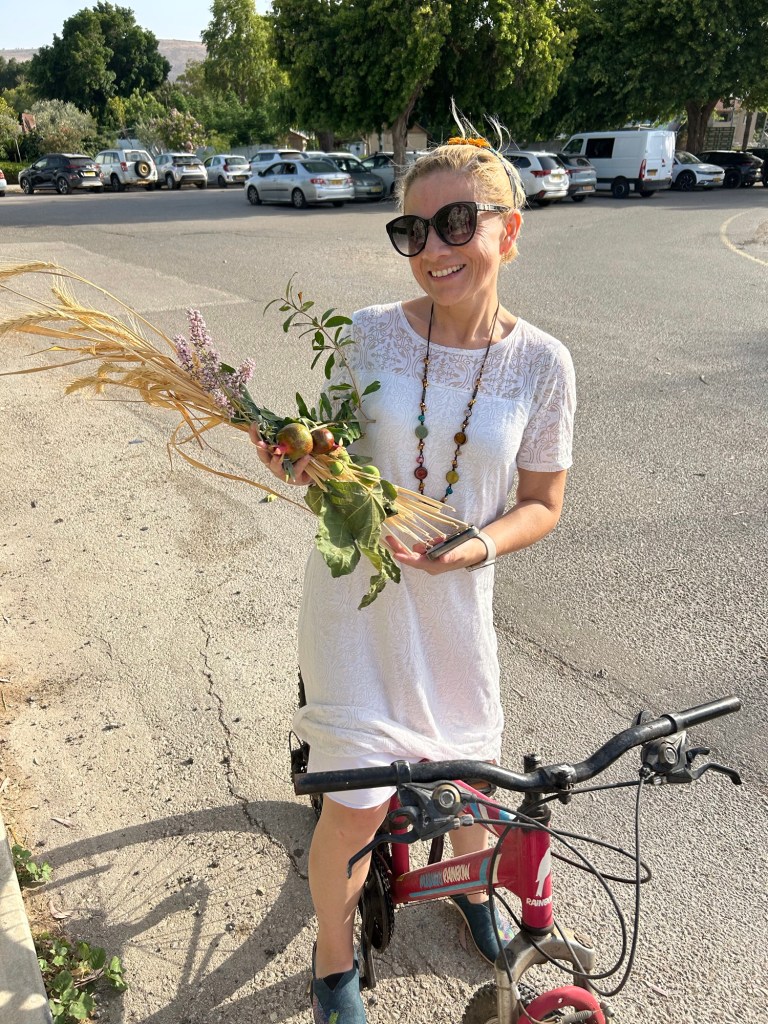
Evelyn greeted us at the entry gate. Her father-in-law knew we were coming and made me this gorgeous harvest bouquet of barley and wheat stalks, figs, pomegranates and lavender- all grown on the kibbutz. It was the most welcoming introduction. As is traditional, everyone wears white, and as it is a harvest festival, it is customary for people – young, old, male, female – to wear a lovely floral wreath on their head.
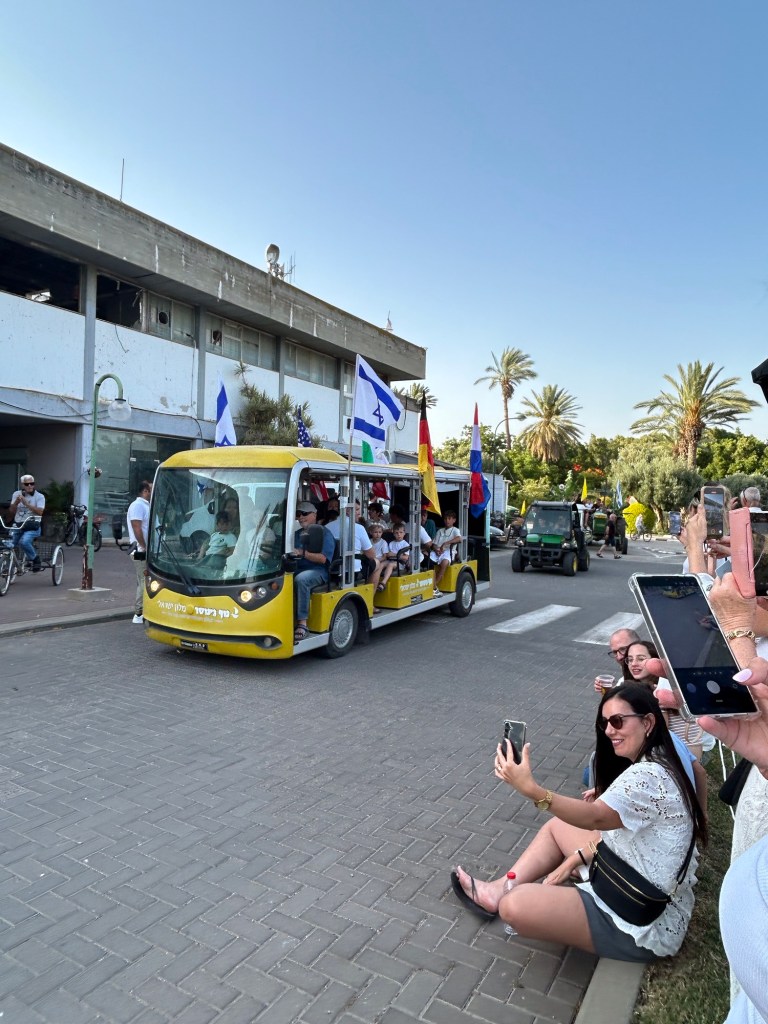
We arrived shortly before the festivities. Many of the kibbutz folk, mostly the older people, gathered on the main square to watch the tractor parade. Tractors pulling carts filled with hay bales and families.


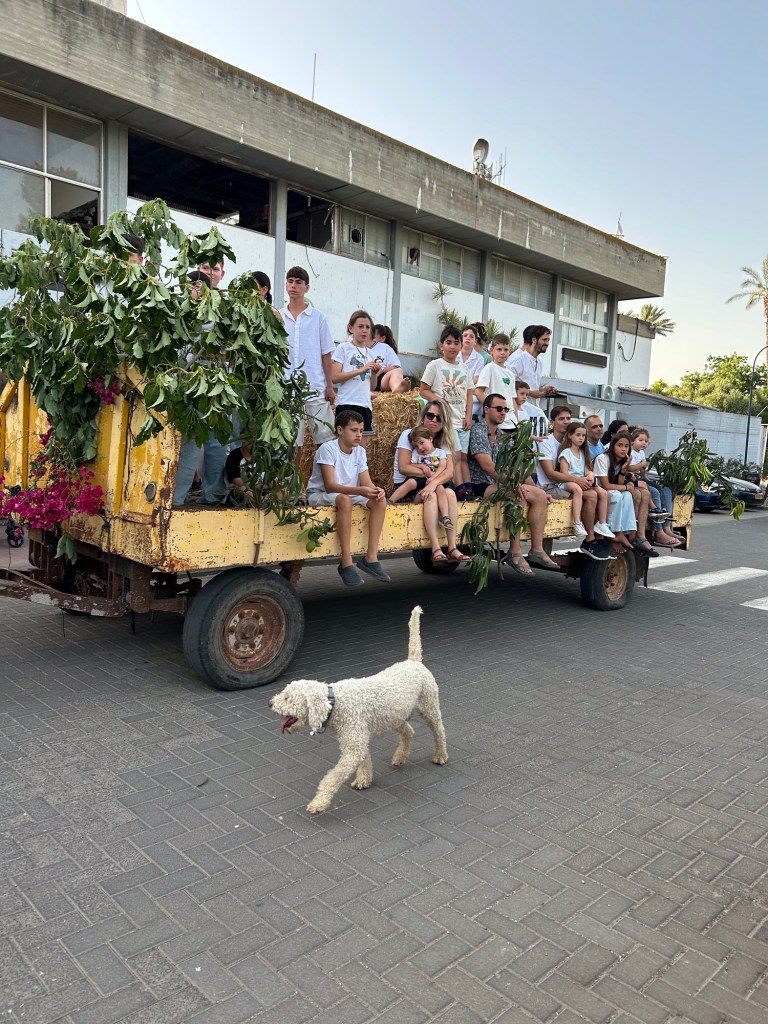


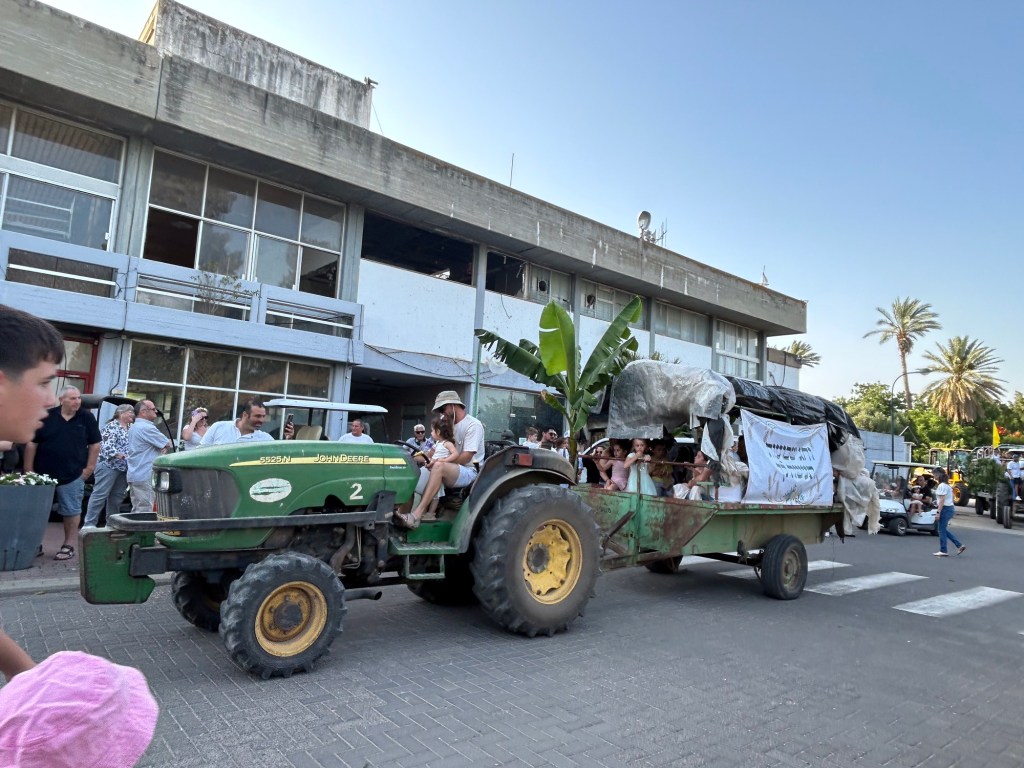

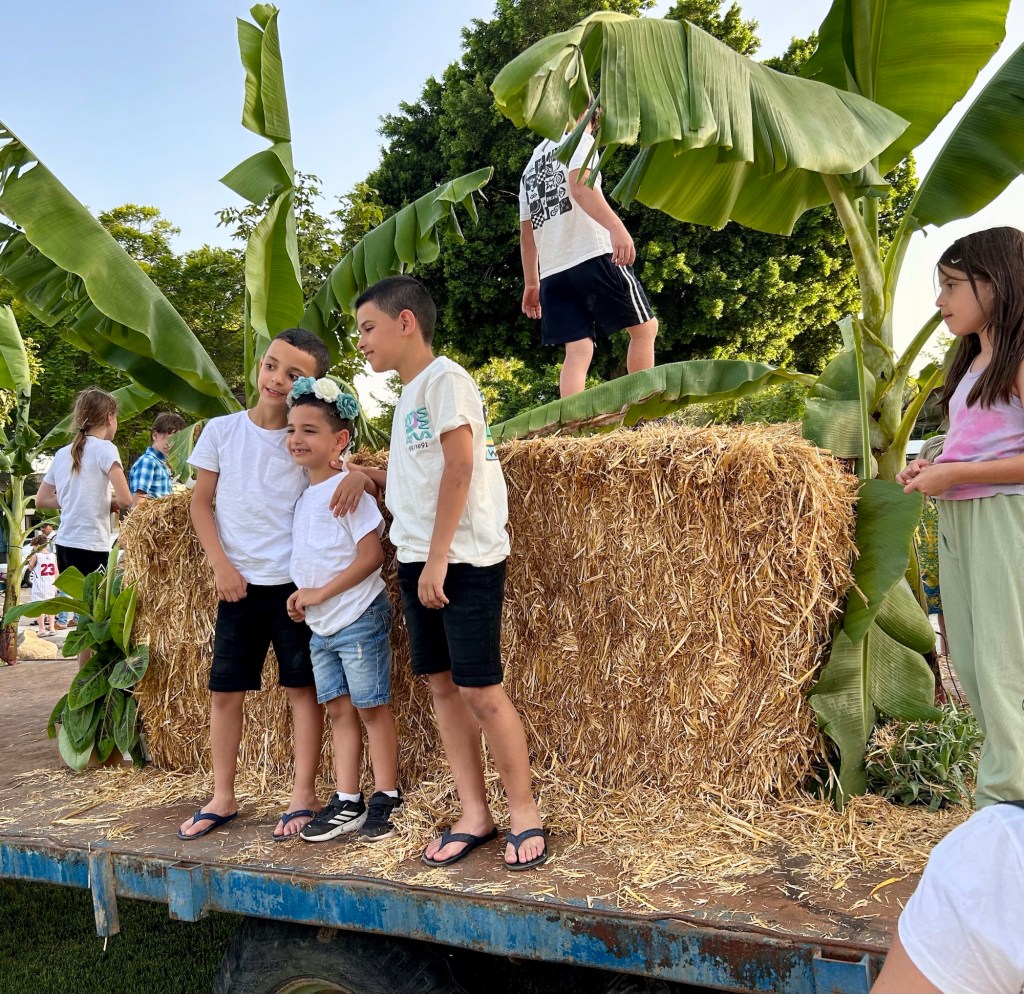
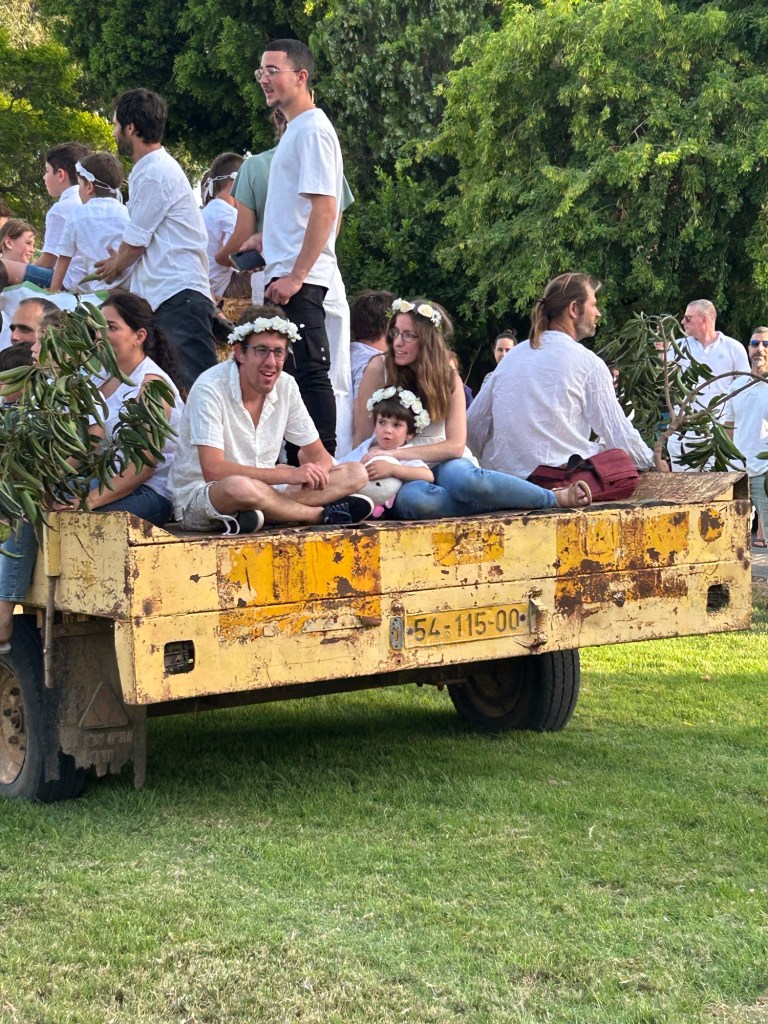
And the celebration began, first with the presentation of all the babies that were born on the kibbutz in the past year, 38 in all, a new record! So cute to see all the families. It is such a healthy thing to see a vibrant, happy, growing population. This was followed by a dance put on by some of the moms with babies on their front packs (or twins on front and back). It was adorable. The song, in Hebrew, was about how the mom can get no more sleep as the baby keeps her up all night and all day.
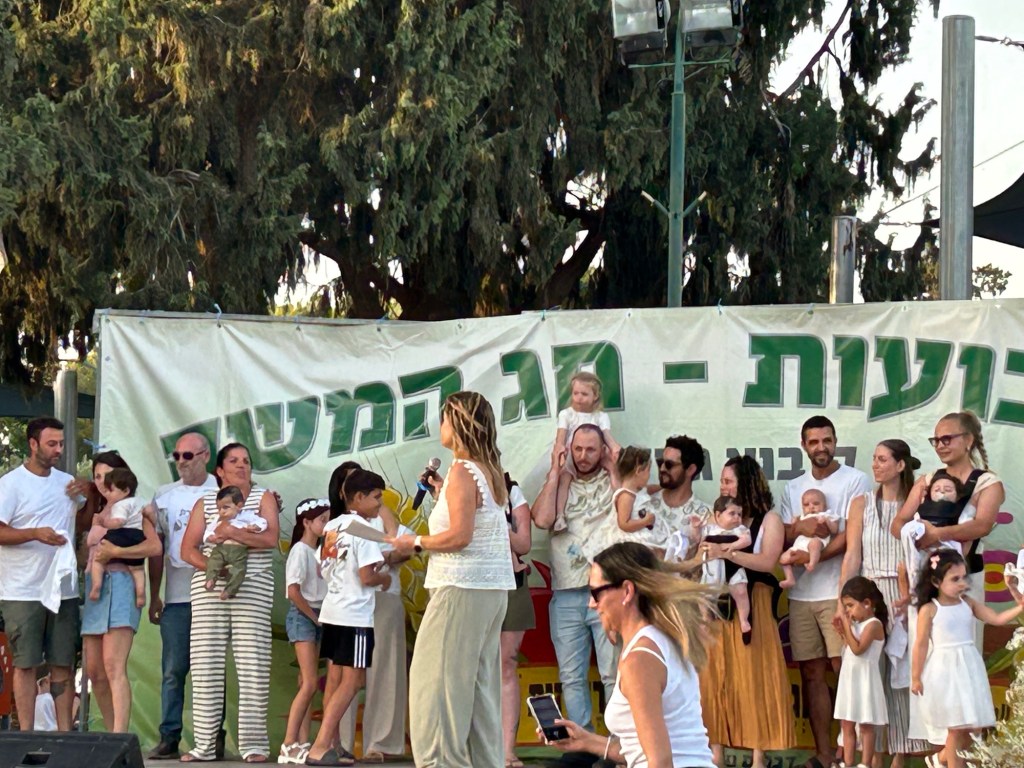
The little children of three age groups all put on song and dance routines and little skits. The all the three year old boys were brought up for their first haircuts. It’s a very big, and very fun, deal here. There was a lot of remembrance of the war, those lost in battle, friends still in captivity. It was an incredibly hard year for all the kibbutzim. Many of the men between 18-50 have been doing military service. Pensioners took up the slack and planted and harvested all the crops.
Kibbutz Ginosar is a tremendously large and productive agricultural kibbutz. They own hundreds of acres along the Kinneret. The number of dunams (acreage) of each crop, and tonnage brought in was read aloud. I was stunned. Mangoes, bananas, pomegranates, wheat, barley, dates, apricots, peaches, avocados, almonds. Phenomenal.

I was even more surprised to see the teen involvement. They worked as ushers, MCs, and organizers. And several groups of teens put on choral and folk dance numbers. Did I mention wholesome yet???? This was followed by folk dancing, first by the women, the couples and finally, the plastic chairs were taken away and the entire field turned into one big folk dance fest as the sun began to set.

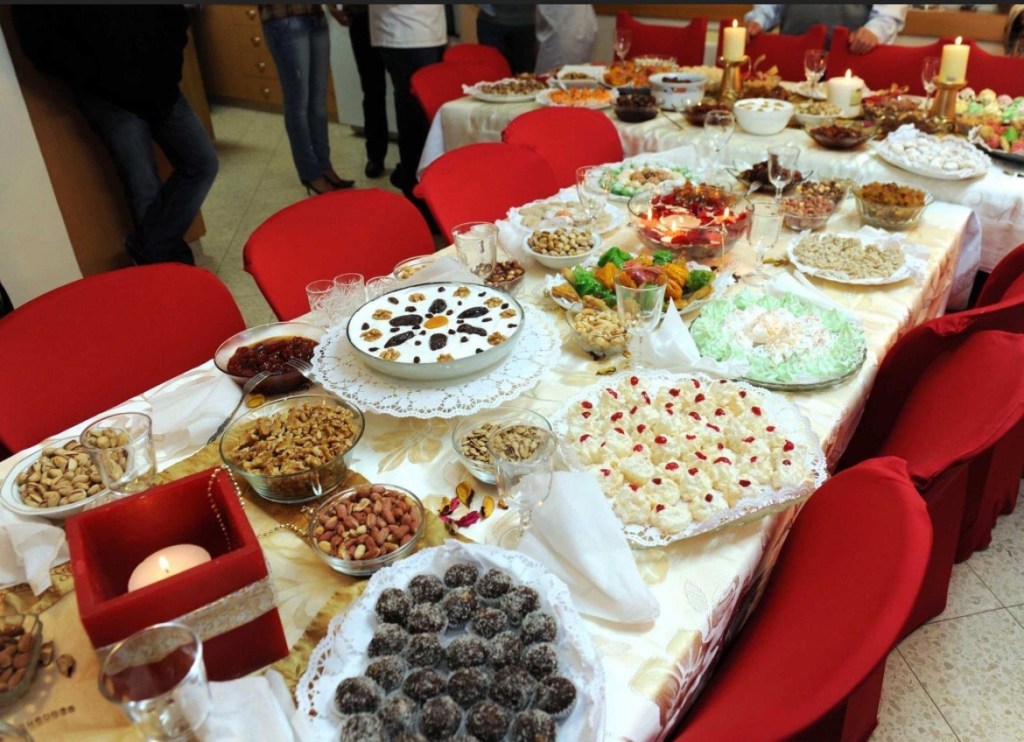
Rows and rows of tables and chairs had been set out for the communal kibbutz Shavuot dinner. Candles lit. Blessings set. There was a booth for Israeli wine and tables groaning under the weight of food. Quiches, salads of all kinds, vegetable dishes beyond belief. Hummus and techineh, and every kind of cheese and dairy one could imagine. It was super abundant and glorious! Folk dancing lasted until late in the evening. And there were small groups of instrumentalists. The wine flowed freely.
Evelyn, originally from Argentina, met her husband when he traveled to South America after his army service. She followed him back to Israel where they married. Yoav’s grandparents were some of the original residents of Ginosar, and her father-in-law was the one to find the famed sunken “Jesus boat,” a 2000 year old fishing boat. Evelyn is an ElAl flight attendant and Yoav is a farmer. They’ve lived at Ginosar for 19 years.
I tell you all this because Evelyn and her family took us in like we were one of the family. After living ‘in the city’ for ten years, I’d totally forgotten and missed that amazing aspect of Israeli life. Everyone is “mishpocha.” We met the brothers, the in-laws, the kids, and cousins. Young couples had driven up from Tel Aviv and central Israel to be with their family. And somehow there was room for all.
It was not extremely religious. In the morning some of the older folk went to the community synagogue. Children, with bathing suits on since 8am were eager to swim in the Kinneret. Others went sailing and jet skiing. The morning breakfast on the kibbutz dining room offered myriad dairy from cheese-filled bourekas and blintzes to fish. Fish is very typical for breakfast in Israel. There were fruit salads and vegetable salads over the top and freshly baked breads, homemade jams and freshly squeezed juices.
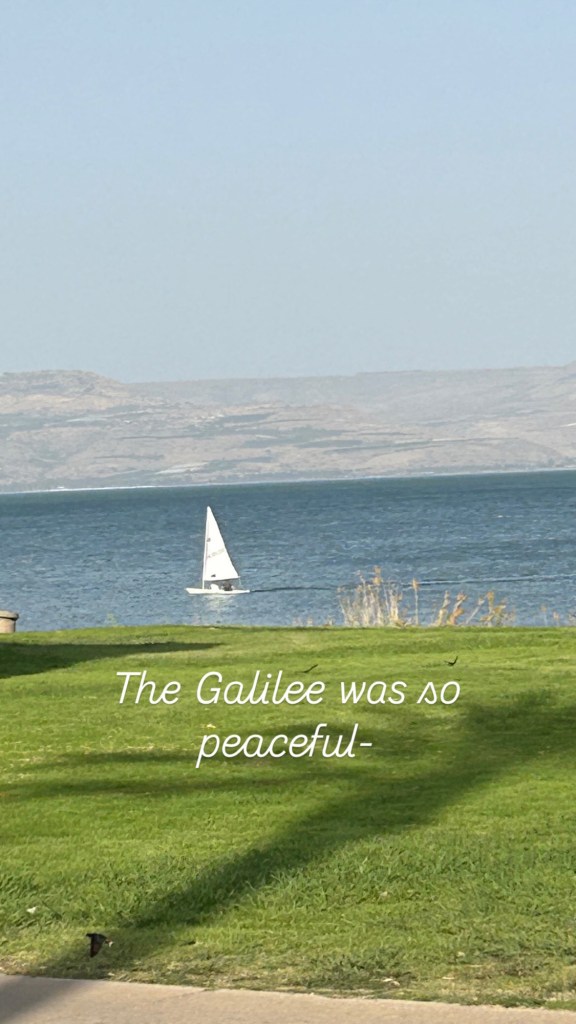
I must say, last year e spent Shavuot praying in Jerusalem. Most years, we spent at home very low key. Not particularly Israeli. This year, the Zionistic and patriotic spirit, albeit a bit subdued from what I was told (due to the fact we are still at war), was one of the most incredible experiences John and I have had here. Thank you, Evelyn!!! We had a blast!














 Israel Dreams