
“Serendipity: an unplanned fortunate discovery; a common occurrence throughout the history of product invention and scientific discovery; finding valuable or agreeable things not sought for.”
Since moving to the beautiful, diverse, completely random Land of Israel 8 years ago, John and I have learned to flow serendipitously. Around every corner we have found the unexpected… a glorious treasure of a tiny moshav (village) that used to be an art center, abandoned but with the ‘goods’ left behind; a little village that sells fresh goat milk products; secret swimming holes; archaeological and historical sites; an Olympic ice skating center on the Lebanese border; friendly and inviting people who grow organic products or make their own beauty products; beekeepers…. and winemakers.
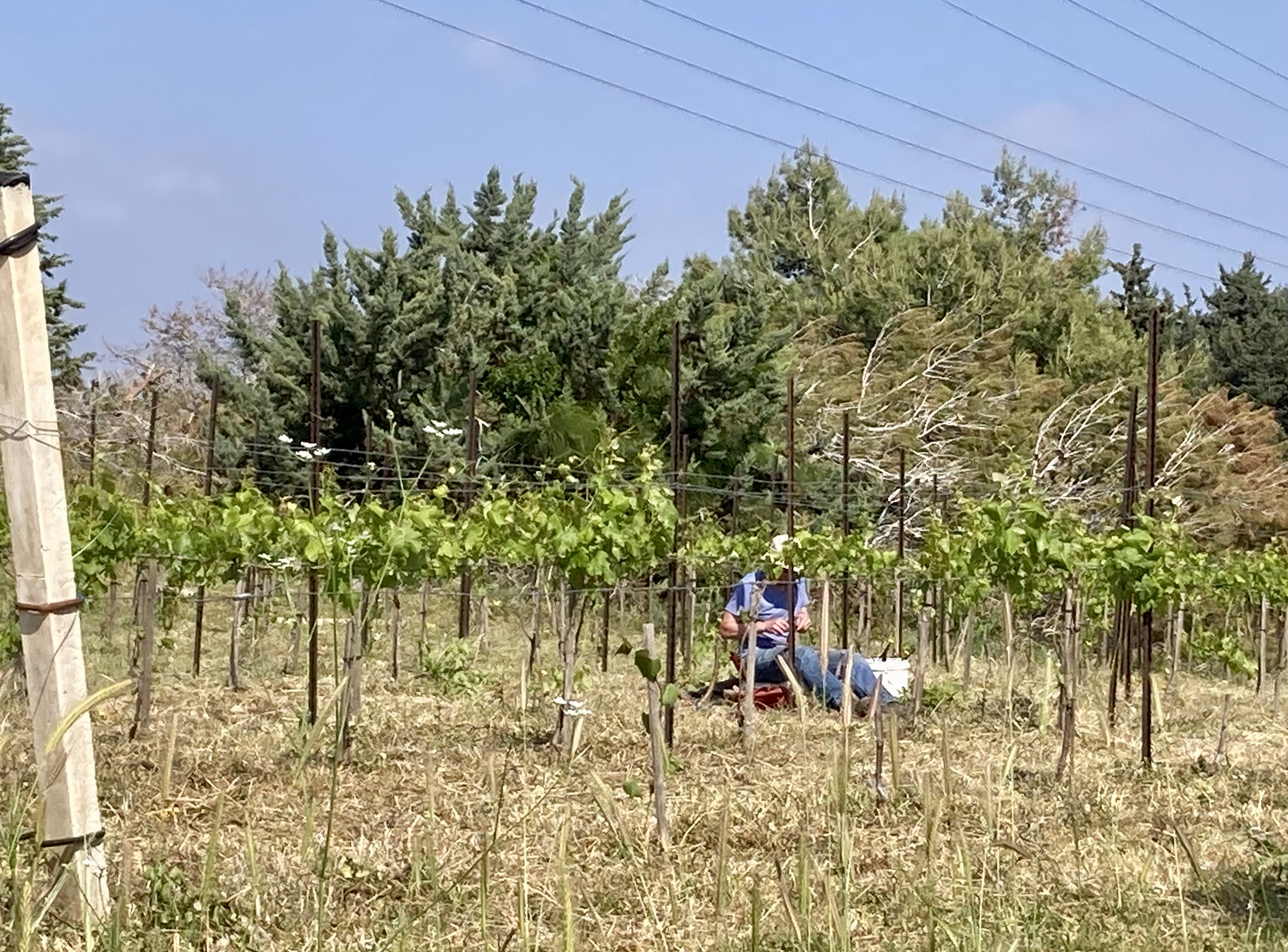
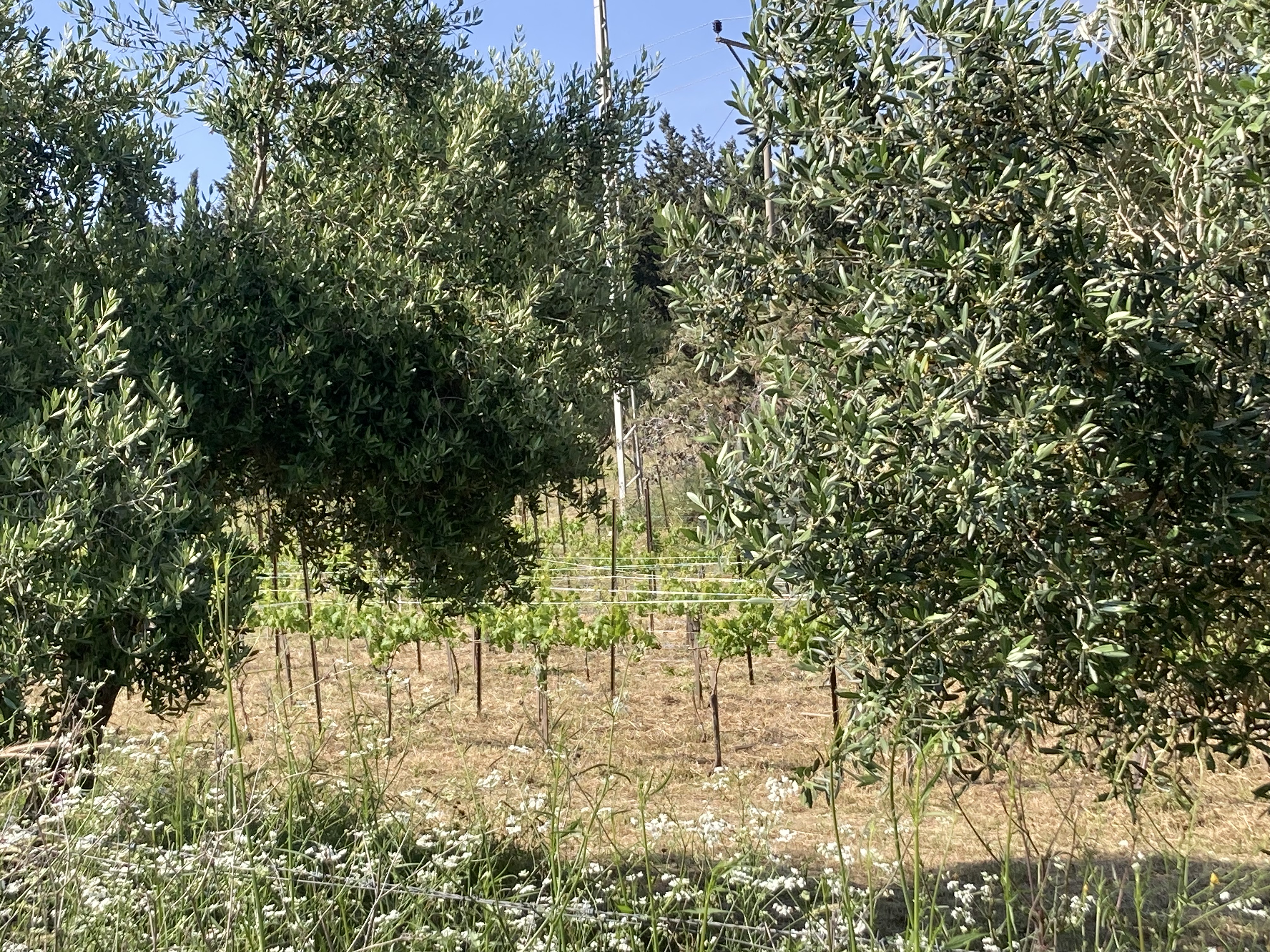
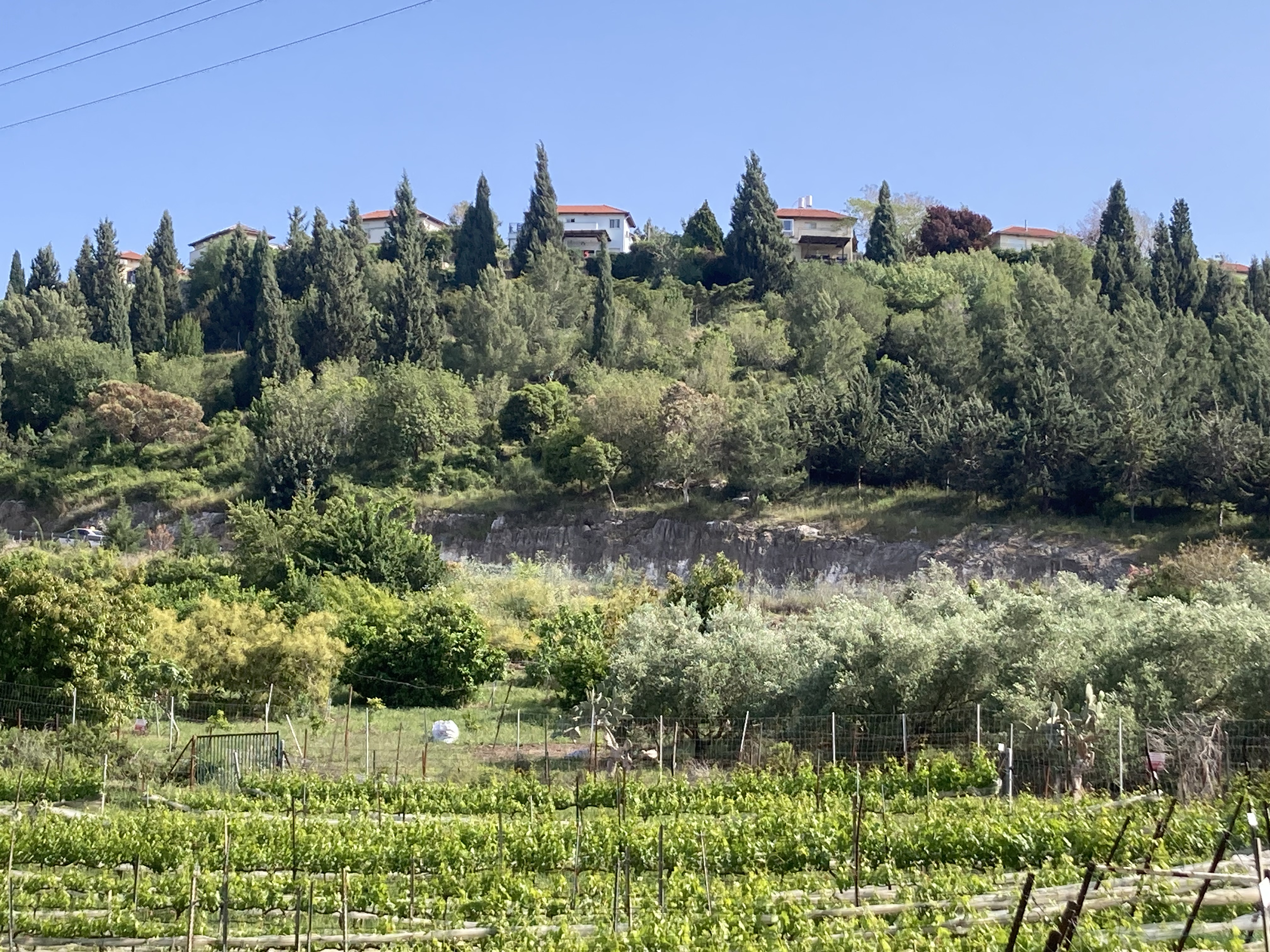
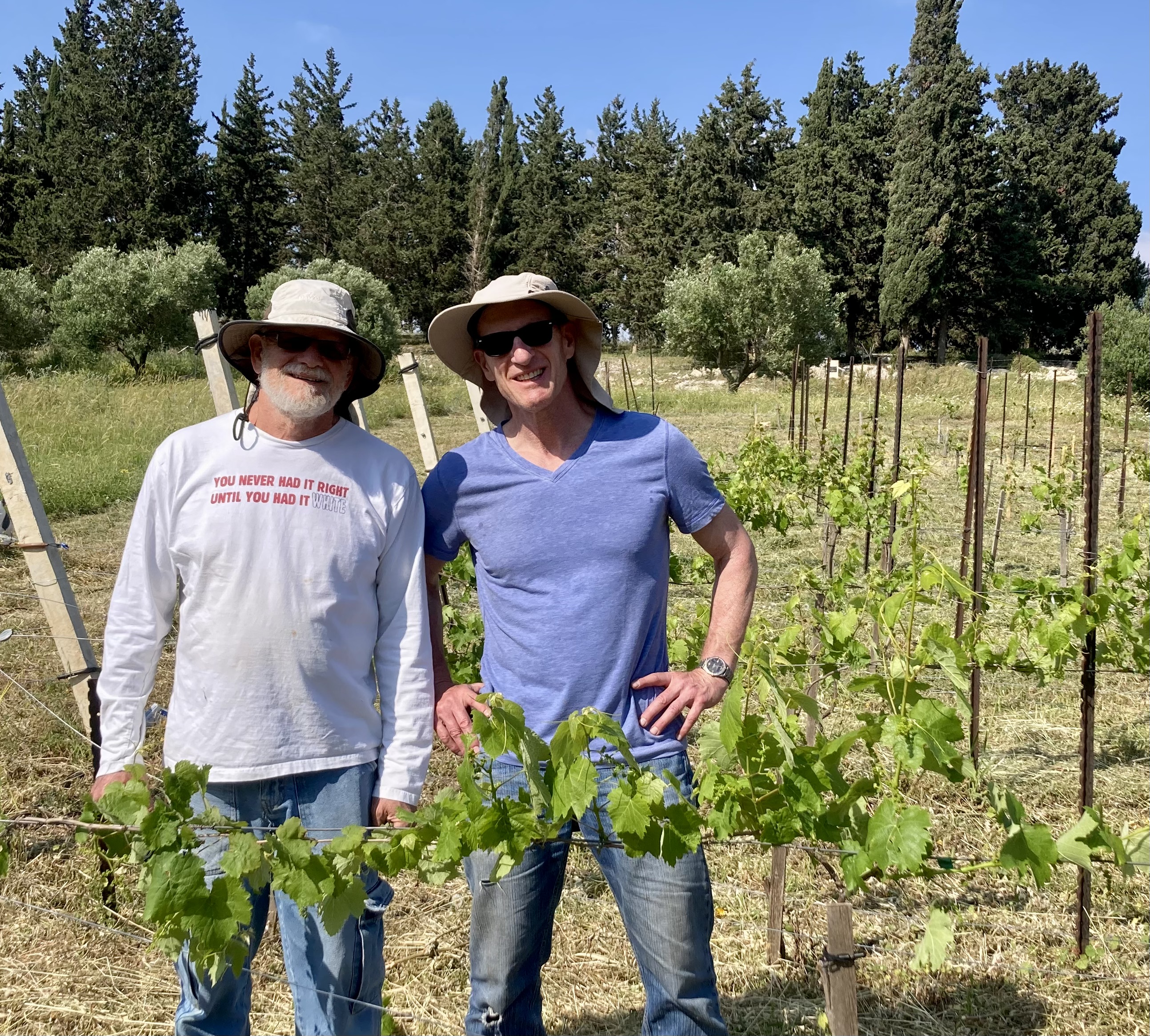
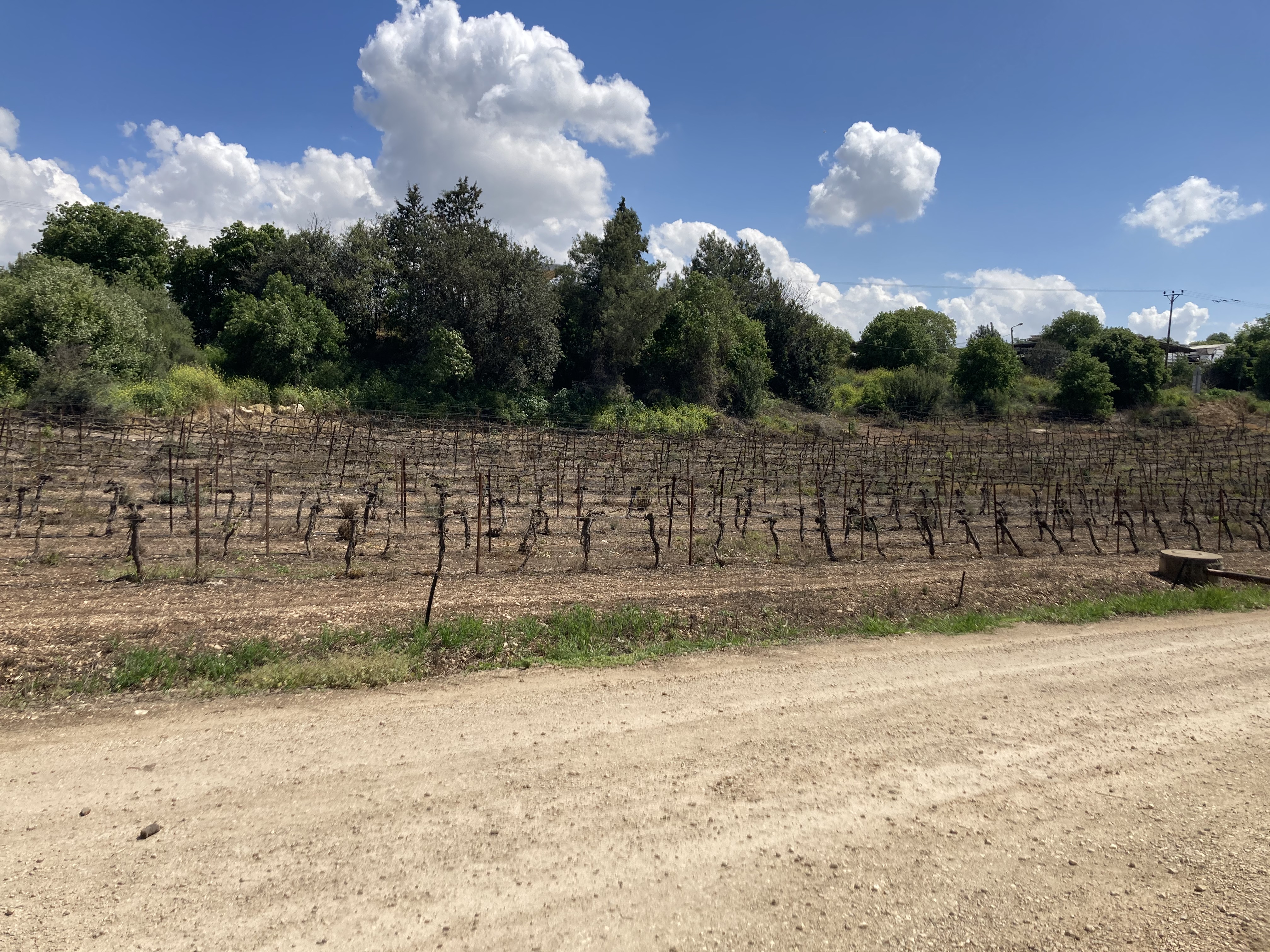
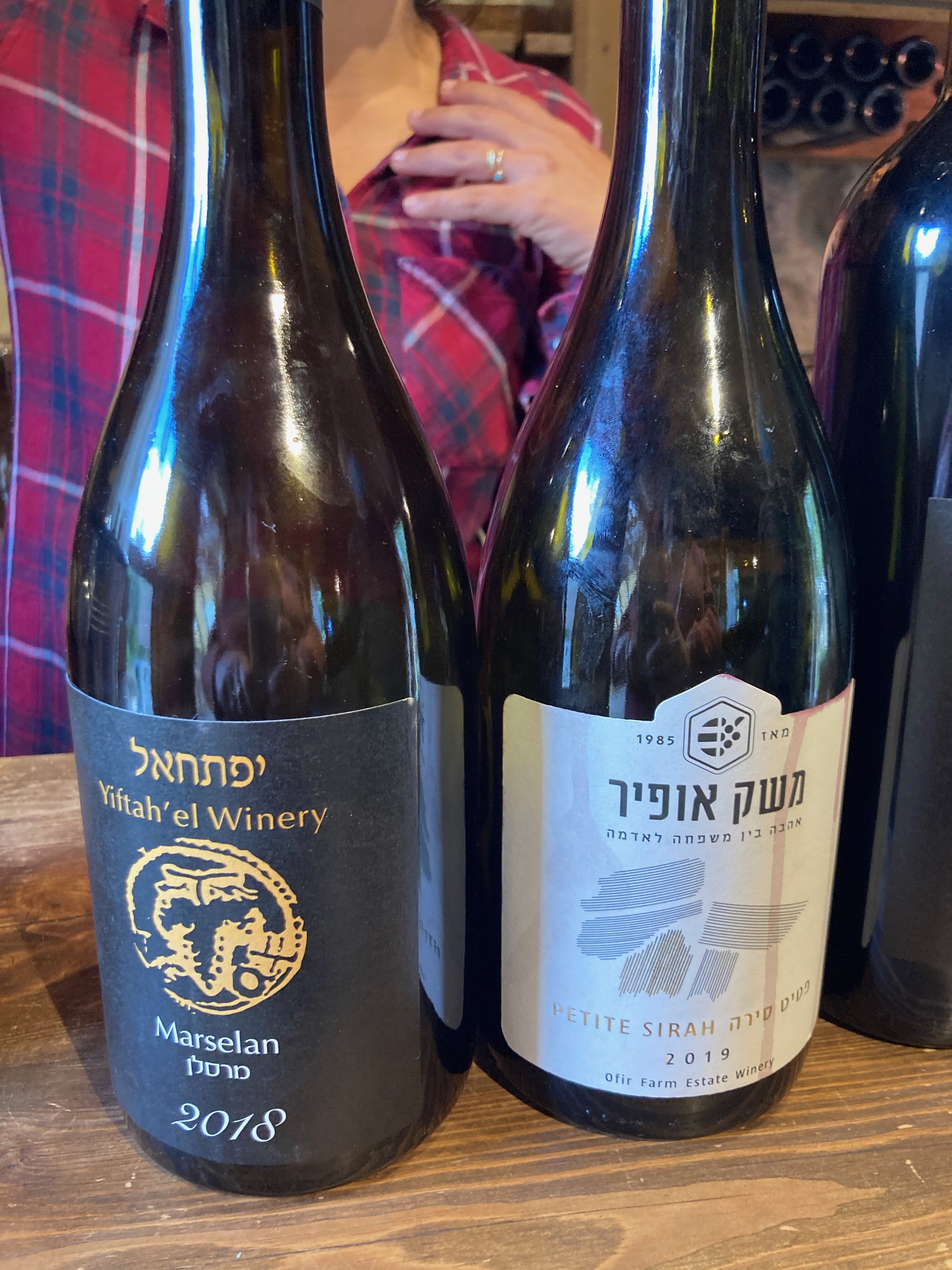
Of course, I called to them in Hebrew… and of course, they answered back in English. They were Stanley Levin and Joey Fisch – grafting new vines onto their rootstock. Stanley, from South Africa; Joey from Chicago. Both had lived right here in the Galilee for ages. They invited us to walk the vineyards and take a look. Marselan, Petit Verdot, Grenache, and other beautiful, green vines. Theirs was a garage winery, Segev Winery, producing under 5000 bottles a year. I had to find out more, so arranged a time when we could go to their yekev, production/tasting cellar.
Both Stanley and Joey started out in the high tech industry. Joey had been growing grapes and making wines “since he was a teen.” Joey worked at Intel in business development, but always kept winemaking in reserve as a hobby. His wife, Gilat, worked at SAP Software with Stanley. On the weekends, Joey and Gilat hosted wine parties in Ya’ad, which is where Stanley and Joey first met. Ya’ad, founded in 1979 as Israel’s first technical moshav, had been allotted some small acreage by KKL/JNF. These were sprinkled throughout the surrounding forested areas and set aside for agricultural use.
In 2010, the JNF saw that much of their land had not been developed. The residents of Ya’ad faced an ultimatum: put the land to use or have it taken back. At the moshav community meeting, Joey and his brother-in-law volunteered to take one parcel or 10 dunam, which is 2 1/2 acres. It was serendipity. They were leased the land and split the property between them, planting olives and grapes. The little mountainside was absolutely perfect for growing grapes. It has deep, rich soil and a great climate. Joey began planting any grape he could find: Petit Verdot, Grenache, Mourvèdre. Because Joey was working full time in high tech, he could only spend vineyard time early mornings and on weekends (which here is just part of Friday and Saturday). He was getting a mere 20-25% yield, throwing away too many unused grapes and lacking in both time and man-power. He needed a partner.
Enter Stanley. He was working in nearby Karmi’el when SAP shut down their branch in 2013, throwing him into early retirement. Serendipity! Stanley decided that “now is the time,” and beside working for a Danish firm part time, he made the switch to winemaking. So he went to Ohalo in the Upper Golan Heights to study the craft for 2 years.
Joey Fisch and Stanley Levin, the two vintners, together began to grow more profusely. In 2014 an entire vineyard of the Marselan grape was planted. They were studying and learning from their mistakes and from experience, gradually becoming more sustainable in their farming. They stopped turning the soil. And they began letting cover crops (weeds) grow, dry out and be cut down but not removed. In this way, a natural type of mulching was established. This led to less drying out of the soil underneath and more nutrients going into the soil. It also added to an increase in good bacteria, resulting in much less use of any chemicals. The first years of production were good ones. All of the processing, the crushing, the aging in stainless steel and the transfer to French Oak barrels was done on site at their small, in-house facility.
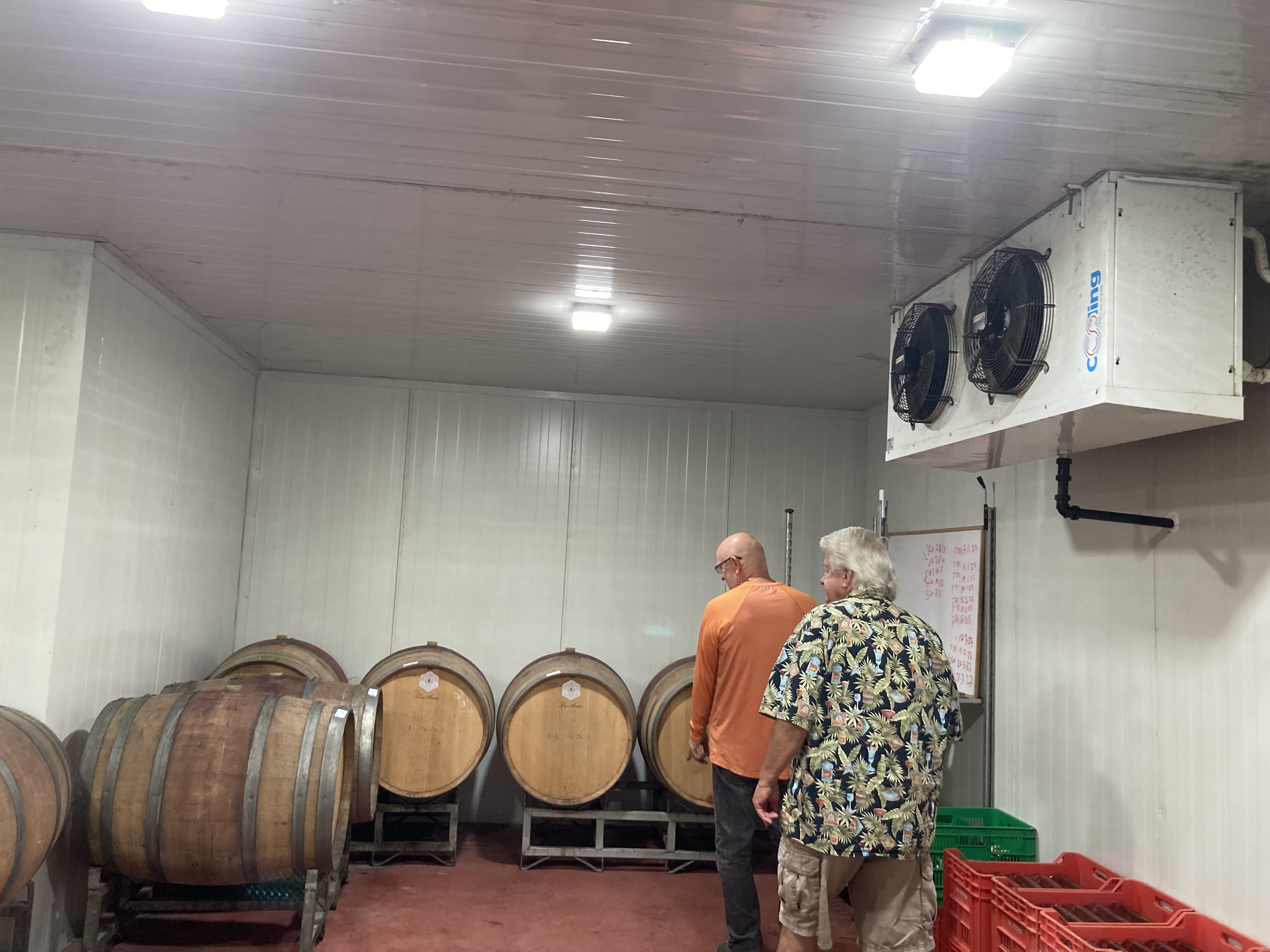

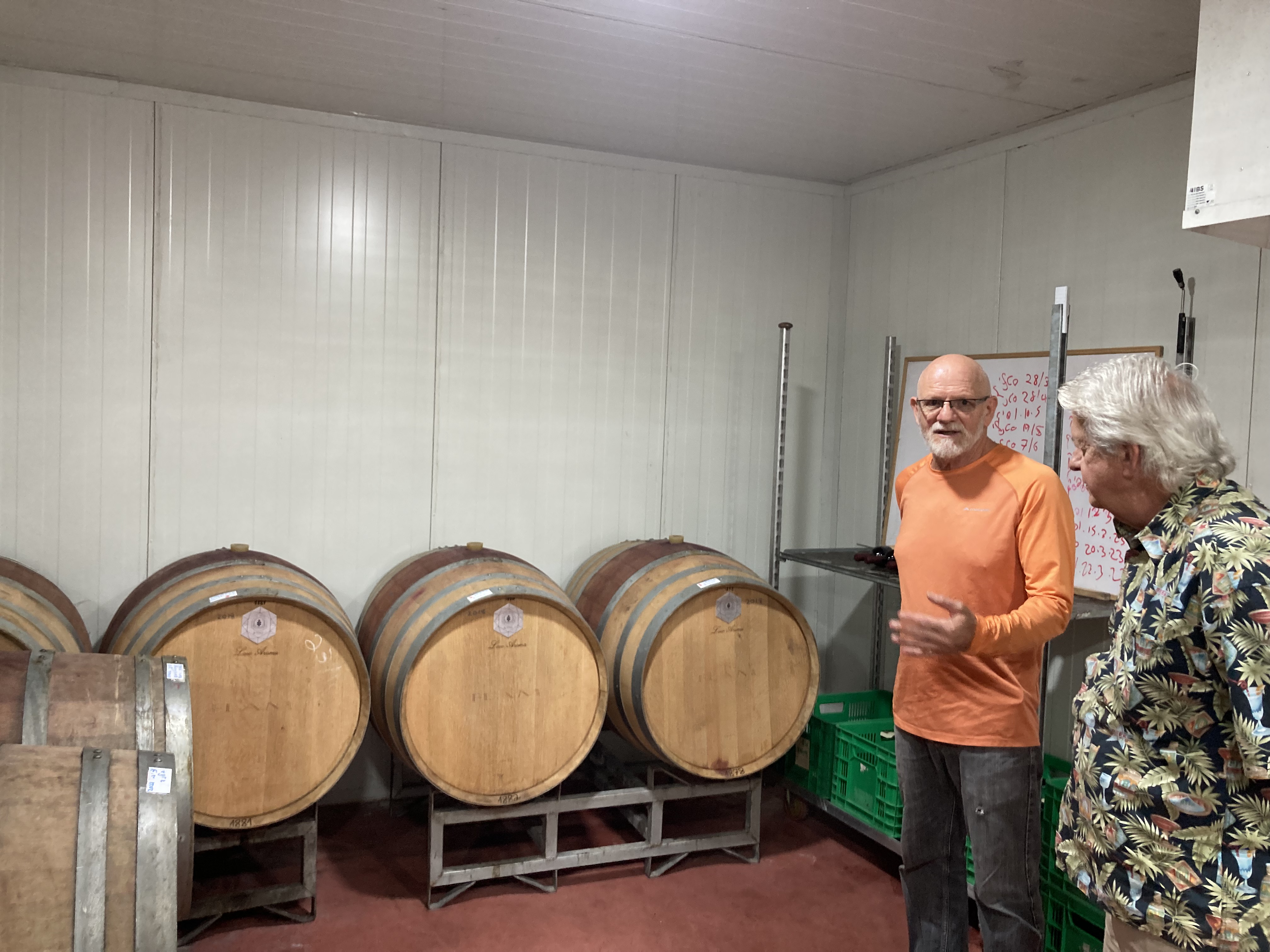
Unexpectedly, in 2018, Joey moved to Germany, accepting a full-time position with Deutsche Telecom. He kept his house in Ya’ad, and is still involved in every single operation of the vineyard, just remotely. He returns to Israel for the harvest and at other times during the year. And it was serendipity that we ran into them both a few weeks back.
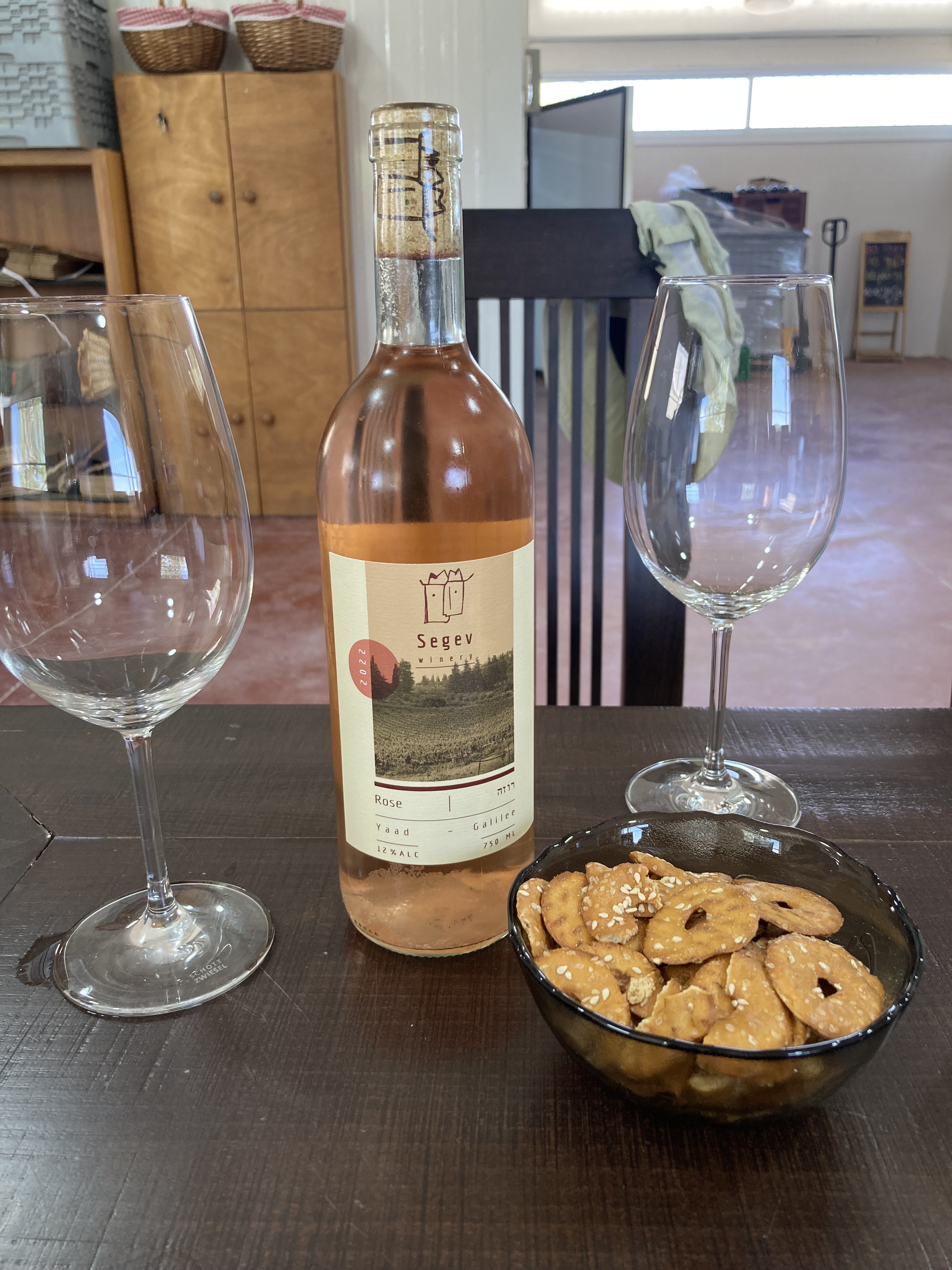
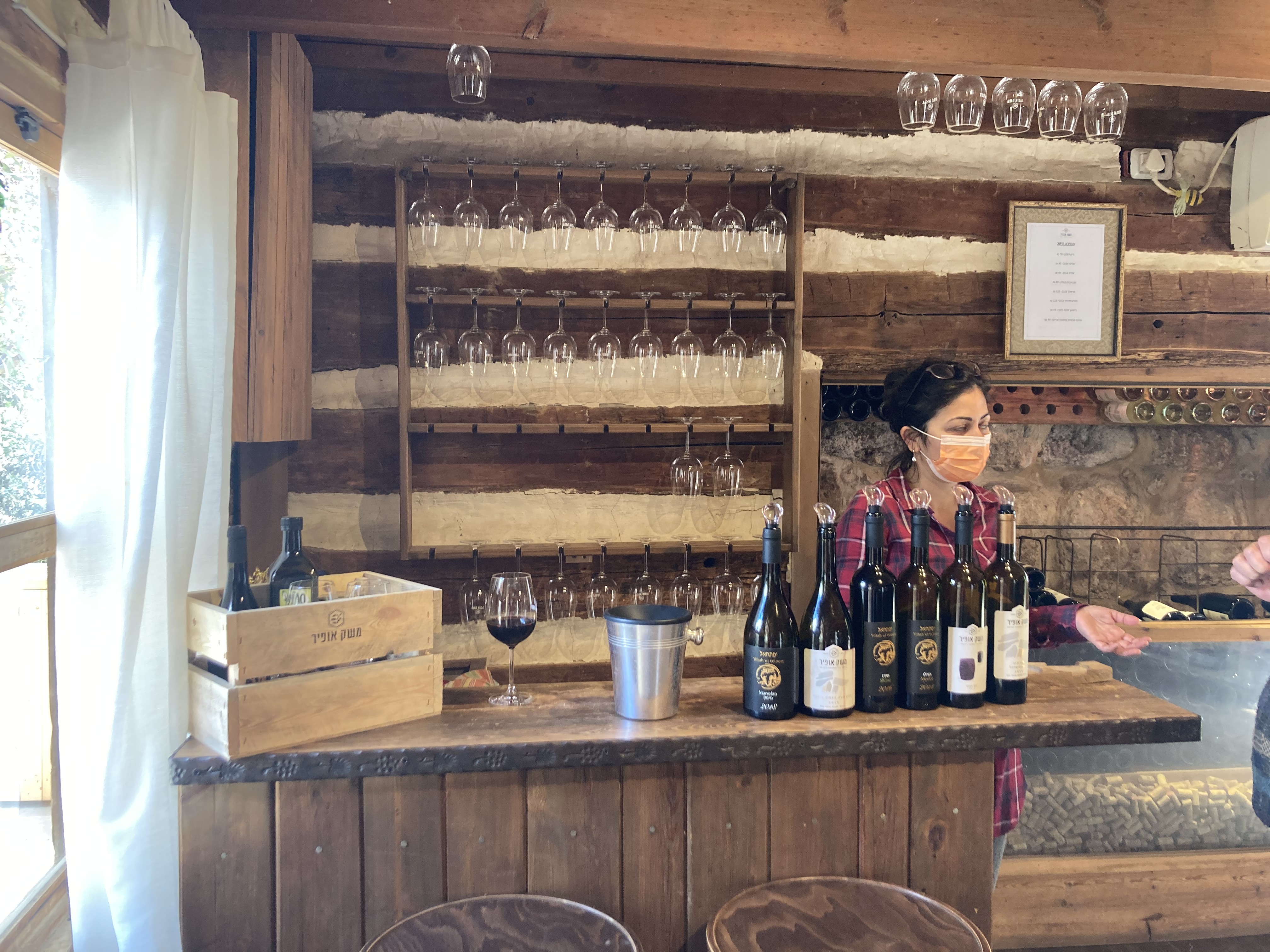
When John and I returned to find out about Segev Winery, Stanley met us and started the pour with a ‘22 Rosé from Grenache grapes. We finally found the summer wine we had been searching for! A beautiful shade of peachy pink, the Rosé has a nose with citrus and tropical notes, and was fruity, yet crisp and dry. I got a distinct cherry finish on the palette. Only 800 bottles were produced, so at 80 shekel a bottle, we bought 3. It’s a nice wine with salmon or grilled chicken, a great picnic wine or a bottle for just sitting on the porch sipping.
The next wine was their 2019 Vineyard Red Blend. A very deep purple/red wine with a jammy nose, this one was very fruit forward. With overtones of very ripe cherries, it was surprisingly quite light, however had a slightly rough finish… a bit of a sour bite at the end. The Vineyard Blend might become better with a little more age, and was only 70 shekel per bottle. This would be a good one to serve with pasta and mushrooms or lamb.
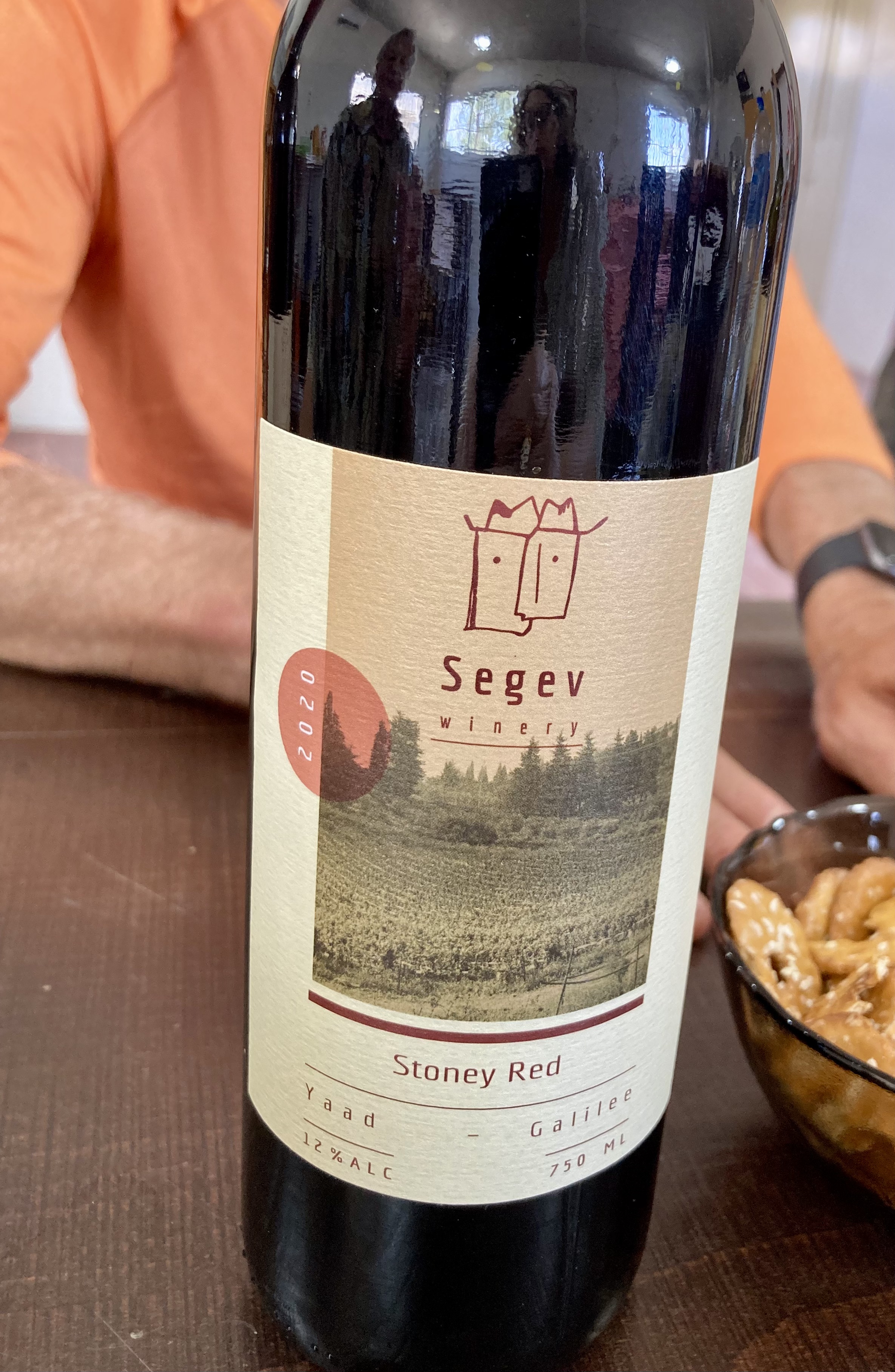
We moved on to the 2020 Stoney Red. In 2020, Joey and Stanley bought 500 kg of Cabernet Sauvignon grapes from a vineyard near Dalton, on the Lebanese border. Their friend, Gil Schatzberg from Recanati Wines sold them the grapes. Joey was in Germany when the Covid lockdowns went into full force, and Stanley had to isolate due to an exposure to the virus just when harvest was getting under way. So all the picking was done by family and friends while Stanley watched and supervised the entire operation remotely by camera. Schatzberg helped with the fermentation process and production. 40% Cabernet, 40% Marselan and 20% Petite Verdot makes this ruby red gem a well-balanced, very drinkable wine now. With a nose of ripe forest fruits, and a surprising hint of cinnamon at the finish, this is an amazingly good wine. It is absolutely beautifully balanced: 12% alcohol, only 2000 bottles were produced: the price coming in at 100 shekel a bottle. We bought one to add to the collection (but plan to return for more of this one- we have a feeling it will age quite beautifully).
Of course the best is always saved for last. The ‘21 Marselan is a deep crimson, leggy red wine. Redolent of blackberries and a slight bit of chocolate, it is pleasing on the palette leaving a mouth of ripe fruit and slight mint/sage. A great wine with a steak or red meat, it was only 85 shekel a bottle. This wine is sure to get better with age. We bought 2 bottles.
Segev wines are sold locally at their winecellar in Ya’ad (Misgav Regional Council), a few small stores local to Misgav and a few restaurants, including one in Tel Aviv. It was such a pleasure chatting over the wines with Stanley Levin, a great host. We will most definitely go back again!

I jump at any opportunity to make a drive to the wild, pristine Golan Heights. It’s one of our favorite places. Last month we were taking my son to his reserve duty. After we dropped him off we made the short, incredibly scenic drive to Azizo Lavender Farms (see two posts back). As we were leaving Moshav Kanaf, we spotted a large red barnlike structure and a sign for Terra Nova Vineyards. Again, serendipity. It was midweek and still early for Israelis, so when we walked in, we had the entire venue to ourselves.

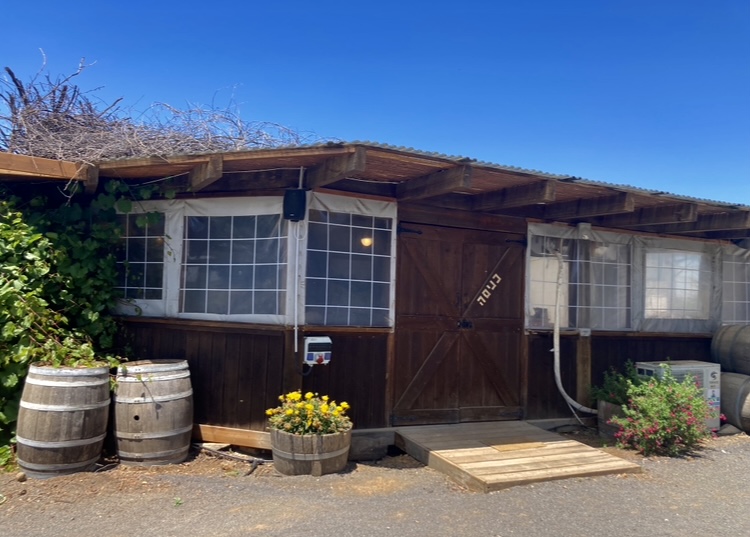
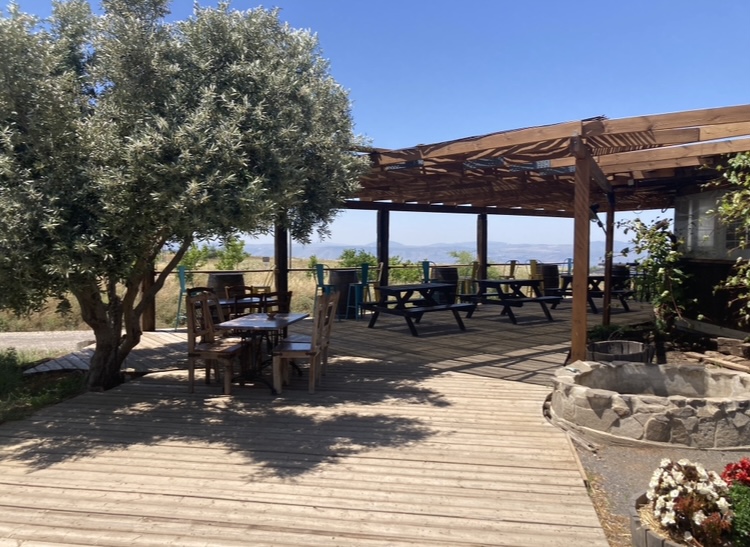

There was a wide sweeping terrace surrounding the building. The views from the top of the plateau overlooking the Sea of Galilee, the Hula Valley, and mountains to the snow capped Mt. Hermon were reason enough to sit back and relax. What a spectacular place for a party! A wedding, birthday or Bar Mitzvah here would be perfect. Adjacent to the terrace was a large covered pavilion ready to barbecue the fresh Angus beef the Golan is famous for. There was plenty of room for a band and dancing.
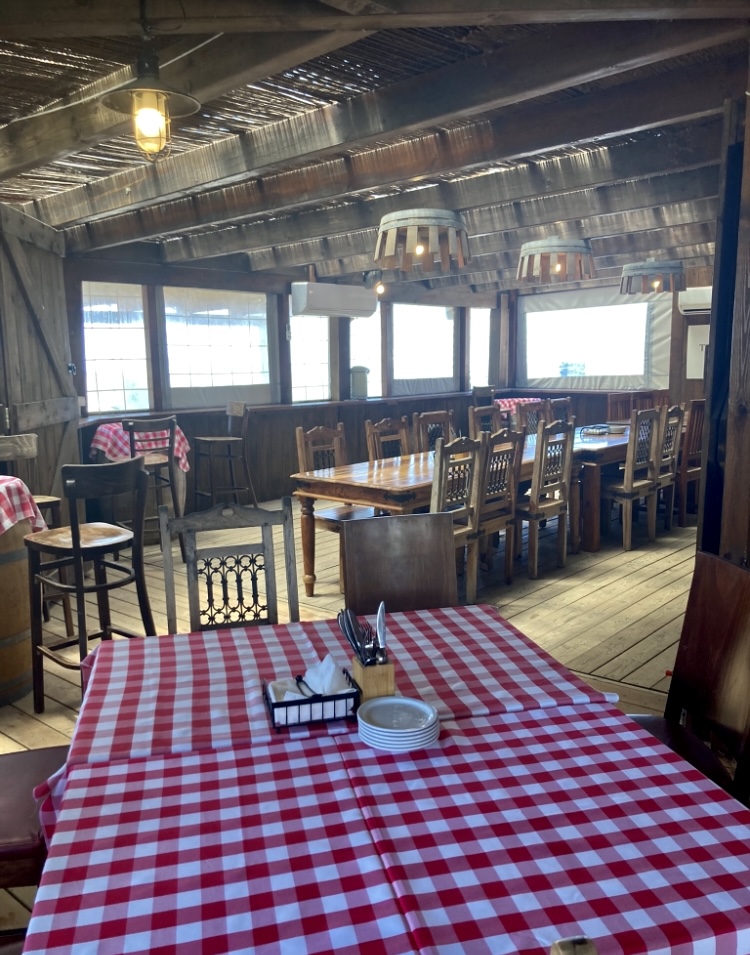
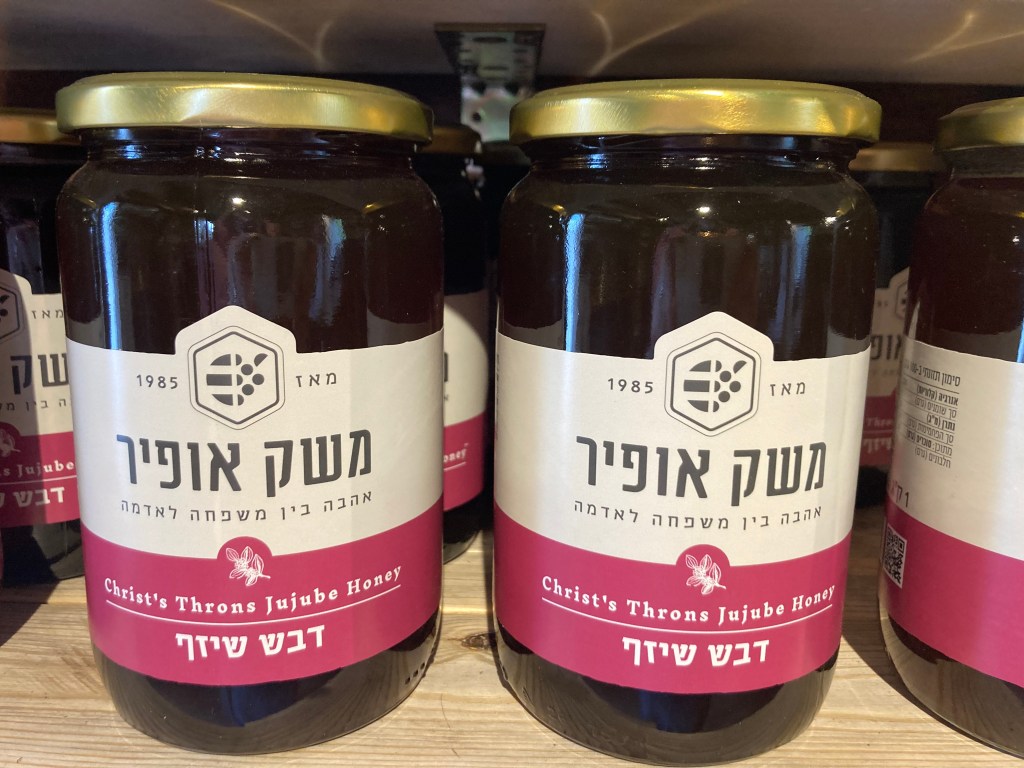
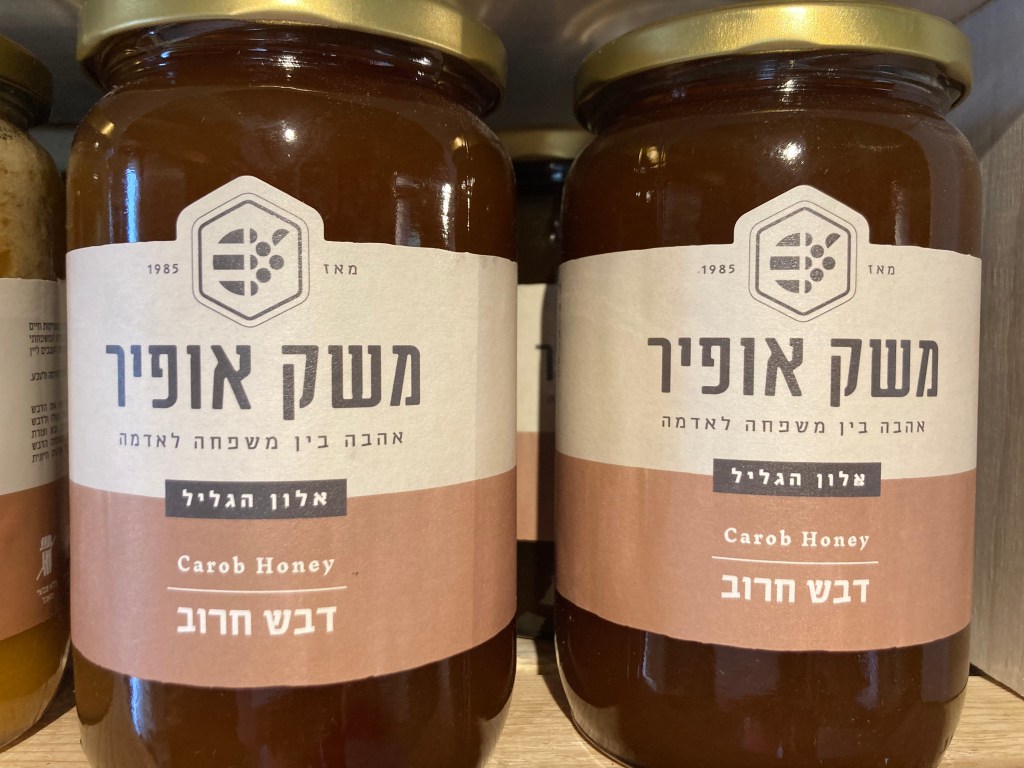
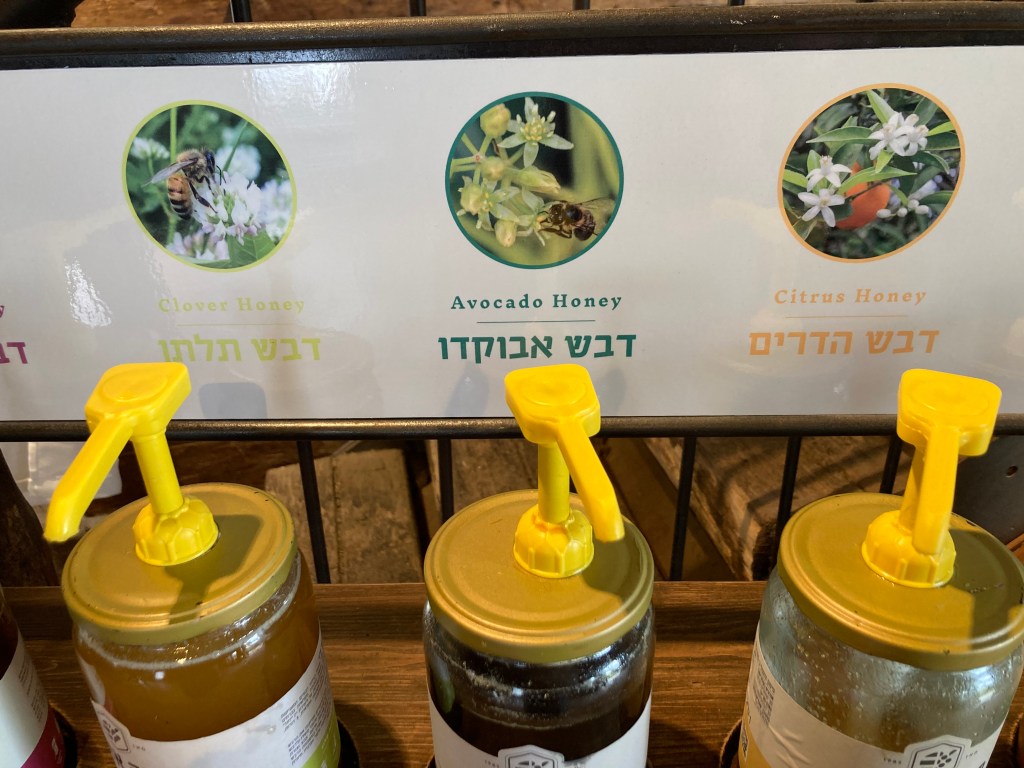
Inside were two spacious dining rooms, with rustic, ranch vibes, a large wine bar, and a shop that sells local products: the Terra Nova Wines, olives and olive oils, local honey, soaps, jams and spreads. The menu included wines, cheeses, olives, and all sorts of light fare like quiche. Catering is available for special occasions. It actually felt like we had arrived at a winery in Texas – or California.
John and I got a table and ordered a wine flight and a cheese and olive platter. We asked our server auto tell us about the wines we had ordered and he called Roni to come in from the fields. Completely unasked. Completely unexpected that the vintner himself would take time out of his work to come talk to us. Completely Israeli. So it was a total surprise when a while later, a lovely young girl strided in confidently and pulled up a chair. In perfect American English, she exuberantly welcomed us to her winery. Ah!!! So this was Roni!
We were so taken with it all. And here is where serendipity, those truly chance occurrences steps in. John commented on her completely American accent, and asked if she was from the States. Roni Cohen-Arazia was born in Israel. Her parents were Israeli, but traveled the world and she with them. Roni, age 31, was completely Israeli, grew up outside of TelAviv, but had gone to boarding school in Switzerland. She would visit her parents who lived in Camarillo, California. Her father, Effie Cohen, worked at Amgen in Thousand Oaks!! Oh my goodness, what a small world! We explained that’s where we’re from. My husband worked directly across the barrenca from Amgen. We had many of the same friends it turns out. Who’da guessed??
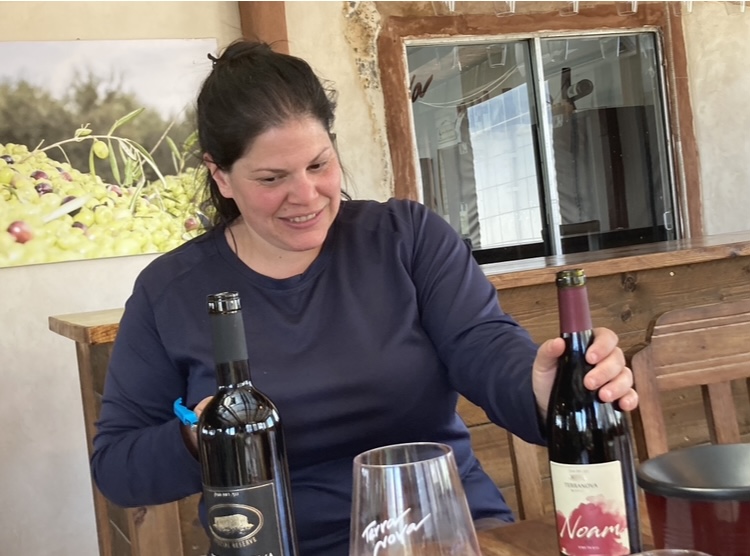
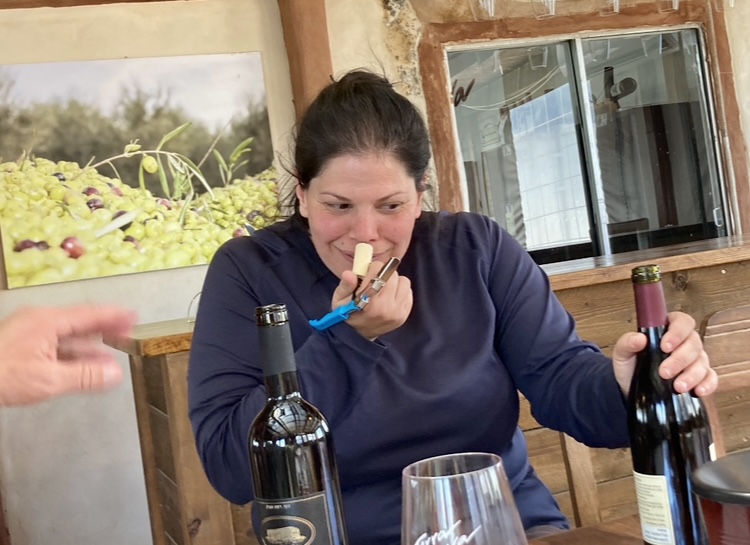
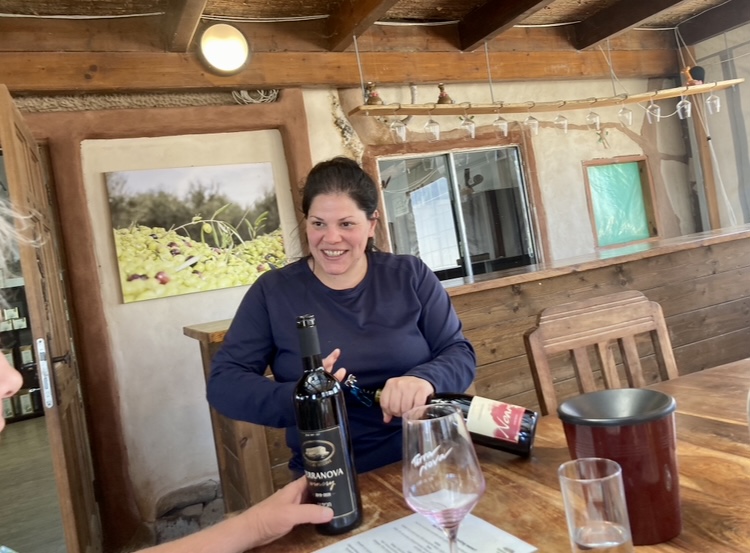
After high school and IDF service, Roni received her biomedical engineering degree from Tel Aviv University, but found it boring. “I found myself a lot in wine bars and wineries to lift my spirits, and worked through uni in restaurants and wine bars where I learned a lot,” she explained. “I wanted to see the production side, study the fermentation and chemistry of it all. So I went to wine school here in Israel. In Katzrin in the Golan at Tel Hai’s 2 year viticulture program.”
She told us that there were 3 partners at the agricultural co-op in Kanaf. These men, residents of the moshav, had a large dairy farm; grew olives and had berry fields. They had 20 dunams – and in the perfect volcanic Golani soil, with its hot days and cold nights, is perfect for growing grapes. especially Cabernet Sauvignon, Merlot and Shiraz. They later purchased another 11 dunams nearby where Carignon and Vigonier are grown. Roni started working for them at Terra Nova, a boutique winery with a 15,000 bottle a year output, in March of 2021, and in 2022, the original vintner left the entire production line to her! Now that’s serendipity!
Roni poured generously for us as we chatted. We started with their B’reshit, appropriately named… in Hebrew, ‘in the beginning.’ It was a heavy, jammy fruit-forward nose, nice and leggy on the glass. Aged in French oak barrels, B’reshit is a red blend of Shiraz (50%),Merlot (30%)and Cabernet (20%) – 13% alcohol, at 100 shekel a bottle. It had a forest fruit taste with a hint of bell pepper and was surprisingly light and refreshing. It’s a great wine to serve with cheese and olives and would go really well with Italian food. We bought 5 bottles.
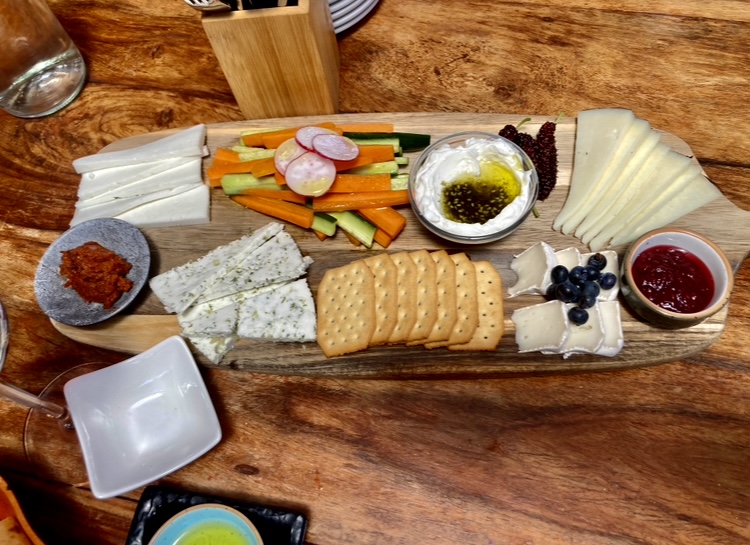
The olives, grown and cured right there at the Golan property, were amazing. It was wonderful to be able to sample the different varieties of olives and the olive oils (both a Spanish and a Greek stock). The accompanying cheese and veggie platter was more than generous for all of us to share. Even though it seemed we were drinking a lot, the food and the very long conversation tempered the alcohol. All of the cheeses were made from local goat and cow milk. I am currently working on making the most delicious herbed goat cheese from the recipe Roni got for me. Everything comes from Moshav Kanaf. There was labaneh, humus, and a delicate raspberry jam as well with fresh blueberries and mulberries(tree strawberries) on the side.
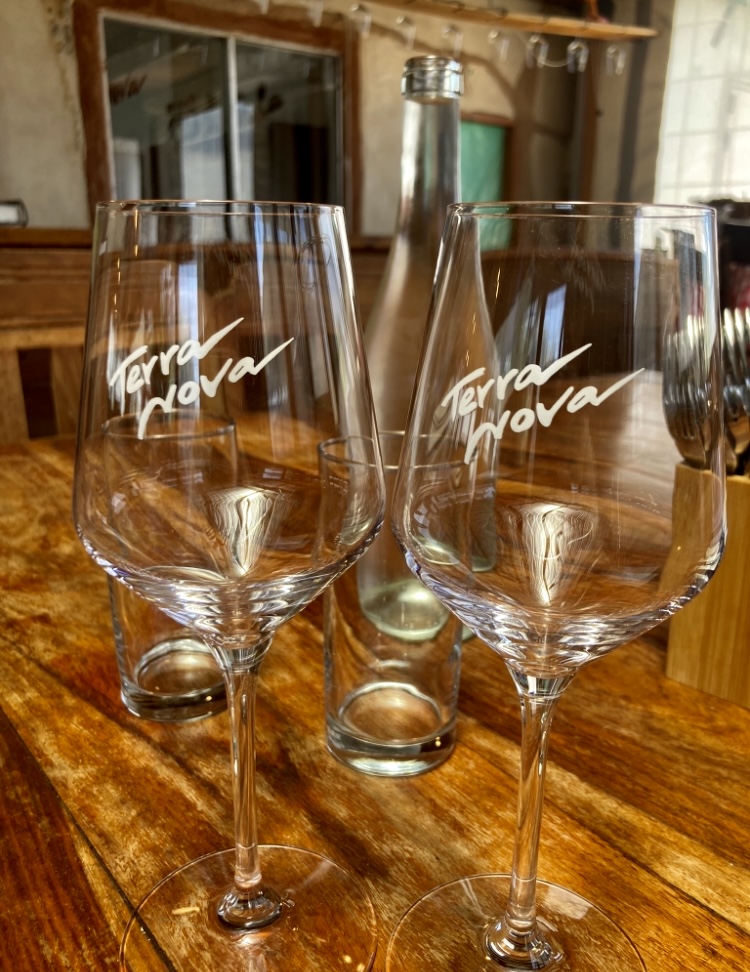

We tried a 2020 Terra Nova Winery Special Edition with minty, sage overtones to the nose. I got a nice, subtle smokiness from swirling it and smelling. This wine too, was a leggy red – a blend of Shiraz, Cab, and Merlot. Heavier than the B’reshit with a deep cherry finish, slightly oaky. A great wine with barbecued or smoked meats. We got 4 bottles.
We tried their Barrel 14, another special edition red, very heavy with some intense tannins at the end. The 2020 Carignon smelled of blackberries, but I was also getting hints of peppery spice and olives. It was spicy but with a smoky finish and a bite.
The Noam was absolutely delightful… berries and flowers to the scent. a bright honey taste, but not at all too sweet. For a red, it was bright and flavorful, great with lamb or to serve alongside either a cheese or charcuterie platter. The Noam was a well-balanced very drinkable wine. It is a very different Cabernet, Shiraz blend with a splash of Vigonier (white wine)and we bought 3 bottles.
The wines Roni has blended are all still in barrels aging, so are not ready for tasting yet. This is all fine and good as we can’t wait to go back. The wines do not have Kosher certification. Terra Nova offers a membership club to those who sign up with a very nice discount to members. They sell to private consumers only and will deliver to door in the Golan/Galilee area. This offer includes not only wines, but olives, olive oils and fresh-picked berries.









 Israel Dreams