Diversity in Israel: Meet the Circassians

Circassian Cultural Heritage Center in Kfar Kama, Galilee

Adding to the rich cultural diversity in Israel, we have the Circassians. Mainly living in two communities in the North and numbering approximately 4,000, the Circassians’ history goes way back to pre-4th century. Originally from what is present-day Russia – from between the Black Sea and the Caspian Sea, they were the indigenous people of the Caucasus Mountains. They lived from Sochi to Baku: their capital city was Nalchik and they were known as the Adyghe (Adiga) people. In their language Ady means highlander and ghe means sea. Between the 4th and the 9th centuries, many of them converted to Christianity. When the Tartars and Ottoman Turks conquered their territory, many were forcibly converted to Islam. The Turks called them Cherkess which was Latinized to Circassian. After many years as dhimmie under the Ottomans, most adopted the Muslim religion voluntarily. 1763 marked the 100 year war between the Circassians and the Russians for access to the Black Sea. Eventually, in 1864, Russia launched a genocidal campaign. 90% of their population were exiled from their land – put on ships bound for the Balkans, Anatolia, Bulgaria and Turkey. From there they were taken to the Middle East and can be found throughout the Levant. Their population is about 1.5 million.

Because they were such good fighters, the Ottomans took them in as brother Muslims; and it was the Turks who scattered them throughout the Lebanon/Syria/Israel/Jordan region as a counterweight tothe non-Muslim Jewish, Christian and Druze populations as well as to the Bedouin. Even though they are Sunni Muslim, they are not Arabs. They were brought here in the 1870s as tax collectors for all the other Arab villages in the surrounding area (today, this practice no longer exists).Here in Israel, they maintain excellent relations with the Jewish and Arab populations. The Circassians, although very separate with their own language and educational system, all serve in the IDF. They have kept their ancient phonetic language, Adyghebza, but are fluent in Hebrew, Arabic and English. Their educational levels are very high, their communities, impeccably clean with flowers blooming in every windowbox and garden. There are only 26 family groups or clans within the Israeli Circassian community.

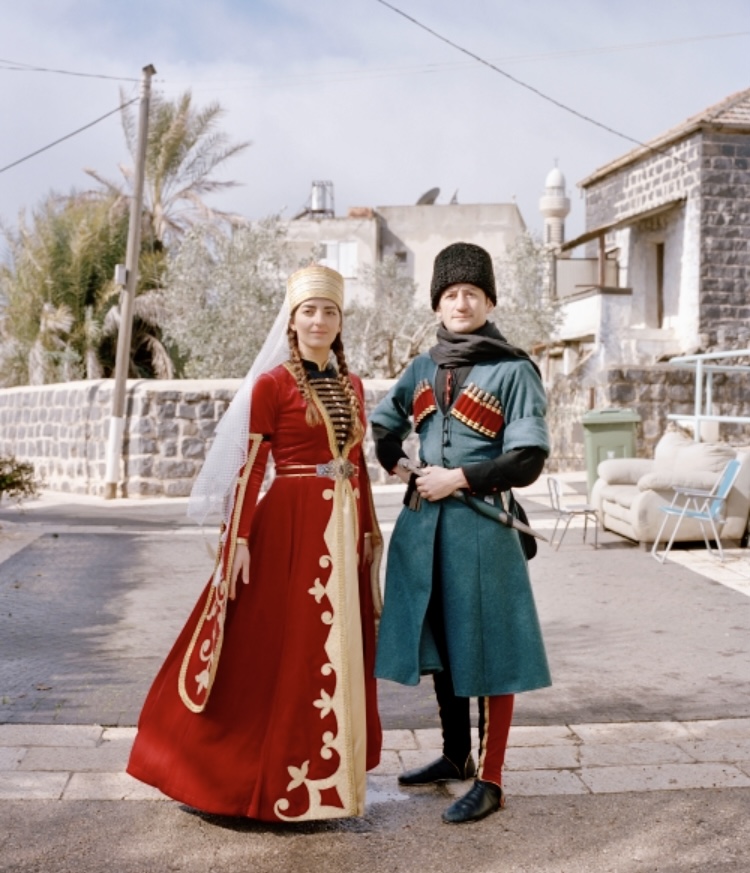
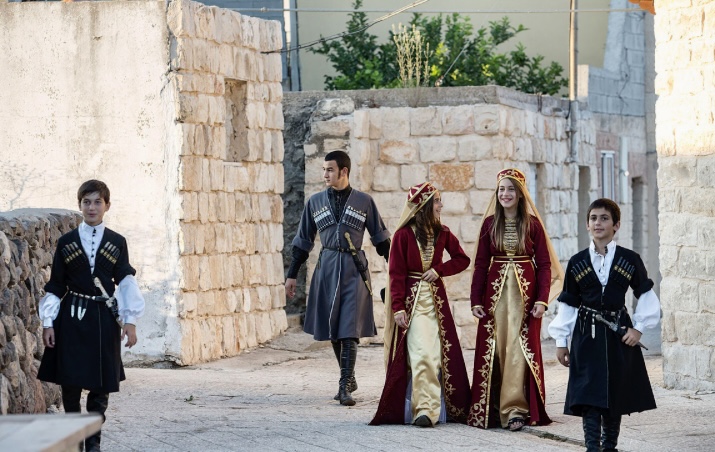
We visited the two Circassian towns recently. Kfar Kama (pronounce Comma) is a thriving village on the upper slope of Har Tavor (Mt. Tabor) in the lower Galilee. The mountain village is walled in, an old form of defense. All of the stone houses are interconnected, sharing a back or side wall. The only way through into the village is from a guardpost/ gate, like a fort. The mosque stands in the very center of the town. And it is the location of the Circassian Heritage Center. Every day, the center welcomes Israeli school groups as part of their educational enrichment program. We were greeted graciously by our docent, Ibek, dressed in a black costume and high fur hat.
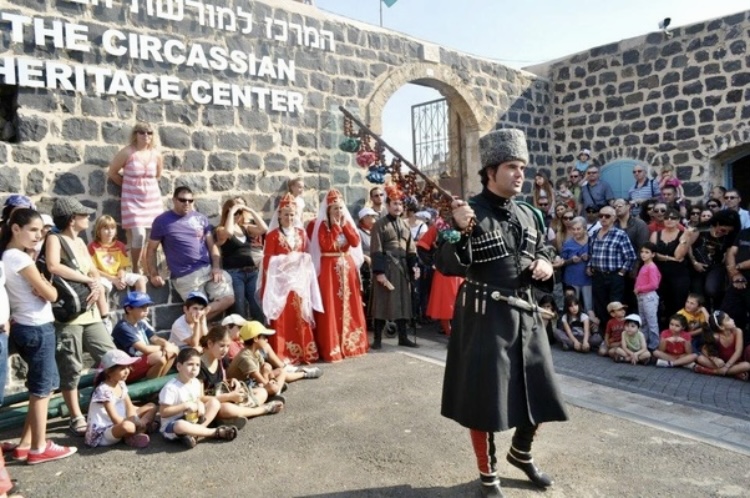
After sharing their history with the large group, several members of the village put on a dance exhibition in their native noble costumes. Red and black are their battle colors, turquoise symbolizes the sea and green, the land from which they came.
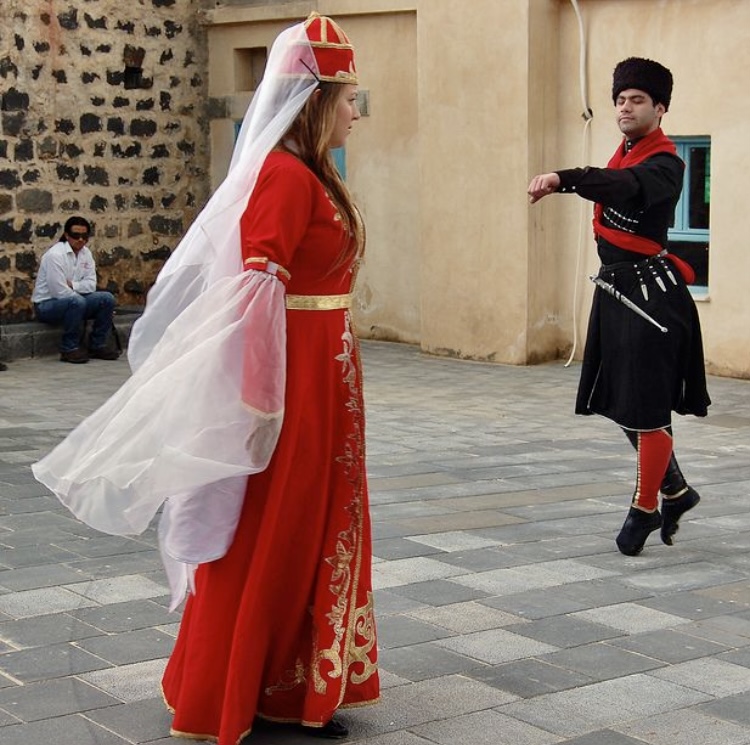
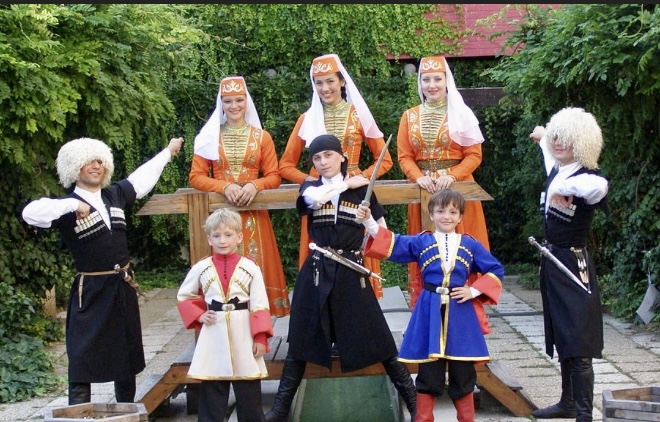
All Circassians are taught the traditional dances from the time they are young, and all can play at least one musical instrument. The women have much power in their society, and are free to make their own decisions. When a young man comes of age, it is traditional for the Circassian man not to ask permission of the girl’s parents to marry. He asks the girl to marry him directly. This is where the story gets good. Without her parent’s knowledge, the bridegroom and his male attendants, kidnap the beloved at an agreed upon time and place. Two of the bridegroom’s attendants, then go to her family’s home to inform the parents (after she has not shown up). The family must then go out in search of their daughter, but it is the girl’s decision entirely to marry. The parents have no say in the matter. The bride is taken into the groom’s family’s home, and it is they who pay for the entire wedding feast. The families marry within their clans. Sometimes the men travel to Eastern Europe or Turkey where other clan member reside to find their betrothed.
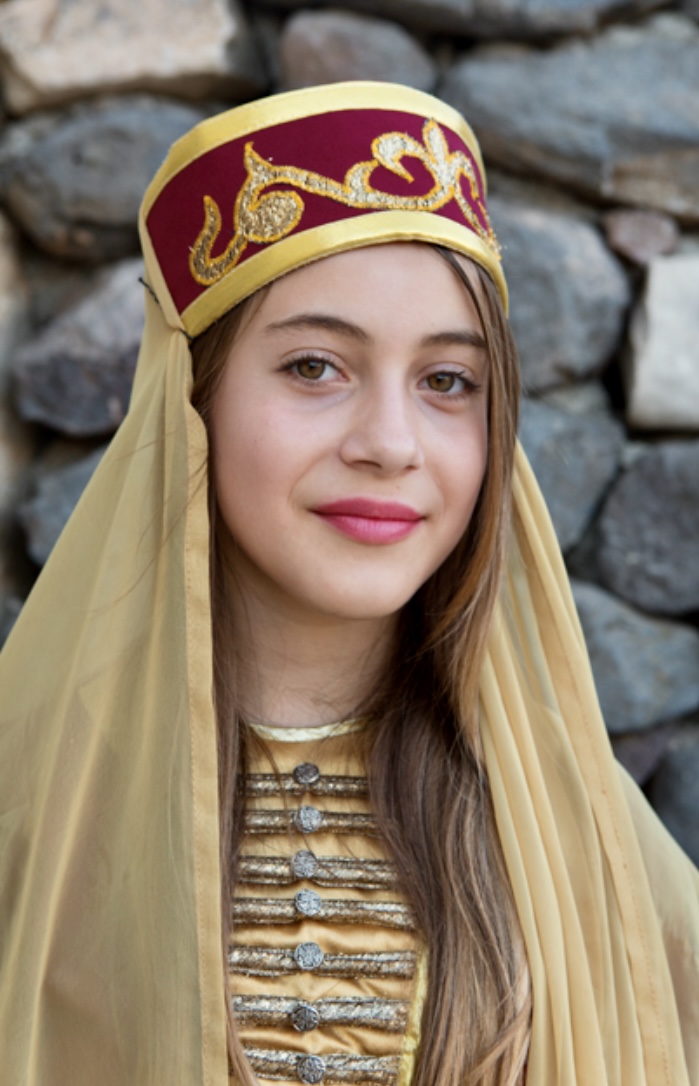
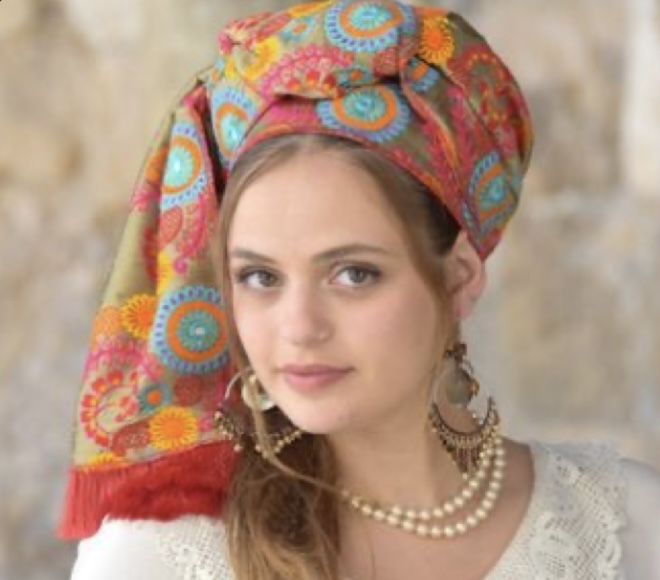
Circassian young woman in native dress

Much of their labor today is agricultural. Olive growing has played a large role in their subsistence . They follow the Muslim dietary laws (refraining from pork, Hallal slaughter) with the exception of fish. Because so many of their people were killed in the Black Sea War, fish and seafood are off the menu in homage to their brethren. They are fairly famous for their smoked meats and hard smoked cheeses. The cheese shop in Kfar Kama boasts of the oldest cheese in Israel: this hard, smoked cheese is shaped like an enormous dagger and is 43 years old!

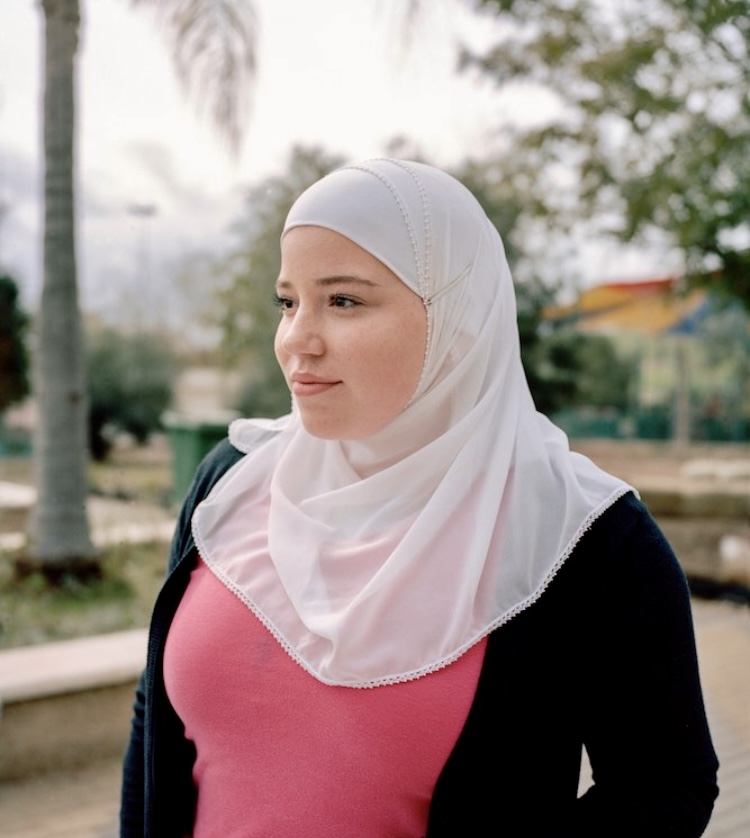
Today in Israel, about half of the Circassians are devout, the other half fairly secular. There is no pressure to be traditional, although all intimately know the culture and traditions. Observant women wear a white headscarf, like Druze women, but the Circassian style for every day is more like a hijab. Colorful clothes as well as pants are worn by the younger women.
The other Circassian village is Rechaniya, near the Lebanese border, established in 1878 by 66 families. It too is built in the fortified walled village style with a central mosque as in Kfar Kama. Because of their location, the village maintained active ties with their Lebanese and Syrian relations across the border. This proved problematic for the Israeli authorities during the 1967 and Lebanese Wars. Frequent home searches were conducted by the IDF for security reasons. Smuggled weapons were confiscated and some of the Rechaniya townsfolk were temporarily moved to Kfar Kana, 30 miles to the south. Mostly, they preferred to remain neutral during the wars Israel faced. Today, friendly relations have been restored. They pride themselves as being full Israeli citizens and part of the fabric of society. Many Circassians today serve in the police and border patrol units. Several are noted Israeli football stars.

Hani Madaji is the owner of the Rechaniya restaurant, Nalchik. There you can eat like a local, feating on lots of carbs, some baked, some fried, all with different fillings. One of the favorites is Haliva, a fried dough dumpling filled with Circassian cheese, potatoes and herbs. Some variations use beef and leeks.

There are Kalkata, dumplings filled with sheep milk yogurt and paprika; memjak, a savory lentil dish and an interesting type of chicken salad. The shredded, cooked chicken is dressed with a rich, garlicky tehineh and is served at room temperature. Before eating a red olive oil that has been infused with spicy Aleppo pepper and paprika, is drizzled over top. Walnuts, also are sprinkled over (Note: for those visitors keeping Kashrut, this food is definitely not Kosher! Still, interesting to see and learn). Also in Rechaniya is a specialized cheese dairy that has been in the same family for generations. It is an art that has been passed down from mother to daughter for hundreds of years.

Nadi explained to us when we asked how the Circassians fit into society in Israel today that it is a matter of tolerance. They see other people and other cultures as having tremendous dignity and worth as human beings. We are all brothers and sisters, she said. We seek to live peaceably among our own people and alongside the other Israeli citizens. However every Circassian carries deep within him the desire to go back to their original homeland that is today part of Russia. They are all a part of the Great Circassian Diaspora. For them, May 21 is their Genocide Remembrance Day. In both Kfar Kama and Rechaniya there are parades, special services and speeches made. All are welcome to attend.
A Micronation Within Israel & Parties on the Beach

As I always say, Israel is the most random country. There are adventures and interesting spots in the most unsuspecting of places. It’s another reason we enjoy living here: we never know what we’ll find next. I had heard rumors of Achzivland when I was in high school from friends’ older siblings who’d returned from Israel. Then the stories popped up again when we were volunteering with the army. There were tales of rock concerts, hippies, free love on the beach, artists, celebs and draft-dodging wanderers in the 1960s-1970s.

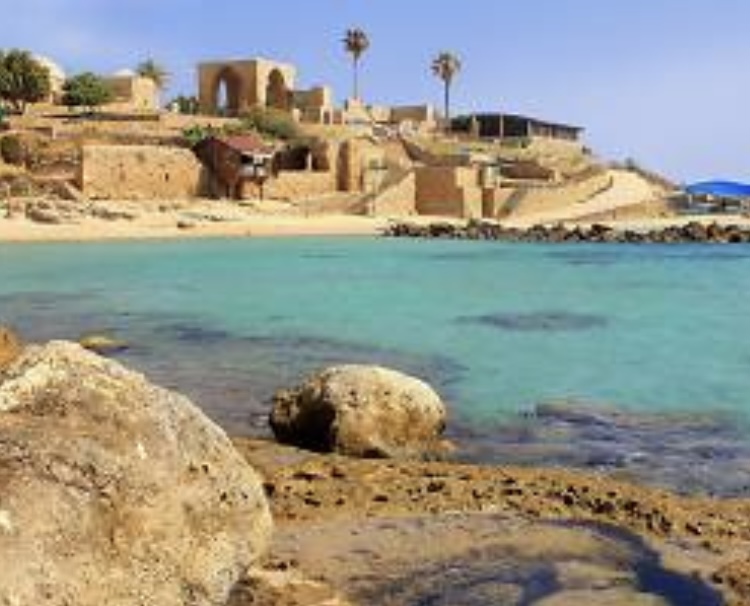
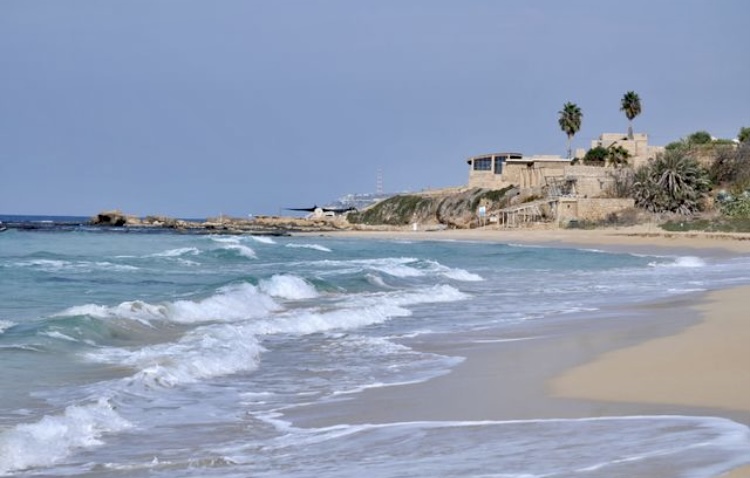
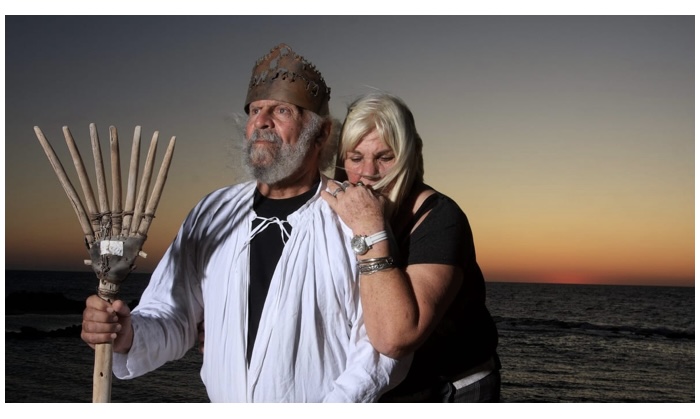
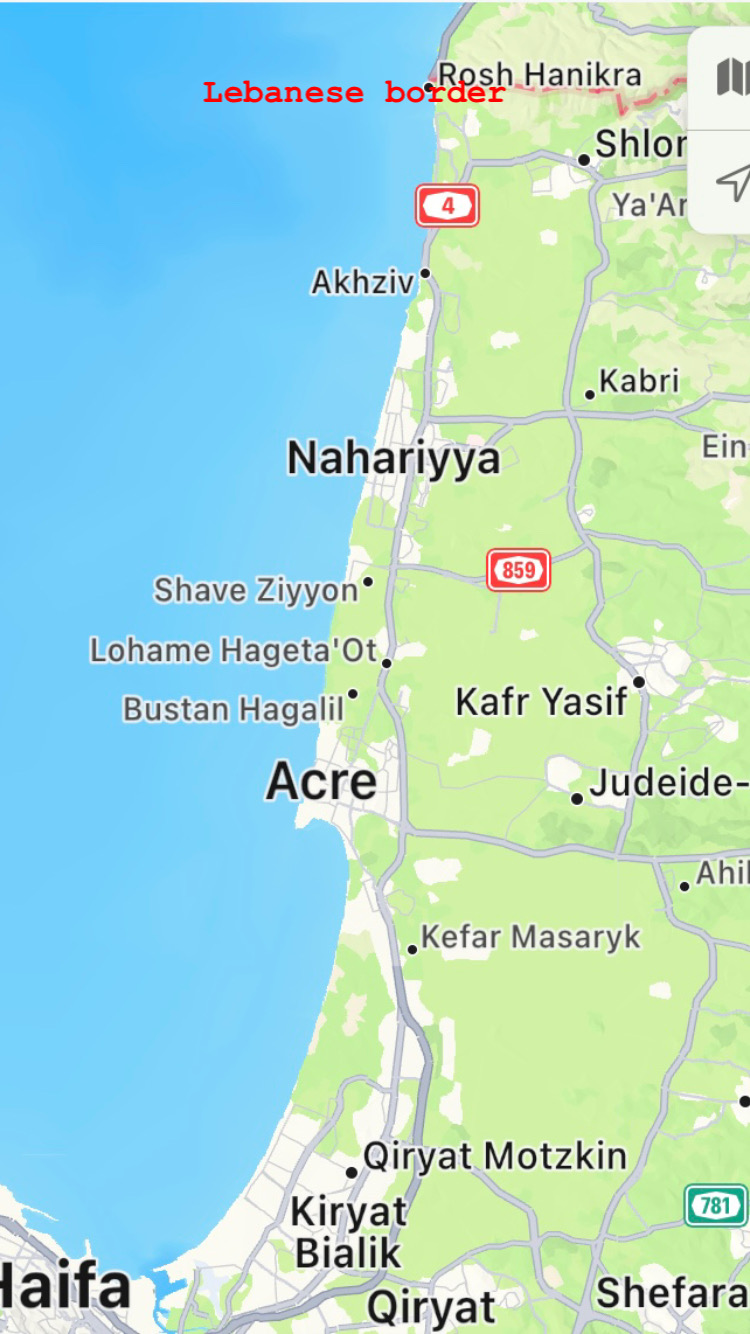
Achzivland is actually its own independent country, the smallest in the world, on the shores of the Mediterranean just 3 miles south of the Lebanese border. The story begins with Persian-born Eli Avivi who immigrated with his family to Israel when he was a baby during the Palestinian Mandate, a time when the British ruled the nascent Jewish state. Always in love with the sea, Eli, who was in his early 20s, was a smuggler. He was involved with the underground navy, pre-IDF: really just a few old fishing boats, a couple freight barges and a decommissioned cruise ship. The British had imposed strict quotas on the number of immigrants after World War II and the numbers were quite low, so Eli would take a small fishing trawler from British Palestine to Cyprus and other European locations to pick up Jewish refugees from the Holocaust and smuggle them at night across the Mediterranean back to their ancestral homeland. After the British withdrew in 1948 and the newly approved (by UN majority vote) nation of Israel fought off the invasion of Arab nations in the War of Independence, Eli Avivi left Israel for colder climates. He worked on fishing boats in the North Sea, in Iceland and Norway for two years. Then he sailed to Africa. But Israel was always calling him back.
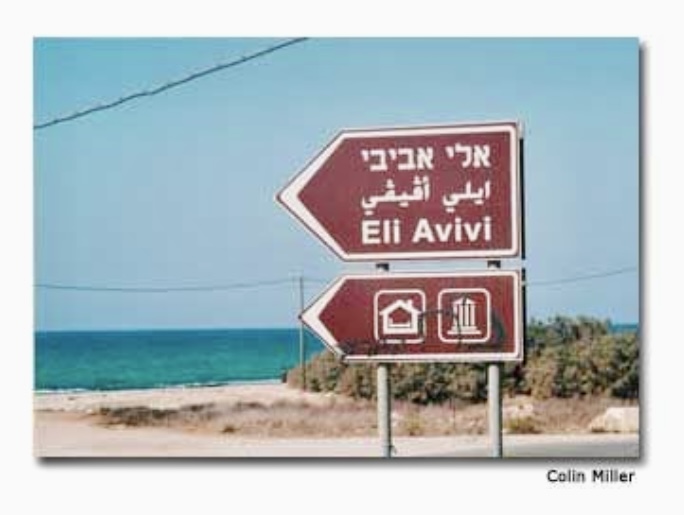
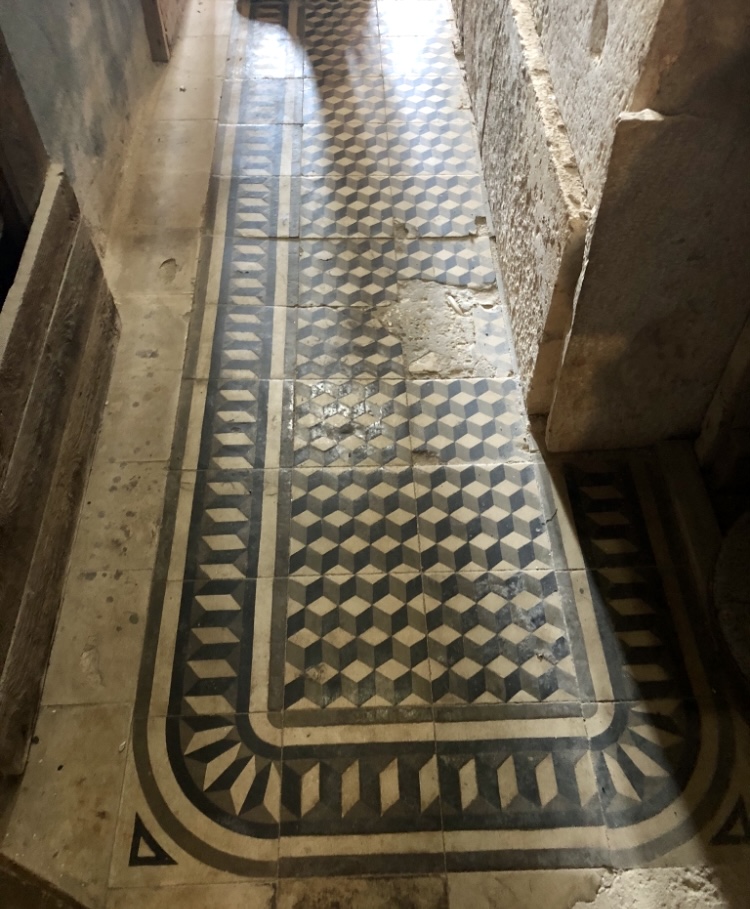
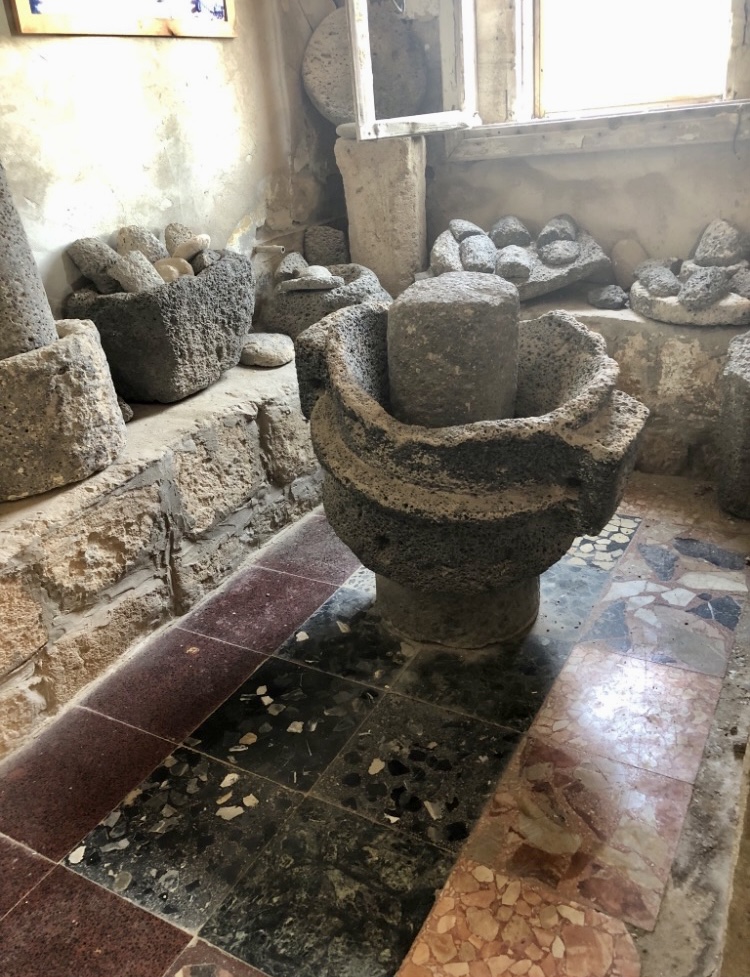
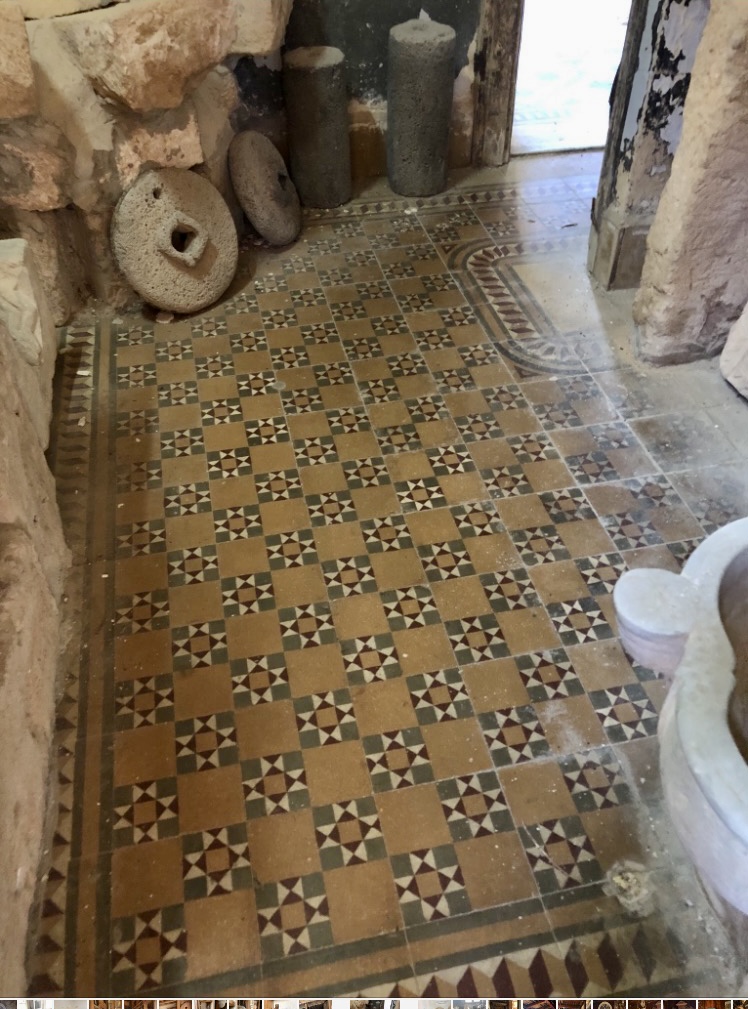
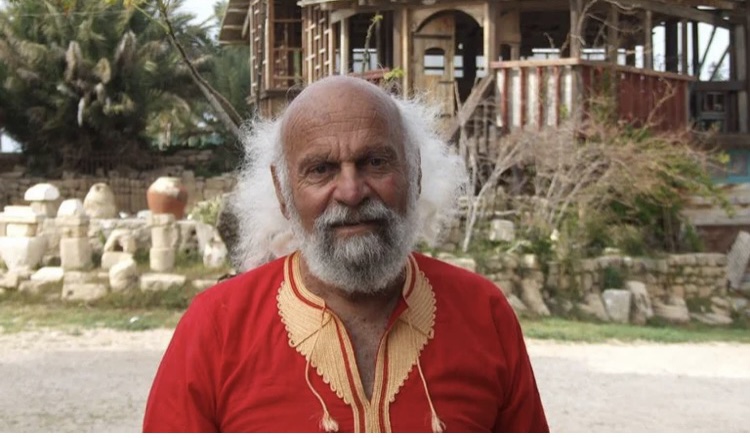
Eli returned to Israel in 1952, settling down at an old abandoned Arab fishing village on the Mediterranean Sea once known as Al-Zeb. The few stone buildings were run down, but there was a certain charm to the compound. To Eli, it was Paradise. Beautifully frescoed plaster walls and magnificent mosaic and tiled floors in each room added to the mystique. Rumor had it that the large house was owned by a wealthy Bedouin sheik and his many wives and concubines. The fishing was excellent, there was a natural-spring well, and it was close to Akko. It was quiet and remote, perfect for a solitary life. The beach-combing and scuba diving were favorite pass-times as well as scouting out the surrounding unplowed fields. Eli picked up all sorts of artifacts and antiquities, his massive collection constantly growing to include pottery, sculptures, ancient Iron Age tools and farm implements, Ottoman and Crusader weapons, glass and coins. Avivi studied the history of his ’new’ home and discovered it went back to Biblical times. It was home to the tribe of Asher and was also inhabited by the ancient Phoenicians who used to trade nearby. What more could a handsome young man want in this Garden of Eden? He was soon joined by the beautiful fashion model, Rina, who became his wife.

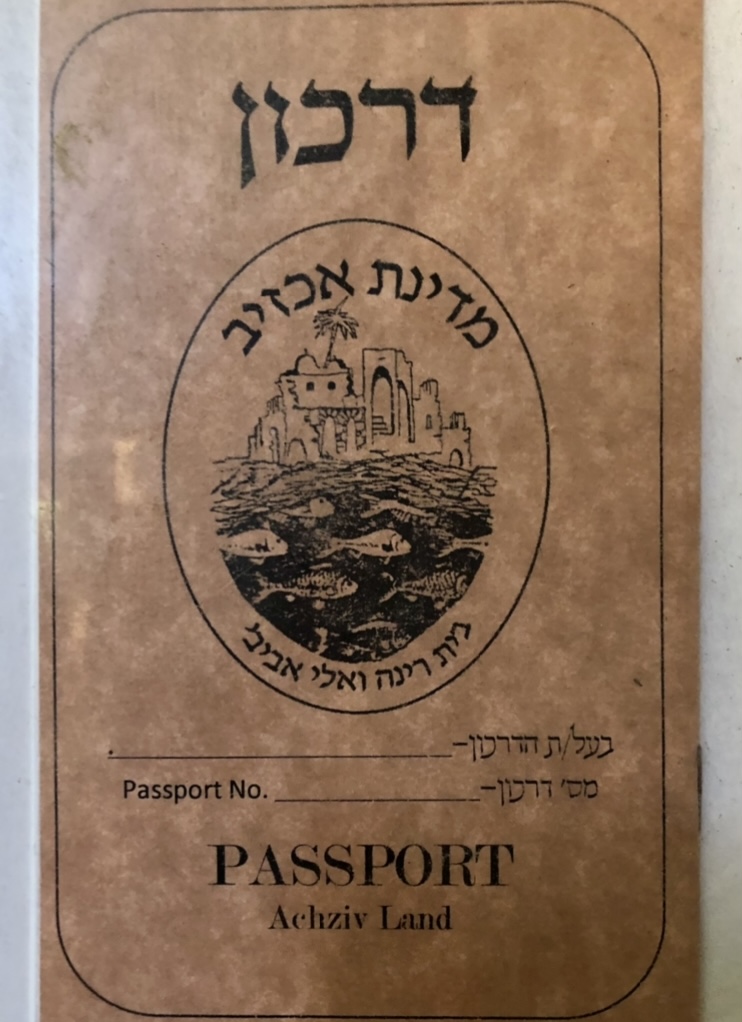
Technically, Eli and Rina were squatters on this 3 1/2 acre piece of prime real estate. The Israeli government repeatedly tried to take the property back, even showing up with bulldozers. After nearly two decades of battles and their refusing to leave, Eli and Rina ripped up their Israeli passports and declared their independence. They held a large press conference and became overnight celebrities in Israel. ”I fought for this country. I loved Israel. But I have no time for the government. I just want to be allowed to live on my own little piece of land, in my own place, in my own way,” he said in a television interview. As an act of protest, Avivi created the State of Achzivland in 1971 with himself as its President for Life. He established a bicameral House of Parliament consisting of Eli and Rina. The new micronation had its own flag, with a mermaid and his house as an emblem. He wrote up a constitution (“The President is democratically elected by his own vote.”), a national anthem and passports.

For all of this Eli Aviv was arrested by the Israeli police and border patrol. He was thrown into jail, but released ten days later when the judge ruled the charge ”Creation of an Independent Country Without Permission” did not exist. Still, he was hounded by the government until he brought a countersuit. The high court ruled he could have a 99-year lease.

Eli and Rina were no pushovers. A group of six Arab PLO assassins tried to infiltrate Israel from nearby Lebanon to commit acts of terrorism in the winter of 1971. The Palestinian terrorists landed their raft on the beach of Achziv on a foggy March morning. The Avivis had seen them approach from their living room window. One wetsuit-clad terrorist met up with a fully-armed Rina as he snuck into the house. Not expecting a loaded rifle and Karl Gustav pointed at his head, he dropped his gun and a bag of grenades and pita breads. Two were wrestled on the beach by Eli and disarmed. The Avivis tied up their captives and fixed a pot of hot tea as they waited for the authorities. The paratroopers, police, Golani brigade – the whole army showed up. The other infiltrators escaped inland and were later caught by the IDF. At this point, the Avivis were national folk heroes.

In the early 1970s, just as today, the world was in upheaval. It was a time of great unrest. The war in Vietnam was raging. The hippie movement was growing. Students were protesting in Europe. The Mideast was in constant turmoil. And the beach at Achzivland was just gaining notoriety. Jewish kids, whose parents sent them after high school to work on a kibbutz would end up there. European hikers and university students found out about this great, laid-back camping area and hostel right on the beach where the only rule was non-violence. They would help out around the property in return for a place to stay and a meal. Nude bathing? No problem. Free love? It was not unheard of. Drugs? While not encouraged, it was not discouraged either. The water was pumped from the well. The bathrooms were rudimentary latrines. The house had no electricity. The young people helped Eli as he constructed his makeshift second story to the house. They helped build additional guesthouses. It was a work in progress. At the time, it was an out of the way local, yet through word of mouth, Achziv attracted artists and bohemians, poets and musicians.

Israeli musicians and rock bands played free, all-night summer concerts on the beach. Soon artists and celebs from around the world were guests there. Young couples came asking Eli to perform marriage ceremonies for them on the beach. He happily complied. In the summer of 1972, the Avivis planned a large Woodstock type music festival. Young people came from Israel, Europe, America, Canada and Australia. From that summer on people from the likes of Bridget Bardot to David Bowie, Leonard Cohen and Bar Rafaeli would drop in. The main house grew in size but not to any code. More bungalows were erected. Electricity and plumbing were eventually installed.

We first visited Achzivland almost three years ago to the day. It was exactly one year to the day that Eli Avivi passed away. Rina was there with several of their old friends remembering times past. Long gone ere the concerts and parties. The main house, now a museum open to the public, was in terrible disrepair. Still, it was not hard to envision groups of revelrers dancing around a fire or hanging around the salon. A few people come by to swim at the beach. But the sun-worshipping youth have now been replaced by large Arab men, their fully-covered wives sitting on the sand. We went again last year and met Ofer, helping out around the property before his army service. His parents were regulars at the beach compound years ago. He remembered the tail end of Achzivland’s glorious past.
Our good friend, Norman (now of blessed memory) had also told us of the place in its heyday. He had come to Israel the summer of 1974 to work on a nearby kibbutz. After his stint there had ended, he met a gorgeous blonde from Sweden. It was an August romance, the tale of the girl that got away. The guests and rock stars that were there. Swimming in the Mediterranean on a moonlit night. Barbecues on the beach. His ”Lagatha” returned to Sweden, he stayed in Israel… and so it goes.

We return infrequently to that idyllic beach. The large lot next door is now a national park/ lifeguarded beach where families come to picnic and swim. The strains of music have been replaced by the sounds of children. It’s a completely different vibe. At Achziv, Rina still rents out cabins called tzimmers, mostly to the locals. They are quite rudimentary, but fitting for the beach. Old timers occasionally spend a summer weekend there, chatting with Rina and recounting tales of the past. If you visit, make sure to bring your passport and have it stamped with the seal of this interesting micronation.

Old Hollywood Glamour in Israel

I love Israel for its absolute randomness. There are just so many amazingly unexpected places to discover here. I had first heard of the old Dolphin House Hotel years ago, but it wasn’t until a few months ago that I had the opportunity to visit the site and learn about its history. A friend of ours took us to brunch at The Breakfast House in the little village of Shave Zion (pronounced SHAH-vay Tsee-YONE in Hebrew).

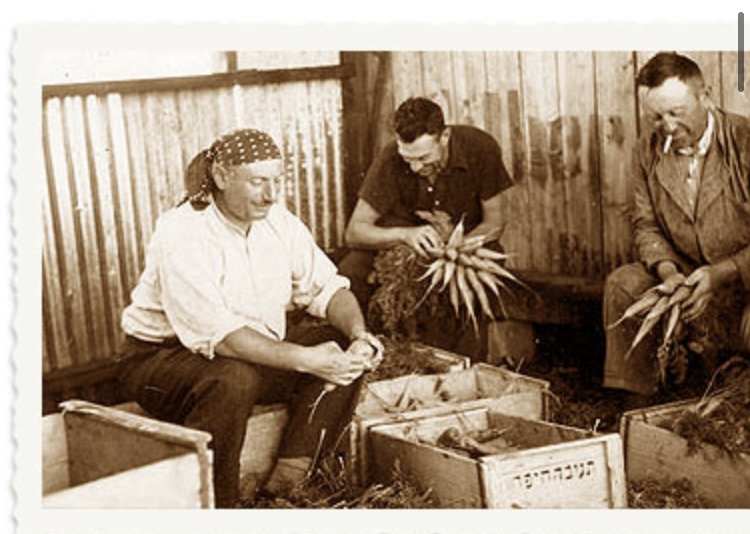
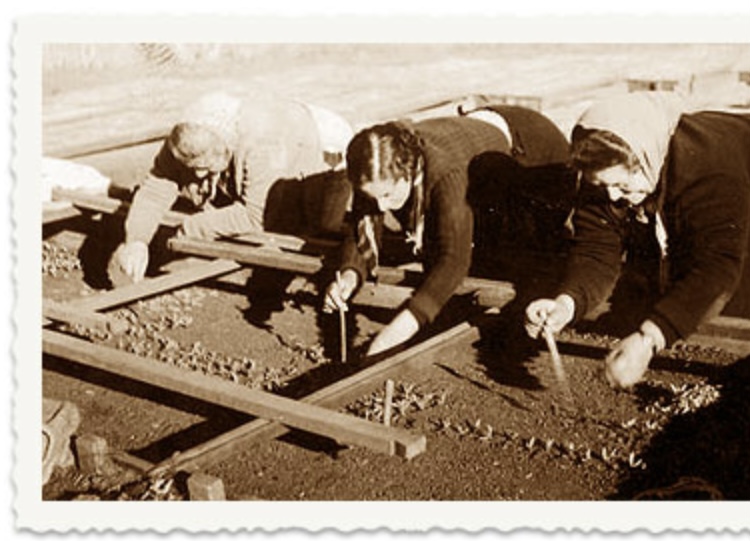
Shave Zion (Return to Zion) population 1209, is located exactly 2 miles between Akko (Acre) and Nahariyya, 5.5 miles south of the Lebanese border. It sits right on the Mediterranean Sea and is one of the most beautiful places to relax and enjoy the sun and sea breezes. It was established in 1938 by a small group of German Jews who were escaping the Nazis. In its early days, the moshav was primarily an agricultural one, growing carrots, wheat, dates and citrus fruits. Fighting off armed bands of Bedouin raiders was not uncommon in the days of the British Palestinian Mandate.

Joshua Malka (1920-2005), was born in Egypt, one of seven children born into an upper-class Jewish family. Speaking Arabic, French, English and Hebrew, he served in the hospitality sector as a manager at the Luxor Hotel in Alexandria waiting on the elites of Egypt including King Farouk. Egypt, however, was becoming increasingly hostile to its Jewish population. Joshua and three of his brothers escaped persecution, immigrating to Israel in 1948, just in time to serve in the IDF during the War of Independence. He was 28 years old.

Afte the war, Joshua, now known as ”Shua,” returned to the hotel industry. He became head of reception at the famous King David Hotel in Jerusalem. At the time, it was Israel’s only luxury hotel serving foreign dignitaries, businessmen and celebrities of the highest order. In the late 1940s, immediately after World War II, Israel saw a huge wave of new immigrants: they were Jewish refugees rising like Lazarus from the concentration camps of Europe, arriving on the shores of the newly-reborn nation with nothing but the clothes on their backs. It was an interesting time for Israel, impoverished from the war with few resources, food rationing and in most places, third world living conditions. Despite all the hardships, the people came with hopes and dreams. It was around this time that the South African movie producer, Norman Lurie started to build a beachfront hotel in Shave Zion.

The new Beit Dolfin, The Dolphin House Resort Hotel and Country Club needed a manager. Someone used to working with VIPs, serving them and catering to their unique needs. None other was more suited for this job than Shua Malka. Shua and his gorgeous wife Eva (Chava), herself a Czech refugee who had survived Auschwitz, moved to Shave Zion in 1951. They lived a charmed life. In the winter they would travel to Europe with their young daughter. At night they would scout the hottest Parisian clubs and Berlin coffeehouses for singers and dancers to entertain at Beit Dolfin. While Shua made business connections, Chava would shop for high fashion in London and Milan. They brought back the highest quality furnishings for the new hotel as well as European chefs and entertainers.

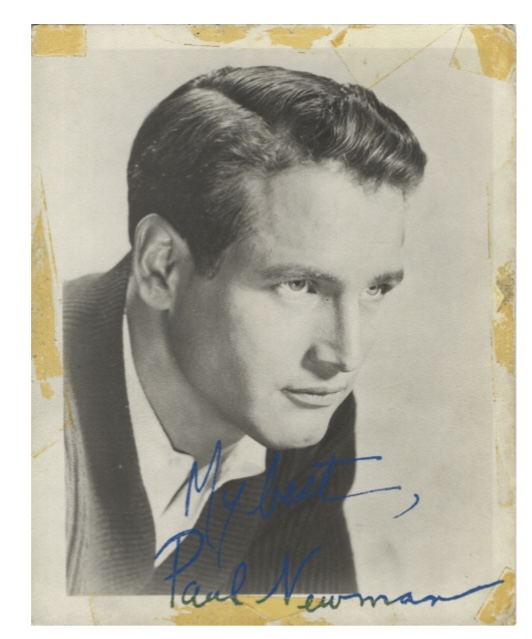
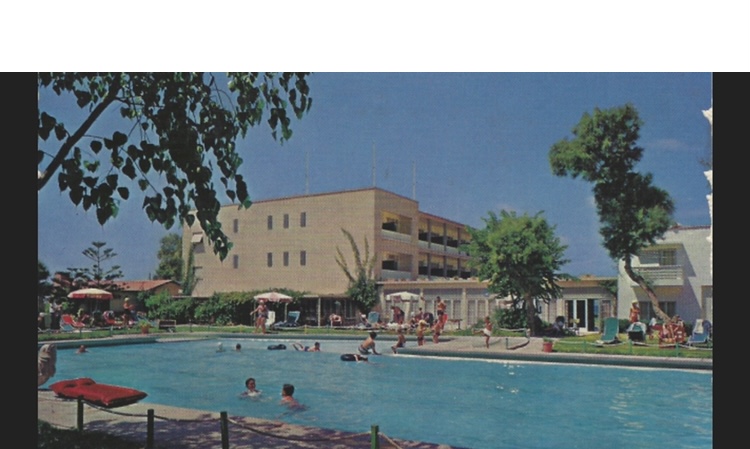
By the mid-1950s, Dolphin House had earned a reputation among royalty, diplomats and Hollywood movie stars. With ”unbeatable scenery and impeccable service,” the luxury hotel had an Olympic-size swimming pool, tennis courts, shuffleboard, library, theatre, synagogue, and activities center. Tsimmerim, private suite cabins on the beach were always in high demand year round. Besides a Kosher dining room, there was a cafe and five-star gourmet chef restaurant. There was a house orchestra, jazz band, and celebrity entertainment. It was not unusual for there to be ballroom dancing one evening, jitterbugging on the terrace the next and Israeli folk-dancing around a huge bonfire on the beach another night. Peter Sellars, Danny Kaye, Elizabeth Taylor, Frank Sinatra and Sofia Lauren were among the most prominent regular guests. Leon Uris wrote his novel, Exodus, from a beach chair on the sand there. Later, during the filming of the major motion picture by the same name, Pat Boone, Eva Saint Marie, Paul Newman and Joanne Woodward would stay at Dolphin House. Kirk Douglas first stayed at the hotel while filming ”The Juggler,” the first full-length Hollywood movie to be filmed in Israel. It was there that he ‘discovered’ the young Dalia Lavie who lived on the moshav. She told him she wanted to be a dancer, and Douglas convinced her parents to let her study ballet in Sweden. Dalia Lavie would go on to become a top model and Hollywood starlet, often playing the role of femme fatale. She is best known for her performance in the James Bond film, Casino Royale.

Beit Dolfin didn’t just bring Beverly Hills style living to Shave Zion, it raised the entire quality of life of the moshav. The resort complex employed round-the clock workers from chefs, waiters and waitresses, cleaning crews, entertainers, valets and chauffeurs, activities leaders, lifeguards, tennis instructors and managerial staff. Private tour guides would escort the guests on hikes and to historical sites throughout the land. The Malkas built a waterfront villa and were the first in Shave Zion (outside the hotel) to own a telephone, television and private car. By the mid-1960s, Shave Zion had one of the highest standards of living in Israel.

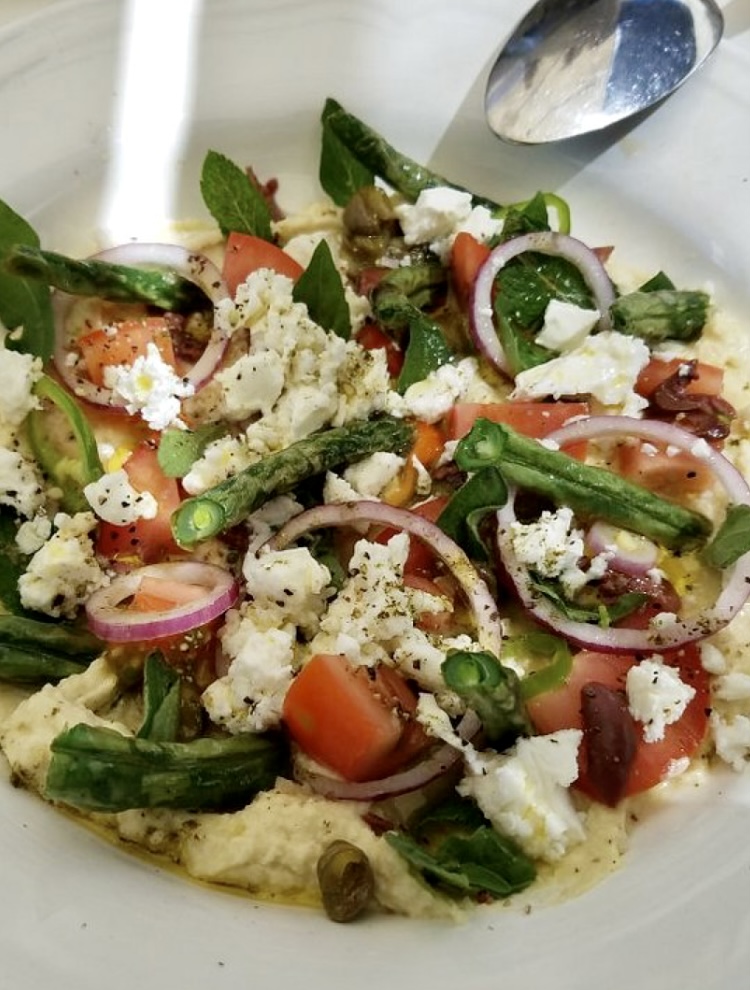
I heard the stories over what is arguably, the best brunch in Israel…The Breakfast Club cafe. We sipped mimosas on the patio – the place is always packed and reservations are an absolute must! It’s a bit out-of- the-way, but easy to find as the village only has one main street, lined with shade trees, boutiques, cafes and pubs. Their scrambled eggs on brioche served with creme fraiche and lox was to die for. My husband ordered the chavita, an omelette topped with asparagus, basil, Mediterranean vegetables and feta, equally delicious.

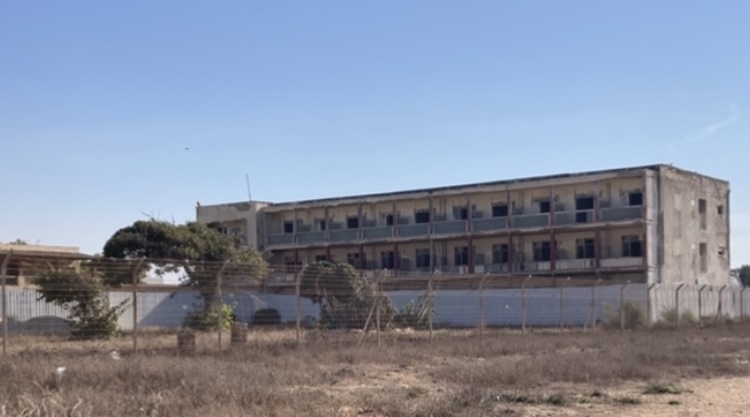
After brunch, we were in desperate need of a walk, so we made our way down the street to see the hotel I had heard so much about. Unfortunate is not the word. Today it is completely abandoned, fenced off, and in absolute disrepair. Sad. Sad. Sad. The bones oof the building are still there, but it is hard to imagine the glory days. We pray someone will buy and restore it to its former self, abuzz with VIPs and alive with activity. Until then, ghosts of the past haunt it halls and memories of music and laughter waft from the balconies of Beit Dolfin.

A Quintessential Israeli Dish- 5 Ways!

I thought I’d take us all away from the constantly dismal news cycles and do a fun food blogpost this time. I was first introduced to chicken schnitzel by my California/Israeli girlfriend, Bilha. Every Friday afternoon, my son Max and I and Bilha would go to the local retirement home and do a Shabbat liturgy for the elderly Jewish residents. We’d light the Shabbat candles, sing wonderful songs, read a part of the Torah passage for the week, tell a story and say the blessings over the wine and challah bread. It really was a highpoint of our week, something we always looked forward to and something I still miss terribly. We made beautiful friendships with Holocaust survivors and other residents. And I really miss Bilha. As we’d leave to go back to our homes each week, we’d discuss what we were making for Shabbat dinner. For me, it was invariably salmon: for Bilha, who grew up in Israel, it was usually schnitzel. She gave me her recipe. I tried it, and was hooked! It was delicious…. and really easy to prepare. And the leftovers!!!

Fast forward to our lives here in Israel. I quickly discovered the ubiquitous schnitzel. First brought over by German and Austrian immigrants, it is a staple food here. It’s very economical and easy to prepare. In the stores here, you can buy ”chicken schnitzel,” boneless, skinless chicken breasts that have been pounded thin into cutlets. Or there are plenty of pre-made frozen varieties that all you have to do is pop theEm in the oven or frying pan. When my husband and I volunteered to serve in the army (warehouses) each week, we were usually served chicken schnitzel for lunch. It was at the army that I first discovered corn schnitzel patties, because 32% of the soldiers were vegetarian. And there are many fast food schnitzel and chips shops including Schnitzelina, which specializes in the tasty cutlets stuffed into a baguette sandwich.

I will begin with Bilha’s recipe, the basic schnitzel (it’s ALWAYS chicken for the meat) and then go into some easy and tasty variations. The recipe calls for a kilo (about 2 pounds) of chicken cutlets. I don’t know if they sell pounded breasts in the markets where you are, but if you buy the boneless, skinless breasts or tenders, they can be pounded to flatten to about 1/2 inch thick between two sheets of waxed paper. A kilo is about 6 half breasts for me. O.K. Let’s start

Bilha’s Chicken Schnitzel, Israeli Style

I serve this with wedges of lemon to squeeze on top (a must!!!), an Israeli salad of chopped tomatoes, cucumbers, red onion, salt, olive oil and lemon juice. Roasted or mashed potatoes are also delicious with this, but most Israelis eat this with chips or French fries. I hope you enjoy it as much as we do- oh!!!! if there are any leftovers – I ALWAYS make enough to have leftovers- they make the BEST sandwiches, cold with lettuce and tomato, mayo and Thousand Island or for me, just humus.

Ingredients:

  • 1 kilo (2.2 lbs or 6 half breasts) chicken cutlets
  • 1 cup flour
  • 2 cups dried breadcrumbs
  • 3 eggs
  • 1 tsp dijon mustard
  • 1 Tbsp mayonnaise
  • 3 lemons
  • lemon zest
  • salt and pepper, about 1/2 tsp each)
  • 1 tsp paprika, optional
  • 1 TBSP sesame seeds, optional
  • vegetable oil

In a flat pan, beat the eggs and add in the dijon and mayo. In another flat dish or pan, pour on the flour. In a third flat dish, the bread crumbs, grated lemon zest from one lemon, salt and pepper. (Many people here add 1 tsp paprika and 1 TBSP sesame seeds which I find adds to the deliciousness).

Rinse off the cutlets and towel dry. First dredge in the flour. Using a long tongs, coazt the floured chicken cutlet in the egg mixture. Then place in the pan of bread crumbs to cover each side. Heat the oil (canola, safflower, sunflower) in a large skillet until shimmery. I use about 4 TBSP, then add more. I don’t like the cutlets swimming in oil, but do want to have a nice crunchy outcome. Place the breadcrumb coated chicken pieces in the hot oil and let fry until they are nice and golden brown on each side. Transfer the cutlets to a wire rack with paper towels underneath the rack, but not touching the schnitzel. Serve hot with lemon wedges to squeeze over the top.

Shevvy’s Trader Joe’s Falafel Schnitzel

This is a fun recipe that I got from my friend in the States. She raves about it. The kids love it, her Israeli husband is addicted to it, and I had to bring back two boxes of falafel mix to Israel so we could enjoy it as well. It does not disappoint. Seved with a side of chips (fries), a salad or chopped Israeli salad, fluffy pita bread and humus and/ or techineh. Oh my goodness! For those of you who don’t live near a Trader Joe’s market, see if you can find a standard dry falafel mix-

Ingredients:

  • 1 kilo chicken cutlets (see notes above)
  • 1 cup panko (Japanese style bread crumbs)
  • 1 cup Trader Joe’s falafel mix
  • 2 eggs
  • 1/4 cup humus or techine
  • vegetable oil
  • humus or techine for dipping

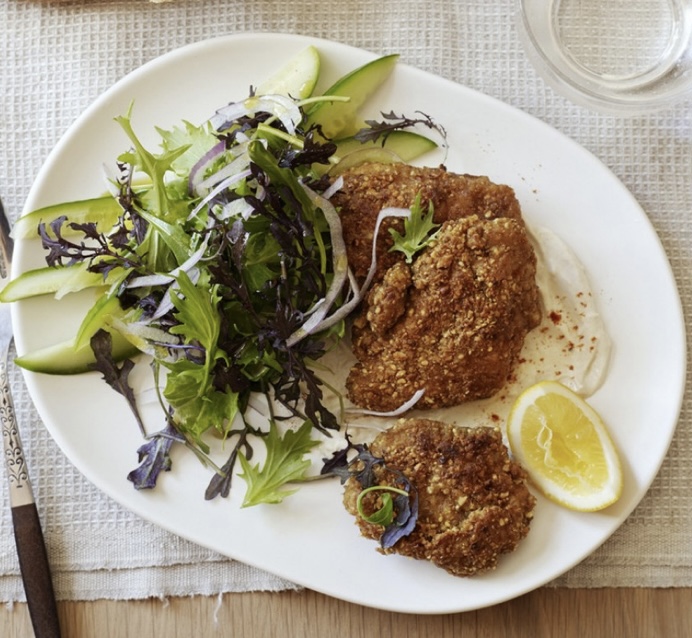
In flat bowl or dish, beat the eggs. In another flat bowl, combine the panko and falafel mix. Dredge rinsed and dried chicken cutlets first in egg to coat, then in the panko falafel mix. Heat about 4 TBSP oil in a skillet until hot and shimmery. Add the cutlets, frying on each side until browned and crispy. Add more oil as needed. Transfer the cooked schnitzel pieces to a wire rack to drain and keep crunchy. Drizzle with techine or put a dollop of humus on top. We do both. Oy va voy, is is amazing!


Crunchy Seeded Schnitzel, Yotam Ottolenghi Style

I love Chef Ottolenghi’s recipes. I have all of his cookbooks and was first introduced to him here in Israel. A friend of mine who lived in Jerusalem had a cookbook club. We would pick a certIn chef each month, prepare their recipe as was written, then do a riff on the original recipe. This is my slightly modified version of his schnitzel.

Ingredients:

  • 1 kilogram schnitzel chicken cutlets
  • 6 TBSP sunflower seeds
  • 3 TBSP toasted white sesame seeds
  • 2 TBSP black sesame seeds
  • 1/2 tsp sweet paprika
  • 1/2 tsp smoked paprika
  • 1/2 tsp granulated garlic
  • 1 tsp salt
  • 1 tsp black pepper
  • 2 eggs
  • 2 TBSP mayonnaise or humus
  • 1 cup flour
  • extra virgin olive oil

Start by combining the seeds and spices in a large flat-bottomed pan. In a second flat pan, beat the eggs and mix in the mayo or humus. This helps the coating to stick to the cutlets. In a third pan, place the flour. Rinse and pat dry the pounded chicken cutlets (they may be already flat, or you can flatten the breasts between two sheets of waxed paper). Dredge the cutlets, one at a time, in the flour. Then using a tongs, transfer to the egg wash, coating both sides. Next, place each cutlet into the seed mixture. Both sides should be covered. Heat the olive oil, about 4-6 TBSP in a large skillet. When very hot, place the cutlets in the oil, frying on each side until golden brown. Transfer to a wire rack to drain.

Tamar’s Asian-Inspired Schnitzel Curry

I looked all over, but could not find a photo of this one. So sorry. This is a must-try, and frankly, is our favorite twist to the standard schnitzel recipe. I marinate the cutlets overnight to infuse the flavor and tenderize. Because many recipes for chicken include a milk bath, and that is not within the Kosher guidelines, I decided to try coconut milk. Infused with the curry and lemongrass, it’s heavenly! Also pretty funny, in Israel canned coconut milk must be labeled ’coconut liquid’ so people don’t get confused and think it’s a dairy product. Only in Israel! I always bring at least 6 bags of Angel-Flake coconut back from the States. We don’t have it here, and it’s just so moist and delicious. If you don’t have Angel-Flake, use the dried coconut shavings. I serve this with chutney on top and rice as the side. Add in roasted broccoli with a bit of teriyaki or soy sauce and some roasted carrots and you have a feast.

Ingredients:

  • 1 kilo chicken cutlets (see note above)
  • 1 can coconut milk (liquid)
  • 1 TBSP yellow curry powder
  • 1 4-5 inch piece of lemongrass cut in thirds
  • 1 cup panko bread crumbs
  • 1 cup baker’s Angel Flake coconut (or desiccated coconut)
  • coconut oil
  • apricot or fruit Indian Chutney to top

In a freezer bag, or a glass baking dish, shake up and pour the can of coconut milk/liquid. Add the curry powder and the sticks of lemongrass. Add the chicken cutlets to coat. Let marinate overnight or at least six hours. (I put several bags of this in the freezer along with the coating mix in a separate freezer bag. Defrost in the fridge and assemble for a quick dinner)

In a flat pan, add the panko and the shredded coconut flakes. Mix well. Remove the marinated chicken to the breading pan and coat on both sides. Heat up about 1/4 cup coconut oil until shimmering. Add the cutlets to the hot oil and cook until golden on each side. Transfer to a wire rack for draining. This is my favorite. Please try it!

Jessica Halfin’s Vegetarian Corn Schnitzel

I’d never leave out the vegetarians! We first had these when doing our army service and they were quite tasty. Here in Israel, they are a staple on the kiddie menu. My friend, Jessica Halfin, who did Haifa Street-food Tours and who also writes for Hadassah Magazine, developed this healthy version of corn schnitzel. The recipe makes about 10 patties.

Ingredients:

  • 5 1/2 cups canned and drained or frozen corn
  • 3/4 cups all purpose flour
  • 2 cups breadcrumbs
  • 3/4 tsp salt
  • 1/2 tsp black pepper
  • 1/2 tsp granulated garlic
  • 1 egg
  • 1 TBSP white sesame seeds
  • vegetable oil

Process 4 cups of corn kernels in the food processor until smooth. In a large bowl, add the processed corn along with the 1 cup whole corn kernels. Mix in the egg, the flour, the spices and 1 cup of the breadcrumbs. In a flat pan, mix together the additional cup of breadcrumbs and the sesame seeds.

Using an ice cream scoop, scoop the wet mixture into the bread crumb pan and flatten, coating the patty with breadcrumbs on both sides. In a skillet, heat the vegetable oil until hot and shimmery. Using a spatula, transfer the corn cutlet to the skillet and fry until golden brown on both sides. Drain on wire rack.

Serve with ketchup and Israeli tomato-cucumber salad, pita and humus on the side.

It’s a Wrap! The Art of Headcovering

Recently a good friend of mine in the States who is Catholic asked me to buy her a beautiful Israeli chapel veil for when she goes to Mass. After all, I’m sure that she thought it’s the Holy Land, so they must be sold everywhere. In all my touring the country and visiting holy sites of many different religions I have only once seen chapel veils – actually mantillas worn by a group of Mexican ladies on a pilgrimage to the Annunciation Basilica in Nazareth.

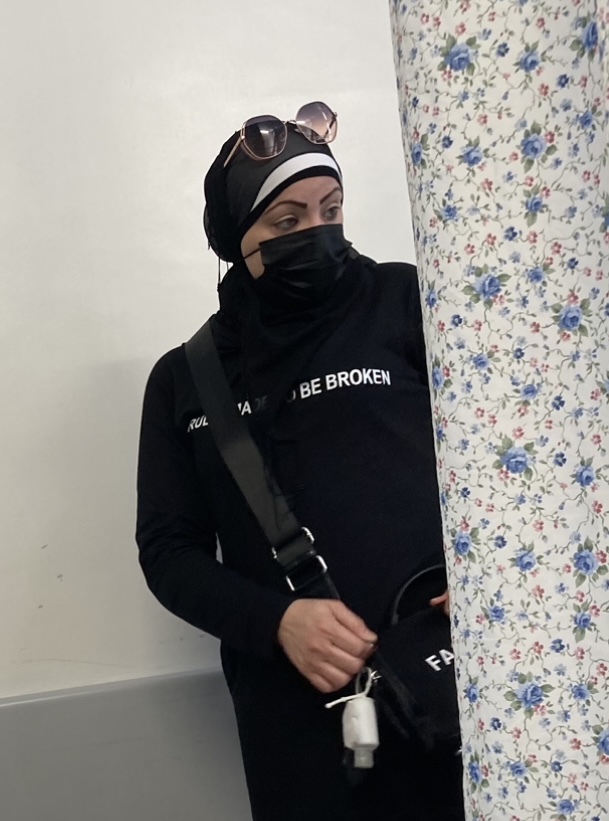
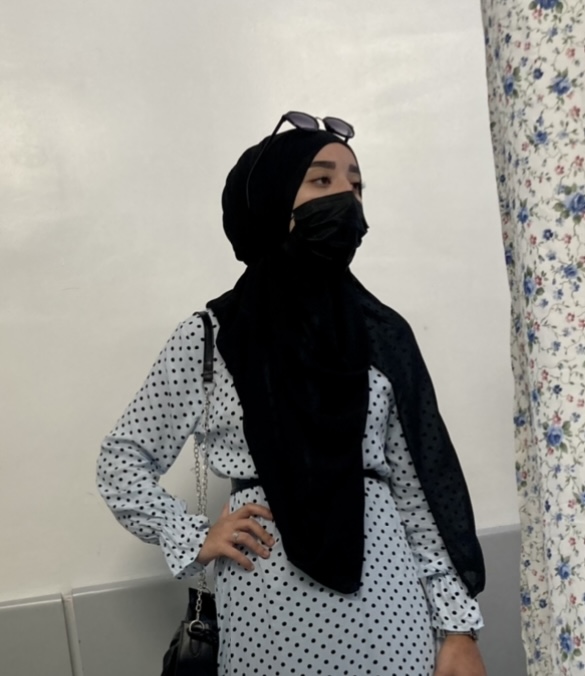
Israel is a unique place in that there are a majority of people who do cover their heads. Just by looking, one can tell which religious or ethnic group a person belongs to. Religious Jewish men wear different styles of kippah – knit, black velvet, small, large- and different styles of hats depending upon their sect. Druze men wear white knit caps or maroon fez-type turbans, depending upon their rank. And some of the Muslim men wear tight-fitting knit caps. Sometimes you will be lucky enough to see a Bedouin shepherd sporting his kaffiyeh tied around his head with black rope.

But it’s the women who really take head covering to a whole new fashion level in Israel. The married women are the ones who cover their heads here. So if the woman is religious, right away you know her marital status (secular people or hiloni as well as Christians keep their heads bare). Druze ladies are the plainest, wearing long black robes and white veils. Muslim women cover their entire heads and the neck and throat with a hijab, which gives them a very distinct look.

Orthodox Jewish women also keep their heads covered all the time. Whereas there are no Biblical or Scriptural injunctions that are given, it is a tradition rooted in ancient times. It is both a sign of respect to G-d, that one is under His authority; a sign of one’s marital status; a beautiful crown for a queen; and for some, a sign of modesty in reserving the most beautiful parts of herself for her husband only. It is NOT a sign of feminine subjugation, as the man also covers his head in the religious household.

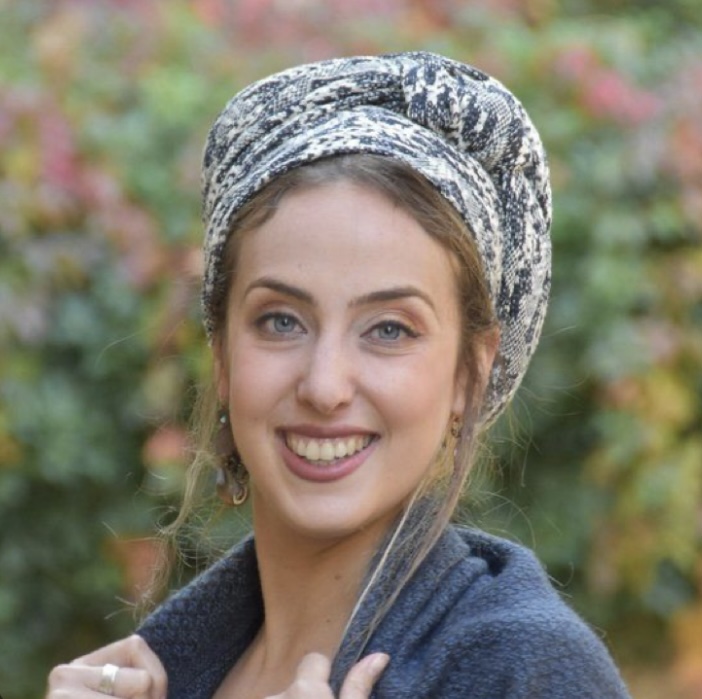
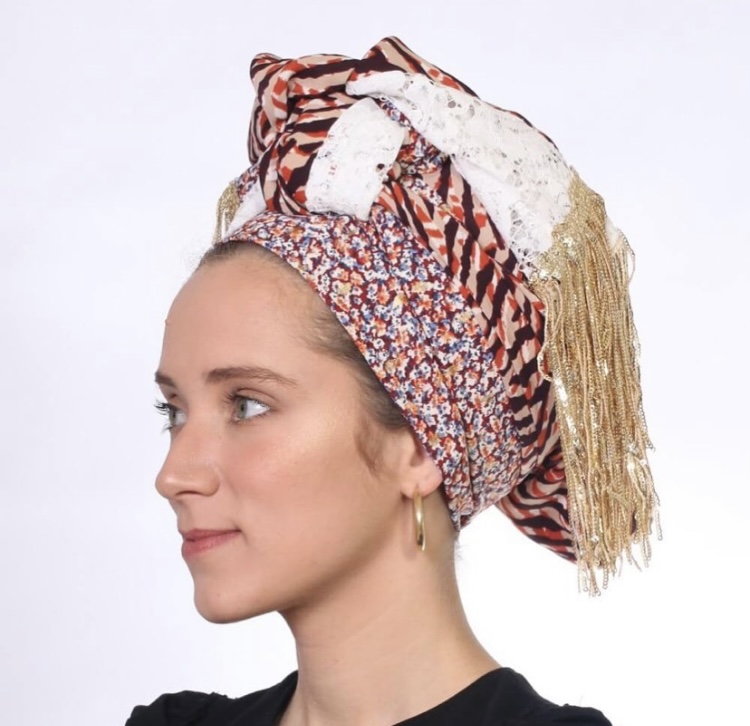
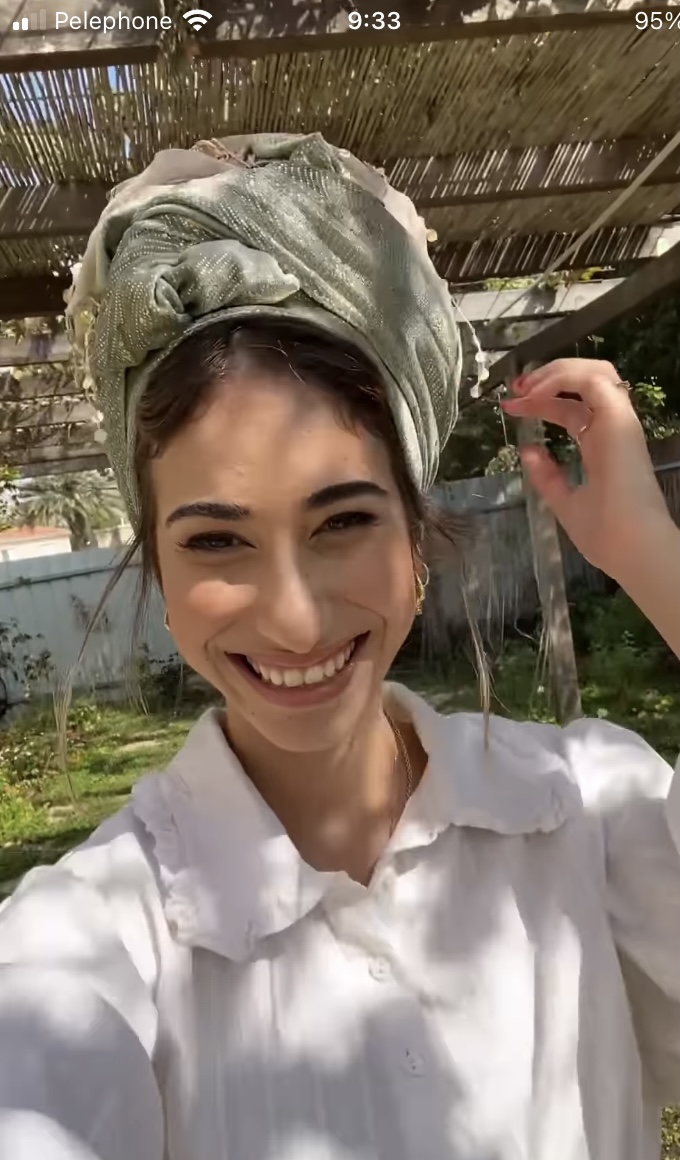
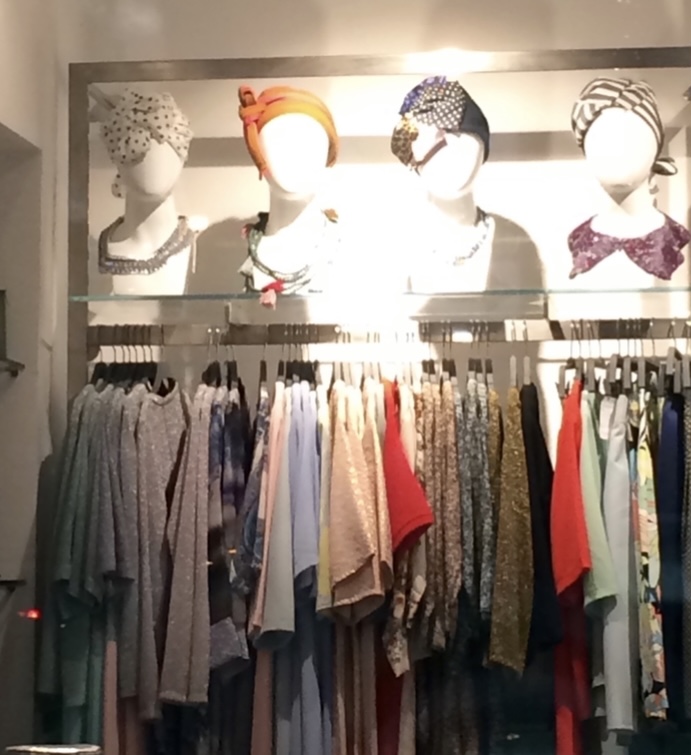
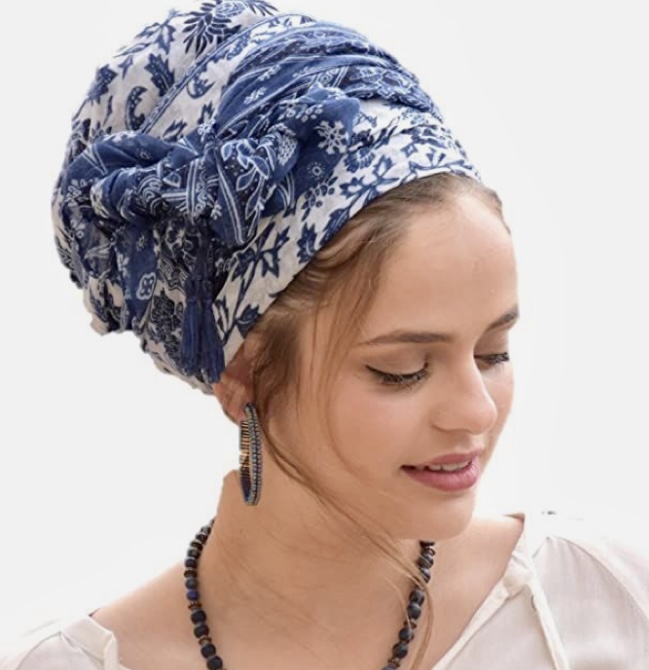
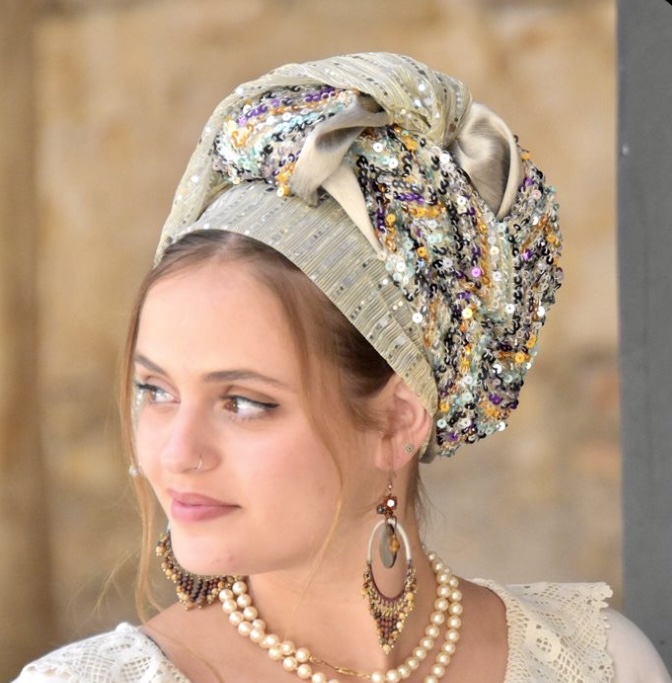
That said, let’s move to the fun part… the fashion. The headwrap is a creative and beautiful extension of a typical Israeli look. Called a mitpachat, meet-PAH-khat, in Hebrew or tichel, TIH-khel in Yiddish, it is a single or multiple layers of scarves wrapped around the head. Sometimes a bobo is used, which is a padded pouff used to add extra volume and a wig band is essential for keeping the mitpachat in place.

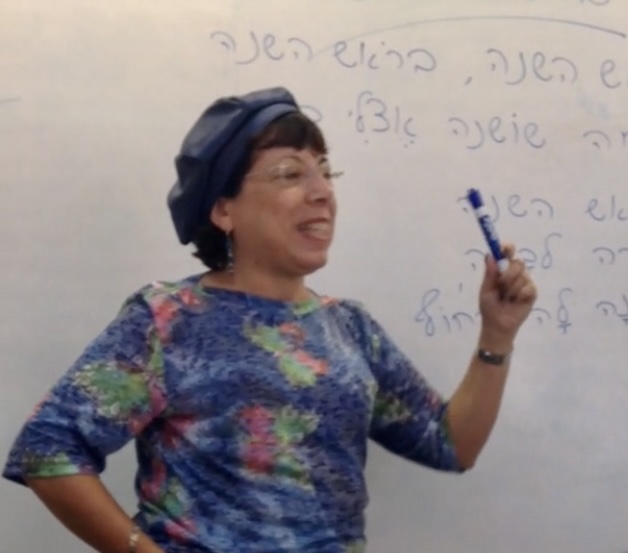
Although married women of all ages wrap their heads in scarves and laces, some of the older women and women who don’t like that look for them, opt for hats. Sometimes berets in felt wool or fluffy knit are worn, others sport jaunty little caps which range from extremely casual to very dressy (weddings, Shabbat, holidays).

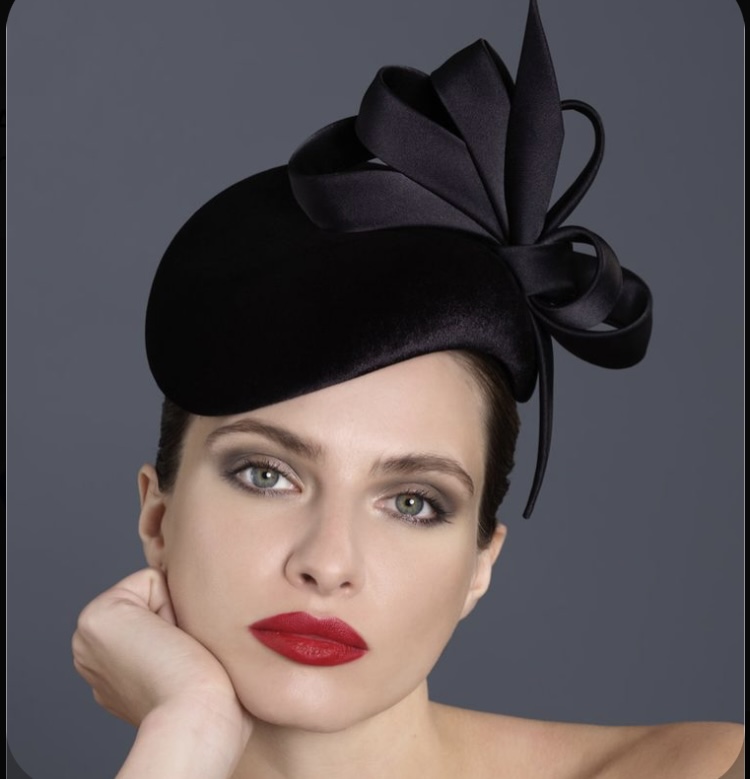
Not up here in the periphery where things are more casual, but in Jerusalem, Tel Aviv and the center you can see amazing fashion statements. I think it’s the influence of French and British Jewish women, but I’ve been recently seeing the most gorgeous fascinator hats worn by young married ladies of style. There are entire shops which just sell hair accessories… and some of the selections are very, very expensive!

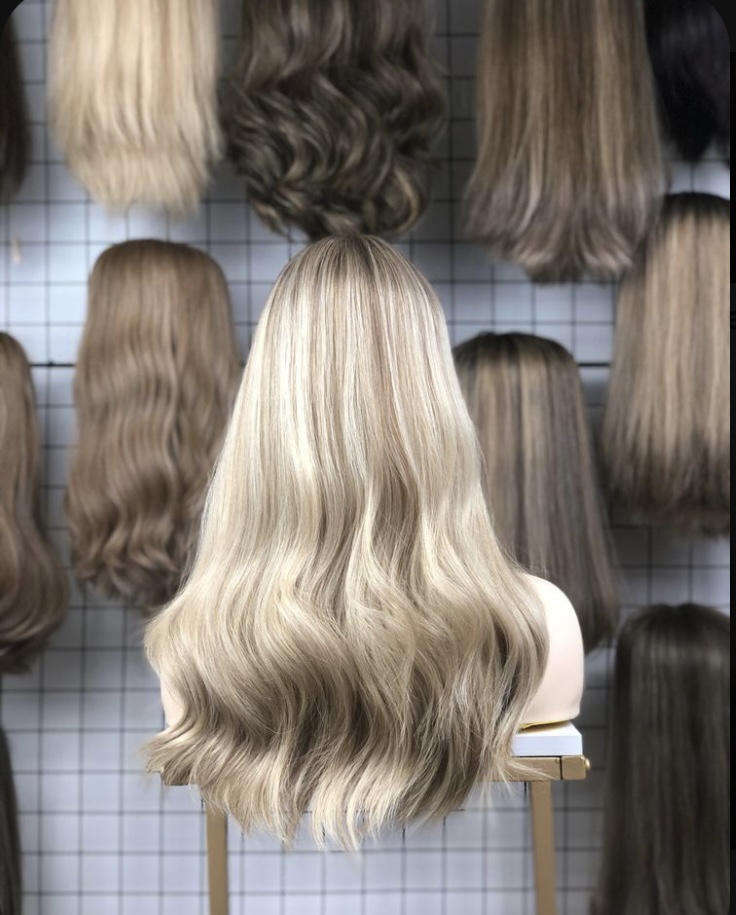
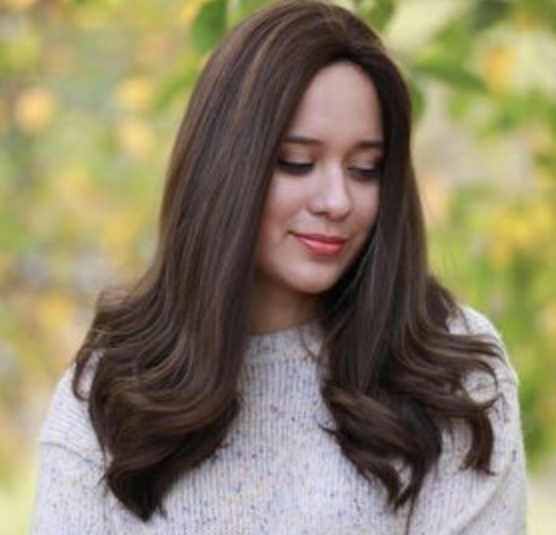
The next look, worn by many ladies in the Chabad sect, is the sheitel, SHAY-tl. Be very, very fooled. These are wigs. Not yo momma’s wigs either. Beautiful, long full, silky, luscious locks which cover the head, but feel and look incredibly natural. I remember pointing out women in sheitels to my husband when we first got here and he was pretty incredulous. If you didn’t know, there’s no way you could tell. It’s now become a fun ”game” for us, especially in the larger cities. And of course, they come in all lengths, colors, textures – and price ranges from expensive to exorbitant!

So there you have it, the diverse world of Israeli fashion. One of the most popular items to buy at the shuk, the markets, here in Israel are pashminas. They are huge scarves made of lamb’s wool and woven in the most gorgeous variety of patterns and colors. Many tourists buy them to wear as shawls for cool evenings. Some use them for table coverings or even wall hangings. Jewish women collect them to use as mitpachat. I have a large basket full of them, yet I have never once seen a chapel veil for sale. Not in the Christian quarter of Jerusalem, nor in Nazareth or any other shop selling to pilgrims here. Although it is a rule that one must dress modestly upon entering a church here(no shorts, bare legs or arms), head coverings are not required. I leave you with a few more samples-

Ancient Mysteries

The last day of our three day desert adventure this past December was incredible in several ways: it was midweek and there was no one else for miles so we were alone in the desert – a special experience; we were able to cover a tremendous amount of territory and make it to three amazing and different archaeological sites; we were trying to do it all before the predicted high winds, sandstorm and first major storm of the winter hit.

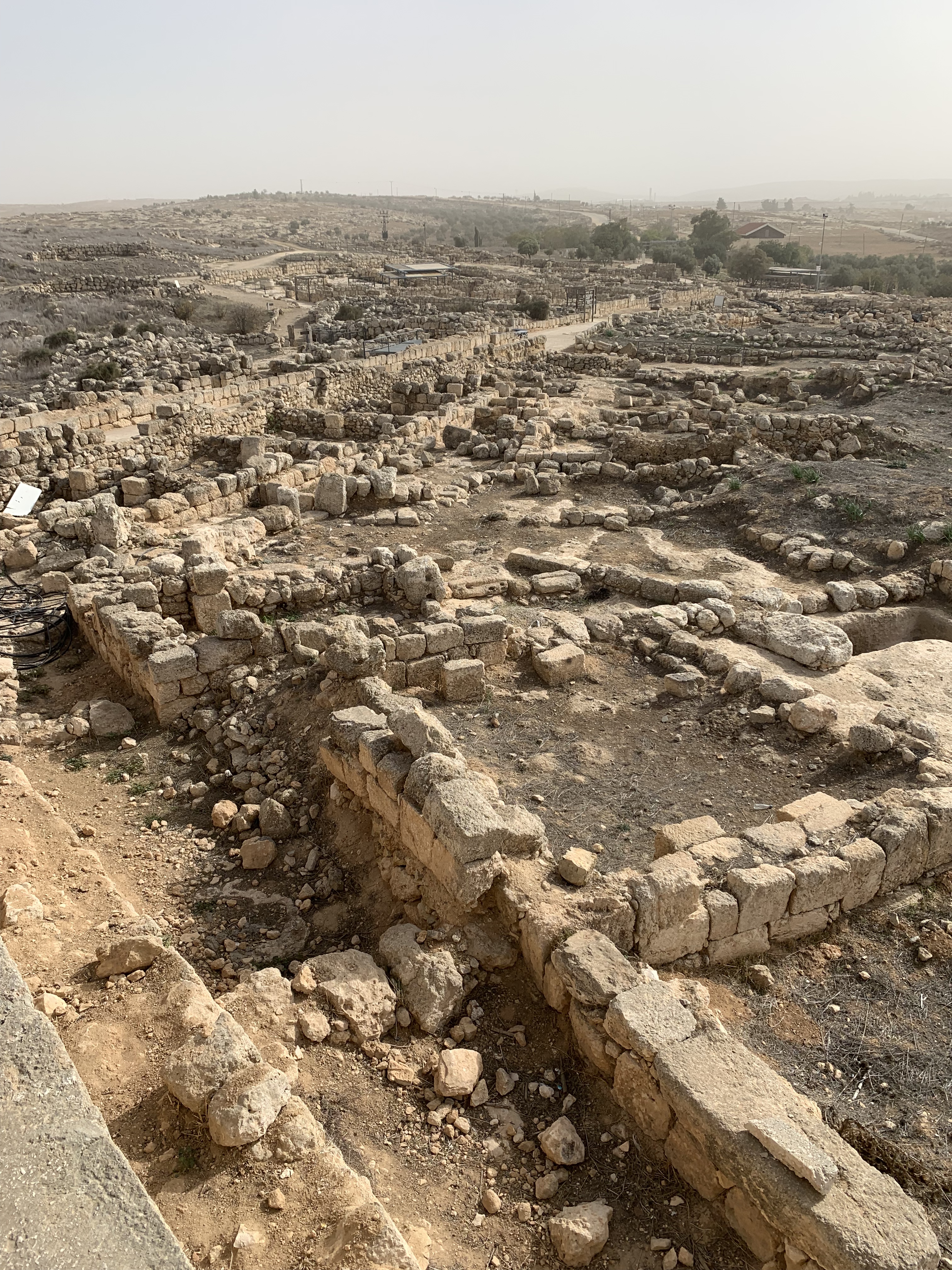
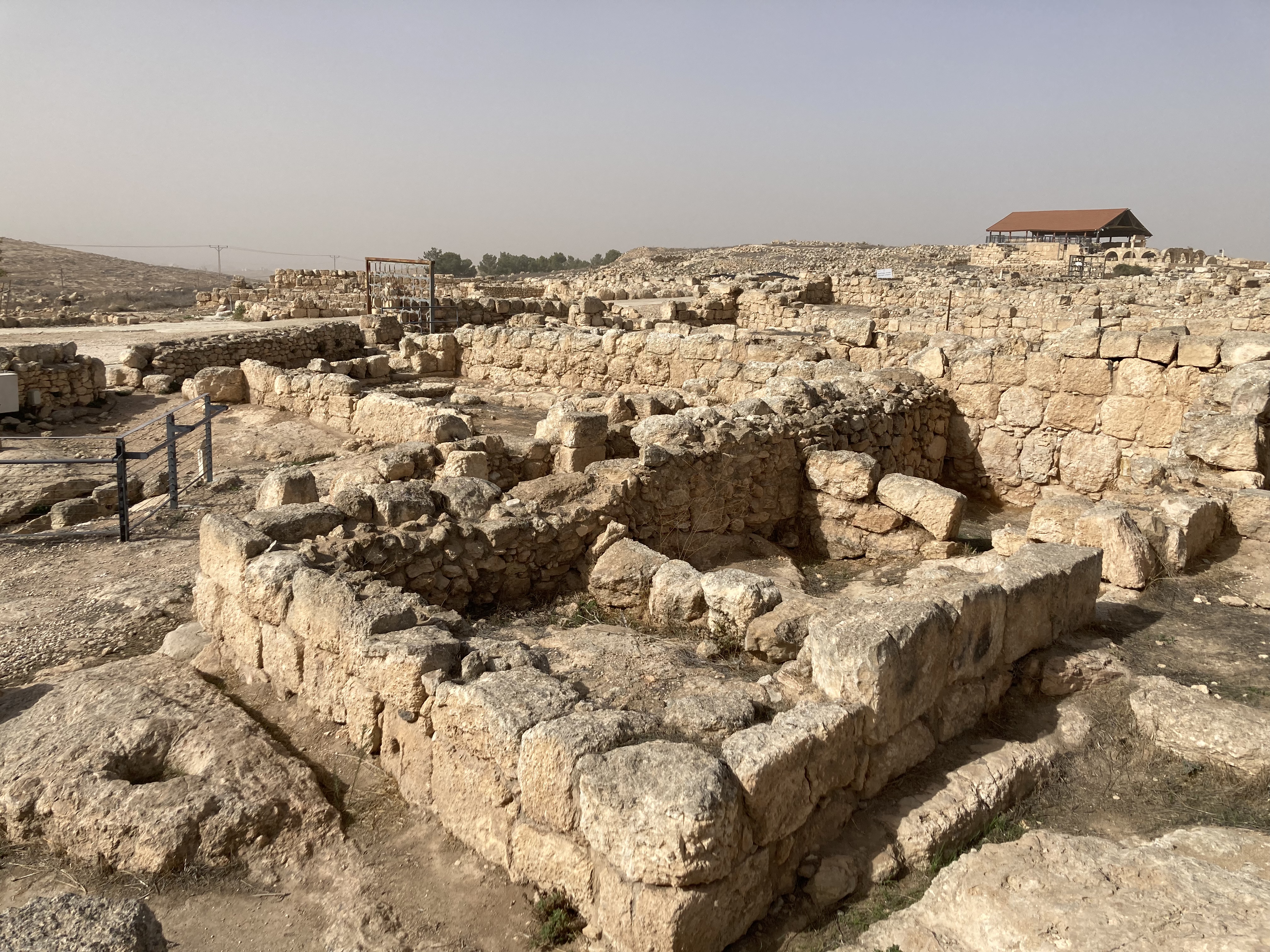
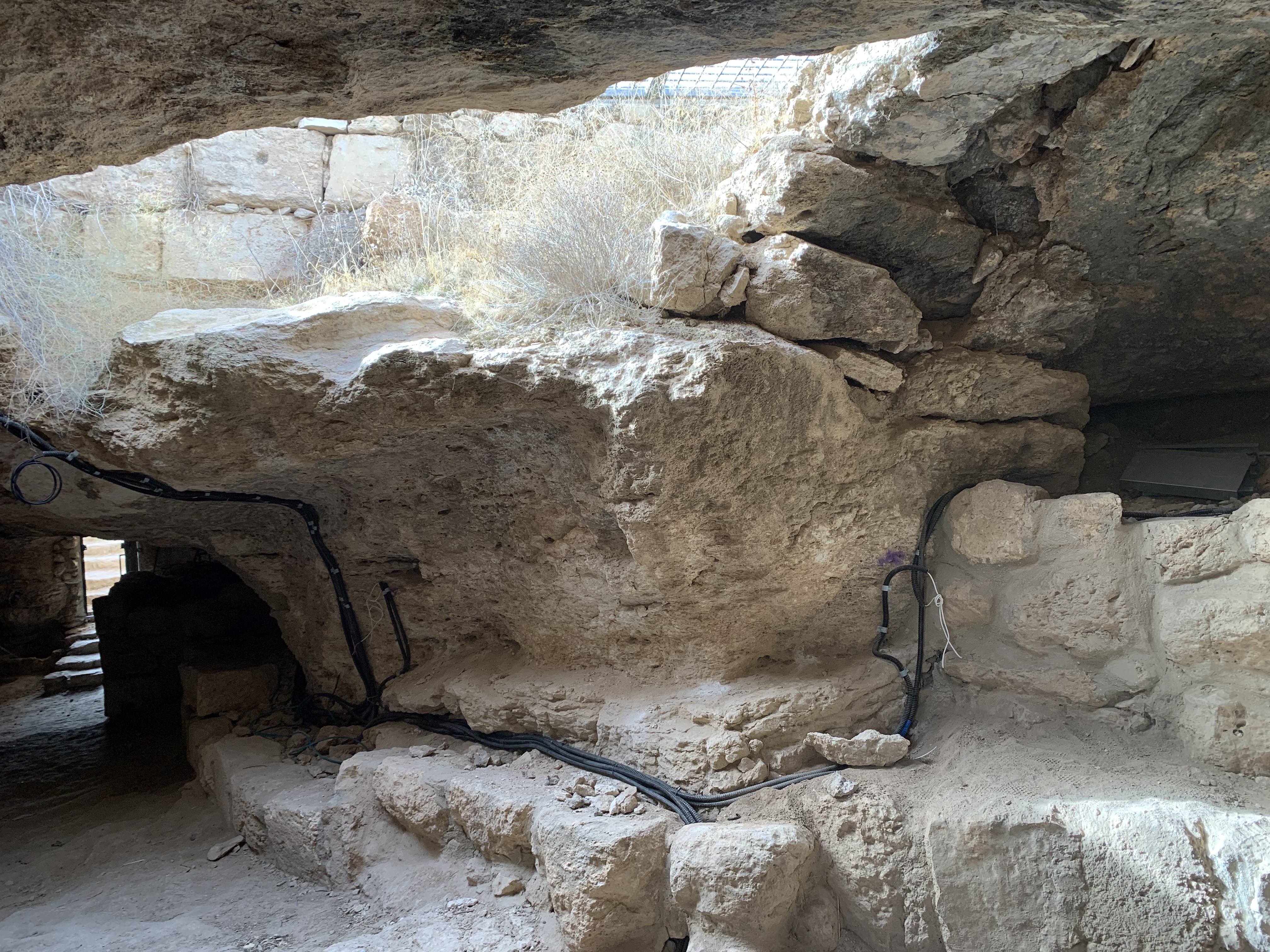
Our adventure started early in the morning at the ruins of Susya, an ancient city that was excavated from 1985-2000. On the eastern fringe of Mount Hebron, southeast of BeerSheva in the area once walked by Abraham and the Patriarchs of monotheism, settled by the tribe of Yehuda (Judah), a large town was built by Jews after the Roman destruction of Yerushalayim. It is one of the most unusual ancient towns we’ve ever visited, a town filled with mystery. Sometimes there is only so much that archaeologists and anthropologists can put together from their findings. Stones are uncovered which tell only part of a story. Without first-hand written records or documents much is left to speculation.

Susya was a fortified city built on a high plateau, excellent for defense. As in most ancient towns, it was surrounded by a high stone wall at one time. It was built after 70AD and lasted until the end of the Byzantine or beginning of the early Arabic period. After that, it seemed to have been abandoned. Why? A mystery. The town had homes separated by streets and alleys, but most of the homes and businesses (potter, forge, olive production, wine production) took place underground! Homes were connected by subterranean passageways. Many of the ”buildings” were carved out caverns. Huge underground chambers, many linked together. Why? Was it for defense? If so, from who? Perhaps because it was cooler underground in the summer and warmer in the winter? Without written documents, it’s difficult to piece together the whole story.

More than 70 of these underground spaces have been uncovered at Susya. What is known is that it was a Jewish city. Both private and public mikvaot (ritual baths used for purification purposes) were found. Such a large number of these purification baths testifies to the great importance of their adherence to Torah law.

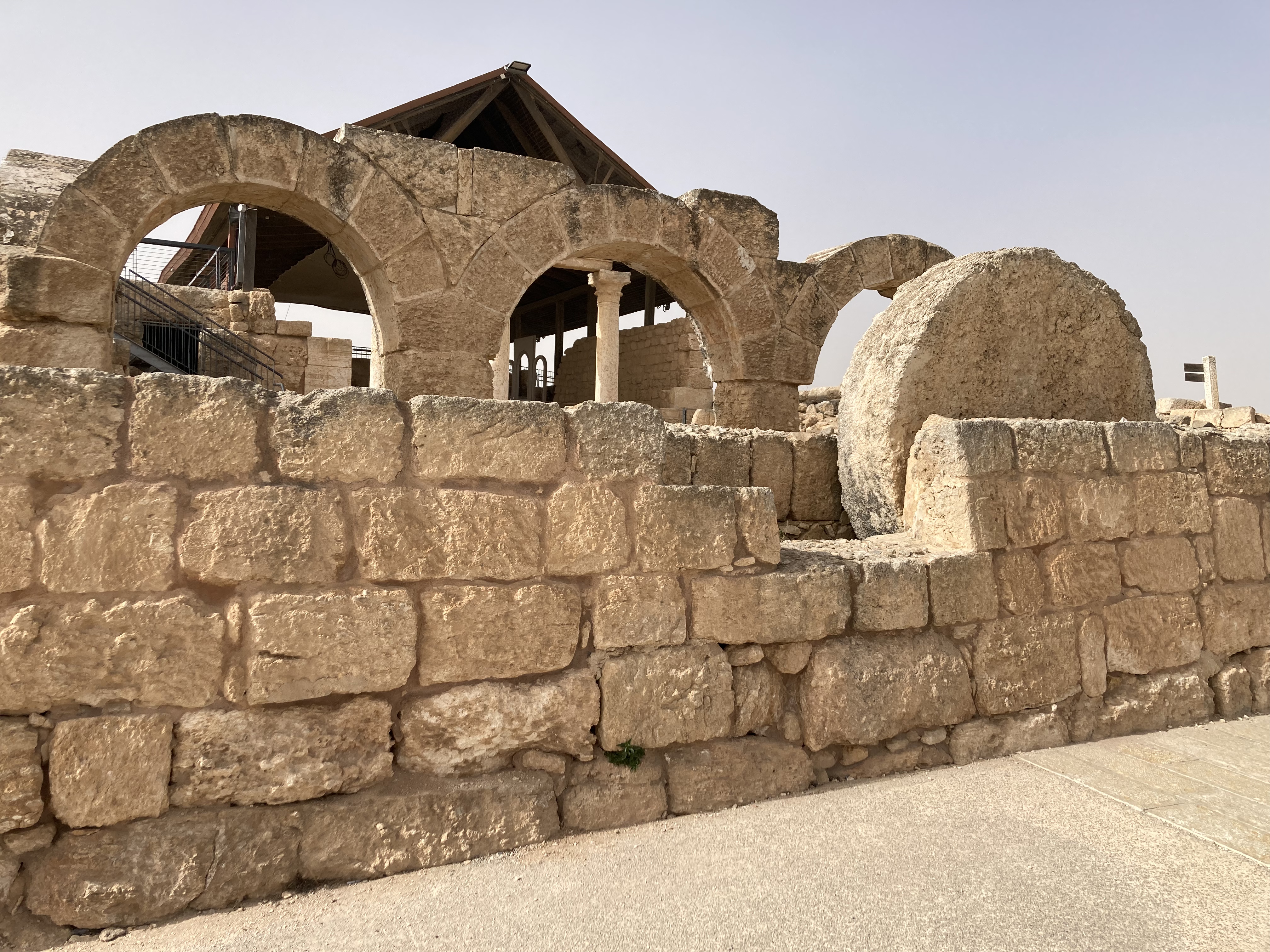
The crown of the city is its spectacular synagogue, which is still fairly well preserved, considering its age. The entrance to the synagogue can be approached through a large arched portico surrounding a central congregating area. An enormous round stone, which can be rolled by many strong men along an outer track, can block the main entrance to the courtyard. From the portico, there are high steps and Doric columns leading into the large worship/study area.

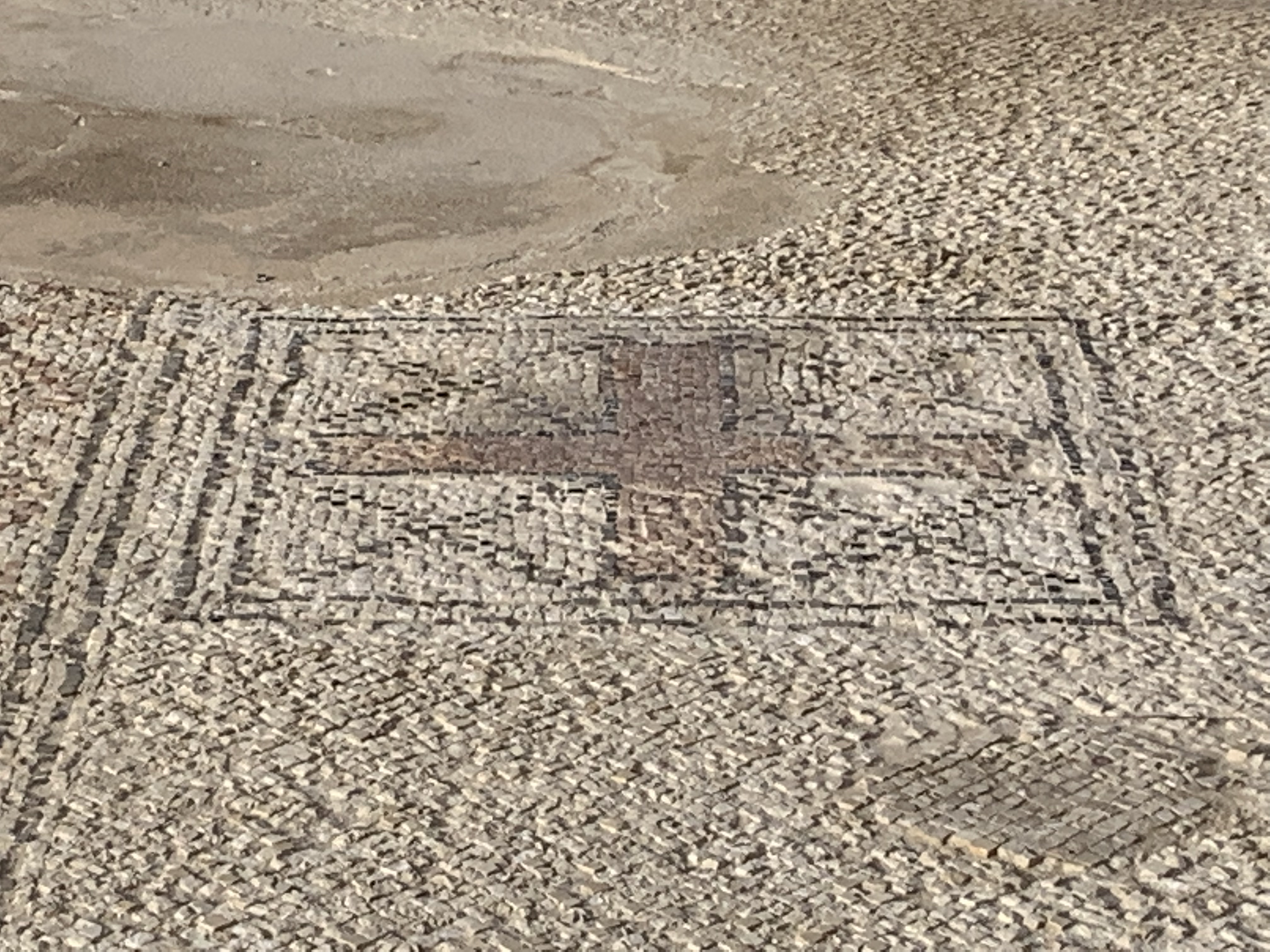
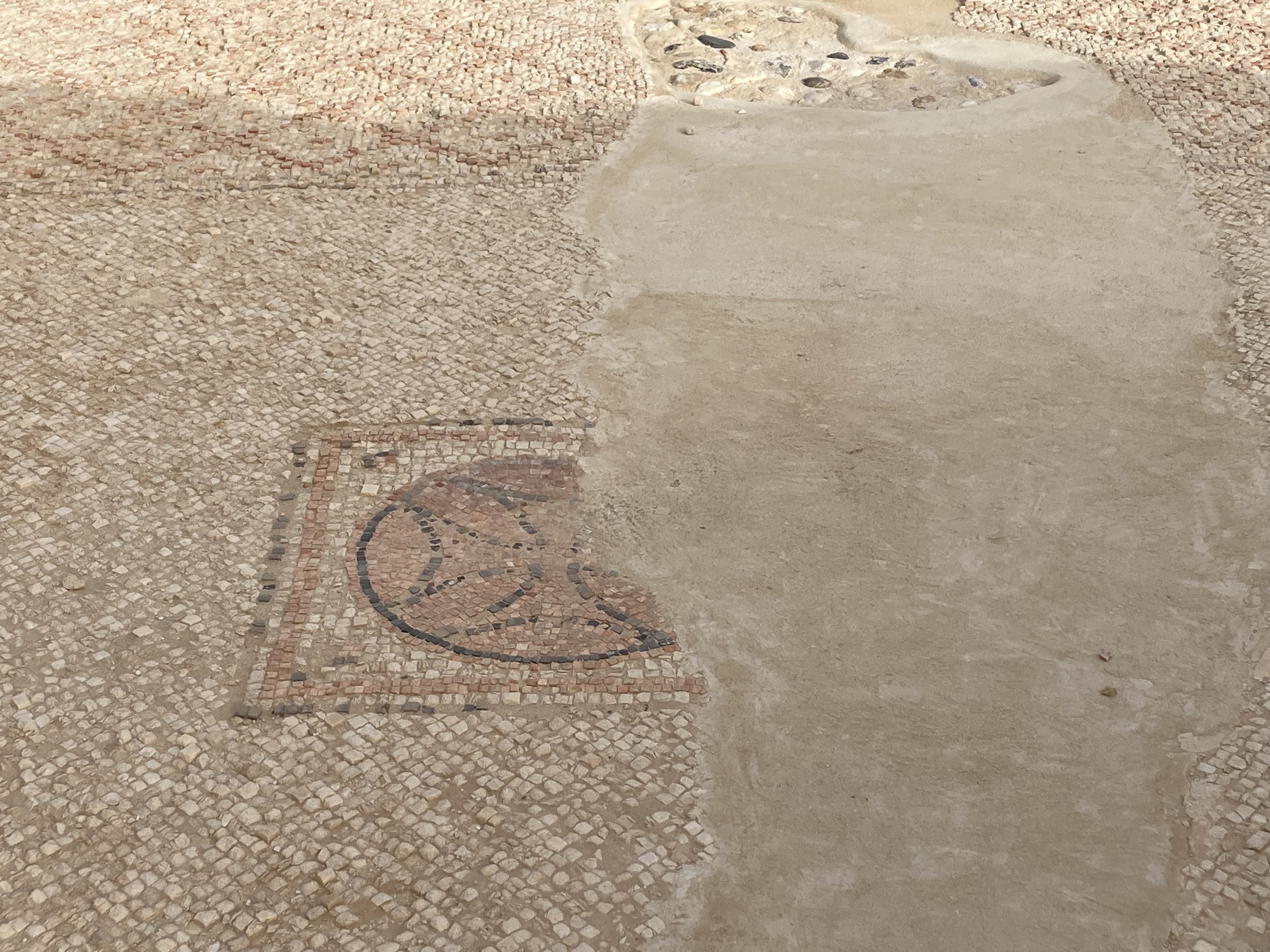
The floor of the synagogue is covered with a well-preserved mosaic floor. The mosaics include two menorah/lampstands, a shofar, lulav branches and etrog, and an immense zodiac calendar. There are many blessings written in Aramaic including one that reads, ”remembered be for good the comforter Yeshu’ the witness and the comforter that [……]”. What does this mean? Was it an early Messianic community? Was that why they were so concerned with defense? Was it part of another group?The rest of the inscriptions are all typically Jewish. There is a raised platform or bima and a space where the ark containing the Torah scrolls would have been kept. The synagogue also had an upstairs gallery for women. But here, too, in the synagogue are escape tunnels and stones to roll across doorways to block the ebterances and exits. From whom were they hiding and trying to escape? So far, archaeology gives us no clues….Today the synagogue is used for weddings and Bar Mitzvahs.

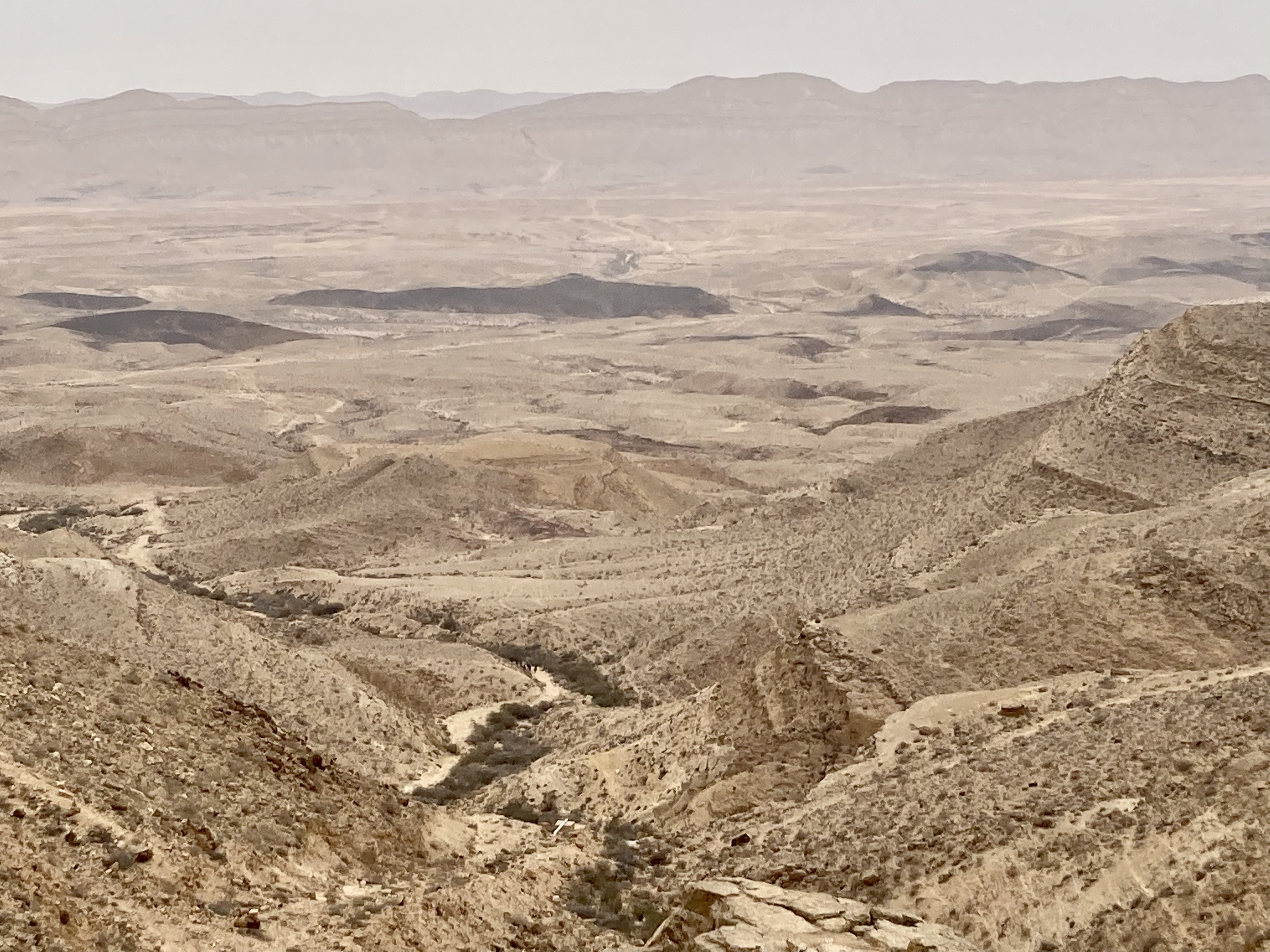
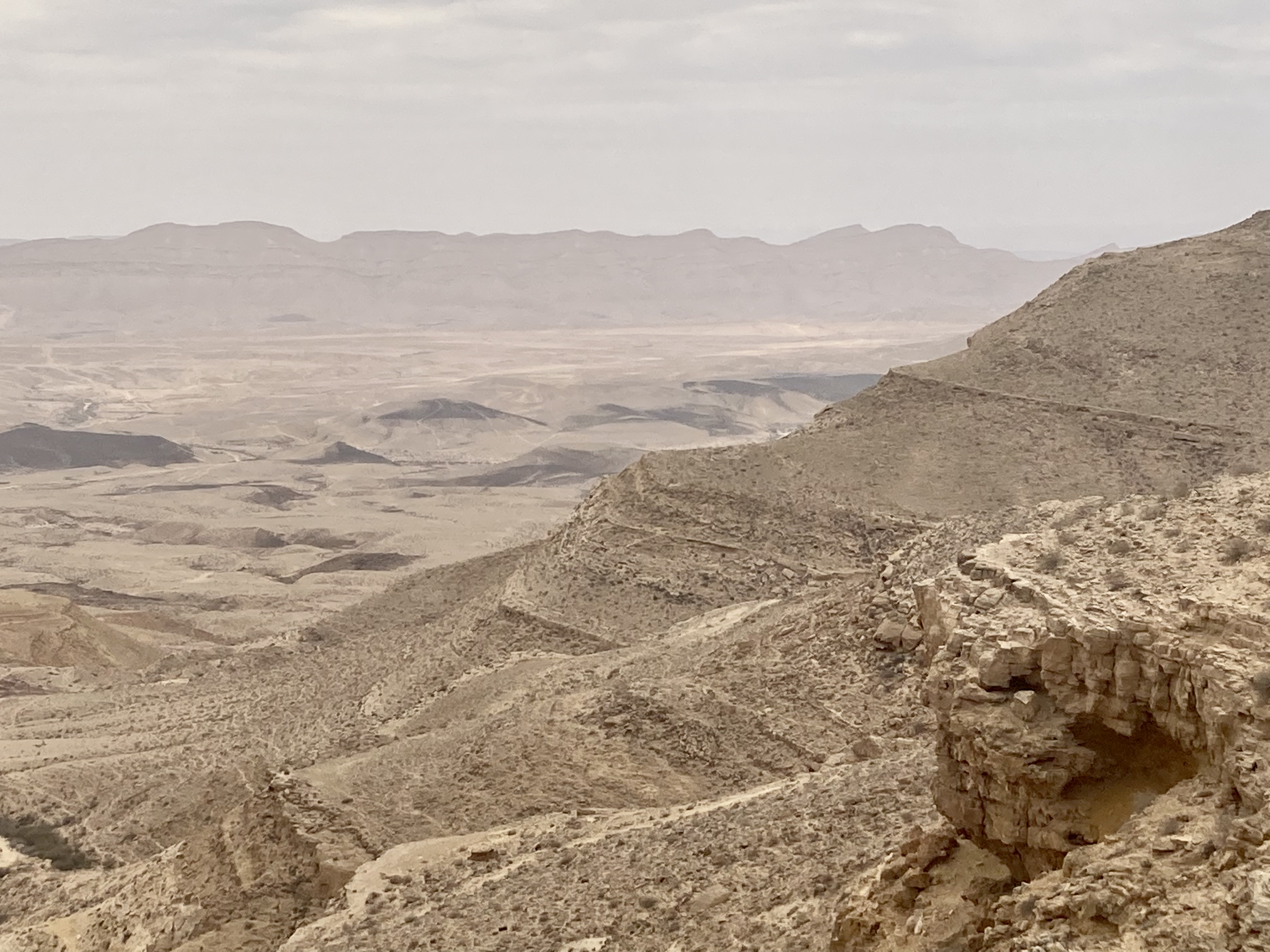
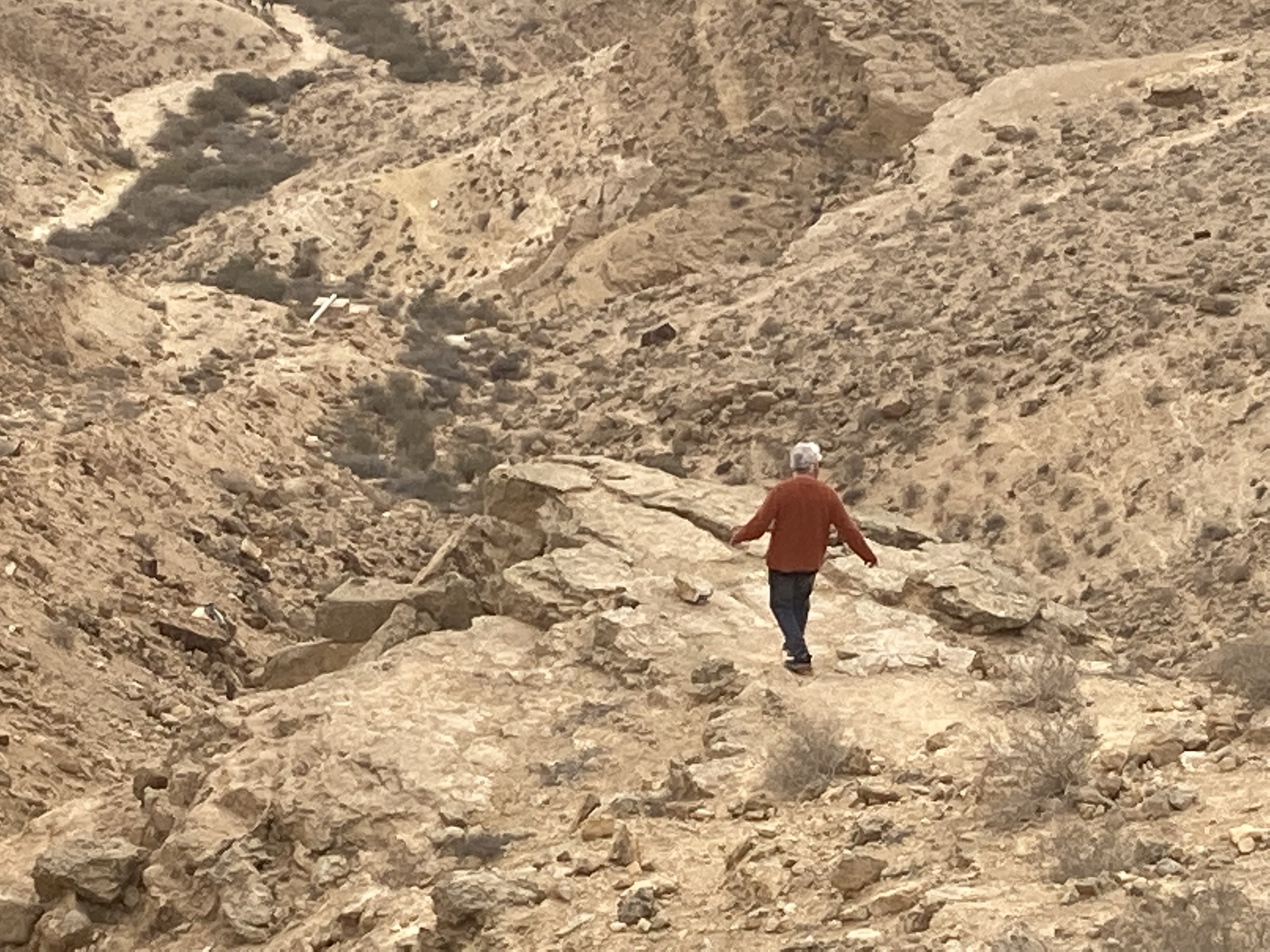
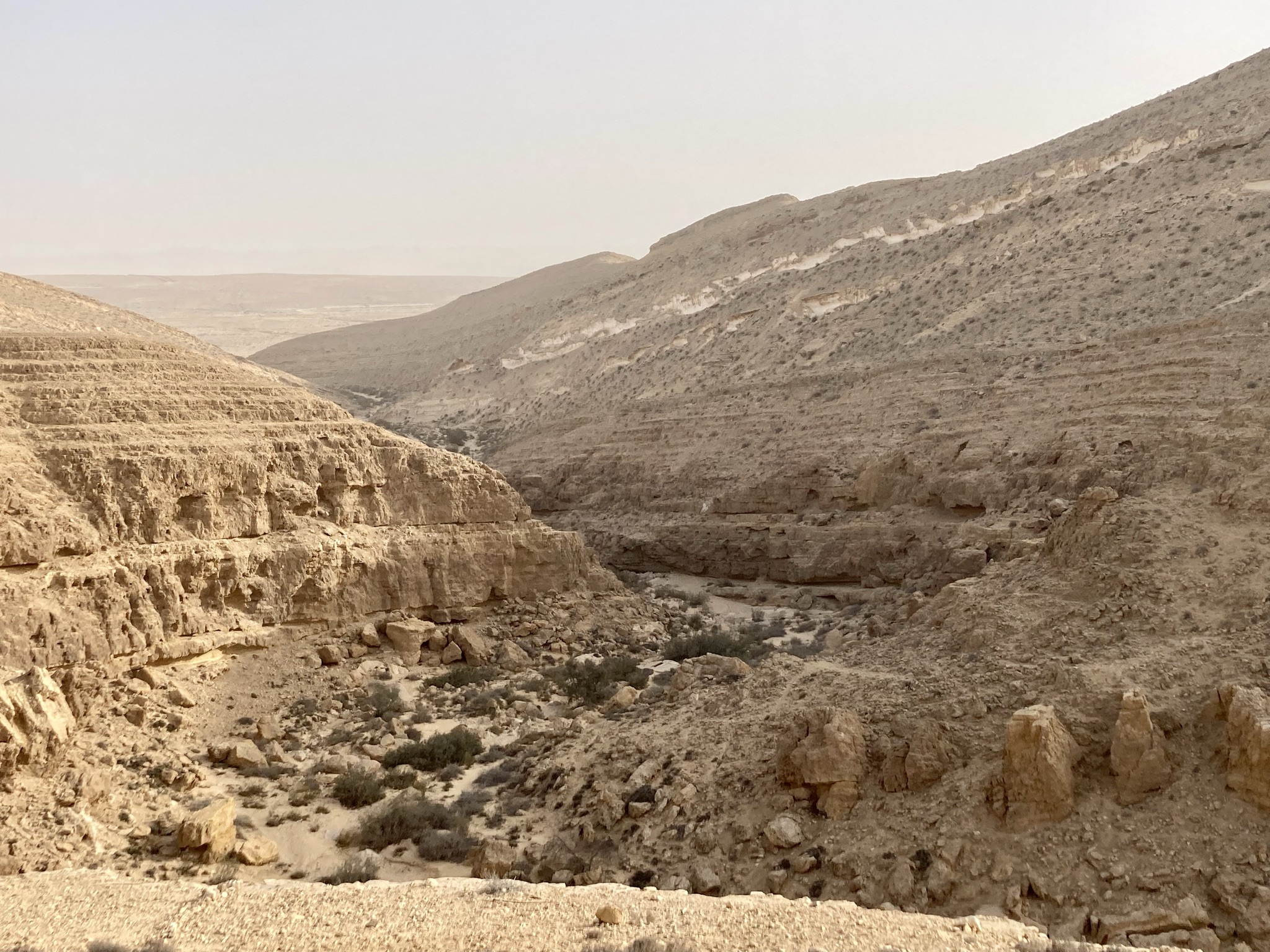
The next stop on our desert adventure was at an overlook along the high cliffs of the Maktesh Kattan. A maktesh is a geological formation that only occurs in the Negev. There are three of them here, kattan meaning the smallest. It’s s a completely sunken hole, a huge round crater that was naturally formed as the ground there collapsed millennia ago. We were beginning our descent onto the desert floor. I got out of the car to take photos and John got out… well… to be John.

I really shouldn’t have been nervous at all when he scurried down to the edge of the ledge. He’s done it at the Grand Canyon. He did this at Maktesh Ramon years ago. I think he’s part mountain goat. Truly. Still, I just about had a heart attack and he got some pretty great pics: the Thelma & Louise remnants of an old car crash; the white and blue stripes signifying the Israel Trail (seriously, who would hike down this cliff into the desert?); a hidden party terrace.

The road we traveled was tortuous… a real snake path. No safety barricades on some of the cliff edges. Hair-raising! The panoramas absolutely gorgeous! Once on the desert floor, we quickly headed for the painted desert. Mineral deposits left not only lots of iron, but also copper, magnesium, manganese, sulfur. I forgot to mention that this was in the area of Biblical Gomorra….hmmm…. There were huge chunks of iron ore in the sands – and tons of white snails! In the desert sands!! Snails! Still, my first reaction when I saw the beautiful palette of colors? Make-up!!! The shades of pink, rose, purple, yellow, red, brown, orange, ochre. Nothing short of magnificent!!

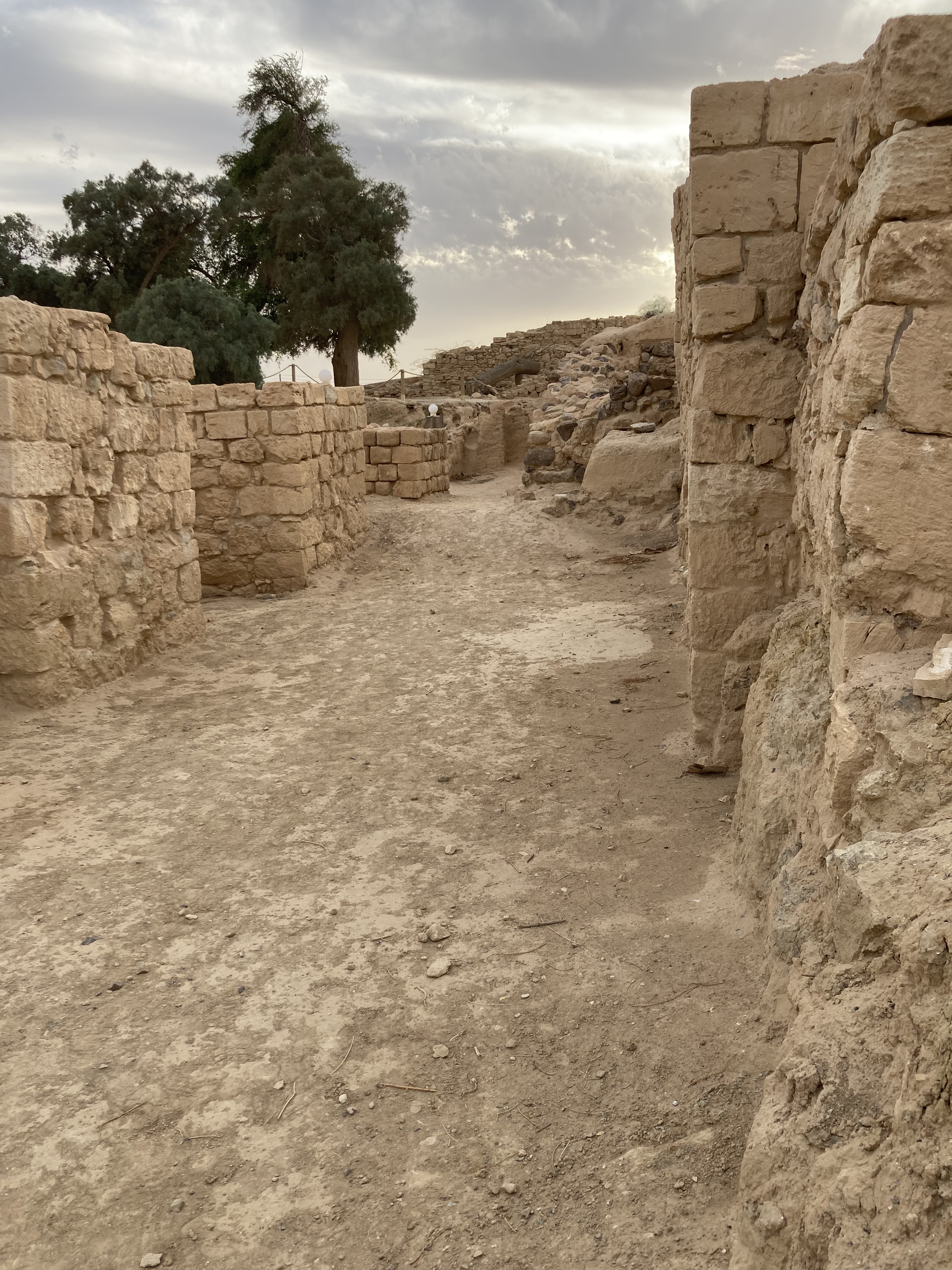
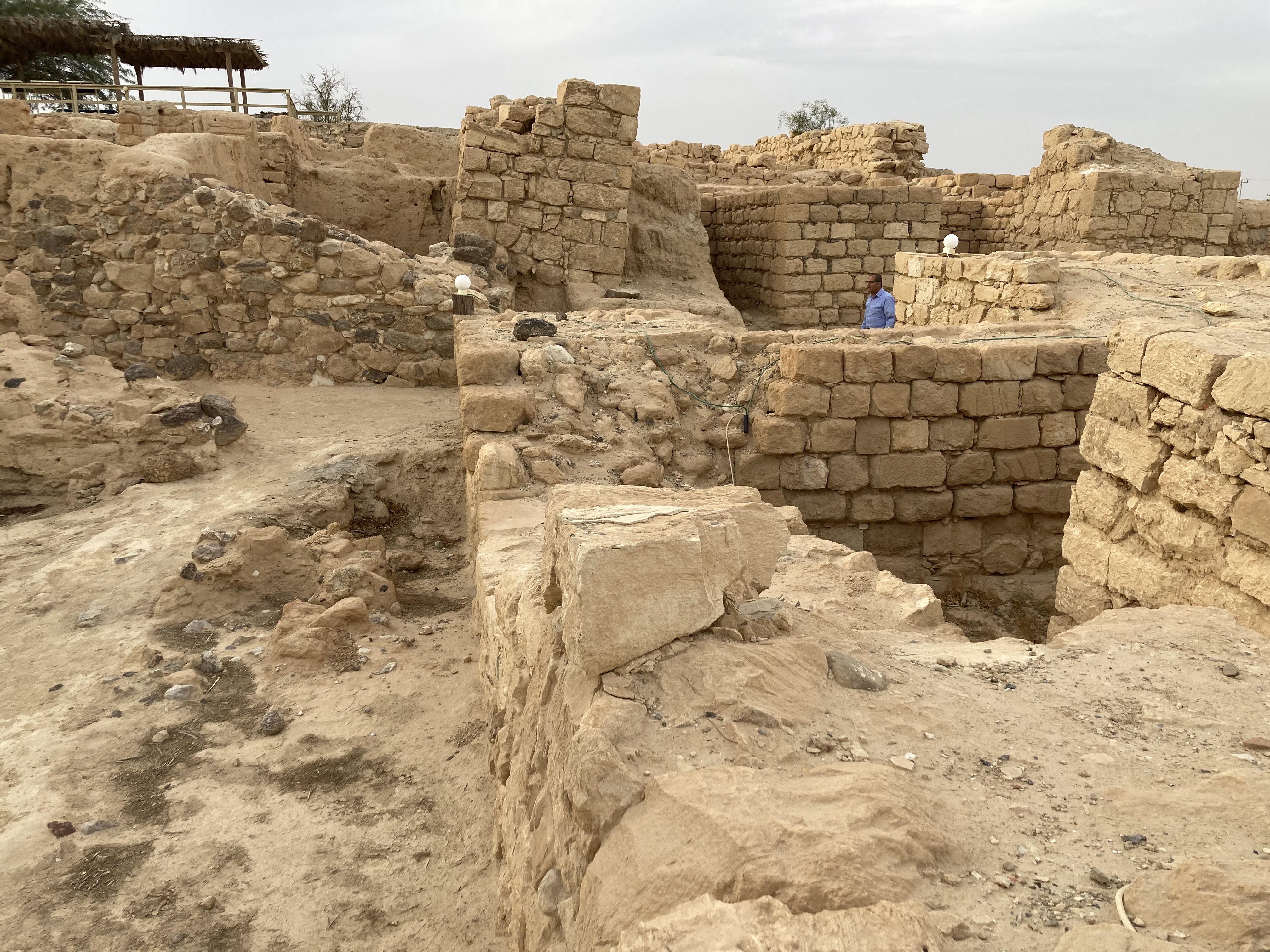
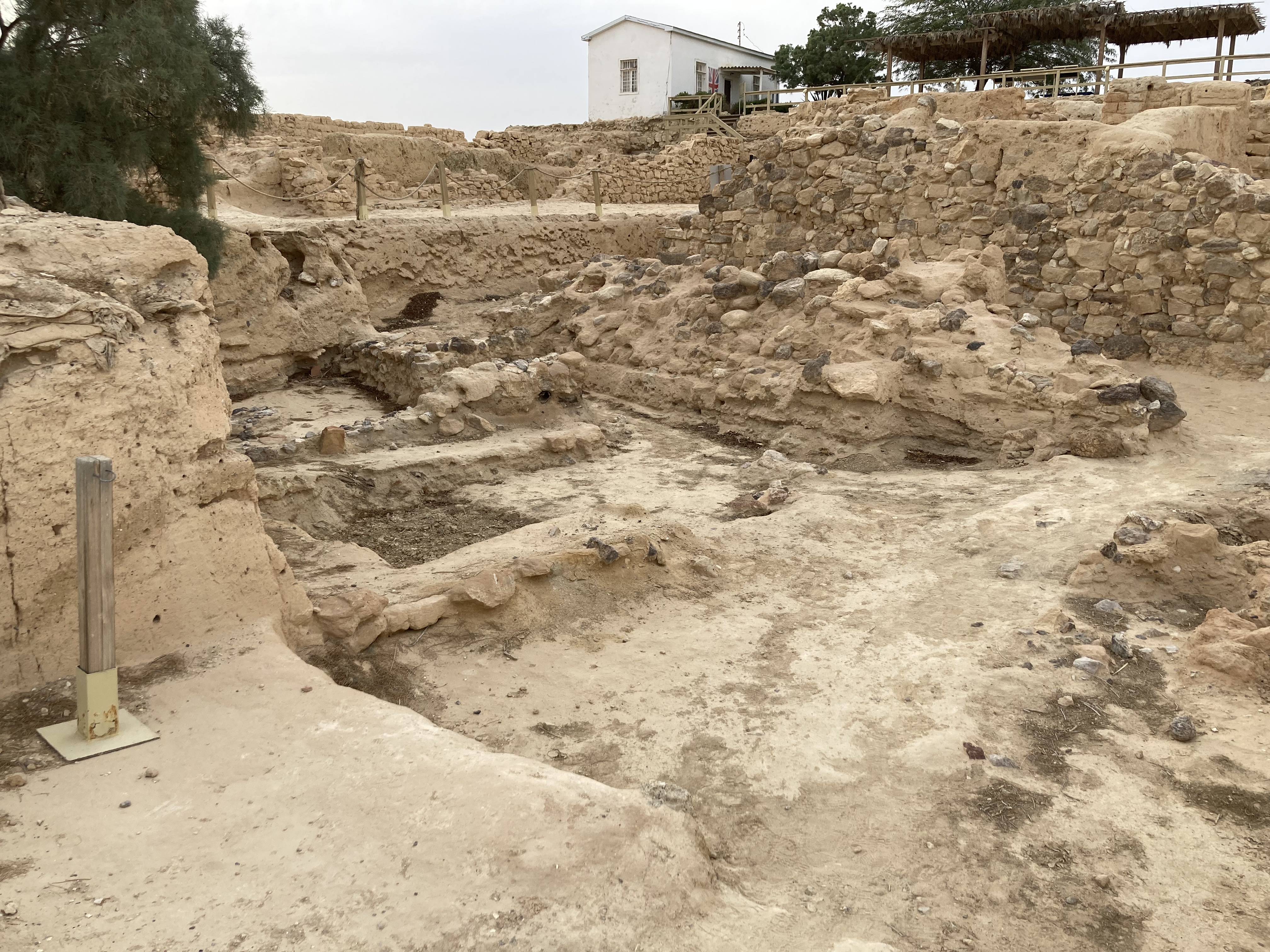
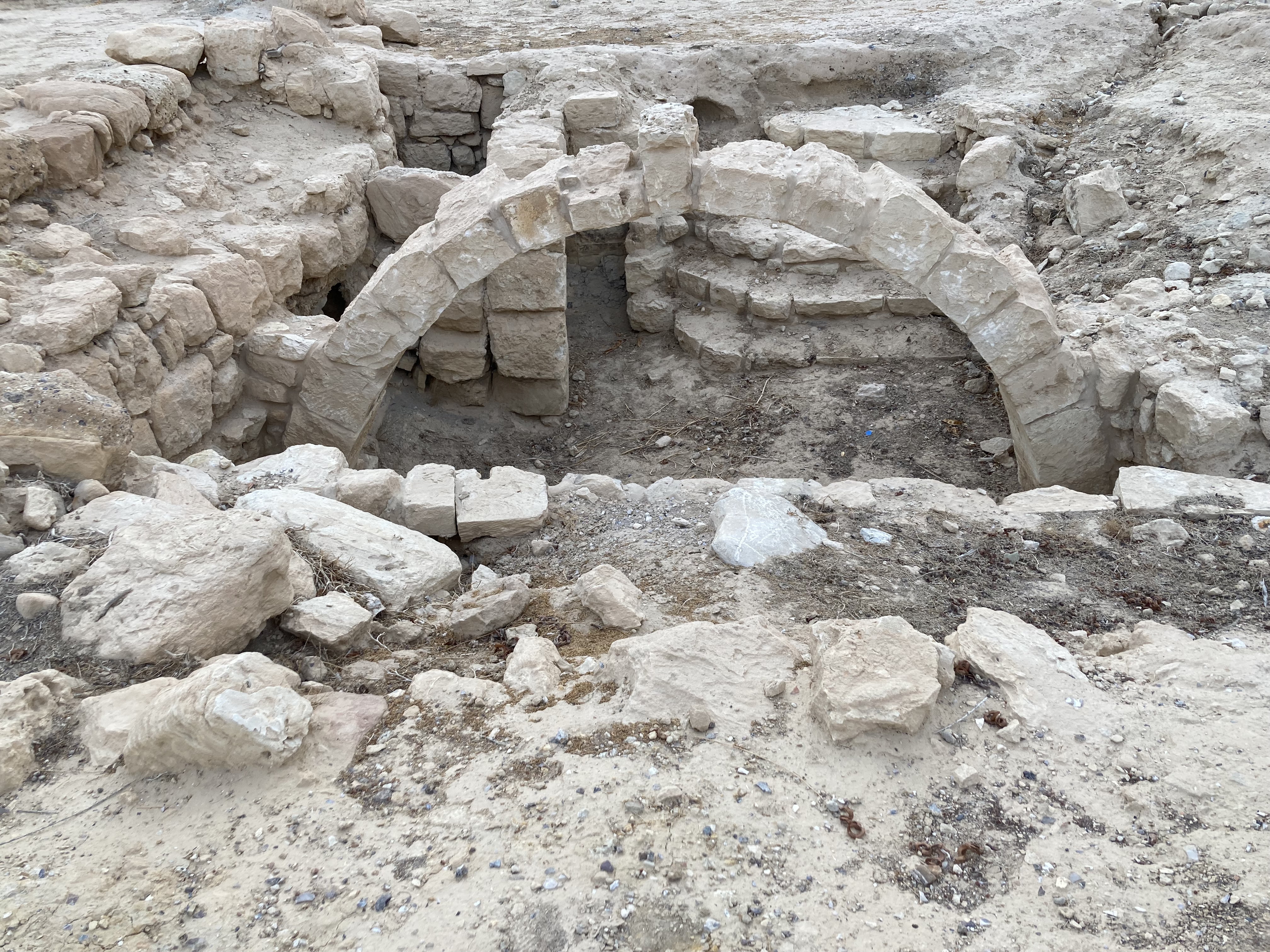
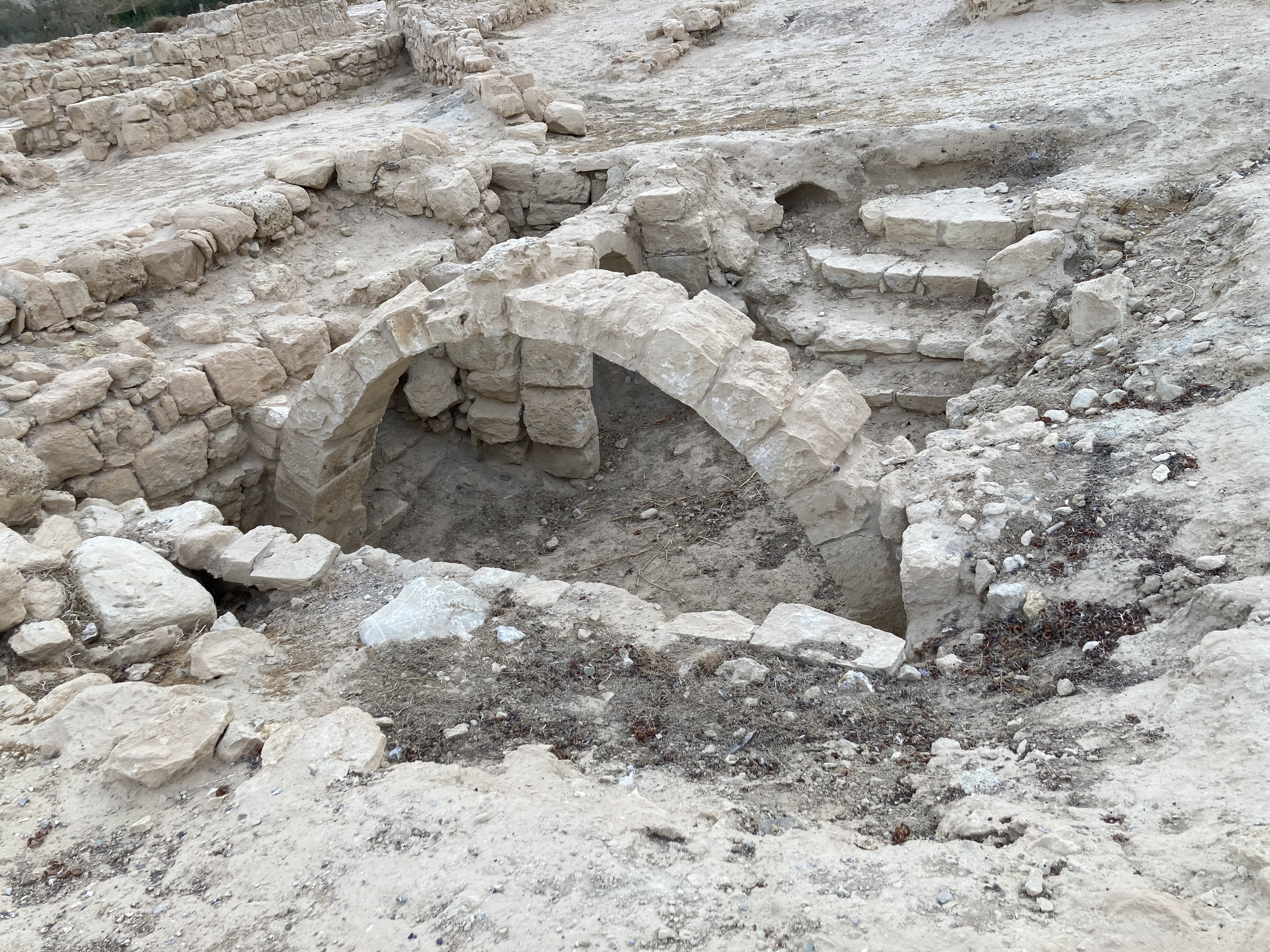
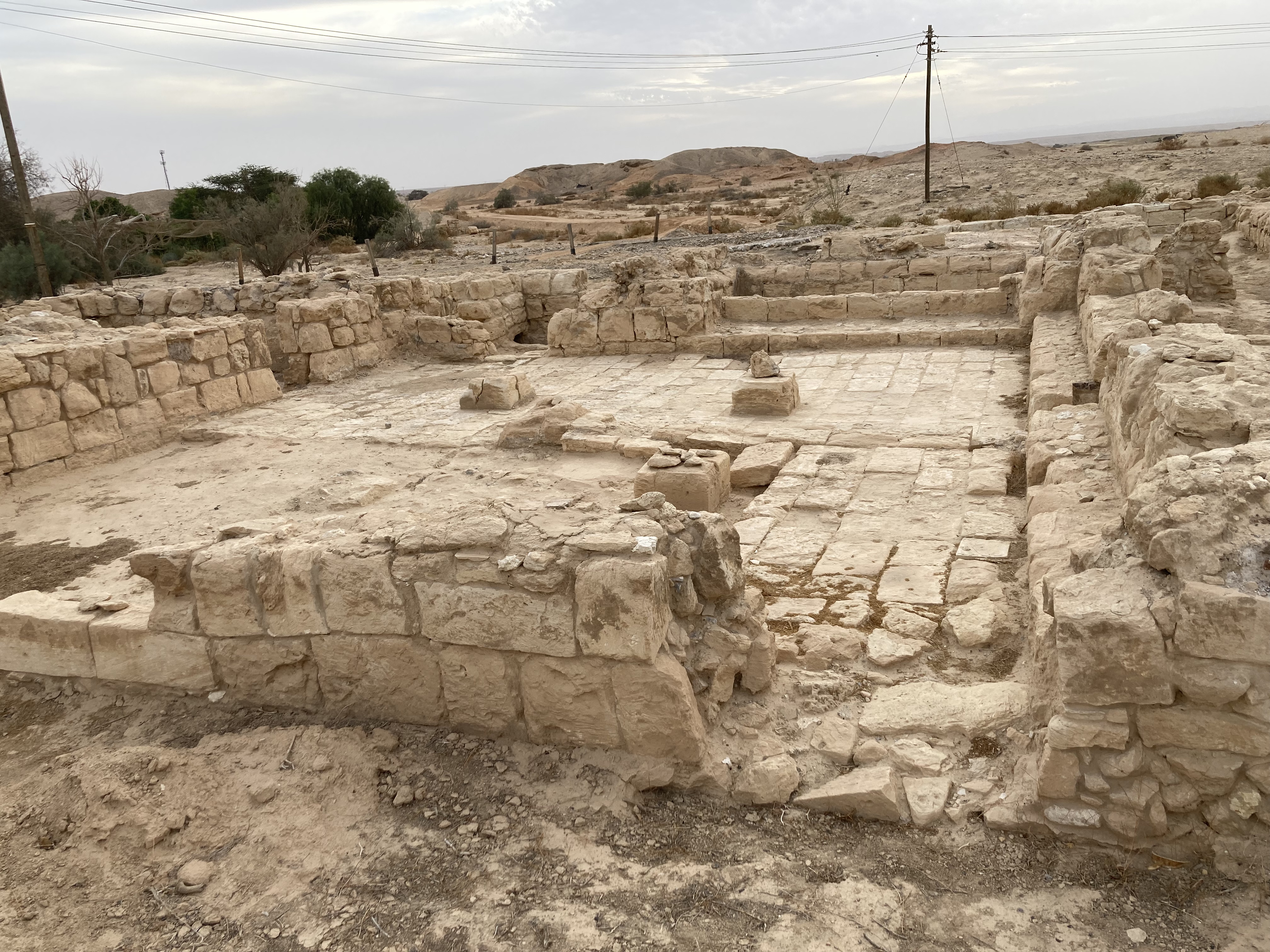
We still had two places to visit. No time to dally! Back in the car and on to Tamar Fortress in the Arava part of the desert, about 30 miles or so south of the Dead Sea. Tamar was once just an oasis, a desert watering hole where the Moabites and Edomites used to frequent. Mayaanot, underground springs surrounded by date palms, or tamar in Hebrew (yes, my Hebrew name means date palm). The place was well known to the ancient Israelites. It is mentioned in the Scriptures. During the reign of King David, it was the southernmost outpostfor the tribe of Judah. King Solomon built a fortress here, serving not only defensive purposes, but it was strategically positioned to monitor caravans traveling to and from distant places in the east, and to protect the southern copper mines. We read in the book of Kings that King Josiah destroyed the pagan idols that had been set up there. Archaeological remains are always confirming the words of the Bible. It is an irrefutable claim that the Jews inhabited the land of Israel from ancient times. Tamar Fortress (excavated by archaeologist and adventurer, T.E. Lawrence ”of Arabia”) is an incredible fortified walled city. Strata upon strata of different civilizations have built layer upon layer. Ancient Israelites, Greeks, Romans, Mamelukes, Ottomans. And at the top of the hill, the offices for the generals of Great Britain during the period of the British Mandate in the early 1900s. Today it serves as a museum to the history of the area.

It was getting on in the afternoon, one of the shortest days of the year. The trip had been an incredibly hard one for me, as I was still in the process recovering from an extensive spinal surgery. I was exhausted. My legs stiff and heavy. The wind was picking up and a dusty haze was limiting visibility. We had one more stop: the Nabatean city of Mamshit (pronounced MomSHEET). So we pressed on.

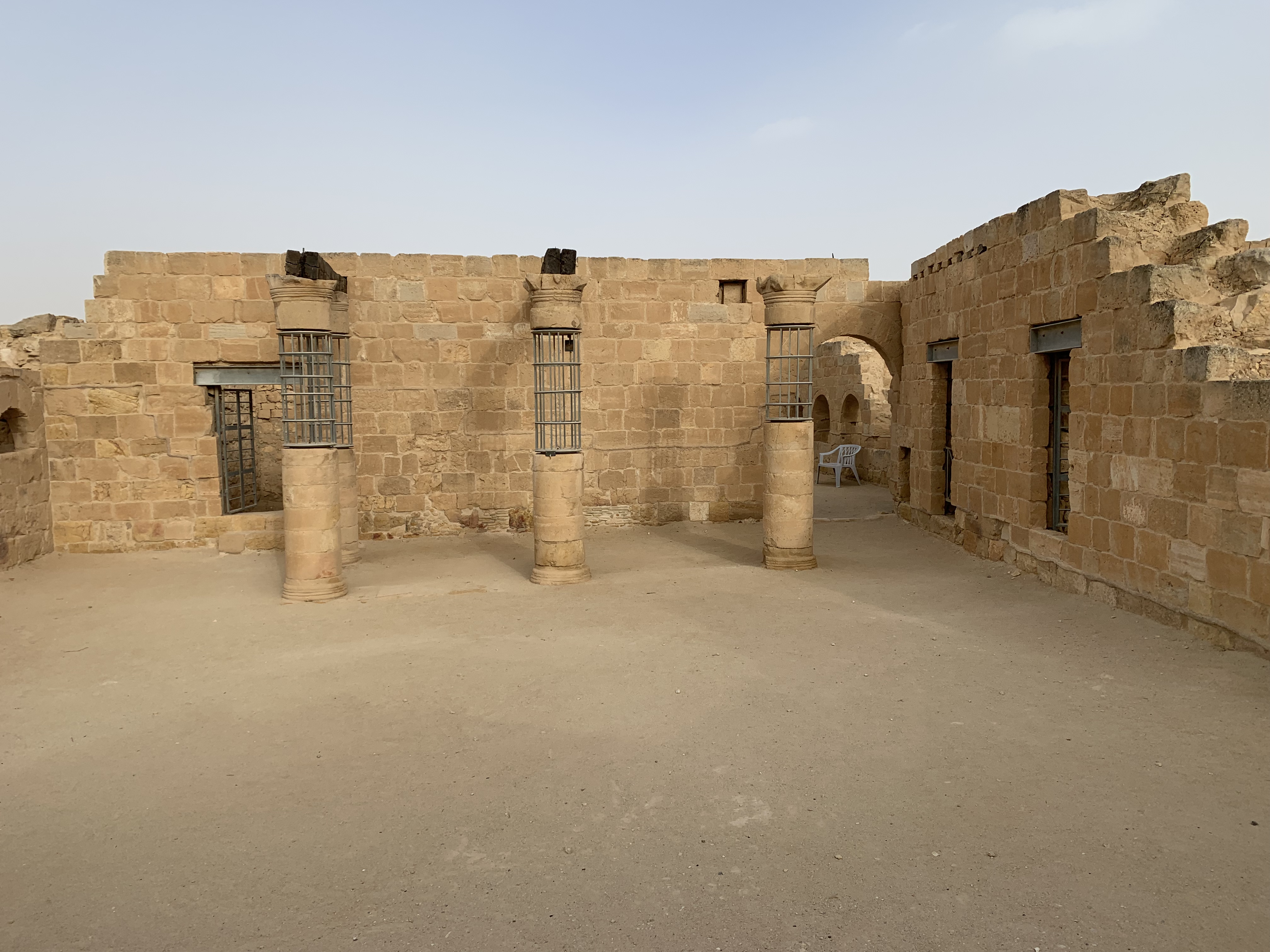
Mamshit was a Nabatean city. The Nabateans were spice traders. Their caravans of camels traveled from what is now Saudi Arabia, through Jordan, through Israel to the Mediterranean laden with frankincense, mhyrr, spices and jewels. Mamshit sits at a crossroads on the spice route. A permanent settlement was established here in the first century BC. It consisted of villas for its wealthy inhabitants as well as khans, or inns for travelers!and large and extravagant stables. It is believed that they were also breeders of stallions from the stables and implements they found in situ. By the second century AD Mamshit had been annexed by the Romans. The extravagant building projects continued.

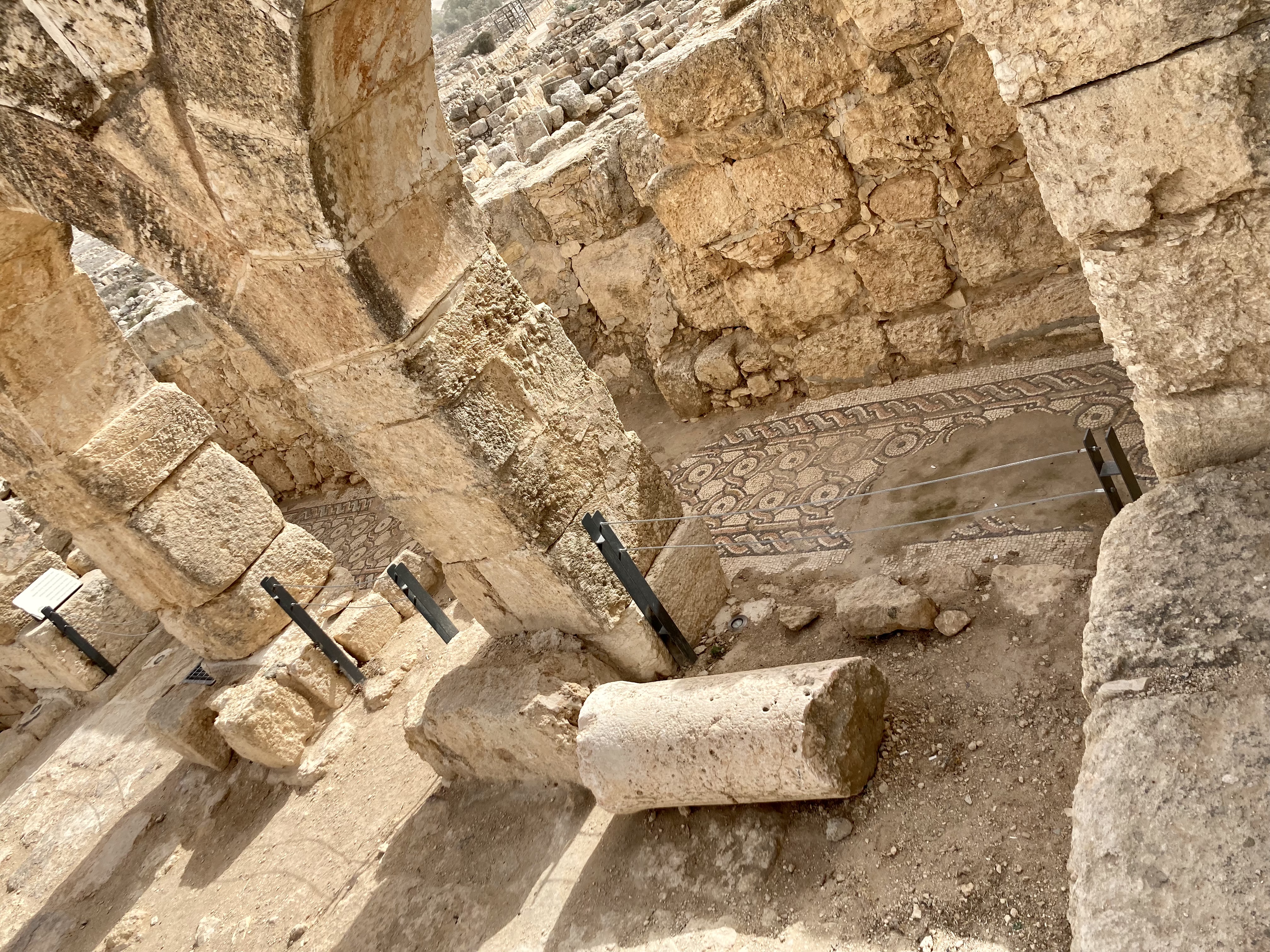
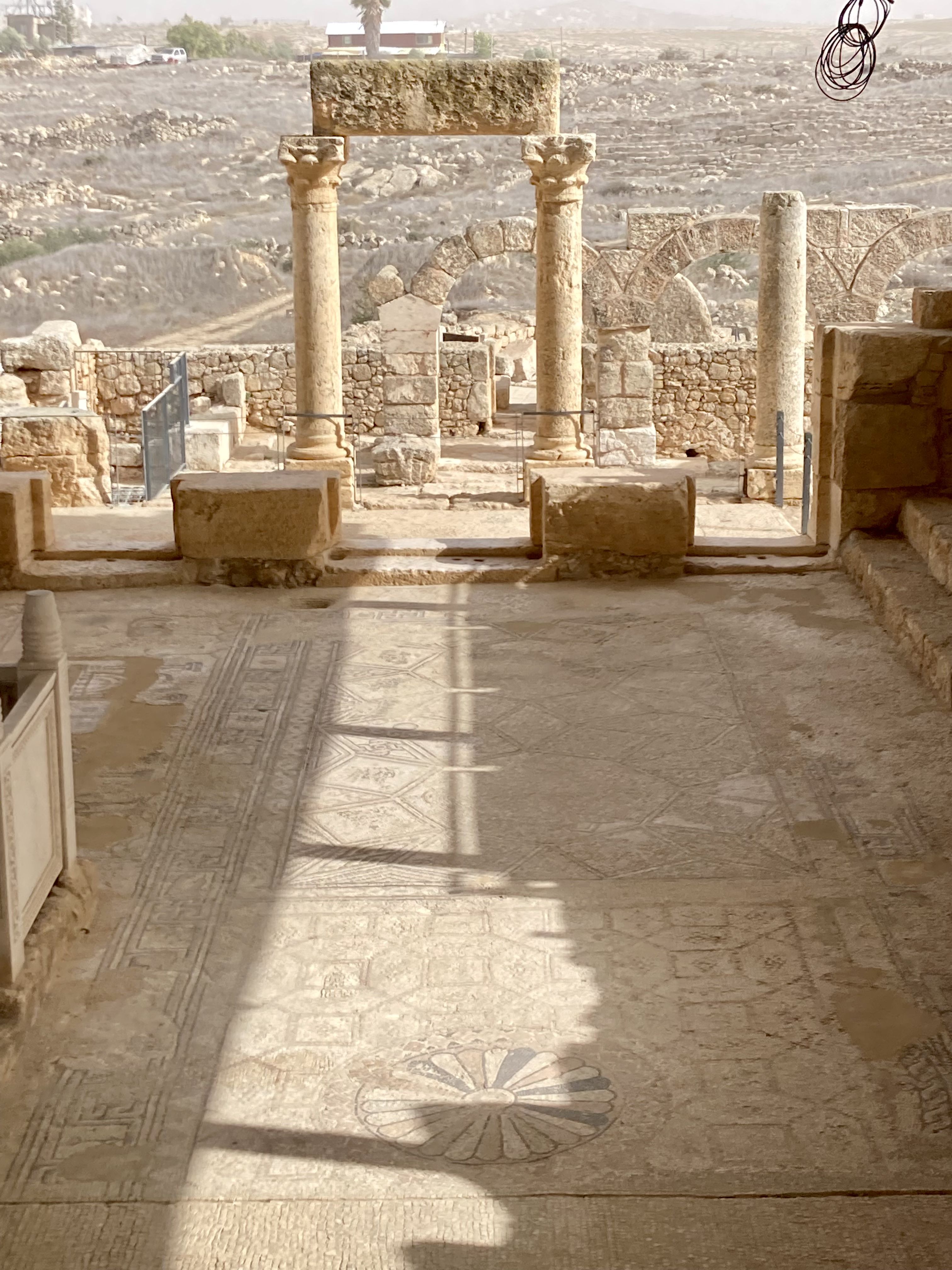
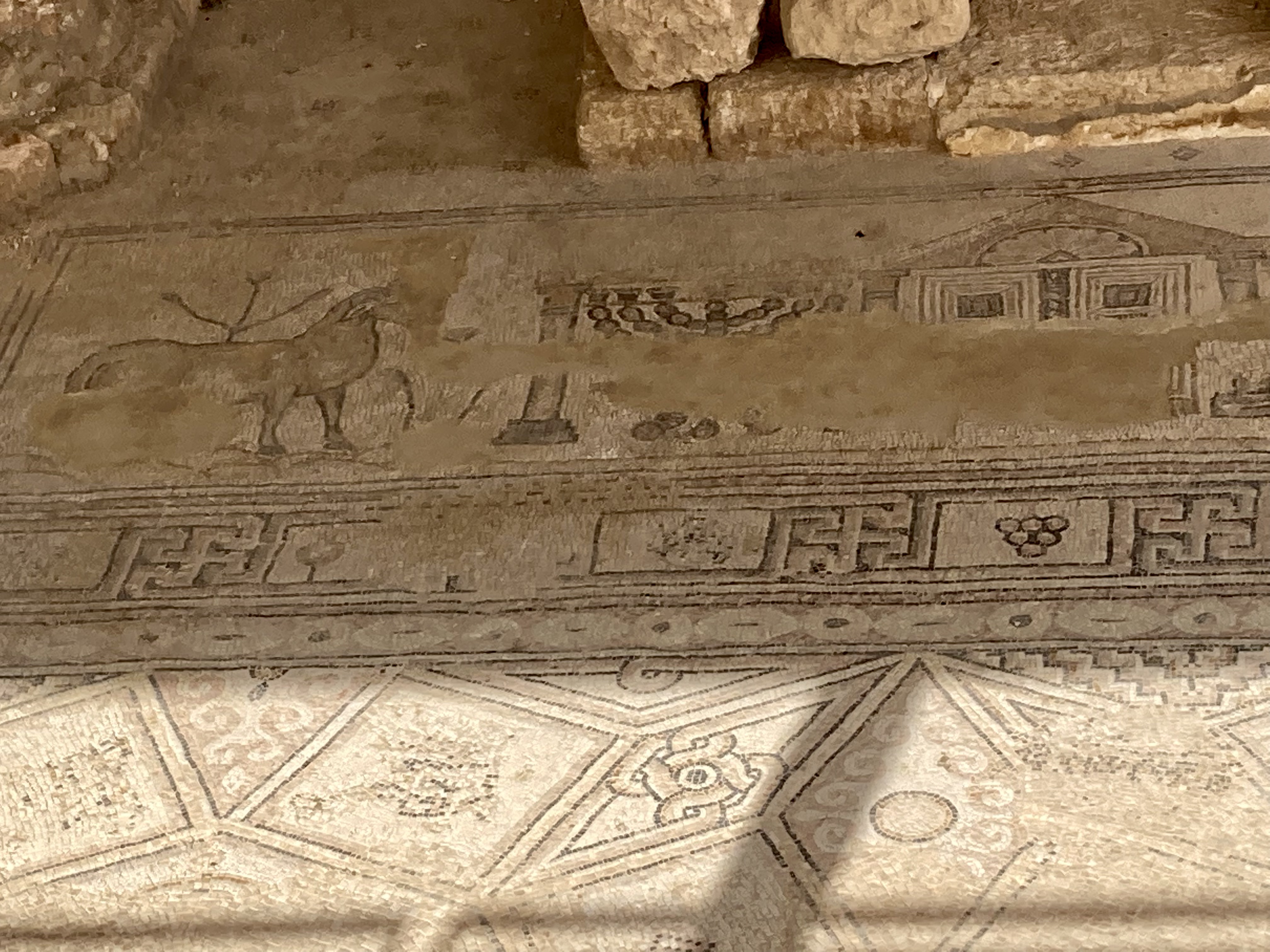
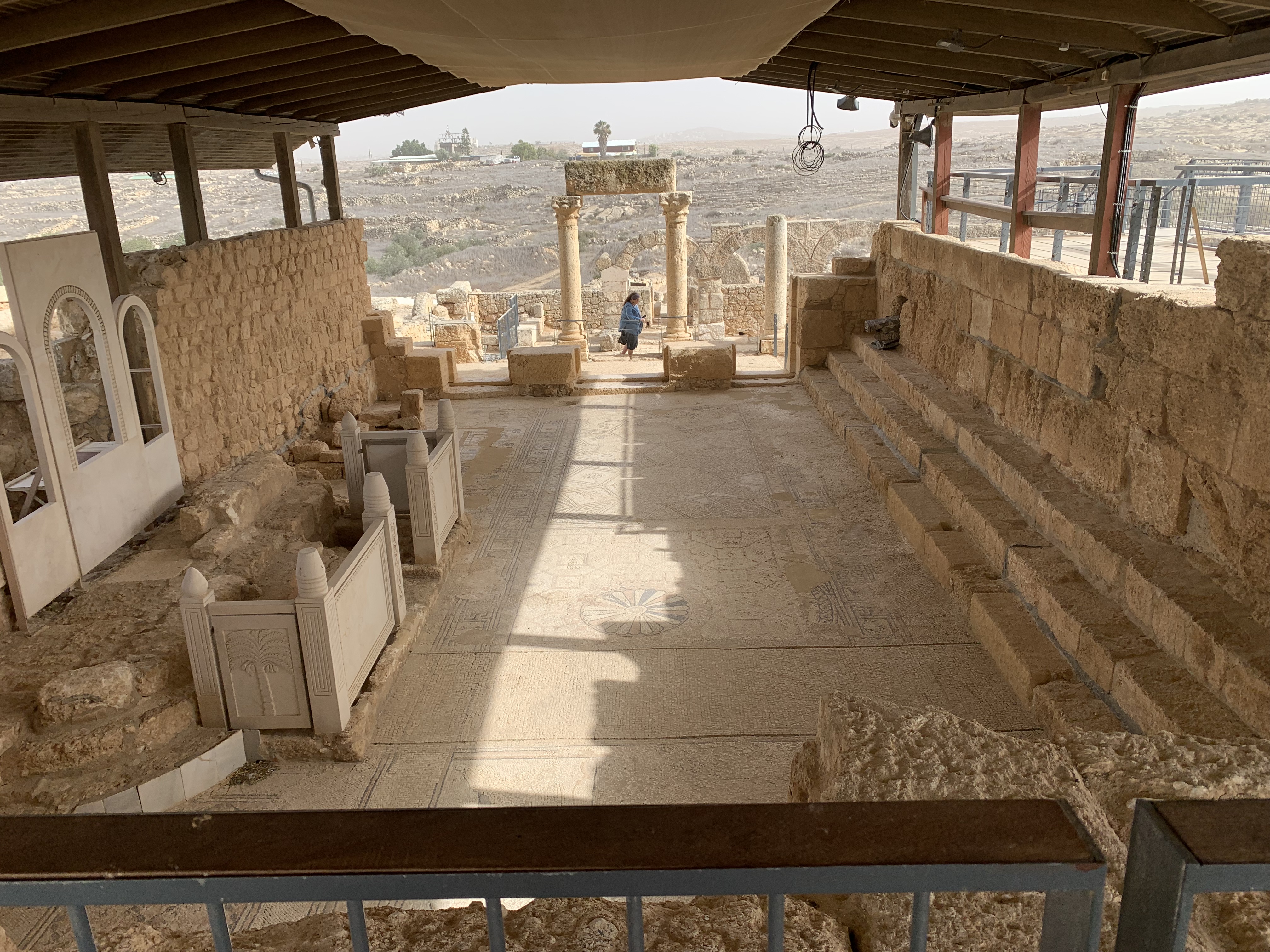
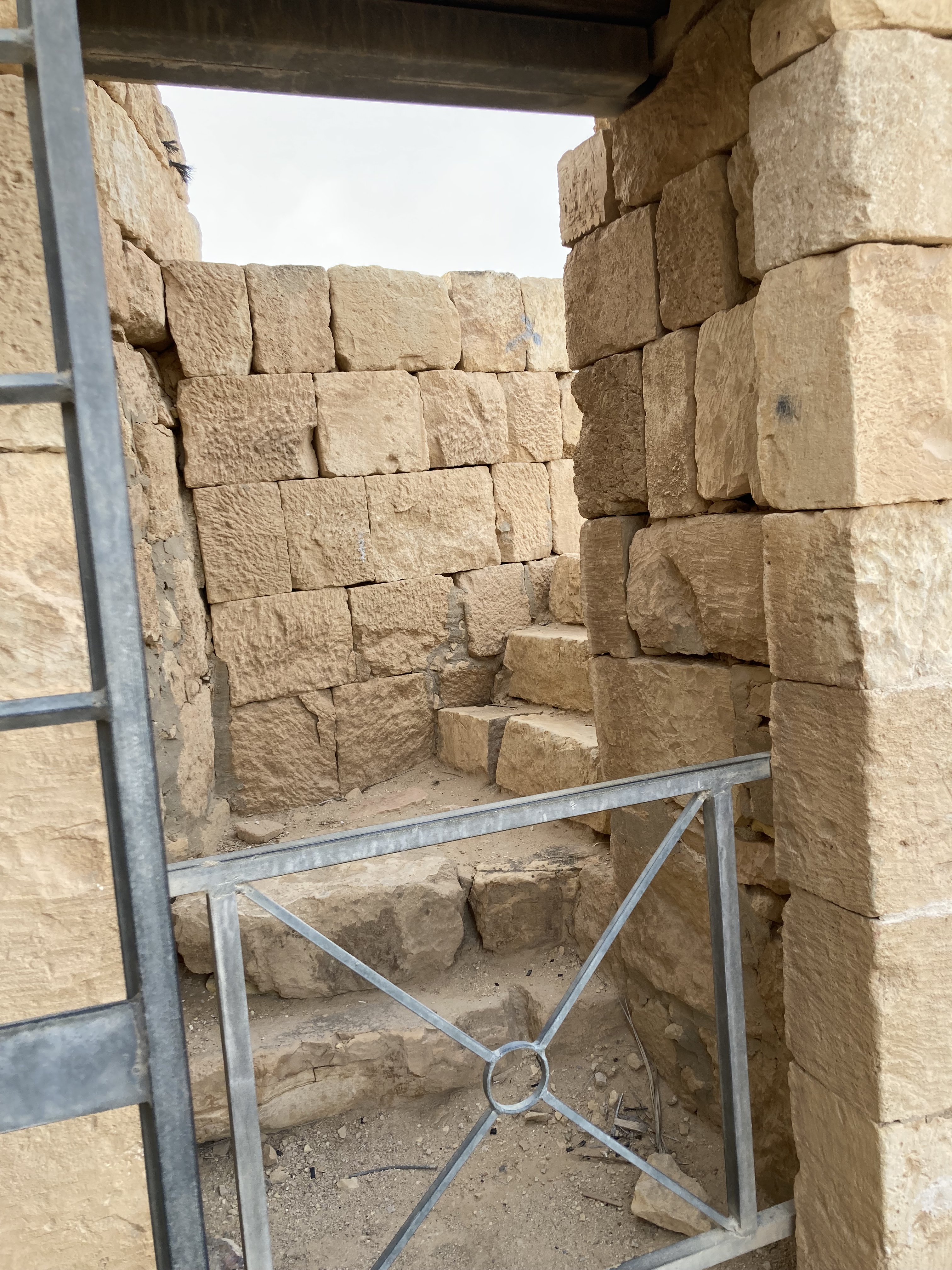
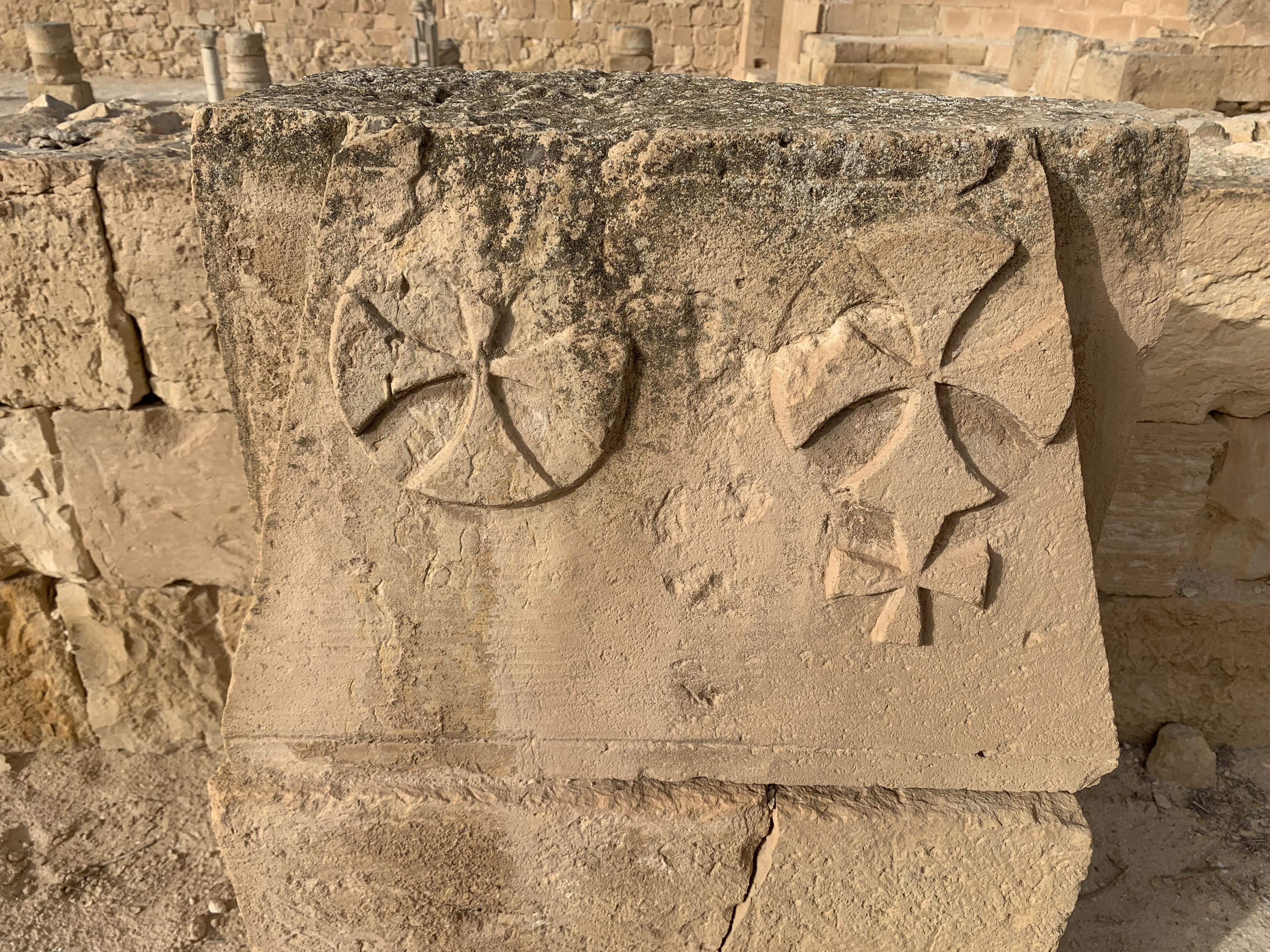
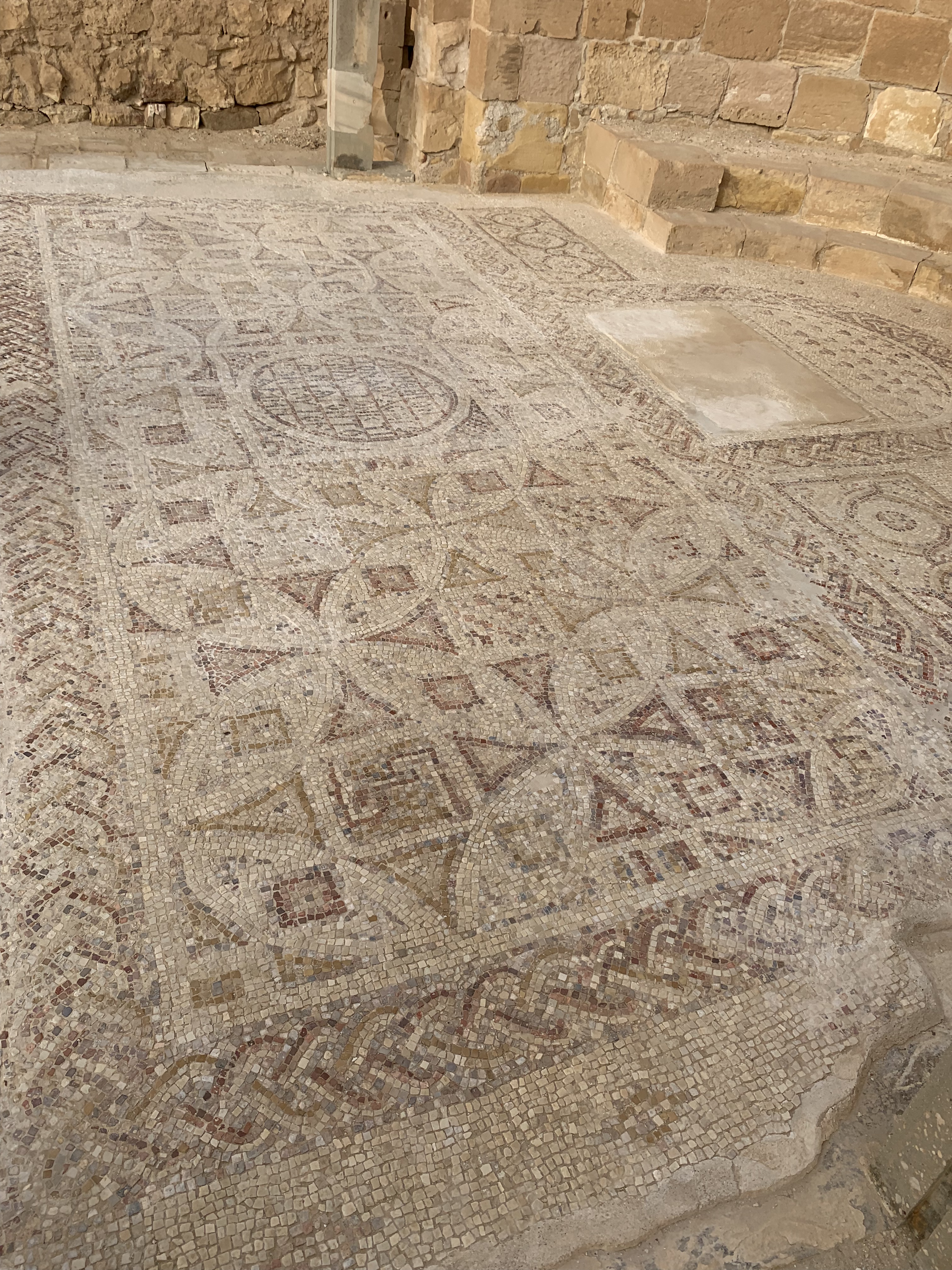
The Nabateans were converted from their polytheistic idol-worshipping religion to Christianity by the third century. At the beginning of the fifth century, two magnificent churches were built here: the Western Church and the Eastern Church (named for their locations in the city). They were in use until the Arab conquest in 636AD. After that time, Mamshit ceased to exist. The Western Church was a basilica shaped church, built at a high point in the city. It was entered through a colonnaded courtyard or atrium. The main part of the church was divided into three parts: a central nave and two side aisles. At the front was a semicircular apse marking the sire of the altar and the direction of prayer. The floor was paved in mosaics featuring geometric patterns, birds, two peacocks and inscriptions.

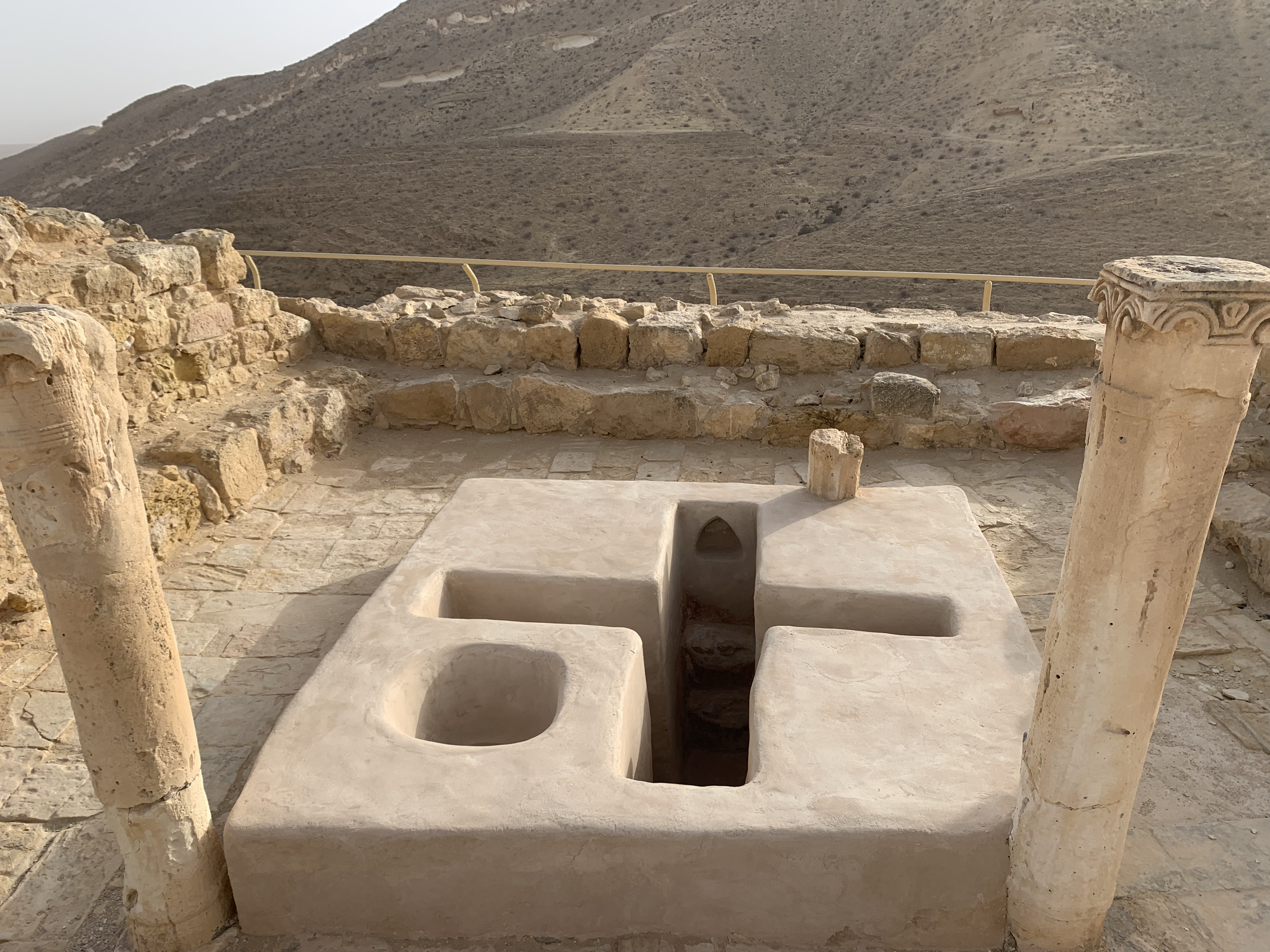
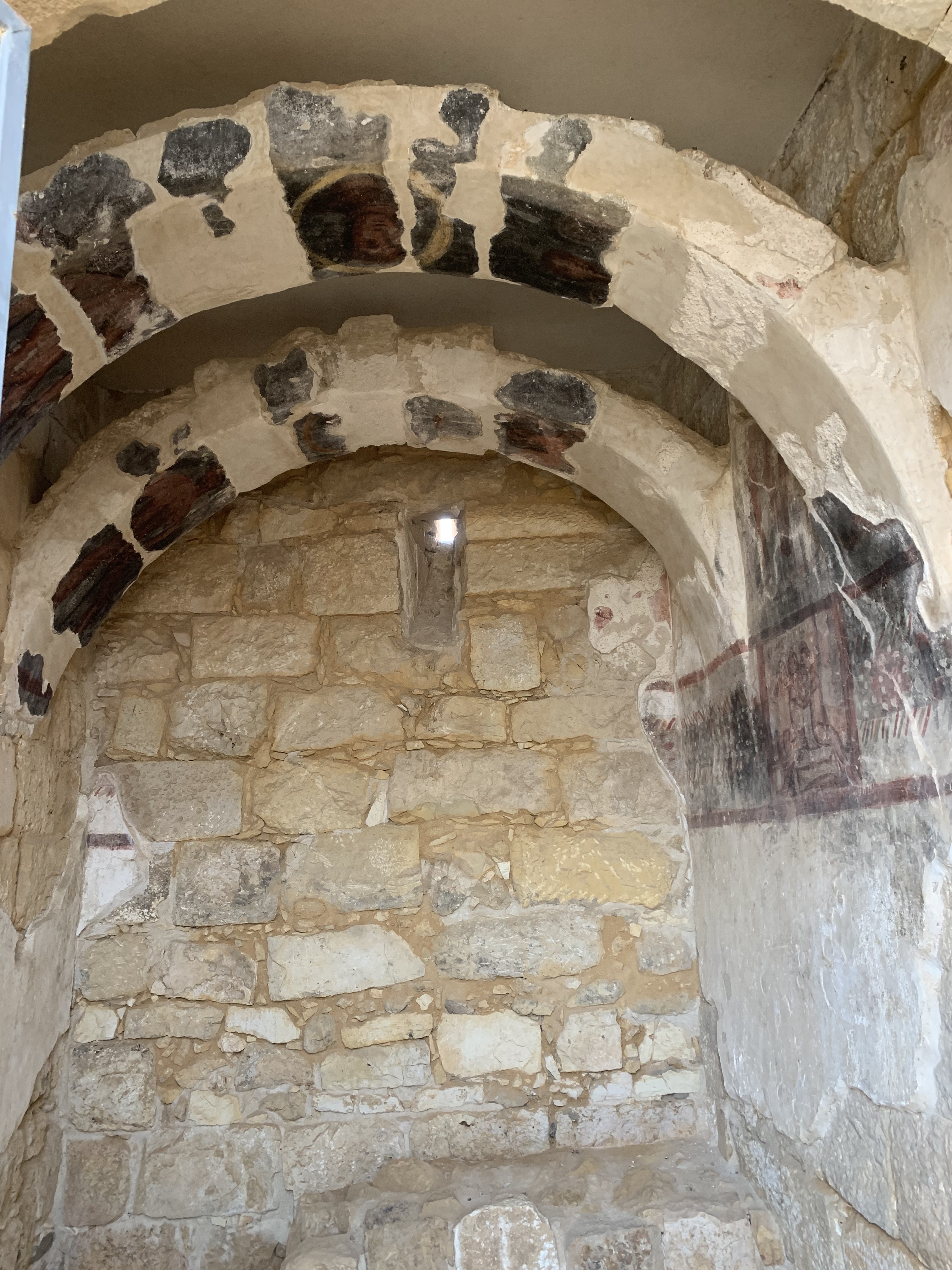
The day was growing short. The wind was whipping sand through the air. I was most exhausted, but we wanted to see the other church and the ”Nabatu house.” John and I (foolishly) split up. He was more able to make the long haul and climb the stepped ruins up to the Eastern church – and he was able to get some great photos of the frescoed walls and mosaics. He said there was also an incredibly deep baptismal pool there as well and that the mosaics here were incomparably beautiful and really well preserved.

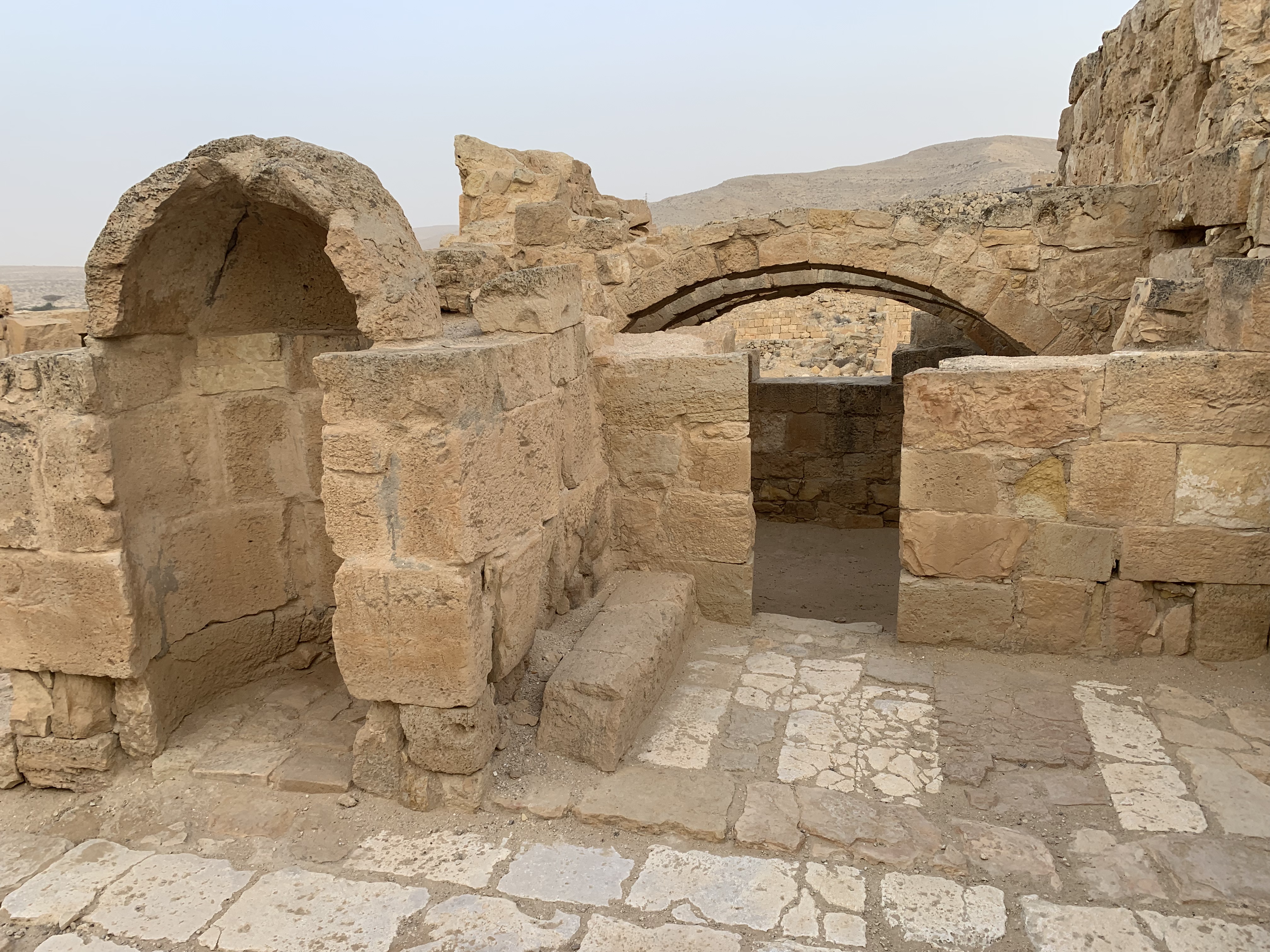
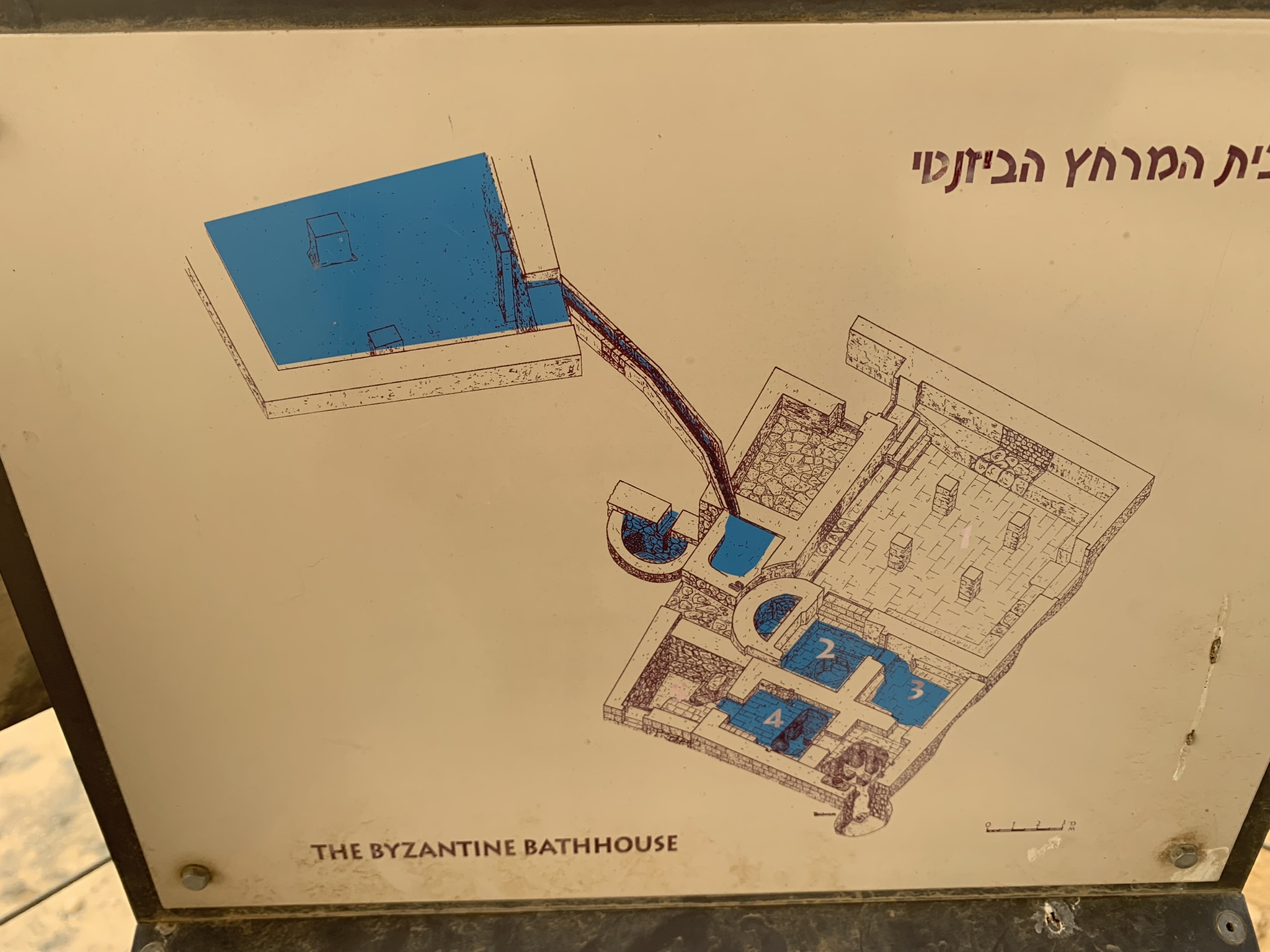
Iwent to visit the largest villa, known as the Nabatu house as well as a three room bathhouse next to it. The public bathhouse ( because you know – Romans!) was made of three rooms: the caldarium, a forced air steam sauna and hot pools; a frigidarium, a cold water pool from the reservoir for a quick plunge after the sauna; and a forum or dressing/social room. The furnace room consisted of red bricks heated by a massive fire and clay pipes through which the hot air flowed. It was all very interesting.

I really don’t know what happened next. I was walking with two crutches. The pavement was really quite uneven. Theres a metal pole sticking up from the ground about three inches. It was very windy and getting very cold. My legs were very heavy and my body aching. My back was screaming at me. I was trying to take pictures… and I went down. Really hard. I felt whatever surgery corrected in my back completely shift. I screamed, but there was no one else around. And that marked a dramatic end to our Negev adventure. The drive home was dusty with limited visibility. We made it just in time- through a sandstorm and before the rains hit. Since then I’ve been laying low, literally, and have been enjoying our rainy season. The winter has finally arrived with storm after storm. We made our trip just in time. It was totally worth it. Until the next adventure –

It’s All About the ”Red Stuff!”

Middle Eastern Red Lentil Stew (vegan!)

Yaakov (Jacob) simmered a stew, and Esav (Esau) came in from the field, and he was exhausted. Esav said to Yaakov, ‘Pour into me now some of that very red stuff for I am exhausted.’(From then on they called him Edom) Yaakov said, ’Sell me today your birthright.’ And Esav said, ’ ’Look, I am going to die, so of what use to me is a birthright?’ Yaakov said, ’ Swear to me this day;’ he swore to him and sold his entire inheritance to Yaakov. Yaakov gave Esav bread and lentil stew, and he ate and drank, and got up and left; thus, Esav spurned the birthright.

Each year we read through the Torah, the first five books of the Bible. I have always loved the story of the two brothers, Jacob and Esau, on so many levels. It’s so descriptive. And I’m a real foodie, so I appreciate that it centers around food – but to sell off my entire inheritance (Esav, the oldest brother was a son of Yitzhak (Isaac), and grandson of Father Abraham, the Patriarch: two incredibly wealthy men). He had to be mighty hangry!!! And that must have been some mighty delish stew!! Each year I try to test a new recipe for that ’red stuff,’ so now I’m going to share three of my favorites. So glad I had this blogpost in reserve to pull out for you all. This year’s trio is decidedly MiddleEastern, as I’m trying to be more authentic and historical. Next year, I’ll actually be up and able to make them… in the meantime, somebody bring some of that mejaddra!!

– Genesis 25:29-33

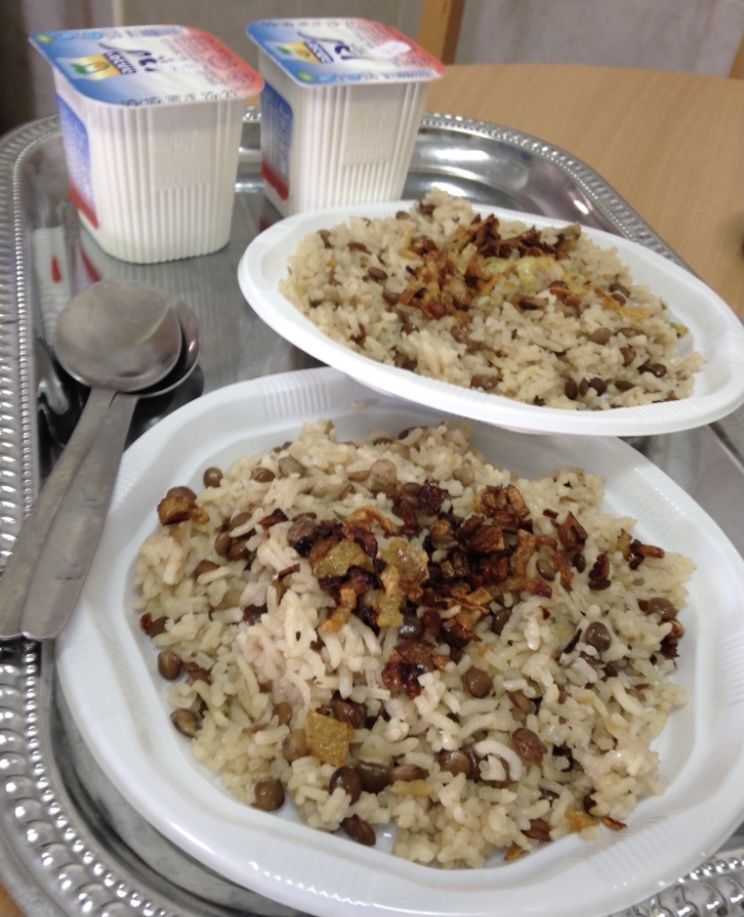
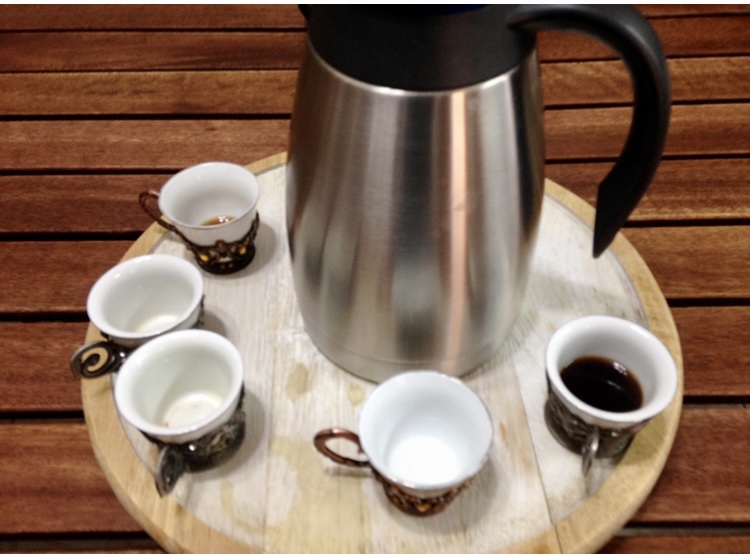
The first recipe is true Middle Eastern comfort food. I think my tastes are changing a bit from strictly Western to other things. I first had this on my pilot trip to Israel in 2014. I hadn’t really eaten much in a couple of days because I was so on the go, and I was starving. Like Esau. In the ancient city of Tsfat in the Upper Galilee, I met a native Israeli family who invited me in to their home for lunch. They served the most delicious dish: simple home cooking. The perfect, satisfying, filling, comfort food, and so easy to make. It’s not red stew, but a combination of rice, lentils and fried onions. We feasted on freshly-made cheeses, mejaddra, and yogurt. And afterwards the father brought out a carafe of strong Turkish coffee infused with cardamom, which we sipped from tiny demitasse cups while eating a little piece of halvah. It was the best, just an unforgettable moment of Israeli hospitality. So glad I snapped photos of it back then. What I wouldn’t give for this plate of mejaddra now…. I hope you enjoy!

Mejaddra

Ingredients:

  • 1/3 cup Extra Virgin Olive Oil
  • 3 large brown onions (the onions are the star of the show here)
  • 1 cup dried brown lentils (or 1 can lentils, liquid reserved)
  • 1/3 cup flour
  • 1 cup Basmati rice
  • 1 tsp cumin seeds
  • 1 tsp coriander seeds
  • 1 tsp powdered cumin
  • 1/2 tsp cinnamon
  • 1/2 tsp allspice
  • 1 tsp turmeric
  • 3 cups of water or vegetable stock, or if you are using dried lentils, the boiled lentil water)

In separate bowls, soak the rice and the lentils for a couple hours, straining out and changing the water twice. Next, drain off the lentil water and place the lentils in a medium sized pot. Cover the lentils completely with water with a good inch more over the top of the lentils. Add about a tsp salt and bring to a boil. Turn the heat down to simmer and cook about 20-30 minutes until the lentils are tender. NOT MUSHY! Drain off the lentils SAVING THE LENTIL WATER! (If you are opting for the quicker, canned lentils, drain, reserving the liquid.)

Thinly slice the onion. Place in a bowl and sprinkle with salt and flour. Toss to coat the onion in the flour. Heat the olive oil in a large saucepan or medium sized pot. When glistening, add the onion slices and fry up for 10-12 minutes until the onions are a crispy brown. DO NOT BURN!! Transfer out the crispy onions to a paper-towel lined plate. In the same heavy saucepan in which the onions were cooked, add the cumin and coriander seeds. It should become quite fragrant after heating for about a minute. Now add in the drained rice and the remaining powdered spices. Stir to coat the rice in the oil and spice. Add in the lentils and reserved lentil water. The liquid should measure 3 cups. If necessary, add in more water. Bring to a boil, then turn down to low and cover. Simmer for about 15 minutes. Uncover and fluff rice. season with salt to taste.

Spoon the rice-lentil mixture onto a large plate or bowl and top with the crispy fried onions. If you’d like, you can top it off with a small handful of chopped parsley or cilantro.

This next soup is more of an accurately Biblical lentil dish. the spices and the red lentils really bring out that glorious color:

Red Lentil Soup vegan

Now this red lentil soup is the real deal. The Red Stuff. Esav’s Bane. True flavors of the Levant. Israeli cooking, whatever that is. It’s fragrant, filling, flavorsome, fantastic. I think once Esav got a whiff of this soup, he was justified in saying, “Just pour it right down my throat, Bro!” Not only a lovely soup, but the lentils are just full of protein, so it is quite life-sustaining.

Jacob’s Big Boilin’ Pot of Red Stuff, aka Red Lentil Soup

Ingredients:

  • 2 cups red lentils
  • 5 cups vegetable broth (or water or a combo of both)
  • 1 large onion, diced
  • 5 cloves garlic, chopped
  • 2 large carrots, peeled and sliced
  • 1/2 tsp cumin
  • 1/2 tsp turmeric
  • 1/4 tsp cayenne or chili powder
  • 1/2 tsp smoked paprika
  • 2 Tbsp olive oil
  • 1 bay leaf
  • salt
  • 1 lemon, cut up
  • optional garnishes: chopped parsley or cilantro; yogurt; crumbled feta cheese bits (we’re keeping it Israeli)

In a large bowl, soak the lentils for about two hours, straining out and replacing the water at least once. Heat olive oil in a medium/large pot. When glistening, add in the garlic, onion, and bay leaf until the onion is soft and fragrant. Add in carrot slices and cook, stirring about 2-3 minutes. Mix in all the spices with about 1/4 cup of the veggie broth or water. It will be very rich in color and very fragrant. Add in drained lentils and 5 cups of veggie broth or water. Bring to a boil, then immediately reduce heat to a simmer and let gently cook on low heat for 20 minutes. The lentils should be tender/ slightly chewy, but not mushy.

I keep the soup chunky. It’s more rustic and has more of a Biblical feel to it that way, but feel free to puree it with an immersion blender. Add salt to taste, and garnish with the chopped herbs. Serve with a wedge of lemon on the side, which can be squeezed into the soup at table. You can also add crumbled (goat) on top. This is great served with light, fluffy Israeli pita and humus (NOT the American cardboard that passes as pita!!) or pieces of crusty, wholegrain bread.

But I like the idea of a red stew. A stick to your ribs kind of meal. Hearty and healthy.

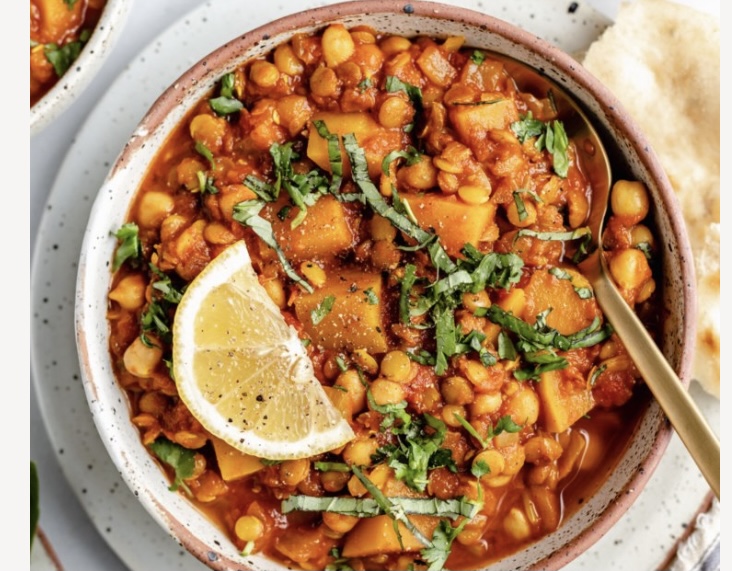
Hearty Red Lentil Stew with Chickpeas and Pumpkin vegan

This is the one! The lentil stew to sell a birthright for …. almost … not quite. But still, this is the one I was making all last winter that is, quite frankly, one of my favorites. It can be made in a crockpot for a Shabbat lunch (perfect for this weekend!). Great lefovers. Freezes well.

We have lots of pumpkin here. Big, huge, light brown monsters that are cut into wedges and sold fresh at the market. Our dlaat is a staple food here. As is the lentil. As is the humus. Not the paste, but the bean. The Hebrew and Arabic word for chickpea is actually humus, pronounced KHOO- moose. I’ve tried to keep this stew as authentically Biblical, using foods indigenous to this region. If you are a geeky homeschool mom (ME!!), then this is a perfect food to cook with the kids as a historical re-creation. Enjoy!!

HEARTY RED LENTIL STEW WITH CHICKPEAS AND PUMPKIN


Ingredients:

  • 1 1/5 cups red lentils
  • 1 can chickpeas, drained (15 ounce/ 425 g)
  • 1 kg/ 2 pounds of peeled, chopped pumpkin cubes or butternut squash cubes
  • 5 cloves garlic, minced
  • 1 large onion, chopped
  • 2 TBSP olive oil
  • 5 cups vegetable broth
  • 1 28 ounce/794 g can chopped tomatoes, with the liquid
  • 2 tsp cumin
  • 1 tsp cinnamon
  • 1 tsp turmeric
  • 1/4 tsp cayenne or chili powder
  • 1/2 tsp paprrika
  • 1/2 tsp cloves
  • 1/2 tsp allspice
  • salt, to taste
  • garnishes: lemon wedges; chopped herbs (parsley, cilantro, zaatar), grated nutmeg, (goat) yogurt

In a medium bowl, soak lentils in water for about two hours, changing the water at least once in the process. Heat olive oil on medium high heat until shimmering, then add the garlic and onion, sautéing until soft. Add in the spices and 1/2 cup of the broth to form a red, fragrant paste with the onions. Cook about 2 minutes. Now add the rest of the broth. Mix in uncooked squash or pumpkin cubes, the undrained canned tomatoes, and the drained lentils. Pour the chickpeas into a strainer, drain, and rinse under cold water. Let drain and add to pot. Stir until well mixed. Bring to a slight boil, then turn down heat to low and let simmer at least an hour. Add salt to taste. Cook low and slow, the longer the better, stirring the bottom and sides every half hour to prevent sticking.

Garnish with lemon wedges, chopped herbs, yogurt, or sour cream. Serve with soft, fluffy pita, or a hearty whole grain sourdough. Makes great leftovers. Freezes well. This is also a fantastic crockpot meal for Shabbat.

A Diversity of Cultures

When last I wrote, I think I was still in the hospital – I can’t even remember any more. So much has been happening both globally and domestically in just the past couple months that it makes my head spin! I’m home, post a very extensive back surgery. After putting out a call for meals, I got a few real winners – one, a whole Indian dinner from a Mumbai immigrant that was so surprising and so phenomenal that I promise to devote an entire blog just to her story and her food. She’s in Austria now, but as soon as she returns I hope to be up to spending a day in the kitchen with her, learning her secrets.

This was the BEST Indian food ever!!!! The red at 7 o’clock on the plate is a roasted Tandoori cabbage slice!!!

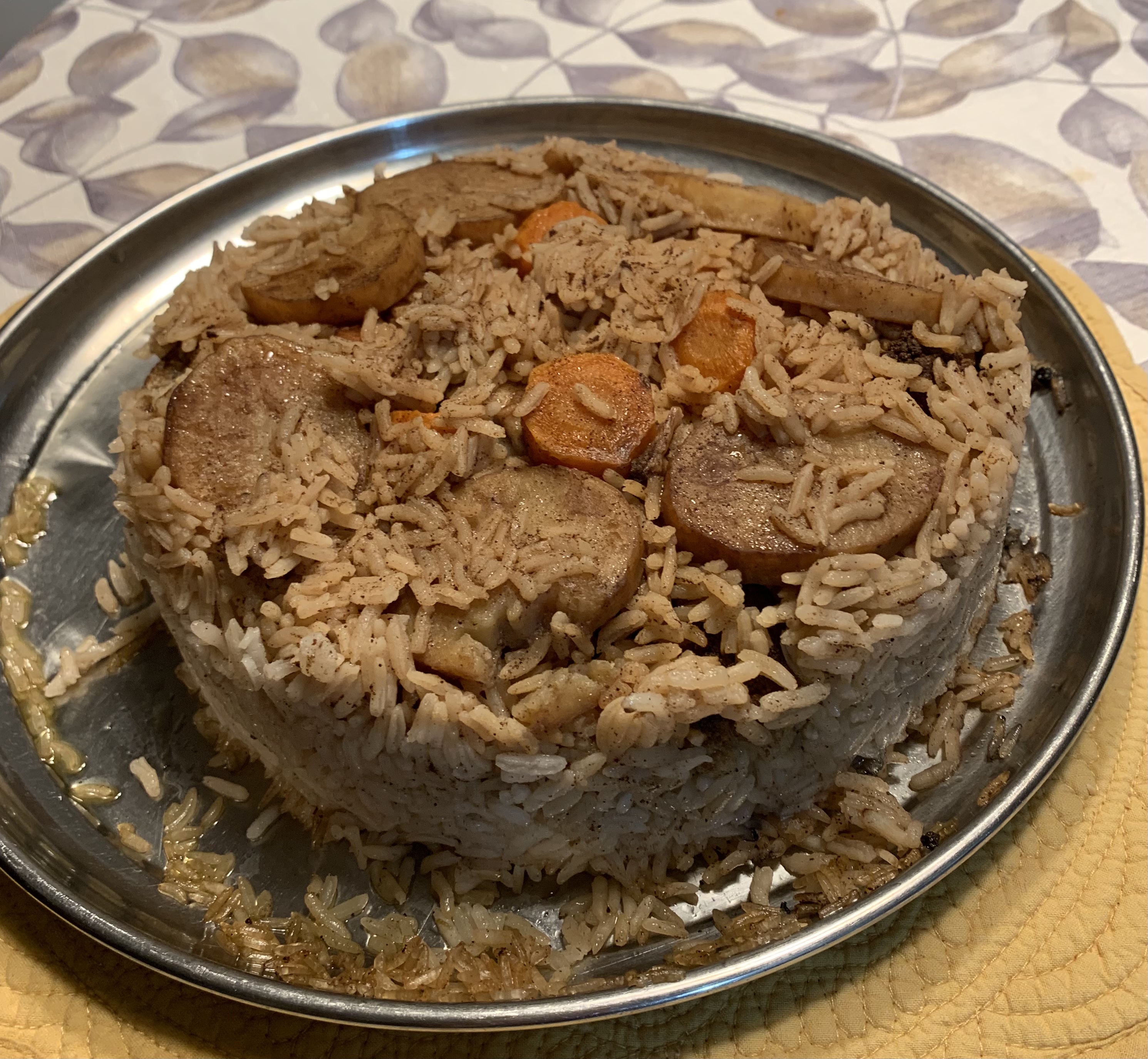
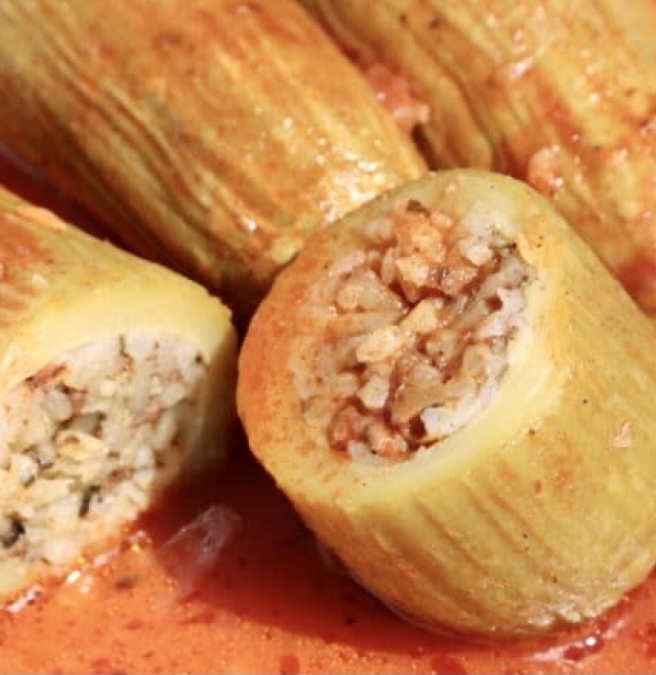
The diversity of cultures here always astounds me. Israel is truly a melting pot in every sense of the word. Claudia’s family came from from Damascus in 1949. The dishes she brought us are very typical of the cuisine of the region. I found her Makhloubeh , a very simple chicken and rice dish to be entirely flavorsome and entirely satisfying. It’s economical and nicely spiced. She also brought us kishou (KEY-shoo) squash, cored, stuffed with a spiced meat, rice and tomato, swimming in a tomato sauce.

Before I start with recipes, I’d like to share our conversaton. She came up to my bedroom to find out how I was doing. I find Israelis to be much more forward than we Americans. “What did the doctor do? Who was the doctor? Which hospital?”Then, “How was I doing now? Was I swelling? Did I run a fever? (Do you have heat? was how she put it-) Was I going to the bathroom regularly? What was I drinking and eating? Was I getting up and walking?” She’s not a nurse. She’s a tour guide, a beautiful woman in her forties. When she found out I was eating lots of salads and raw fruits, she was horrified (I was trying to keep food prep as simple as possible for my husband, who was lacking in culinary skills). “After surgery, you must only eat hot foods! Cooked foods. Soups. Never anything raw. Certainly never raw vegetables!” I had never heard this before, and she thought I was completely off my rocker for not knowing this fact, although I never did find out why this was. And never, ever, ever, under any circumstances drink cold drinks!!

Anyway, it was so nice of her. And the Makhloubeh was lovely. John was quite impressed and took a picture of it before serving.

MAKHLOUBEH (meat/basari)

The dish is an all-in-one meat, veggie and rice “cake.” The word makhloob means upside down in Arabic. It’s a Middle Eastern comfort food. Many of these recipes are found throughout the Levant, from Iraq to Egypt, with lots of family or ethnic variations: differences in vegetables, meats or spices used. The following recipes were not tested by me, but Claudia assured me they are very easy to assemble. Some of the instructions are from her memory and taste and not measured. Both serve about 6 generous portions.

Ingredients:

  • 1 large potato, peeled and sliced in 1/2 inch/ 1 cm rounds
  • 1 medium carrot, peeled and sliced in 1/2 in/ 1cm coins
  • 1 medium brown onion, peeled and sliced
  • 1 small purple eggplant, sliced
  • 1 small head of cauliflower, cut into florets
  • 1 small can or package tomato paste
  • 1kg/ 2 pounds chicken, cut up: 2 legs, 4 thighs, cut up, skin on.
  • 6 cups water
  • 2 cups rice
  • 2 tsp turmeric powder
  • 1TBSP salt
  • 1 TBSP black pepper
  • 1 tsp cloves
  • 1 tsp paprika
  • 1/2 tsp cinnamon
  • 1 tsp cumin

Slice the veggies. Sprinkle salt on the eggplant and potato; let stand for 5 minutes and then rinse. Soak the rice in a bowl of very warm salted water. In a large pot, add extra virgin olive oil to generously coat the bottom. Heat the oil, then add the onion, potato, carrot and cauliflower. Cook, stirring until slightly soft. Now add the spices. Continue to cook, stirring to coat the veggies. The vegetables will be soft. Add the tomato paste, a heaping serving spoon and stir in. Next add in the eggplant. When all is nice and soft, remove the veggies to a paper-lined platter, leaving the sauce behind. Place the cut up chicken pieces over into the pot. Stir to brown. Add 6 cups of water. Place the lid on the pot and cook on medium heat about 30 minutes. Remove chicken to a plate. Reserve the stock/soup to a bowl.

To assemble the makhloubeh, in the same large pot, add a little more olive oil, layer the vegetables in your desired circular pattern covering the bottom. Then add the layer of chicken pieces (bones and all!) and finally the strained, uncooked rice on top.

To the reserved stock, add another 1/2 tsp salt and some additional cumin, about a teaspoon. Pour it slowly over the vegetable, chicken, rice pot. The stock should cover the rice. If it does not, add a little extra water. Place pot on medium high heat on the stove until just before boiling, about five minutes. Cover pot and let simmer another 40 minutes to let the rice fully absorb the liquid. Remove from heat and let cool about 10 minutes.

Very carefully place a plate over the pot of makhloubeh and turn upside down. It can be sprinkled with pistachio or almond and and freshly- chopped parsley.

RICE-STUFFED SQUASH (meat/basari)

This reminded me so much of the stuffed vegetables my mother used to make. I haven’t had this in years. I guess it’s Jewish comfort food. But this had a decidedly Mizrachi (Middle Eastern) flavor. The secret here is hollowing out the palm-Sized squash. There is a special coring tool Claudia uses. It cores out the center of the squash, but could also be used on apples, pears, potatoes…In Hebrew the word for squash is kishu, in Arabic, kusa.

Ingredients:

  • 8-10 palm-sized green squash
  • 2 cups water
  • 1 large serving spoon of tomato paste
  • 1/2 kg or 1 lb ground beef
  • 1/2 cup white rice, rinsed welland drained
  • 1 tsp salt
  • 1/2 tsp black pepper
  • 2 tablespoons mint, chopped
  • 2 Tbspparsley, chopped
  • 1 small onion, diced
  • lemon juice

Wash and cut ends off the squash. Use the coring tool to remove the inside, hollowing out the meat of the squash so it looks like a tube. Set squashes aside.

In a bowl, mix the rice and onion in with the ground beef. Both will be raw. Add half of the mint, half of the parsley and the salt and pepper. Mix gently with hands to combine. In a large pot, pour in the water and stir in the tomato paste until it resembles tomato juice. Heat until it comes to a boil. While tomato liquid heats up, stuff each squash leaving a little at the ends (an inch/2cm to allow for expansion. Add parsley, mint, a pinch of salt to the liquid. Squeeze the lemon into the tomato broth. You can also add a pinch of sugar. place the stuffed squash into the pot. Cover and reduce heat. Let simmer for 35minutes.

My good friend, Ronnie, is an American, but is married to an Israeli man. She brought over one of his favorite salads -and our too. This one is really quick and easy to make. Perfect for any meal, breakfast, lunch or dinner, and is so healthy! It’s a powerhouse in a bowl. The quinoa and humus ( that’s the actual Hebrew word for garbanzo beans!!) add protein and are filling. The veggies are tomato, red onion and cucumber. Top it off with tiny cubes of bulgarit cheese or its saltier cousin, feta crumbles. And add a simple dressing. It’s absolutely wonderful! I had John do some photos of this one, too.

RONNIE’S QUINOA SALAD (dairy)

Ingredients:

  • 1 cup quinoa
  • 2 cups water
  • 1 can chickpeas, drained
  • 1/2 red onion, diced
  • 1 cup small Persian cucumbers, sliced OR 1 English cucumber, chopped
  • 16-20 small cherry tomatoes, halved
  • lemon juice
  • extra virgin olive oil
  • 1 tsp vinegar
  • salt and pepper
  • 2 tsp chopped fresh mint or parsley, optional
  • 1/2 cup feta crumbles or bulgarit cubes

Put the water and quinoa with a dash of salt into a pot and bring to a boil. Lower heat to a simmer. While quinoa is cooking 12-15 minutes, uncovered, chop the veggies and add to a bowl. Fluff the quinoa. Let cool. Add to bowl and mix with the vegetables and drained chickpeas. Sprinkle with lemon juice. Drizzle with olive oil. Salt and pepper to taste. Add the cheese bits. Combine gently. Top off with the mint and/ or parsley, if desired.

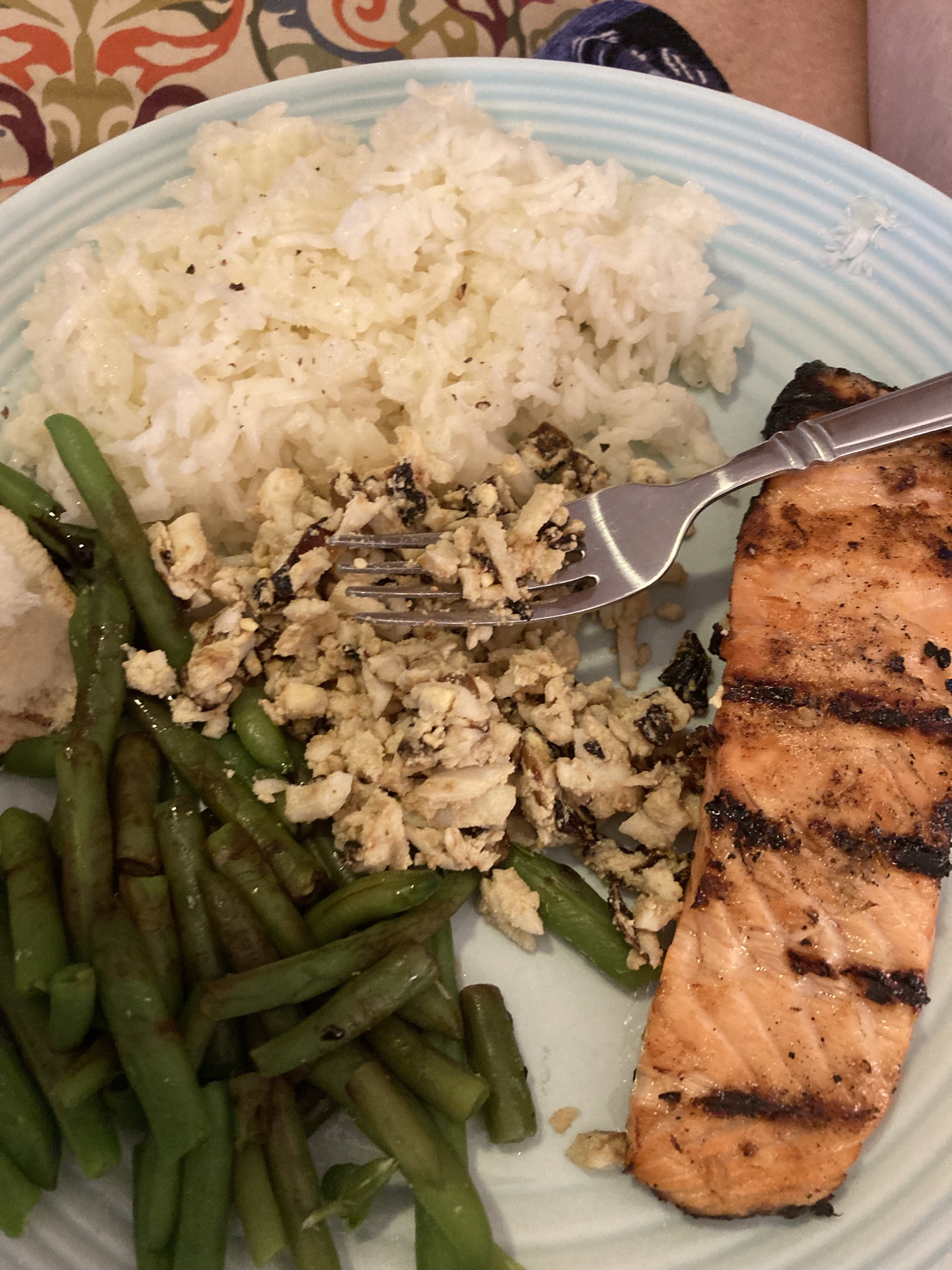
Over the past few weeks, my progress has been very slow, but very much forward. I tire very easily, and realize I’m not as young as I used to be. My husband, John, has been an absolute tsaddik, righteous person, in his care for me and the house. He’s trying so hard, G-d bless him, caring for me, shopping, cleaning, fixing meals and snacks. He has salads and snack down, and has mastered marinated, grilled salmon fillets (one day he will ‘get’ rice, but that’s a tricky one). I gave him instructions for a simple zucchini soup. It was delicious!

So, I’m pretty exhausted now. John is following my instructions for a potato leek soup. At the rate he’s going, Master Chef is soon to come. I’m getting totally spoiled…. he will soon need a break. Can’t wait to get back to fun day-tripping and cooking! Until next time-

Living Like Kings

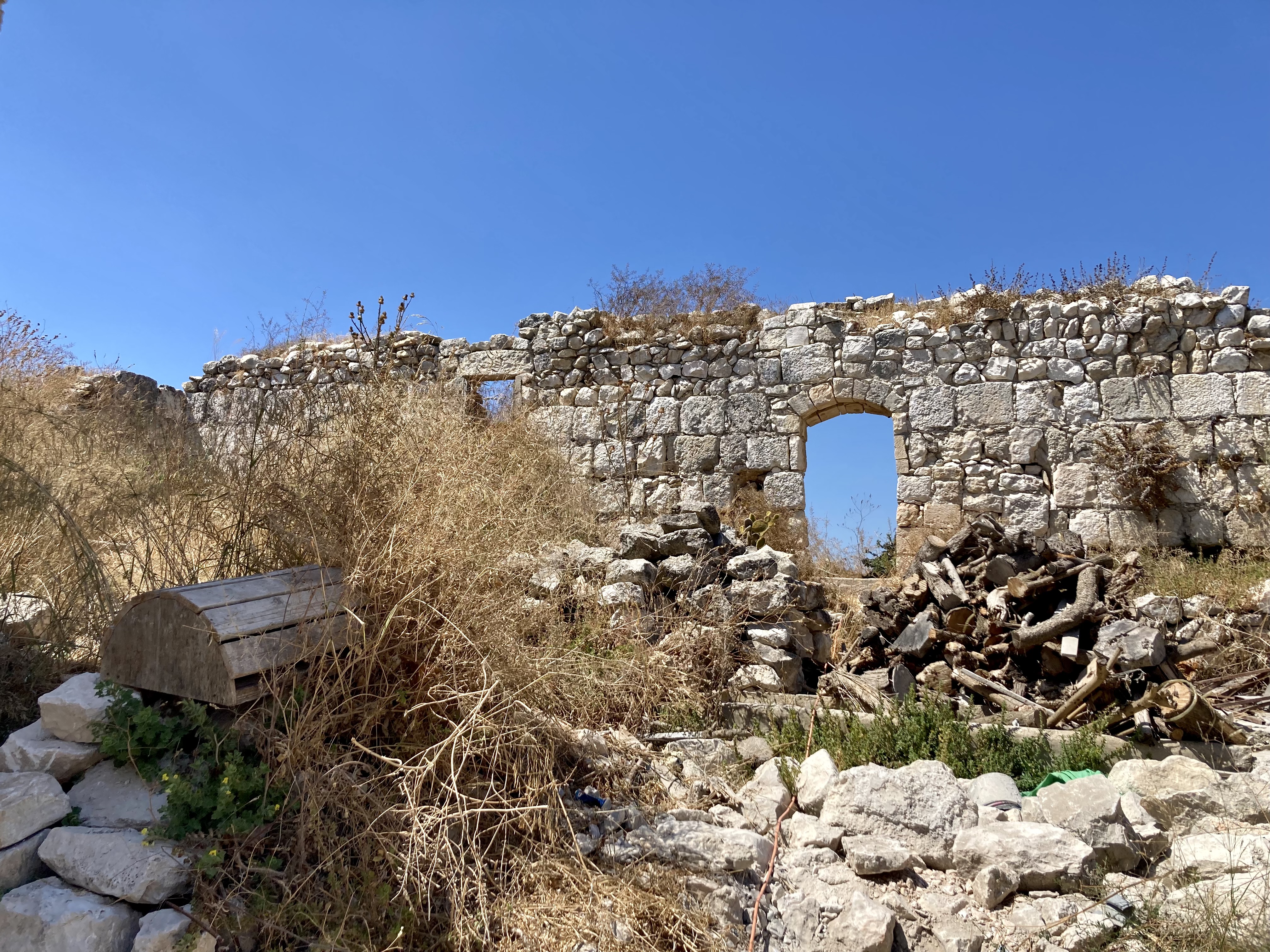
Perched high atop a hill in the Northern Israeli village of Mi’ilya  were the vestiges of an old castle. For decades families had used the outer towers, building their homes over and inside the walls. But time had long ago taken its toll, and the structure had fallen into such disrepair that it was structurally unsafe. 

Labib Assad (of blessed memory) lived in one of those houses since his childhood. He had many childhood stories to pass down of life in the village. Labib, a policeman, and his wife, Salma, owner of the village gas station, gradually bought up the other existing houses one by one until they owned a large part of the complex. It had been Salma’s dream for years and years to bring to life the existing skeleton. In 2012 the Assafs received a letter telling them the castle needed to be restored or destroyed. It could no longer safely stand on its own with its crumbling walls and arches. There was an existential dilemma. What to do? The cost of a rebuild would be absolutely exorbitant, but this could be their one opportunity to make Salma’s dream come true, while at the same time preserving an important part of the local heritage.

Flash back to the 12th century: Baldwin Bourcq led a Crusade from France to the Holy Land with his cousins Godfrey de Bouillon and Baldwin du Boulogne in 1096. On the way, he became Count of Edessa  (in present-day Turkey), marrying and setting up a fiefdom there. He rode into Jerusalem in 1100, winning many battles, and was crowned King Baldwin II of Jerusalem in 1118, expanding the reach of his empire to as far as Damascus. He was aided by the Knights Templars and the Knights Hospitallers.  King Baldwin had four daughters by his Armenian Christian wife, Morphia. The eldest daughter, Mellisande, became his successor. 

Mellisande married and had a son, Baldwin III, in 1129. He was crowned King Baldwin III of the Crusader State of Jerusalem when he was 14 years old. Eventually wresting power from his mother during a familial civil war, he ceded Jerusalem, Judaea and Samaria to her. Keeping his title, King Baldwin set up his home in the mountains of the Galilee. His reign extended from the Jezreel Valley in the south to Beirut in the north and as far as Damascus in the east. On a mountaintop in Mi’ilya, midway between the coastal cities of Acre and Tyre, with sweeping views to the Mediterranean and the Galilee, he built “Castellum Regis,” the King’s Castle. It would serve as the capital of his Frankish Lordship in the Galilee. It was a massive, walled stone compound with four square guard towers, one at each corner. 

The property was first mentioned in 1166 after the death of Baldwin III in a land transfer to a Jean d’Khayfa (John of Haifa). It was, in turn, sold along with the surrounding houses, gardens and vineyards to Count Jocelyn III, uncle of Baldwin IV in 1179 under the name Castellum Novo. A sizable Byzantine church adjacent to the castle was also part of the property. It all fell to the Muslim conqueror Saladin in 1187 during the Third Crusade. However, in 1192, with the signing of the Treaty of Jaffa by Saladin, Richard the Lionhearted and Phillipe of France, it was returned to the Crusaders, along with the Western Galilee and the city of Acre, six miles to the west. 

By the mid-1200s, the castle had been superseded by the newly-built Starkenberg Castle (Castle Montfort) just three mountaintops away. Starkenberg was built by German Teutonic Knights, who also bought the Castellum Novo property for 7000 silver marks. It was a short-lived investment, as Baybars, the Mamluk Turk known infamously as the “Father of Conquest” swept in and took everything, levying a 25% dhimmi tax on the barley, olives, wheat, dates, figs, goats, and beehives owned by the resident Christians. There are no existing records after that. The castle and its inhabitants were wiped out in the 15th century. Was it the result of the Ottoman invasion? An earthquake? Black Plague brought to the area by the Europeans? It remains a mystery. 

Melkite (Greek Orthodox Catholic) Christians returned to the area in the mid 1700s, with the Assaf, Shufani, Abo-Oksa and Arraf families among the first residents. They rebuilt a little village in and around the old castle, and resurrected a church near the site of the original Crusader era one that had been completely destroyed. Upon digging the foundations for their Ottoman-era houses, they began to uncover treasures from the past – mosaic tiled floors, burial chambers and an underground water reservoir. The finds were covered up, but stories of riches in the ground were passed down through the generations.

Salma Assaf had heard the rumors of hidden treasure from her childhood. She was passionate about history.  When the letter threatening possible demolition was received, Salma and her husband made the decision to restore the houses, starting a project that took over a decade and a half to complete. It was her life’s dream. Unfortunately, Labib passed away in 2012 before seeing the project to its fruition.

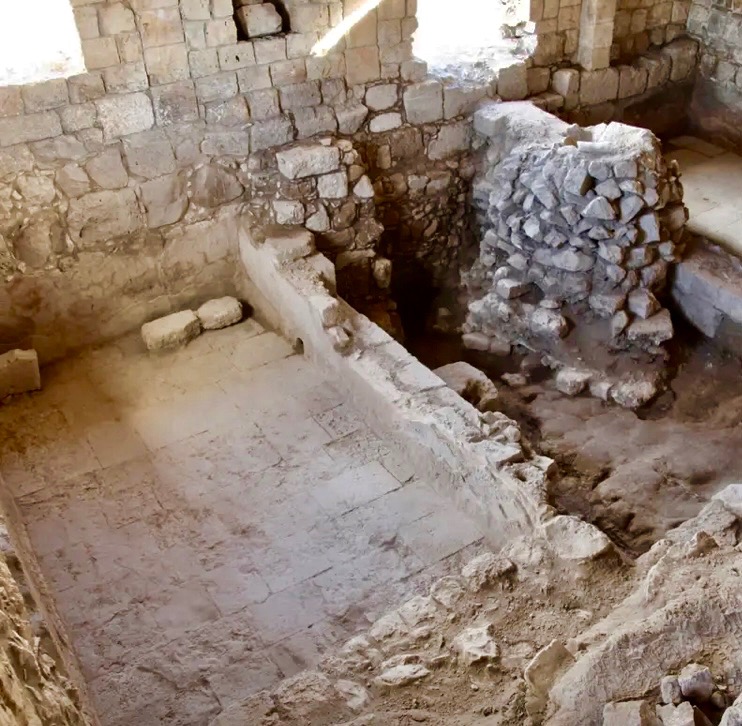
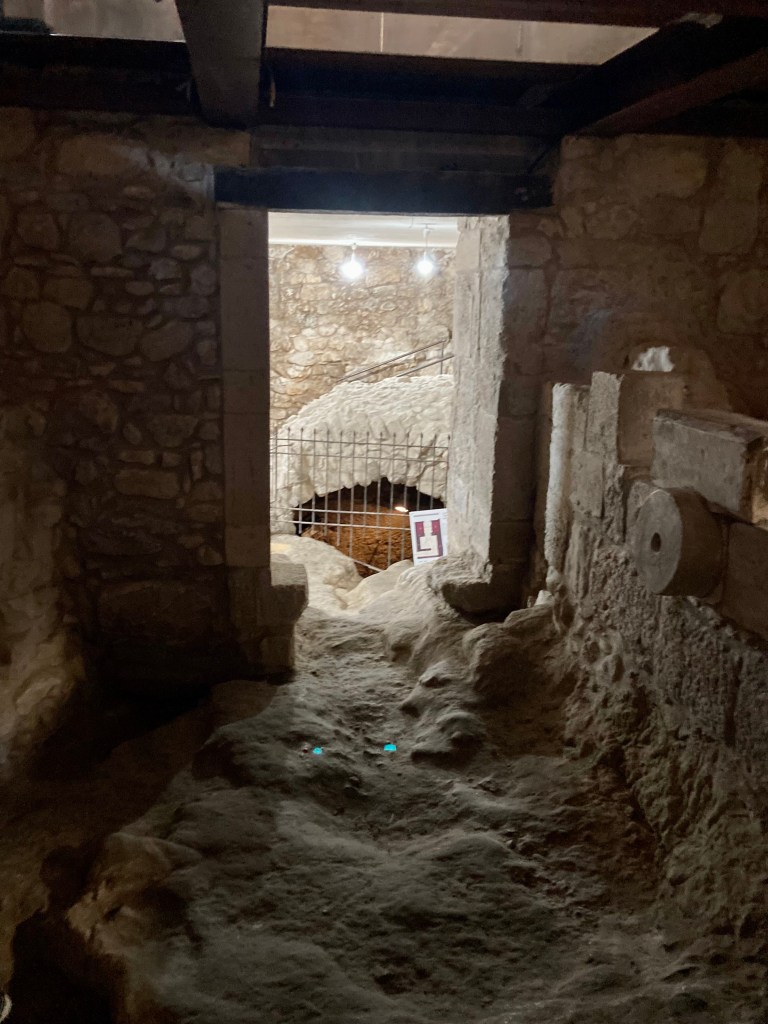
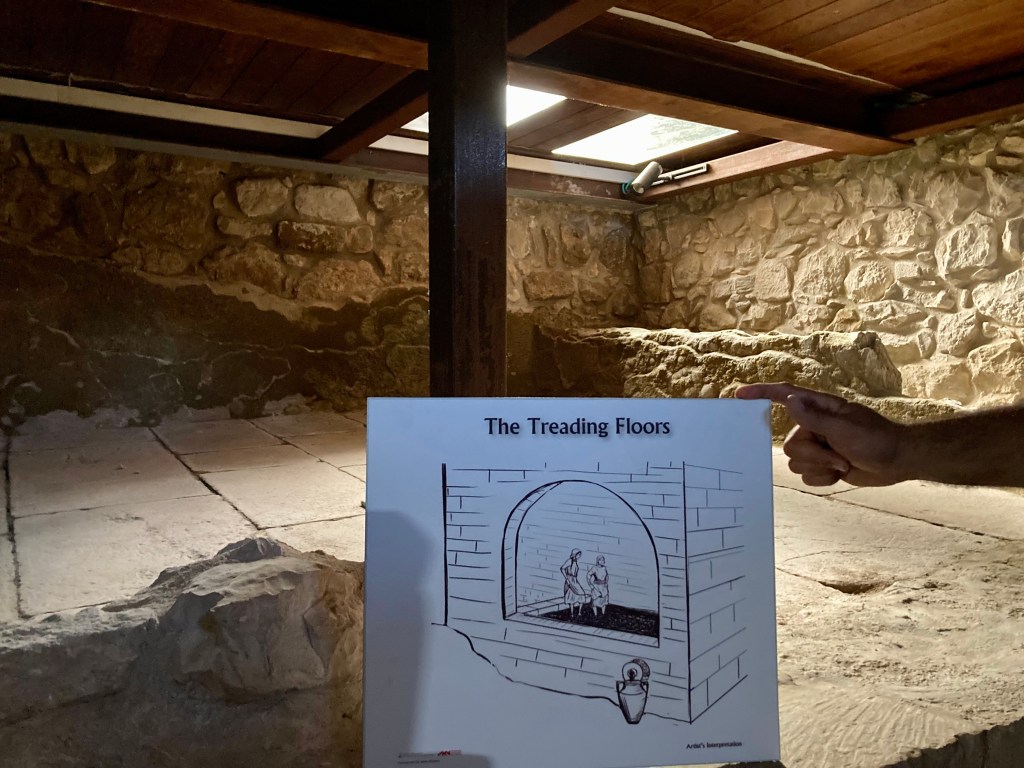
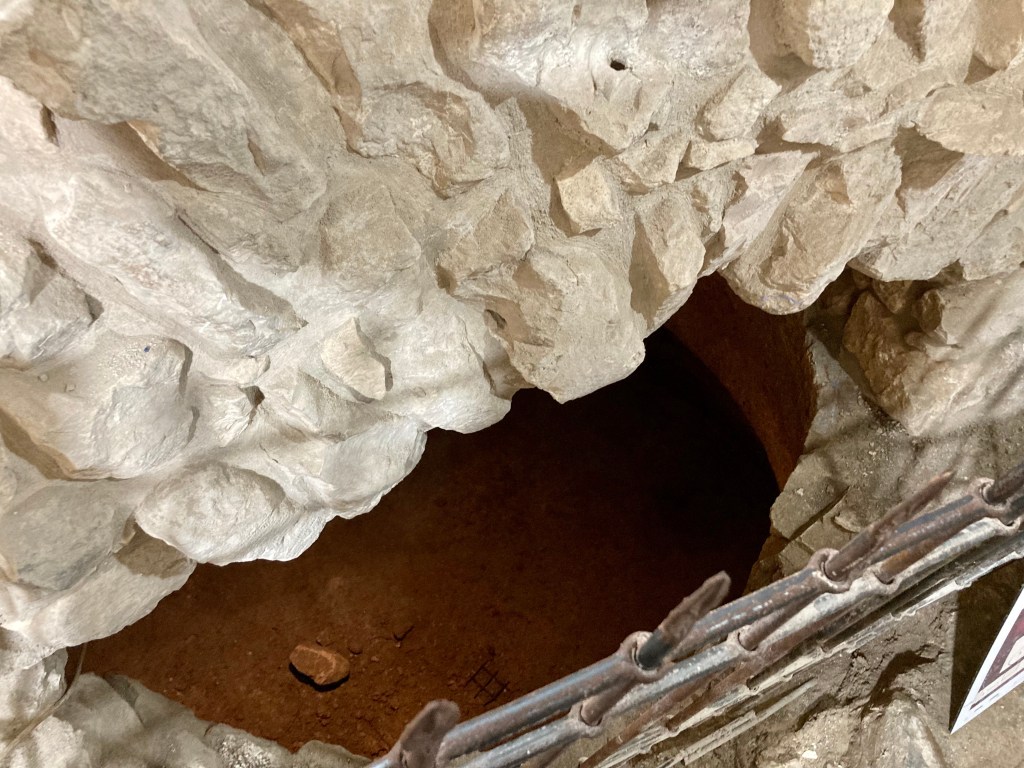
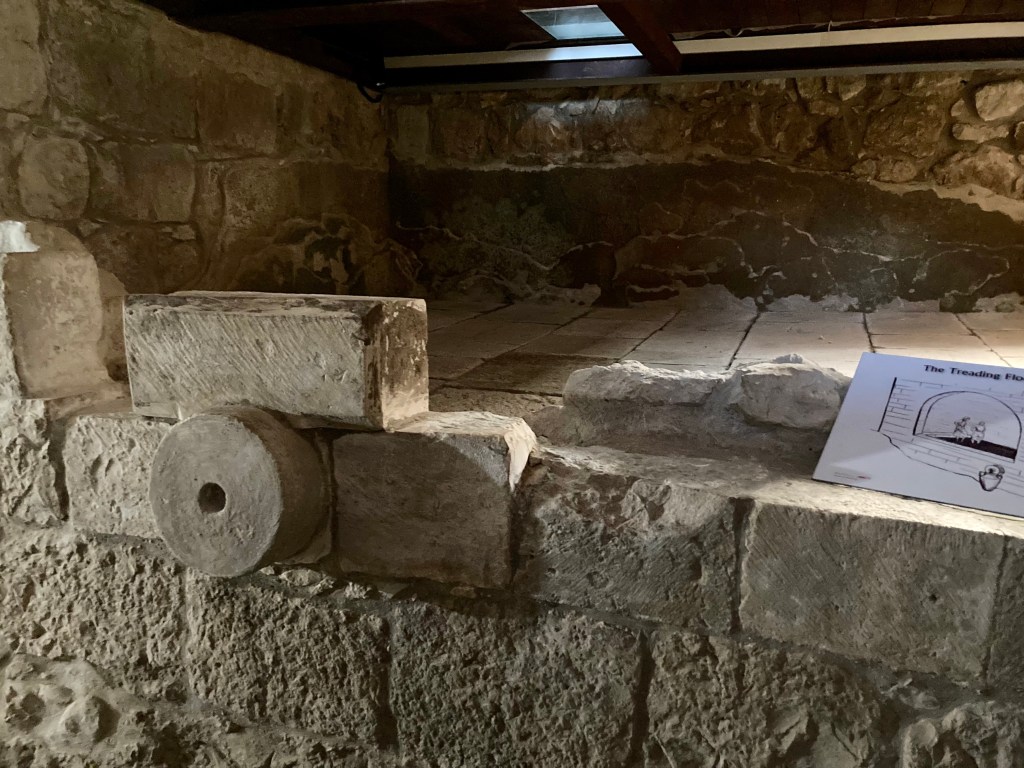
When reaching the final stages of restoration of the buildings, on a whim and out of curiosity, the Assaf family decided to put spade to the ground below. Would stories of the past be revealed or were they all just legend? Salma reached out to her neighbor, Rabei Khamisy, Doctor of Archaeology at the University of Haifa. He, too, a lifelong resident of Mi’ilya, had been brought up with these stories from the past. Together they sprang into action. In a short time, something extraordinary came to light: the largest winepresses and two treading floors from the Latin East (the correct term for the Crusader period in the Levant) had been discovered. Further digging  2 meters from the winepresses revealed a stone dome which covered a 6-meter deep Roman period cistern from the first century. The Crusaders had repurposed the ancient cistern to hold barrels of wine for aging in the cool deep cavity below. For Salma, it was a good omen. It was upon this historical foundation that she would build her restaurant, Chateau du Roi, the King’s Castle. Salma enlisted her son, Khalil, a successful accountant, to be the CFO.

The whole project – the restoration of the above-ground building as well as the excavation – were privately funded by the Assaf family. A greatly appreciated contribution of the local community helped finance the shoring up of the crumbling north wall of the castle adjacent to the restaurant.

They worked tirelessly for four years in tandem with the Israeli Antiquities Authority to complete the excavation. Much more treasure was unearthed: ancient coins; the seal of the archbishop of Acre, who also lived there at one time; cooking tools, trenchers, and plates from the Crusader kitchen. As to the buildings above ground (where the restaurant, bar and boutique hotel rooms stand today), architects and contractors carefully conserved much of the traditional structure. The winepresses have been preserved in the basement of Chateau du Roi, and are open for viewing. Plexiglass windows have been thoughtfully and strategically placed in the floor of the restaurant’s main dining room so guests can view the winepresses below.

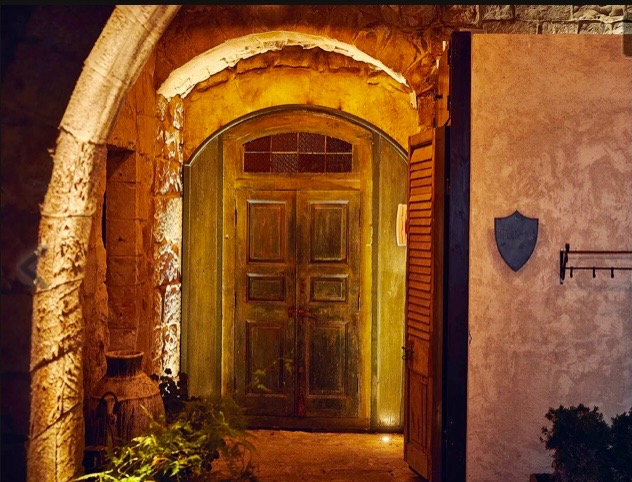
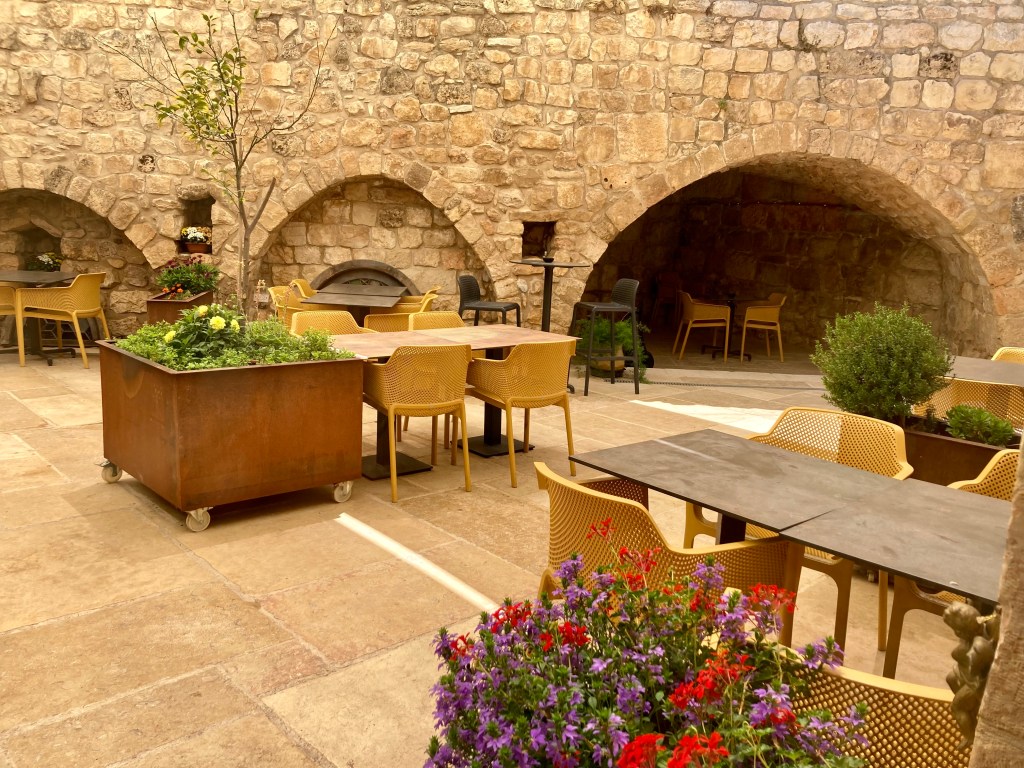
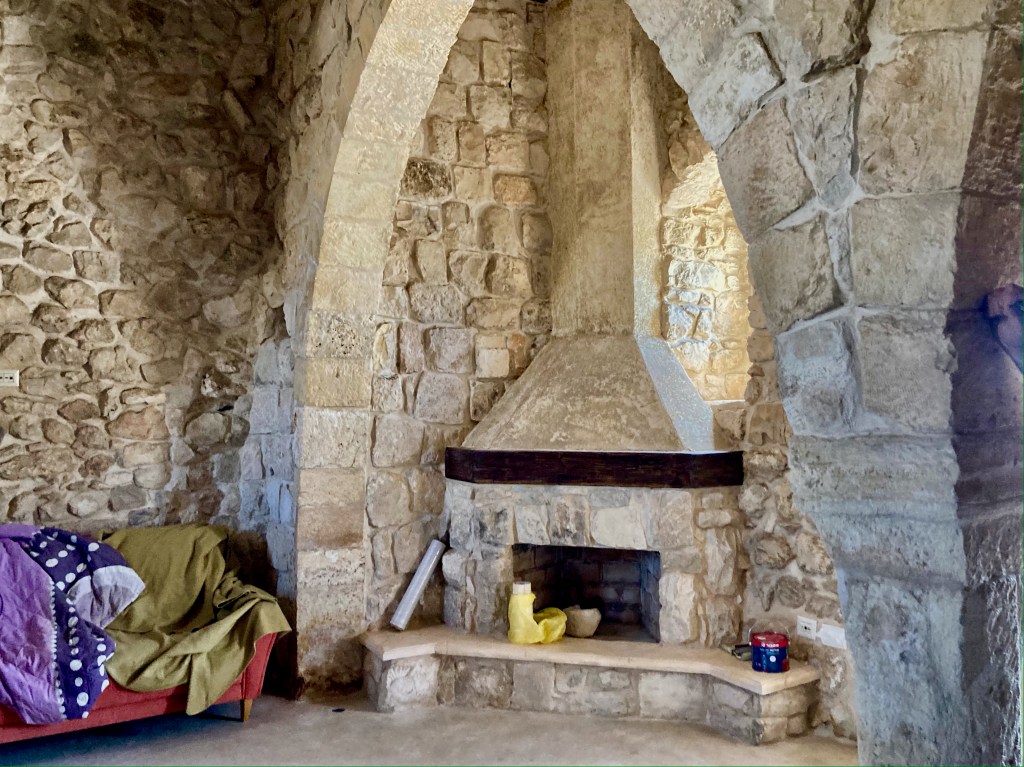
The restaurant is composed of many spaces, each with stone walls, high arches, balconies accessible by winding staircases, cozy inglenooks and fireplaces. A large outdoor patio offers a sweeping panorama of the picturesque Northern Galilee mountains. Chateau du Roi has the ambiance of the finest European restaurant. No detail is overlooked from the china, silver and crystal on the beautifully set tables to the antiques throughout. 

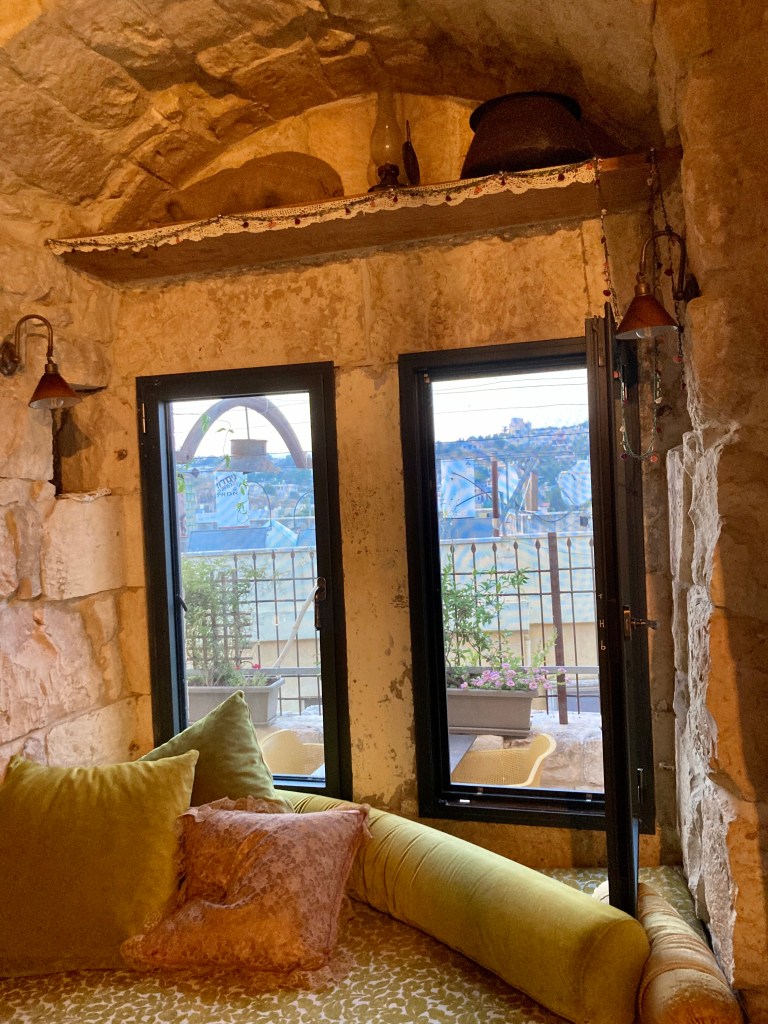
In the cozy and comfortable pub, a large wooden bar stands along one wall. The room is flanked by niches and pillowed window seats built into the arched windows. Luxurious leather chairs invite a person to relax and cast aside all cares. All the culinary equipment and accoutrements throughout the restaurant including the pizza oven in the bar are of the finest quality imported from Italy. Live jazz and acoustic music is featured regularly. Other dining options include a spacious covered patio courtyard with full service, and private dining niches under the castle’s stone arches. It doesn’t get more romantic than this!

Salma called in an old family friend, Elian Layousse, originally from Mi’ilya, who was working as a chef in Padua, Italy. He was more than happy to oblige and quickly assembled an award-winning team. The menu at this five-star restaurant is a fusion of Northern-Italian and Israeli. The dishes are traditional, yet unique. Everything is prepared from the freshest seasonal ingredients: Golan beef, Mediterranean seafood, homemade pasta, locally grown fruits and vegetables. Elian’s passion for detail is evident in every bite. The wine list is impressive. As an added bonus, Salma is able to provide jobs for many of the locals. The staff is warm and welcoming, and not only is Hebrew spoken, but Arabic, English, French and Italian, so guests should feel at home. It is one of Israel’s top gourmet destinations. 

In addition to the restaurant, the Assafs have opened two guest rooms on the property. Khalil, speaking lovingly about how his mother pampers all the guests as if they were her own family, says she serves “the grandest local breakfast. Wow!” Work has already started on converting the west wing of the castle into seven additional luxury guest rooms and suites. No expense will be spared and the fully-appointed rooms will be a blend of ancient architecture and antiques with top-of-the-line modern conveniences. A stay in the castle will make you feel like as if you were living like kings.

Currently, the Assafs are correlating with the Israel Antiquities Authority to open a museum on site. All of the finds from the excavations, which have been catalogued and stored in the Institute of Archaeology at Haifa University, would be returned so visitors can see the town’s history from Roman times onward. 

In addition to Chateau du Roi, the villagers have begun unearthing treasures on their ownproperties. The Arraf family, for instance, are sitting atop a Byzantine church and adjoining monastery. Beautifully colored geometric mosaic floors are once again coming to light. The recent excavations are exposing a complete Frankish rural settlement in what was once known as the Latin Kingdom of Jerusalem. 

Today, Mi’ilya has grown to about 750 homes with a population of about 3000. It is one of two exclusively Christian villages in Israel (the other being Fassuta, about 4km to the east). All of the land and the excavations are privately funded by each villager. The Israeli government has commiserated, but has done nothing to help financially. All of the funds for the digs have been raised privately by the village and through donations. Each year during the Christmas season, they hold a Christmas market. The village is festooned with lights and decorations. It is a grand celebration and thousands of people from miles around come to enjoy the festivities. In addition to this religious festival, the municipality holds a social/cultural Spring Festival with musical shows and local products for sale. 

A trip to Mi’ilya is a trip back in time, and a stay at Chateau du Roi will make you feel pampered like royalty. Their website is https://chateauduroi.co/  

In the Footsteps of Elijah

Fresco, Ascent of Elijah, on the wall of Stella Maris

I love that everywhere we go in Israel, there is a biblical or historical site. They are everywhere. For the past month, we have been on the trail of the prophet Elijah. Our balcony overlooks Carmel Ridge, where much of the Biblical story takes place. It’s about 40 minutes from our house, so when friends offered to take us to Mukhraka (‘the place of the fire’ in Arabic) last month, we jumped at the opportunity. They were going for the sweeping panoramas. We were hunting Elijah, Eliyahu in Hebrew.

On the southeastern slope of Mount Carmel, the prophet had his famous showdown with King Ahab and the prophets of the god Baal. In this encounter, described in 1 Kings 18:1-40, Elijah issued a challenge to 450 pagan priests over whose god could make it rain. Before an assembly on the summit of Carmel, he called on the priests to seek fire from Baal to light their sacrifice. When Baal failed to respond to their pleading, Elijah built an altar to the L-rd, pouring mega-gallons of water (this was during an extreme drought!!!!!) on top of his own sacrifice. Immediately, fire from heaven consumed his waterlogged offering. Directly down the steep slope of this mountain runs the Kishon Stream, just as it was written in the Bible attesting to us the fact this was the correct location. Elijah tells his servant to go look out to sea to see if there is any sign of rain. From this spot, one can look far off in the distance to see the Mediterranean(another verification of the site). Soon after, the storm began and Elijah outran the chariot and horses of King Ahab down Mt. Carmel to the Jezreel Valley below. When I was a kid, we used to think Elijah was the fastest man alive because he could outrun Ahab’s chariot. Today, now that I’ve been to Mukhraka, I think he was smart. As we stood atop the mountain looking down, we could not even begin to imagine what it must have been like to drive horses and chariot down a steep, very rocky slope. Avoiding trees. Flash flooding. Mudslides. It must have taken endless hours. So much faster and much more direct to just make one’s way by foot!!

Mukhraka today is a Carmelite monastery open to the public. The gardens are well-kept and peaceful. In the center courtyard a monument to Elijah stands. Inside the small chapel is an altar with 12 stones from the site, just like the 12 stones the prophet erected for his altar on this spot. But the prize is climbing to the rooftop for the panorama. You can see for miles and miles in all directions. In the North, you can see all the way to the mountains of the Lebanese border. To the west is the Mediterranean Sea. To the east, the view encompasses the Jezreel Valley, Mount Tabor, Nazareth and the surrounding areas, and to the South one can see Megiddo, Ceasaria, Netanyahu and all the way to Tel Aviv!!! It’s absolutely breathtaking!!!

Elijah the prophet was known to hide out in a cave on the Carmel ridge because King Ahab and Queen Jezebel were both seeking out the prophets of G-d to kill them – and for Elijah in particular. This is where the story gets even more interesting. Here in Israel, you will often find different locations for each Bible story. Because the Roman Catholics, the Greek Orthodox, the Protestants, the Jews, the Druze and the Muslims will not worship at the same site together, there are multiple locations (i.e. The Holy Sepulchre vs the Garden Tomb; three sites of Capernaum; three sites for the Sermon on the Mountain; the Western Wall for Jews and the Temple Mount for Muslims, different sites of the Annunciation to the Virgin Mary). After researching and asking many people and tour guides, we found four different caves of Elijah. Each religion swears theirs is the correct one. So, here goes-

The Jewish Cave of Elijah is at the very base of Mount Carmel near Bat Galim Beach in Haifa. It’s not terribly well known. To find it, you must go up a flight of steep steps to a person’s private residence. The old stone home is built right atop the entrance to a cave. Finding it is not so easy as it’s not well marked and the cave is behind a large set of wooden double doors. Once inside, there is a divided cavern – one side for the women and one side for men, as prayer is segregated by sexes in Judaism. At the back of this cavern is a smaller chamber in the rock where the Holy Ark containing the Torah scrolls are kept. All in all, the cavern is spacious, dimly lit and musty. Could this be the place?

The next Cave of Elijah is a story unto itself. We were equally unprepared for this one. My husband and I heard that there was another cave at the top of the western cliff of Mt Carmel in Haifa, just 140 meters up the hill above the Jewish cave. Literally surrounding the cave is the Roman Catholic Church of Stella Maris, run by the Carmelite order. The Carmelites were founded upon Mount Carmel during the Crusades by hermit monks who lived in caves like the prophet Elijah had done. Many of the monks here were killed by the Muslims in the 1400s, but resettled the mountain in 1631, purchasing the land outright from Emir Jorabay with mediation from the French. They erected the monastery, but were expelled by Al Omar in 1767. Not daunted, the Carmelite monks received patronage from the Turkish Sultan and the French and were allowed to return and expand their building. During Napoleon’s siege of Akko eight miles to the north, the building was converted to a French hospital for the wounded soldiers. In 1821, Abdullah Pasha, the governor of Akko tore down the church, but it was rebuilt in 1836. It became an influential institution to the city of Haifa, attracting a large Arab Christian population. Furthermore, the ‘rediscovery’ of the Holy Land in the late 1880s (Mark Twain) brought more visitors and pilgrims to the area. In 1887, a hostel was built around the cave and church. Many brought their sick who came for the chance the spirit of Elijah would heal them. The large complex of monastery, basilica, lighthouse (which we see from our balcony every night), and surrounding gardens stand to this day.

Before I get back to Elijah, there’s another thread I want to share (that happens all the time here. I’ll go for one story and find three other fascinating ones as well!!). A mysterious, invisible straight line links seven monasteries from Ireland to Israel. They were built independently of one another from the sixth to the sixteenth centuries and are all very far apart from each other, yet all in a line. As the story goes, the archangel Michael fought a great battle in heaven with Lucifer/Satan, eventually hurling him from heaven to earth. It is said that the line of churches follows the path of Michael’s sword, the tip landing in Haifa on Mt Carmel. The first monastery is located on the island of Skellig Michael in Ireland…on to St. Michael’s Mount in Cornwall, UK…Mont-Saint-Michel in Normandy, France…Sacra di San Michele in Turin, Italy…Monte Santangelo, Italy….Simi Monastery, Greece… and Stella Maris. And all were supposedly built by direct request from an apparition of St. Michael, Archangel.

We made it up the mountain to Stella Maris Church just in time for the Mass. The church was reminiscent of many I’d seen in France or Italy. It was astoundingly beautiful, but strikingly different, because the raised altar was built over top of Elijah’s Cave. The walls were marble imported from Italy, as was the mosaic floor. Stained glass panels told the story of Elijah, and overhead was a stunning cupola with frescoed panels depicting Elijah, King David, other prophets, and Mary. Just beyond the pews were three steps down into the grotto, where pilgrims go to pray and light candles, much as in the Jewish cave. Above the altar was a large statue of the Virgin Mary holding baby Jesus. Suspended from her hand is a large scapular. Mary, patroness of the Carmelites, gave this scapular to one of the monks in the 1200s. Many Catholic faithful today wear it. A tiny bit like a talit kattan worn by Jewish men or a mezuzah, the scapular is a prayer placard suspended around the neck by cords or fringes. It rests over the heart and between the scapula bones at the back. Of all the Elijah caves we visited, this was certainly the most impressive.

At the southwestern face of the Carmel Ridge is the site that Protestant Christians claim is the true cave of Elijah. There are no fancy churches, no places for prayer or lighting of candles, no holy books or gardens….just a lonely walk to a cave in the side of the mountain. It was roped off and quite inaccessible to humans – except for a couple of creepy life-sized dolls. Were they supposed to be representations of the famous prophet? The site certainly had that desolate feel of a place a hermit would live or a place one would go to seek escape. But those dolls!!! What were the people that put them there thinking???

The last cave of Elijah was not on Mount Carmel at all. It was adjacent to the city in which we live! A five minute drive across the highway and a twenty minute hike on a narrow trail. Located between the Arab towns of Nahef and Deir al Assad, we could see the structure high up in the mountain cliffs. John and I had always wondered what it could be? It looked like an ancient Egyptian temple or some type of mausoleum. It was the Muslim site of Elijah’s cave. In Arabic Elijah is known as “El Khader”. During the Byzantine period the Beit ha Kerem (House of Vineyards) Valley was a major center of Christian monasteries. The caves in the hills were used as burial sites for local Jewish residents and also for the early Hebrew Christians of the Galilee. Monks secluded themselves in these numerous caves as well. When the Muslims invaded the land, they took over many of these sites. They built their own shrine at the entrance to one of the larger caverns for their El Khader. Today, Bedouins still go up to the heights to offer sacrifices of sheep and goats… seeing the remnants of a recent Eid sacrifice near the entrance was just a little weird for us.

2 Kings, chapter 2 recounts the famous Bible story of Elijah being taken bodily to heaven in a whirlwind. He had traveled with his disciple Elisha down to the Judaean desert at the Jordan River crossing. There, Elijah instructed Elisha to wait on the western side of the river and not to take his eyes off him as he crossed over and ascended in the whirlwind when a fiery chariot split the sky (but Elisha’s attention was not diverted!!!) and he saw his mentor go up into the heavens. He then received a double portion of Elijah’s anointing – and his mantle.

Last month, our good friend, Marc, wanted to visit that spot at the Jordan River – to see how high the water was after two years of heavy winter rains. The Kinneret (Sea of Galilee) was still full and feeding the Jordan, which down near the Dead Sea is usually just a slimy trickle a couple inches deep. This year, it was supposed to be freely flowing and quite deep. I was dying to go because not only was it where Elijah was taken up, but it was also the exact spot where the Children of Israel crossed into the Promised Land of Israel at Gilgal (near Jericho)after their forty year desert wanderings – Joshua 3. Once we got down there, I learned it was also the site where John the Baptist was immersing his disciples – and where he immersed Jesus. Also, it marks the spot where the leprous Syrian general Naaman dipped seven times in the river at the directive of Elisha. He was reticent to do something so simple, but was immediately cured of his disease (2 Kings 5). So it was quite the holy place!!!

In the Samarian (Shomron) desert, also known as the West Bank, on the border with Jordan, is Qaser Al-Yahud, also known as ‘the baptismal site.’ It had been completely closed since the 1967 War. Following Jordan’s defeat in the war, and their loss of control of the West Bank, the Palestine Liberation Organization under Yasser Arafat began to launch attacks on Israel from the Jordanian territory. The fighting lasted until Black September in 1970 when the troops of King Hussein routed the Palestinians (being supported by Haze Assad of Syria) into Lebanon. The area they left behind had been heavily mined. The old church that stood at the site is still pockmarked with bullet holes. Over the past decade, the IDF has been working to clear the landmines in the immediate vicinity so the Catholic Church and Franciscan monastery there could be used again. Today, it’s under the protection of the Israeli Parks Service and the Franciscans and can now be used for baptisms…once tourists are allowed back after the pandemic closures.

Because there were so few tourists on the Israeli side, we had a fun time to ourselves. Being careful to stay within the confines of the designated paths, we made our way down to the Jordan River. Unlike the crystal clear waters in the North, the Jordan was quite muddy by the time it reached Qaser al Yahud. The Israeli side was quite sparse, but there were an assortment of beautiful churches on the Jordanian side: Roman Catholic, Eastern Orthodox, Russian Orthodox. There were steps leading down to the river for baptisms, and a large chain dividing line that signified the border between Israel and Jordan. It was crazy being so close to the border!

As I was dipping my foot in (I just HAD to do it!) the murky waters, we heard singing coming from the Jordanian side. English voices! Americans!!!! Escorted by an armed guard, an American Evangelical pastor from California had taken some of his congregation on a pilgrimage. I yelled to them from the Israeli side. He was there to baptize them. How lucky for us to be there to see them!!

In total, he baptized six people. Tears were flowing, songs were being lifted heavenward, and you could just tell it was a moment that would forever be sealed in the hearts of those people. By the time we left, the one armed guard was joined by four other Jordanian military. And so we found ourselves at the last point in Elijah’s earthly life. It had been a most interesting journey for us.