"When G-d will return the captivity of Zion, we will be like dreamers. Then our mouths will be filled with laughter and our tongues with glad song." Psalm 126
This is an unusual year here in Israel. For the first time in many years, Passover, the Roman Catholic, Orthodox, Coptic, and general Christian population celebrate concurrently their Holy Week. It is an exciting and special time to visit the Holy Land. This year, convents and hostels are filled with Christian pilgrims – many of them have traveled from Poland, the Philippines, Mexico and South Korea. Jewish people from the United States and Canada have come to celebrate Pesach with family living here. Still, the recent war has kept the multitudes away for the most part.
For the Jews, last Shabbat led right into the Pesach/Passover Seder. Families gathered together. Army units had their Passover Seders in dining halls and in the fields. Everyone celebrated the story of the liberation from Egypt under Pharaoh, the crossing of the Red Sea by Moses and the Children of Israel in Exodus, and ate the festive meal. During the seven days of Chag ha Matzot (the Matzah holiday) or Khol ha Moed, the intermediate days, Israelis head to to the hills and mountains hiking and to the shores of Lake Kinneret (Sea of Galilee) camping. For those that stay in the cities, museums are all free.
As the Seder feasts wound down in the wee hours of last Sunday morning, Holy Week started for the Christians. Thousands gathered with palms for the traditional Palm Sunday walk. Tens of thousands of pilgrims came from all over the world. The crowds were still not as large as in most years, but the festivities started at BethPage at the top of the Mount of Olives, Har Zeitim. The Latin Patriarch and the Franciscan Custos of the Holy Land blessed the palms and the participants in the walk. The Arab Israeli Scouts from Jerusalem, Nazareth and Ibillin led the procession.
Arab Israeli Scouts lead the procession with drums and bagpipes
The walk starts at the top of Mt. Olives and winds its way down through East Jerusalem. Spectacular views of the Temple Mount, Old City and all of Jerusalem are one of the high points of the walk which traces the path of Jesus from the starting point to its finish within the Holy City. The entire walk is about 3 miles. As in the Gospel accounts, people wave palm and olive branches and sing Hosannas and great Hallels. Security is tight with armed soldiers ready against any act of terror. Helicopters circle overhead for added protection for the walkers.
Mexican pilgrimsInternational throng with palmsThe Franciscans A group of nunsFr. Francesco Voltaggio with the NeocatechumensThe Hebrew CatholicsSweeping views of JerusalemKoinonia John the Baptist from ItalyA procession of Hebrew Speaking CatholicsThe pilgrims enter the Lion Gate into the Old City
And even Jesus showed up for photo ops…
On Wednesday, Maronite Catholics, indigenous Arameans and Lebanese and Syrian Catholics living in the Holy Land, celebrated the blessing of the Holy Oils and the lighting of the Blessed Candles. Their congregations are mostly to be found throughout the North, where the majority of the Christian population is either Maronite of Orthodox Christian. Their population centers are Nazareth, Fassuta, Jish, Me’ilya, Tarshicha, Ibillin and Sh’faram.
Yesterday, the Orthodox Christians (Greek, Russian, Eastern) and the Roman Catholics celebrated Holy Thursday, the beginning of the Triduum, or three-day holy period, concurrently. Eastern rite/Orthodox priests and patriarchs led the procession through their churches with the carrying of the cross for their congregation to venerate.
Cardinal Pierbatista Pizzaballa, the Latin Patriarch, commenced the Catholic liturgies at the Church of the Holy Sepulchre. There was a solemn procession from the place of the crucifixion to the stone where Jesus was wrapped and then throughout the church to the tomb where Jesus was interred. The faithful gathered to reverence, kiss and touch objects to the holy stone slab.
As soon as the Roman Catholic rite was finished, the church was cleared so the Orthodox worshippers could celebrate their liturgy. This is scheduled to happen throughout the weekend.
For the first time, in order to to accommodate all branches of the faith, the Roman Catholics will hold their Easter Vigil at the Holy Sepulchre very early in the morning – 06:30 am on Saturday morning. “Catholics must enter the New Gate between 05:30 and 06:00 am. After 06:00 am, the gate will be closed for entry to the Vigil Mass. Entry into the Basilica will be difficult due to extensive security apparatus in place on this day for the Orthodox Holy Fire ceremony. All those participating in the Latin Mass, will be obliged to leave the church after he Mass. No one will be permitted to remain, as the entire church will be cleared for the Orthodox worshippers.”
The Orthodox Holy Fire is the oldest recorded continual miracle. It has occurred in the Holy Sepulchre…the tomb where Jesus’ body laid… for 2000 years. The Orthodox priest enters the sepulchre at midnight with the Paschal candle and waits in darkness as the worshippers congregate throughout the basilica with their candles. A blue fire comes down and miraculously lights the candles. The flames burn cold for about 10 minutes afterward. This will be the eternal flame from the pascal candle that burns throughout the year in Jerusalem. You can view the entire spectacle onYouTube. It is quite fascinating!
Passover ends this Shabbat for the Jewish people. Saturday night, as the Christians celebrate the start of Easter, Jews in Israel will be celebrating Maimouna. This party at the conclusion of Passover, comes from Morocco. But it has taken hold of the entire Jewish population here. It is a time of great merriment as pastries and tea and candies are piled high on golden trays. The revelers wear bright colors and lots of gold jewelry. There is music and dancing and fun to be had by all.
I wish all of my readers a meaningful, holy and happy feast. Next year I Jerusalem!!!!
Have I told you yet how much I absolutely love this country? Its customs and traditions? Today is New Year’s Day! For 🌳 🌲🌴🌵🌳! Yes. TREES!!!! How cool is this? It’s the Hebrew month of Shvat – also amazing because who else has a month Shvaaaahht??? Even saying the word makes me laugh. And the 15th of the month, during the full moon, we celebrate nature. It’s the original Earth Day without all the political hype. And of course…. We eat and drink. But more about that later.
So to quote my friend, Arky Staiman, we have this holiday where we celebrate the blossoming of the trees. They are just beginning to sprout forth right now. Here in Israel. Now listen, for those Ashkenaz Jews in the US (hello, Chicago, NewYork, DC, St Louis and Seattle), in Canada (you out there freezing your tuchuses off inMontreal and Toronto), in France, Germany, England….this holiday makes little sense. For those in the extreme South (yes, you in Tasmania! In Argentina and Brazil, even in India) you are in the throes of summer. But here in Israel, the rains have come and everything is green and the buds are shooting forth from the ground and the bushes and trees. Judaism only makes sense here in Israel.
No where else does this make sense. The trees know it’s time to blossom their beautiful flowers and it’s all connected to one place, right here, in the Land of Israel, where Judaism is connected and the holidays are connected to the Land and Nature and the People. It’s the time when people go out and the earth is soft and fruit trees (and other trees) can be planted. The early settlers in the 1800s and early 1900s took this opportunity to restore the ecology and verdure of the land by planting forests and groves.
Groups of schoolchildren were out today planting bulbs and trees in the neighborhood park. Whole congregations go out together and plant – avocados are becoming increasingly popular. A friend lives on Kibbutz Ginosar (Gennesaret) where they are planting dunams/acres of bananas this week.
Did you know fruits can be really really Kosher? That Jewish trees in Israel are circumcised??? That’s another weird one. Let me explain. A fruit tree is planted about now…15 Shvat. It is cared for and grows. The first year comes and fruit pops out. Leave it alone! Do not touch the fruit! It is not ready yet. Why? Leviticus 19:23 states
When you enter the land and plant any tree for food, you shall regard its fruit as forbidden. Three years it shall be forbidden for you, not to be eaten.
In the fourth year of fruit bearing, the farmer would bring the fruit from those trees to the Holy Temple in Jerusalem as an offering…on Tu b’Shvat. Then the tree is circumcised, holy, set apart for eating, Kosher. Who knew? From year five onwards, the nuts, the fruits, the seeds are all good to go. Pretty wild, eh? Many farmers still abide by these Biblical laws today here in Israel – except they offer the fruits and nuts to the poor because there is no longer a Temple.
In the 1500s and 1600s, the Jewish mystics of the city of Tsfat (only 20 minutes from here) created a Tu b’Shvat Seder which has come into real popularity in Israel today. It was modeled after the Passover Seder, where different foods are eaten in a certain order, blessings said, and everything has a symbolic, deeply spiritual meaning. We have our own lovely Seder. Here’s what I do:
The table is set with a lovely bunch of fresh flowers I just picked from the neighborhood park. There is no requirement to light candles, but as this is a festive celebration I light the two candles and say the holiday blessing. We have four small glasses of wine set out – white wine, a light rosé, a darker rosé and a red. We take turns reading just like at Passover. I fill a large pitcher with rose scented or lavender scented water. There is a basin. Each person recites the prayer for handwashing and washes his hands individually.
The First Cup of Wine
This glass of white wine symbolizes winter. For a mystical twist this is the energy G-d used in creation to create the trees and flowering, seed bearing plants. We read Deuteronomy 8:7-10 and then lift our glass, say the blessing and drink the wine.
Barukh ata Adonai, Eloheinu Melekh ha-olam borei peri ha-gafen.
Blessed are you, Source of all life, Creator of the fruit of the vine.
Reader: For Adonai your God is bringing you into a good land. A land of brooks of water, of fountains and depths springing forth in valleys and hills, a land of wheat and barley and vines and fig trees and pomegranates, a land of olive trees and honey, a land wherein you shall eat without scarceness, you shall not lack anything in it; a land whose stones are iron and out of whose hills you may dig brass. And you shall eat and be satisfied, and bless God for the good land, which is being given unto you (Deuteronomy 8:7-10).
The First Fruits
Did you know a nut is also considered a fruit? At this point we eat a fruit that is hard and inedible on the outside but with a softer flesh on the inside, like coconut, pecans, walnuts, almonds. The hard shell is strong like our covering and protection by G-d when we walk in His ways. We become strong spiritually, but in the inside we are still tender and yielding. Today as a first course, I serve walnuts in the shell, almonds (indigenous to Israel. Aaron’s staff had budding almond flowers) and also some feta cheese.
Barukh ata Adonai, Eloheinu Melekh ha-olam, borei peri ha-etz.
Blessed are You, Source of all life, Creator of the fruit of the tree.
The Second Cup of Wine
The second glass of wine is a light pink rosé. It stands for springtime. It is also a mystical symbol of mercy (the white wine) mingled with a little bit of justice (the red grape juice or wine), two attributes of the Creator. We read Deuteronomy 28, the blessings and the curses for obedience and disobedience to G-d’s commandments. Then the blessing over the wine, and drink the second cup.
Reader: Blessed shall you be in the city, and blessed shall you be in the field. Blessed shall you be in the fruit of your body, and the fruit of your land, and the fruit of your cattle, and the young of your flock. Blessed shall you be in your basket and your kneading trough. Blessed shall you be when you come in and blessed shall you be when you go out (Deuteronomy 28:36).
Barukh ata Adonai, Eloheinu Melekh ha-olam, borei peri ha-gafen.
Blessed are You, Source of all life, Creator of the fruit of the vine.
The Second Fruit
The second fruit(s) we enjoy are soft on the outside with a seed or pit in the center. I use olives, as they are one of the seven Biblical species indigenous to the Land. They grow everywhere throughout the Galil. It has become a sign of home. You can also use any stone fruit like cherries, apricots, peaches. I also use dates, because they grow here around Lake Kinneret (Sea of Galilee) and in Hebrew, the date palm is Tamar. These fruits remind us of the spiritual and emotional strength within us.
We read Psalm 1. We say the blessing over the fruit again. Now eat the olives or dates.
The Third Cup of Wine
The cup of late spring early summer. The wine is a deep pink rosé. It is more judgment than mercy. It is a season of growth and development. Life is always changing, but G-d remains the same.
The Third Fruit
This fruit symbolizes the first harvest. We eat fruits that can be eaten whole without peeling. What you see is what you get. It also stands for G-d’s omnipresence. Blueberries. Tomatoes. Apples and pears. Grapes. I use grapes as that is also one of the seven species. We read Genesis 1:29-31, say the blessing and consume the fruits.
28 And God blessed them, and God said unto them, Be fruitful, and multiply, and replenish the earth, and subdue it: and have dominion over the fish of the sea, and over the fowl of the air, and over every living thing that moveth upon the earth.
29 And God said, Behold, I have given you every herb bearing seed, which is upon the face of all the earth, and every tree, in the which is the fruit of a tree yielding seed; to you it shall be for meat.
30 And to every beast of the earth, and to every fowl of the air, and to every thing that creepeth upon the earth, wherein there is life, I have given every green herb for meat: and it was so.
31 And God saw every thing that he had made, and, behold, it was very good. And the evening and the morning were the sixth day.
The Fourth Cup of Wine
The last glass is red wine. We are judged for our actions. As the fall comes and winter sets in, it is time to plow under the soil. The land rests. We become introspective and make things right between ourselves as people and with G-d. This glass, all red, also stands for fire, burning, purging, but not consumed like the burning bush, or the fire of the Divine Spark within us. We read the story of the burning bush in Exodus 3, say the blessing and sip the wine.
The Fourth Fruit
The fourth fruit has a touch, protective skin on the outside, but sweet, soft flesh within like avocado, citrus fruits, mangos or bananas. It symbolizes the mysteries of the world and the hidden mysteries in Scripture. We are constantly seeking to uncover deep truths and are nourished by her fruits.
This is just a tiny bit of our Seder. We sing songs and eat lots of great vegetarian (and I serve dairy) foods between each part of the fun ceremony. There’s a lot of deep spirituality that goes with each part and, as a result, lots of discussion.
I know it’s a bit late for you this year, but here are some recipes that we will be enjoying.
Tu b’Shvat Israeli Salad
Ingredients and Directions: Chop a variety of fresh vegetables into small diced chunks… Tomato, Cucumber, Yellow or Orange Bell Pepper, Red Onion, Carrot. Add crumbled Feta Cheese. Dress with juice from 1/2 fresh lemon and a drizzle of olive oil. Gently stir in roasted, salted sunflower seeds.
Tamar’s Sweet Israeli Tabbouleh
Serves 6-8 as a side dish 4 as a lunch entrée. Vegan. (Pareve)
Ingredients:
1 cup bulgur
1 1/2 cups boiling water
1/4 cup pickled red onion (onion pieces swimming in vinegar with pickling spice)
1/2 cup parsley, chopped very fine
1/4 cup fresh mint leaves, chopped very fine
1 cup toasted walnuts, chopped
1/2 cup pomegranate arils
2 persimmons, chopped into small cubes
1/4 cup yellow raisins
1/4 cup chopped dates
Dressing ingredients:
1/2 cup extra Virgin olive oil
Zested rind and juice of 1 large naval orange
2 TBSP apple cider vinegar
2 Tablespoons honey
2 Tablespoons pomegranate syrup/molasses or carob syrup, if available
2 tsp sumac
I tried to use all things indigenous to the land and/or part of the seven species in this cold salad. Wheat, dates grapes (raisins) pomegranates and honey for the Land of Milk &Honey. It’s so healthy, light and addictive! Very Israeli with a twist. I really do hope you make and enjoy this one!
In the meantime, plant some bulbs or a fruit tree. If you desire to bless Israel, go to https://shop.jnf.org>collections>plant-trees and plant a tree in the Land of Israel for only $18. You’ll get a gorgeous frame able certificate and can plant the tree in memory of someone who has passed away or honor someone having a special event like a birthday, anniversary, wedding or Bar/Bat Mitzvah.
Late last summer, the war front in Israel moved up here to the North. Hizbulla began firing missiles at us every day, multiple times a day (and night). Each salvo contained anywhere from 20-60 missiles. When the red alert siren sounded, we had only a few seconds to find shelter. Thank goodness we had the Iron Dome Missile Defense System which intercepted most of the rockets. But then there was the vey real danger of falling shrapnel.
Soon after, concrete bunkers – small shelters called magenit, or little shields – started popping up on highly trafficked street corners. They were placed in parks, near schools, kindergartens, shopping center parking lots. Hideously ugly, they did the job. But they also proved to be the perfect blank canvases. Enter Australian artist, Justin Andrew Hook.
John and I had the good fortune of spending a day with Justin last month, hearing his story and getting to know this amazing human being. Justin, whose, stepfather is Jewish and mother who is Christian, worked for a while in the luxury hospitality industry in Sydney, even serving members of the government and foreign dignitaries. Everything changed for him during COVID, when his jobs ended. This led to some intense soul searching.
“G-d placed certain gifts inside me that needed to be honored. Art was my currency that actually became my identity. When I started to acknowledge and use that, things began to shift for me,” explained Justin. He began to show his paintings at exhibitions and galleries, and then became a curator and manager of an art gallery in the heavily traveled Bondi Junction suburb of Sydney. Opening nights attracted many different kinds of people from all over the world.
Because many Israelis travel the globe after their army service, Justin soon made many new Israeli friends. He began to bump into Israelis everywhere, and a desire to visit the Holy Land grew within his spirit. He now comes every year. “I absolutely love Israel! The culture is so attractive, fast-paced and super inclusive. The people are warm and inviting: the lifestyle and food is amazing! It’s like you become instant family with everyone here! Despite all the severity here, Israelis know how to live life, prioritizing G-d, family and friends. They live life to the max and know how to get the most out of life.”
Totally extroverted and exuberant, Justin has met a wide spectrum of people in Israel from Orthodox Jews to seculars; from Arabs to Druze; Christians and Messianics. His experiences are different each trip. In 2022, he was commissioned to paint a huge mural on a prominent wall in the village of Mesilat Zion outside Jerusalem. A short documentary was made and put on YouTube which opened up many more opportunities for him.
During his 2023 trip, Justin happened to be celebrating Sukkot in a village outside Haifa when the 7 October Hamas invasion into Israel took place. Thousands of rockets were falling on Tel Aviv and the center of the country. The Australian government put a notice out to all travelers that they must return home immediately. There was no choice and a military airlift was scheduled to depart. Justin was in no way fearful. He even wanted to stay and help anywhere he was needed, but the government was insistent that he leave.
In the months that Justin was home in the Land Down Under, it seemed that everything had truly turned upside down. The narrative of the situation in Israel as told by the media was nothing but half-truths and outright lies. This deliberate anti Israel propaganda resulted in the growth of the pro-Palestinian movement, marching and chanting and vandalizing the larger cities of Australia. The media was playing upon the good Will of innocent, well-meaning people – stories of genocide and IDF atrocities against the people of Gaza was a complete deception. Immediately, Justin knew he had to become a voice for truth and for the people of Israel. He was well connected to the Land and the People and knew firsthand the reality of the situation on the ground.
At the very last minute, this past September, he knew in his spirit that it was time for his return. Justin booked round trip tickets for a 2 1/2 week stay during the Feast of Sukkot. He was led to travel the country, bringing a message of hope and support to his friends. When he arrived at Tiberias on the shores of the Kinneret (Sea of Galilee), the doors opened wide for him to put his artistic talents to work.
Despite continual bombing by missiles from Hizbulla in Lebanon and suicide drones, those ugly cement shelters were calling out to him. Justin reached out to an Israeli friend, who immediately and miraculously received instant approval from the mayor of Tiberias to decorate the blank boxes. Not only that, but Justin’s Jewish friends who run NGOs throughout the Galilee would help support the project. There was just one hitch: it had to be done now or never.
A new dilemma arose: Justin was scheduled to fly back to Australia in less than a week. There was no way he could attempt to complete such a project in so little time! Justin walked along the Kinneret, praying and seeking G-d’s direction. Everything was happening so quickly, but if this was part of the Divine Plan, all the little details would come together. In Israel, there is a saying: “There are no coincidences. It is all by HaShem (G-d).” And so it was, that at the very last minute, Justin’s non-refundable plane ticket was changed and paid for by his very own travel agent who also had a deep love for the people of Israel. Both of them knew that Justin had been handed a once-in-a-lifetime opportunity.
“I also set up a last minute page (on his social media) showcasing this opportunity. It included a Go Fund Me link so people could help contribute to my living expenses. My visa was good for three months. Amazingly, after posting a few videos, generous people from all over the globe caught on to the vision and funded my ability to stay in Israel.” The various cities paid for all of his art supplies and he was able to focus on the project and complete the first season of shelters. The. L-rd provides and guides.
“It was during this time I learned spontaneity. I just rode the wave and flowed with the Spirit. I knew G-d wanted me to be a bridge builder with love and the desire to help these people in need.” For the next three weeks , Justin painted his first shelter, right in the center of downtown Tiberias, an extremely important Orthodox city, one of the four holy cities of Israel.
On the outer walls of the bomb shelter he painted the most gorgeous mural of the Sea of Galilee in the full bloom of springtime. The painting wraps around the entire magenit. The mountains of the Golan and lower Galil region encircle it. Butterflies ands birds symbolize new life. The red poppies are a remembrance of the hostages still in captivity. Working with a medium of spray paint, Justin captured the fishing boats on the sea and the migrating birds overhead. The morning sun over the mountains depicts the verse from Malachi 4:2. “The sun of righteousness will arise with healing in his wings.” It was truly a project of healing.
But this was not all. Missiles flying overhead and the thunderous booms as Iron Dome intercepts the incoming rockets can be terrifying for many people. Little children, especially are easily traumatized by having to run for cover. Through Justin’s gift, fear, trauma and ashes could be transformed into beauty and hope.
Justin was inspired to paint a large tallit, prayer shawl wrapped over the entrance to the shelter. It was a sign of G-do’s abiding presence. People were beginning to take notice as he painted. Rabbis stopped to admire his work. Justin painted a verse from Psalm 16:1, a Psalm of David, in Hebrew: Preserve me, O G-d. You are my shelter.”
Stepping inside, instead of being greeted by cold, gray walls, Justin painted the seven-branched menorah that stands in the Old City of Jerusalem, its flames almost alive, glowing brightly. It was truly an inspired vision and a way to share the message of hope and G-do’s love and mercy to His people. It is the national symbol of Israel and has become his signature inside each bomb shelter. “The menorah is a sign of the victory of the Jews over their enemies. It is an eternal symbol that proclaims ‘I am with you always,” explained Justin.
The chief Chabad rabbi of Tiberias sent a video of the finished shelter to the chief Chabad rabbi of Sydney. It was shared with the public on the last night of Chanukah, giving a loving message of perseverance to the Jewish people of Australia. The video soon spread throughout Jewish congregations worldwide:
After this first shelter project, 50 more quickly became available throughout the Galilee, in Tiberias and he Holy City of Tsfat. Justin has received a commission to decorate magenit at playgrounds, skate parks, bus stops and schools. Thus far, six have been completed.
Returning to Jerusalem, Justin bumped into wildly popular social media influencer and Jewish/Israel activist, Zack Sage Fox at the Kotel (Westen Wall). He was visiting from the States.The two did an interview on the spot and Justin’s fame spread like wildfire. I met up with Justin a couple days thereafter. He is totally a bridge between Australia and Israel, the Christian Zionists and the Israeli people.
Justin had to leave as his visa was up, but is praying that the Australian and Israeli governments will grant him a long term visa which will enable him to see the new art project to its completion. “We are all called to be light wherever we go,” he told us over coffee. “We embody His living Torah; we are to do good works and serve others in love, to bring joy and hope to those we meet. We are each given specific gifts and talents that make up our unique identity. If everyone used the gifts given us, for the betterment of the world, this would be a better place.”
The longer we live in Israel, the more reasons John and I find to fall in love with this country. I always thought Americans were unparalleled in their giving….and they ARE! But the Israelis!!! For good reasons, native Israelis are called sabras, or cacti. The cactus is rough and prickly on the outside. If anyone has ever accidentally rubbed up against a cactus…ouch!! Watch out! But inside the flat green plates and the purple fruits is luscious juicy sweetness that just drips out. Israelis are much the same way: abrasive and tough on first encounter, but with hearts of pure gold. The entire story of Yad Sarah is a prime example. But first, a little backstory-
O.K. So I am now using crutches or walking sticks as my back, hips and knees are at the crumbling stage. No biggie. My crutches help when I really need them and absolutely nothing will stop me. When we were in Venice in October, I propped my crutches up on a balustrade over one of the canals to take the most gorgeous selfie of John and myself. And that’s when it happened. One of my rather expensive sticks slipped into the canal. It floated on the surface for about four seconds, as if it was waiting to see if my dear husband would jump in and rescue it – and then, glug glug glug, sunk down to the bottom of the Venetian canal.
Two weeks ago, I visited our local Yad Sarah. I’ve seen the signs pointing to their branches in various cities, and have heard many people talk about using their services, but never really paid much attention to this most amazing organization. Yad Sarah is a non-government, non-profit volunteer service. They have offices in almost every Israeli city, many Arab villages, and in the larger kibbutzim and moshavim.
In Jerusalem, 1976, a rabbi and high school teacher, Uri Lupolianskineeded a vaporizer for his sick child. He searched drug stores and medical supply stores throughout Jerusalem, eventually finding one to borrow from a neighbor who had immigrated from the States. Seeing an immediate need, with a large vision and a small amount of seed money, Lupolianski started Yad Sarah in memory of his Grandma Sarah who had died I the Shoah. He started by procuring and lending small home medical equipment to those in need: wheelchairs, crutches, vaporizers, oxygen tanks, etc.
Today, Yad Sarah is the largest volunteer organization in the country, with over 9,000 volunteers. It has grown exponentially over the past decades, allowing patients to rehab in home, thereby staying out of the hospital and long term care centers. Every one of two families has been helped by Yad Sarah in some way. The branches provide everything from hospital beds to apnea monitors; breast pumps to nebulizers; shower chairs, toilet lifts, and post-surgical walking boots. Lent for free to the poor, home bound and elderly, this saves the country over $350 million annually in medical costs.
As if this was not enough (Illu!), students do internships and residencies for university credit, helping in the fields of occupational and physical therapy, child development, gerontology, social services, psychological services, and even legal work. The larger Yad Sarah centers offer help in preparing advanced medical directives and wills. There are counselors who advise the elderly and poor on their medical rights and with contracts.
Professionally trained volunteers at many Yad Sarah centers work with children ages 3-12 who have developmental issues, autism, ADD and other problems. They offer art and music therapy and even provide parenting classes for free or a nominal cost. There are day centers I Jerusalem, Tel Aviv, Renaana, and Netanya that service disabled and challenged of all ages. They offer everything from volunteer organized and staffed yoga, art, music, dance and exercise, and even horticulture classes. The various services offered are truly amazing! Complete courses in computer skills and basic programming are offered to the disabled so they can enter the workforce as well as interface online.
Some of the larger cities have Yad Sarah offshoots. Gil Zahav is one of them. In Hebrew, senior citizens are called Gil Zahav, or Golden Agers. Seeing the need for the expanding older population, Yad Sarah established centrally located spaces where the seniors can meet for classes and social events. There are lectures and activities, field trips planned, movies and concerts shown and beauty (hair, manicures) and light medical services (podiatry days, dermatology days) provided for very low cost. All Gil Zahav places offer light snacks and meals, some are even equipped with cafeterias.
Horticulture class at Gil Zahav center
Also available for the elderly are geriatric dental services. This even includes a mobile dentistry unit that travels to more out-of-the-way locations. Dentists and hygienists volunteer one day a month to keep this service running. Volunteers from Yad Sarah drive shuttles that are specially equipped for disabled. They provide rides to and from clinics, shopping centers and grocery stores and even airport shuttle services. There are also special programs for shuttling disabled tourists, everything being arranged in advanced from the main center in Jerusalem.
“Help! I’ve fallen and I can’t get up!!!” If you are from the United States, you will easily recognize this commercial for home medical alert systems. The system was developed by Yad Sarah volunteers here in Israel. A need was recognized and solved and wall-mounted and wrist-worn medical alerts were provided for a small fee. The alarm system once activated goes to a central 24-hour YadSarah control which is then immediately routed to United Hatzalah (motorcycle paramedics), Magen David Adom (ambulance), police, or other necessary unit. As an extension, the Azakah Gan, or kindergarten alarm was installed in every kindergarten as an alarm in the event of a terror attack, G-d forbid.
The services just go on and on and on. We spoke with Alan, one of our local Yad Sarah volunteer staff, who gave us an extensive list of all their services. There are people, who, for a nominal charge, will pick up soiled linens from the home bound, wash and return them within two days. There is a meal delivery service, which for a small monthly fee, provides hot Kosher meals daily. This is contracted out to a local catering service and is much like a meals on wheels program. On staff here are four gentlemen who donate some of their time as shiputzniks, or handy men. They will go to the apartment or home of an elderly or home bound person and offer small fix-it and plumbing jobs at no cost. It’s considered a mitzvah, a good deed to a fellow human being.
All the equipment that is lent out (larger or more expensive items are loaned for a small, refundable security deposit for a renewable period of three months) is either donated new or refurbished. All items are cleaned and sterilized by an all-volunteer staff. The items are inventoried in centrally located warehouses, labeled and sent out again. A brand new six month training course offered to new immigrants (in the Tel Aviv and Jerusalem areas) by Yad Sarah certifies them to correctly assemble and package medical equipment. This provides these usually low-income, lower skill set people from countries like Ethiopia and the former Soviet Union with future employment opportunities. It also gives them a way to integrate fully into their new country. What a great idea!!
Especially during this time in our country, Yad Sarah offers Rehab Centers and services for wounded soldiers. Not only are they helping with physical therapy but also emotional and psychological therapy is provided to soldier with PTSD. And now, services have been extended to all those affected by the trauma of war. As if all this was not enough, Yad Sarah also provides a myriad of service to victims of domestic abuse. In women’s restroom stalls throughout the country, there are stickers notifying victims of abuse of how and where to receive help.
An injured soldier receives help
Yad Sarah has won many awards for service and charity including the Israel Award and recognition by the UN (really!). This organization has expanded its training modules to underserved countries throughout Africa and into Asia. Effective, accessible and affordable medical services in order to raise the dignity and worth of every individual is their primary mission.
Yad Sarah is the most amazing organization I’ve ever encountered. Yes, their central offices in Jerusalem are staffed with paid employees. But most of the medical equipment and service vans are provided by generous donations from both within Israel and abroad. Local and international charity drives are often held. When renting a medical device, if the person is able, small extra monetary donations are gladly welcomed. Tax deductible receipts for all donations are given. This is one group we will gladly support, both monetarily and with our time.
If you are within Israel, reading about this for the first time and are I need, contact *6444. Someone will be available to answer your questions in Hebrew, Russian, English, Arabic, Spanish, French or Amharic. There are fundraising branches for Yad Sarah set up in The UK, US, and Canada. To be added to their mailing list or to make a charitable, tax-deductible donation, go to Friendsofyadsarah.org.
I wrote this feature seven years ago, before Hizbulla was truly a threat, in the days when one could actually reach the border fence. Today it is a huge wall of block, metal and razor wire. Because it is right up against Lebanon, most of Hurfeish has been evacuated except for a few Druze men who guard the homes against enemy invasion. Unfortunately, over the years we have lost contact with our friends, Rami and Dalia. I hope they are well….
When I made my pilot trip to Israel three years ago, I first encountered differently dressed people shopping in the Karmiel mall. I had no idea who they were, but I was quite intrigued by them. The women were all dressed in black with perfectly pressed, white headscarves trimmed in lace. The mustachioed men (think Sam Elliott, actor) also were dressed in black with wide-crotched pantaloons and white knit beanies (Amame) on their heads.
After moving to the North of Israel, I’ve begun to learn more about the Druze. The women set up long tables at the local malls on Thursday and Friday mornings selling food. I have never bought any, but it looks and smells delicious! And I’ve asked these women about their cooking –
A few weeks ago John and I had the unexpected opportunity to meet a Druze man. John and another friend stepped in to intercede in a small, but decidedly racist altercation between a Druze and another man. After the situation was diffused, Rami thanked us heartily for clarifying what had been misconstrued, and invited us to his town, Hurfeish on the Northern border with Lebanon. What a great opportunity! So, to prepare myself, I started studying up on these people and their culture.
The Druze are a people, a culture, and a monotheistic religion. Around 1000 AD, in Egypt, two men, Hamza and Darzi, felt that the Muslim religion had strayed too far from its basic tenets and its emphasis on violence and inequality and needed major reform. They formed their faith upon Abraham, Jethro (father-in-law of Moses and their great patriarch), and the Prophets of the Old Testament as well as Jesus, El Hakim, the Greek philosophers, and various teachings of Hinduism. The religion was called Al Tawheed. It was a Gnostic religion, with only a few having access to the complete knowledge of the writings. Open to adherents for only fifty years, the religion became closed. There are no converts. One has to be born into the Druze faith. They believe in theophany, or the transmigration of souls – not reincarnation. When a Druze person dies, they believe after a very short period, the soul of the deceased enters into the body of a newborn baby Druze. They have no set houses of worship, but rather, holy sites on mountaintops, usually at the tombs of their prophets. After a period of intense persecution by the Muslims in Egypt at the beginning of their formation, they fled to the mountains of the Galilee in Israel, on Mount Carmel near Haifa, and to the mountains of Lebanon and Syria.
The Darzi, or Druze, are centralized and organized into large family units. They are monogamous, with the women held in high esteem in their society. Very seldom is there divorce, and in the event of a couple who feel they are unable to live together, the husband and wife appear before a panel of elders who try to settle and make amends in the family. In the rare circumstance of infidelity or completely irreconcilable differences, the marriage is annulled – the man must move to another community, the women always maintains custody of the home and children and receives support from the husband. Neither are allowed to remarry. All of the Druze follow a strict moral and ethical code. They do not drink alcohol and follow the Scriptural Levitical food laws forbidding the consumption of unclean animals (pork, shellfish…). They are people of their word. They do not gossip and strive to tell the truth at all times. Their word is their bond.
Having faced tremendous persecution in Syria and Lebanon in recent years, many have escaped to refuge in Israel. The Druze are a noble warrior culture in the absolute sense. They only fight in defense of their country. There are many communities of Druzim scattered across Northern Israel. They are absolutely Zionistic, believing that G-d has given this land to the Jewish people, and that they have the right to return to their homeland. They enjoy full rights of citizenship here in Israel. Many Druze communities are right upon the borders of Lebanon and Syria forming a first line of defense for us. They have sworn an allegiance to defend the land of Israel, and most Druze men serve in the Israeli Defense Forces. They have risen to the highest ranks of command, and after their service, many Druze work as guards in our schools, banks, public institutions, synagogues, and even as guards for members of Knesset.
Despite their strong agrarian ties to the land, many are highly educated, and are doctors, pharmacists, judges, members of parliament, and other professionals. So it was with a great sense of honor and pleasure that we joined Rami one afternoon for a tour of his town. Druze take pride of ownership. Their villages are well kept and very clean, with lots of greenery and flowers everywhere. They are proud to hang their multi-colored flag along side the Israeli blue and white.
We met Rami at one of their holy sites, the mountaintop grave of Nebbe Sabalon (their prophet, Zebulon, founder of one of the tribes of Israel). From the top of the mountain, we could see all the North from the Mediterranean to the mountains of the Golan, and into Lebanon to the North. It was breathtakingly gorgeous, but for me, quite sad, as just a few miles to the North between two mountain peaks, I could see Ayta alShab, the Lebanese town where Michael Levin, a Lone Soldier for the IDF from Philadelphia, was killed by Hizbollah forces in the Second Lebanese War (2006).
After taking in the view, Rami drove us through his town of Hurfeish, pointing out the home where his grandparents and parents were born, and showing us other various landmarks. We then made our way up the hill and onto a dirt road where we saw his brother’s chicken farm, and family fields of olives, pomegranates, goats and cows. The spring day was beautiful and the trees were abloom with pink, white and yellow. Fields full of flowers with the fragrance of Spanish broom and sages hung heavy in the air. We had made it to a military service road on the border. “Do you see the fence? That’s the border of Israel. See the outposts? And the military bases? And that fence over there? Right past that fence is Lebanon. The dirt was piled up to keep stray bullets from hitting us on the road here…” Never did I dream that he would nonchalantly take us right up to the border. The place where Hizbollah has its arms build up. Yet the day was so peaceful – the only sounds were the breeze and the twittering of songbirds. When we turned around, Rami pointed out the tracks of tank treads in the dirt. Haunting.
A friendly welcomeTank treadsEnd of the roadLooking out to LebanonBorder fenceBorder gate
We were then privileged enough to merit a visit to Rami’s family museum in Hurfeish. A war memorial to his cousin, Nabi Meri. In 1972, Meri joined the IDF with hopes of becoming one of the elite paratroopers. At that time, the Druze were put into a special minorities brigade, but with the help of Moshe Dayan, Defense Minister, and David Elazar, Commander of Forces, he was able to realize his dream. After fighting in the Sinai during the Yom Kippur War, Nabi Meri became commander of Herev, the minorities units, lobbying to change the name to generate more pride. By 1978, he had become Deputy Commander of the elite Givati Fighting Brigade; then as full colonel, headed up the Arava Battalion – all while getting married, having a family, and receiving bachelors and masters degrees in Political Science and National Security. After serving as Commander of the Northern Gaza Brigade, he was promoted to Brigadier General Commander of the Gaza Division. I 1996, Nabi Meri, age 42, was killed in action by a Hamas sniper while trying to give support to his soldiers during a Palestinian attack. His younger brother showed us the museum in the first floor of his home. It was filled with memorabilia, including pictures of Meri with many Israeli and foreign officials – prime ministers, diplomats, generals – as well as his weapons, flags and uniforms from his various posts, and the bulletproof vest he was wearing when he was killed. The bullet hole was a mere 2mm from the ceramic deflectors on his breast.
It was late in the afternoon, and Rami drove us up to his home to meet his wife and family. Such a gracious, kindhearted gentleman. When we arrived, his lovely wife, Dahlia, had fixed us a Druze platter – all homegrown and homemade. Olives, humus, vegetables, goat cheese, pickles, tabbouleh, labane cheese with olive oil and the herb blend, zata’ar (she gave me her recipe and a huge jar full of this AMAZING blend of hyssop, roasted sesame seeds, lemon salt, and sumac. It would have been an insult to their hospitality to say no, so we sampled a bit of each of the delicious and healthy goodies. Dahlia made sure to tell me she had honored all the Kosher laws and there was no meat or anything that was unclean. It was so nice of her to think of honoring us in this way. She had made wonderful cookies filled with cinnamon and dates, and the signature Druze soft flatbread. Their specialty is coffee – home roasted over an open fire. Strong, but very delicious.
We ate on the patio in front of their house under the shade of a tree that held a “shrine” – a remnant of a Lebanese-fired Katusha rocket that had come down next to their home and split the branch of a tree in 2006. Afterwards, the couple warmly invited us into their home. It was lovely. Dahlia had her own very feminine parlor, with the first wall-to-wall carpeting I’ve seen in Israel. Their main living area had intricately carved wooden beams across the ceiling, and low sofas lined with pillows against the walls. We sat and talked for quite a while, listening to their history and promising to get together soon. We have since hosted them in our home, and have formed what I hope will be a strong and lasting friendship. They are lovely and gracious people – we have been invited to their extremely handsome son’s wedding when he finishes his IDF service next fall. His fiancee is equally gorgeous and is in university studying urban planning and architecture. We are so blessed to have been given the opportunity to experience a new culture first hand and to have been given this gift of friendship.
First, I want to thank you, my dear readers. You are the best!! I collected several heartfelt notes and letters both in my messages and direct email for our neighbors, the Aviv family. They lost their son, a beautiful peaceful windsurfer, who fell while on reserve duty in Gaza. I took them in a lovely ribbon-tied envelope last week. Emmi, Ido’s mom, was overwhelmed to tears. Both Emmi and Mark were absolutely shocked to know that people across the globe stand with them and support Israel. Every single Israeli I’m talking with feels so alone now. We all cried and I hugged both Emmi and Dasha (Ido’s fiancée- the wedding was supposed to be next month). We held each other close for a long while. I’ll be taking them another meal next Thursday, so your letters of comfort and encouragement are still wanted.
Speaking of neighbors: it’s time you met a few of my neighbors. Aryeh and Leah are 94 and 92 years old. They were born here and their passports and documents from pre-1948 label them as Palestinians. They were born under British mandated Palestine and their families have been here since the 1800s. They have been married 73 years. Every evening, Aryeh and Leah go on a long neighborhood walk, which is how we first met them.
Leah loved my hollyhocks, so I gave her some seeds. She gave me a gorgeous red amaryllis. I shared my baby Italian and Native American tomato plants with her. Turns out Aryeh was an engineer just like my husband and he worked for years at Raphael, which is very much like Teledyne where John worked. Leah was a school teacher for decades. They are still avid hikers, and have traveled the world with their children and grandchildren. And…… they, too, are “collectors of found objects.”
It’s been a hobby/obsession of mine to pick things up from our travels and walks: flowers to press, shells from the beach, coral (leading to my arrest here the first year), pinecones, fossils and rocks. My kids used to make fun of me. John has gotten used to it and has become a pretty good “picker” himself. So, last week when we visited our neighbors, we were amazed. Geodes, rocks, fossils – each from a special place with a unique history and a story.
Meet the neighbors!Aryeh gave me that turquoise blue rock, a piece of copped from Solomon’s Copper Mines in the NegevThe balls are geodes found in the area. The Arabs call them Elijah’s bread!!Aryeh points to a special findFossilized shells found locallyRocks from Vesuvius, Egypt, France, Arizona, Wyoming, Maine, Peru…Amazing fossil collection including large nautilus shells when these mountains were under the sea-
This past weekend was the Jewish holiday of Lag b’Omer, a celebration of the Light of Creation, holy Light, the Light of the World through the Scriptures, which is sometimes compared to fire. It also commemorates the life of Rabbi Shimon bar Yochai (Rashbi) and the miracles associated with him. Lag b’Omer is always a huge holiday here in Israel. Whether religious or secular, it’s a fun family festival where huge bonfires are lit. Kids sing and dance around the bonfires and families roast potatoes and eggs and meat wrapped in foil in the hot coals. The ultra religious make a pilgrimage to Mt. Meron, Rashbi’s tomb. This year, because of the war, everything was cancelled. No bonfires. No large gatherings. Especially Meron, which is a closed military area. It’s quite depressing.
Wednesday, John and I decided to drive up to Tsfat, about 30 minutes away. Nestled at the top of a mountain, it’s one of my favorite cities. This is the usually-busy tourist season. We would be having guests and taking them there this time of year. Big Bar Mitzvah and wedding parties would, in normal circumstances, be processing with musical fanfare down the already bustling cobblestones alleyways. Tsfat – sometimes transliterated Safed or Tzfat or Zefat, dates from Biblical times and is one of Israel’s four Holy Cities.
Tsfat was the home of the mystics and kabbalists. Today there are still many ultra Orthodox, but also there the hipsters, the hippies and the artists. Galleries line the streets of the Old City displaying high quality professional artwork like weaving, sculpture, painting, incredible jewelry and various crafts. They are known for their pieces of Judaica. And it’s a great place to shop for presents. We had an engagement party coming up and two weddings, and an anniversary.
The drive up, although always gorgeous scenery-wise, was somber. Much of the area is so close to the border, people are not traveling there. We get drones and missile attacks from Lebanon several times a day. The city was a ghost town. No tourists. Empty streets. Most shops are closed. In Israel, when a person dies, a black and white notice goes up informing the public of who died, where the funeral and where/when house of mourning will be held. This time in Tsfat, posters were plastered throughout the city. Death notices. A sad but also clever way of saying the city and its businesses had died.
Death notice for TsfatEmpty streetsClosed shops and galleriesI love the architecture hereMemories of days past in Tsfat
Luckily, the candle shop was open. Safed Candles are amazing handmade, all-beeswax candles…for Shabbat, Havdalah, Chanukah and every day use. Plus this business, open for over 50 years, has lots of other beautiful Judaica. And now, because there is no business, everything was on sale. To fulfill a request from my oldest daughter I bought 6 pairs of long golden beeswax tapers for only about $15. She’ll be delighted. Plus I scored a few other colorful handmade gifts. One other gallery was open. We felt so sorry for the shop owner who had four small kids and no income for nearly eight months. So we bought a few items: Roman glass earrings for my daughters, an engagement gift and anniversary gift.
all-beeswax candles…for Shabbat, Havdalah, Chanukah and every day use. Plus this business, open for over 50 years, has lots of other beautiful Judaica. And now, because there is no business, everything was on sale. To fulfill a request from my oldest daughter I bought 6 pairs of long golden beeswax tapers for only about $15. She’ll be delighted. Plus I scored a few other colorful handmade gifts. One other gallery was open. We felt so sorry for the shop owner who had four small kids and no income for nearly eight months. So we bought a few items: Roman glass earrings for my daughters, an engagement gift and anniversary gift.
We stopped to admire the views from Tsfat. Mount Meron, which has been shelled daily (it’s a high point, literally, and a military intelligence installation. The day was so clear, there was no trouble at all seeing directly over the mountains into Lebanon – now all Hizbulla. Thankfully, there was no action, but John couldn’t leave quickly enough.
Over the ridge into LebanonMt Meron and Lebanon, far right
The highlight of our week happened last night. We were invited to an irusim, an engagement party. John had coached Pri’el in baseball as a kid and now he’s marrying his sweetheart, Bat’El. The cutest couple! But I’d never been to this type of party. The bride is from a Mizrachi Jewish family (Mid Eastern) and they have their own traditions. I was expecting a short, informal religious ritual where a rabbi blesses the newly engaged couple, basically a formal betrothal. I was totally wrong. No ceremony. No religious service.
Once again, most of the women were dressed fairly elegantly. Nope, not me. I kinda stuck out like an American sore thumb… and John in a short sleeve Hawaiian shirt. What were we thinking? We’ve been to funerals and weddings where people wore jeans, but the Mizrachi are different. Or rather we were- the men wore jackets, the women nice dresses. The young friends of Pri’El…. very casual, several in army uniforms.
The bride’s dowry and a gift table was set up for everyone to see. Gifts from the bride’s parents. All beautiful housewares – in white and black and gold. All wrapped beautifully in cellophane with silver or black ribbon. And my rainbow colored gift bag from America that said congratulations with the colorful tissue paper tucked inside. Totally out of place.
The music! Live DJ, drummers, guys singing these melodiously Arabic sounding Hebrew songs. The bride and groom-to-be wore all white. And the food! Hors-doeuvres, salads of the Middle Eastern variety (Baba ganoush, dolma, tabbouleh, humous, lox, pickled fish, cabbage salads, lentil salad….). Then the first course- skewered salmon grilled over a fire. Wow. Then the large platters of meat – kabobs, sausages, brisket, steak pieces). So the party was at 7:30. And I had made dinner and we ate beforehand. Oooopps!
And of course, the dancing. The guys all dancing separately from the girls in circles. The joy. Spontaneous eruptions in different places. And then the young couple and friends sneaking out into the courtyard for a dance together…but never touching. All so pure, and innocent, beautiful and joyful.
After all the food and dance, the father of the bride-to-be presented his future son-in-law with a magnificent gold watch. Rolex??? Then our good friends, the parents of the groom presented Bat’El with gold earrings, a necklace, bracelet and ankle bracelet. It is a tradition in the Mizrachi culture to give gifts of gold.
Then came the next high point. The engaged couple paraded through the room like prince and princess with families behind. Then the bride’s mom and the Kallah instructor (the bride has a special female escort and instructor of the laws of family purity…well save that one for another time) handed a crystal bowl filled with chocolate pudding??? and two candles to Bat’El. They each lit a candle. They then took the bowl of pudding???? with the lite candles and proceeded to wave it in circles over the heads of the engaged couple. So weird. While the chazzan chanted and the people clapped along. PriEl’s friends were dancing on the chairs – it was very very cool.
O.K. So I found out it wasn’t pudding. Or mud. Or a bowl of poo. It was Hannah. And now the ceremony begins as the bride’s mother and grandmother henna’d the palms of the engaged couple. And put a cool seal on to, tying it behind the hand. And next all the women line up to get their hands henna’d too.
By this time, it was getting on to midnight, and the desserts and rest of the festivities were going strong. We were beyond exhausted so John and I took our leave. It was quite the cultural experience- and a lot of fun. But now, preparations for Shabbat begin in earnest, so…more news next week.
Please, if you haven’t already done so, I ask you to write little notes of comfort for and solidarity with the grieving Aviv family. I will present them next Thursday. I can’t tell you how much a little note means to these people. To know they are not alone. Just put them in the comments section. And have a peaceful, relaxing weekend.
It’s just the usual yesterday plus a score of missiles from Lebanon
So for today’s post I could write about the constant intrusions and rockets from Hizbulla…. or the way the IDF set up over 450,000 tents and shelters with cots, cookstoves ( no, the innocent Gazans are not reporting to wood and trash fires to cook), water and medical attention. 8 hospitals have been fully staffed with doctors and medical personnel not associated with Hamas. They are for the Gazan civilians in need. There is also a special women’s center set up for maternity and OB/GYN needs. The staff is all women-
I could write about how Israel was not even included in the last round of hostages talks: the one where Hamas accepted a deal. Only they had changed it so radically and by then it was too late as every effort had been made to negotiate. Or how the IDF withdrew troops down to two battalions and put any attempts to enter Rafah on the Egyptian border and clear it of Hamas.
I was going to write about how the IDF did start to invade Rafah on Sunday night with surgical precision; how Hamas responded with rocket barrages into Israel; how in the morning, Hamas rockets landed on the Kerem Shalom Border Crossing. How 5 Israeli soldiers inspecting humanitarian aid shipments were killed, 4 injured, 3 trucks, and over a ton of food marked for entry into Gaza destroyed.
But no. Today I’m writing about a phenomenon that has swept all of Europe…and Israel. When I went to England, everyone was talking about (and my son-in-law’s sister’s husband was a respected commentator) who would win. Here, in Israel it’s reached a fever pitch. And no. It’s not Football/soccer.
It’s Eurovision!!!! Usually, we are not sucked in, but this year. Both my husband and I have been listening to all the entries and the pundits’ and social media influencers’ reviews of the 39 contestants. We listened to all of the first half of the entries Tuesday night. Tonight are the performances of the last 20.
I know Americans have The Voice and American Idol. But this is waaaay bigger. And this year there is major controversy. You see Israel (always a major contender and who has won four times, I believe), was not allowed to join at first because of the Israel-Gaza War. There were protests, petitions and threats to keep Israel out of the competition, but the Eurovision Committee decided at last to let Israel in.
The song to be entered was reviewed by the committee and rejected as being too political and too controversial in the midst of a humanitarian crisis in Gaza. It was titled October Rain. The song was reworked and resubmitted under the name Hurricane, with female vocalist Eden Golan singing. 20 year old Eden has recently immigrated to Israel from Russia, where she had won several vocal competitions. This is her big international debut.
I really was marginally interested until I heard the commentators from other countries’ reactions. Everyone was blown away and moved to absolute tears. Two anti-Israel people completely changed their bias and said they now understand where Israelis are coming from because of 7 October.
“We can bring everything we’re feeling and everything the country is going through in these three minutes,” stated Golan. It is a powerful song of loss and redemption, of strength in tough times. Compared with all the other entries, Eden Golan’s range, her emotion, her dramatic pauses put her in a league way above everyone else. Listen:
I’m so deeply moved by this song. We will definitely be watching tonight, hoping the politics are placed aside and that Israel comes across strongly enough to make it to the finals Saturday night. There are a couple countries that give stiff competition, but we shall see how the live performances go. Of course, we will be rooting for Eden Golan!
First: a HUGE thank you to all my readers who have sent in notes of comfort and support to the grieving Aviv family. (See last post). Please keep them coming, as I will present the letters along with the JNF memorial certificates and FIDF donation certificates to them on Memorial Day next Monday. So you have through the weekend. Please don’t delay.
John and I just returned from a few days in Jerusalem and Tel Aviv. He had a doctor’s appointment and we really needed a change of scenery. I hadn’t been down to Jerusalem since the pandemic, and once again there are no tourists.All the streets, holy sites, and tourist spots are completely empty. It’s a totally different vibe than when there are thousands of tourist groups, lines to enter a building, crowds jostling. It’s lonely, but also beautiful. To be able to enjoy sacred silence.
We visited King David’s tomb. We went to the Cenacle just upstairs in the same building. We walked the empty cardo, the excavated Roman Main Street that ran the width of the Old City through the marketplace and to the second Holy Temple. There was only the chiseling and hammering sounds of archaeology in progress. The stalls of the vendors were open despite the few customers. The cries in Hebrew, English, Russian, Arabic for tourists to come and buy. Only now there were few visitors. Still, the fragrance of nard and sandalwood hung heavy in the air. The colors of the fabric hanging and the brass and silver gleaming were just as vibrant. John and I went to the Sepulchre. The Orthodox Christians had just celebrated their Easter the day before. The miracle of the Holy Flame, the oldest continual miracle, had occurred the Saturday night previous. And of course, we made our stop at the Kotel, the Western Wall.
It’s rare to get such a clear day. You can see for miles. Beyond the Arab sector, the Judaean Desert, Dead Sea and Jordan (Edom)The ramparts of the Old City WallsThin slit in wall to shoot arrowsDefensive hole in the Old City Wall. Lookout and arrow/ stone launchingHow many battles were fought? How many invading armies? How many victories? Defeats?Scenes from Jerusalem
Flags were flying half mast for the five soldiers who were killed by missile fire as they unloaded humanitarian aid at the Kerem Shalom crossing on Sunday. It was quiet. Very quiet there. No groups singing, dancing, praying at the Kotel Plaza. No bands of soldiers. Only a few seminary girls in their long skirts and mothers with young children. A few men praying at the wall. It was easy to get a chair and bring it right up against the cold stones.
I really thought the floodgates of my tears would open up. I told John I might be a couple hours. I had a whole pack of tissue and my Scriptures. I’ve been holding space for so many people and so much over the past six months, there is barely enough room to hold any more. Every time I go to the Wall, unexpectedly, I sob until I cannot cry any more. Sometimes, it’s for certain people; other times it’s because I feel such connection with my past (family, ancestors who either visited or long to come to this very spot); sometimes it’s for the state of the world. This time, fully expecting…. again the unexpected. For the first time, I just could not cry. Nothing would come up – or out.
I prayed. I prayed a lot. But I could not grieve. Not yet at least. I gave thanks for the new lives in our family and our circle of friends. For. G-d’s protection. For all the blessings we’ve received just in this past year alone. But I could not cry.
Jerusalem in the spring is a place of incredible beauty. The wisteria is in full bloom and just climbs over the old buildings. The fresh mountain air is still crisp and cold and the surrounding Judaean hills are still green.
Huge fan of the old architecture of JerusalemThe Judaean Hills outside the city – see the vineyard?The view across the mountains to the Mediterranean was breathtaking!Even at night, it is a place of beautyNew high rises are popping up everywhereJerusalem side street, night timeOld building with lots of charm at nightTin shutters and laceThe Mechane Yehuda Market at nightSunset descends on the city
We really needed this breath of fresh air. In the morning, we headed out for breakfast at a sabich place. Oh my goodness!!!! If you have never had a sabich, are you in for a taste explosion when you come here. I’d never had one of these Middle Eastern delights until I came here, and this place was the absolute best. So what is a sabich (pronounced sah bikh with that gargling sound at the end)? You take a big fluffy as a cloud pita, smear the inside with humus; put in some hot fried potato slices; a sliced hard boiled egg; some pickles, fried eddplant; amba (the most incredible pickled mango sauce); some schkoog (hot!!!!!!) for the adventurous; more eggplant -crispy outside, soft inside- techineh, cucumber, tomato, onions, more amba and humus. It sounds wild and IS WILD!!!! Fairly healthy, incredibly filling. All together delicious and wholly satisfying.
Which brings me to a recipe: When we were in England, our daughter made a deconstructed sabich salad for dinner one night. She served it with leftover roasted chicken and it was quite marvellous! So much so, I took pictures, asked her for permission and voila!
Elizabeth’s Sabich Salad
Serves 4. Pareve. (Vegetarian/neither dairy nor meat)
Ingredients:
1 head romaine lettuce, cut up
1 small English cucumber, sliced
4 hard boiled eggs, sliced
1/3 cup sweet pickles (gerkinns), chopped
1 small purple eggplant, sliced
1 small sweet potato, peeled & sliced
1/2 tsp paprika
1/4 cup pomegranate arils
Dressing: 1/4 cup olive oil, juice of 1/2 lemon, salt & pepper
Sauté the sliced eggplant and sweet potato in very hot olive oil until soft and golden brown on outside. Let cool. Arrange rest of salad…lettuce, cucumber, pickles, eggs. Add in eggplant and sweet potato. Sprinkle with paprika and pomegranate. Dress with lemon/oil.
After breakfast, we went to Machaneh Yehuda Market, an entire covered square block of vendors and stalls selling produce, fish, meats, candy, baked goods, fresh squeezed juices, teas, spices, flowers, eggs, cheese, halvah, nuts, sweets, herbs, coffees, and everything else edible, gourmet and mundane. I did my shopping for the week, getting fresh figs!!!!! among other great things. (At night the stalls close up and the nightclubs and restaurants take their place… it becomes quite the hopping place for the younger crowd). But this morning, there were the usual rabbis, old ladies and beggars asking for spare change to feed the hungry; the guys playing guitar and hand drum and the Rastafarian dude with the steel marimba and the mime. The beautiful mime with her handmade outfit and props. She was standing there at one of the entrance on her little box platform, with her bird in its cage. Just standing, parasol in hand. Just standing.
Halvah, chocolate halvah, coffee halvah, chile halvah, pecan halvah….Herbs, roots, spices, rice spice, blends, fish spice, chicken spice, Indian curry, shawarma spice…Teas, herbal infusions, fruit infusions, medicinal teas, chaiGreens and red plums, grapes, nectarines, cherries just coming into seasonPastries… all dairy… with cheese, chocolate, poppy seed, nuts, fruits, sweet and savory as wellAll kinds of olives and pickled veg and spicy pepperThe desert guy selling knaffeh… my favorite The mime!!!Can you even believe the detail in her handmade outfit???
On to Tel Aviv. Take in a couple museums. Feel the vibrancy of this bustling city. Marvel at all the gorgeous and innovative high rises continually being constructed. Yet the city, as is typical of most Israeli cities, never loses its greenways and parks. Urban gardens and jungles. Children’s play places. Tree-lined promenades. Delivery guys on motorbikes. Crazy drivers (everywhere here) with horns honking. High fashion alongside black denim and black tee shirts. Lots and lots of people walking dogs. Gun-carrying soldiers. Moms with strollers. Lots of moms. More pregnant women than I could count….and the gorgeous beach with the bikini clad, sunkissed babes and the men playing motkot (paddle ball) on the hard sand.
We met my son and a good friend we hadn’t seen in like forever for dinner. we had planned to spend about two hours, but it quickly turned into five hours. I love so much about Israel, one of which is the restaurant service. You are not expected to vacate your table right after you eat. They expect you to take your time, to sit and talk and enjoy the company. We had decided upon an outdoor table at a Sarona Market restaurant.
The Sarona area of Tel Aviv, like the community in Jerusalem and Haifa, was first settled in the early 1900s by Germans. They were a resurrected Templar group. Messianic Lutherans…. expecting that if they settled the Holy Land it would hasten the coming of the Messiah. It turned out they were Nazis..Really. They became Nazis in league with Hitler and were expelled from the country by the British in the early 1940s. But they built the cutest, quaintest neighborhoods. The houses are all intact, now turned into posh and artsy shops and cafes – surrounded oh all sides by skyscrapers. I love the juxtaposition.
Yet, despite the respite, everywhere were posters of the abducted. Banners and displays to bring home the hostages. Pictures of the faces of young girls, elderly men, and little children. Young concertgoers in their prime. It reminded me of New York after 9/11. All in all, it was a wonderful getaway. Hopefully, it won’t be another three years before we return.
Stonework and geraniums on balconyOur hotel room had a ritual handwashing stationSculpture at Mamilla Mall In the Womb I Formed YouMontefiore WindmillVibrant corner marketBeautiful banner in a churchShelter of Peace StreetPrayer books and jelly at ur restaurant Inside the empty Holy Sepulchre
Once again, I had plans to write a completely different post. One day soon, I will answer some of the most pressing questions that I have been receiving. But that is not today.
Yesterday morning, I received news from a friend who first saw it on a Facebook post. The city had also sent out text messages to the residents. Of course, it was announced in the news and spread throughout the army. The family was notified and then the relatives and friends. Another solder had fallen from our city. A 28 year old reservist in the tank division in Gaza.
In the Jewish religion, a body is supposed to be buried within 24 hours. Ido Aviv had been killed on Sunday night, but it was a holiday (last day of Passover/day of complete rest like Shabbat) , so the funeral was set for 3pm Tuesday. My friends and I showed up over an hour early. This was the fifth or sixth funeral since 7October. Forgive me for losing count.
The streets leading up to the cemetery were already lined with people holding Israeli flags, some singing softly in unison. This is typical here. Citizens form a patriotic display on both sides of the streets for the family in honor of the fallen. An hour early and there were already scores of groups gathered in the parking lot, at the entrance to the cemetery and throughout the cemetery itself. I’ve never seen so many soldiers, both regular and reservists, gathered in one place. Young and middle aged men and women.
The tent had been erected graveside, covered with Israeli and battalion flags. Chairs set up for the family. Seven soldiers stood at attention at each end of the gravesite. Within minutes of our getting there, hundreds of people were gathered round. It is so truly moving. I’m on crutches, so a soldier insisted people make room for our party at one side of the barrier just outside the mourning tent. He insisted that I sit down, finding me an extra chair, and made sure I had a bottle of water. Soldiers hand out water bottles to all the people at any kind of event. It’s pretty crazy how considerate these people are.
A large crowd had already gathered 45 minutes before the funeral began.
We stood next to two sisters. I asked them if they knew Ido. They had just heard the news as well from the town. They did not know him personally. Their parents were around somewhere with the two younger siblings, but the girls wanted a front row view. One was 14, the other 17. The older sister was hugging the younger and both were visibly crying. Then their 16 year old brother joined them. It brought back memories of my teenage years and how emotional I became during the Yom Kippur War upon hearing the news of all the fallen soldiers. Soon they, too, will be called up to defend the State of Israel. An older soldier, came over to hug the younger sister and just be there to comfort her. There was absolutely no ulterior motive as he put his arm around her and gave her a packet of tissue.
A group of reservists from Ido’s battalion
Of course the mayor and mayor emeritus showed up along with the head of the regional council and other government officials. Because there were higher ranking military and so many soldiers gathered, the drones in the sky and circling helicopters were incessant. I’m still not used to any of this. I don’t think I’ll ever get accustomed to it.
As the family arrived, I realized I knew them. They are Anglos, and members of our local English Speakers club. I recognized the parents, and know the grandparents. They are also our neighbors, living three streets down from us. This makes the fourth soldier in our neighborhood who has been killed. It is not getting any easier. On the contrary.
The opening Psalms were read. Then the Kaddish prayer, or Mourners’ Prayer, praising, glorifying and extolling G-d above all, for eternity. It is probably the last thing a mourner wants to do, but essential to keep the tie with faith in the Eternal this time.
I did not know Ido Aviv, but he looks like a Biblical hero
The father spoke first. A beautiful eulogy to an oldest son. Incredibly moving. Incredibly tragic. Each member of the family spoke: the grandfathers, the teenage brothers, and then the mother. It is always the eulogy of the mother to her beloved child, a part of her soul that has been ripped away, the hugs she will no longer give or receive, her futile attempt to reconcile that fact that her beloved son sacrificed his own life – her life – for the country. Hearts rip out at this point in the service. To hear the anguish of a mourning mother.
Soldiers, grown men weep. They hug and hold one another. They tenderly wiper the tears from their face, and holding the face of their brother in arms, wipe the tears from his face. I really can’t take it. I push it all deep deep deep down inside me. The bottle of my soul seems like it will soon spill out. His fiancée speaks. They have been together for six years and were planning their wedding, their home, their family. She will not wear the dress she picked out. She will not be escorted to the marriage canopy. There is not a dry eye.
Ido’s friends and army buddies give short eulogies. He loves the sea. He loves to surf. He is a surf instructor. Ido and Dasha had plans to travel to Sri Lanka. His smile. He helped everyone. He was a leader and commander of his troop and everyone loved and respected him. He had an amazing spirit. He loved his country….
Members of his battalion laid floral wreaths at the grave. So many flowers. The grave is completely covered. More Psalms and ElMalay Rakhamim…a prayer to the most merciful G-d was chanted. Kaddish said again. And it was over. We estimated that, as usual there were about 2000 or more present.
Later that night, long after I’ve been sitting up in bed catching up on the days’ news, we read that Ido and another soldier were killed by friendly fire, it seems. The worst news of all. From my (rough) translation of the Hebrew: on the evening of the holiday, following two-sided shooting by our forces and Hamas terrorists in a corridor near the Turkish hospital in the center of the Strip. A tank mounted a charge and was hit by an anti tank missile. Another tank came out of a secure area and returned fire at a building that was outside the boundaries of its sector, where our forces were stationed. Ido and Kalkidan (another IDF soldier) fell, and another fighter was seriously wounded.
This morning eight friends and my son sent me the same post. Tomorrow, my friend and I will go to the house of the mourning family to pay our respects. In Judaism, the family mourns for seven days, sitting on the floor or on low chairs receiving guests. The army sets up a large tent outside on the street and provides chairs and tables of refreshments. There will be photographs from the life of the fallen soldier. People arrive with foods a which will be set up for those coming to pay their respects. Usually, when a soldiers dies, hundreds and hundreds of people come each night to pay their respects to the family. They come from all over the country. Not just Jewish people, but Druze and Christians and others who are there to comfort and offer support. I’ve never ever seen anything like this anywhere else. Living in Israel has been the most beautiful, most connected experience. And the most heartbreaking-
We survived a bit of a scare attack over the weekend. Psy-ops? I don’t know? Grounded in some reality? Perhaps…
Last week there were several ‘direct hits’ in Gaza, Lebanon, Syria and Iran. Several key players, masterminds of the Islamic terror world were eliminated by direct drone and missile attacks. Even this morning there was a huge explosion at a missile launching site in Iran.
We do not know who is taking out these key members. Some say it’s Israel and Mossad. Others the US. There have been many retaliatory attacks on US bases throughout the Middle East lately. There are rumors that in Iran it’s an internal job. Whatever the case there is more and more pressure on Israel, especially in the North.
On Friday, we received news that the mayor of a Haifa suburb had told all his residents to invest in a generator and to have enough food, water and necessities to last at least a week. The military would be so overwhelmed it might be more expedient to rely on yourself. This, after two Hizbulla missiles were shot down over Haifa on Friday. It turned out to be ‘misinformation.’
In the meantime Israel has set a deadline of the end of January for an agreement being led by a multinational group to try to force Hizbulla to move away from the Israeli border. The agreement seems less likely as the days go by and it looks more threatening because Hizbulla forces refuse to move back.
The Lebanese Patriarch of the Maronite Catholic Church, Beshsra Al-Rahi, called for the removal of every rocket launchpad between every home; the removal of all missiles from homes and schools; UNFIL to enforce resolution 1701 pushing all Hizbulla troops off the Israeli border fence, back 2 km (no man’s land) and away from the Lebanese border. Nasralla has said no such. So it looks like there might be a showdown starting next week. The thought of 150,000 missiles pointed directly at us is a wee bit daunting-
At present 72,000 Israelis have been displaced from their homes in the North alone. Since there are no tourists, many citizens who lack family or friends who will shelter them, have been put up in hotels along the Sea of Galilee. Makeshift schools have been set up for the children. Some are being squeezed into the schools in Tiberias and the local communities.
Hizbulla in the North is a proxy for Iran, just as the Houthis in Yemen South Red Sea and Hamas in Gaza. Of the three, Hizbulla is much more greatly funded, trained, weaponized and numerous. Last week, in his latest trip to Israel, US Secretary of State, Antony Blinken, was assured that “ Israel would not surprise the United States by an attack on Hizbulla without prior notification.”
So we are now waiting…. You would never know as people go on with their daily lives here as best as possible. Stores and schools and services are open. There is plenty of traffic and people seem busy.
Yesterday we went to visit an Arab Christian friend who lives in the Galilee. She has two Maronite Christian families from Metulla living in the two apartments underneath hers. They were empty apartments and the landlord let the displaced famI lied live there temporarily. Claudia is a tour guide. She has so much knowledge and understanding of the history of Israel from many different perspectives. We have gone so many places with her. As during COVID, she again has no business.
Claudia also teaches classes on Israeli cooking, Biblical cooking and culture. We took a long walk with her into the fields adjacent to her apartment.
Look closely at the pictures above. What do you see? A field? Yes. What else? Grasses and weeds? Perhaps. But they hold a hidden treasure, for now that the rains have come everything had begun to sprout and turn green. All of these ‘weeds’ are edible!!!! The wild asparagus and celery. The dandelions and lettuces. The loof. And most have medicinal properties known by people in Biblical times and passed down through the generations to today.
Wild celery
When we returned to Claudia’s, she gave us a little class on how to prepare each. Some were sautéed. Some would be dried (hyssop) to make zataar, the herb that is used in many foods here. Other plants would be boiled first, then wrung out (to remove any bitterness) and then sautéed.
Claudia seasons the hot pan with garlicSome of our leaves, sorted, washed and driedAsparagus and wild celeryNo longer just weedsKhobezeh looks like a wild geranium but much larger leaves. Ayilt. A type of wild romaine lettuce stir fried with onion
During the winter months, you see older women…Bedouin and Druze, mostly, out in the fields foraging. The women are everywhere along the country roads, stooped over with their aprons and plastic bags. Wild mustards are prevalent and are a special delicacy. Some leaves (loof) are large. These are destemmed, steamed and then stuffed with rice, onions, lentils and herbs, rolled up and then steamed again.
Loof grows in rocky places. It has a huge purple Jack-in-the-pulpit type flower. Claudia in her kitchenFresh labanehBiblical brunch!!!Slicing pita
We feasted on homemade labaneh, a cultured dairy product made with the goat milk Claudia got from a lady down the street. She had made pita bread in her tabun (outdoor metal oven) the day before. We had a type of feta cheese. The greens and dairy were drizzled with fresh Galilee olive oil. We had olives and homemade humus from her store of dried chickpeas. On some of the greens, Claudia cracked eggs and let them steam- a green shakshuka. On top of this she put a dollop of Zhug, a very very spicy hot pepper and herb mixture. It was all quite delicious. All homemade with fresh, local ingredients.
If you come to Israel in the winter months, not only could Claudia give an amazing tour, but you could also take a cooking class from her. Hopefully you won’t have to dodge missiles.


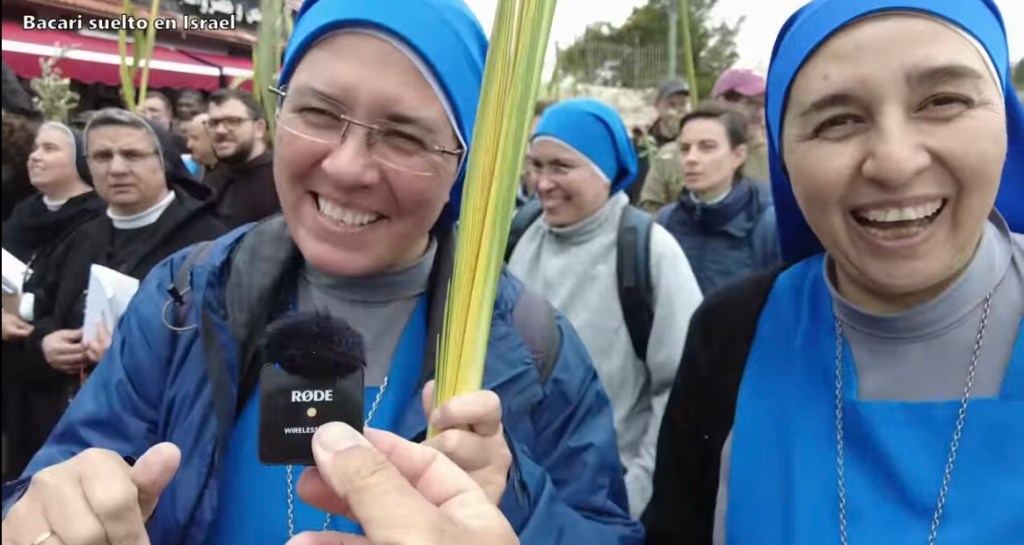



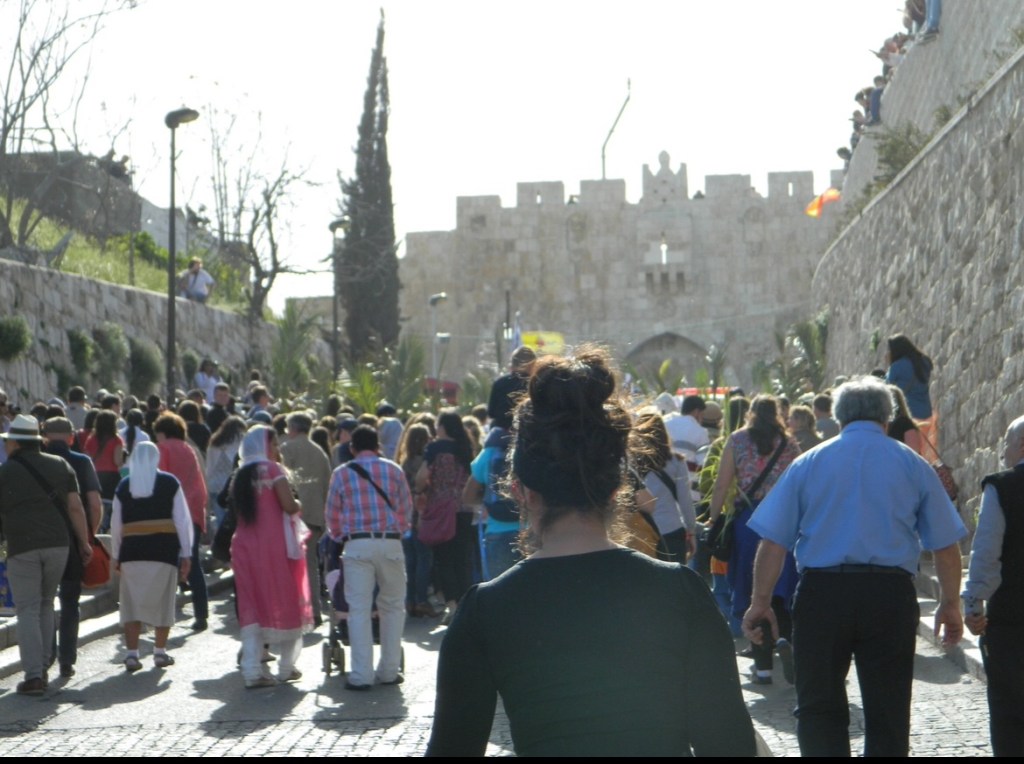


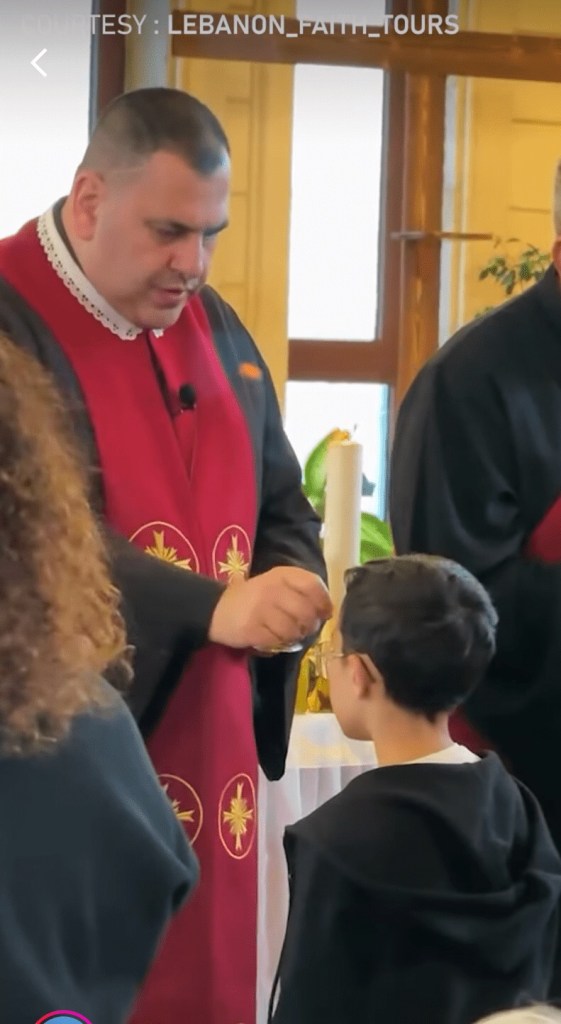


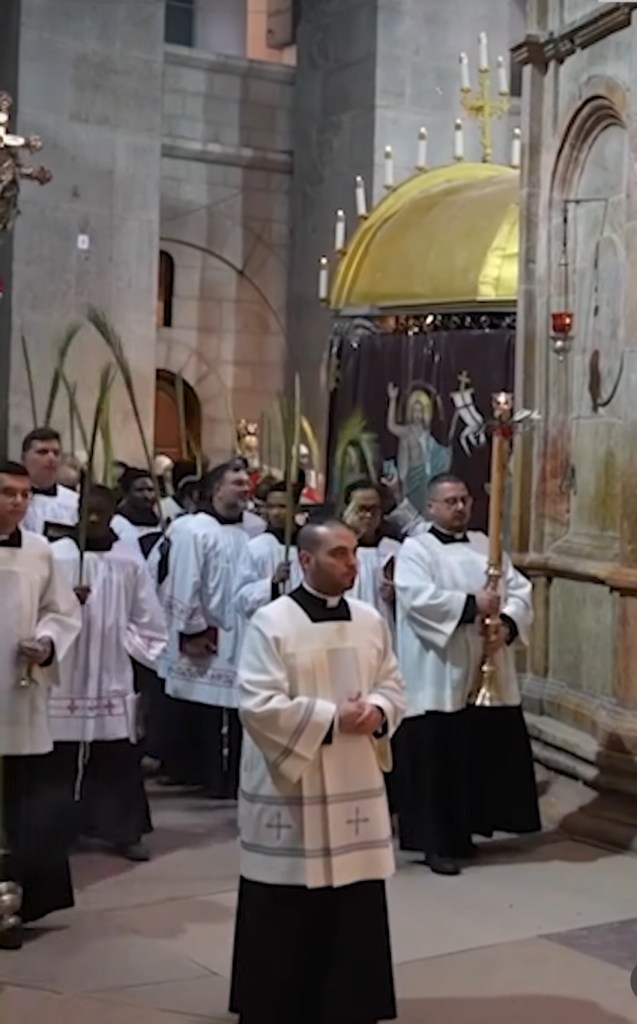
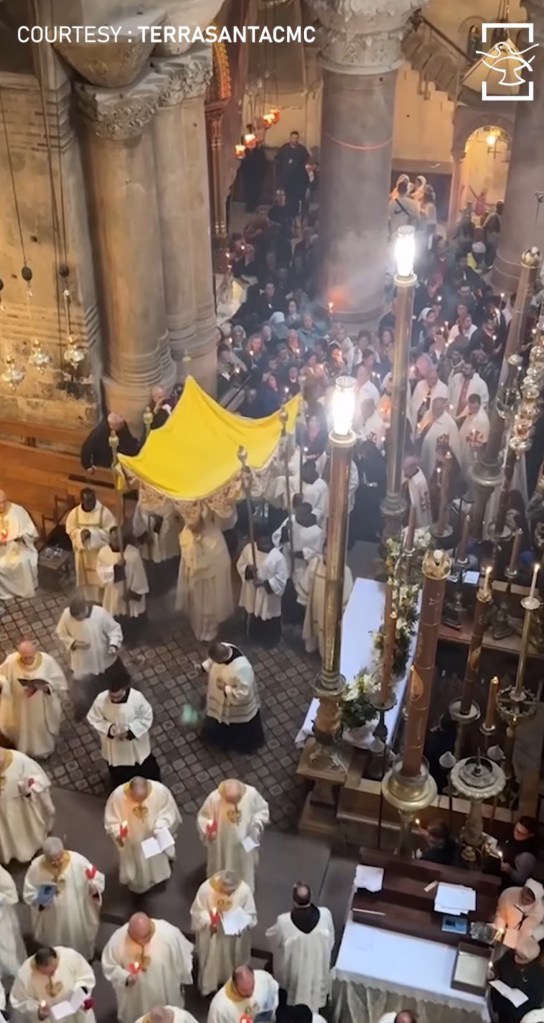

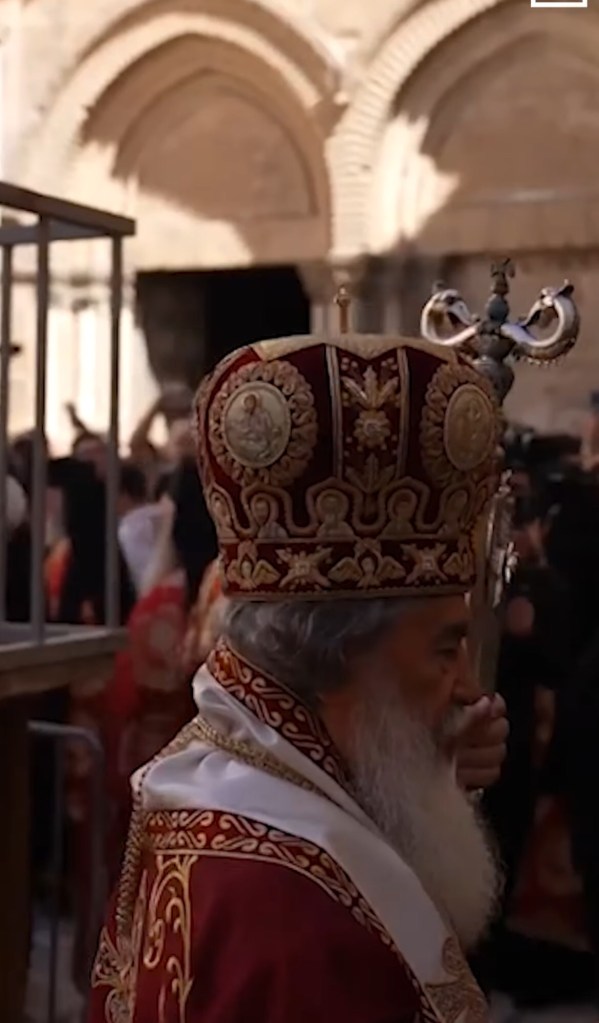
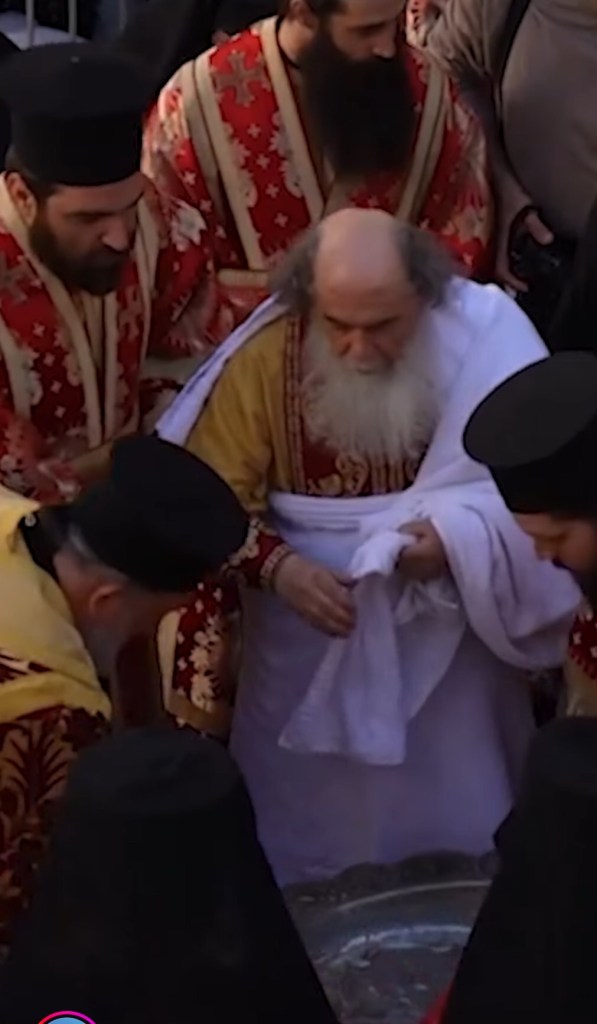


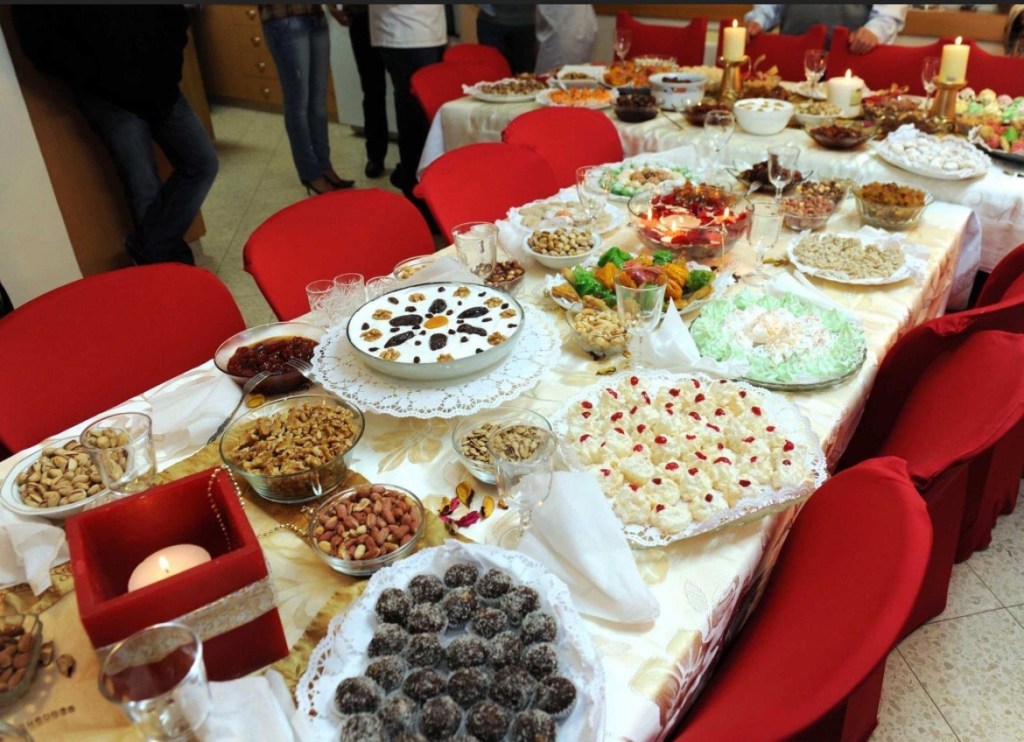


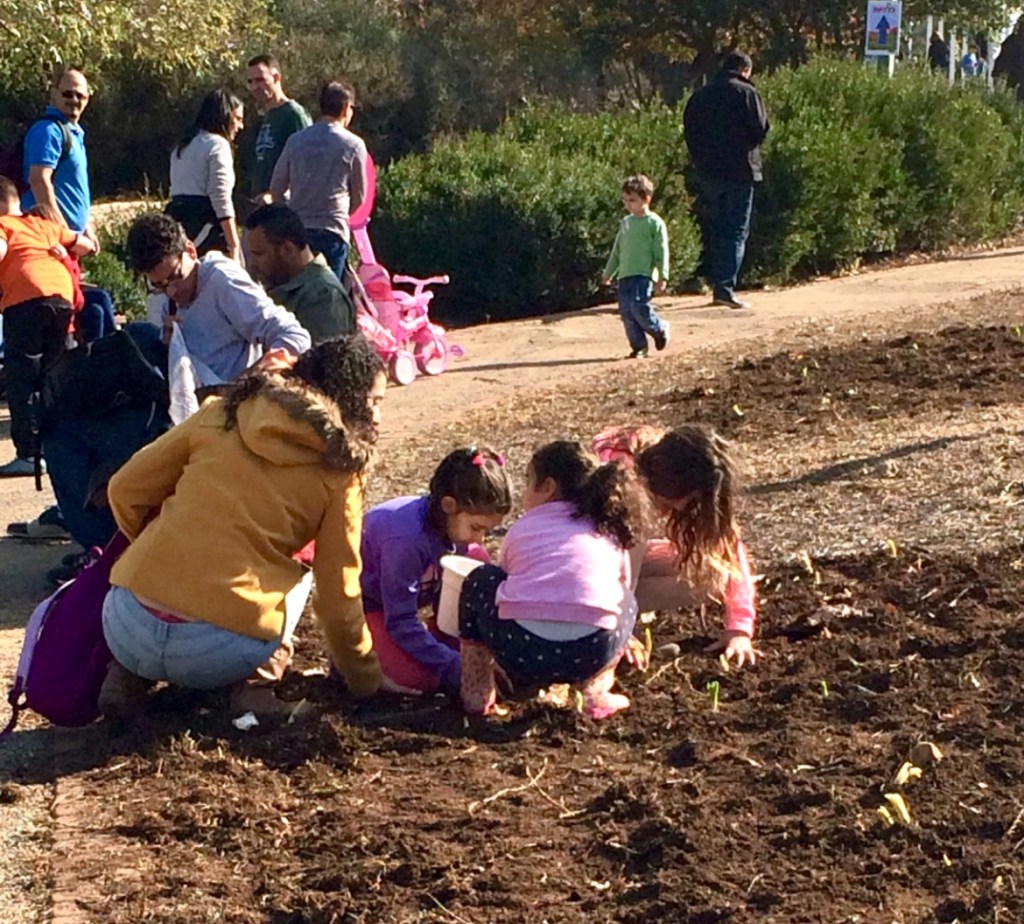

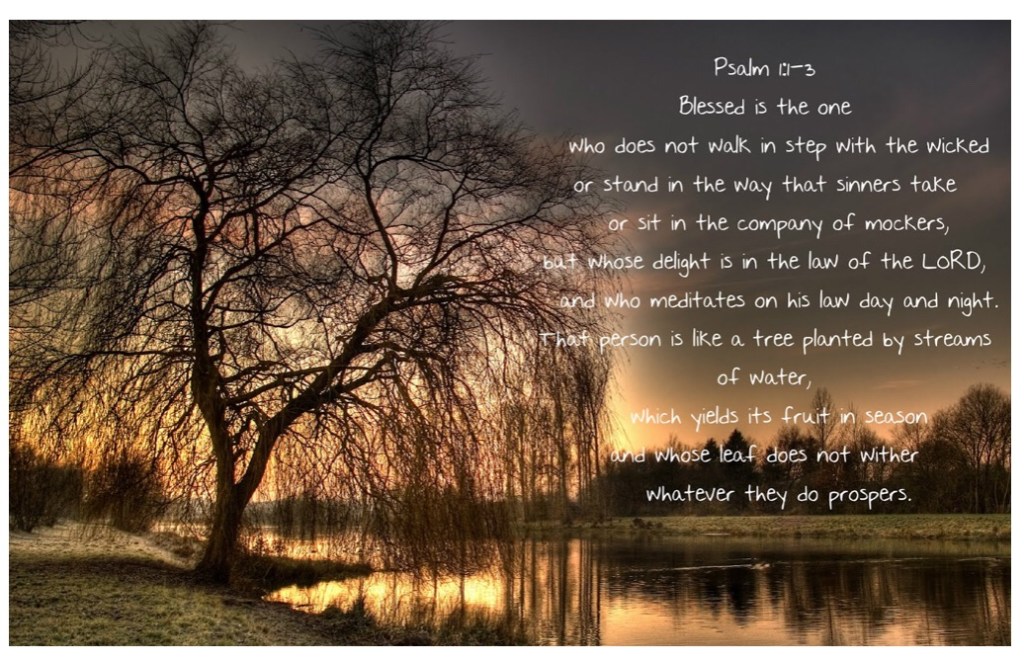
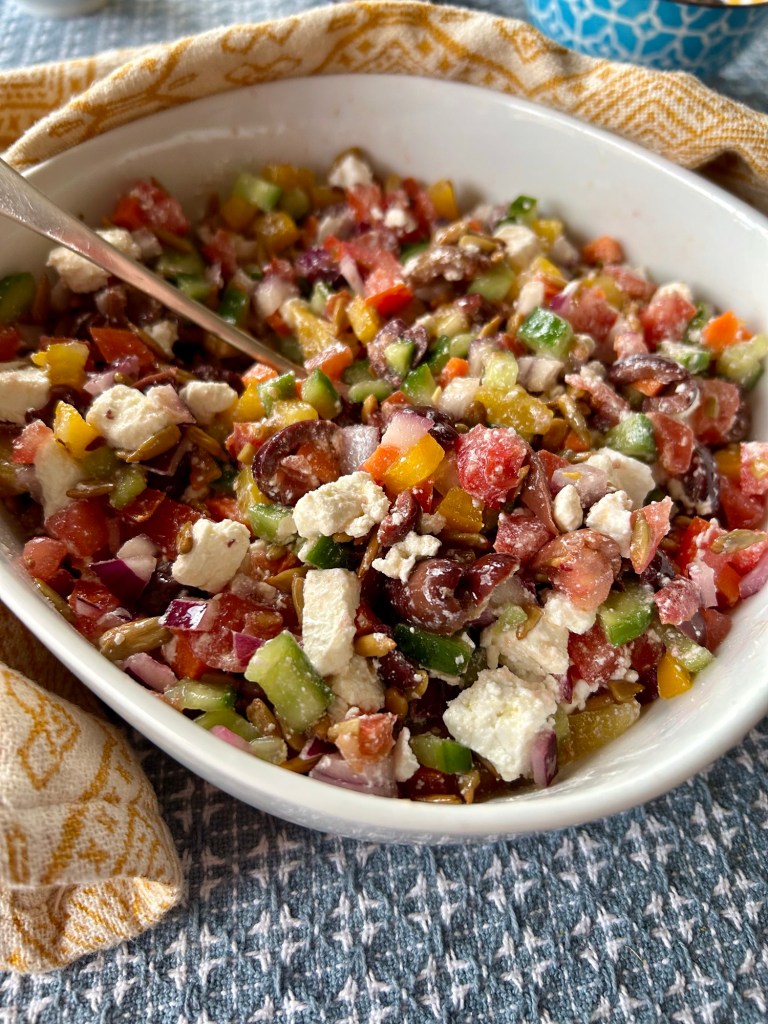
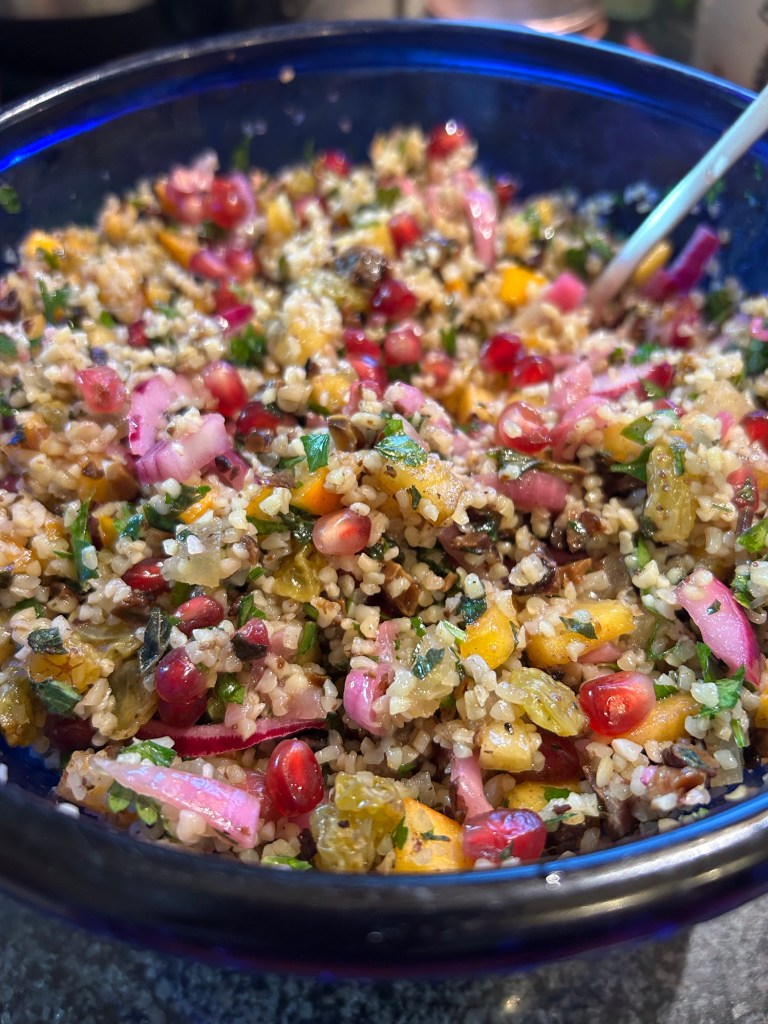

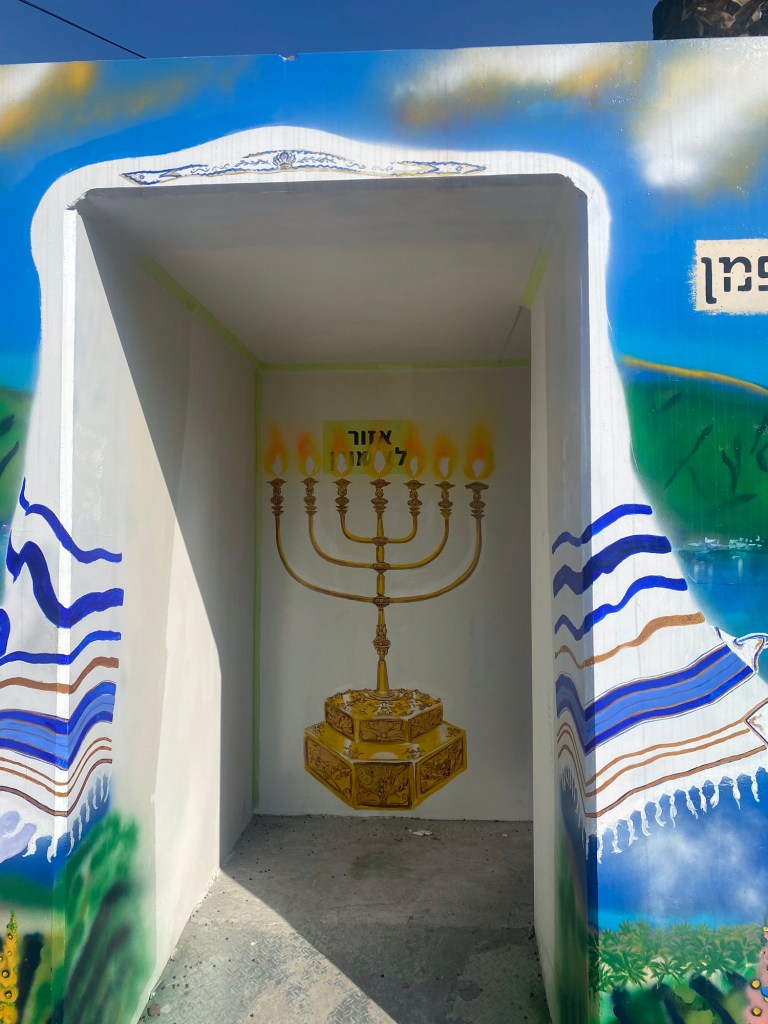


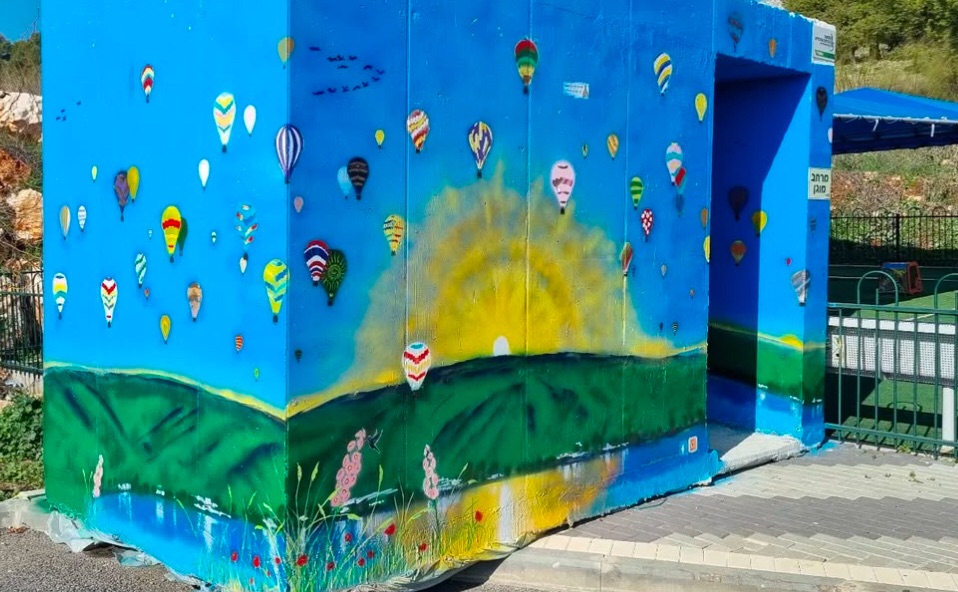




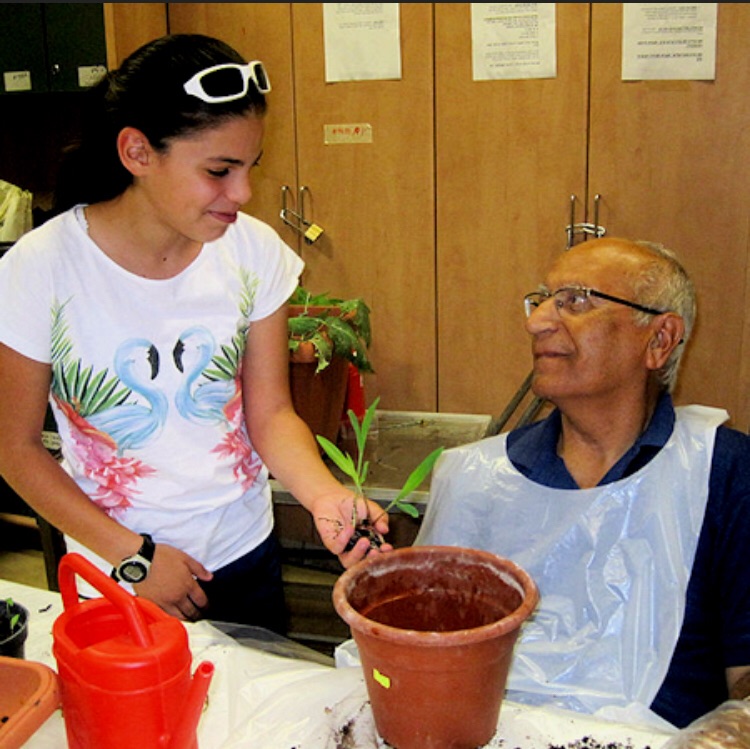
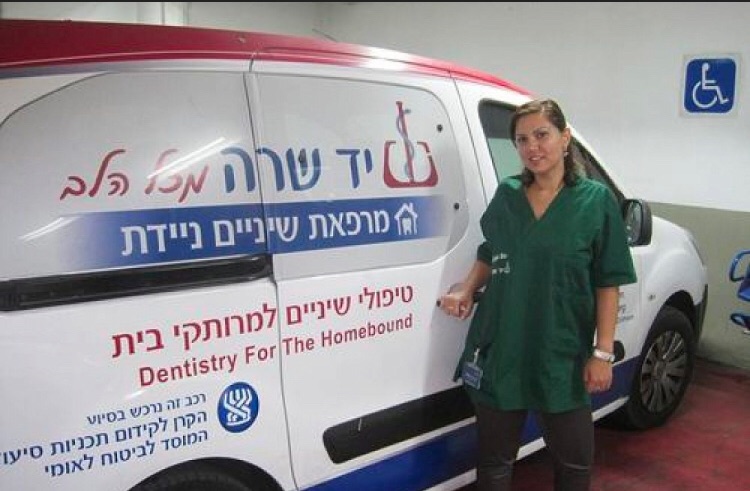


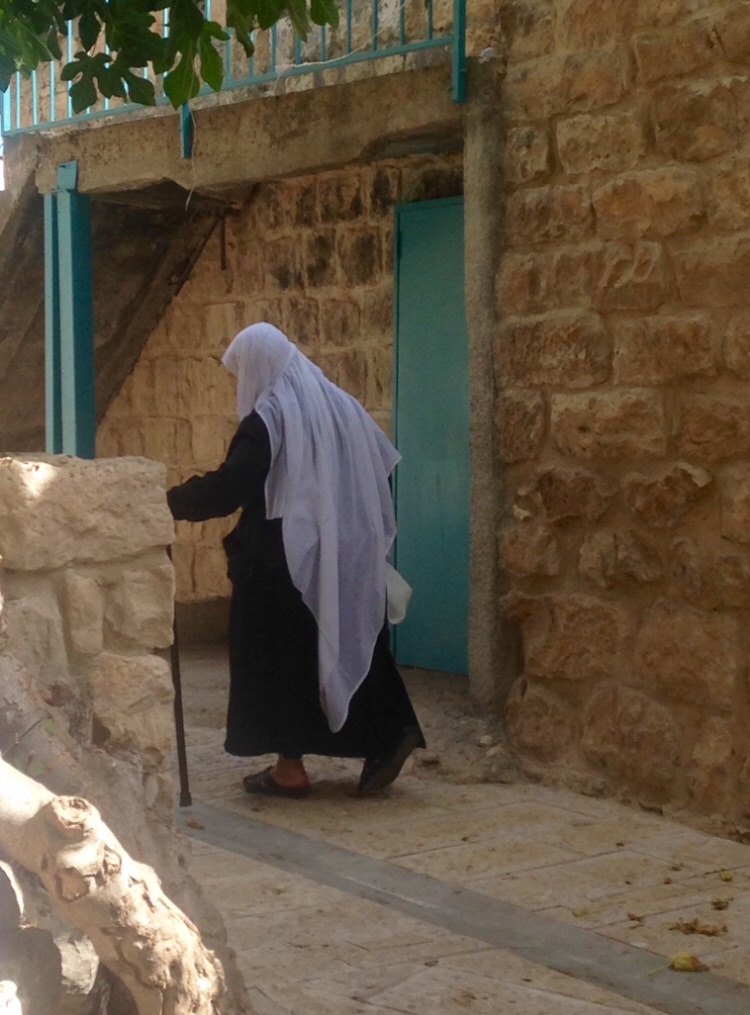


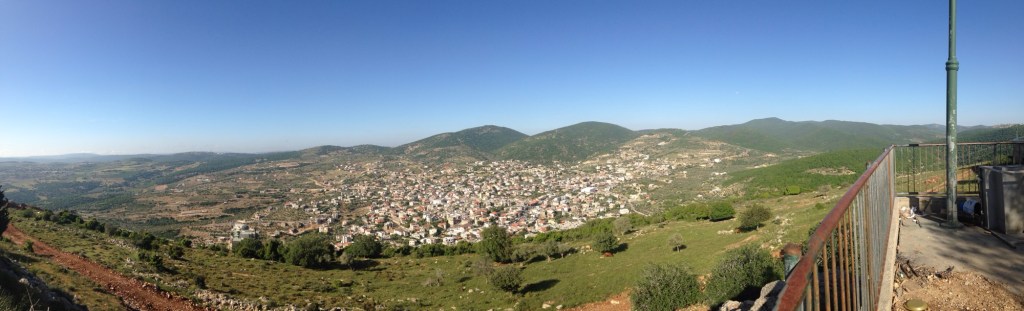
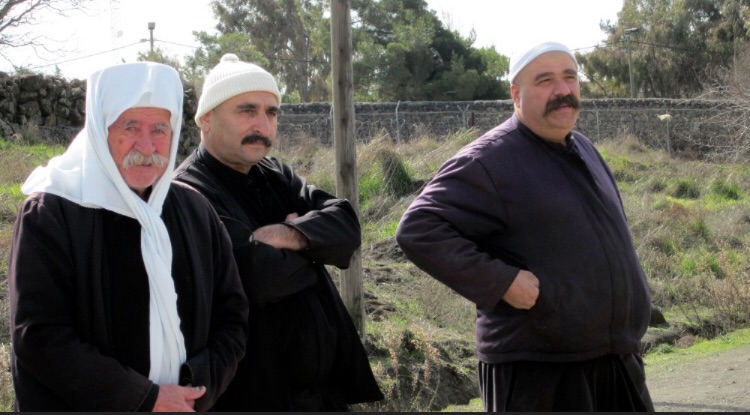


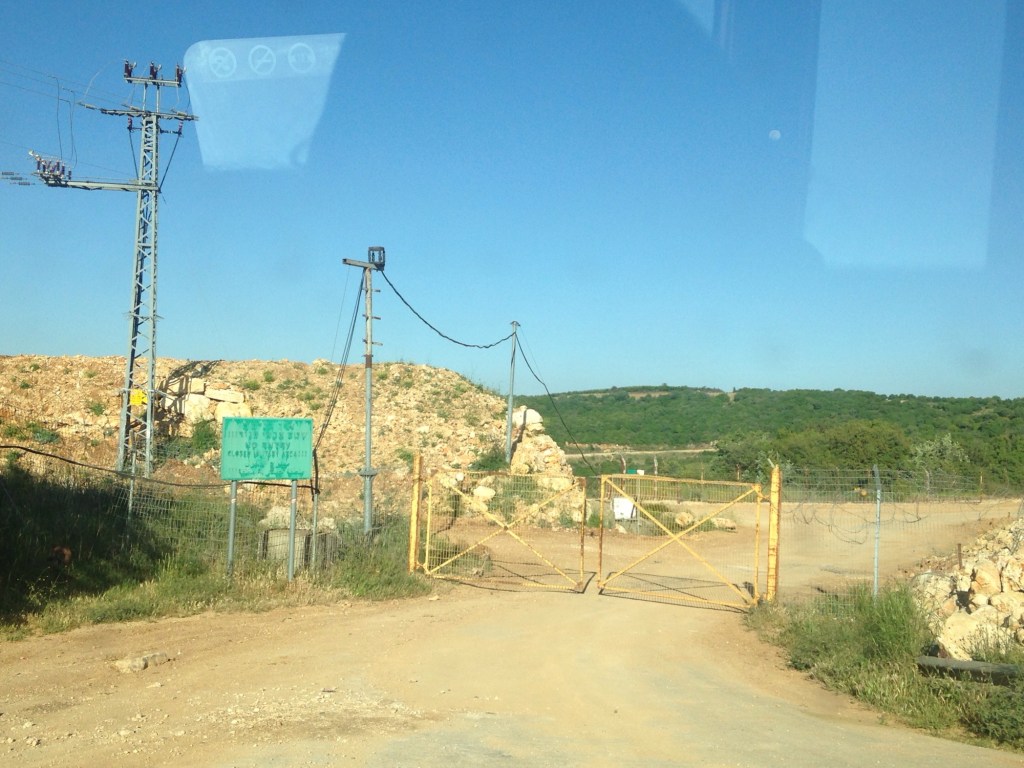

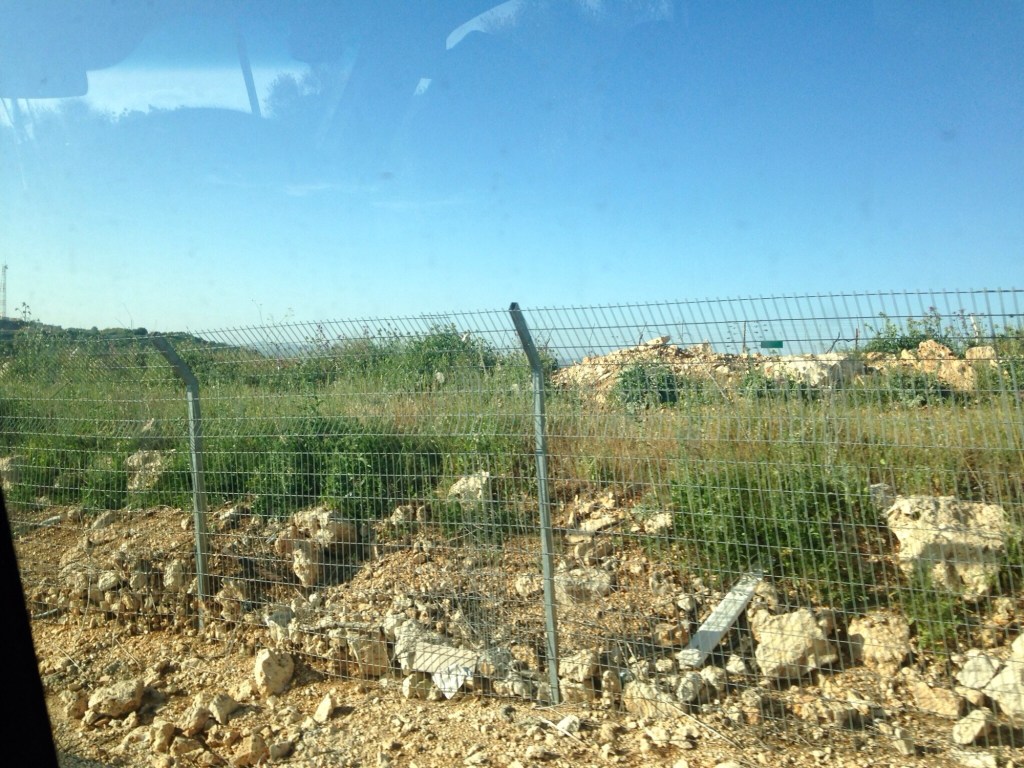


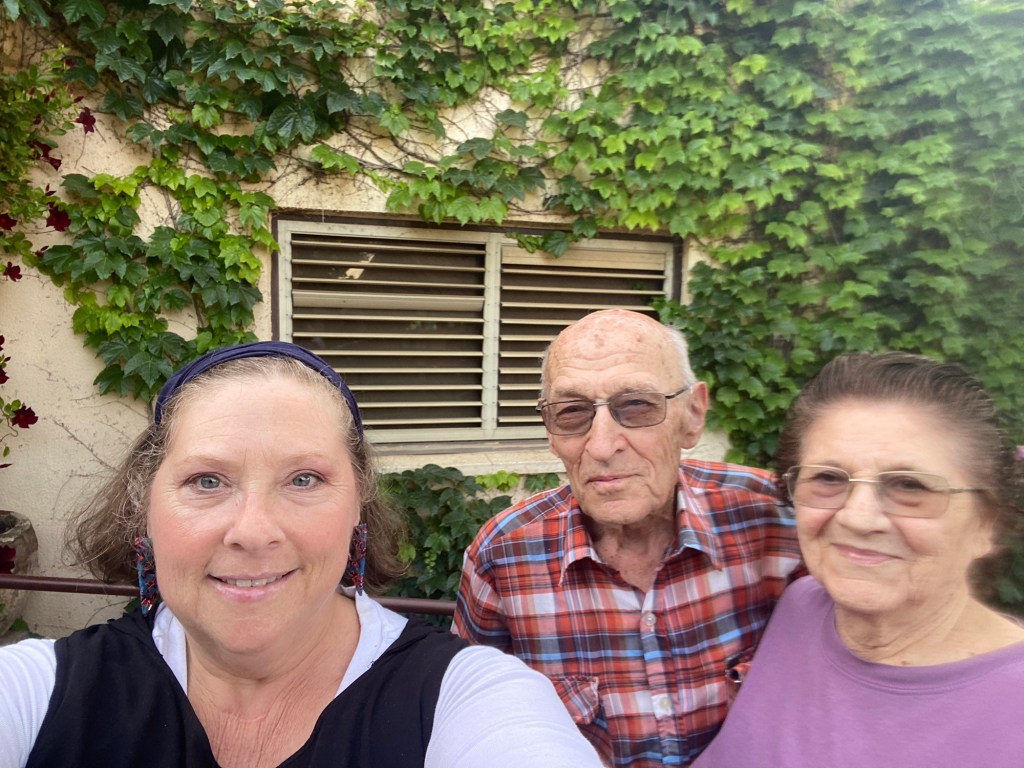
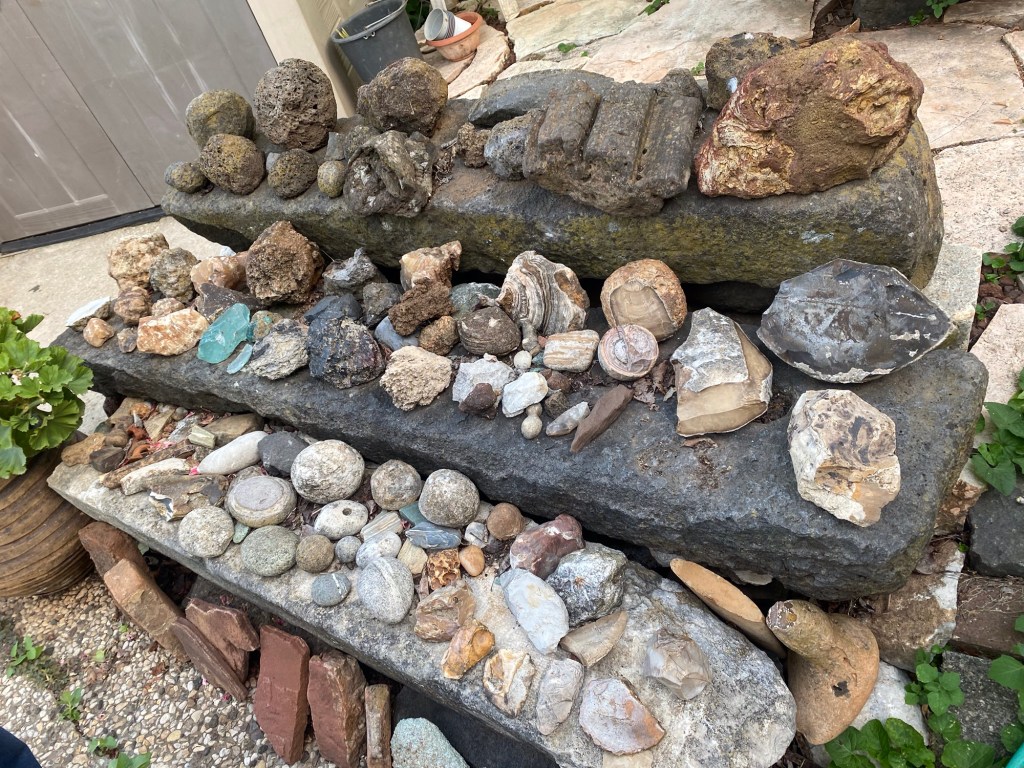


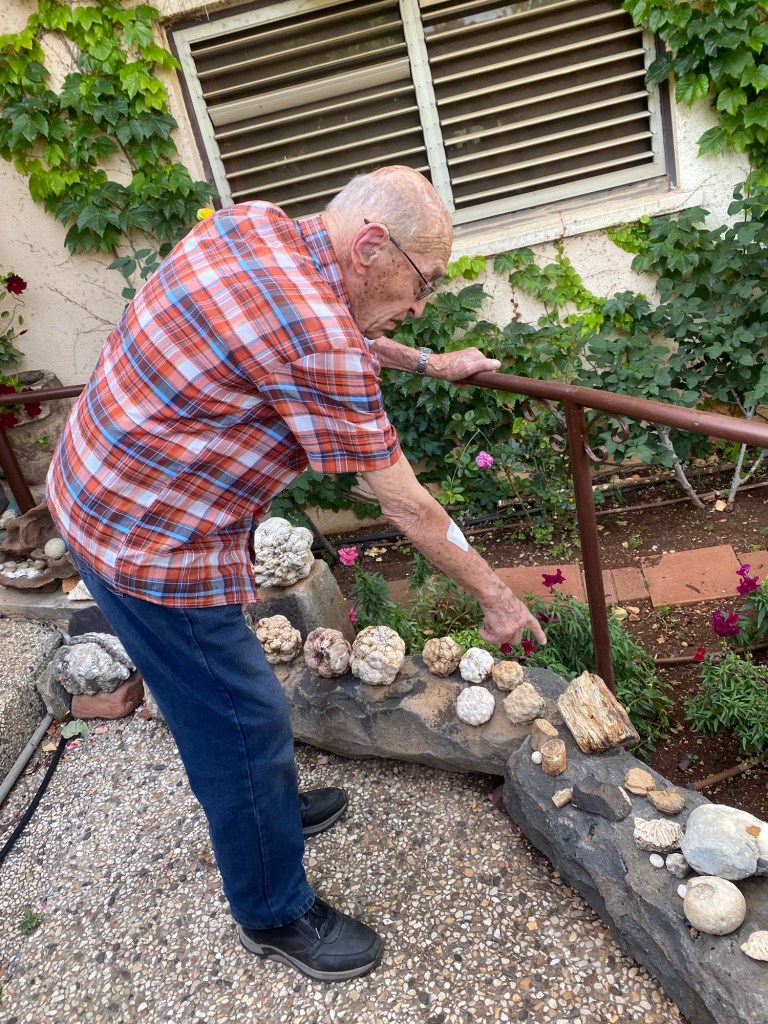
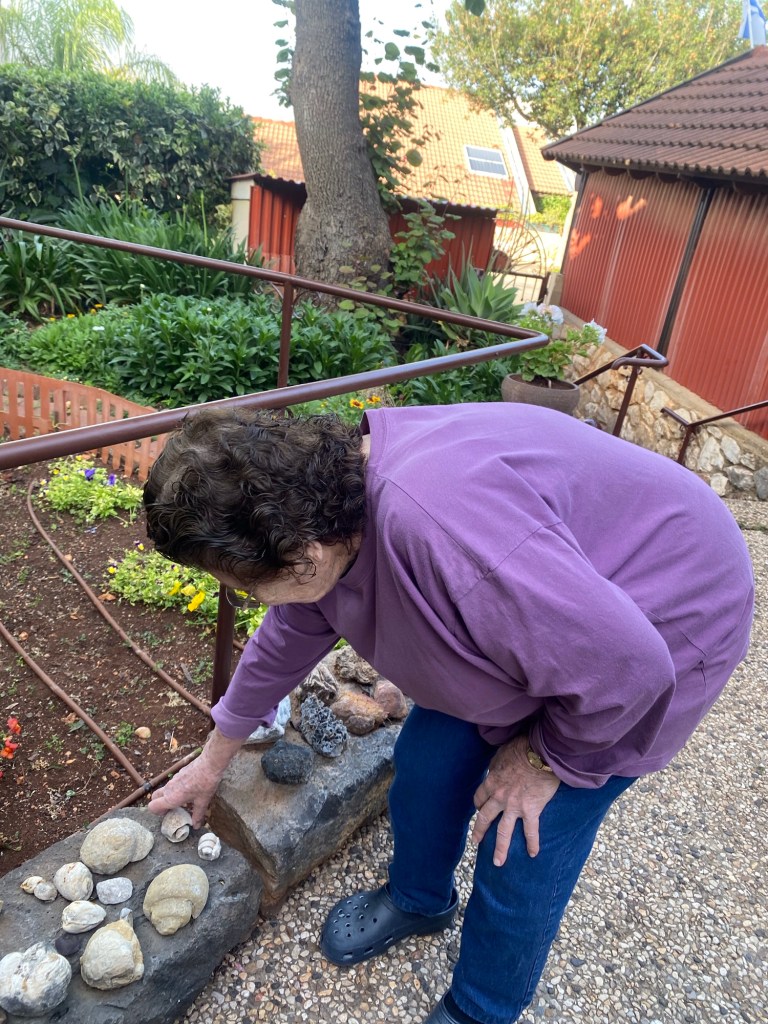
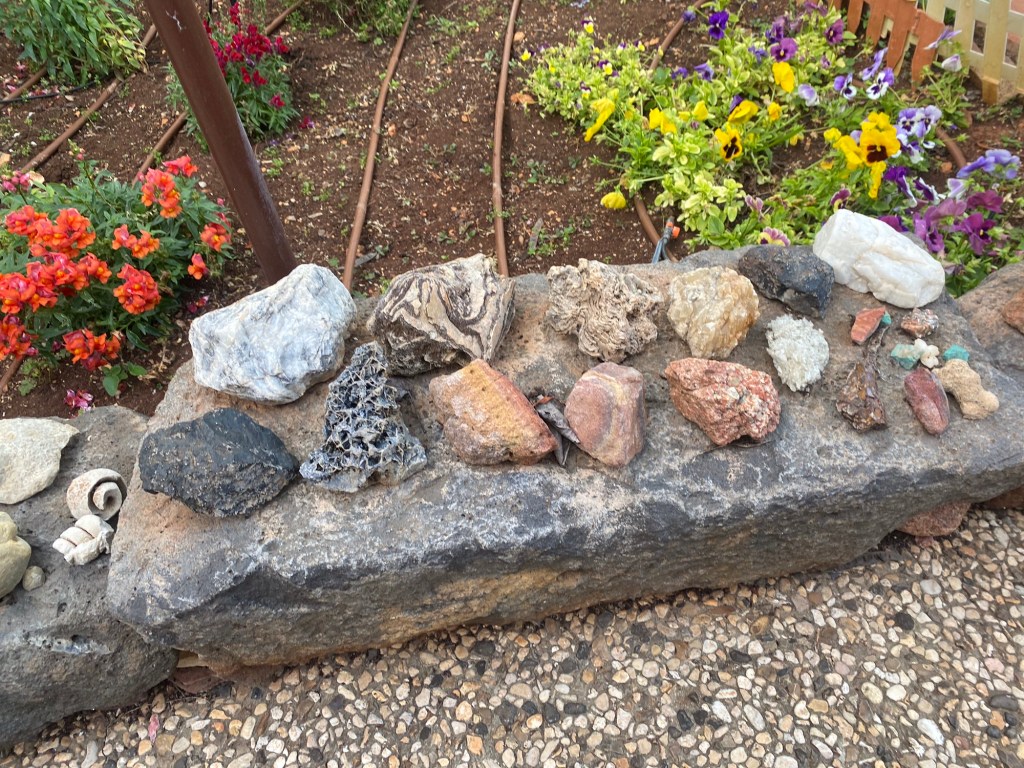


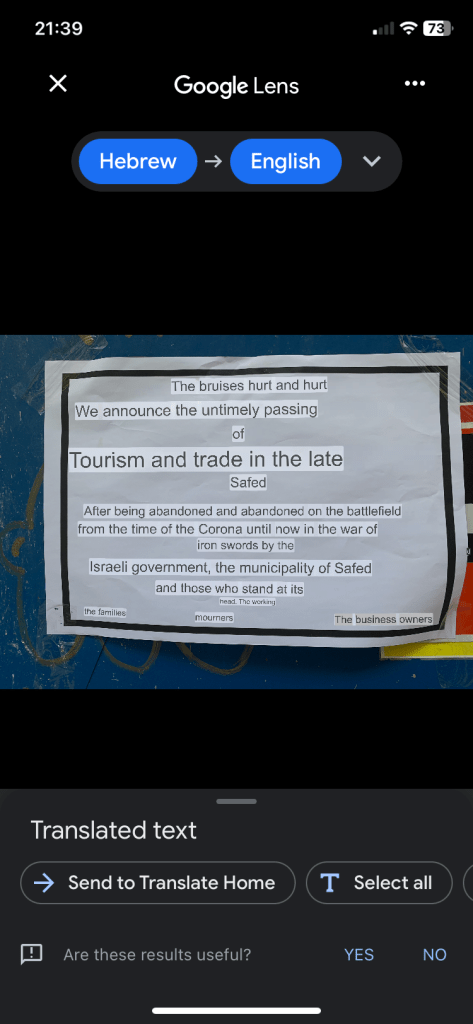

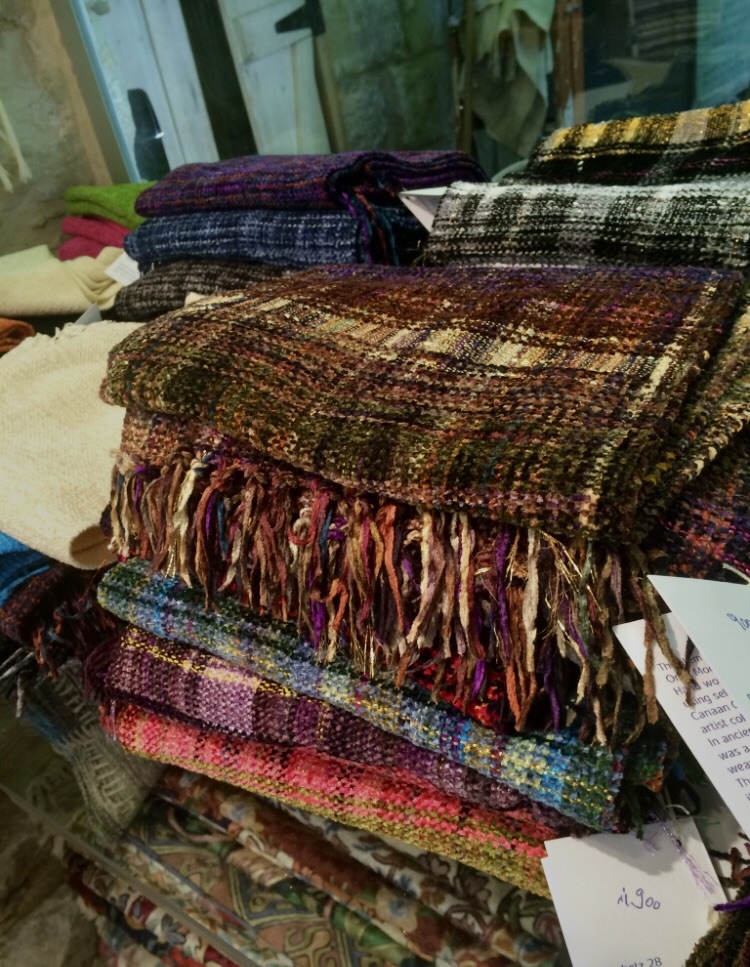


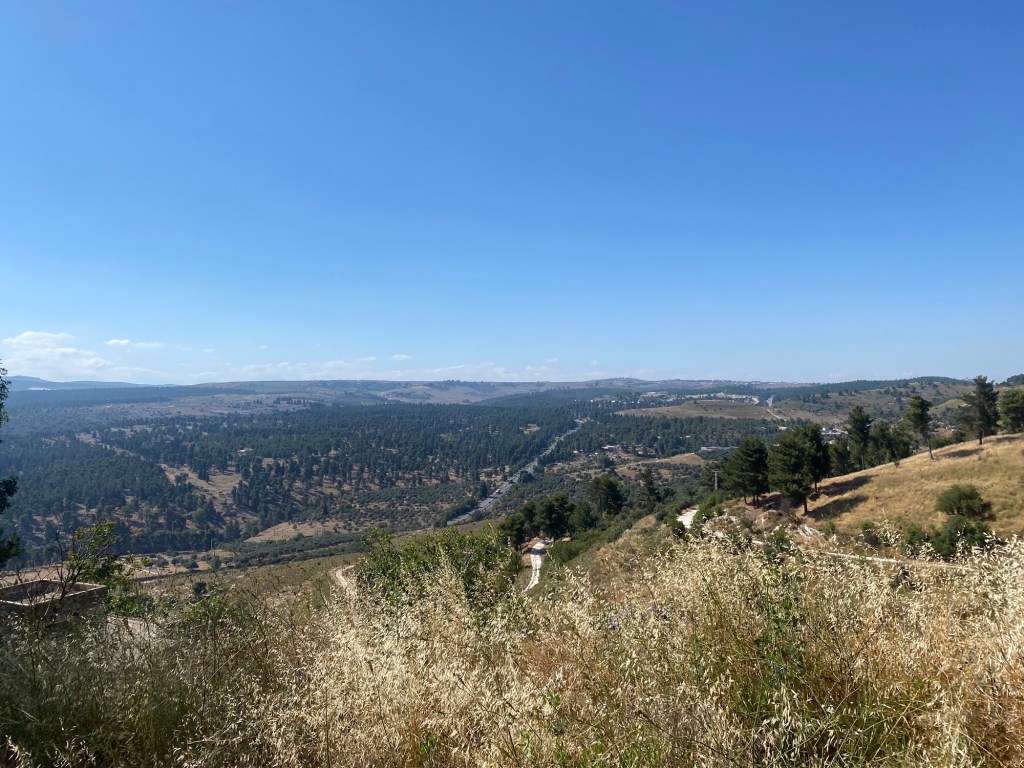


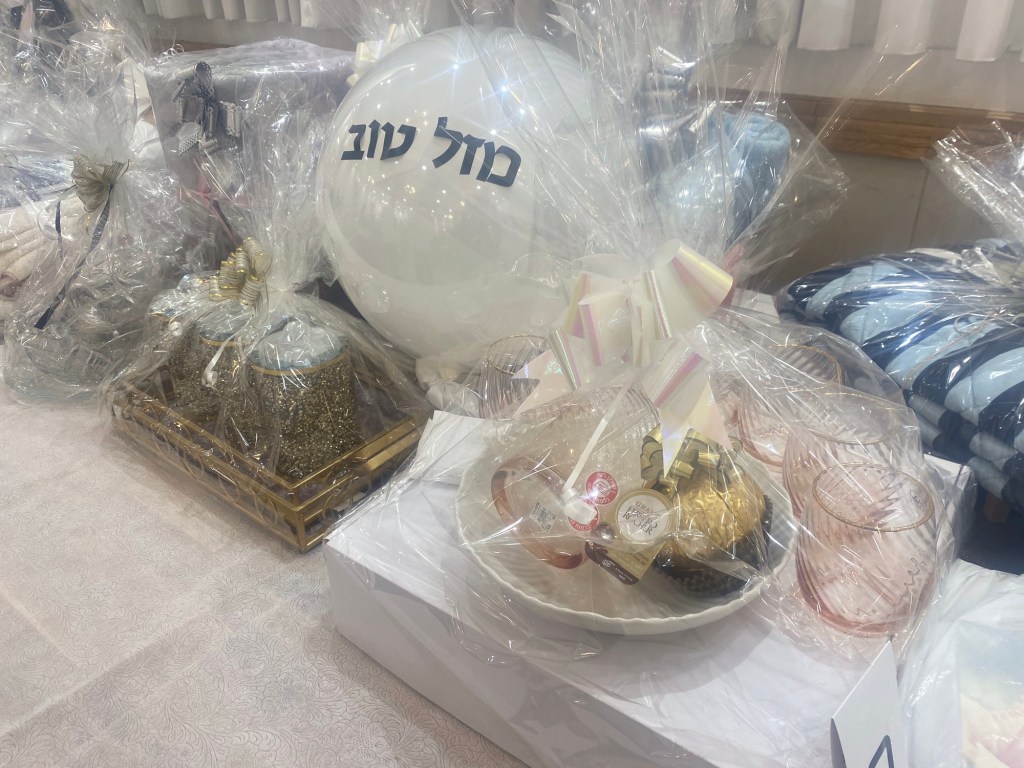

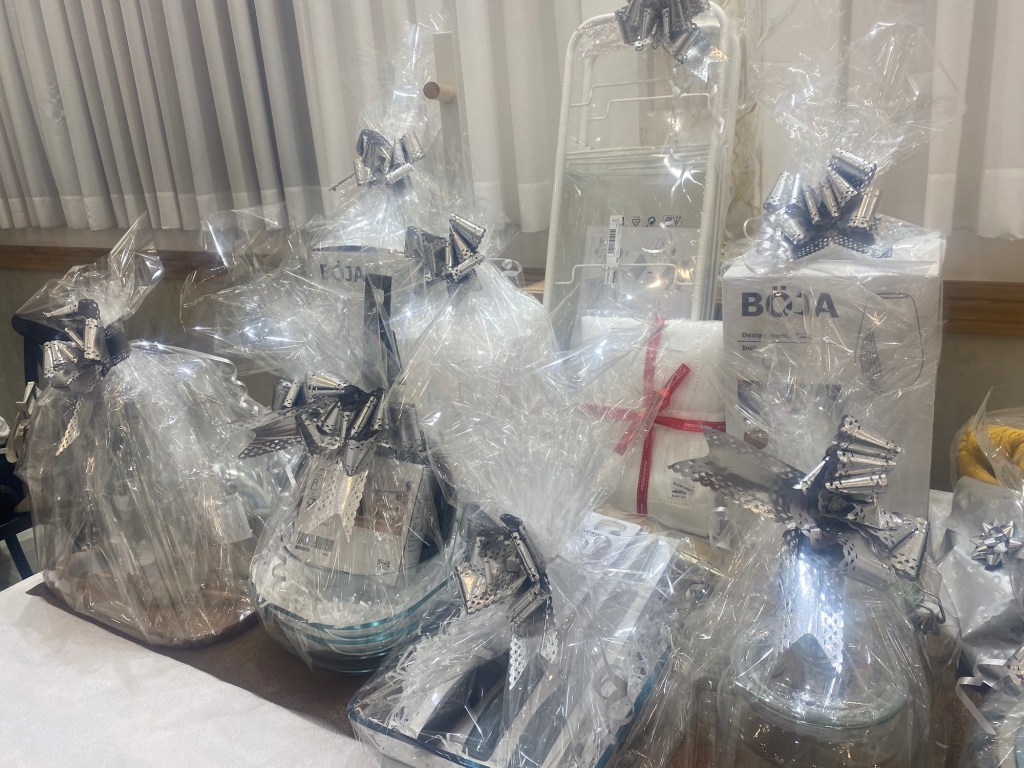


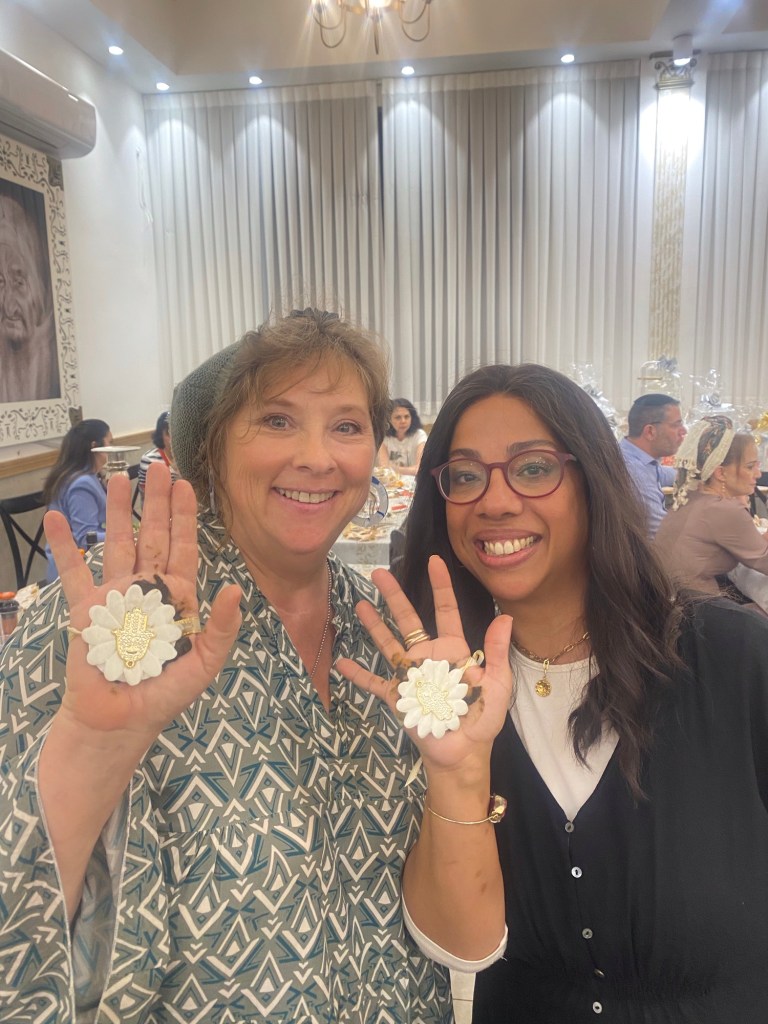




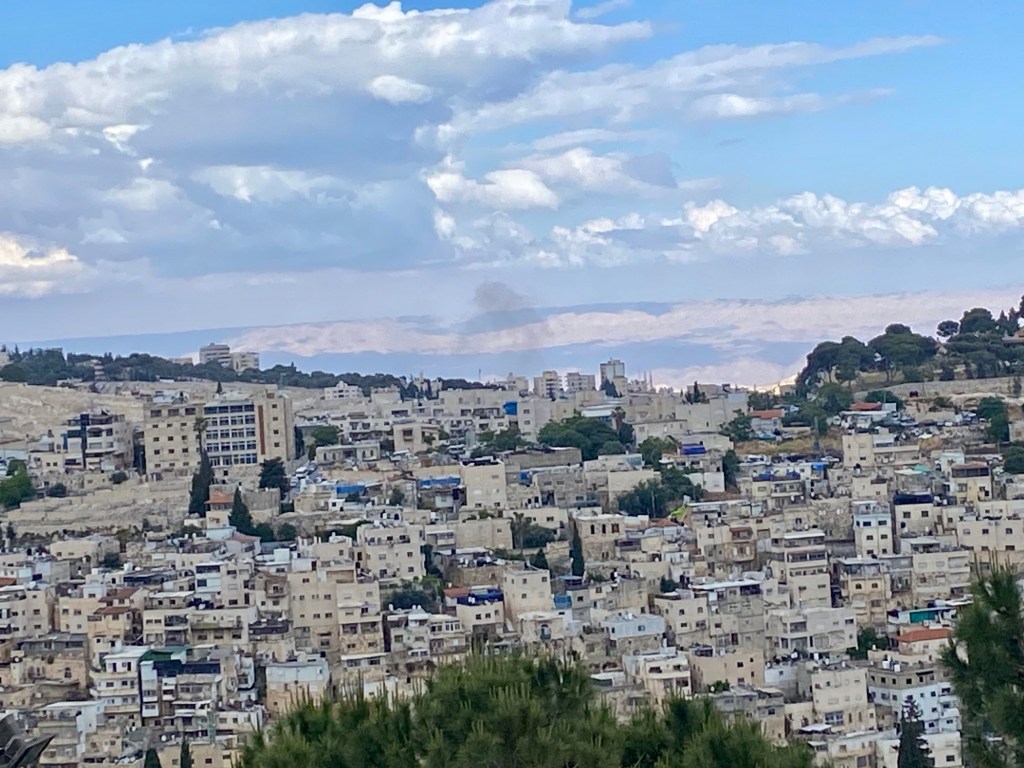
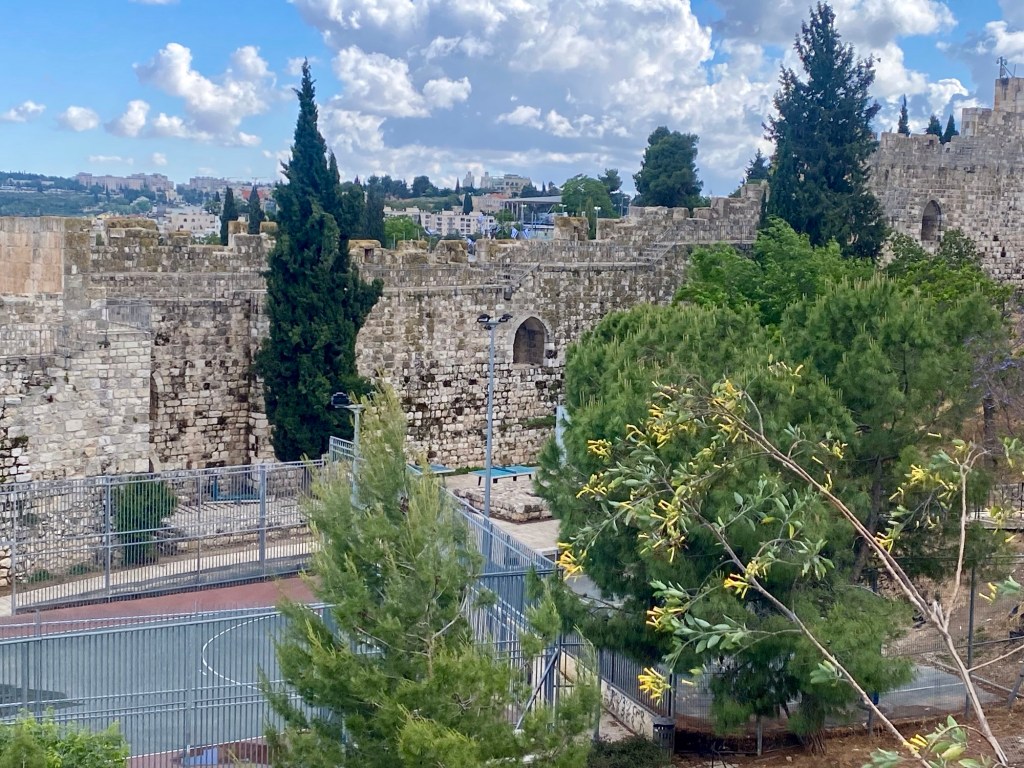
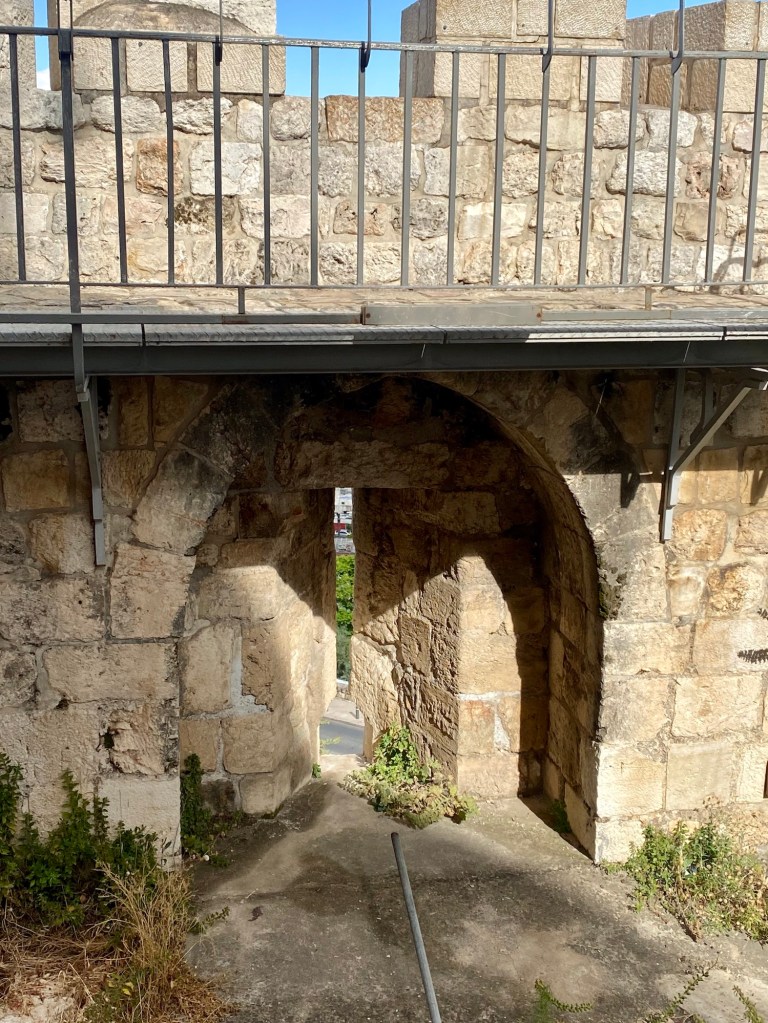
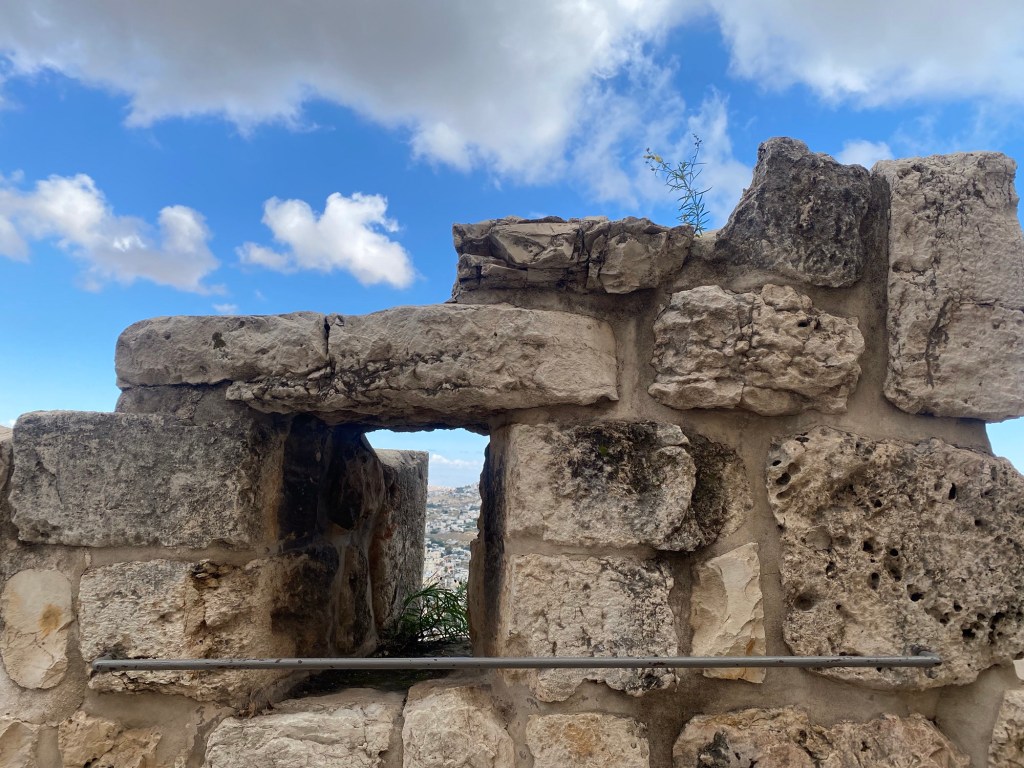

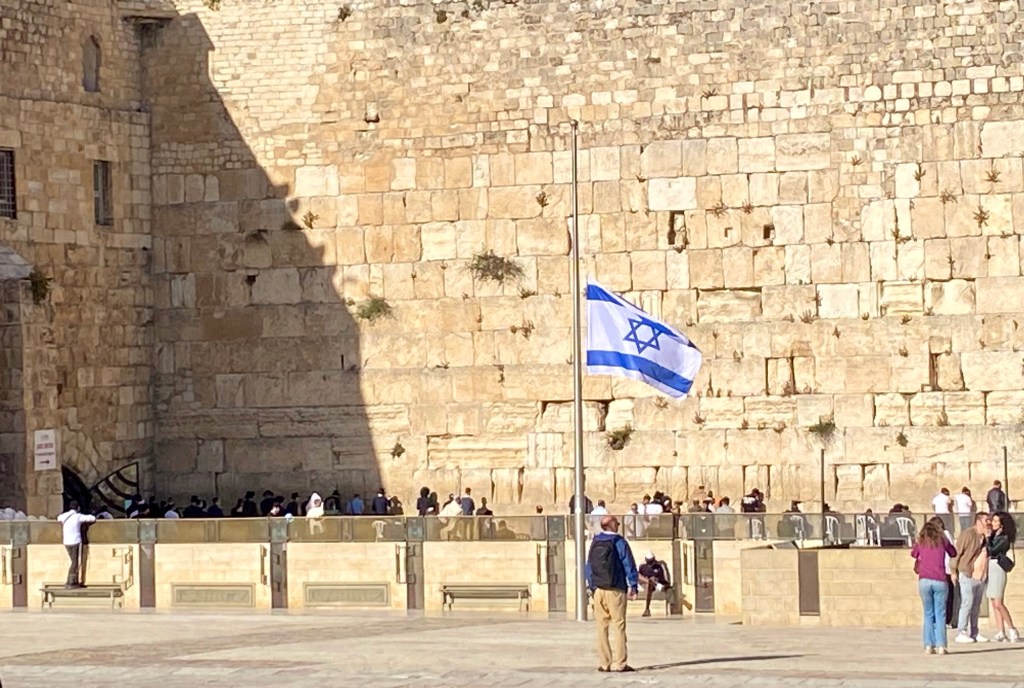
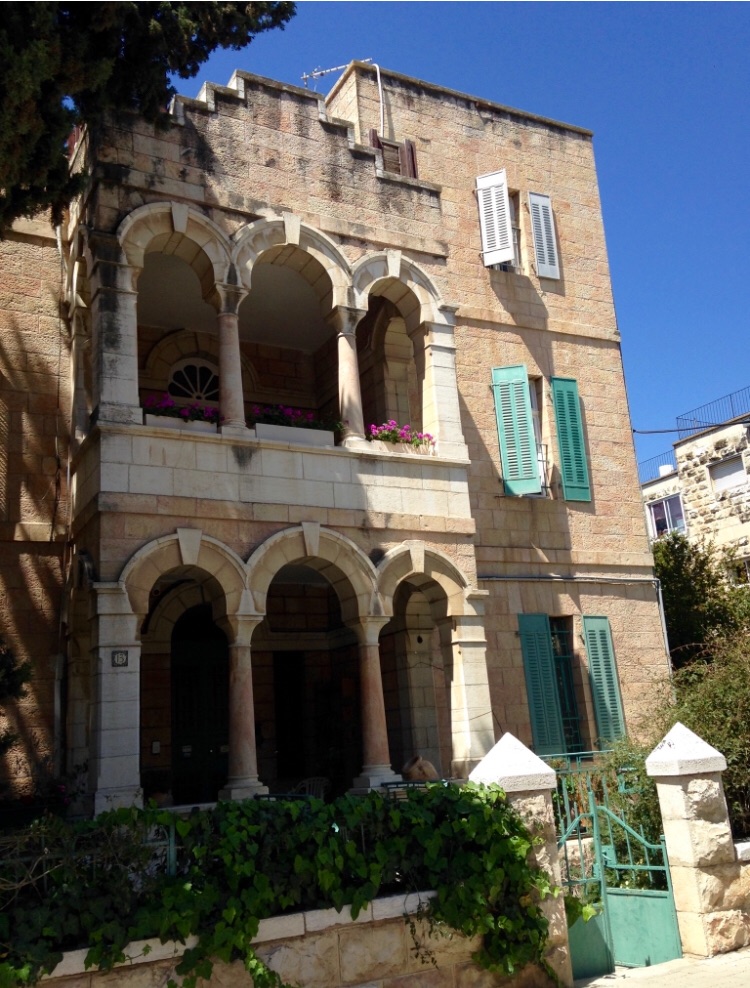


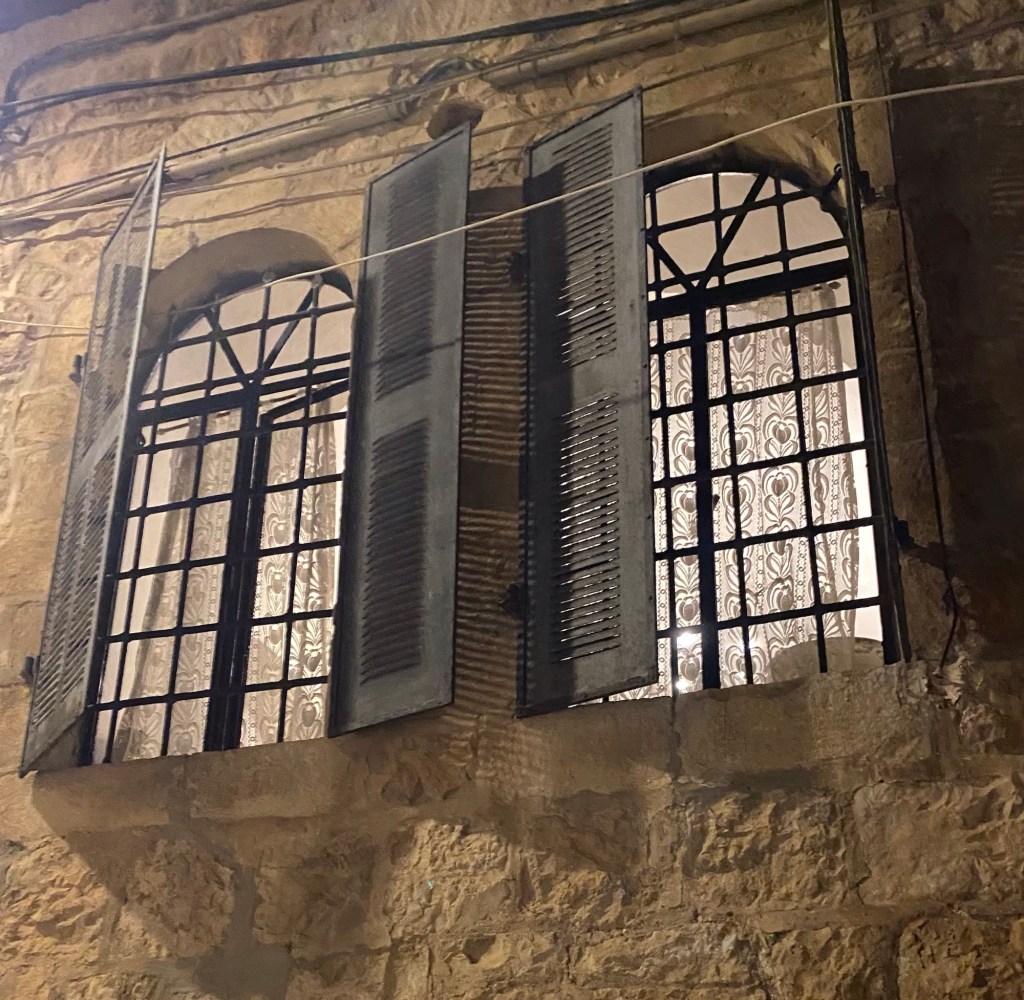


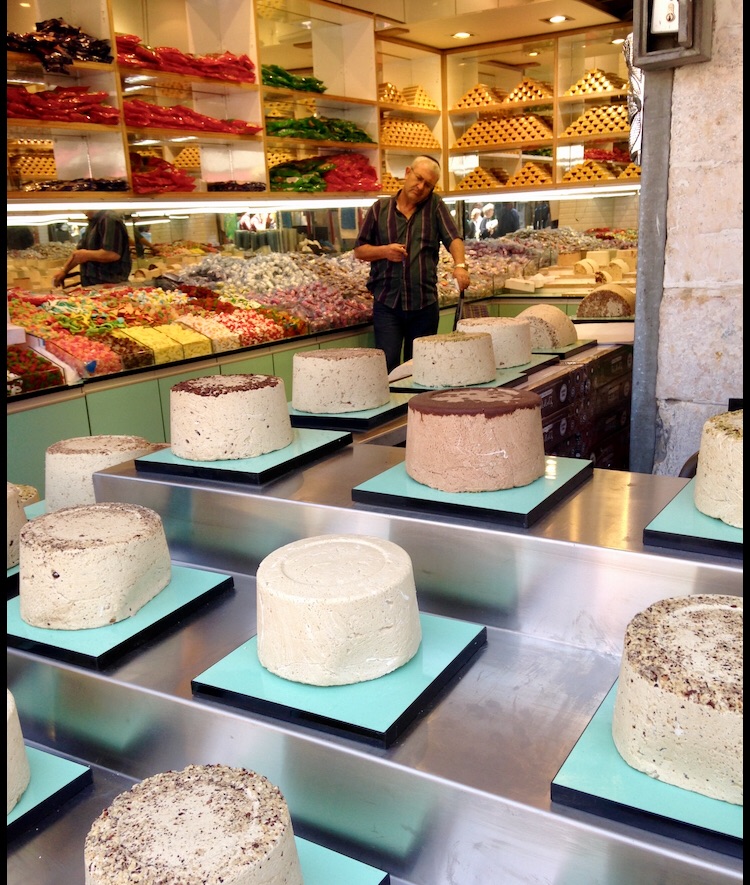
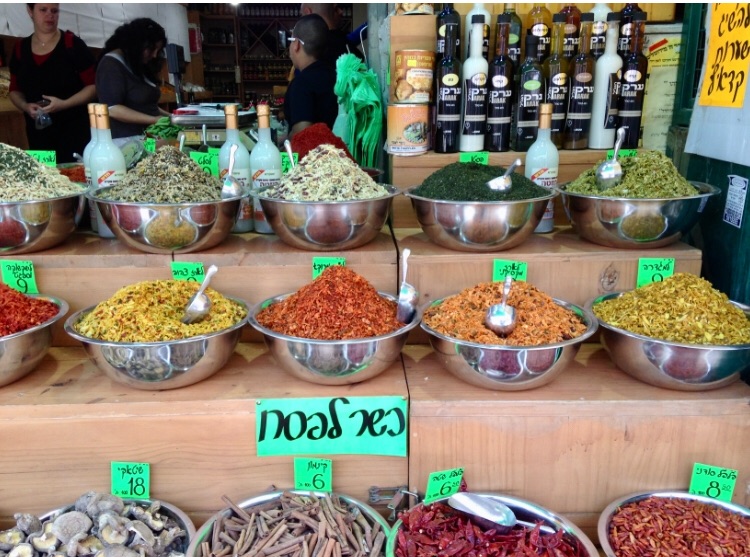

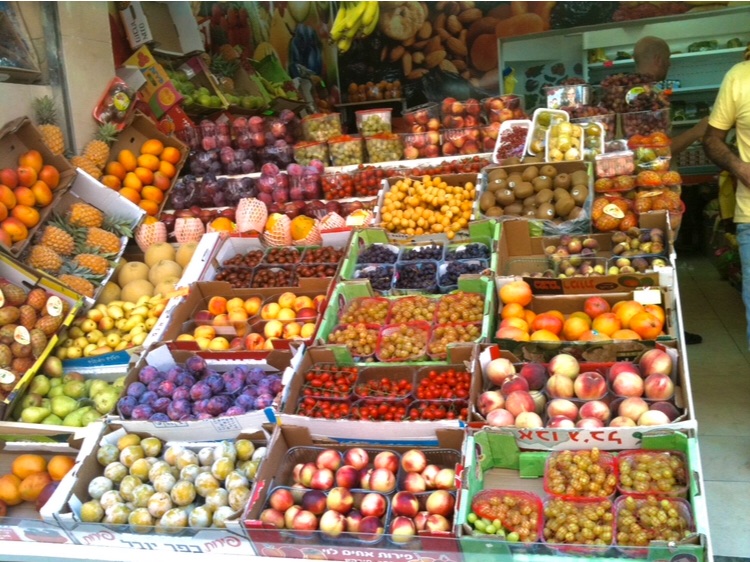


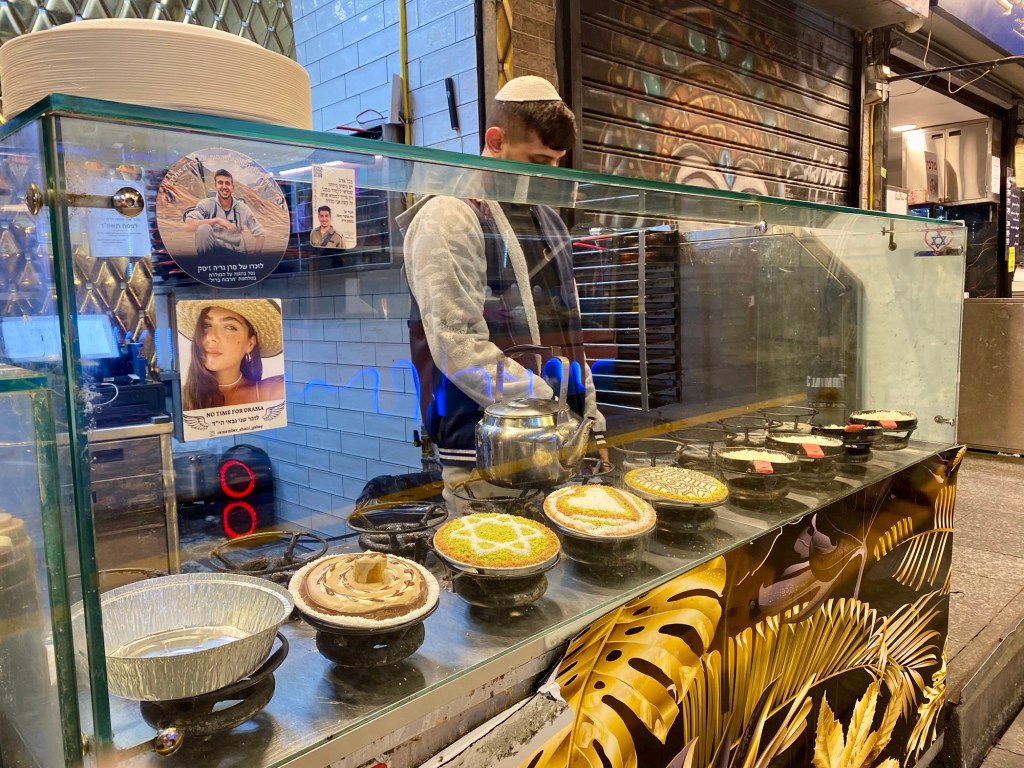
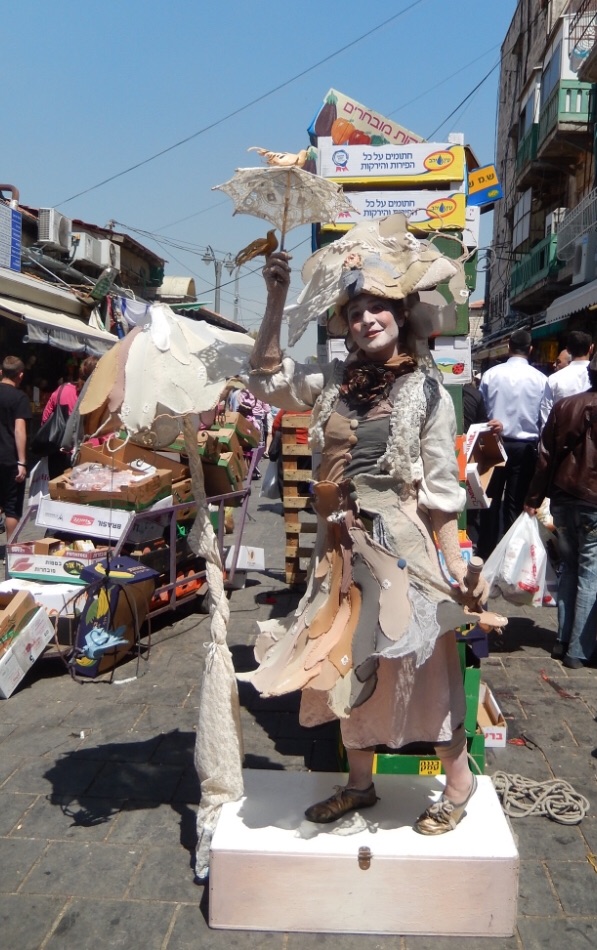


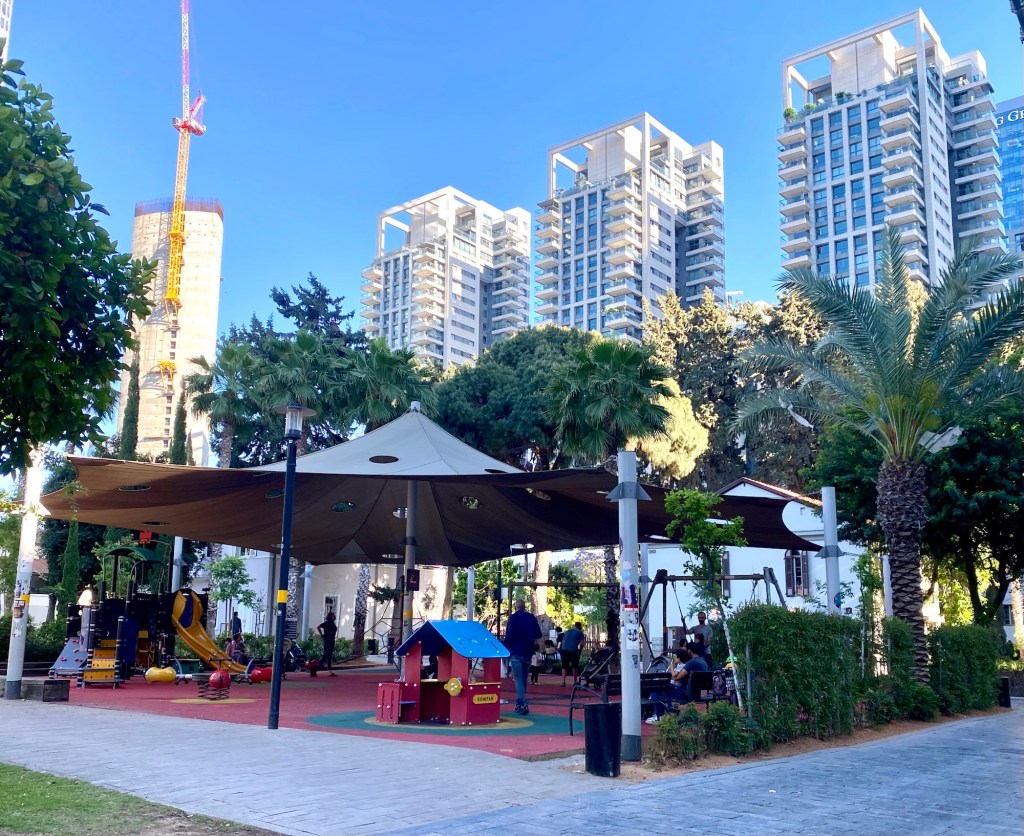
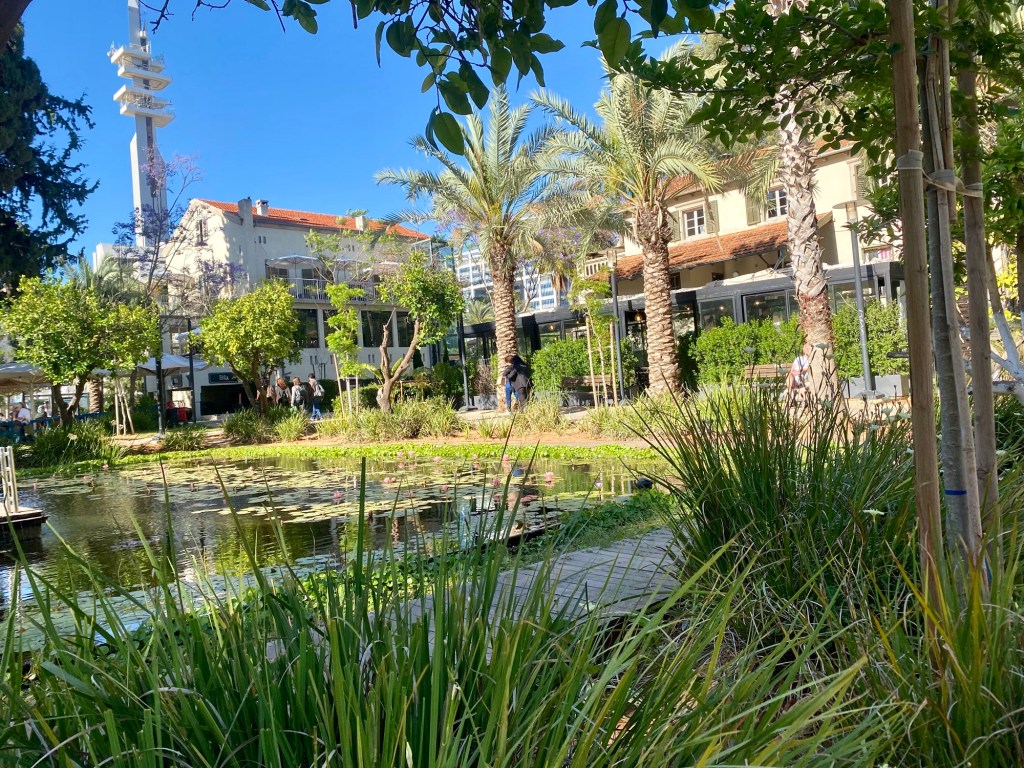


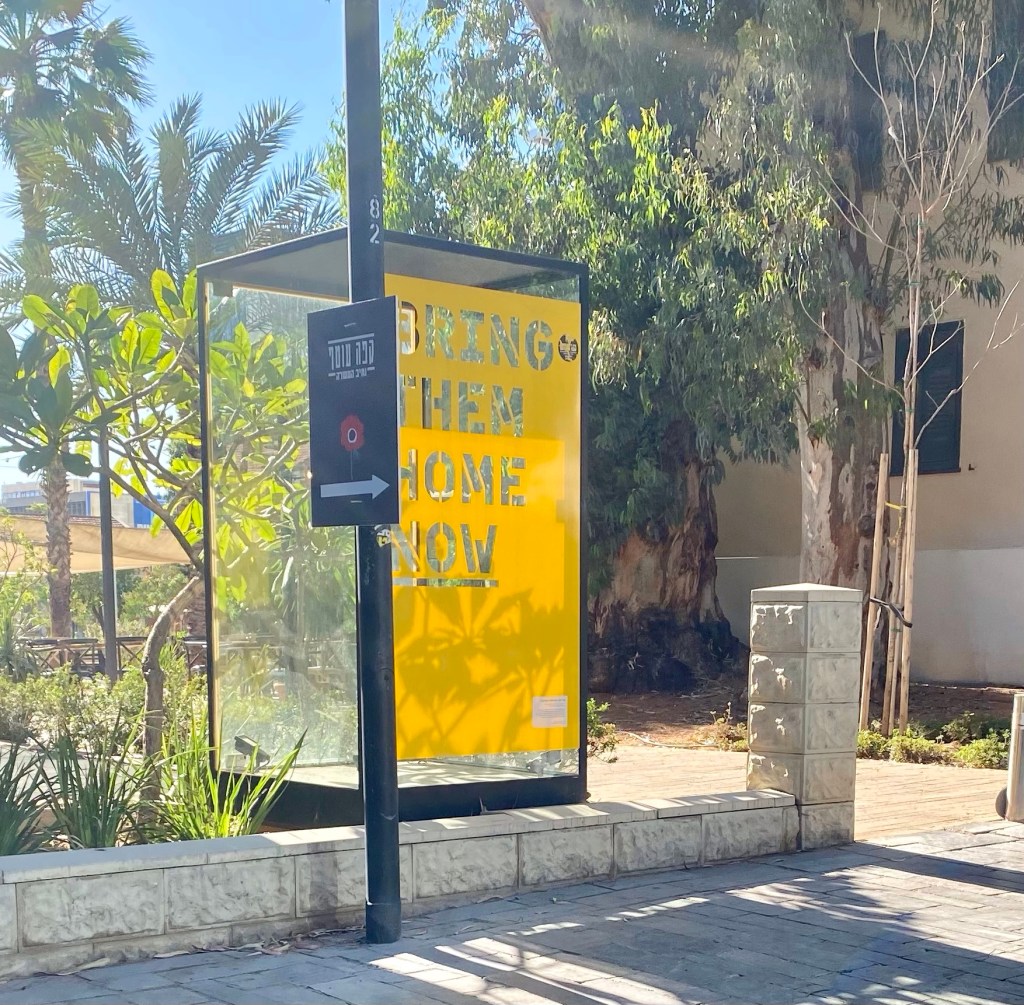

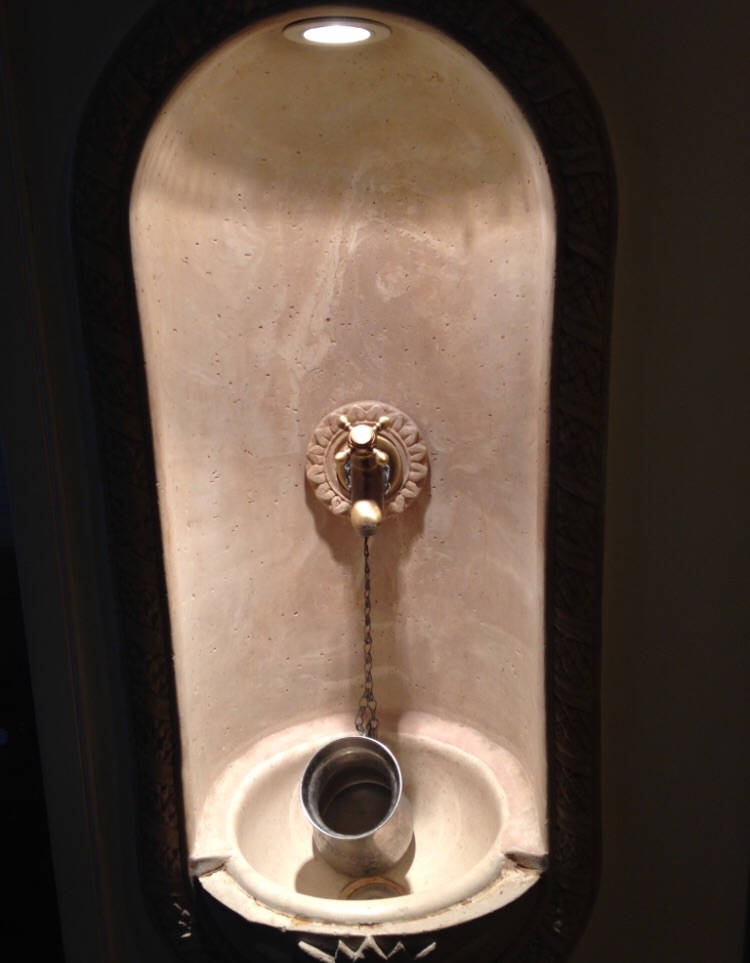


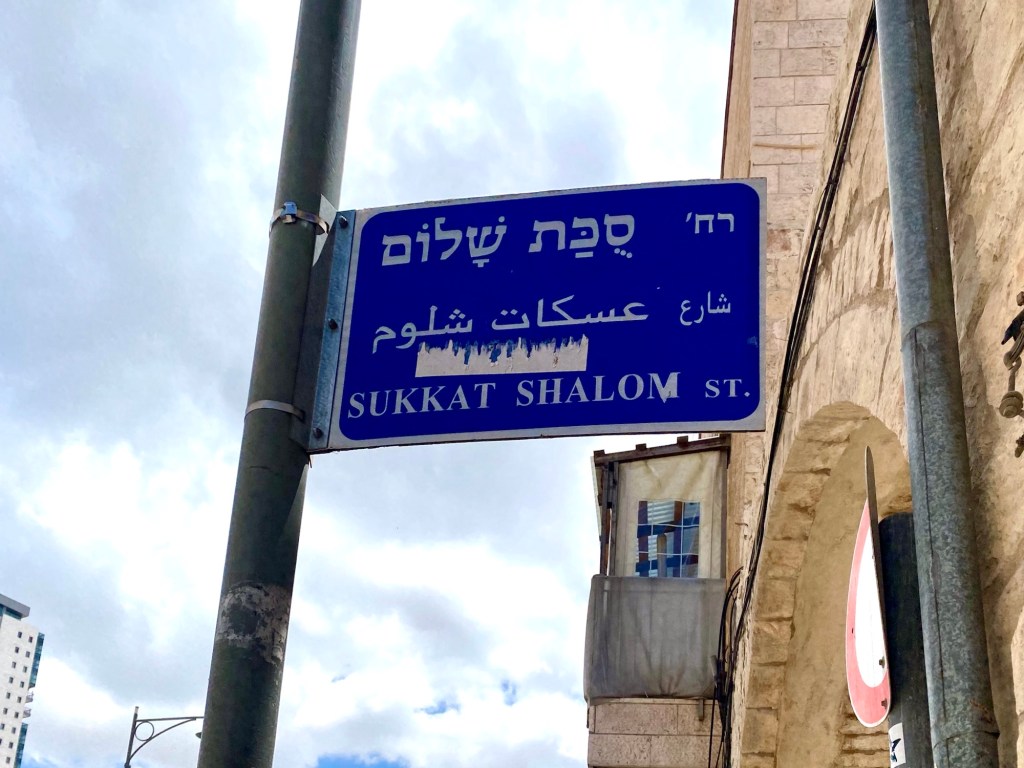


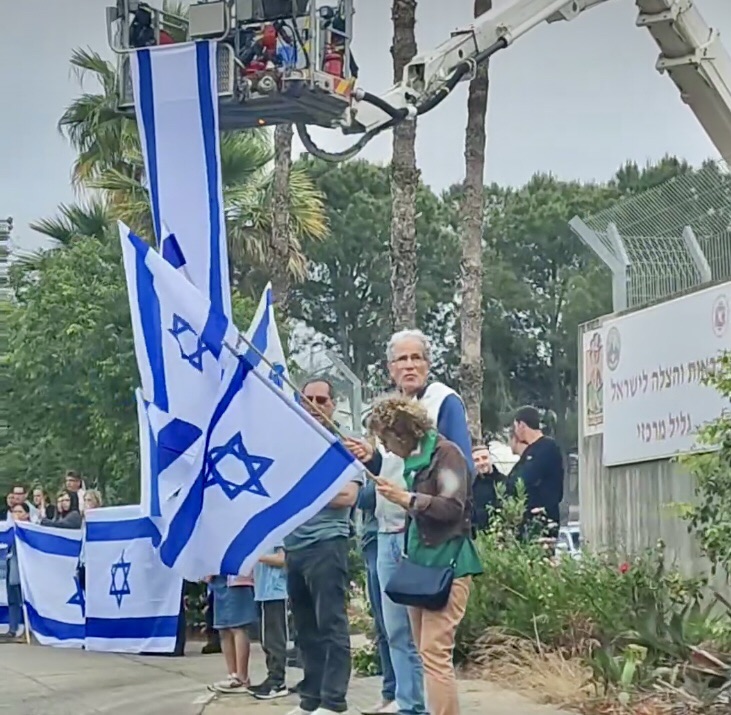
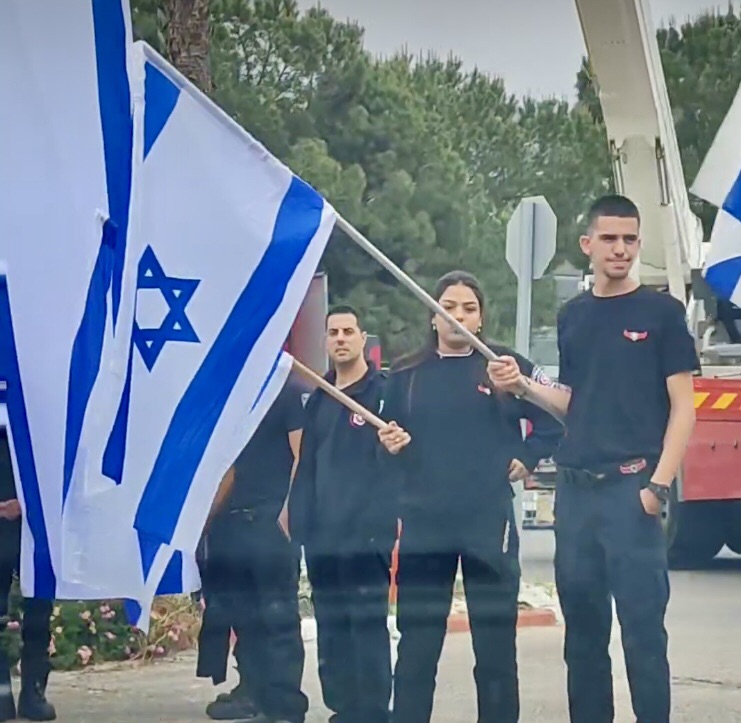


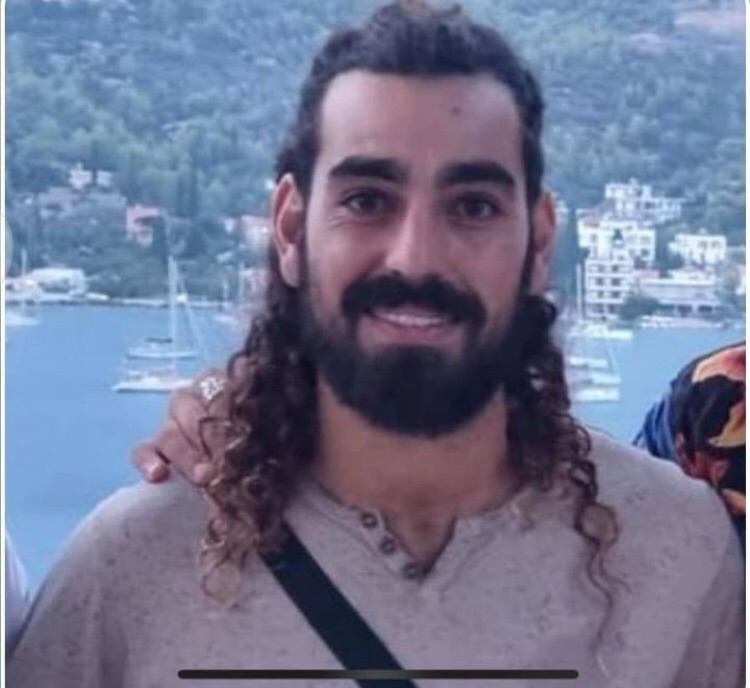


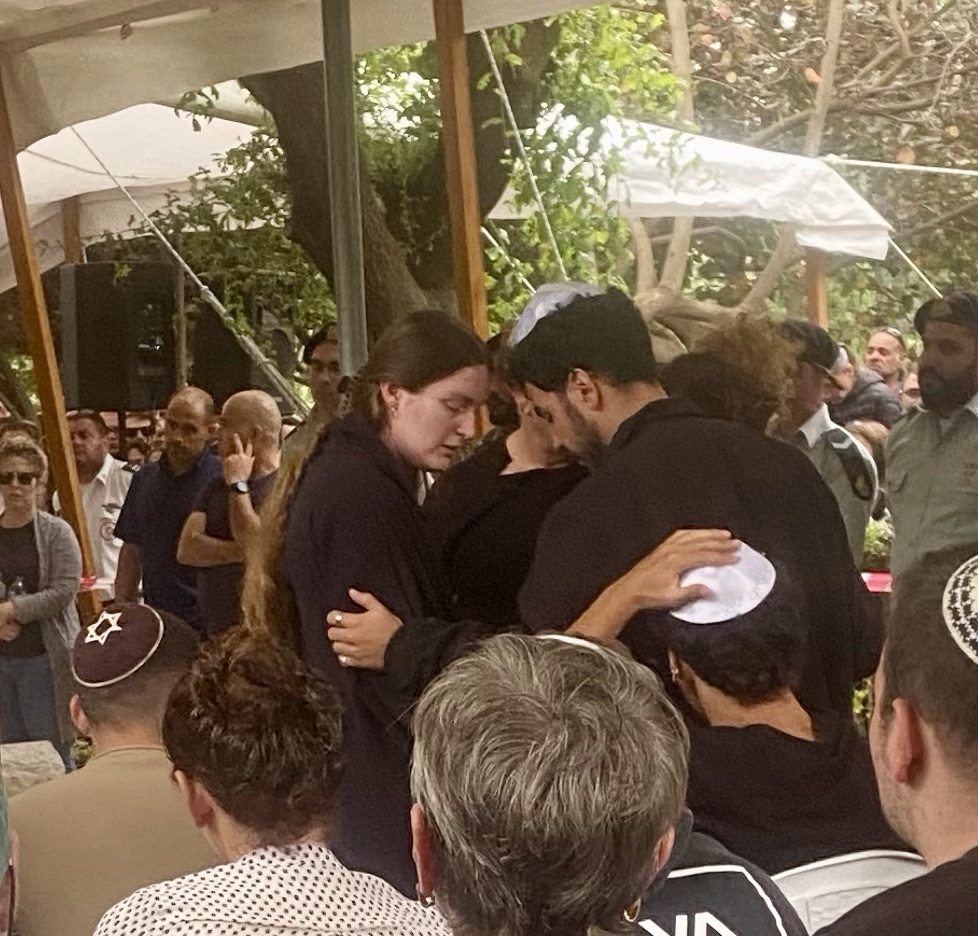
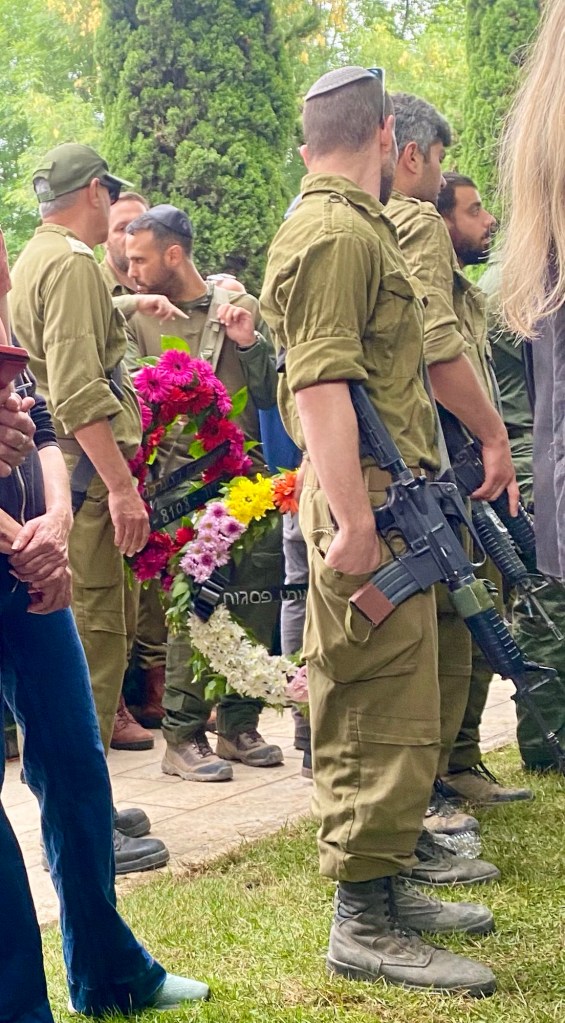








 Israel Dreams