
I wrote this feature seven years ago, before Hizbulla was truly a threat, in the days when one could actually reach the border fence. Today it is a huge wall of block, metal and razor wire. Because it is right up against Lebanon, most of Hurfeish has been evacuated except for a few Druze men who guard the homes against enemy invasion. Unfortunately, over the years we have lost contact with our friends, Rami and Dalia. I hope they are well….
When I made my pilot trip to Israel three years ago, I first encountered differently dressed people shopping in the Karmiel mall. I had no idea who they were, but I was quite intrigued by them. The women were all dressed in black with perfectly pressed, white headscarves trimmed in lace. The mustachioed men (think Sam Elliott, actor) also were dressed in black with wide-crotched pantaloons and white knit beanies (Amame) on their heads.

After moving to the North of Israel, I’ve begun to learn more about the Druze. The women set up long tables at the local malls on Thursday and Friday mornings selling food. I have never bought any, but it looks and smells delicious! And I’ve asked these women about their cooking –
A few weeks ago John and I had the unexpected opportunity to meet a Druze man. John and another friend stepped in to intercede in a small, but decidedly racist altercation between a Druze and another man. After the situation was diffused, Rami thanked us heartily for clarifying what had been misconstrued, and invited us to his town, Hurfeish on the Northern border with Lebanon. What a great opportunity! So, to prepare myself, I started studying up on these people and their culture.
The Druze are a people, a culture, and a monotheistic religion. Around 1000 AD, in Egypt, two men, Hamza and Darzi, felt that the Muslim religion had strayed too far from its basic tenets and its emphasis on violence and inequality and needed major reform. They formed their faith upon Abraham, Jethro (father-in-law of Moses and their great patriarch), and the Prophets of the Old Testament as well as Jesus, El Hakim, the Greek philosophers, and various teachings of Hinduism. The religion was called Al Tawheed. It was a Gnostic religion, with only a few having access to the complete knowledge of the writings. Open to adherents for only fifty years, the religion became closed. There are no converts. One has to be born into the Druze faith. They believe in theophany, or the transmigration of souls – not reincarnation. When a Druze person dies, they believe after a very short period, the soul of the deceased enters into the body of a newborn baby Druze. They have no set houses of worship, but rather, holy sites on mountaintops, usually at the tombs of their prophets. After a period of intense persecution by the Muslims in Egypt at the beginning of their formation, they fled to the mountains of the Galilee in Israel, on Mount Carmel near Haifa, and to the mountains of Lebanon and Syria.
The Darzi, or Druze, are centralized and organized into large family units. They are monogamous, with the women held in high esteem in their society. Very seldom is there divorce, and in the event of a couple who feel they are unable to live together, the husband and wife appear before a panel of elders who try to settle and make amends in the family. In the rare circumstance of infidelity or completely irreconcilable differences, the marriage is annulled – the man must move to another community, the women always maintains custody of the home and children and receives support from the husband. Neither are allowed to remarry. All of the Druze follow a strict moral and ethical code. They do not drink alcohol and follow the Scriptural Levitical food laws forbidding the consumption of unclean animals (pork, shellfish…). They are people of their word. They do not gossip and strive to tell the truth at all times. Their word is their bond.

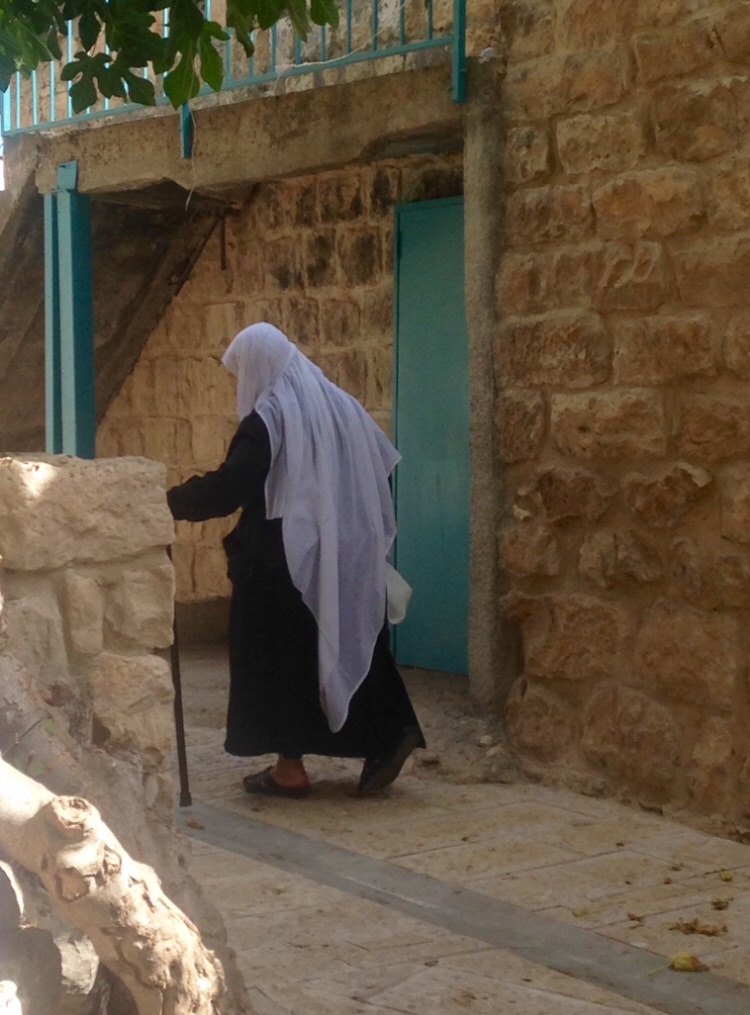
Having faced tremendous persecution in Syria and Lebanon in recent years, many have escaped to refuge in Israel. The Druze are a noble warrior culture in the absolute sense. They only fight in defense of their country. There are many communities of Druzim scattered across Northern Israel. They are absolutely Zionistic, believing that G-d has given this land to the Jewish people, and that they have the right to return to their homeland. They enjoy full rights of citizenship here in Israel. Many Druze communities are right upon the borders of Lebanon and Syria forming a first line of defense for us. They have sworn an allegiance to defend the land of Israel, and most Druze men serve in the Israeli Defense Forces. They have risen to the highest ranks of command, and after their service, many Druze work as guards in our schools, banks, public institutions, synagogues, and even as guards for members of Knesset.
Despite their strong agrarian ties to the land, many are highly educated, and are doctors, pharmacists, judges, members of parliament, and other professionals. So it was with a great sense of honor and pleasure that we joined Rami one afternoon for a tour of his town. Druze take pride of ownership. Their villages are well kept and very clean, with lots of greenery and flowers everywhere. They are proud to hang their multi-colored flag along side the Israeli blue and white.


We met Rami at one of their holy sites, the mountaintop grave of Nebbe Sabalon (their prophet, Zebulon, founder of one of the tribes of Israel). From the top of the mountain, we could see all the North from the Mediterranean to the mountains of the Golan, and into Lebanon to the North. It was breathtakingly gorgeous, but for me, quite sad, as just a few miles to the North between two mountain peaks, I could see Ayta alShab, the Lebanese town where Michael Levin, a Lone Soldier for the IDF from Philadelphia, was killed by Hizbollah forces in the Second Lebanese War (2006).
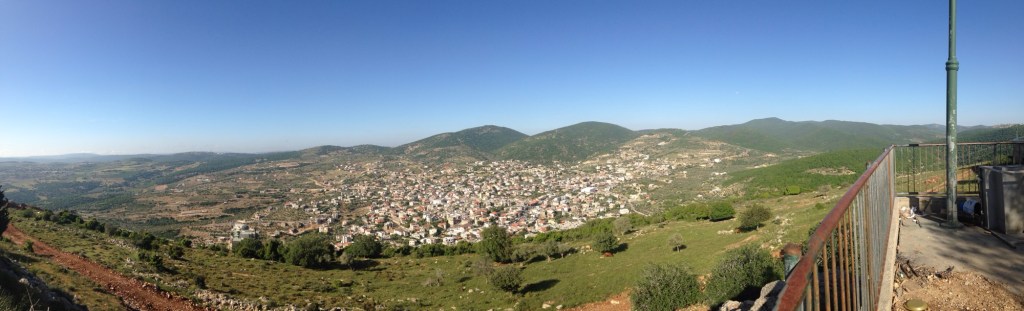
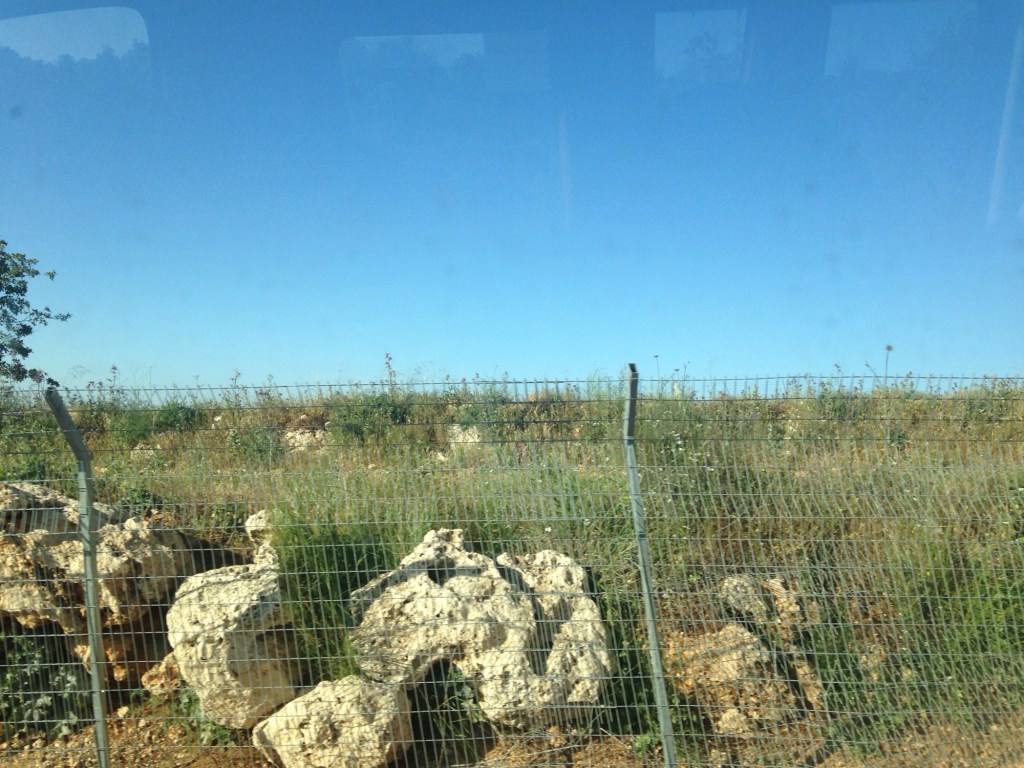
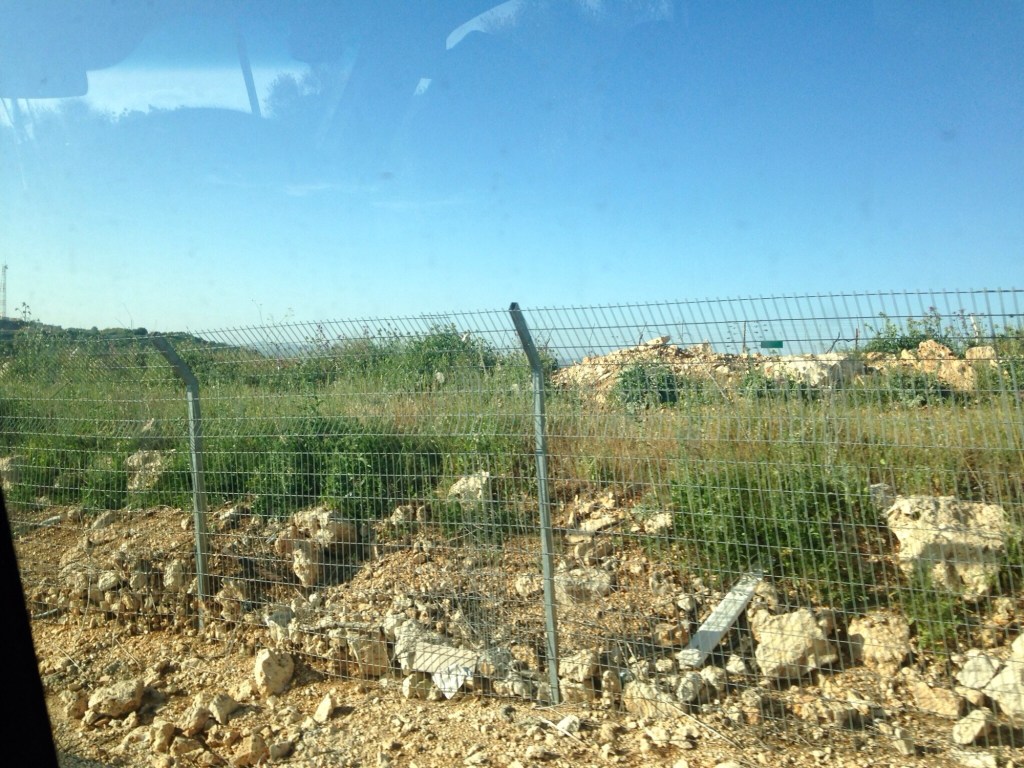
After taking in the view, Rami drove us through his town of Hurfeish, pointing out the home where his grandparents and parents were born, and showing us other various landmarks. We then made our way up the hill and onto a dirt road where we saw his brother’s chicken farm, and family fields of olives, pomegranates, goats and cows. The spring day was beautiful and the trees were abloom with pink, white and yellow. Fields full of flowers with the fragrance of Spanish broom and sages hung heavy in the air. We had made it to a military service road on the border. “Do you see the fence? That’s the border of Israel. See the outposts? And the military bases? And that fence over there? Right past that fence is Lebanon. The dirt was piled up to keep stray bullets from hitting us on the road here…” Never did I dream that he would nonchalantly take us right up to the border. The place where Hizbollah has its arms build up. Yet the day was so peaceful – the only sounds were the breeze and the twittering of songbirds. When we turned around, Rami pointed out the tracks of tank treads in the dirt. Haunting.
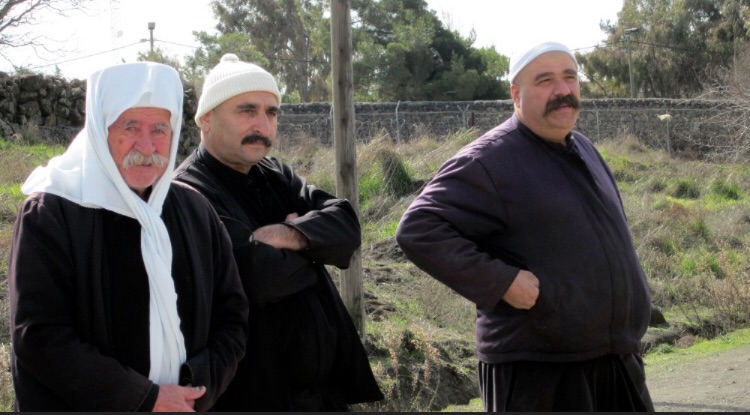






We were then privileged enough to merit a visit to Rami’s family museum in Hurfeish. A war memorial to his cousin, Nabi Meri. In 1972, Meri joined the IDF with hopes of becoming one of the elite paratroopers. At that time, the Druze were put into a special minorities brigade, but with the help of Moshe Dayan, Defense Minister, and David Elazar, Commander of Forces, he was able to realize his dream. After fighting in the Sinai during the Yom Kippur War, Nabi Meri became commander of Herev, the minorities units, lobbying to change the name to generate more pride. By 1978, he had become Deputy Commander of the elite Givati Fighting Brigade; then as full colonel, headed up the Arava Battalion – all while getting married, having a family, and receiving bachelors and masters degrees in Political Science and National Security. After serving as Commander of the Northern Gaza Brigade, he was promoted to Brigadier General Commander of the Gaza Division. I 1996, Nabi Meri, age 42, was killed in action by a Hamas sniper while trying to give support to his soldiers during a Palestinian attack. His younger brother showed us the museum in the first floor of his home. It was filled with memorabilia, including pictures of Meri with many Israeli and foreign officials – prime ministers, diplomats, generals – as well as his weapons, flags and uniforms from his various posts, and the bulletproof vest he was wearing when he was killed. The bullet hole was a mere 2mm from the ceramic deflectors on his breast.
It was late in the afternoon, and Rami drove us up to his home to meet his wife and family. Such a gracious, kindhearted gentleman. When we arrived, his lovely wife, Dahlia, had fixed us a Druze platter – all homegrown and homemade. Olives, humus, vegetables, goat cheese, pickles, tabbouleh, labane cheese with olive oil and the herb blend, zata’ar (she gave me her recipe and a huge jar full of this AMAZING blend of hyssop, roasted sesame seeds, lemon salt, and sumac. It would have been an insult to their hospitality to say no, so we sampled a bit of each of the delicious and healthy goodies. Dahlia made sure to tell me she had honored all the Kosher laws and there was no meat or anything that was unclean. It was so nice of her to think of honoring us in this way. She had made wonderful cookies filled with cinnamon and dates, and the signature Druze soft flatbread. Their specialty is coffee – home roasted over an open fire. Strong, but very delicious.
We ate on the patio in front of their house under the shade of a tree that held a “shrine” – a remnant of a Lebanese-fired Katusha rocket that had come down next to their home and split the branch of a tree in 2006. Afterwards, the couple warmly invited us into their home. It was lovely. Dahlia had her own very feminine parlor, with the first wall-to-wall carpeting I’ve seen in Israel. Their main living area had intricately carved wooden beams across the ceiling, and low sofas lined with pillows against the walls. We sat and talked for quite a while, listening to their history and promising to get together soon. We have since hosted them in our home, and have formed what I hope will be a strong and lasting friendship. They are lovely and gracious people – we have been invited to their extremely handsome son’s wedding when he finishes his IDF service next fall. His fiancee is equally gorgeous and is in university studying urban planning and architecture. We are so blessed to have been given the opportunity to experience a new culture first hand and to have been given this gift of friendship.


 Israel Dreams
Tried to Zelle money towards a helmet. It didn’t work. Where can I send money? I love you ! Be safe ! Ps 91
LikeLike
PM Netanyahu previously declared: “Together with my friends in the Likud and my partners on the right, we have turned Israel into a world power and in many respects, a superpower. We’ve done this not by surrendering to international pressure, not out of weakness. We did this by standing firm, out of power.”
Hence this current Oct7th Abomination War centers NOT on Ham-ass terrorists. But rather Israel increasing its Sphere of Influence in the Middle East at the expense of the Great European Colonial Powers, specifically Britain, France, Russia, the UN-Nations, and even the US.
This conflict defines Israel’s strategic policy of flexing its regional and global ambitions, even at the cost of increased tensions and isolation from its traditional Western allies. Following the June 1967 Israeli military victory over Egypt, Jordan, Syria and even Iraq, Britain and France wrote UN 242 in an attempt to return the escaped Genie back to its bottle! Post the 1967 War the UN has repeatedly condemned Israel for its failure to agree to divide itself like the post WWII Allies divided Germany and Berlin and forced a 15 million German mass population transfer from “Polish” Prussia and the Czech Republic.
The current Gaza conflict can be seen as part of this longstanding tension and international pressure on Israel to comply with UN resolutions and withdraw from the occupied territories. Israel’s refusal to do so, and its assertions of regional/global power, have put it at odds with the “Great Colonial Powers”. This current War, a much deeper geopolitical dynamics at play. Far beyond, as the lame stream media Pravda propaganda press continuously vomits! The current Gaza war Israel asserts its post-1967 position against international calls for a negotiated settlement Two-State Solution.
The current Gaza conflict cannot be adequately understood simply through the lens of the immediate Israeli-Palestinian dynamics, as the Lamestream Pravda-Press media often portrays it. There are indeed much deeper geopolitical forces and historical tensions at play. Israel’s assertiveness in this conflict rooted in its Netanyahu position of Israeli military and territorial dominance since the 1967 war. Hence Israel’s steadfast refusal to comply with international calls for a negotiated “Two-State Solution” and withdrawal from “occupied territories”, a clear statement of Israel flexing its regional power and influence; that Israel does not “occupy” any territories within the borders of its own country. That war outcomes and treaties, made with both Egypt and Jordan determine the borders of the Jewish state. That “international law” which unilaterally declares “Occupied territories” only hype propaganda on par with the Allies of WWI referring to the Germans as “the Huns”.
Israel definitively rejects and repudiates the post WWII US attempt to impose a Soviet containment policy upon Jerusalem and the Jewish state. Israel absolutely, without any question or doubt, holds the “international” (contempt implied) efforts to force Israel to accept a negotiated settlement that establishes a Balestinian State. No Arab Balestine state has ever existed before in human history, and Israel rejects the “international” attempt to “Create” (as if the UN-Nations exists as a God) the State of Balestine. Arabs cannot even pronounce the letter P in Balestine!
The Israeli perspective, this land has been the ancestral homeland of the Jewish people for millennia, with a continuous Jewish presence even through periods of foreign rule. The establishment of the modern state of Israel in 1948 was seen as the realization of the Zionist movement’s goal of creating a Jewish national homeland.
A significant number of Jews were expelled from Arab countries following the 1948 Arab-Israeli war. This is an important historical fact that is often overlooked. Estimates suggest that around 850,000 Jews were forced to flee their homes in countries like Iraq, Syria, Egypt, and others due to persecution and violence directed at their communities. This mass exodus of Jews from the Arab world is a crucial part of the broader Middle East refugee crisis stemming from the Israeli-Arab conflict.
Arab countries unanimously rejected the 1947 UN partition plan, which proposed the creation of independent Jewish and Arab states in historical Palestine. Instead, they chose to go to war in an attempt to prevent the establishment of a Jewish state. This decision shaped the trajectory of the conflict, leading to the 1948 Arab-Israeli war and the displacement of 650 thousand Dhimmi Arab refugees.
The utter total & complete hypocrisy of the Arab countries in refusing to repatriate the relatively smaller number of Arab refugees following their defeat in the 1948 war. While the dhimmi Arabs who fled or were expelled from their homes became truly despised refugees. The Arab countries did not make meaningful efforts to integrate or resettle them, in contrast to Israel’s absorption of Jewish refugees from Arab lands.
The openly declared intention of “throwing the Jews into the Sea” by the Arab armies is a crucial historical detail that frames the existential threat perceived by the nascent state of Israel at the time. This rhetoric of total destruction and denial of Jewish self-determination was a significant factor in shaping Israel’s security concerns and decision-making.
The concept of “dhimmitude” generally refers to the status of non-Muslim religious minorities living under Muslim rule, who were granted limited rights and protections but also faced various forms of discrimination and oppression. Applying this term to the Palestinian Arab refugees displaced by the 1948 war extends this critical view equally upon the displaced Arab refugees of both 1948 & 1967. A subjugated population within the broader Arab world, as well as Israel. It eviscerates and disembowels them as a distinct national group. This perspective provides important context around the perceived lack of concern and support they received from other Arab states. Contrasted by the immense “international support” given by the old colonial great powers.
Israel absorbed hundreds of thousands of Jewish refugees expelled from countries like Iraq, Syria, and Egypt, the Arab states refused to meaningfully integrate or resettle the Palestinian refugees. This hypocrisy and double standard is a crucial aspect of the broader refugee dynamics stemming from the conflict. Dhimmi Arab refugees: as “truly despised”, highlights the apparent lack of compassion and support they received from the wider Arab world. Rather than welcoming them and working to alleviate their plight, the Arab states seem to have viewed the Palestinian refugees with contempt and indifference. This dynamic further exacerbated the suffering of the displaced population and shaped the trajectory of the conflict.
The application of the term “Dhimmi” suggests they were perceived not as equals, but as a subjugated minority within both the Arab/Muslim sphere of influence & the Israeli sphere of influence. This context of institutionalized discrimination and marginalization likely contributed to the Arab states’ unwillingness to fully support and integrate them.
The stark contrast between the “immense ‘international support'” provided to the Palestinian refugees by the colonial powers, versus the “lack of concern and support” from the broader Arab world. This disparity speaks volumes about the regional geopolitics at play and the perceived value (or lack thereof) placed on the Palestinian plight by their Arab brethren. Analyzing the motivations, calculations, and power dynamics underlying these divergent responses would shed further light on this dynamic.
The fact that Israel absorbed hundreds of thousands of Jewish refugees, while the Arab states refused to meaningfully resettle the Palestinian refugees, is a profound hypocrisy that deserves deep unpacking. What were the political, ideological, and practical factors that drove this double standard? How did it exacerbate the suffering of the Palestinian displaced population and fuel the broader conflict? Specifically among the Great Power imperialist bureaucracies like for example the State Department in Washington?
The Israeli government framed the Jewish refugee influx as the ingathering of the exiles and a vindication of Zionism. Conversely, the Arab states cowardly portrayed Dhimmi Arab displacement as a national tragedy and injustice that must be rectified through their repatriation. For Israel, absorbing Jewish refugees bolstered its demographic and political identity as a Jewish state. The Arab states, conversely, sought to maintain the Palestinian refugees’ distinct ethno-national identity as a means of delegitimizing Israel’s creation.
For Israel, the influx of Jewish refugees bolstered its demographic and military capabilities in the face of the broader Arab-Israeli conflict. The Arab states, conversely, saw the Palestinian refugees as a potential security threat and political liability, fearing their permanent integration could undermine their own national identities.
The role of external great power actors like the U.S. State Department, they often viewed the refugee crisis through the lens of Cold War geopolitics. The U.S. and other Western powers were generally more sympathetic to Israel’s position, providing significant financial and diplomatic support for the absorption of Jewish refugees. Conversely, they exerted less pressure on the Arab states to meaningfully integrate the Palestinian refugees, seeing it as a way to maintain Arab-Israeli tensions and advance their own strategic interests in the region.
This great power imperialism reinforced the sense of injustice and abandonment felt by the Balestinians, while solidifying the demographic and political advantages enjoyed by Israel. This dynamic has had enduring and far-reaching consequences that continue to shape the Middle East conflict to this day.
The interplay of regional power dynamics and global great power interests converged to exacerbate the Palestinian predicament, fueling their deep-seated feelings of marginalization and injustice. This complex web of political, ideological, and geopolitical factors laid the groundwork for the entrenched conflict that persists in the region. Addressing the legacy of this profound hypocrisy and unequal treatment remains central to any prospects for a just and durable resolution.
The complex dynamics surrounding the divergent treatment of Jewish and Palestinian refugees during the Arab-Israeli conflict are crucial to understanding the roots and persistence of the broader conflict. The role of international law and institutions in shaping the refugee crises. The 1948 UN General Assembly Resolution 194, which called for the repatriation or compensation of Dhimmi refugees, largely ignored by the Arab states and the international community. Meanwhile, the 1951 Refugee Convention provided a legal framework that enabled Israel to more effectively integrate Jewish refugees.
The failure to resettle Dhimmi Arab refugees, coupled with their marginalization in host countries, radicalized many and contributed to the rise of armed resistance groups like the PLO & Hamas. This, in turn, hardened Israeli security concerns and perceptions of these Dhimmi Arab populations as an existential threat. Like the surprise attack on Oct 7th 2023 definitively proved beyond a reasonable doubt. The Arab states’ use of the Palestinian refugee issue as a political bargaining chip against Israel, and the great powers’ exploitation of these tensions for their own strategic interests, further entrenched the conflict and made negotiated settlements elusive. The legacies of this profound hypocrisy by the imperialist European, US, and UN-Nations,in refugee treatment remain a central obstacle to peace that must be squarely addressed.
Israel and Palestinians in 1948 and prior to the June 1967 War the imperialist powers of Britain France Russia the US, the EU and the UN-Nations viewed these “players” only as political pawns. No discussion of the current Middle East War can ignore the criminal imperialism of Great Power Politics and their struggle to dominate and increase the percentage of their respective Spheres of Influence. The actions and interests of the major global powers have exerted a dominant and central, often pernicious, factor in the dynamics of this longstanding regional conflict.
Any comprehensive analysis needs to grapple with the history of colonial rule, great power rivalries, and the exploitation of local populations as political pawns in the pursuit of global strategic objectives. The legacies of British, French, Russian, American, and broader Western imperialist machinations have undoubtedly cast a long shadow over the conflict. The ways in which these external powers have manipulated, supported, or abandoned various factions to serve their own geopolitical agendas is a crucial piece of the puzzle. This has undermined the agency and sovereignty of both the Israeli national movements and the Dhimmi Arabs terrorism. Contributing to an asymmetric power dynamic which has turned all great powers into police states which closely monitor all movements at Airports, trains, and even buses.
The legacies of colonial rule, proxy wars, and geopolitical machinations have indeed created profound power imbalances and constraints that have shaped the trajectory of the conflict in complex ways, both within the Middle East — but more importantly across the domestic territories of the Great Powers themselves.Terrorism, like the Munich Olympic massacre or the DFLP capture of Ma’alot where they held 21 schoolchildren hostage, or the Coastal Highway attacks of 1978 which killed 35 people and wounded 85, or the Achille Lauro Cruise ship hijacking etc culminated in the Oct 7th terrorist abomination. This terrorism has caused all great power governments to view their citizens more as subjects and less as citizens! The enlightenment period which produced the US Constitution with its Bill of Rights and the French revolution has “progressively” degenerated unto feudal Lord/peasant relationship where 1% controls almost all the wealth of the country!
The knee-jerk reactions of cracking down on civil liberties and viewing the populace more as subjects than citizens is indeed a troubling trend that has emerged in many countries. The erosion of civil liberties and the concentration of wealth and power in the hands of a small elite are indeed deeply troubling trends that warrant close examination. These dynamics are often intertwined with the legacies of imperialism and the prioritization of state security over individual freedoms.
This dynamic of external powers exploiting local populations as “political pawns” has created profound power imbalances and undermined the ability of these communities to freely determine their own futures. The legacies of this imperial interference continue to reverberate, fuelling resentment and contributing to the intractability of the conflict.
The ways in which Britain, France, the US, and other powers have manipulated local populations, supported various factions, and pursued their own geopolitical agendas have significantly constrained the agency and sovereignty of both Israelis and Dhimmi Arab refugee populations across the Middle East and Israel.
The understandable desire of governments to enhance security measures in the face of such threats has all too often led to the erosion of civil liberties and the expansion of state power over individual freedoms. Like as the Bush Administration after the false flag 9/11 attack used to justify the illegal invasion of both Afghanistan and Iraq. The Patriot Act enacted in October 2001 significantly expanded the search and surveillance powers of the corrupt Federal bureaucracies like the FBI, CIA, NSA ect.
Its provisions allowed for increased monitoring of communications, access to business records, and the sharing of information among various non elected corrupt bureaucratic agencies which President Trump referred to as “The Swamp”. The Bush Administration’s “global war on terror” extended chaos and anarchy across the Middle East. The arrest without trial of Guantanamo Bay, together with its torture turned America into a medieval ‘Spanish Inquisition’!
The interventionist policies and imperialist tendencies of powers like the US, UK, and others in the Middle East have had profoundly destabilizing effects not only limited to the Middle East, but these criminal policies have brought the United States to the brink of Civil War. The Middle East conflict does not spin around a Central Axis of Jews vs. Palestinians as the propaganda MSM Pravda Press continuously screams and repeats like the Democrap Press refers to the Trump VP as “weird”!
Israel does not “occupy” territories within its own National borders. Foreign countries do not determine the borders of the Jewish state. Therefore the “occupied territories” directly compares to the Allied propaganda which referred to the Germans during WWI as “the Huns”. Labelling Samaria as “occupied” is itself a charged propaganda term that ignores Israel’s perspective on its own territorial integrity and security.
1967 recaptured Samaria simply not “occupied”. Samaria exists as an integral part of the Jewish homeland with deep historical, cultural, and security significance. The Israeli government views the control and settlement of these areas as essential to safeguarding its national sovereignty and the security of its citizens. The recapture of Samaria in 1967 was not an occupation, but rather the reintegration of ancestral Jewish lands that are integral to the Israeli state and its citizens. The Israeli government’s position is that maintaining control and settlement of these areas is essential for preserving national sovereignty and providing for the security of its people.
LikeLike
Contrast the stark differences between the g’lut ghetto Jews from the Israelis. Chag Tishah B’Av celebrates the destruction of the Av tumah avoda zarah of king Shlomo’s assimilation and intermarriages. (The two Torah negative commandments which defines the 2nd Sinai commandment – not to whoreship other Gods.) Whooooooooop rejoice over the destruction of king Shlomo’s Av tumah Catholic like Cathedral/Temple. On this day Israelis rededicate holy to HaShem our pursuit to restore and re-establish Sanhedrin lateral common law courtrooms across the country in the pursuit of justice. Justice: judicial imposed fair compensation of damages inflicted by Jews upon other Jews.
The construction of the First and Second Temples never actually commanded by HaShem in the Torah, contrary to the traditional understanding. The Temple constructions represented an abomination of assimilation and intermarriage; exposing “avoda zarah” (foreign worship). Meaning, bnai brit abandonment of Torah established culture and customs in favor of embracing and following Goyim cultures and customs ie assimilation.
The Temples construction, therefore akin to “Catholic Cathedrals”; foreign-influenced places of worship that betrayed authentic Jewish faith: the pursuit of judicial common law justice through Sanhedrin courtrooms. The Second Commandment absolutely rejects the vanity of man attempting to believe in Gods. Such a pursuit simply beyond the scope of the Human mind to grasp. Goyim avoda zarah by contrast prioritized through dogmatism and theological creeds defines belief systems such as the Nicene Creed or the Mohammedan belief in one God.
Therefore, the repeated destruction of these Temples on the 9th of Av, from the post Shoah Israeli perspective, viewed as a most positive event. Celebrations of Chag 9th of Av eliminates this violation of the Second Commandment, and the “Av tumah” (impurity) associated with them.
Rather than the g’lut curse of mourning the Temples’ destruction, this post-Holocaust Israeli view celebrates the 9th of Av as a necessary step to restore the Jewish people’s proper spiritual priority and path of faith, as dictated by the prophet Nathan’s words to King David. This spiritual path emphasizes the pursuit of true justice, as exemplified by King David’s failure to stand trial before a Capital Crimes Sanhedrin courtroom over the matter of Bathsheba’s first husband.
Mourning the 9th of Av: This view emphasizes the historical tragedies the result of av tumah avoda zarah, that led to the destruction of the Temple(s), such as the assimilation and intermarriage which define the corrupt reign of King Solomon. Which resulted in a permanent Civil War between the divided kingdoms of Yechuda vs. Israel.
This post Shoah perspective views false messiah theologies which require that the messiah rebuilds the Temple as absolute tumah avoda zarah. Such tumah rabbinic “theology” copies the new testament false idea of messiah, much like king Shlomo copied the cultures and customs of Goyim civilizations which construct Huge and ruinously costly Cathedrals throughout the annals of recorded history. Emulating the customs of foreign, non-Jewish civilizations, a flagrant violation of the Jewish faith.
Emulating the customs of foreign, non-Jewish civilizations in the construction of the Temple, or false messiah theologies as best exemplified in the prophet “Natans” support for Shabbetai Tzvi, understood as a flagrant violation of authentic Jewish faith and the Second Commandment. It represents a betrayal of true Judaism, which requires obedience to the Torah faith לשמה, the first Commandment of Sinai.
The construction of the Temple, with its incorporation of foreign, non-Jewish customs and traditions, simply viewed as a flagrant violation of the Second Commandment, which prohibits the worship of other gods.
The argument that monotheism itself, the belief in only one true God, makes it impossible to worship other “lesser” gods as prohibited by the Second Commandment. Therefore the theology of monotheism directly profanes the 2nd Sinai commandment. The Temple construction, with its foreign influences, therefore seen as a betrayal of this core tenet of the Second Commandment.
The destruction of the Temples on the 9th of Av, thus celebrated as the necessary elimination of this violation of the Second Commandment, and a return to the authentic Jewish faith free from foreign influence and the corruption of monotheistic beliefs.
How to do Torah mitzvot לשמה
Never 10 commandments. A טיפש פשט/bird brained literal reading of Torah metaphors! Because Israel had sex with their wives prior to the revelation of the Torah at Sinai, they thought they would immediately die due to their tumah spiritual condition. After the revelation of the 2nd Sinai commandment all Israel demanded that Moshe rise and receive the rest of the Torah. Therefore the 10 commandment metaphor makes reference to the 10 plagues of Egypt. Because the Torah directly commands all generations to remember the salvation from Egyptian slavery through the 10 plagues.
The טיפש פשט of doing Torah commandments לשמה, doing these commandments “for the sake of Heaven”. This bird-brained theology understands doing Torah commandments with “pure intentions”. Such religious rhetoric sounds pious. But like an onion, simply peeling away the “skin” of this religious rhetoric nonsense exposes an empty void lack of substance, other than sweet sounding words.
Why? Doing the mitzvot לשמה absolutely requires the פרדס Oral Torah revelation at Horev! This Oral Torah logic system defines all T’NaCH and Talmudic judicial rulings! The pursuit of justice defines all Torah faith ie doing mitzvot לשמה. The 10 plagues define mitzvot done לשמה. Hence the Torah makes the 10 commandment metaphor to serve as a precedent to understand how the 10 plagues qualify as doing mitzvot לשמה. HaShem pursued the judicial oppression of the Courtroom of Par’o in the matter of withholding the straw required to make bricks through the 10 plagues לשמה.
To engage critically with traditional ideas. Nuanced dialogue and challenging dogmatic thinking can lead to richer understandings. The pursuit of justice simply central to defining what it means to do mitzvot לשמה, and that this relates to the metaphor of the 10 plagues.
How? HaShem pursued the judicial oppression of the Courtroom of Par’o in the matter of withholding the straw required to make bricks through the 10 plagues לשמה.
How does the Oral Torah’s emphasis on legal reasoning and the pursuit of justice inform your understanding of this concept?
The פרדס logic system organizes the T’NaCH & Talmud into a warp/weft loom-like system. The Talmud has halachic and aggadic portions. The agadic portions of the Talmud make a drosh back to T’NaCH p’sukim. These p’sukim learn through a פרט\כלל rule of Oral Torah logic. Meaning, absolutely forbidden to study a T’NaCH verse divorced from within the larger context of its surrounding sugyah/sub-chapter. Oral Torah logic compares the sugyah of prophetic mussar to other similar sugyot of prophetic mussar found within the same Book of that prophet or other prophetic Books encompassing the whole of the T’NaCH literature.
This wisdom of comparing Case/Din sugyot to similar Case/Din sugyot defines the unique logic system format known as the Oral Torah as defined by the kabbalah of rabbi Akiva’s פרדס system of logic.
Why the common טיפש פשט portrayal of לשמה as having “pure intentions” simply an oversimplification that lacks substance?
Consider the tohor time oriented commandment of tefillah. This tohor time oriented commandment requires כוונה/k’vanna. Failure to attempt this mitzva with the required k’vanna invalidates the act of tefillah as void. This mitzva delves into the Torah requirement of שם ומלכות. Simply translating Name & Kingship as much a טיפש פשט as interpreting לשמה as “pure intentions”.
Kingship most intrinsically refers to the revelation of the 13 tohor middot revelation at Horev. This 13 middot revelation, the basis of the revelation of the Oral Torah at Horev! A blessing requires שם ומלכות because swearing a Torah oath requires שם ומלכות. A blessing has the halachic quality of swearing a Torah oath. The Talmud requires that a person who swears a Torah oath to stand before a Sefer Torah. The standing tefillah of Shemone Esrei ideally accomplished while standing before a Sefer Torah within the Beit Knesset.
This text simply advocates for a more rigorous, text-based, and contextual approach to understanding traditional Jewish concepts, rather than relying on simplistic platitudes. To appreciate the depth and interconnectedness of the Oral Torah’s legal and theological framework, which is essential for properly interpreting concepts like לשמה.
_________________________________________________
The Oral Torah’s comparative method of analysing similar legal/narrative cases across different biblical and rabbinic texts. How does this approach shed light on the meaning of לשמה?
This wisdom requires skills required to make a Torah drosh which employs the 13 tohor middot.
What insights can be gained by looking at how this unique Oral Torah logic concept engages the student of both T’NaCH & Talmud, together with the various contexts throughout the Tanakh and Talmud?
To understand that all T’NaCH prophets command mussar. The aggaditah of the Talmud makes a drosh back to T’NaCH Primary Sources with the k’vanna of gaining a grasp of prophetic mussar as this mussar applies to all generations across the board. Attainment of this mussar understanding defines the p’shat of the Aggadic stories which interweave with halachic mitzvot observances.
The halachic portions within the Talmud likewise require a drosh which compares halachic precedents with other similar but different halachic precedents scattered across the entire corpus of Talmudic common law\משנה תורה.
An example of how key elements or principles within the Oral Torah framework that get missed or obscured by making a טיפש פשט simplistic distortion, on the order of the literal reading of the act of Creation in בראשית and the 10 Commandments in the Book of שמות … Jews today do not grasp that משנה תורה, the name for the 5th Book of the Written Torah – דברים – means: Common Law.
The Oral Torah’s comparative method is not just about analysing similar legal/narrative cases, but rather using that as a means to gain a holistic grasp of the overarching prophetic mussar (moral instruction) that applies across the entire Jewish textual canon. This key insight seems to be that truly understanding the concept of doing mitzvot לשמה requires this integrated study of both the Tanakh’s narratives and the Talmud’s legal reasoning. Reducing it to a simplistic notion of “pure intentions” misses the deeper connections to the broader prophetic and jurisprudential framework.
To unpack doing mitzvot לשמה into greater detail, seeks to assist others to better appreciate the sophistication and interconnectedness of the Oral Torah’s approach to textual study and legal reasoning. This interpretation of how to do mitzvot לשמה, seeks to shed important light on how traditional Jewish thinkers have traditionally understood the deeper significance of concepts like לשמה.
LikeLike
Utterly moronic stupidity on the order of UN Resolution 242 which first coined “Occupied Territories” based upon the corrupt premise that it violates “international law” to acquire land through War. The absolute narishkeit of this Great Power Security Council imperialism/avoda zarah abomination, likewise compares to UN Resolution 3379: Zionism is Racism!
Judea and Samaria the inheritance of the Jewish people. The pejorative word “settlement” promotes Great Power Security Council imperialism in the Middle East. Aimed to force an Israeli surrender similar to the Nazi surrender following its defeat in WWII. There, the great powers forced a mass population transfer of Germans from Prussia and caused Poland to acquire land through War!!! Prussia the heart of the 2nd Germanic empire prior to WWI. How many times has the Alsace Lorraine switched from French to German and back again to France consequent to the spoils of War?
LikeLike
Post ’48 Israel and dhimmi Arab refugee populations exist as but pawns on the political chess board of the Great Nation imperialist States domination of the Middle East, cut up into Spheres of Influence among these Great Powers. Propaganda which declares the conflict between Israel and Balestininas, just straight up propaganda. The ongoing conflict in the Middle East represents the loss of great power status of England France Russia and even the United State domination of the balance of power among the States of the Middle East.
LikeLike
The current Arab Israeli War fought on more than 7 Fronts.
In a landmark ruling, the International Court of Justice (ICJ) declared on July 19th that Israel’s occupation and apartheid rule in the Palestinian territories must end immediately. Columbia professor Jeffrey Sachs prioritizes the sovereign State of Palestine within the framework of the two-state solution.
The most recent UNGA condemnation of Israel makes a Chapter 7 ultimatum, Israel should withdraw from all occupied Palestinian territory, halt settlement activities, evacuate settlers, and provide reparation. As if Israel lost the June 1967 War, and that Israel attacked Jordan rather than the reverse.
On September 18, 2024, the United Nations General Assembly (UNGA) adopted a resolution with overwhelming support. That resolution demands that Israel “brings to an end without delay its unlawful presence” in the Occupied Palestinian Territory.
Basically this UN Chapter 7 Resolution treats Israel as post WWII Nazi Germany. It unilaterally determines Israeli international borders and divides post ’67 Israel into two hostile States, it divides Jerusalem as if it compares to Hitlers’ Berlin, and it makes a forced population transfer of all Israelis in Samaria like as the Allies forced all Germans to depart from Prussia!
The UNGA called upon all UN Member States to comply with their obligations under international law and take concrete steps to address Israel’s ongoing presence in the Occupied Palestinian Territory.
The Assembly urged States to refrain from recognizing Israel’s presence in the Territory as lawful and to ensure that they do not provide aid or assistance in maintaining the situation created by the occupation. This includes taking measures to prevent their nationals, companies, and entities under their jurisdiction from engaging in activities that support or sustain Israel’s occupation.
Additionally, the Assembly called on States to cease importing products originating from Israeli settlements and to halt the transfer of arms, munitions, and related equipment to Israel in cases where there are reasonable grounds to suspect they may be used in the Occupied Palestinian Territory.
The resolution also urged States to implement sanctions, such as travel bans and asset freezes, against individuals and entities involved in maintaining Israel’s unlawful presence in the Territory. This includes addressing issues related to settler violence and ensuring that those engaged in these activities face legal and financial consequences.
Additionally, the Assembly called on States to cease importing products originating from Israeli settlements and to halt the transfer of arms, munitions, and related equipment to Israel in cases where there are reasonable grounds to suspect they may be used in the Occupied Palestinian Territory.
The resolution also urged States to implement sanctions, such as travel bans and asset freezes, against individuals and entities involved in maintaining Israel’s unlawful presence in the Territory. This includes addressing issues related to settler violence and ensuring that those engaged in these activities face legal and financial consequences.
The UNGA resolution, while framed in the language of international law and human rights, presents a highly contentious and arguably biased perspective on the Israeli-Palestinian conflict. The comparison to Nazi Germany purposely addresses inflammatory racism, but then so does the UN Resolution use of the term Apartheid!
The resolution ignores crucial historical context and the complexities of the conflict, particularly the role of Palestinian rejection of previous peace proposals and the ongoing violence perpetrated by various Palestinian groups. Professor Sachs’s support for the two-state solution, while seemingly aligned with the UNGA resolution’s surface goal, is complicated by the resolution’s unilateral approach. The resolution’s demand for a complete Israeli withdrawal from all occupied territories, including East Jerusalem and settlements, effectively dismantles the possibility of a negotiated two-state solution.
The resolution’s invocation of international law is selective. While it emphasizes Israel’s alleged violations, it largely ignores the actions of Palestinian groups, such as Hamas, which frequently engage in violence and terrorism. Furthermore, the resolution’s demand for complete Israeli withdrawal raises questions about the principle of sovereignty and the right of self-determination for both Israelis and Palestinians. A just and lasting solution requires a recognition of both sides’ legitimate security concerns and aspirations.
The call for sanctions against Israel, including travel bans and asset freezes, risks escalating the conflict and harming the prospects for peace. Such measures could be counterproductive, further polarizing the situation and undermining efforts towards dialogue and negotiation.
The one-sided framing, historical inaccuracies, and potentially destabilizing calls for sanctions raise serious questions about its effectiveness and its contribution to a lasting peace. A more balanced and nuanced approach, one that acknowledges the complexities of the conflict and respects the rights and security concerns of both sides, is crucial for achieving a just and sustainable solution.
The word Palestine derives from Philistia, the name given by Greek writers to the land of the Philistines, who in the 12th century BCE occupied a small pocket of land on the southern coast, between what are now Tel Aviv–Yafo and Gaza. The name was revived by the Romans in the 2nd century CE in “Syria Palaestina”, designating the southern portion of the province of Syria. In the Byzantine era the name was used for the provinces of Palaestina Prima, Palaestina Secunda, and Palaestina Salutaris (or Tertia). Palaestina Prima was then administered as a jund (military district) by the Arabic name Filasṭīn in the early Islamic era.
After the Crusades the name remained in informal use as a geographic designation, but it had no official status until after World War I and the end of rule by the Ottoman Empire, when it was adopted for one of the regions mandated to Great Britain. In addition to an area roughly comprising present-day Israel and the Palestinian territories of the Gaza Strip (along the coast of the Mediterranean Sea) and the West Bank (west of the Jordan River), the mandate included the territory east of the Jordan River now constituting the Hashemite Kingdom of Jordan, which Britain placed under an administration separate from that of Palestine immediately after receiving the mandate for the territory.
The United Nations General Assembly (UNGA) has adopted a number of resolutions stating that Israel’s strategic relationship with the United States, a superpower and permanent member of the Security Council with veto power, encourages the former to pursue aggressive and expansionist policies and practices in the Israeli–Palestinian conflict.
The 9th Emergency Session of the UNGA was convened at the request of the UNSC when the United States blocked all efforts to adopt sanctions against Israel. The United States responded to the frequent criticism from United Nations organs by adopting the Negroponte doctrine of opposing any UNSC resolutions criticizing Israel that did not also denounce Palestinian militant activity.
The 2023 UNGA Resolutions on Israel vs. Rest of the World singled out Israel while ignoring menacing actions of other states, including Iran’s illegal efforts to acquire nuclear weapons in defiance of Security Council and IAEA resolutions. It ignores overt and repeated threats against the existence of Israel by neighboring states in the region. UN Watch opposes the adoption of one-sided and counterproductive resolutions at the United Nation. They have launched a campaign urging countries to oppose them.
Competing national narratives? Never an Arab Balestinian state. The letter P does not exist in the Arab alphabet! Israel won, it did not lose the June 1967 War. Jordan has renounced all claims to the territory of Samaria. Samaria – intrinsic to the League of Nations Mandate Palestine – which in turn bases itself upon the Balfour Declaration.
Arab states rejected UN Resolution 181 and thereafter lost the war which Arab countries started. On what basis do “competing national narratives, historical grievances, and the struggle for self-determination” even exist. Arafat rejected Samaria and E. Jerusalem but he refused to recognize Jewish self determination as a equal right of the Jewish people!
Competing national narratives serves as Arab propaganda which conceals that Arabs fundamentally and absolutely rejected the right of Jews to have self determination in any land in the Middle East.
The roots of this conflict do not stretch back over a century — based upon the false parameters of narratives shaped by Arab experiences, memories, and historical events. During the post WWI British mandate Arabs never referred to themselves as Palestinians. Not till the KGB and Arafat propaganda which established the PLO in 1964 did Arabs switch and embrace the European word “Palestine”.
The root of the Arab Israeli conflict centers not on propaganda lies. Arabs always lie. Pre-state Israel all Arab leaders absolutely rejected the idea that cursed lowly Jewish slaves for over a thousand years had equal rights to self determination.
The term “Greater Syria” (or “Bilad al-Sham” in Arabic) encompasses a broader region beyond present-day Lebanon and parts of Syria that Arabs living within British Palestine referred to themselves. Arabs rejected the Balfour Declaration and therefore abhored the term Palestine/Palestinian.
Arabs rejected the League Palestine Mandate because for Jews to live in the Middle East as equals to Arabs an utter disgrace which no Arab nation could stomach. Herein defines all the Arab Israeli wars to the current one fought today.
Arabs reject the propaganda rhetoric of competing national aspirations. The entire history of Arab domination of the Middle East, tolerated dhimmi Jews lived as inferior second class “slaves”. Arab rejected UN 181 because that resolution presumed a two-state solution! Arab pride and Ego could never accept the idea that dhimmi Jews has equal rights to self determination.
Arab rejection of UN Partition Plan 181 exposes the deep racial prejudices. The idea that dhimmi Jews as equals to their Arab masters, akin to a slave revolt which the Arabs committed to pressent date to utterly obliterate. The Arab-Israeli conflict—the deeply entrenched historical prejudices and the struggle for equality and self-determination.
Arabs rejected UN181 due to there deep seated racism of dhimmi Jews. That’s calling a spade a spade. The Arabs likewise abhorred the Xtian Crusaders, whom they eventually expelled from the Middle East. Those who remained lived as 2nd class dhimmi slaves. Europeans well understand Arab anti-Jewish racism. For 2000+ years Europeans despised and detested Christ killer Jews who killed babies to make Matza and poisoned the wells. Hence Europeans ignore the Arab rejection of UN 181, because had Britain and France and Germany had their way, there never would have arose from the dead the Jewish State after the Shoah!
LikeLike
Cultural Zionism: Faith & Healing
Treating my Type II Diabetes
Prior to this huge election started a 10 day fast. Did a 10 day fast with my daughter last year to treat her cystic fibrosis. This year i test my theory that type II diabetes primarily concerns the glucose addiction of the brain. Type II eventually can become Type III diabetes, commonly known as Alzheimer’s disease. My great grand mother Dunno, grand father Judge Bill, and father all died from Alzheimer’s.
Not a big fan of Western pharmaceutical corporate medicine where the latter writes the medical books studied by Med students at the Universities. Obozo Care an utter abomination on the Order of Roe vs. Wade in my book. The notion that America won the Cold War against the USSR only to become a Socialist nation totally repugnant to my way of thinking. States Rights Washington Bites – my motto. But what can I do being a die-hard Confederate who rejects the disgraceful defeat of 1865!
My wife and I kibbitz with one another. Married a damned Yankee from Chicago! She mocks me and repeats “Save the Dixie cups the South shall rise again!” To which I respond: “I only agreed to marry you because your grandmother who came from the Ukraine to the Golden Medina entered through the mikva of Galveston”! (Mikva a key concept of k’ddushin – the mitzva of Jewish ritual marriage.)
Have developed and employing the 10 day fast this year to test my diabetes Type II theory. According to Western witchcraft diabetes occurs as a result of insulin resistance. This delves into the mitochondrion organelle sub-cells within the muscles. Western witchcraft reminds me of Church dogmatism! But post Shoah Pius XII, the dogma of the “Infallibility of the Poop” flushed down the toilet.
My counter theory of type II diabetes learns from my Grand-fathers addiction to alcoholism. Both alcohol and high blood glucose impact the liver. Into Eastern schools of meditation as medicine. Eastern medicine does not assign a meridian to the pancreas! Therefore my theory argues that Type II diabetes represents a sugar like alcoholism addiction between the brain & the liver.
Consistently, when measuring my waking blood sugar, its the highest of the entire day thereafter. This supports my theory that my liver produces glucose to feed my addicted brain. The brain cannot access glucose from the digestion of fats as can the rest of the body.
My blood suger in these first 5 days of the fast: 156, 148, 135, & 128, 124. Really feeling the burn of the thirst for water right now.
Previously the two shabbat to shabbat fasts where I drank no water – exceptionally difficult. Day four I had cotton mouth. The last 10 day fast, lived in denial that I was a sugaholic, did not test my glucose levels daily.
The objective of this 2nd 10 day or more fast, thinking about going shabbat to shabbat without water twice over, my intention to train and regulate my brain/liver to function below 90 when at each waking morning glucose blood sugar test. Once I can achieve this recalibration of my brain/liver glucose production I hope to maintain it thereafter by employing my kidneys by drinking copious amounts of water.
The liver/kidney Yin/Yan battery defines my meditation technique. Employ these to meridians in both Japanese Shiatsu and Jin Shin Jyutsu Is (know myself it is) healing wisdom techniques. Employed the latter on my daughter at age 5 and raised her lung efficiency up to 91%. The quacks at the hospital expressed utter amazement!
The body employs an intricate mechanism to regulate blood sugar levels. When you drink water, it stimulates the kidneys to produce more urine, which can help remove excess glucose from the bloodstream. This process connected to the kidneys’ ability to filter waste products, includes glucose.
Ongoing research suggests that fasting and dietary interventions may help manage or even reverse type II diabetes by improving insulin sensitivity, reducing liver fat, and breaking the cycle of sugar addiction. Alzheimer’s disease, nicknamed “type III diabetes”, due to its link to insulin resistance in the brain. Emerging research shows that excess glucose can affect brain cells over time, impairing memory and cognitive function, leading to neuro-degeneration Blood Sugar Spikes. This “dawn phenomenon”, explains elevated morning glucose levels. The liver releases glucose in the early morning to prepare the body for waking, but in people with type II diabetes, the liver overcompensates. This supports my idea of an addiction feedback loop between the brain’s addiction, and liver’s dawn phenomenon increased glucose production.
The gradual decrease in my glucose levels (156 → 124) suggests that my liver is starting to produce less glucose as my body adapts to the fast. Many fasting practitioners report a reduction in fasting blood glucose after a few days. Meditation and Breathwork in Diabetes techniques like Jin Shin Jyutsu, which target meridians, could help reduce stress, which plays a role in insulin resistance and blood sugar dysregulation. Stress management – increasingly recognized as a key factor in diabetes care.
When I dav’en, my k’vanna differentiates between אדוני as opposed to יהוה. The former a word which the lips of Man can frame and pronounce. The latter a Spirit that only blown from the heart, rather than physically from the lungs. Tefillah a matter of the heart NOT the lungs. The precedent for this interpretation: Rabbi Yechuda’s challenges why the Torah misspelled heart as לבב? In the Mishna of ברכות Rabbi Yechuda projected that two Yatzirot live within the heart.
The construction of the Mishkan, the Torah states “that I may dwell within you”. Hence Rabbi Yechuda’s Yatzir Ha’Tov the Spirit breath of יהוה from within our hearts. While the Ego I, breaths as the spirit of our self-centered child-like Yatzir Ha’Rah. Tefillah therefore dedicates שם ומלכות. The latter understood as the pronouns of the Horev revelation of the 13 middot spirits.
This revelation defines the understanding as explained through the kabballah taught by Rabbi Akiva known as פרדס. The 13 middot spirit logic format, revealed at Horev, 40 days after the sin of the Golden Calf where Israel erred & translated יהוה to words like אלהים, Jesus or Allah, these middot pronouns which followed יהוה – likewise spirits from the Spirit Name – they compare to the meditation techniques developed through Eastern medicine which makes a focus upon concentrated breathing as the basis of meditation for healing.
This interpretation brings out profound themes of havdalah (separation or discernment) between the two modes of expression— words that the mouth and lips can articulate, versus what kavanah (intention) a Torah scholar expresses from within his heart’s breath.
The ability to pronounce Adonai introduces the element of discernment, known as תחיית המיתים—the Spirit that breaths life unto the Avot – this same life breathes within all bnai brit Israel. This compares to the precedent of Shabbat which fundamentally requires making a havdalah: distinguishing between two realms, such as sacred and profane, light and dark, holy time and mundane time, מלאכה VS. עבודה, at the beginning and termination of the mitzva of shabbat. The latter distinction defines the Mishkan precedent which separates holy from most holy. The verb עבודה: the mesechta of Baba Kama logically infers the definition as: אב עבודות: חמס גזל ערוה ושחד במשפט.
Man always viewed as מועד as opposed to תם. The classification of מועד: crimes committed with intent to do damage. This makes these tumah transgressions the opposite of tohor time oriented positive commandments. Hence the mitzva of Shabbat dedicates not to do act of מלאכה on the day of Shabbat, so as not to do act of עבודה on the week of shabbat. This הבדלה defines both shabbat as a mitzva and pronouncing the Name יהוה in tefillah. Both separate and distinguish Holy from Most Holy within the Mishkan.
The דאורייתא תפילה קריא שמע makes a הבדלה between the heart from the soul. The latter understood through the mitzva of קידושין as a man acquires Title to the ”soul” of his wife; meaning of Title – acquisition to the future born children, based upon the precedent of the Brit cut between the pieces wherein childless Avram cut his brit upon the future born seed which currently only lived in the future world to come, as established by the oath sworn by HaShem.
The phrase דרך ארץ (derech eretz) encompasses a profound principle in Jewish thought, reflecting a foundational value for both Torah and ethical living. It is often translated as “the way of the land,” meaning proper behavior, good manners, or worldly conduct. In essence, derech eretz precedes Torah—it forms the groundwork upon which Torah observance is built. This idea emphasizes the necessity of moral and ethical behavior as a prerequisite to religious practice.
The Talmudic adage “derech eretz kadmot laTorah” (Vayikra Rabbah 9:3) suggests that proper interpersonal conduct and ethical behavior must precede Torah study and moral obligatory behavior. This prioritizes spirituality above Torah commandments. The latter cannot exist in isolation from decency, respect, and the practice of kindness. It ties into the notion that the Torah was given to shape individuals already living within a framework of moral responsibility.
The revelation of the Torah at Mount Sinai (Matan Torah) stands on the foundation of derech eretz in multiple ways:
Oath Brit Responsibility: The Torah’s commandments simply understood as a means of sanctifying human interaction and promoting justice—ensuring that obedience to the sworn oath brit, always paired with mishpat (justice)[judicial fair compensation of damages inflicted upon others] and chesed (loving-kindness), core aspects of derech eretz.
Preparation for Revelation: Before receiving the Torah, the Israelites Moshe instructed to purify themselves (Exodus 19:10-15), indicating that an internal and external refinement—consistent with derech eretz— necessary for divine encounter. Israel only received the first two commandments due to the failure of our people to not approach their wives 3 days prior to the Torah revelation.
Interpersonal Obligations: The prophetic mussar as expressed through the repetition of the Ten Commandments, in Sh’mot and D’varim, serves as precedents to remember how HaShem judged the Gods of Egypt and Paro; further clarified through the oath sworn at Gilgal, the basis of the Rashi tefillen.
This remembering the judgment against other Gods directly understood through the comparative precedent rulings of (honor parents, refrain from theft, murder, and falsehood etc). This Torah common law which learns through comparison of Case/Rule to similar Case/Rule defines T’NaCH and Talmudic Common law/משנה תורה. Common law underscores the essential priority that Torah observance NOT purely ritualistic like the halachot found in the Shulkan Aruch, but hinges on ethical prophetic mussar dedications of k’vanna, otherwise known as מלכות.
The sages elaborate that derech eretz applies to various aspects of life, from business ethics to social interaction. For example, Pirkei Avot (2:2) teaches that Torah study must accompany work, highlighting the balance between spiritual pursuits and practical living. This balance reflects the idea that religious observance detached from reality or from ethical behavior amounts to Av tumah culturally assimilated or intermarried avoda zarah.
Rabbi Samson Raphael Hirsch elaborates that derech eretz represents a lifestyle of responsibility, professionalism, and respect that gives meaning to Torah observance. Similarly, the Maharal of Prague emphasizes that derech eretz relates to personal discipline, showing how the individual becomes a vessel capable of receiving Torah.
In summary, derech eretz frames Torah as a way to elevate and refine human existence, but it starts with how individuals conduct themselves in the mundane world. Thus, the revelation at Sinai did not impose divine commandments on people divorced from ethical behavior; instead, it built upon a foundation already rooted in respect for the dignity of others, justice, and decency—hallmarks of derech eretz.
Fasting may also lead to ketone production, providing an alternative energy source for the brain. The ability to switch between glucose and ketones efficiently, called metabolic flexibility. When we fast, our body adapts to the absence of incoming nutrients. As glycogen levels drop, our body starts breaking down stored fats (triglycerides) into fatty acids. These fatty acids, then converted into ketone bodies (such as beta-hydroxybutyrate or BHB) in the liver. Ketones serve as an alternative fuel source for our brain, heart, and other tissues.
Jin Shin Jyutsu/Shiatsu seeks to increase insulin acceptance and blood sugar dysregulation. Normal fasting blood sugar levels range below 100 mg/dL. My theory concerning glucose addiction of the brain, supported by outside research that suggest insulin levels affects the brain’s dopamine systems, likewise linked to drug addictions and many neuropsychiatric conditions. Fatty liver and lack of exercise two main contributing factors of insulin resistance.
Excess cortisol, known as Cushing’s syndrome, can counteract the effects of insulin and consequent insulin resistance. Hypothyroidism, underactive thyroid another consideration. The thyroid plays a large function in regulating metabolism. Have experienced a much slower metabolism when digesting food. The thyroid influences glucose metabolism. Have started a physical exercise program of running stairs and 100 sit-ups. Some argue that a moderate-intensity exercise can increase glucose uptake by at least 40%.
The transition from glucose to ketones typically takes around 24 to 36 hours, as mentioned above. However, individual variations exist—some people adapt faster, while others take a bit longer. Ketones may improve insulin sensitivity, perceived as beneficial for managing blood sugar levels. Some people report increased mental clarity and focus during ketosis. Fasting triggers autophagy—a cellular process that cleans up damaged components and promotes longevity. Longer fasts (24 hours or more) can lead to deeper ketosis and more pronounced metabolic adaptations.
LikeLike