Out on a Whim. And Special Recipe!!!! 21 November, 2025

For any of you who know me, you know that although usually organized and scheduled, when the opportunity presents itself, I’m up for an adventure.

I signed up to take Hebrew lessons again. This time from Citizen Cafe Tel Aviv. Totally different approach, this time it’s just conversation. No books. No conjugations and inflections. Just street talk on Zoom classes with unlimited cafe time (chat room in Hebrew). And fun. Bimonthly they offer interesting talks in English on random subjects like cooking (fermentation anyone?), music, recent film reviews, livestream urban tours, technological developments in Israel, agricultural innovations and geology.

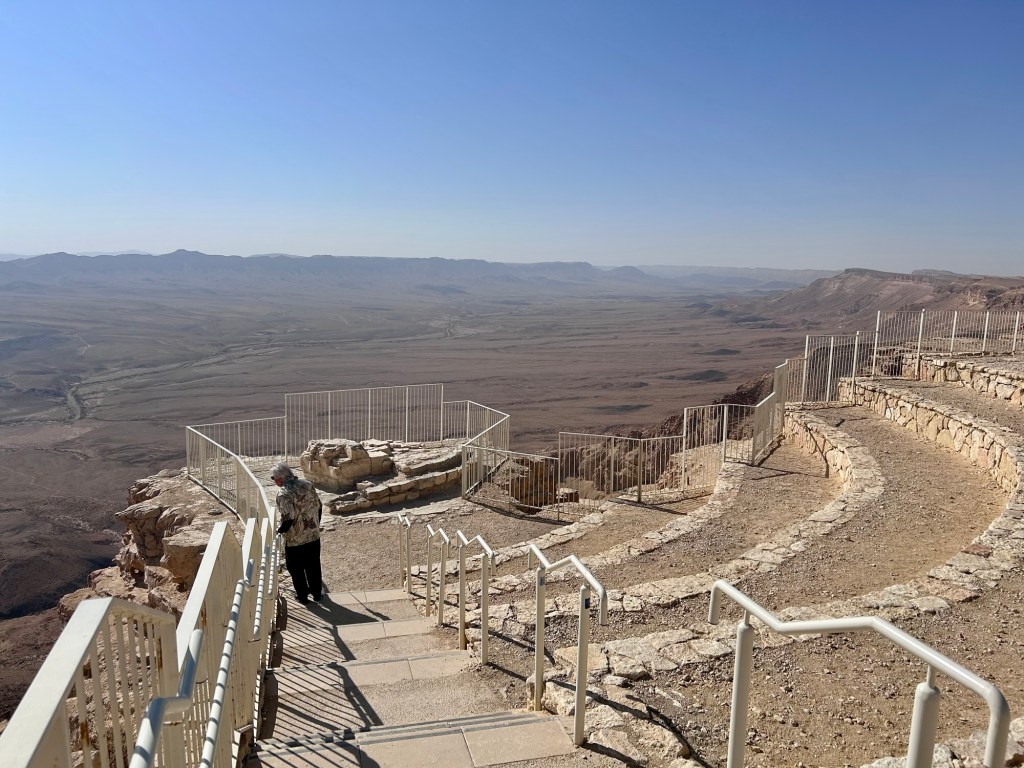
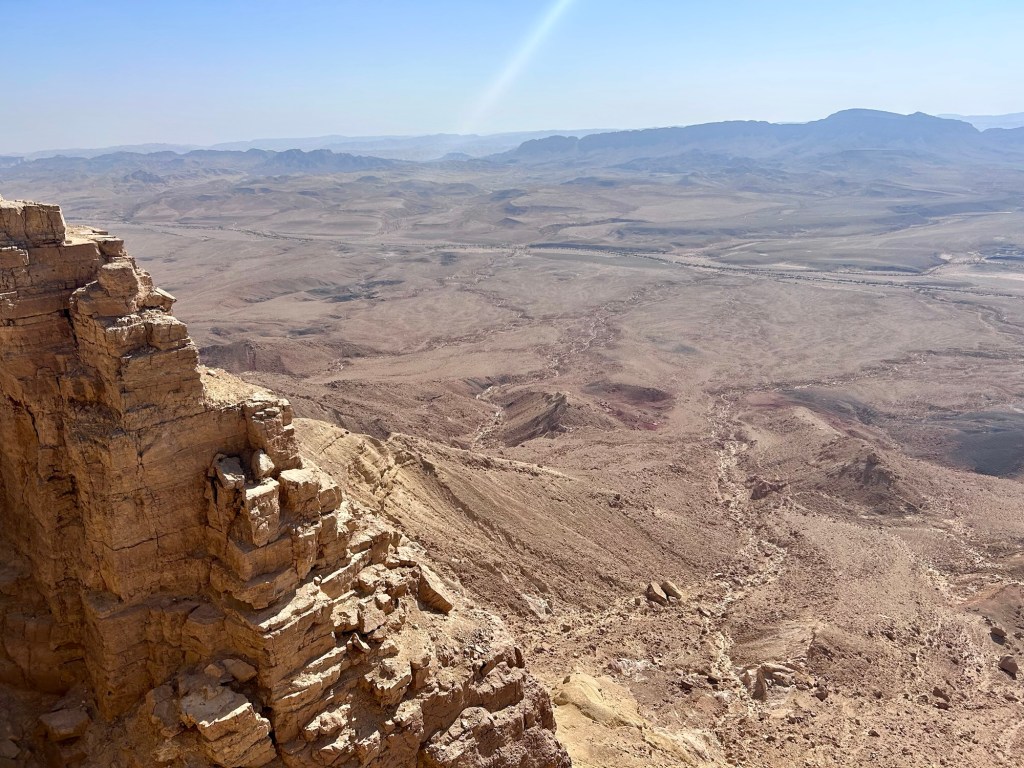
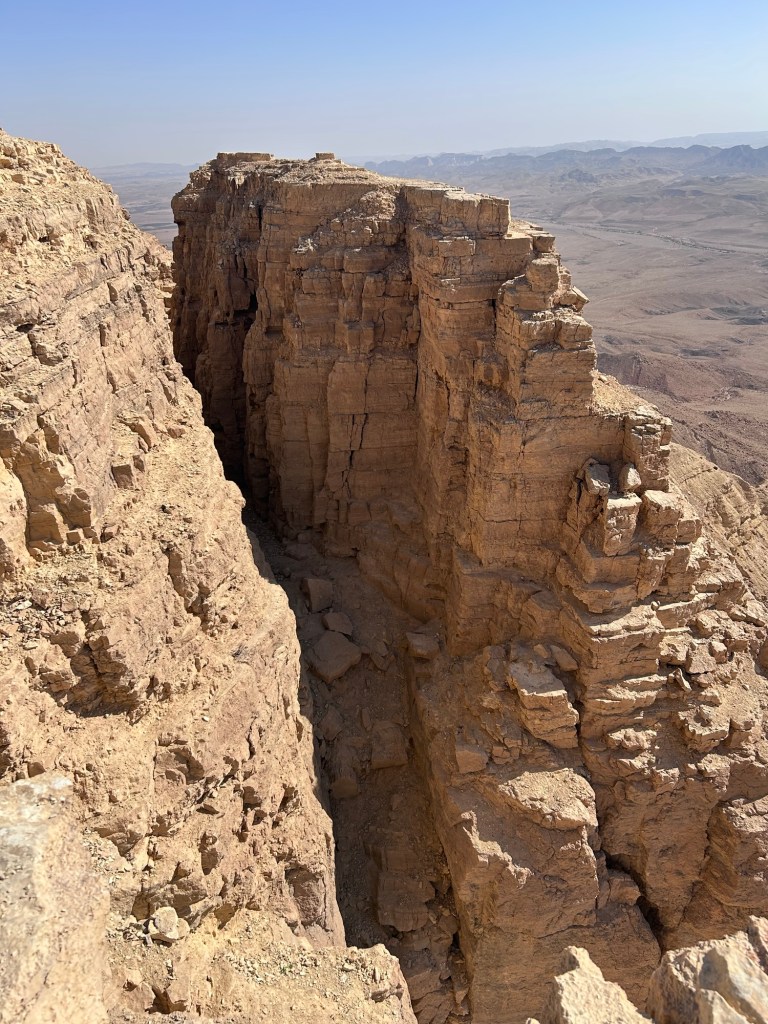
I took a class last Thursday night on the Ramon Makhtesh, a hugely expansive erosion crater out in the middle of the Negev Desert. So so interesting. Only 8 in the world, all in Israel, they are not impact craters (from meteors), but erosion craters.

Along the Syrio-African rift that runs along the length of Israel are tectonic plates. Millennia ago, they shifted. The present desert was flooded with water, grinding down the rock. Eventually leaving behind various strata of sandstone, limestone, marine fossils. There are tar mountains of basalt, deep red iron ore and yellow sulfur deposits as well as white chalk. In other words: gorgeousness!

I got this wild hair…. I turned and yelled at John in the next room,”Honey, can you Google when the Leonides Meteor Shower is?” They usually come around Thanksgiving. “They peak Monday night,” was the response. Mitzpe Ramon, the town at the very edge of the crater is a world-designated dark spot for astronomical observation.

Monday morning we packed our blankets and lawn chairs, thermos, and dog into the car and we were off on an adventure! BeerSheva, where our patriarchs Abraham, Isaac and Jacob sojourned. I wonder what they’d think of the place now?

Past the Bedouin encampments:

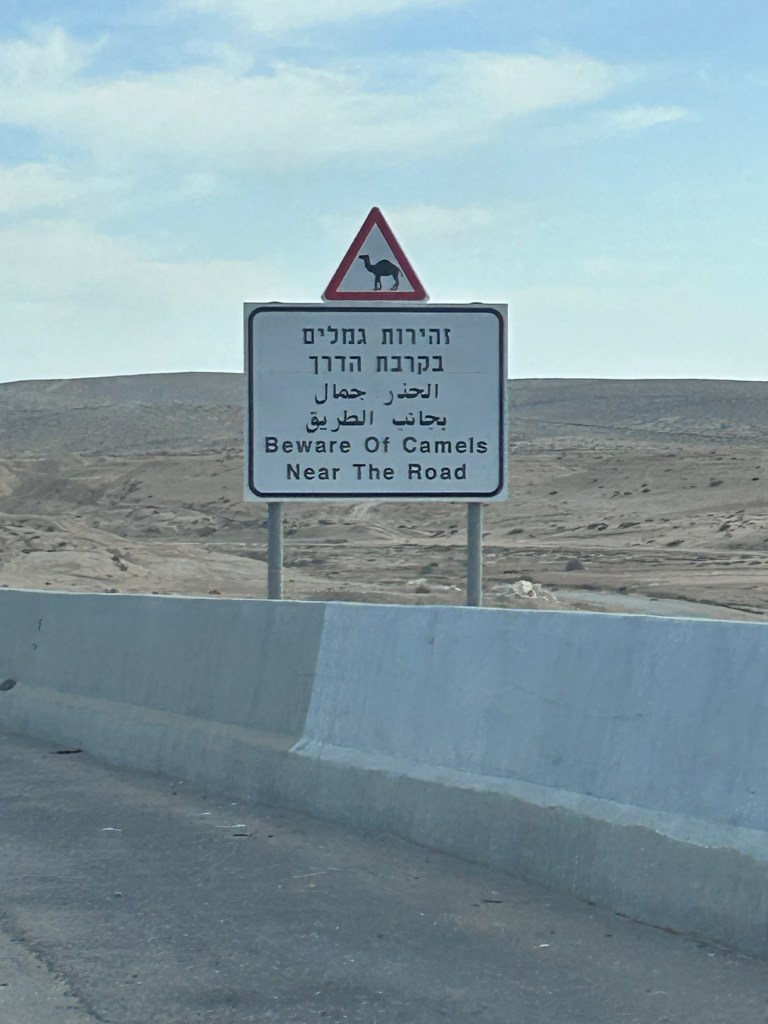
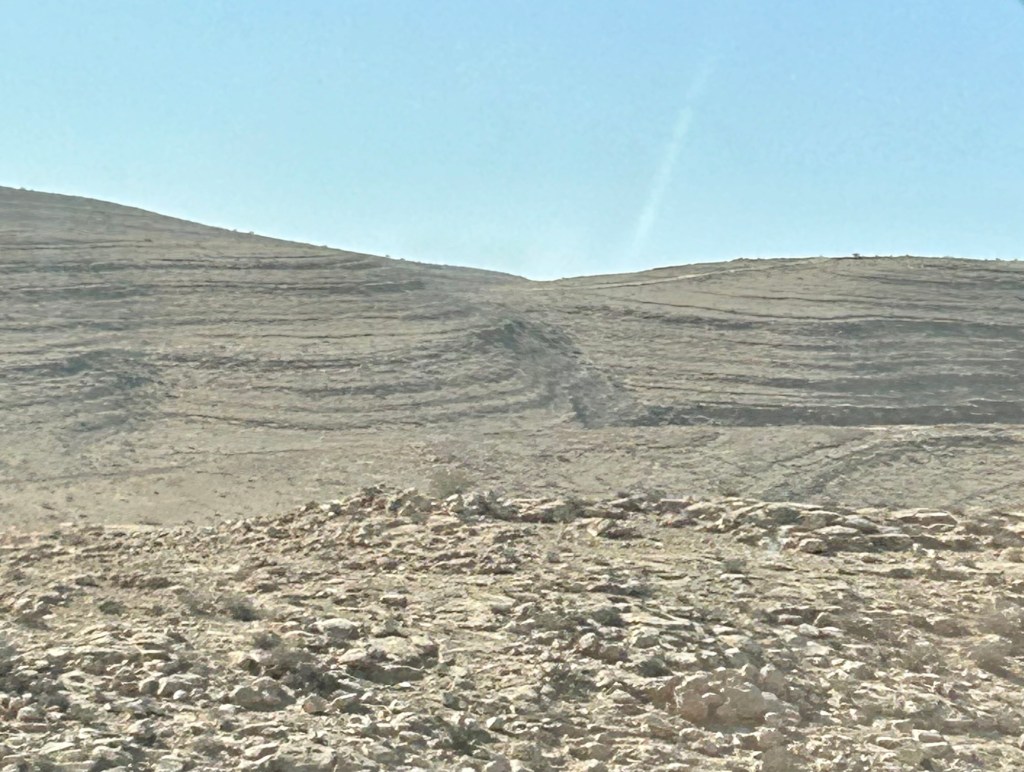
And into the heart of the barren, windswept desert!

The Desert of Zin! Tsin! Sin!!! In the Bible

We had to get there by sunset… it’s all of 3 1/2 hours, but we kept stopping along the way-
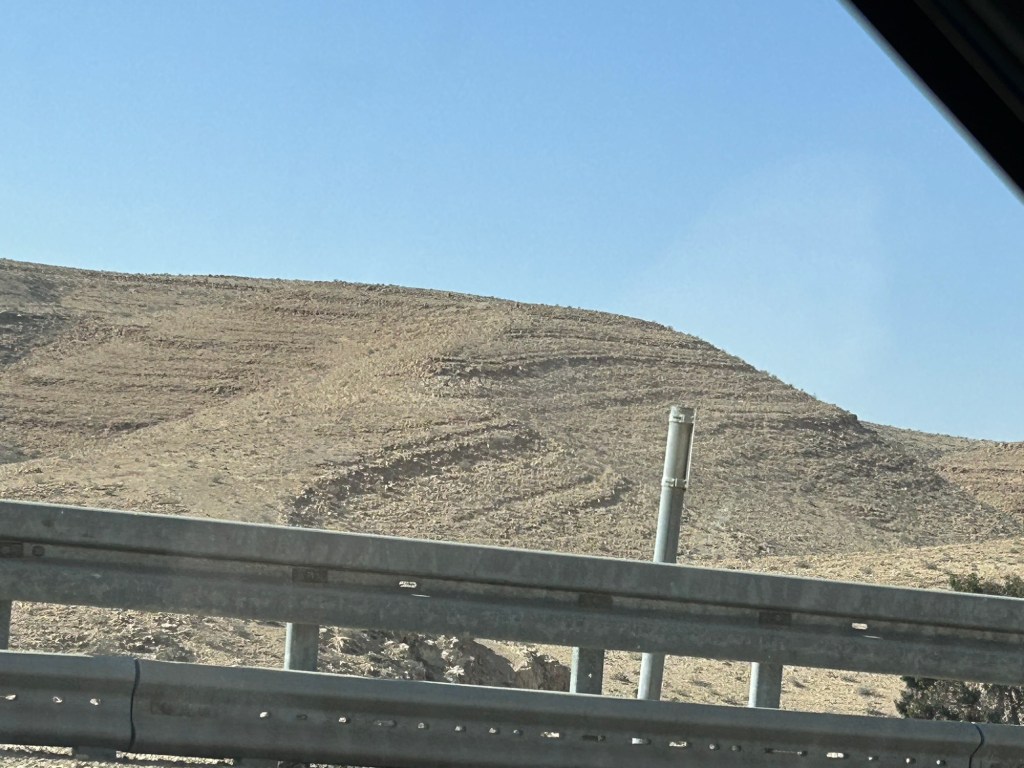
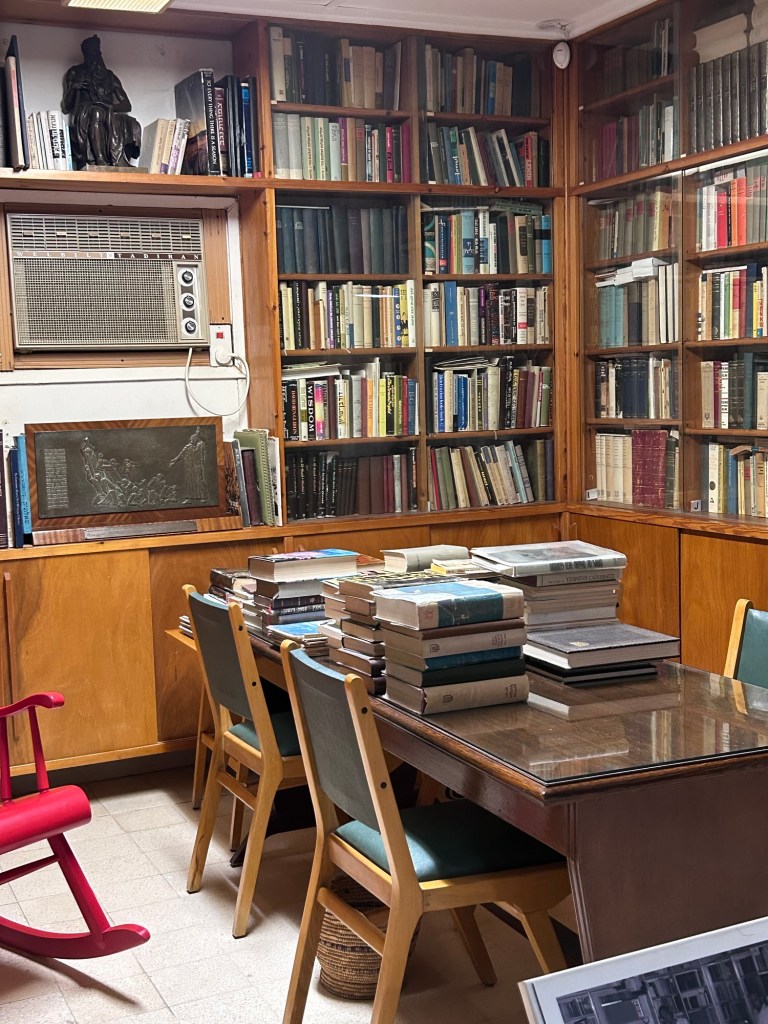
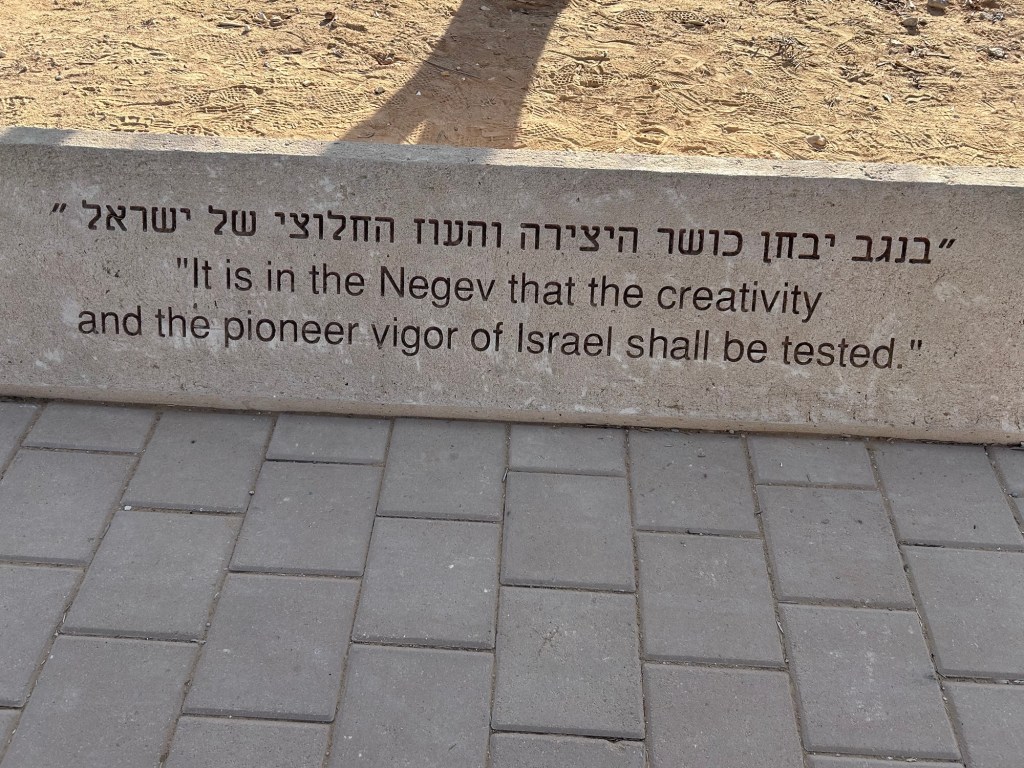
We made a big stop at Sde Boker, the kibbutz founded by first Israeli president, David Ben Gurion. Ben Gurion and his wife, Paula, lived the desert and thought it was the safe spot and key to future Israeli development. He foresaw the day when the Jewish people would learn to irrigate and farm the desert and make it bloom. He wasn’t wrong.

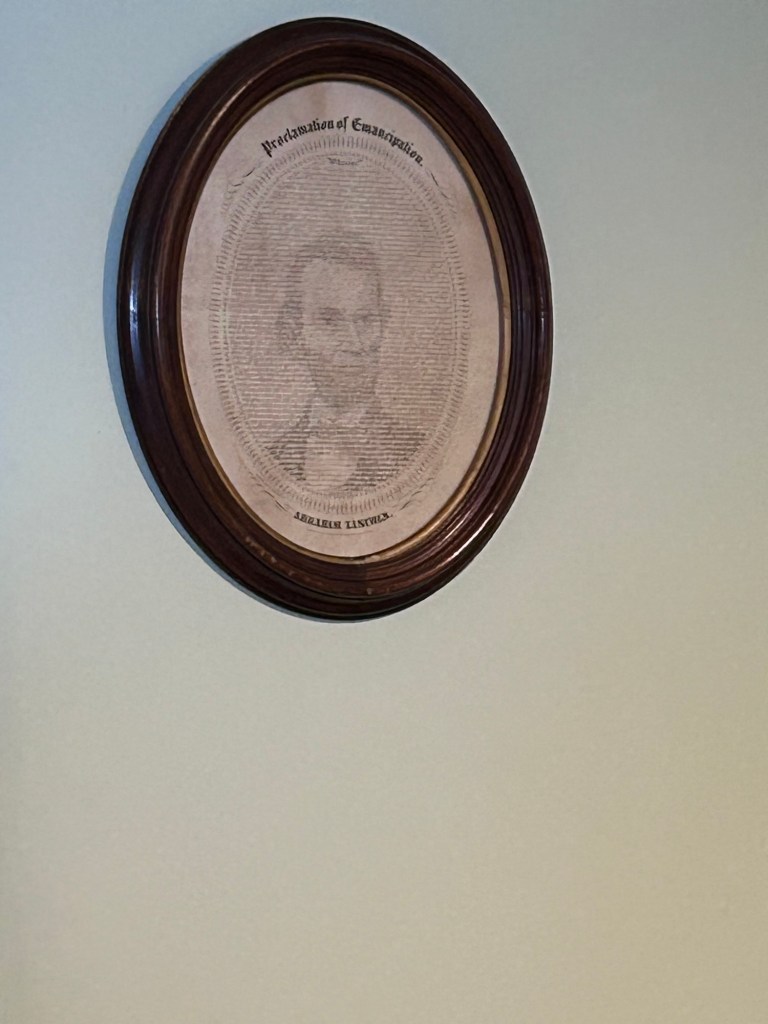
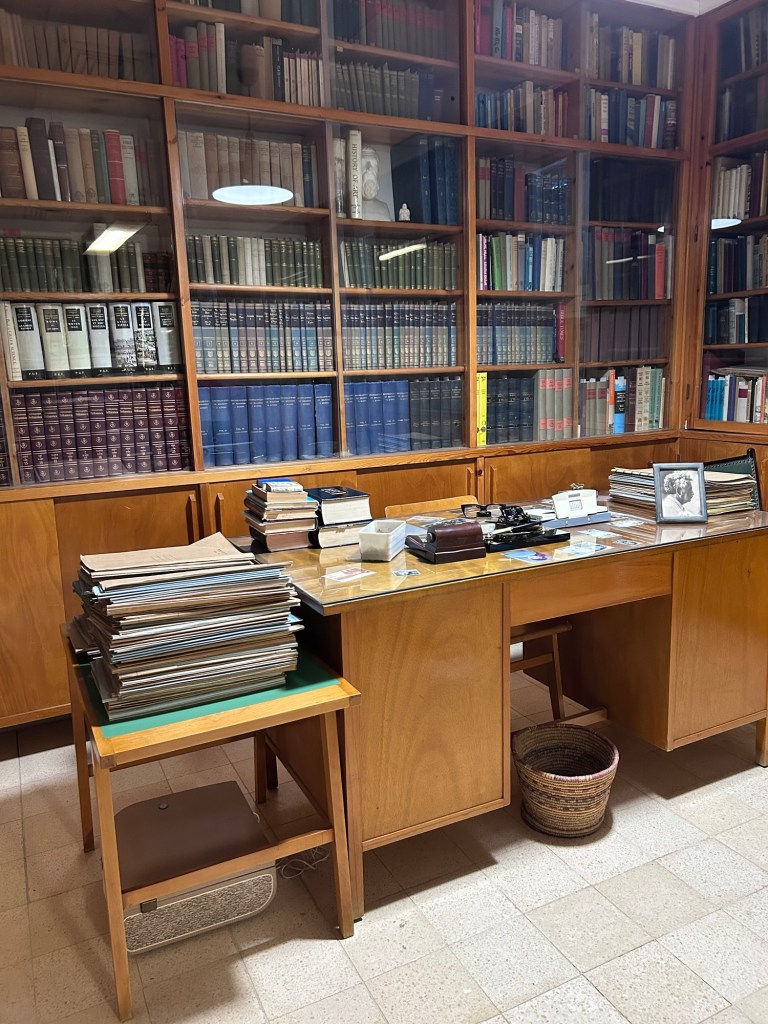
Today his home is a national landmark, open to the public. When we visited, there were only about a million school kids on tour. I was surprised that his home was so modest!!!! And tiny!!!! Like a summer camp bunkhouse. it had a living/reception room, his personal study, teeny tiny rudimentary kitchen and two sparse and small bedrooms- one for BG and one for Paula. He only slept 2-4 hours a night: was always up working, listening to radio news, studying – so Paula had her own quarters so she could get some shut eye. When there was a visiting dignitary, she’d go to a friend’s cabin and the important guest would take her room.

Hurry!!! We need to check in to our hostel!

We found a really remote spot on the edge of the crater. It was much darker than anywhere else (when we first moved to Israel the sky above our home was pitch black and filled with stars. Now, with all the new construction and light pollution, we see very little). John and I – and Haggis, our yappy little long-haired dachshund, sat and waited. We looked up for over 4 hours. The sky was beautiful and the stars many. We named the constellations. We waited. It grew colder. John saw 2 shooting stars. Another hour. I saw 1. So much for the Leonides, although it was a fun adventure.

The next morning we got up early to actually see the Makhtesh. Spectacular!!!!

From Mitzpe Ramon, we made our way back to Beersheva. We kept seeing this bright flaming tower/beam in the distance – both coming and going. So we decided to check it out-

What IS that thing miles away?

How cool!!! The Eye of Sauron overlooking the wasteland of Mordor from Lord of the Rings!!!! We found it!!!!! In Israel!!! Actually it turned out to be the Ashalim Power Station. Decades ago, Elon Musk that you could take 10 square kilometers in the desert, put in solar plates and generate most of the electricity in Israel.

Ranking as one of the world’s premiere and few thermal solar stations, Ashalim is composed of 55,000 heliostats or solar panels that reflect the sun onto a huge mirror-like “Eye of Sauron” at the top of the tower which absorbs the heat and turns it into electric power.

The Ashalim Power Station used to be the tallest solar plant in the world standing at 240 meters (about 790 feet), the size of a skyscraper. However, it was surpassed by Dubai’s Noor Energy 1, with a height of 260 meters (circa 850 ft). There is another (Israeli built) solar power farm in the California Mojave Desert. The reflector on the tower generates concentrated heat which reaches up to 1000 degrees Fahrenheit (over 500 °C) to spin turbines and generate electricity in high quantity. It generates enough power to keep 120,000 homes (5% of all Israeli homes) for a year fully lit. It’s green, renewable and sustainable. I hope to do a more detailed post on this and other amazing Israeli innovations shortly. All in all, it was an illuminating trip!

Now onto a completely different subject!!! Each year, when the Jewish people read the Torah story of Jacob and Esau, I get creative. Esau, a big burly, hairy, red-headed hunter and the favorite son of his father, Isaac, sells his entire inheritance to his younger brother. Jacob has cooked this amazingly tasty and great smelling lentil stew. Esau comes into the desert tent, after a long day of hunting (ibex???). He tells his brother “I’m dying. Just pour some of that red stuff down my throat!!!” Seriously. It’s what he said. I love it!!!!! Anyhoo- Esau winds up giving away the birthright to Jacob for a bowl full. It must have been delicious!!!

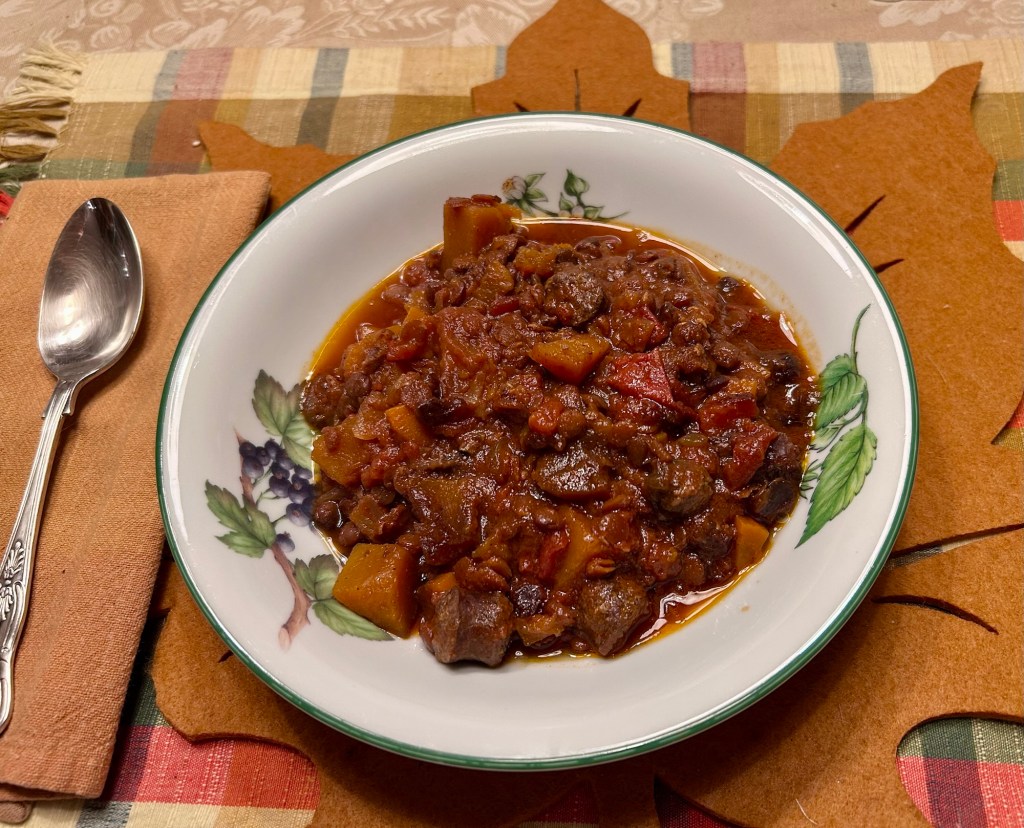
So, last week I worked out my own version: I wanted it MiddleEastern in flavor. With Israeli products. It had to have lentils. It had to be red. And it had to be prepared in a crockpot so I could keep it warm/hot through Shabbat. It turned out AMAZING!!!!!!! So here’s this year’s Red Stuff-

Jacob’s Lentil Stew

Ingredients:

  • 2 large carrots
  • 2 large onions
  • 6 long, thin Merguez beef sausages
  • 1 butternut squash
  • 2 1/2 cups green or brown lentils
  • 10 Medjool dates
  • 1 red bell pepper
  • 1 yellow bell pepper
  • 2 large orange sweet potatoes
  • 6 cups vegetable stock
  • 1 can large chopped tomatoes and juice
  • 1 small packet tomato paste (2-3 TBSP)
  • 2 tsp cumin
  • 2 TBSP baharat spice (cinnamon, cloves, allspice, cumin, black pepper, cardamom)
  • 1 tsp smoked paprika
  • 1 1/2 tsp sweet paprika
  • Pinch cayenne (to taste)
  • 1/3 cup Silan (date syrup) OR 1/4 cup honey
  • Fresh dill
  • 2 tsp salt

In a large skillet cook the sausages, removing outer casing if necessary. Reserve to plate to cool. In same pan, sauté the cubes of onions and peeled carrots – cubed to bite sized chunks. Chop the sausage into 1” thick coins. Add to crock pot. Chop bell peppers into small cubes. Put into crockpot. Peel and remove seeds from squash. Cut into bite sized cubes. Place in crockpot. Peel and cube sweet potatoes. Into the crockpot. Rinse the lentils well, removing any stones or “dry stalks” and dump in crockpot. Pour in the veg stock (can use all natural bullion cubes) and dump in can to tomatoes with juice. Stir well with a big spoon. Remove the pits from the dates and chop coarsely. Scatter around crockpot. Add the spices and tomato paste. Add the Silan or honey. Stir well. Chop about 1/2 cup fresh fennel and add to crockpot last. Mix well and cover. Set the power to low and let cook for hours (overnight). Can add more water if needed. Freezes beautifully.

What’s Cookin’? 15 November, 2025

Our continued heat wave broke last night. Temporarily. It finally feels like autumn, at least for the time being. The thermometer is supposed to climb back up later this week, which is such a metaphor for life here. Despite talks of peace, rockets are still being fired from Gaza into Israel; Hamas is completely refusing to disarm; a giant U.S. military base is being built here on Israeli soil just outside the Gaza Envelope; Hizbulla will not disarm, but seems to be doubling down in its attempt to stage a Northern October 7; and Iran is planning to send over 2000 missiles in its next attack. The heat never seems to abate.

Things are always on simmer at best here. And in my own kitchen, I’m always cooking something. Trying to use the freshest seasonal produce here, I think I’ve developed a California-Israeli fusion. So what was being prepared over the past week here?

Cucumber Radish Citrus Salad serves 4

Ingredients:

  • 1 large English cucumber
  • 6 large radishes
  • 1 Cara Cara (or Valencia) Orange
  • 1 tbsp olive oil
  • 2 Tbsp fresh mint, chopped

Wash, trim ends off and slice the radishes and the cucumber. Peel and segment the orange, trying to avoid the pith or seeds. Squeeze as much orange juice onto the salad. Add the olive oil and chopped mint. Mix and serve cold as an appetizer or side, for breakfast, lunch or dinner.

Mediterranean Torta serves 6. Dairy

A friend of mine just came home from the hospital this week, so I made her (and myself) this fantastic dish that can be served hot or cold for any meal. It’s absolutely delicious!

Ingredients :

  • 1 pre-made pie crust dough
  • 1 large zucchini
  • 1/2 cup roasted red bell pepper (can use from a jar)
  • 1/2 cup sun dried tomato pieces in oil
  • 1 can artichoke hearts
  • 1 cup fresh mushrooms
  • 2 cups fresh spinach, chopped
  • 4 eggs
  • 1/2 cup cream (9-15%)
  • 1 cup shredded mozzarella cheese
  • Italian seasoning: oregano, rosemary, parsley, basil, chile flakes(optional)
  • Trader Joe’s Pizza Season blend (optional)

Heat oven to 350*/170*. Place pie crust dough into a greased, deep dish pie dish. Bake crust until golden brown, about 16-20 minutes. Remove from oven and let cool. Slice zucchini and mushrooms into thin slices. Drain can of artichoke hearts and slice the artichokes fairly thin. Arrange a layer of zucchini in concentric circles on the bottom of the pie crust. Next add strips of roasted red pepper. Now sprinkle the mushrooms across the top. Dot with chunks of sun-dried tomato in olive oil. Sprinkle the Italian herbs (dried) over the top of this layer. Now layer the artichokes on top. And sprinkle the spinach evenly over the top of the pie. In a mixing bowl, combine the eggs and cream until thoroughly incorporated. Pour over the pie. Sprinkle with more Italian herbs and last, the grated mozzarella. Sprinkle liberally with the Trader Joe’s pizza seasoning, if you have access to this fantastic product. Bake in 350*/170* oven for 45-55 minutes, or until fragrant and golden brown on top. Test with a toothpick or cake tester to see if inside comes out clean.

Swiss Chard in Bechamel Sauce. serves 6. Dairy

We visited my daughter in the UK and she made this for us. It was so delicious, that I had to go home and try it. It gets better after a day or two, so reheats well. This is just so tasty! True comfort food and that kick of Stilton just puts it way over the creamy top!

This was the photo I snapped just before it went into the oven….

Ingredients:

  • 2 large bunches/ 6 packed cups Swiss Chard (mangold)
  • 1 white onion
  • 1/2 stick butter
  • 1/2 cup flour (50 grams)
  • 1 cup milk
  • 1/3 cup Stilton (or blue) cheese
  • Salt, pepper
  • Freshly grated nutmeg
  • Fried onions (Durkee, IKEA, etc.)

Preheat oven to 350*/170*. Wash and chop the chard or mangold and set aside to drain. Rough chop the onion. In a large skillet melt the butter and sauté the onion until soft. Add the flour and stir until thickened. Pour in the milk, stirring continually. Mix in salt and pepper to taste. In a greased casserole dish, place the chopped chard. Pour the bechamel sauce over the top. Mix together with crumbled Stilton or Blue Cheese. Grate fresh nutmeg very liberally over the top of the casserole and bake for about 30-40 minutes, until nice and bubbly on top. Remove from oven and sprinkle fried onions over the top.

Corn and Romano Bean Salad. serves 4. Pareve (vegetarian)

So I had end of the season sweet corn and fresh Romano beans (the really flat, wide, buttery green beans) from our local produce delivery. Along with so many other tasty veg…. That I had to use it all up before it went off. So…..this salad is out of this world amazing! One of the best recipes to date! John and I could just east this by the bowls full all day long, it’s that great. If you try no other recipe, do this one. You won’t regret it.

Ingredients:

  • 2 ears of super sweet white corn, fresh
  • 3 cups fresh cut up Roman beans
  • Olive oil
  • Balsamic vinegar
  • Sea salt, pepper
  • 1 can white beans, drained and rinsed

Preheat oven to 400*F/200*C. Using a sharp knife, strip the raw corn off of the cob and reserve to a bowl. On a foil-lined baking sheet, lay flat the washed and trimmed Romano beans, cut into 2 inch pieces. Toss with olive oil, sea salt and freshly ground black pepper. Drizzle about 2 TBSP balsamic vinegar over top. Roast in oven about 5 minutes, then shake the pan or stir the beans and roast again another 5-10 minutes keeping an eye on them so they do not burn. Remove from oven and let cool. Drain the can of white beans and add to the bowl with the corn. Toss in the cooled Romano beans. Dress with the vinaigrette -recipe below – mix well to incorporate and serve cold.

Vinaigrette ingredients:

  • 1 egg yolk
  • 2 TBSP strong Dijon mustard
  • 1 clove garlic
  • 1/4 cup white wine vinegar
  • 1/4 cup honey
  • 1/3 cup avocado (or seed/canola) oil
  • Pinch sea salt, pepper

With an immersion blender, blend together all the above ingredients until smooth. If it seems too thick, add 1/4 cup water to thin out a bit. It should be the consistency of regular salad dressing.

The History of Couscous

I don’t have to tell any of you this, but what a year is already blowing through! For everyone across the globe. Beside being in our fourth lockdown here in Israel, and all the other things we’re already faced with coming down the pike, I will try to keep this blog as uplifting, fun, and informative as possible. Because we all need a break from the “news,” am I right???? That said, let’s get into the real history of couscous. I bet it’s not what you think! And this food that is an Israeli staple, is ubiquitous here. Eaten as a hot side-dish with meat or veggies piled on top, as a breakfast food (really!!!!) or as a cold salad, you’ll get a few recipes and ideas here.

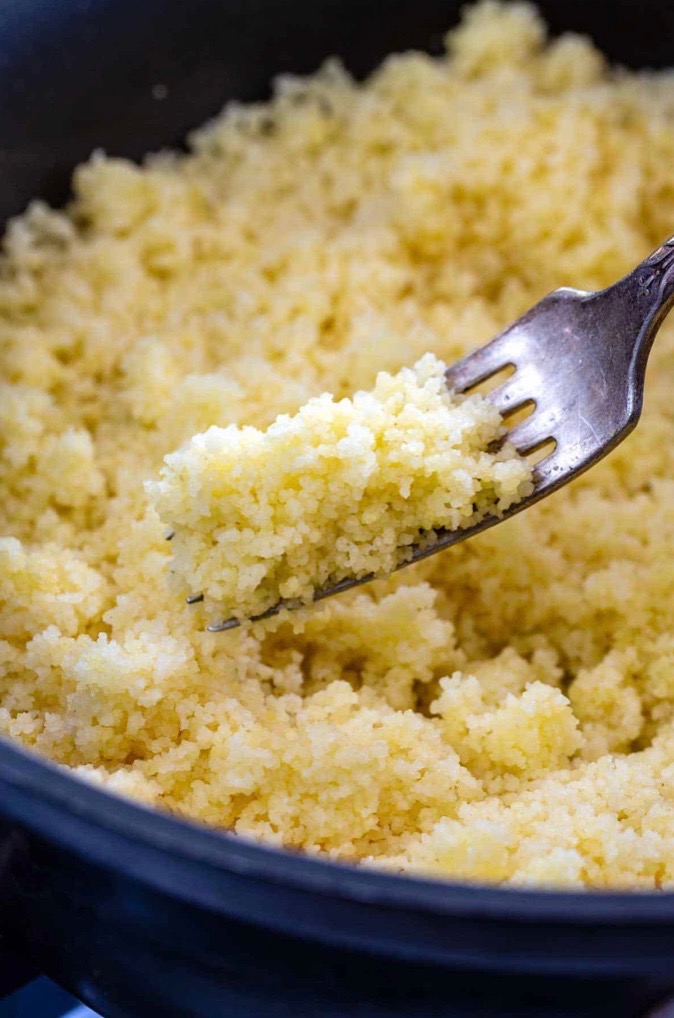
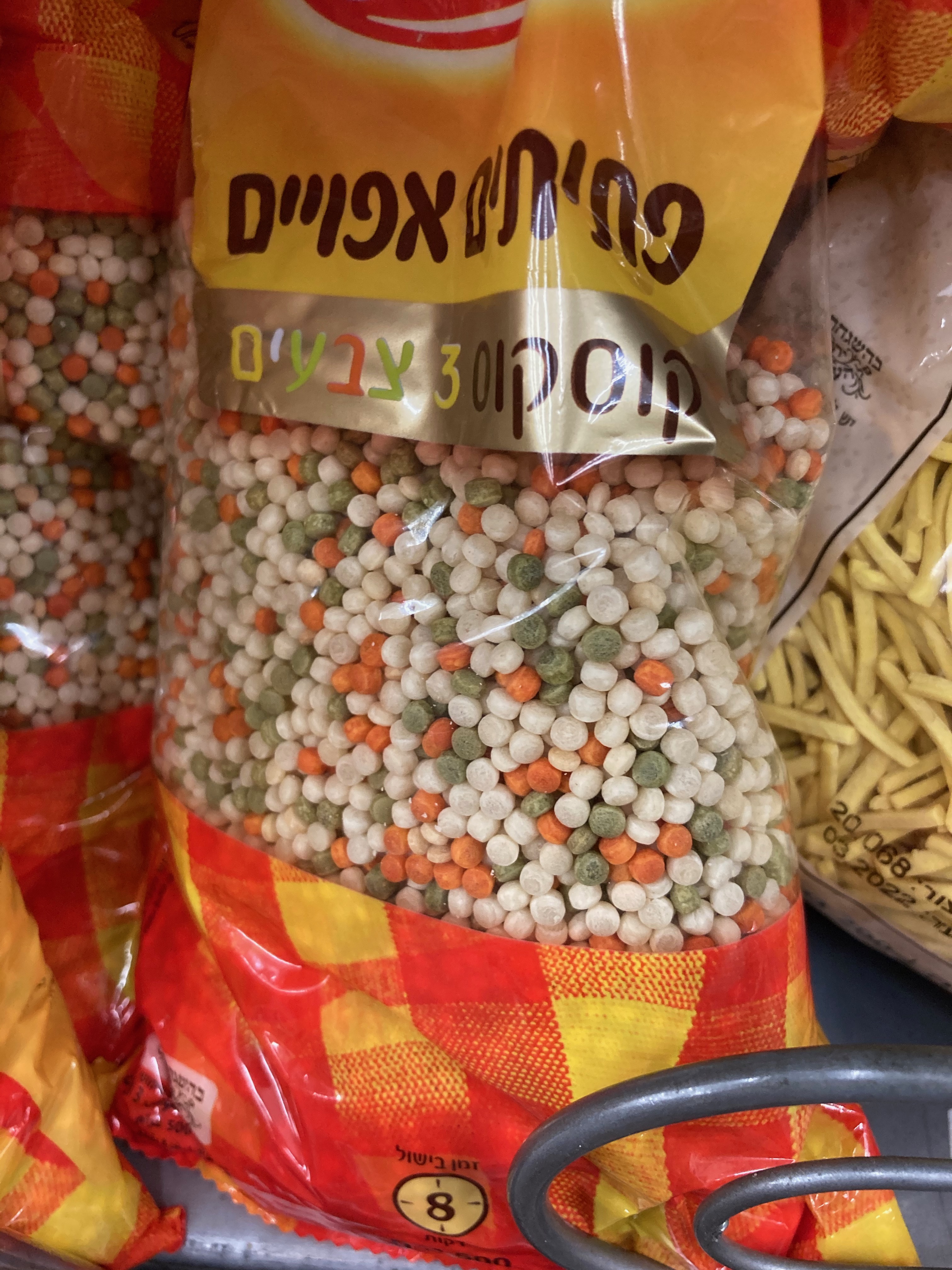
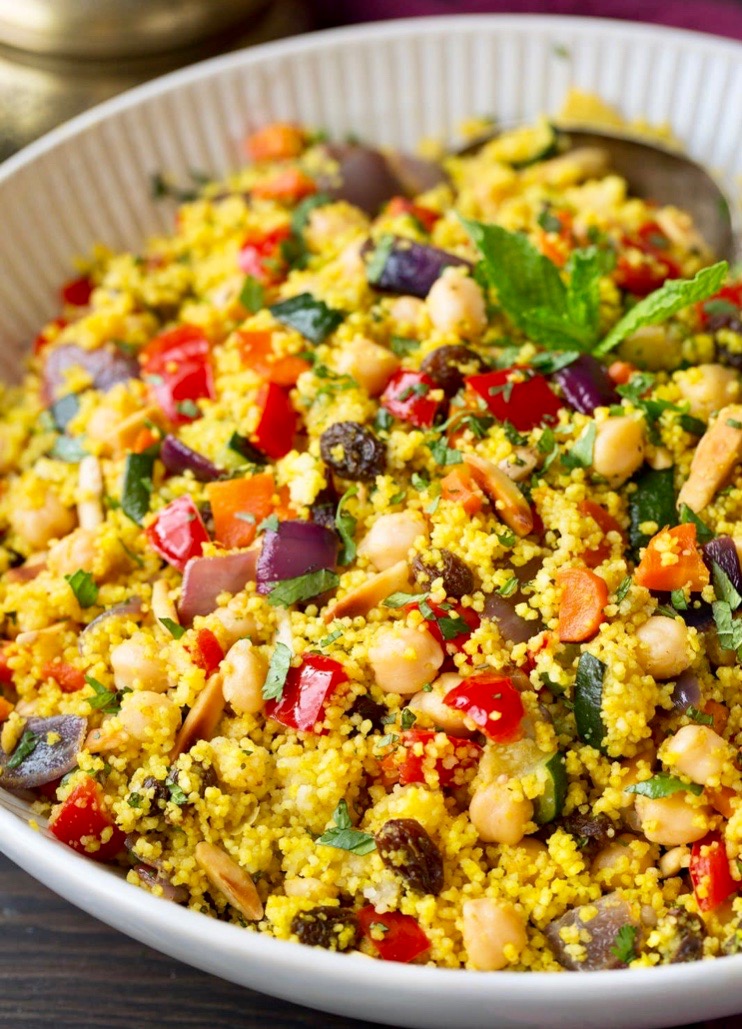
Although this side dish is used by every ethnicity here in Israel, we do not call what is labeled ‘couscous’ or even ‘Israeli couscous’ by that name. We call it p’tit-TEEM, or ‘little flakes.’ The photo below is most likely what you, living outside Israel think of when you hear the word couscous:

This is NOT Israeli couscous!

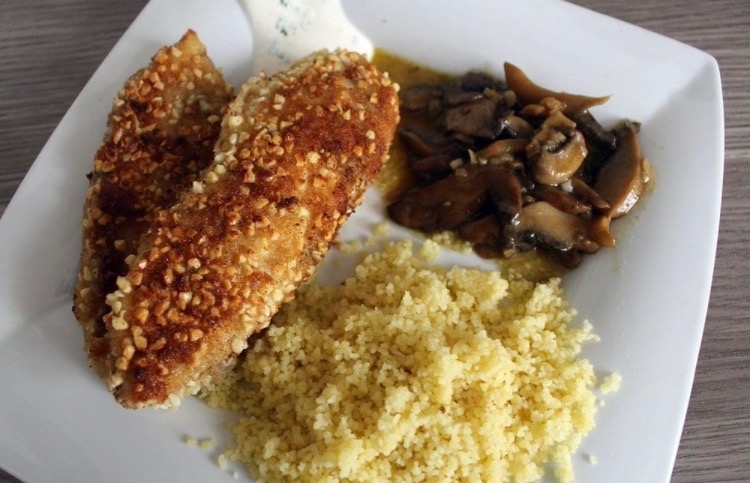
Yes, the picture above shows a fluffy, yellowish side dish fairly familiar in the United States. It actually comes from Italy. Made of durum wheat, it’s really a type of semolina – the part of the wheat that is separated out from the wheat germ and bran in the milling process. In Italy it’s mostly used to make pasta and polenta, but can also be steamed or boiled and simmered and then fluffed up. Then there is the larger product called “pearl couscous” in the States and throughout Europe. This is actually an ancient Middle Eastern side dish (mistaken for Israeli couscous) called Moghrabieh in Arabic, sometimes called maftoul. It is a hand-milled, cracked bulgur wheat product that is hand-rolled to the size of chickpeas. Moghrabieh is also popular within the Mizrachi (Middle Eastern), North African, and Portuguese/Spanish Jewish population – those Jews who lived under Muslim rule. Maftoul is boiled and for the most part, mixed with other ingredients and used as a stuffing for hollowed out vegetables, which are then cooked.

After the Israeli War for Independence in 1948, there was a huge influx of immigrants from all over the world. Many had never farmed, and in the early 50’s the country faced major food shortages. Food rationing was instituted. Importing basic supplies was cost prohibitive. Prime Minister David BenGurion contracted with the Osem Food Company to create a staple food that could replace the expensive rice. It had to be cheap, versatile, and easy to prepare. Called p’titim, or ‘BenGurion’s Rice,’ this new product was made from pre-baked whole wheat flour, water and egg yolks for added protein. The dough was extruded through specially developed machines in mass quantities and the rice-like flakes were then toasted to seal in the starch. It became an instant hit! Soon tiny, itty bitty little flakes, larger pellets, and different shapes like stars and hearts were introduced to appeal to children. Easy to prepare (recipes to follow!), the ptitim is quickly sautéed in oil; then after it browns, water or broth is added; the one-skillet wonderfood is brought to a rolling boil, covered, and left to simmer gently for about ten minutes and voilà! The grains remain firm and slightly chewy when eaten. They don’t get mushy at all. They don’t stick together because of starchiness. And they take on the flavors of the broth or other foods surrounding them. It’s absolutely Israeli comfort food at its best – home cooking, served plain or with meat, fish and veggies piled high atop. We used to eat it every lunch served to us in the army (when we volunteered). Usually alongside chicken schnitzel with ketchup.

In the early 1990s, Israeli chef Michael Sharon, who had a chi-chi, upscale restaurant in New York City, first introduced it to his patrons as “Israeli couscous.” It was a huge hit, and soon became served in posh restaurants on both the East and West Coasts as a novel ethnic dish. Trader Joe’s picked up on the trend and started mass-marketing this popular side as “Israeli couscous” or “pearl couscous.” It’s found in every shape and color here, with even gluten-free varieties. A bag of “regular” ptititim here sells for around $1.00-$1.75/pound with the fancier colors or shapes running a little higher. A small bag of gluten-free (about 3/4 pound) goes for upwards of $4.50.

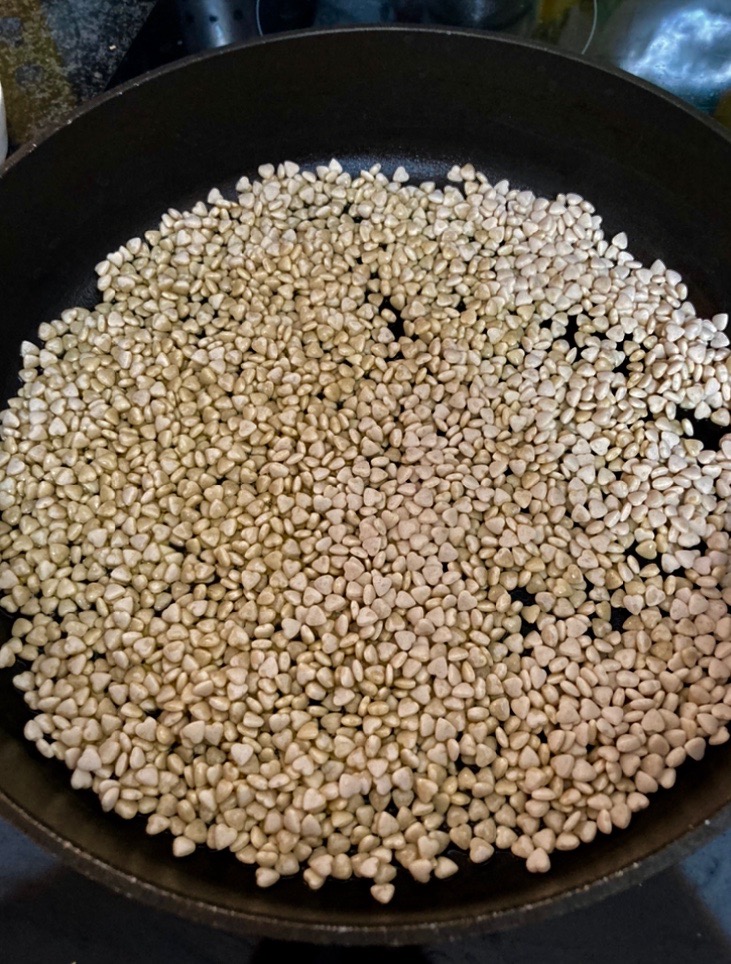
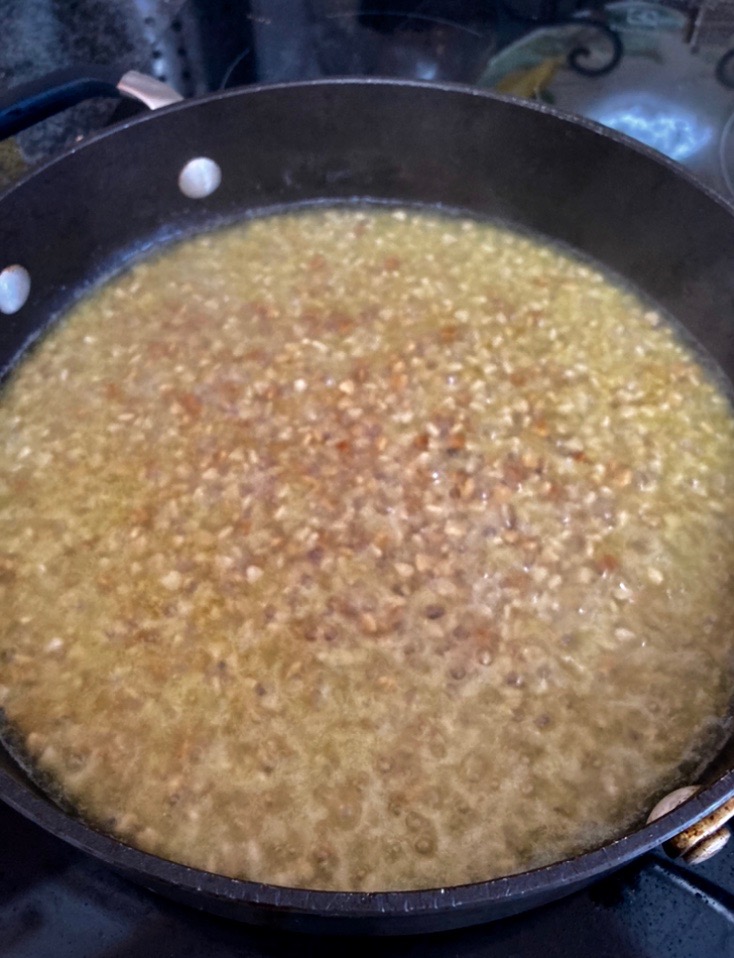
As a very basic cooking lesson, I take about a cup of the “Israeli couscous” and sauté it in about 2 TBSP olive oil on a medium-high stove. It takes anywhere from 2 – 4 minutes to toast up to a nice golden brown. Do not let it burn! For every cup of the ptitim, use 1 1/2 cups of water or broth (veggie, chicken, or beef).

I also add a little salt and then the magic: as the liquid starts to boil, I’ll add a variety of spices. In this instance, I’m adding some raisins and dried cranberries; about 3 TBSP dried onion flakes; a few cut up dried apricots for a burst of color and flavor; and a handful of nuts- I used almonds, but you can use pecans, peanuts, pistachios, pine nuts or hazelnuts for crunch. Cover the skillet and simmer on low for about 10 minutes or until the liquid has been absorbed into the little balls. Garnish with fresh parsley. It’s delicious!

I have used the larger ptitim as a substitute for bread when making a stuffing for turkey or chicken. Following the above directions, toasting, then adding chicken broth to the grains, I then add the following:

-1 onion chopped and 2 stalks celery chopped – both sautéed until translucent -1 tsp each dried rosemary, sage & thyme -1/3 cup chopped chestnuts -sea salt & freshly cracked pepper, to taste – 1 chopped apple or pear

After it simmers down, I place this in a greased baking dish, cover with foil and bake for 15-20 minutes on 170*C/350*F.

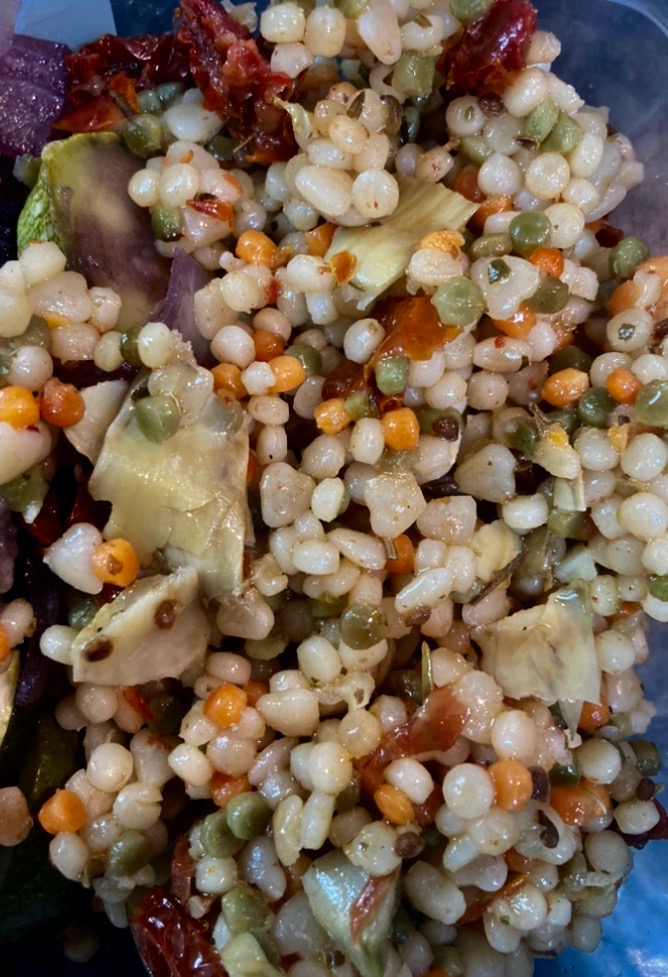
Ptitim is so versatile. It can be served hot or cold. You can make an Italian version by adding: -1/4 cup diced sun-dried tomatoes in oil -1/4 cup halved, pitted kalamata olives -1small jar marinated artichoke hearts with the oil, chopped (about 1/2 cup) -1 TBSP dried oregano -salt & pepper, to taste

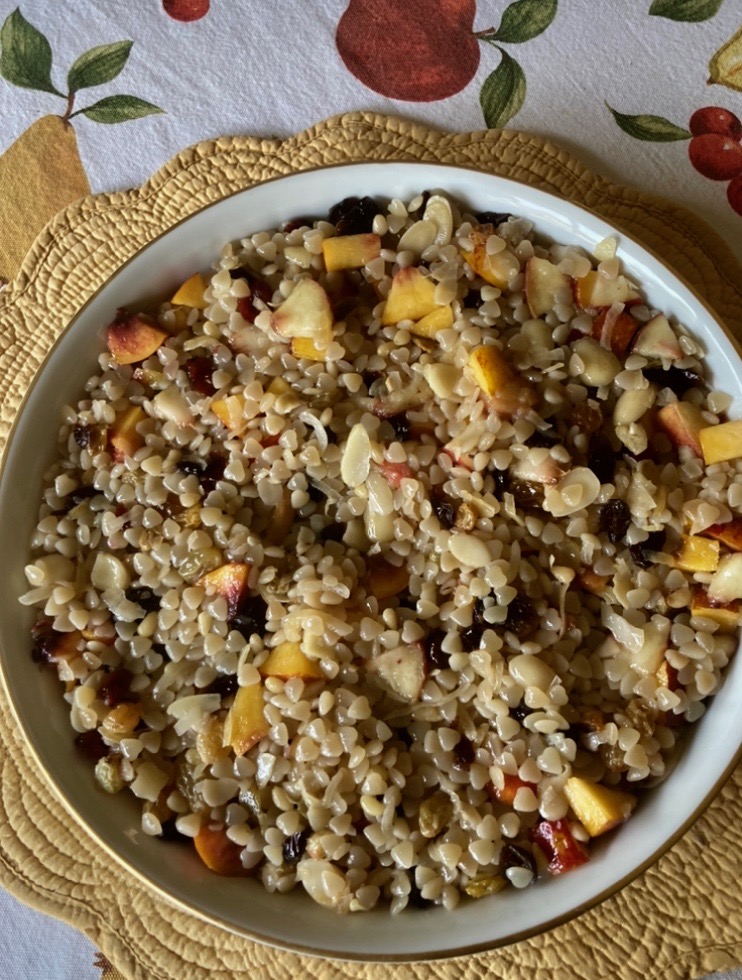
In the summer, I love to serve a cold ptitim salad with chopped fresh stone fruits – peaches, nectarines, cherries and almonds. I use my own cherry or raspberry vinaigrette (if you’re in the States, I highly recommend Brianna’s Blush Wine Vinaigrette) as a dressing. Then I place grilled chicken strips on top. It’s easy to prepare, elegant, and quite tasty – makes a fantastic Shabbat lunch as the ptitim is made the day before and refrigerated, and the chicken strips pre-grilled and ready to be laid atop the salad.

Among North African Jews, especially Moroccans living here, Ptitim with Seven Vegetables is a popular dish. It is made with the tiny flaked variety, simmered in a vegetable stock with 2 heaping TBSP turmeric and a heaping teaspoon of cumin after toasting. The turmeric gives the dish its classic, bright yellow color. Ladled over the grain is a stew of seven vegetables, typically onions, carrots, potatoes, pumpkin, whole chard leaves, zucchini and whole garbanzo beans or chickpeas. The veggies are simmered in a veggie broth laden with turmeric and other spices. Served hot, with pickles on the side, it’s an ethnic treat.

One of my favorite dishes can be served as a meal or a side. I prepare it in advance, stick it in the fridge to let the flavors meld together, and have it for lunch the next day. It’s bright, colorful, healthy, and amazingly yummy – a great combination of color, flavor and texture.

Middle-Eastern Shabbat Ptitim Salad

I use the smallest ptitim flakes, similar to “couscous.” Starting with one cup of ptitim toasted in 2 TBSP olive oil until golden brown, I add 1 teaspoon of yellow curry powder and 1 1/2 cup of water. Bring this to a boil and then power the heat to a simmer for about 10 minutes. Transfer to a large bowl and let cool. After it cools down add:

  • 1 red bell pepper, diced fine
  • 1 small red (Bermuda) onion, diced fine
  • 1/2 cup currants or raisins
  • 1/2 cup chickpeas (canned, drained)
  • 2 green onions, chopped fine
  • 1/4 cup peanuts
  • the juice of 1 orange
  • a large handful of mint, chopped fine

This salad is so easy, so colorful and just loaded with flavor. I refrigerate it and serve it cold.

Lemon Mushroom Ptitim

This is a wonderful dish that can be eaten as a main course or a side dish. It’s a bit of a riff on a mushroom risotto, but much easier to prepare.

Ingredients:

  • 1 cup large grained ptitim (Israeli couscous)
  • 2 TBSP olive oil
  • 1/2 pound mixed mushrooms – oyster, brown, bella
  • 1 lemon
  • 1/4 cup basil, chopped fine
  • 1/3 cup grated fresh parmesan cheese
  • sea salt and freshly cracked black pepper, to taste

In a large skillet, toast the ptitim in olive oil until it gets golden, about 2 minutes. Do not let it burn! Add 1 1/2 cups water, bring to a boil, and then simmer for about 10 minutes. Brush any dirt off the mushrooms and chop into large slices. Sauté in a dry (no oil) pan for about 5-7 minutes, or until the shrooms begin to get juicy. Add the cooked mushrooms to the ptitim. Grate the lemon zest onto the mixture. Cut the lemon in half and squeeze onto the mushroom ptitim. Add the chopped basil, parmesan, salt and pepper, and gently mix just to coat the ptitim. You can drizzle a little more olive oil on top and garnish with basil leaves. Serve hot.

I hope you enjoy these recipes. You can also serve the ptitim for breakfast – toast the grains in coconut oil and then cook in coconut liquid (in Israel, they are not allowed to use the word ‘coconut milk’ because people might confuse it with a dairy product!!) and a little maple syrup. Throw in a chopped apple or a handful of dried fruit. Add a teaspoon of cinnamon as it cooks, and in 15 minutes you have a hearty hot breakfast. Top with sliced banana and some extra milk or coconut liquid. Let me know how these turned out for you if you do try them.

As always, thank you for reading. If you haven’t already please subscribe and be on the lookout for more Israeli life, culture, sights, and of course FOOD!!!!