Out on a Whim. And Special Recipe!!!! 21 November, 2025

For any of you who know me, you know that although usually organized and scheduled, when the opportunity presents itself, I’m up for an adventure.

I signed up to take Hebrew lessons again. This time from Citizen Cafe Tel Aviv. Totally different approach, this time it’s just conversation. No books. No conjugations and inflections. Just street talk on Zoom classes with unlimited cafe time (chat room in Hebrew). And fun. Bimonthly they offer interesting talks in English on random subjects like cooking (fermentation anyone?), music, recent film reviews, livestream urban tours, technological developments in Israel, agricultural innovations and geology.

I took a class last Thursday night on the Ramon Makhtesh, a hugely expansive erosion crater out in the middle of the Negev Desert. So so interesting. Only 8 in the world, all in Israel, they are not impact craters (from meteors), but erosion craters.

Along the Syrio-African rift that runs along the length of Israel are tectonic plates. Millennia ago, they shifted. The present desert was flooded with water, grinding down the rock. Eventually leaving behind various strata of sandstone, limestone, marine fossils. There are tar mountains of basalt, deep red iron ore and yellow sulfur deposits as well as white chalk. In other words: gorgeousness!

I got this wild hair…. I turned and yelled at John in the next room,”Honey, can you Google when the Leonides Meteor Shower is?” They usually come around Thanksgiving. “They peak Monday night,” was the response. Mitzpe Ramon, the town at the very edge of the crater is a world-designated dark spot for astronomical observation.

Monday morning we packed our blankets and lawn chairs, thermos, and dog into the car and we were off on an adventure! BeerSheva, where our patriarchs Abraham, Isaac and Jacob sojourned. I wonder what they’d think of the place now?

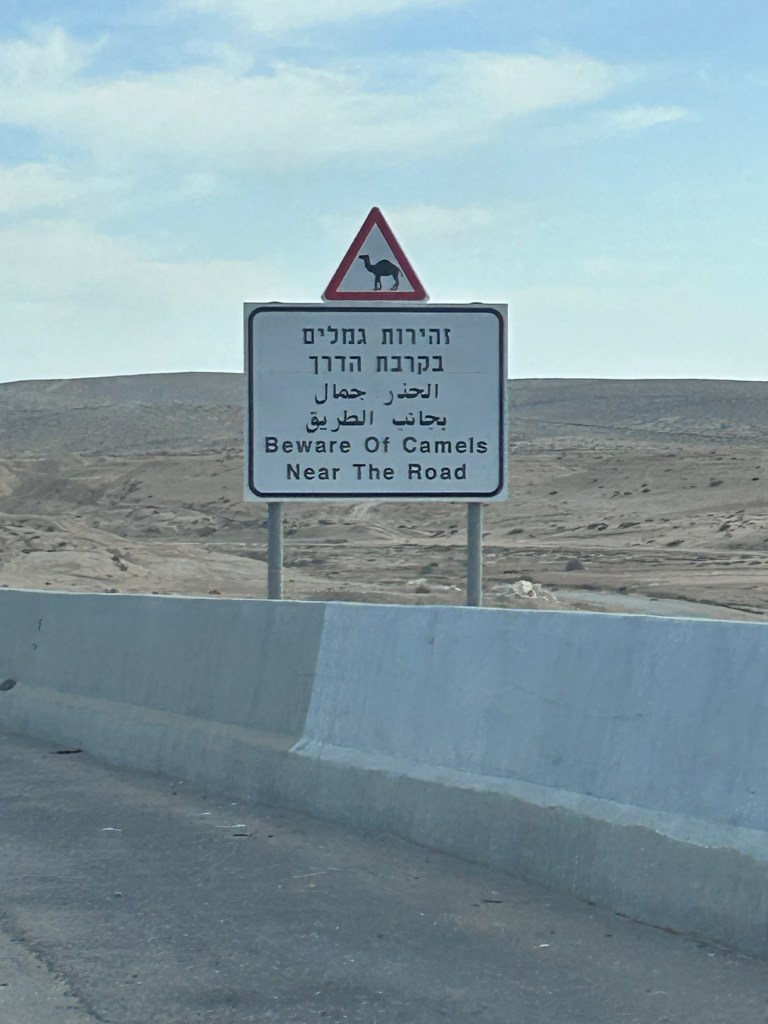
Past the Bedouin encampments:

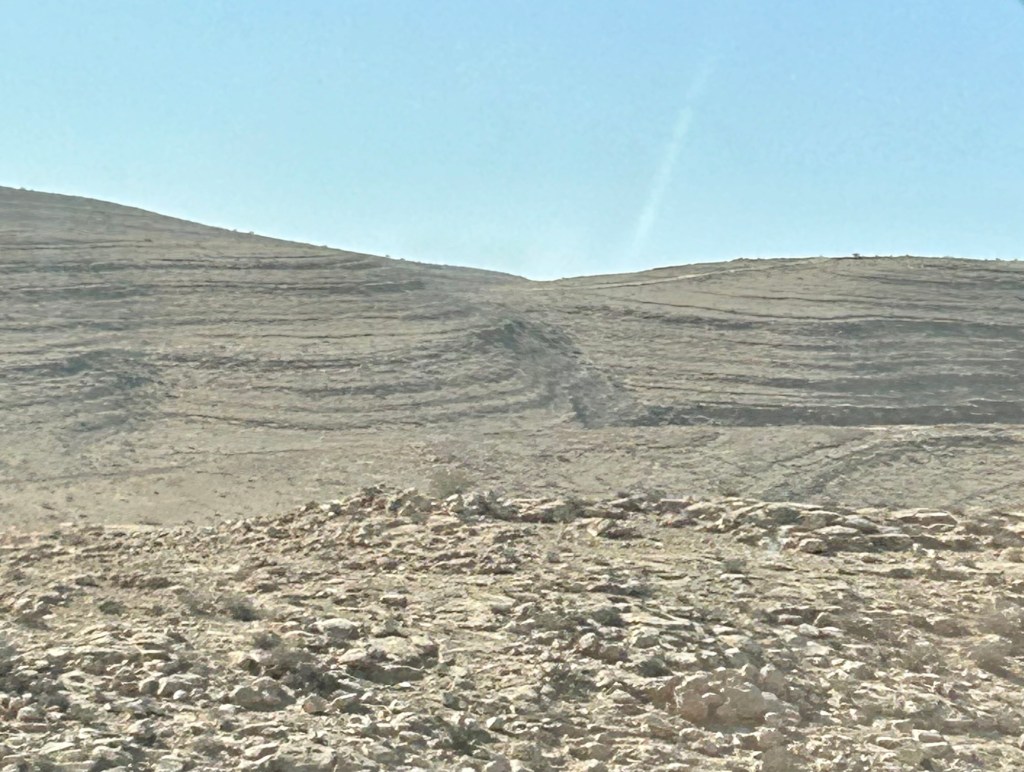
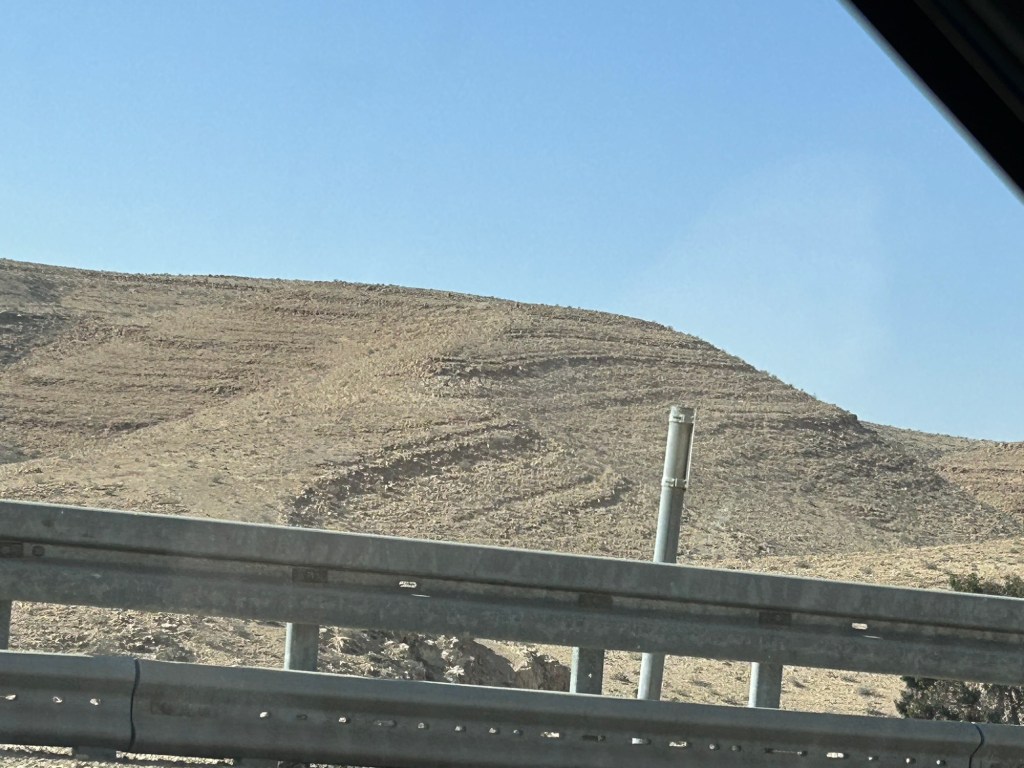
And into the heart of the barren, windswept desert!

The Desert of Zin! Tsin! Sin!!! In the Bible

We had to get there by sunset… it’s all of 3 1/2 hours, but we kept stopping along the way-
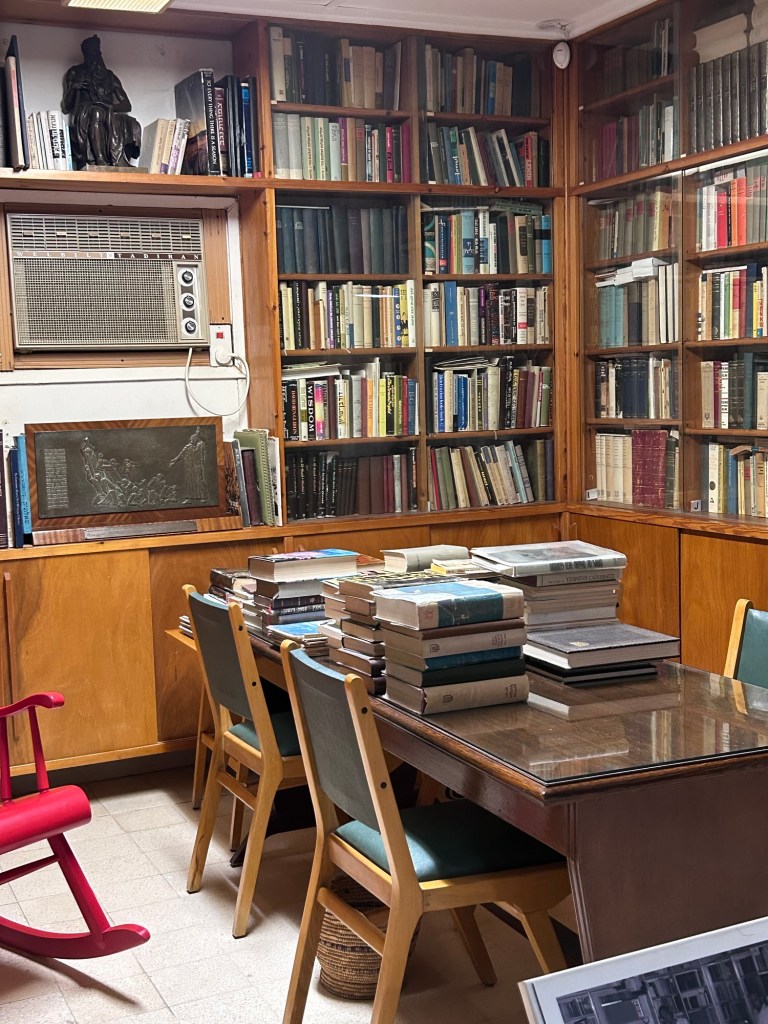
We made a big stop at Sde Boker, the kibbutz founded by first Israeli president, David Ben Gurion. Ben Gurion and his wife, Paula, lived the desert and thought it was the safe spot and key to future Israeli development. He foresaw the day when the Jewish people would learn to irrigate and farm the desert and make it bloom. He wasn’t wrong.

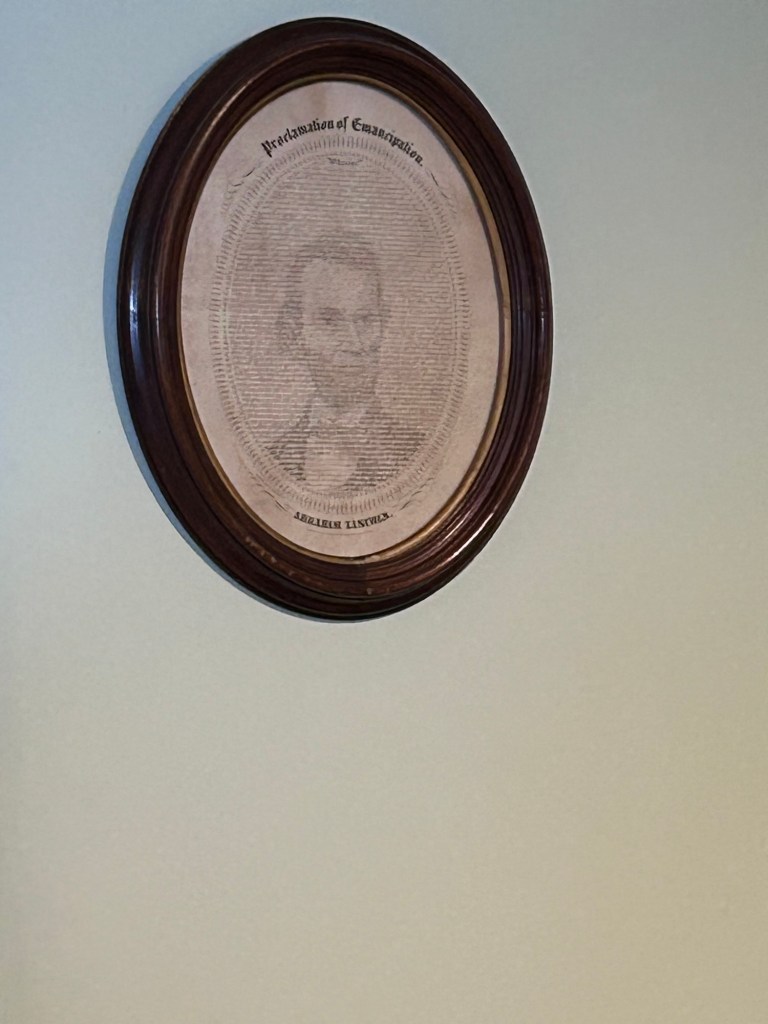
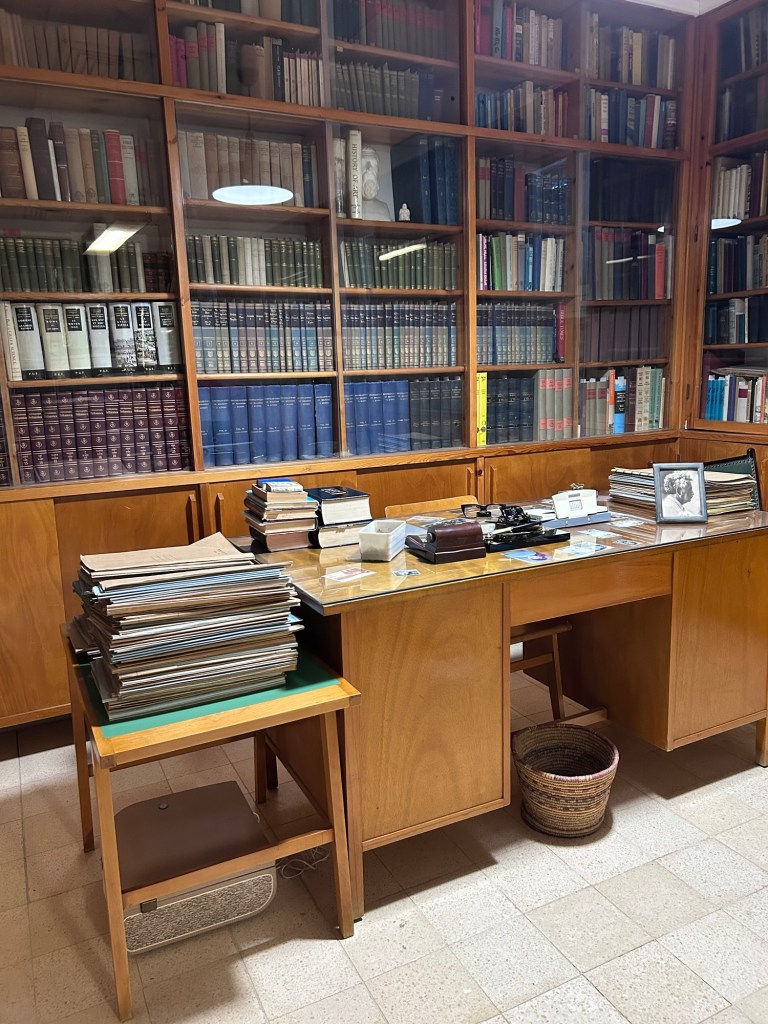
Today his home is a national landmark, open to the public. When we visited, there were only about a million school kids on tour. I was surprised that his home was so modest!!!! And tiny!!!! Like a summer camp bunkhouse. it had a living/reception room, his personal study, teeny tiny rudimentary kitchen and two sparse and small bedrooms- one for BG and one for Paula. He only slept 2-4 hours a night: was always up working, listening to radio news, studying – so Paula had her own quarters so she could get some shut eye. When there was a visiting dignitary, she’d go to a friend’s cabin and the important guest would take her room.

Hurry!!! We need to check in to our hostel!

We found a really remote spot on the edge of the crater. It was much darker than anywhere else (when we first moved to Israel the sky above our home was pitch black and filled with stars. Now, with all the new construction and light pollution, we see very little). John and I – and Haggis, our yappy little long-haired dachshund, sat and waited. We looked up for over 4 hours. The sky was beautiful and the stars many. We named the constellations. We waited. It grew colder. John saw 2 shooting stars. Another hour. I saw 1. So much for the Leonides, although it was a fun adventure.

The next morning we got up early to actually see the Makhtesh. Spectacular!!!!

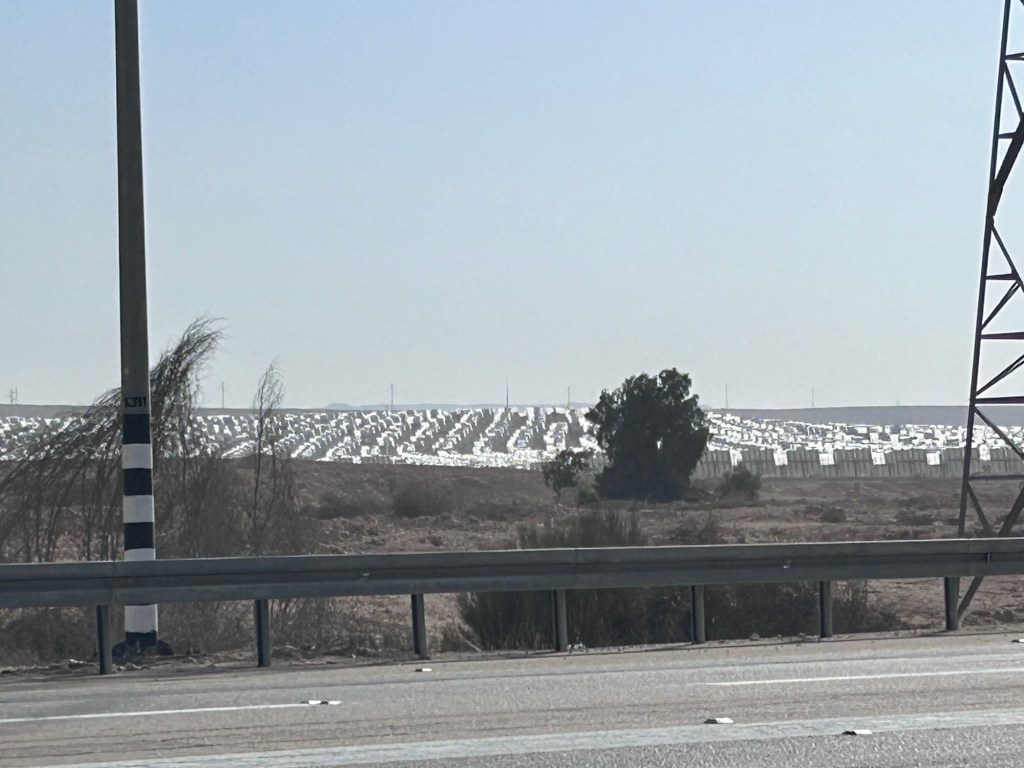
From Mitzpe Ramon, we made our way back to Beersheva. We kept seeing this bright flaming tower/beam in the distance – both coming and going. So we decided to check it out-

What IS that thing miles away?

How cool!!! The Eye of Sauron overlooking the wasteland of Mordor from Lord of the Rings!!!! We found it!!!!! In Israel!!! Actually it turned out to be the Ashalim Power Station. Decades ago, Elon Musk that you could take 10 square kilometers in the desert, put in solar plates and generate most of the electricity in Israel.

Ranking as one of the world’s premiere and few thermal solar stations, Ashalim is composed of 55,000 heliostats or solar panels that reflect the sun onto a huge mirror-like “Eye of Sauron” at the top of the tower which absorbs the heat and turns it into electric power.

The Ashalim Power Station used to be the tallest solar plant in the world standing at 240 meters (about 790 feet), the size of a skyscraper. However, it was surpassed by Dubai’s Noor Energy 1, with a height of 260 meters (circa 850 ft). There is another (Israeli built) solar power farm in the California Mojave Desert. The reflector on the tower generates concentrated heat which reaches up to 1000 degrees Fahrenheit (over 500 °C) to spin turbines and generate electricity in high quantity. It generates enough power to keep 120,000 homes (5% of all Israeli homes) for a year fully lit. It’s green, renewable and sustainable. I hope to do a more detailed post on this and other amazing Israeli innovations shortly. All in all, it was an illuminating trip!

Now onto a completely different subject!!! Each year, when the Jewish people read the Torah story of Jacob and Esau, I get creative. Esau, a big burly, hairy, red-headed hunter and the favorite son of his father, Isaac, sells his entire inheritance to his younger brother. Jacob has cooked this amazingly tasty and great smelling lentil stew. Esau comes into the desert tent, after a long day of hunting (ibex???). He tells his brother “I’m dying. Just pour some of that red stuff down my throat!!!” Seriously. It’s what he said. I love it!!!!! Anyhoo- Esau winds up giving away the birthright to Jacob for a bowl full. It must have been delicious!!!

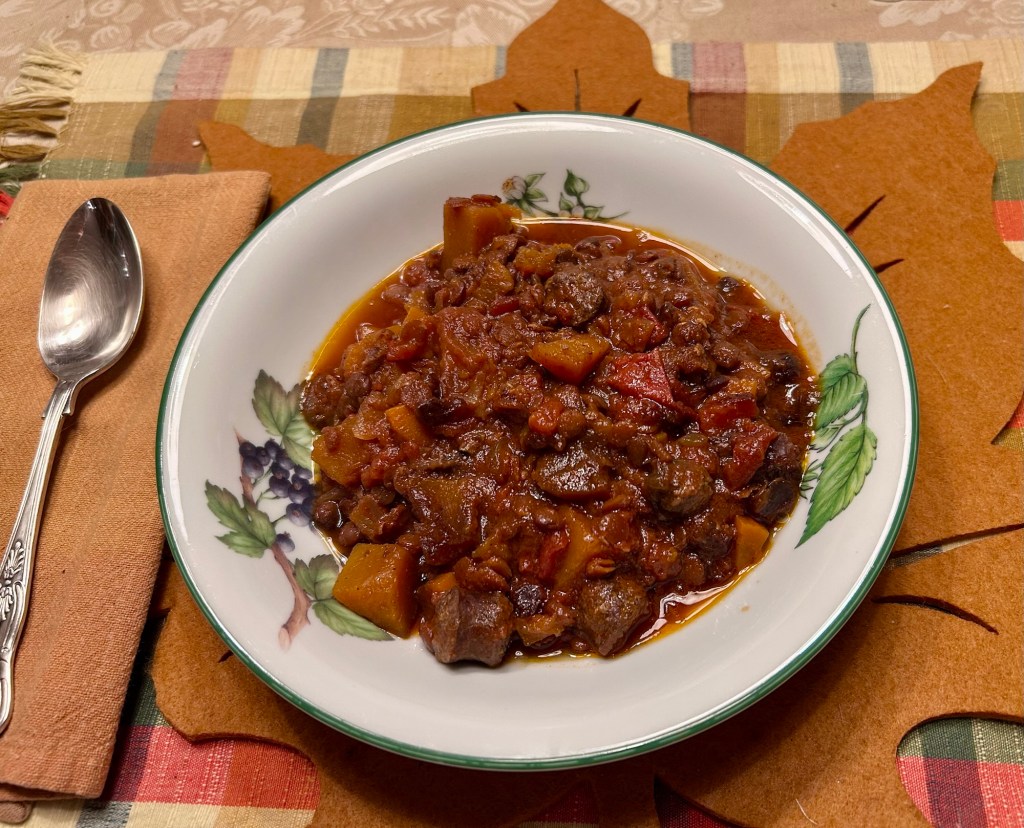
So, last week I worked out my own version: I wanted it MiddleEastern in flavor. With Israeli products. It had to have lentils. It had to be red. And it had to be prepared in a crockpot so I could keep it warm/hot through Shabbat. It turned out AMAZING!!!!!!! So here’s this year’s Red Stuff-

Jacob’s Lentil Stew

Ingredients:

  • 2 large carrots
  • 2 large onions
  • 6 long, thin Merguez beef sausages
  • 1 butternut squash
  • 2 1/2 cups green or brown lentils
  • 10 Medjool dates
  • 1 red bell pepper
  • 1 yellow bell pepper
  • 2 large orange sweet potatoes
  • 6 cups vegetable stock
  • 1 can large chopped tomatoes and juice
  • 1 small packet tomato paste (2-3 TBSP)
  • 2 tsp cumin
  • 2 TBSP baharat spice (cinnamon, cloves, allspice, cumin, black pepper, cardamom)
  • 1 tsp smoked paprika
  • 1 1/2 tsp sweet paprika
  • Pinch cayenne (to taste)
  • 1/3 cup Silan (date syrup) OR 1/4 cup honey
  • Fresh dill
  • 2 tsp salt

In a large skillet cook the sausages, removing outer casing if necessary. Reserve to plate to cool. In same pan, sauté the cubes of onions and peeled carrots – cubed to bite sized chunks. Chop the sausage into 1” thick coins. Add to crock pot. Chop bell peppers into small cubes. Put into crockpot. Peel and remove seeds from squash. Cut into bite sized cubes. Place in crockpot. Peel and cube sweet potatoes. Into the crockpot. Rinse the lentils well, removing any stones or “dry stalks” and dump in crockpot. Pour in the veg stock (can use all natural bullion cubes) and dump in can to tomatoes with juice. Stir well with a big spoon. Remove the pits from the dates and chop coarsely. Scatter around crockpot. Add the spices and tomato paste. Add the Silan or honey. Stir well. Chop about 1/2 cup fresh fennel and add to crockpot last. Mix well and cover. Set the power to low and let cook for hours (overnight). Can add more water if needed. Freezes beautifully.
Tears of Sorrow; Tears of Joy 17 October, 2025

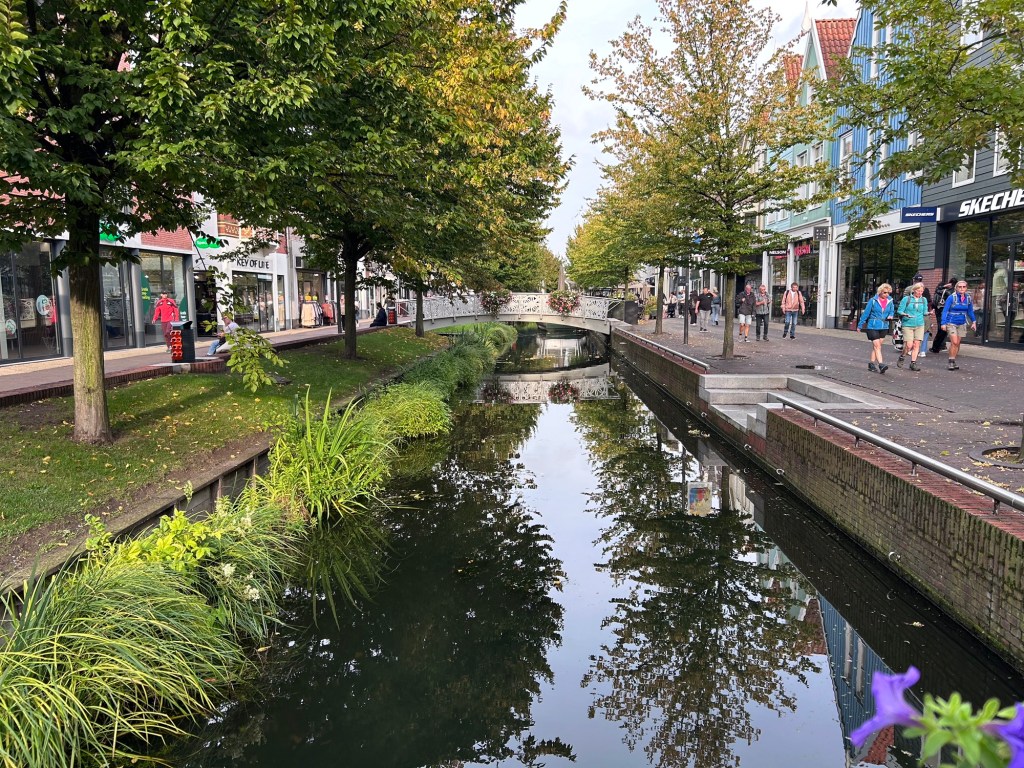
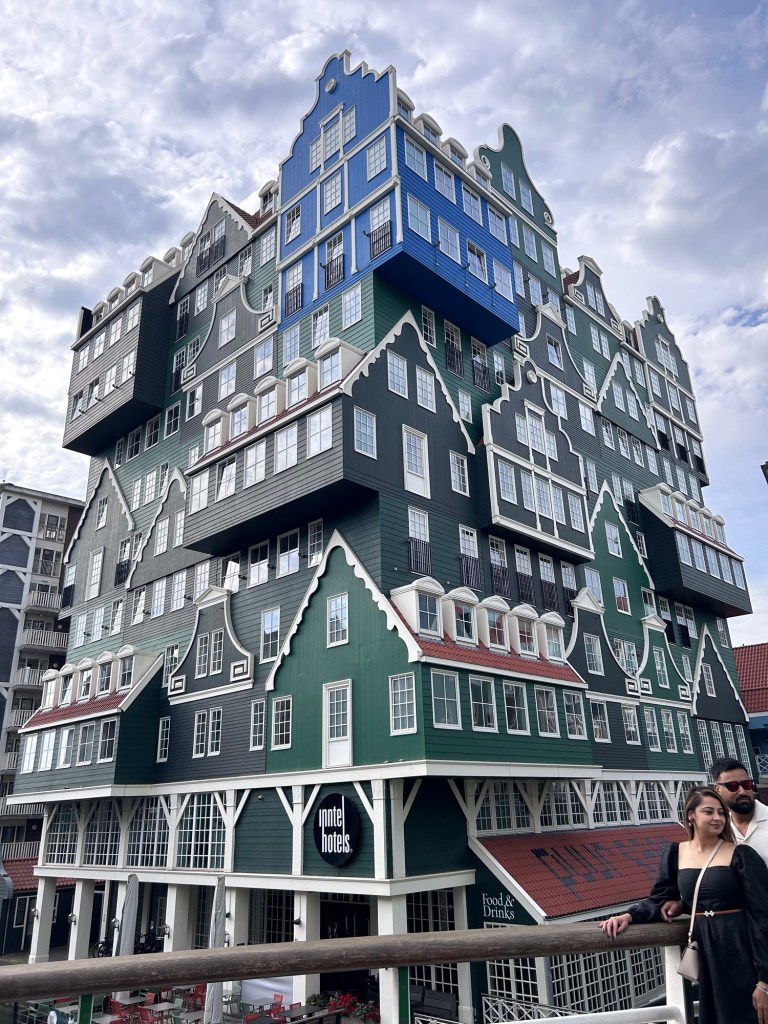
It’s been a long couple months, but we are back safe and fairly sound (still recuperating) from our adventures in England and Amsterdam. My son graduated university with a masters in Public Policy and is now looking for employment in the E.U. His fiancé lives in the Netherlands, so we took a short trip to visit with he family there.

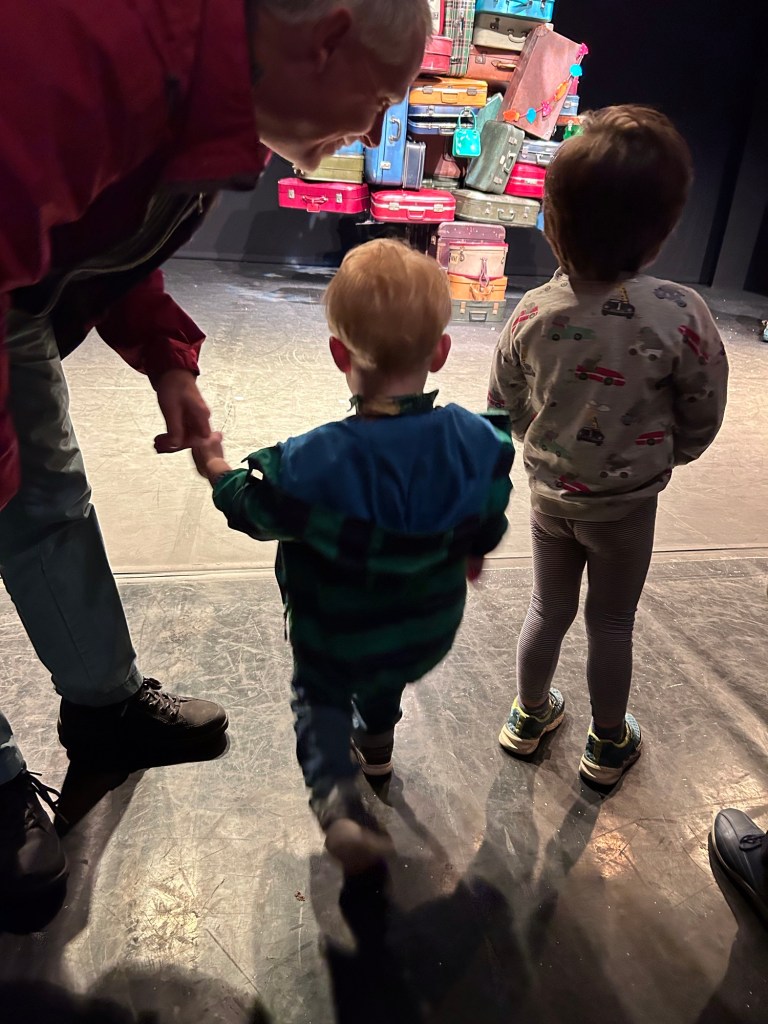
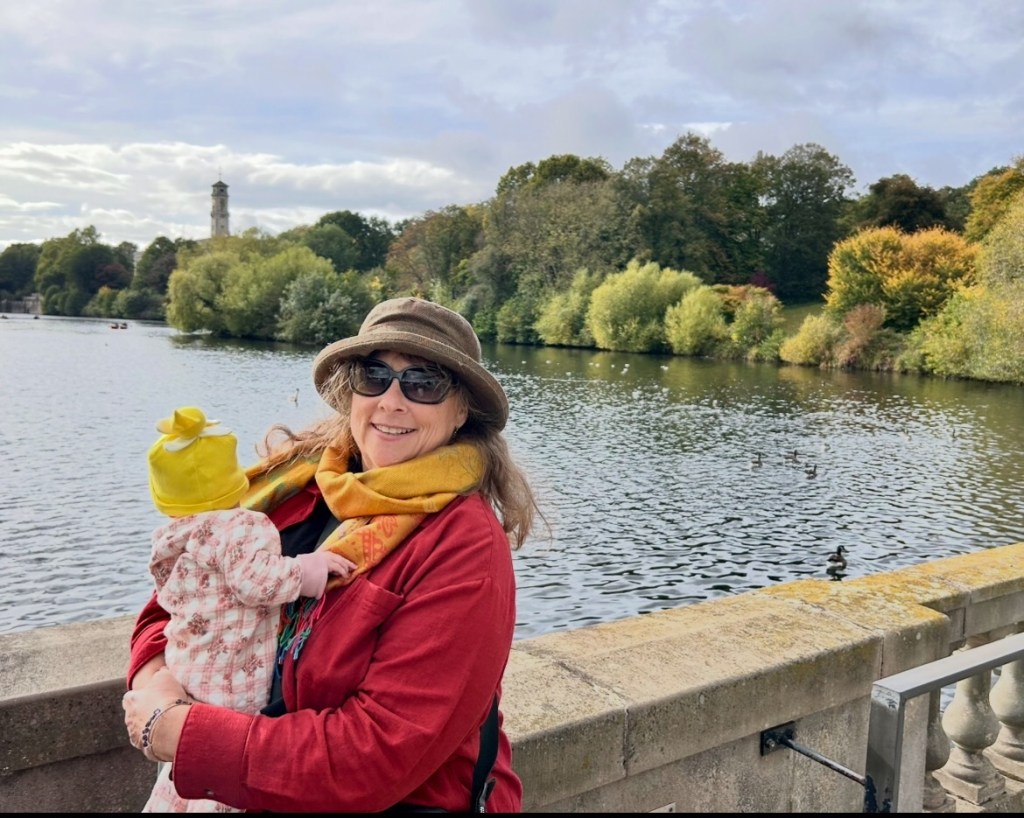
After a most glorious and incredibly jam-packed stay in London, most of our time was spent in the gorgeous English Derbyshire countryside (they pronounce it ‘Darbysher’) with our daughter, her husband and two small children. They’ve requested not to post photos of names of the kids, so….the newborn granddaughter was teeny, tiny, soft and gentle. Holding a baby again – well, there’s absolutely nothing like it! The grandson turned two last week. An incredibly smart and inquisitive and fast as lightening adorable little imp who is both a bundle of joy and a mischievous imp into everything. He thinks he can cook, make a pot of tea, and drive a car…. all very dangerous. But he is amazing and we love them all so much.

We were able to take quite a few long weekend trips together: Chatsworth Estate where Pride and Prejudice was filmed; the Medieval estate, Haddon Hall; quaint villages and hamlets. Small artisanal dairies (Red Leicester, Stilton, Cheddars), charity shops and antique shops emptied our wallets. I had to buy two more huge suitcases!

Rosh haShannah was the start of the Jewish fall festivals. I decided to attend synagogue in Leicester. It was a large, stately red brick building, quite historical from the 1800s. They used to have a school and community center across the street, but it was sold several years ago as the Jewish population had dwindled and the upkeep of the properties too costly. Now the buildings are an Islamic center and a mosque. The once upscale neighborhood of large brick townhouses are now marked by trash outside and Palestinian flags flying from every home. Burkas and hijabs are standard fare. I was more than shocked that there was no police presence outside. Not a good feeling. It was actually quite terrifying as I was scouting out the place for unsavory suspects. In addition, there was no armed quart at the doors (a given in California, unheard of in Israel). Services were absolutely lovely, but not terribly well attended.

I had decided that we would go to synagogue for Yom Kippur in Manchester, a much larger city. Except every single one of us including the kids came down with the flu. That was the day an armed Arab terrorist ran into a group of synagogue-goers before shooting and stabbing his way through the crowd. He claimed to have explosives tied to his body. Thankfully police were close by and he was neutralized. I’d had an ominous feeling that something awful would happen.

Since then, in world news, the flotilla to Gaza with Greta Thunberg, Susan Sarandon and other notables made their way to Israel supposedly carrying lots of aid for the residents of Gaza. Only, they were stopped by the IDF navy before they could enter war zone. The boats carried absolutely no humanitarian aid. About 100 activists had abandoned the flotilla and decided to reach Gaza through the Israeli border by foot. They were promptly arrested. The BBC only reported Thunberg’s statements of “dehumanization and torture in the Israeli dungeon.” They had to sleep on hard mattresses on the floor and the sandwiches given them were very dry. A guard pulled Greta’s hair at one point, which was her version of torture.

All of the BBC news was absolutely antithetical to Israel. Every report spoke of genocide and forced starvation of the Palestinians. Israel, the colonial aggressor, was indiscriminately bombing and leveling civilian areas according to BBC. And Prime Minister Kier Starmer publicly recognized Palestine as a state at the UN. Also, while we were in the UK, there was a march in London led by Tommy Robinson. A few days after Charlie Kirk was assassinated, the rally was anti immigration, pro Israel, standing for taking back Western civilization and culture which is disappearing in Britain. The BBC reported about 60,000 participants but aerial footage estimated the rally neared 800,00 people.

The week following, a woman was arrested for waving the Union Jack in public, and scores of elderly and disabled people throughout the country were arrested for social media postings that were deemed “upsetting” because they came against the government or were anti immigrant, flags of England and of the UK started popping up everywhere. Soon every town had flags and banners hanging. Houses were proudly hailing their red, white and blue, and the Union Jacks were waving from most highway overpasses. It seems the Brits are beginning to wake up.

Everyone now knows about the Trump MidEast deal and all the fanfare that went with it. I’ll write more about that deal in another post, but we are crying tears of joy that 20 hostages were released alive after exactly two years of living hell. Hamas was supposed to release all live hostages and return the 29 dead bodies they were keeping within 72 hours of the signing of the deal.

Israel set free 195 Jihadi prisoners serving life sentences for mass murders, planning massacres of Israelis, car rammings, multiple stabbings, and detonating bombs in grocery stores, nightclubs and on busses. They also released 2000 additional prisoners, most were terrorists caught in Gaza for committing the 7 October atrocities and for fighting as “civilian” Hamas militants.

We were all glued to the internet crying tears of joy as our prayers were answered. Thank you HaShem! 20 live hostages were brought back to their border. All Israel was blazing with joy as the grief of exactly 2 years finally seemed to be ending. The returning men were welcome,ed with tears, hugs and kisses by their families. And the entire country was dancing and singing. Such a part, the likes that Israel had never seen. Thousands of people were rejoicing at the Western Wall. Also thousands dancing in praise to G-d at the Nova music festival site.

As expected, Hamas has delayed and has not returned the promised bodies they are holding. At first, 4 people were brought back. Then four more, one of whom was identified as a Gazan, not an Israeli. Two more were returned after extreme threats and pressure by Trump, Israel and several Arab countries. The other 20 cannot be located, or so they say. As far as John and I are concerned, the agreement has been violated and now is the time to disarm them completely. No questions asked. No more time given. No more excuses accepted.

Footage is being shown from inside Gaza that Hamas is publicly executing hundreds of Gazan civilians in the streets in order to to reassert their control. It seems that families are fighting families, with different clans trying to gain dominance. It’s being reported that Khan Younis and Gaza City are experiencing all-out chaos. And those openly associated with Hamas are unwilling to disarm or give up power. So much for Phase 2.

It’s nearing Shabbat prep time, and I still have loads of laundry and unpacking to do. We’re still fighting nasty coughs and the creeping crud, and both John and I are more than a bit exhausted. So much other stuff happened while we were away (deaths in the family; infighting within a group I was in…I was on the Board of Directors of an Inter-religious Dialogue group. The “Israelis” (me included) were invited to retire due to political unease. This has dragged on for weeks now and I’m drained.) Being with my kids and grandkids was a tremendous blessing and source of joy, but it is so wonderful to be back home in Israel. There is no other country like this one on earth. Shabbat shalom.

Ceasefire. War Stories. Day 425. 4 December, 2024

Recipe Edition!

It’s hard to believe that just last week we were running to find safe spots to get out of the range of falling missiles and shrapnel several times a day/night. Last night I slept for 9 hours straight, a record for the past year. Not complaining, but the traffic here is absolutely unbelievable Who’da thought our small highways would ever resemble Southern California’s gridlocked freeways?

It seems that everyone, absolutely everyone, is out and about. I had not realized how much this war has affected people. It reminds me of the days immediately following the lockdowns of 2020/2021. Schools are fully in session in person for the first time this school year. The stores are packed. The movie theatres, restaurants and cafes are full. Hiking trails? Oh my goodness, don’t even think about being alone in nature at this time!

Our friend Romi, an engineer in the northern border town of Shlomi, last week went to work in his office for the first time in almost one year. It had suffered from indirect hits and shrapnel. Windows were shattered, walls spattered with holes. His 3D printer was majorly damaged…. Many people are going to the little towns and villages just to see the damage incurred. Some are viewing homes and communities for the first time, and from what my neighbor told us, security guards must let you through (proof of living/working there required). A few communities right up against the border are still occupied and guarded by the IDF because it’s still technically a dangerous war zone.

In the first four days of the ceasefire, there have been mortars and grenades hurled at Israeli soldiers from Har Dov on the Lebanese side. Hizbulla operatives were seen in a no-go zone on the first day. They had returned to regroup, but were immediately arrested. A drone from Lebanon that entered Israeli territory was shot down by Iron Dome. There have been other major infractions, but the IDF has immediately responded by firing on the perpetrators from the air. And so it goes. Obladee obladah.

Now that things are a little more quiet, I can share with you the recipes so many of you have said you missed. For starters, it has become a tradition that every year when the Jewish people read the part in the Bible where the story of Esau selling his birthright for a bowl of lentil soup/stews, I share a new lentil recipe. This year, it’s amazing!!

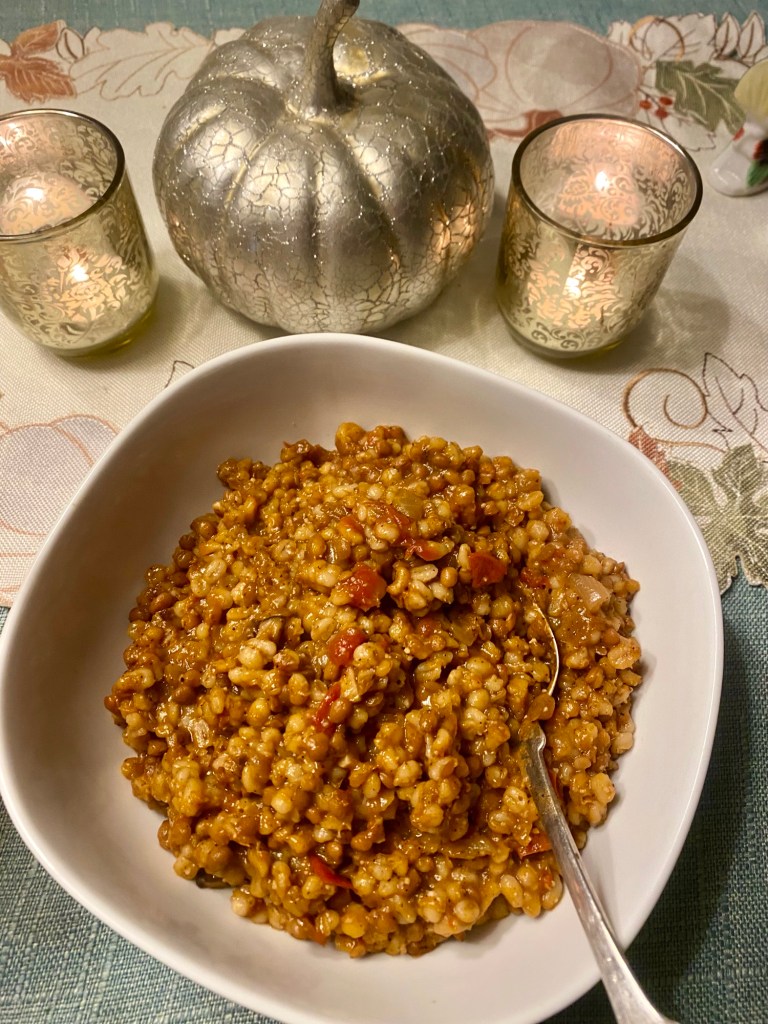
I was first introduced to this bowl of deliciousness by our friend, Marc. It’s called SHALVATO (shall VAH’ toe). It is a staple and comfort food throughout the Middle East. Every culture and person seems to have their own version of this dish. It’s basically a grain and tomato recipe, very simple. The Druze add zucchini. The Lebanese use barley. Some Jewish people from Syria and Yemen now add chunks of fatty meat. It’s similar to the Sephardic/Mizrachi Shabbat Hamim, or the Ashkenaz Cholent, but way better, and vegan. Shalvato can be eaten as a side dish or just enjoyed by the bowlful. It’s so easy to make, and is becoming a favorite in this house. This recipe is from Rami Kahan, but I’ve made a few changes…. Try it this winter. Get ready to fall in love-

SHALVATO

serves 6. Vegan

Ingredients:

  • 1/2 cup barley
  • 1 can small red lentils (or 3/4 cup dried red lentils)
  • 2 cups boiling water (more if using dried lentils)
  • 2 large meaty tomatoes chopped (Roma are good)
  • 1 large onion, chopped
  • 4 garlic cloves, chopped
  • 1/2 cup mushrooms, chopped
  • 2 large TBSP (22BX) tomato paste
  • 1 15 oz. can (I use a small bottle of Muti polpa) tomatoes, chunks
  • Olive oil
  • 1/2 tsp cumin
  • 2 tsp baharat/Rambam spice (see recipe below)
  • Salt, pepper

Baharat recipe: (makes about 1/4 cup) This is a highly aromatic, warm spice blend popular throughout the MidEast. Great addition to meats, soups and stews as well as veggies…. Mix it all well and store in an airtight jar.

  • 2 TBSP cumin
  • 1 TBSP coriander
  • 1 tsp cardamom
  • 1 1/2 tsp sweet paprika
  • 1/2 tsp black pepper
  • 1/2 tsp ground ginger
  • 1/2 tsp ground cinnamon
  • 1/2 tsp ground cloves
  • 1/4+ tsp ground nutmeg (I always put a bit more)

In a large bowl pour boiling water over barley and let sit for an hour or more until til all liquid is absorbed. In the meantime, in a large skillet, heat oil until shimmery. Add in onions, garlic and mushrooms. Sauté over medium- high heat until transparent. Stir in the Baharat spice blend and stir about 1 minute until fragrance is released. Pour in the tomato chunks with liquid as well as your chopped fresh tomato. Mix together over medium-high heat about 2-3 minutes. Add in the canned lentils (if using dried lentils, they must be rehydrated and softened in boiling water like the barley). Mix well. Add in the barley. Mix well. Stir in salt and pepper and additional cumin to taste. Lower heat to simmer, and cover. Let flavors blend, stirring occasionally, about 1 hour. Serve hot. This can also be made in a crockpot on low for Shabbat. Seriously good enough to trade your birthright for….almost.

This is the basic. I play around and add in what I have on hand

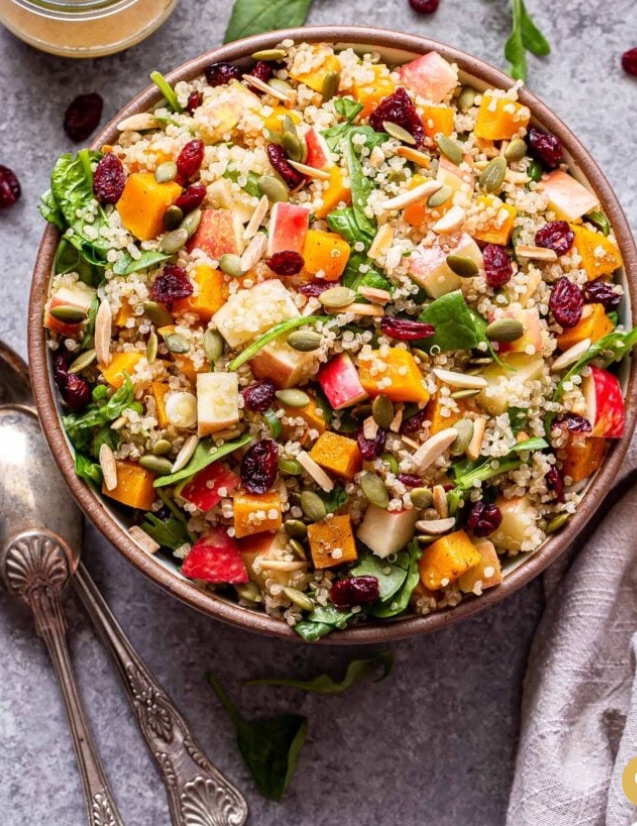
CHOPPED AUTUMN SALAD

Serves 4. Vegetarian (dairy or meat, if desired)

With all the heavy winter meals and for some of us who just finished Thanksgiving and are looking to lighten up before the next round of holidays, this is a great meal. Nutritious, filling, easy, versatile and seasonal. You can add the cheese (or not), or add in grilled chicken of steak slices (or not). Adjust to suit your palate and pantry. Another staple in our house-

Ingredients:

  • Choice of lettuces (try some arugula and leafy reds and dark greens)
  • 2-3 beets, roasted, peeled, cubed
  • 1 sweet potato or pumpkin, peeled, cut into cubes, roasted until tender
  • 1/2 cup cooked, cooled quinoa or bulgur
  • 1 red apple
  • 1 green apple
  • 1 small red onion, sliced
  • 1 large stalk celery, cut up
  • 1/3 cup nuts (walnuts, pecans, pumpkin seeds, toasted)
  • 1/3 cup dried cranberries
  • 1/4 cup blue cheese (optional)
  • 1-2 roasted chicken breasts, sliced (optional)
  • Leftover steak, sliced (optional)

Vinaigrette:

  • 1 TBSP sherry vinegar
  • 1/4 cup good extra virgin olive oil (EVOO)
  • 1 1/2 tsp Dijon mustard
  • 1 TBSP lemon juice
  • 1/4 tsp salt
  • 1/4 tsp pepper

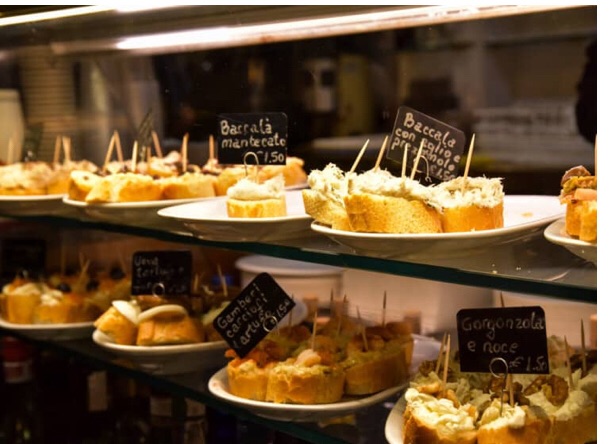
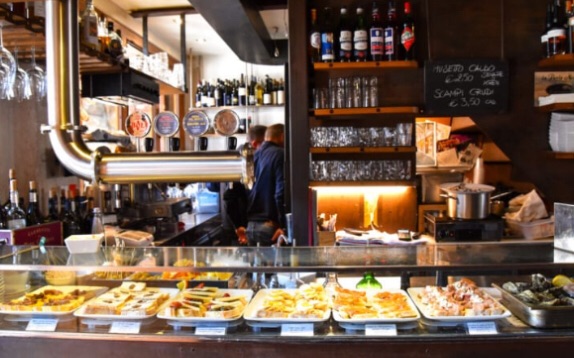
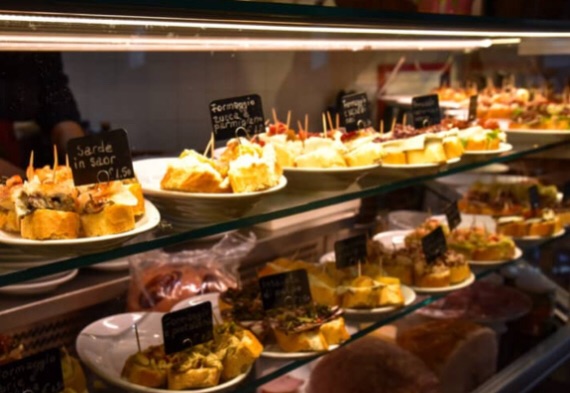
So, when we were in Venice for 2 1/2 days, we were smart and economical. Instead of spending a couple hours at an expensive sit-down restaurant, we ate like the locals. I’d heard about this, and the experience was so amazing and so absolutely delicious, we ate at cichetti bars (chick EH tee) lunch, afternoon snack, dinner, late night snack and second breakfast. All were incredibly out-of this world gourmet fantabulous…..and incredibly cheap. They are eaten to go. Pick your plate and take out your food to eat at an outdoor table Each cichetto ran 1-2€ a piece, so the whole meal would be about €15 for the two of us.

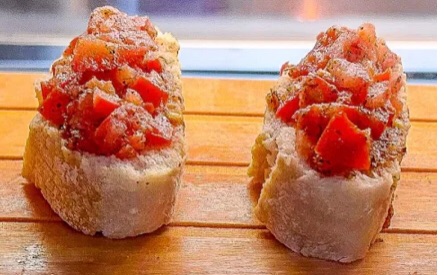
I had a list of several places I’d wanted to try, so after a museum, we’d find a cichetti bar. They are literally little bars the locals frequent. You can get a glass of very good red or white wine for 2-3€. Go up to the glass vitrina or counter and pick out your cichetti, or little bites. Often open faced sandwiches (baccala/creamed cod, pumpkin and Gorgonzola, herbed creamed cheese with pickled radish, fired rice balls, savor/sardines in a flavorful onion, raisin, pine nut sauce, fried artichoke hearts, tapenades and sun dried tomato pastes and pestos with cheeses on baguettes) the combinations were endless! Some of my favorites were the fig and Gorgonzola on a thick toasted cracker; the roasted beet slice with a dollop of buratta/mozzarella ball and a splash of balsamic on baguette; the toast with a sautéed mushroom and onion reduction; the baccala (now I understand Rosemary Clooney’s “Hey Mambo!”); and give me ANYTHING pumpkin!!

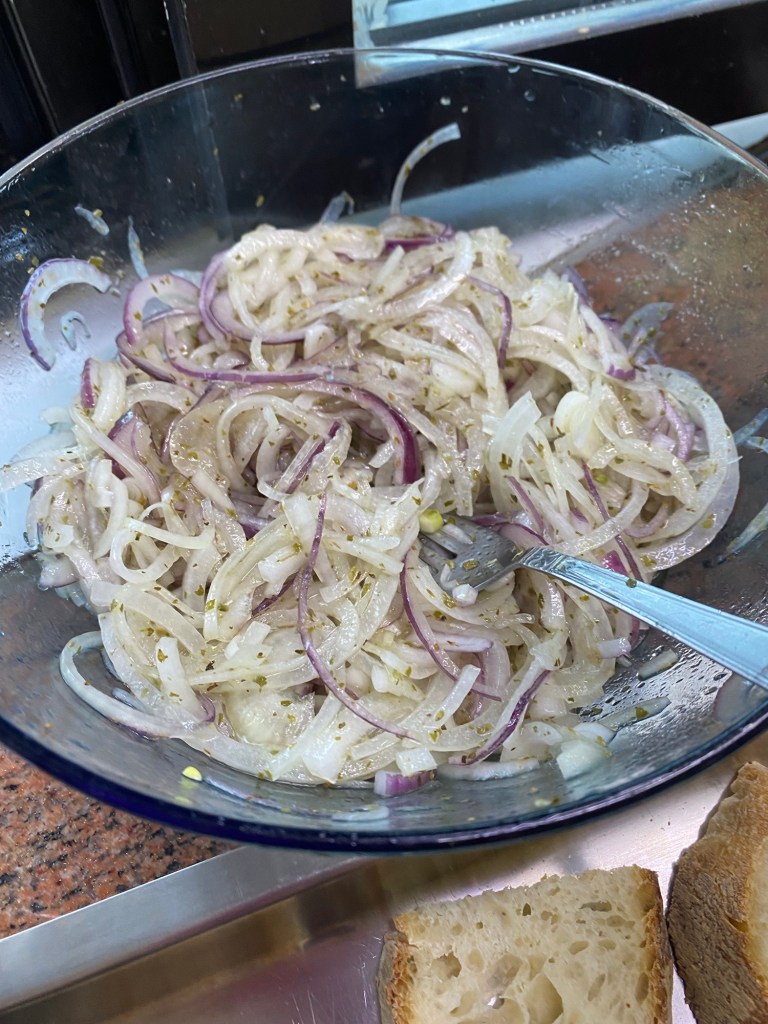
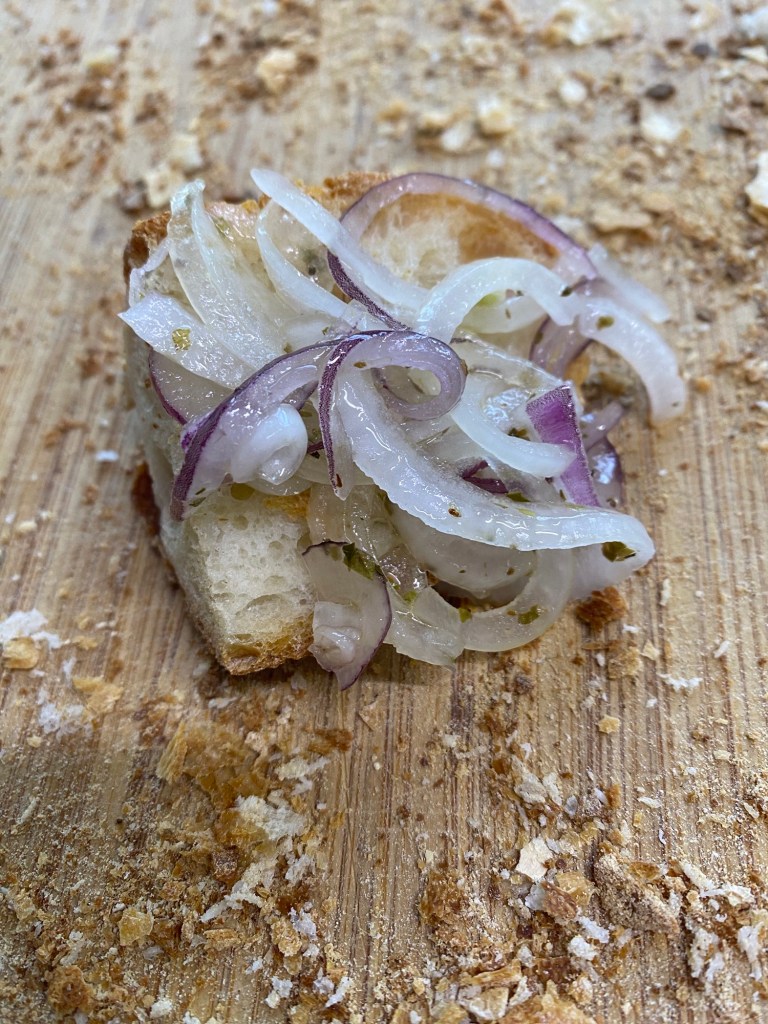
We’ve been eating my own version of these tapas like bites since we came home. It’s a great way to be creative with the leftovers. One of my staples is the “pickled” shallots, which can be served as a base for chopped cucumber and tomato drizzled with olive oil, or a slice of cold cut, or a piece of hard cheese. Easy and delicious!

“PICKLED” ONIONS

I found out everyone in Venice used Cippolini onions. They are sweet and mild, but I can’t find them anywhere in Israel, so I use shallots. It works just as well.

Ingredients:

  • 1 cup thinly sliced cippolini onions or shallots
  • 2 TBSP sea salt or 1 1/2 tsp table salt
  • 1/2 tsp oregano
  • 3 TBSP extra virgin olive oil

Mix all together in a bowl. Refrigerate and use within 4-5 days. Serve on sandwiches or as a base for the little bites.

Enjoy!!!!!

A Sweet New Year

In just a couple days we will be celebrating the Jewish New Year. There will be no parties, no fireworks, no parades or popping of champagne corks. Instead there will be a festive meal followed by two intense days of prayer to G-d for forgiveness of our sins; prayers for our names to be written in the great Book of Life for the upcoming year, which will be 5784; a remembrance of the creation of the world and the creation of man; the crowning of G-d as King of the Universe; and on Sunday, the blowing of the shofar (ram’s horn). Whew!!!

Despite all that is going on in the world, I, personally, am looking forward to a sweet new year… new life in our families, (our daughter in the States just had her third child last night), new friends, new adventures, and much healing. Speaking of new friends, our neighborhood has undergone quite the change in the past year. We rent a villa in one of the oldest neighborhoods in our city. Many of the homes (including ours) really are in need of some tender care and radical facelifts. Several of these old homes have been sold over the last two years to young families who have been doing just that.

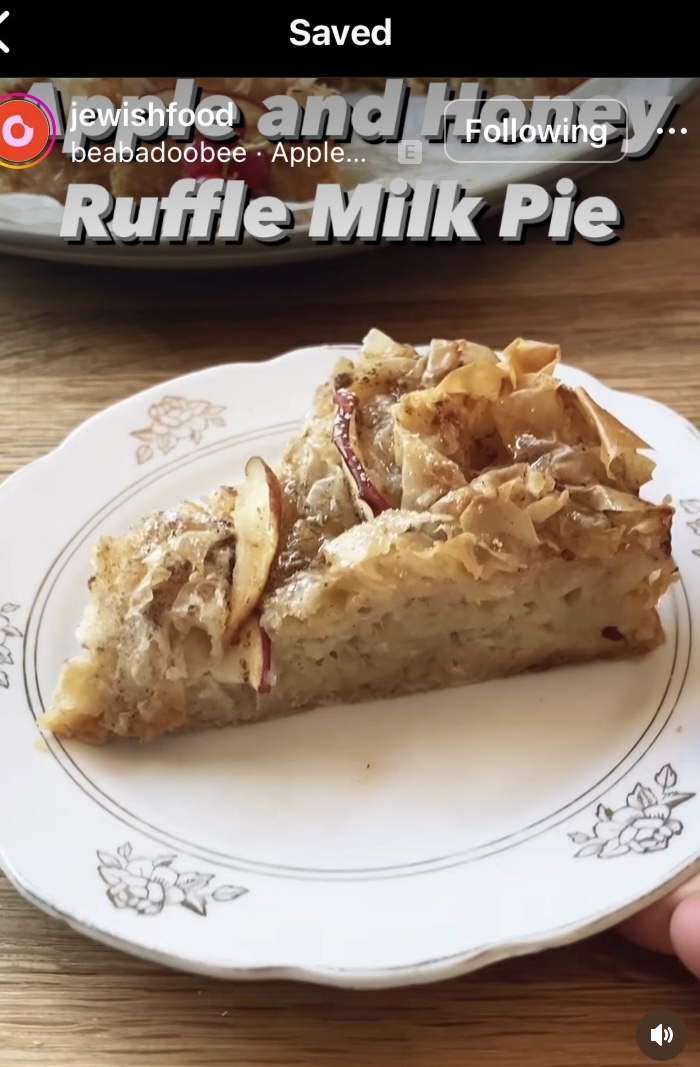
It’s customary to send gifts for the new year, usually sweets or baked goods containing apples, honey, dates or pomegranates. So last week, I made several different types of apple cake to deliver to our neighbors. I was so excited to try this first recipe. I saw it on Instagram and it looked easy and absolutely light and delicious.

Doesn’t it look wonderful? Light, airy sheets of filo slathered with butter, apples wedged into the crevices and a light custard in between. I followed the directions for three cakes but it kept coming out thick and doughy, more like a kugel, but dense and inedible. On to the next new apple cake recipe. It, too, turned our heavy and dry for some reason, so I gave in and made my old standard apples and honey cake with yogurt. Finally!

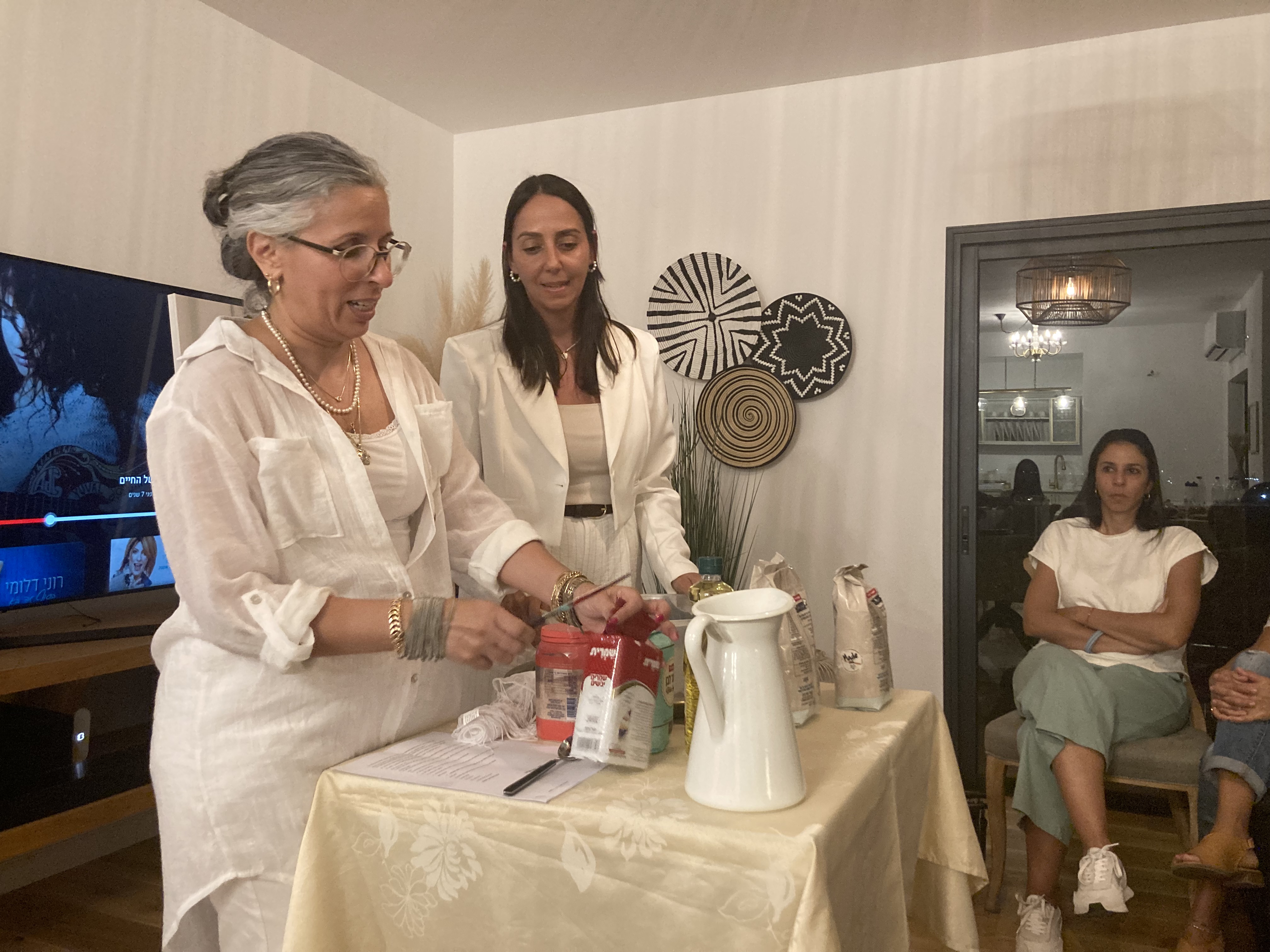
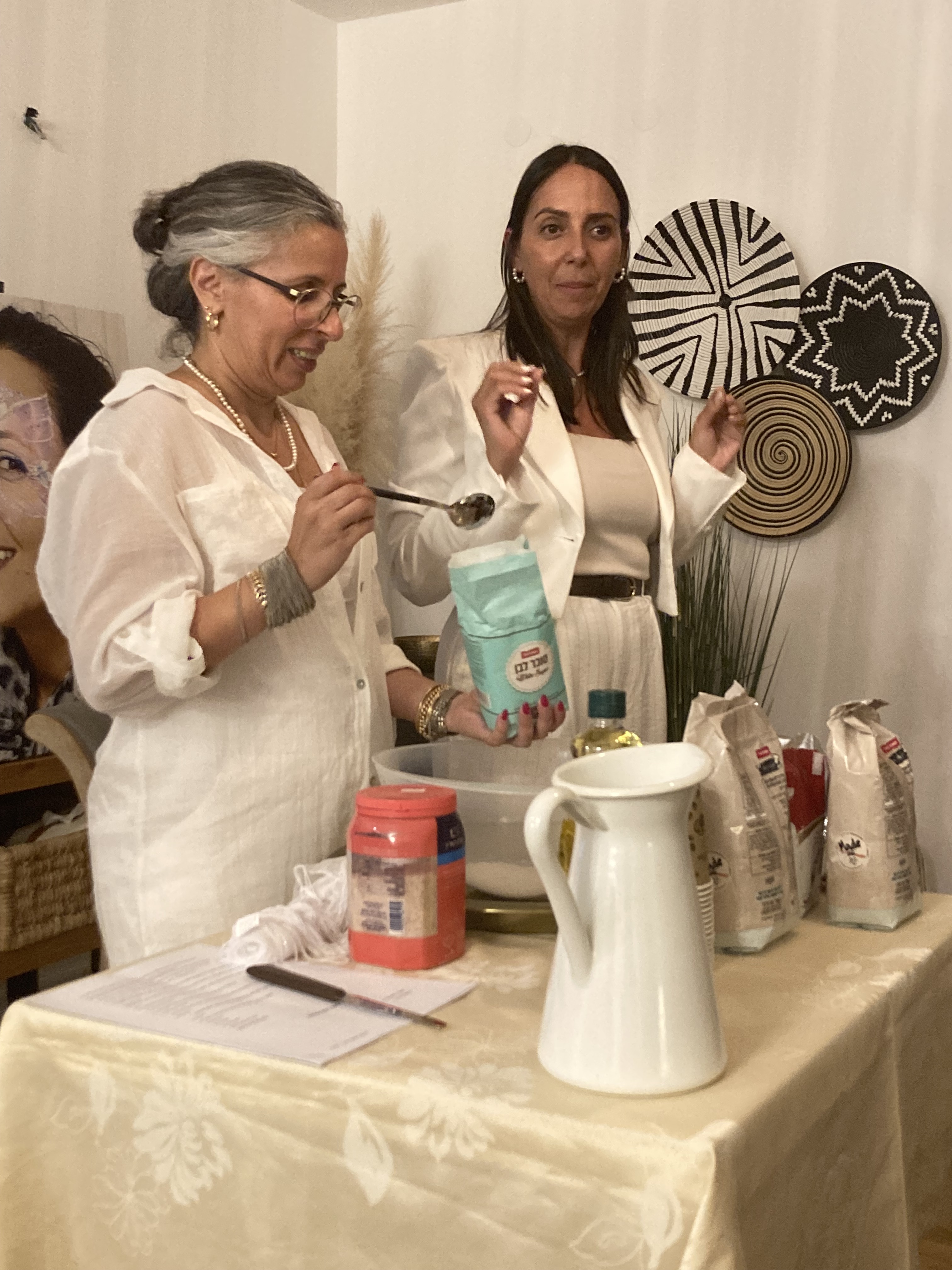
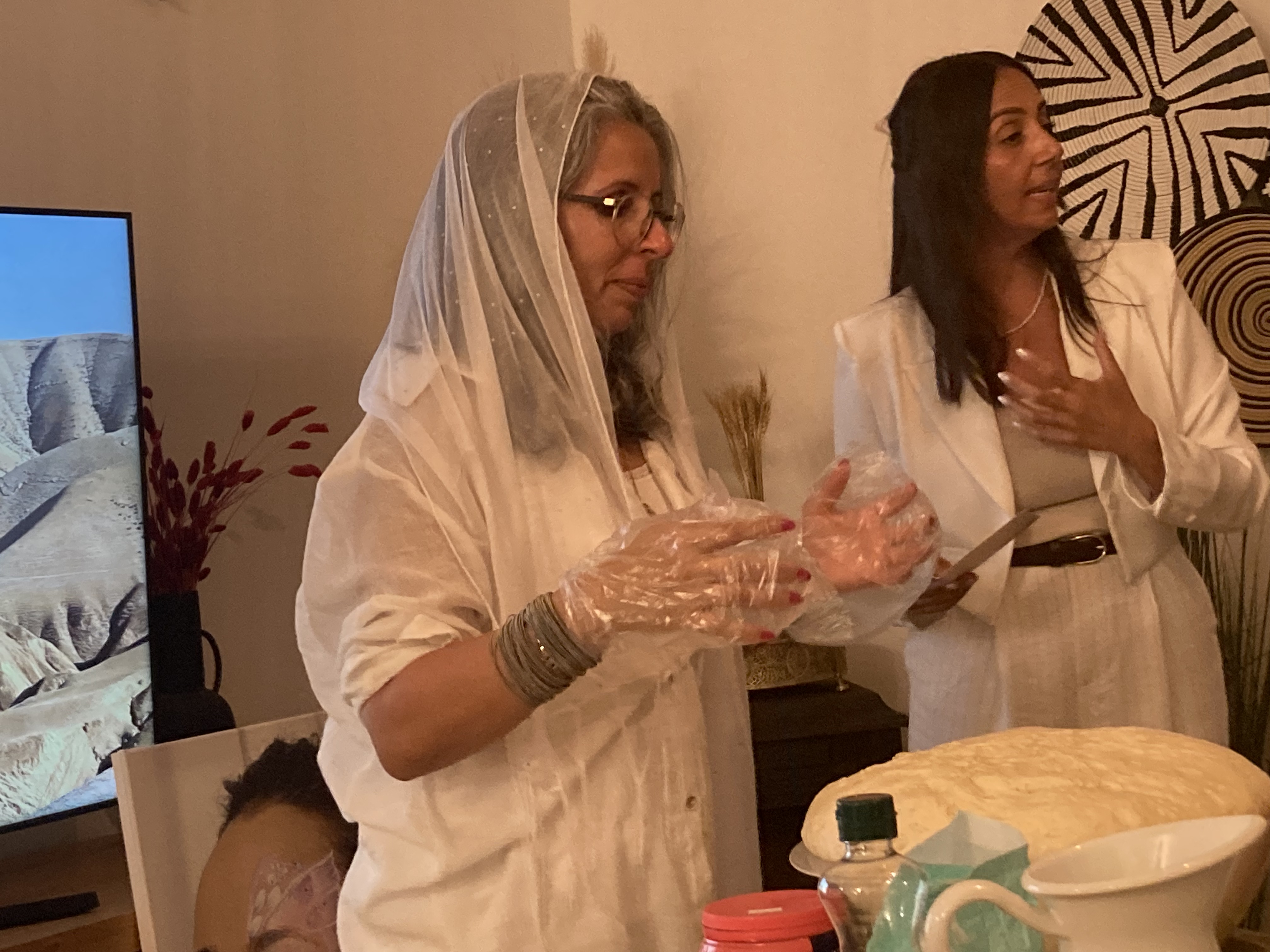
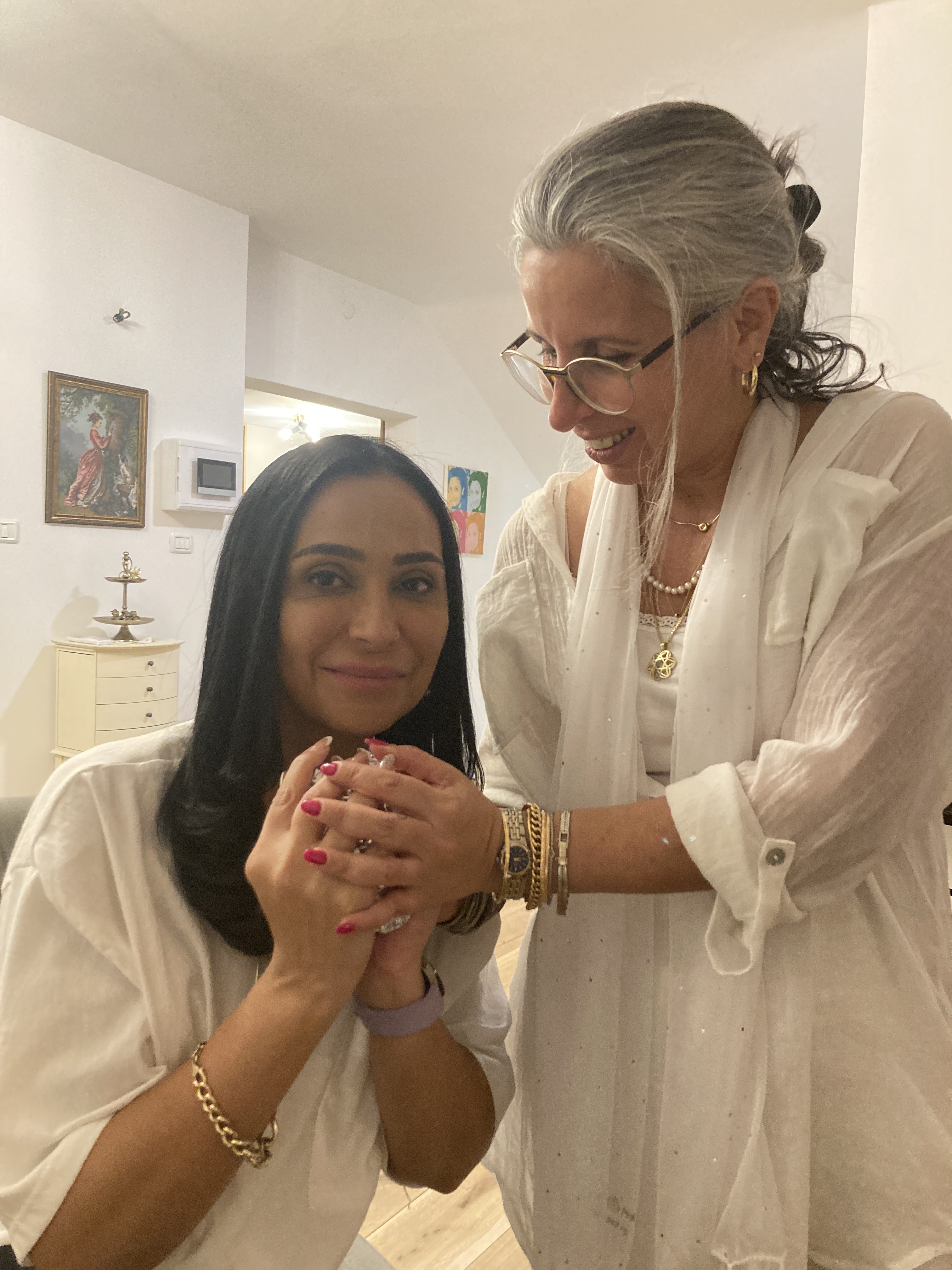
I delivered my last cake to the new family four doors down. They were so nice! Karinne is from Paris and they had lived in our neighborhood for seven years, but bought this new house to completely gut and renovate it from the inside out. And what a magnificent job they did! So, to cut to the chase, Karinne invited me to a challah making class that I went to last night. All I can say is “wow!” It was incredible. 15 ladies from the neighborhood, all getting to know each other better, many already close friends. I was the only English speaker, so it was quite a challenge to keep up, but I managed to understand much. Liat, a lifestyle coach for women, led the class.

Liat spoke on the importance of the new year and how our attitudes and emotions shape a lot of what actually happens in our own environment – our families and our work. She said that especially as daughters, wives, mothers, women in the workplace, friends, we are often confronted with many different problems. Instead of viewing them as problems, view them as opportunities for growth that G-d gives us. Be bold to ask for help, both in prayer and from each other. Ask kindly, but specifically. Most people are more than willing to help, especially when they know exactly what you need athat you have their back as well.

As Karinne was beginning to make the challah bread, Liat took us through the symbolism of each step in the process. We start with warm water. The universe was formless and void except for the “waters of the deep.” Then the Spirit of G-d hovered over the waters – in goes the yeast. The waters were activated. G-d created the planets and the earth through pure love, an act of complete sweetness – add to the yeasty water, spoonfuls of sugar. Out of the dust of the ground, man was formed – flour was added and the dough begins to take shape. Salt and oil were also added (but I didn’t fully understand the comparisons that were made, so if anyone cares to chime in….)

The last part was brilliant. G-d ceased from all His work on the seventh day and gave to man the Shabbat, a day of rest. We wait and let the dough rest for a half an hour. It gets covered, as during the Sabbath we’re are under a spiritual covering. As the dough rests, it begins to rise. Our spirits rise to meet our Creator when we keep the Sabbath. It was a beautiful comparison. Then the dough is ready to be kneaded. And after the final kneading, it is ready to become challah bread. But what makes challah different from all other bread?

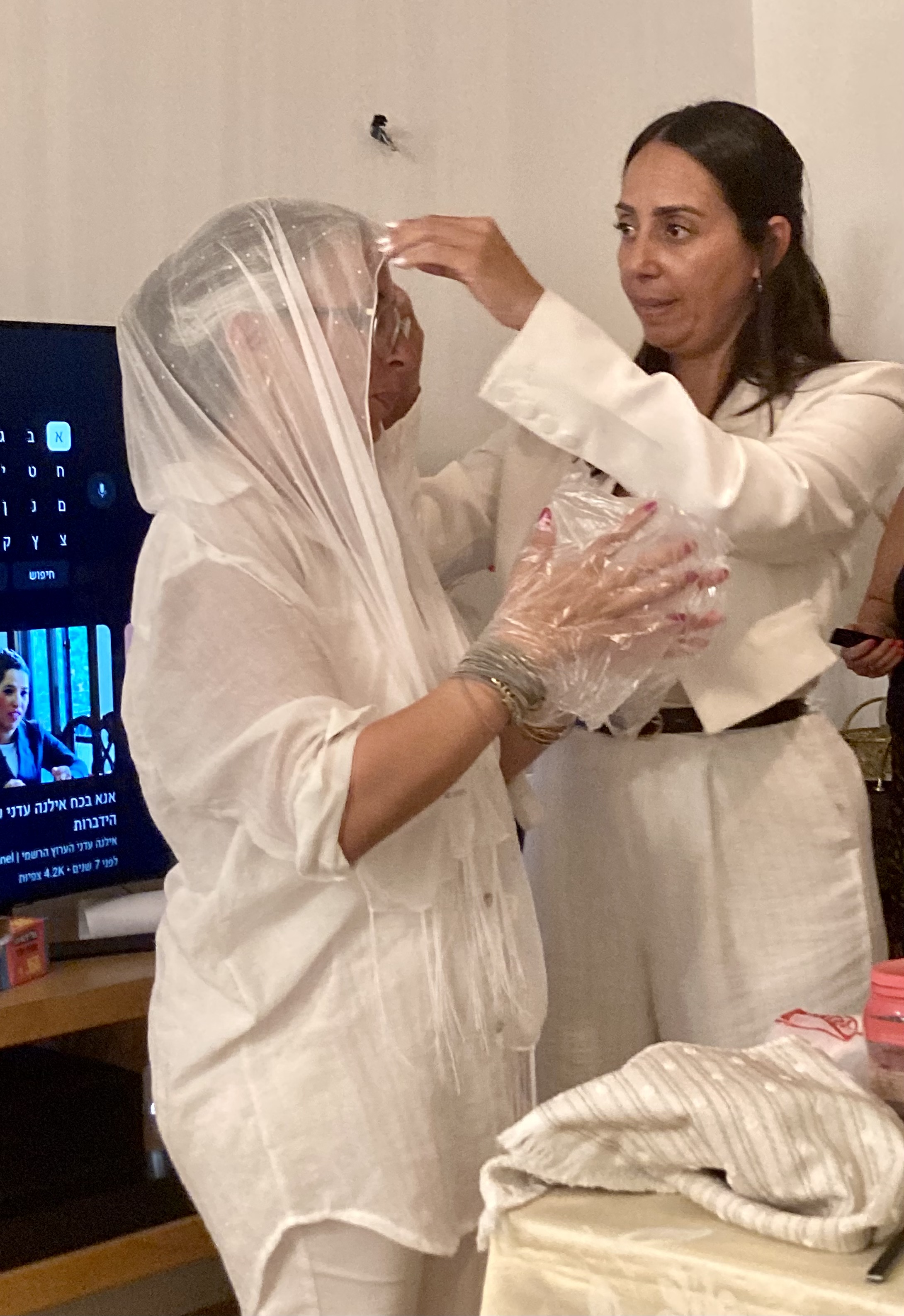
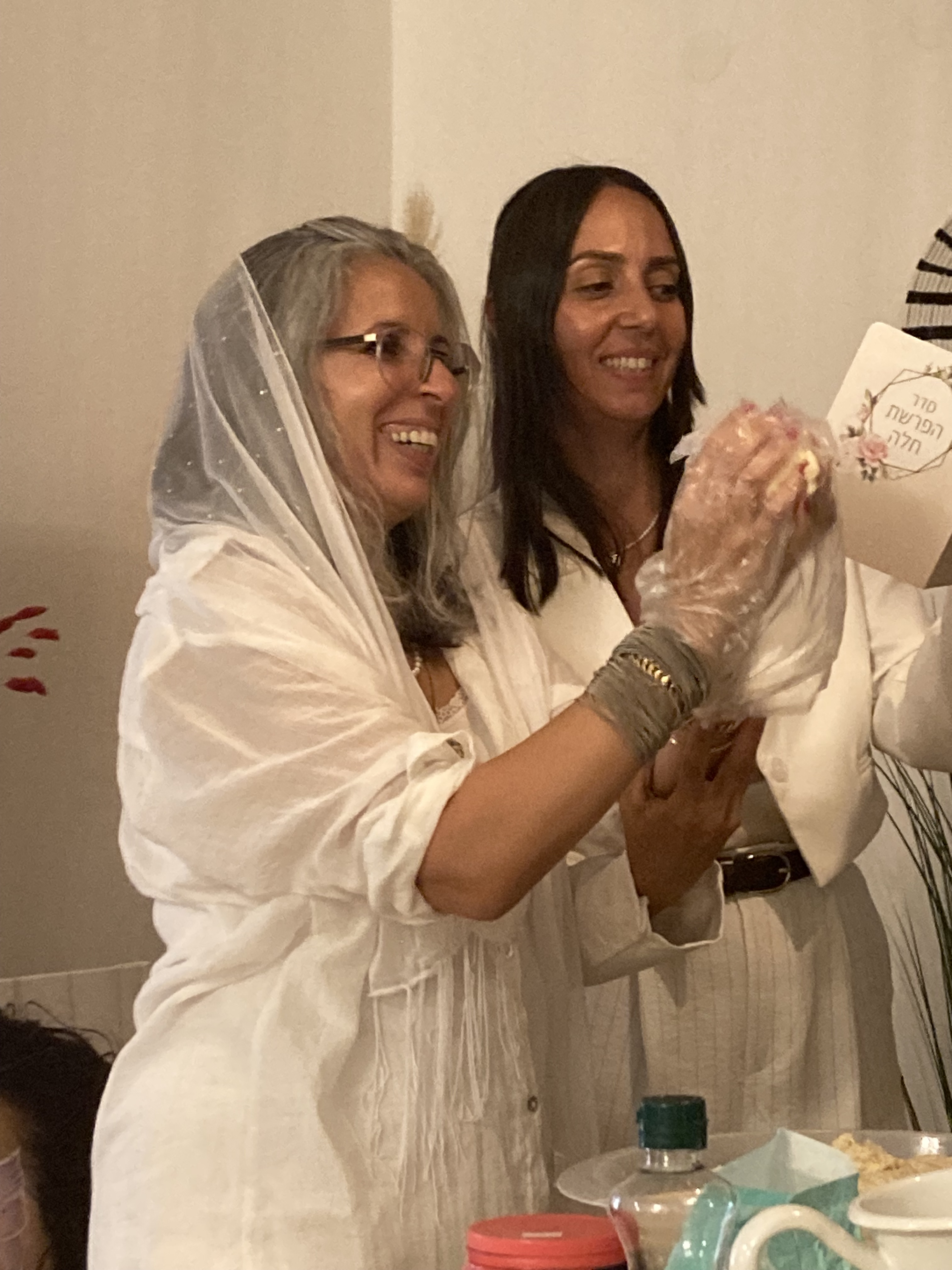
It is a special blessing for women to make the challah for Shabbat. After the dough has risen, the woman recites the blessing for separating the dough. Just as the man was alone, and G-d took from the side of Adam (man in Hebrew) to make Chavah (mother of all living, or Eve), the woman takes out or separates three pieces of the dough to set aside as an offering. At the time of the Temple worship, flour and oil were brought as a meal offering. Because there is no Temple, we take out lumps of dough and burn them in the oven. That separation makes the bread “challah.”

Just as the protein and gluten holds the dough together, the woman holds together the family. Because she has a nurturing nature and can see things in a different light, she is essential to the workplace. She is able to do many different tasks simultaneously. But when she is “placed in the oven” so to speak, if she does not watch out, it is easy for her to burn out. There were so many lessons to be learned from this women’s class. The most touching moment was when Karinne wrapped the challah (that separated lump) in foil, and said a personal prayer as she held it. She then passed it to me, to add my petitions to G-d, then pass it on to the next woman until all woman had attached their prayers to the ball of dough. Then it was placed on the bottom of the oven to be consumed by the heat.

While our personal loaves rose, we were invited to partake of a lovely spread. Each woman was presented with a little packet containing a booklet on how to make challah, a lovely booklet with the challah blessings and a book of the prayers that are said first thing in the morning. Upon leaving, each woman lit a candle and spoke forth their dreams for the new year: dreams of an easy labor and healthy baby; dreams of peace; dreams of health or healing for a loved one; of national unity; for angelic protection during their child’s military service. I was amazed that none of the ladies’ prayers were for themselves. It was a most uplifting night.

Ingredients:

  • 4 cups (485g) all purpose flour
  • 3 tsp (10g) fast action Instant yeast
  • 5 TBSP (16g) sugar
  • 1 1/2 tsp salt
  • 6 TBSP (90 ml) oil, vegetable or olive
  • 1 cup and 2 TBSP (269ml) very warm water
  • for glaze: 1 TBSP honey
  • 1 TBSP water
  • Sesame seeds or everything bagel seasoning

In a very large bowl, pour in the warm water. sprinkle yeast over the top and stir with a wooden spoon. Mix in the sugar. Let stand for about 10 minutes, or until the mixture is brown and bubbly. While the yeast is activating, say a blessing thanking G-d for your ability to provide for your family, and for His provision of food and blessing. Add in the flour and mix with your hand until flour is all incorporated. Add is salt and oil, and continue to knee pulling the dough from the bottom to the top. After about 10 minutes, the dough should be quite elastic and look glossy.and smooth.It should completely pull away from the sides of the bowl. Cover the dough with a plastic bag. Over the bag place a kitchen towel. Let stand in a warm place for about an hour (or two) until the bowl is doubled in size.
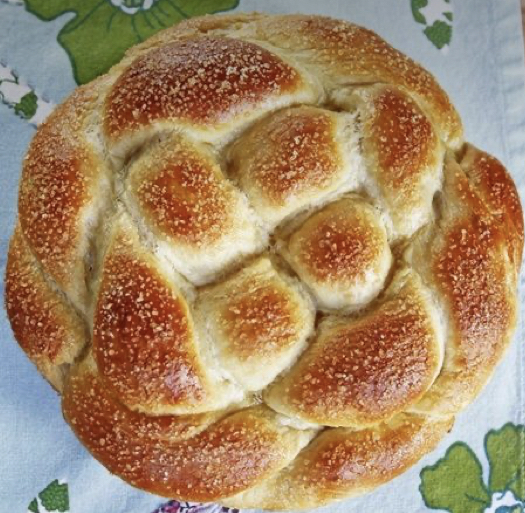
Come back and if you are truly making challah, say the blessing and separate out the three challah lumps of dough. Punch down the dough and divide into two balls. Take the first ball of dough and divide into three equal parts. Roll each ball into fairly long strands. Attach the strands at one end and tuck under. Then braid the dough strands like you are braiding hair. Tuck the little end piece under and place loaf on a slip at lined baking pan. do the same for the second lump. (For Rosh Hashanah, I fold the loaf around on itself to make a round, crown shape). Loosely cover the two loaves with a towel and let stand until doubled in size, about 1-2 hours. It should spring back when you touch it, but leave a small indent. Mix together the water and honey and brush over each loaf to glaze. Sprinkle your seeds on top. Set oven to 350*F/180*C. Bake for about 20 minutes or until loaves are golden brown on both top and bottom. If it looks like the tops are browning too quickly, you can cover with foil. This is the most basic, egg and honey free challah you can make. It is fairly quick and easy. leftovers make good French toast or bread pudding.

For so many reasons, this year I am scaling waaaay back for the holidays this year. Because Rosh Hashanah is a two-day holiday, and because it starts on the eve of Shabbat this year, no cooking will be done after sunset on Friday. Yet all meals must be prepared. Yikes! So, I’ll do this amazing Moroccan brisket in the crock pot. It will have lots of onions and tomatoes as well as apricots, raisins, kalamata olives, orange juice and spices.

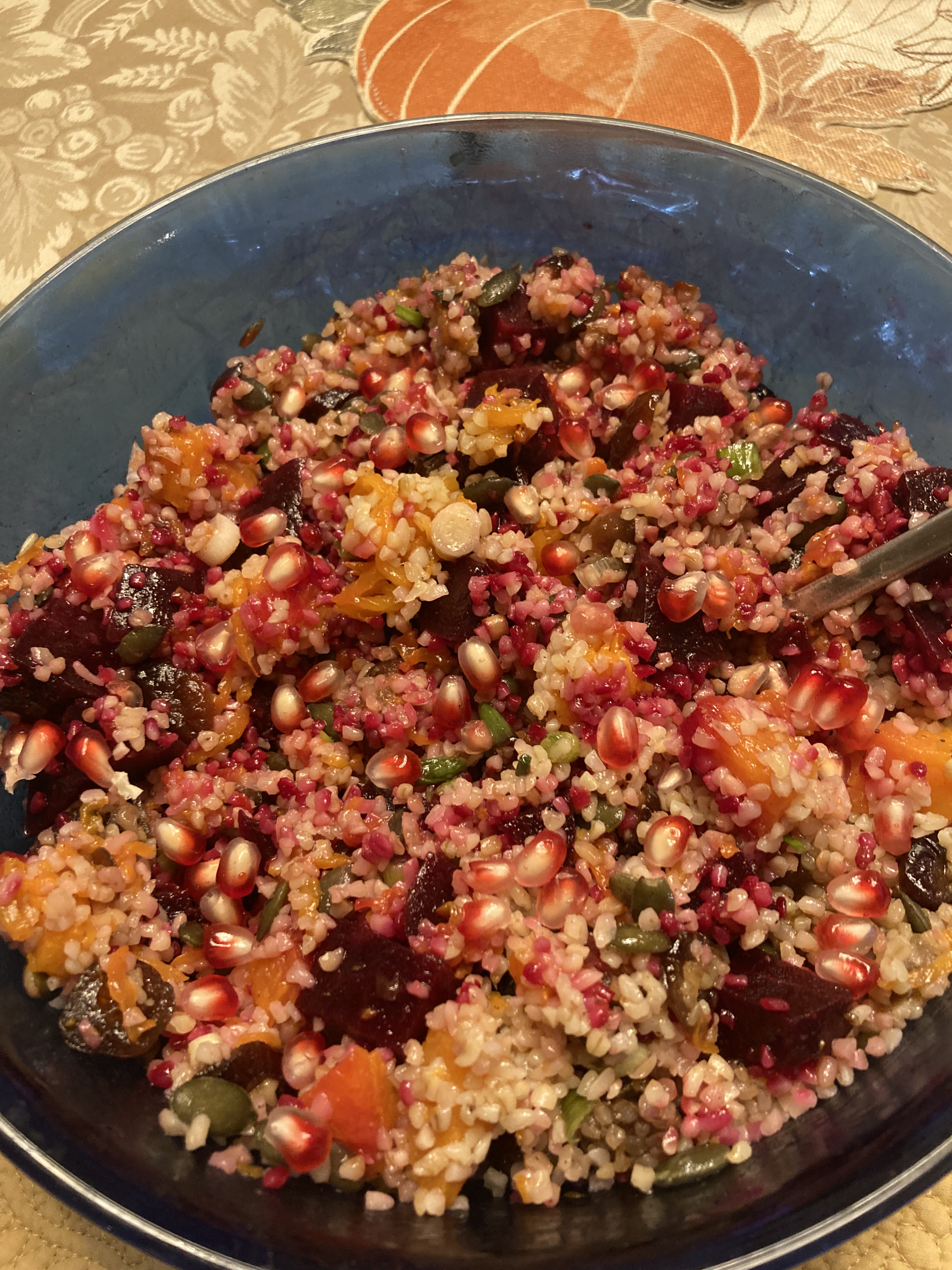
On the New Year, it is traditional to make blessings over several specific foods: pumpkin, pomegranate seeds, scallions, dates, beans, beets…each having special significance. This year I made the most delicious salad that I can’t wait to share with you. It can be served as a side dish with meat, warm or cold, or with dairy (throw in some feta or goat cheese!). And contains many of the simanim (,symbols).

Ingredients:

  • 1 cup bulgur (coarse ground, grain)
  • 1 1/2 cups boiling water
  • 5 scallions chopped
  • 6 dates, pitted and chopped
  • 1 cup roasted, cubed pumpkin (or butternut squash) pieces
  • 1 cup cubed roasted beets (1 large or 2 small beets)
  • 1/4 cup dried cranberries
  • 1/4 cup toasted pumpkin seeds
  • 1/4 cup fresh pomegranate arils
  • 1/2 cup Brianna’s Blush Wine Vinaigrette or or any sweet vinaigrette

Pour the dry bulgur groats in a bowl and pour the boiling water over the top. Let sit for about 10 minutes. When water has been absorbed, fluff the bulgur up with a fork. add in chopped scallions, chopped dates, chopped roasted pumpkin or squash, cranberries and pomegranate arils. In a small saucepan dry sauté the pumpkin seeds or add a little olive oil and fry them until they pop. Remove from heat and let cool. Add to bowl. Dress with Brianna’s Blush Wine Vinaigrette or a sweet vinaigrette. Add beets just before serving as their color spreads onto the other ingredients.

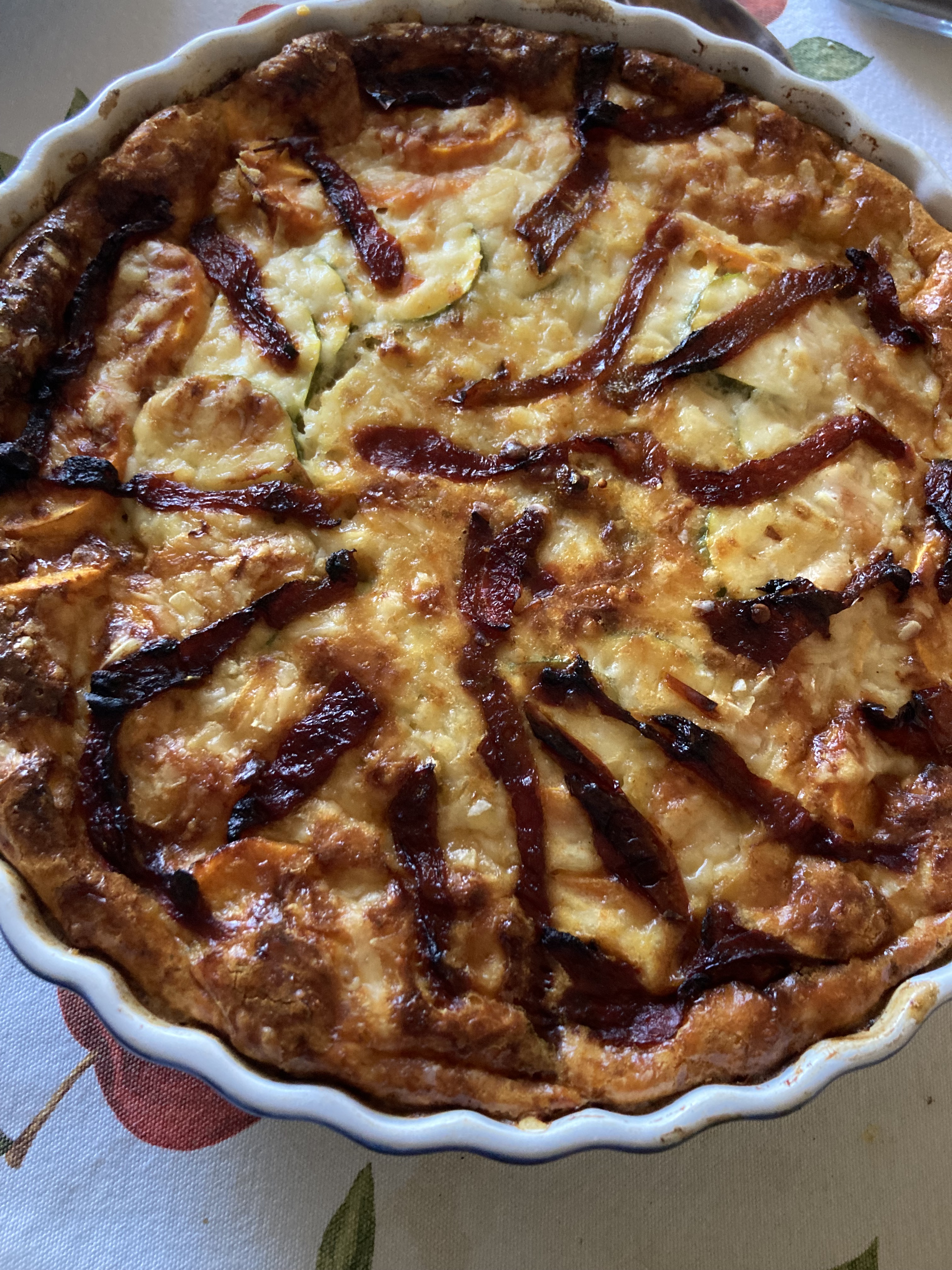
So when I told my daughter I was making a pashtidah (pronounced posh tee DAH) for Sunday, she started laughing hysterically. I told her it was a crustless quiche served in Israel and everybody makes their own version. she said, “Oh, you mean a frittata.” No. No. A fritata just has eggs and is broiled until it browns on top. This has lots of veggies and a custard. She thought I made up the word. Whatever! It’s delicious, so enjoy-

Ingredients:

  • 2 medium zucchini, sliced very thin
  • 2 medium sweet potatoes, peeled, sliced very thin
  • 1 large onion
  • olive oil
  • 1 cup shredded cheese (I use pesto Gouda)
  • 1 cup shredded Parmesan or grana Padano cheese
  • 6 eggs
  • 1 cup heavy cream
  • 1/4 cup chopped fresh herbs ( parsley, dill, thyme, basil…)
  • 1 jar roasted red sweet peppers.

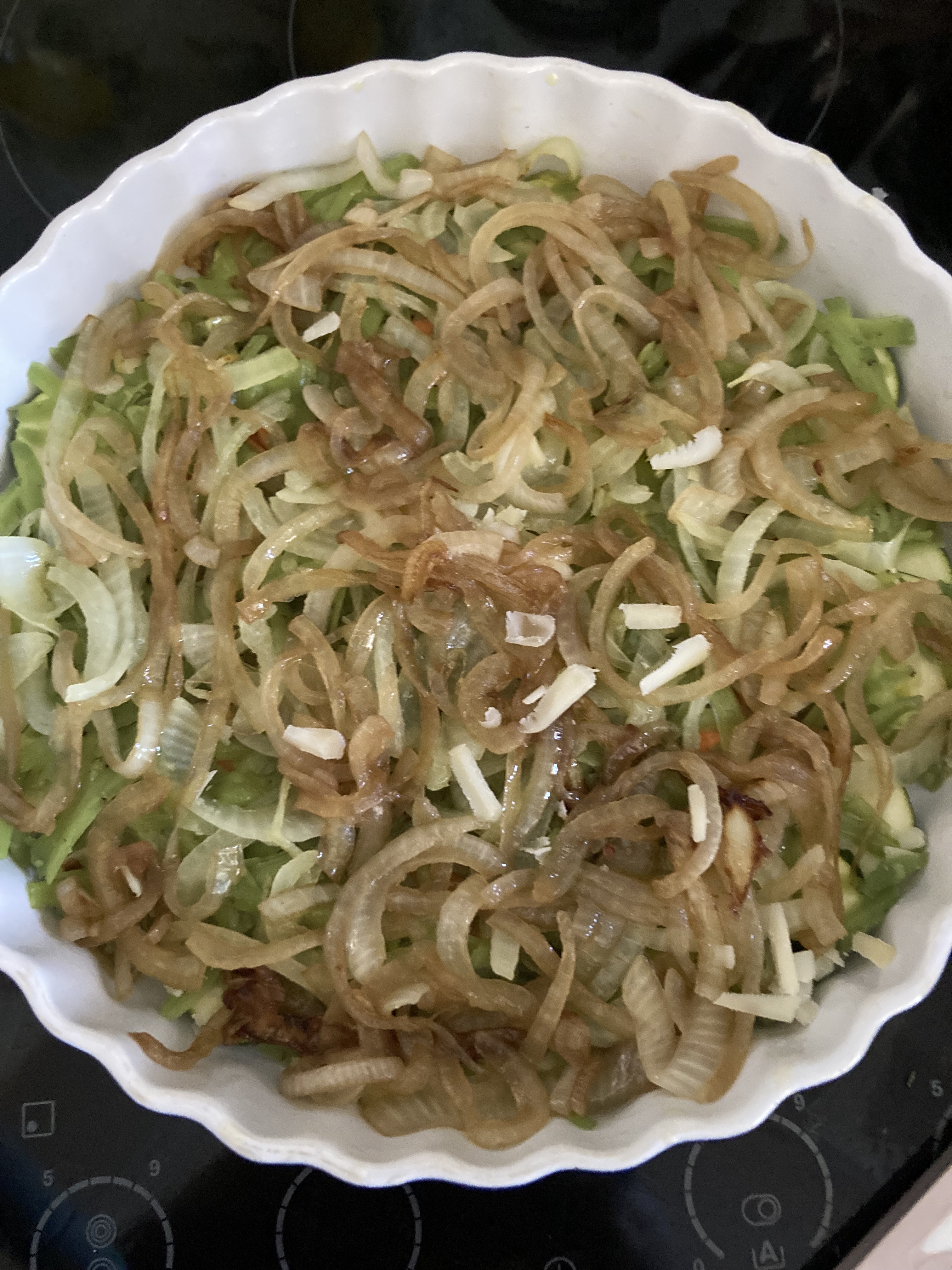
Preheat oven to 350*F/180*CGrease a large, flat, round baking dish with olive oil. Layer the zucchini and sweet potato slices in concentric circles. Sprinkle all the first cheese evenly on top. In a large skillet, heat olive oil and sauté onions until soft and carmelized. Spread evenly atop the cheese layer.

Add another layer of sweet potatoes and zucchini in concentric circles. Beat the eggs and cream. Stir in chopped herbs. You can add salt and pepper to taste at this point. Pour mixture slowly and evenly over veg layer. Top with shredded Parmesan. Slice roasted sweet peppers into thin strips and lay atop the pashtida. Place on baking sheet and into the oven. Let bake for about 30 minutes or until golden brown on top. The middle should not be jiggly. Can be served hot or cold, breakfast, lunch or dinner.

Black-eyed Peas Salad

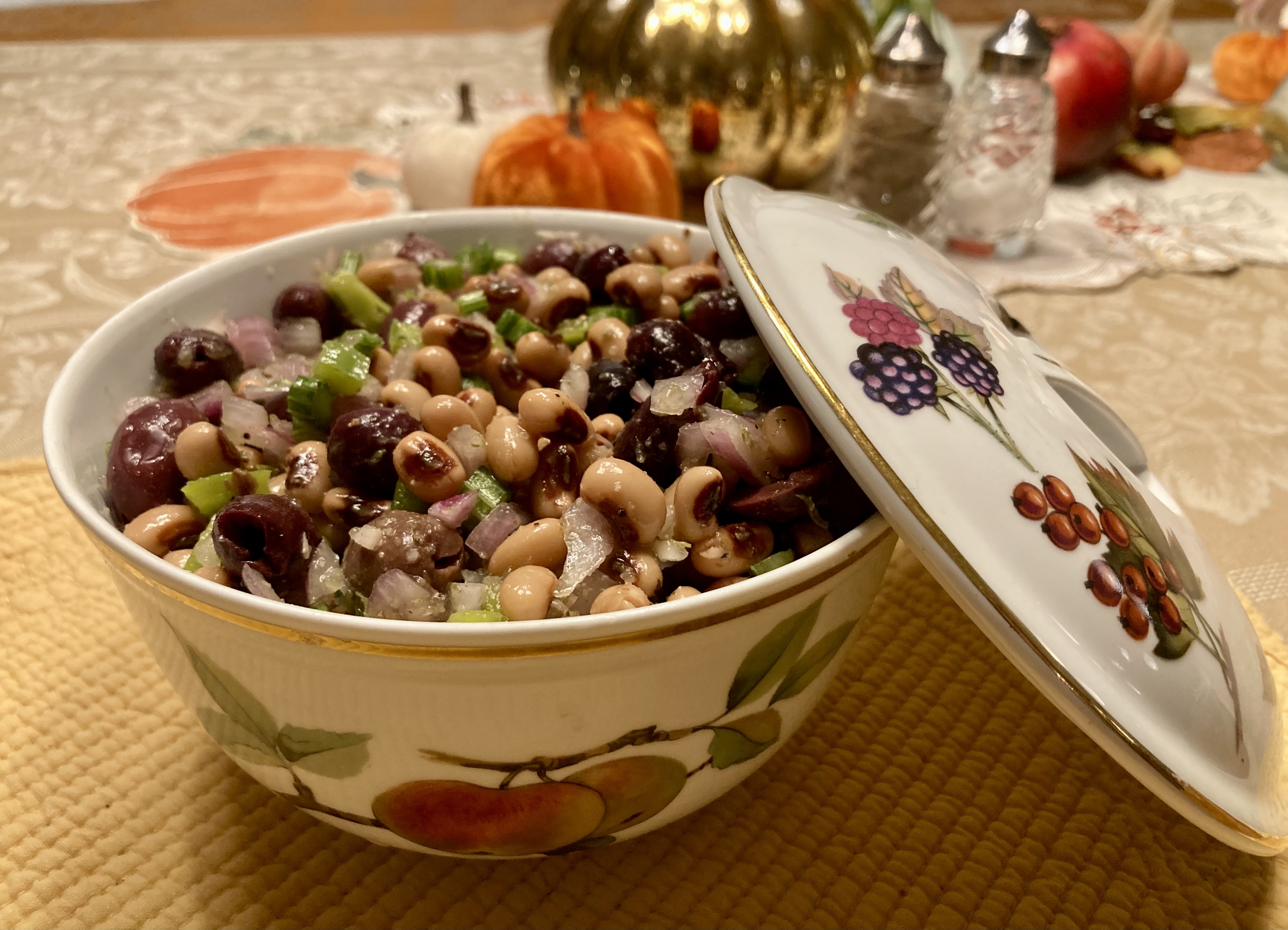
Originating with the Jews of the MidEast, across North Africa and into Spain, many Jewish people throughout the world now celebrate Rosh haShannah Seders. After the candle lighting and the regular blessings over wine and bread, the blessings over the simanim are said. All blessings begin, “Mayit be Your will, O L-rd, forge new year, that….our merits will increase (over the beans); that we will never again be slaves as in Egypt (scallions – and the kids whip each other with the scallions like taskmasters under Pharaoah); that all who wish evil upon us shall depart (over the beets). It all makes sense when it’s said in Hebrew. Basically all the foods have puns attached. imagine a dad holding up a head of lettuce, saying “G-d, lettuce have a good, healthy year.”

Ingredients:

  • 1 can black-eyed peas, drained
  • 2 stalks celery, diced
  • 1 small green pepper, diced
  • 1 small red onion, diced
  • 3 TBSP chopped, fresh parsley
  • 1/4 cup kalamata or black olives, halved
  • 1/4 cup Italian dressing, any variety

Mix all ingredients in a medium sized bowl. refrigerate at least one hour before serving.

For all those out there celebrating, A sweet new year with no bad news. may we have only good in our lives, and may we remain grateful for even the smallest blessings and acts of kindness.

Holiday Food

Where did the summer go? It’s still pretty warm here in the MidEast upper 30*sC/90*sF and now the humidity from the Mediterranean has kicked in making for balmy (sounds more romantic than miserably sticky) nights. We’re headed off to the UK for cooler climes and my daughter’s wedding to the most wonderful English gentleman! Then it’s off to the States to meet our new grandbaby and visit family for a little bit… so I’ve prewritten and scheduled some posts for when I’m gone. In the meantime-

Last week I had to drive my son up to his old base in the Golan Heights because he had reserve duty. Men and women are called up twice a year for a week or two to retrain and fill in spots as needed. This happens until they are in their 40s, depending on the unit. It’s a necessary part of defense here: one needs to be ready to go at a moment’s notice in case of emergency.
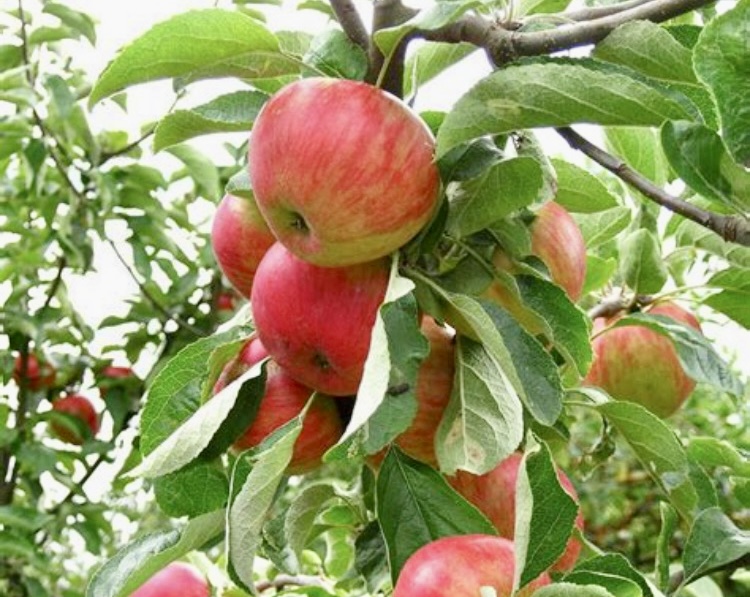
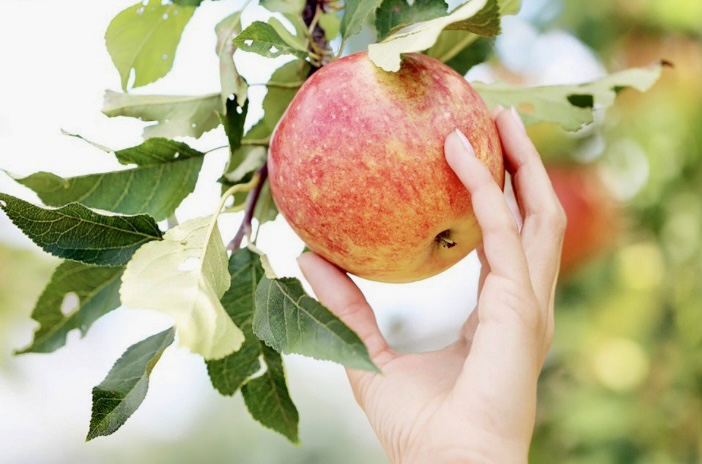
Anyway, I love the drive into the Golan. It’s so wild and pristine and gorgeous up there. Free roaming Angus cattle. Fruit orchards. Horses and cowboys. Tanks and soldiers in training. Mountains. Open space. Military bases. Crusader fortresses and Biblical ruins. Druze men roadside selling carob and date honey, apples, olives, and other local delicacies. I could tell it was the end of summer and only a few weeks until the Jewish New Year and fall festivals because…. Pomegranates!! Apples!! The trees were heavy with fruit and the orchards open to pickers. So I just HAD to. Pick. Waaaay too much, but the prices were so cheap! Like $0.60/pound or 4NIS/kg.

Rosh HaShannah, the Jewish New Year is celebrated both religiously and culturally. To represent the sweetness of the year, we eat apples dipped in honey. We eat apple cakes, apple fritters, apple noodle casseroles (kugels), apple salads. You get the idea.

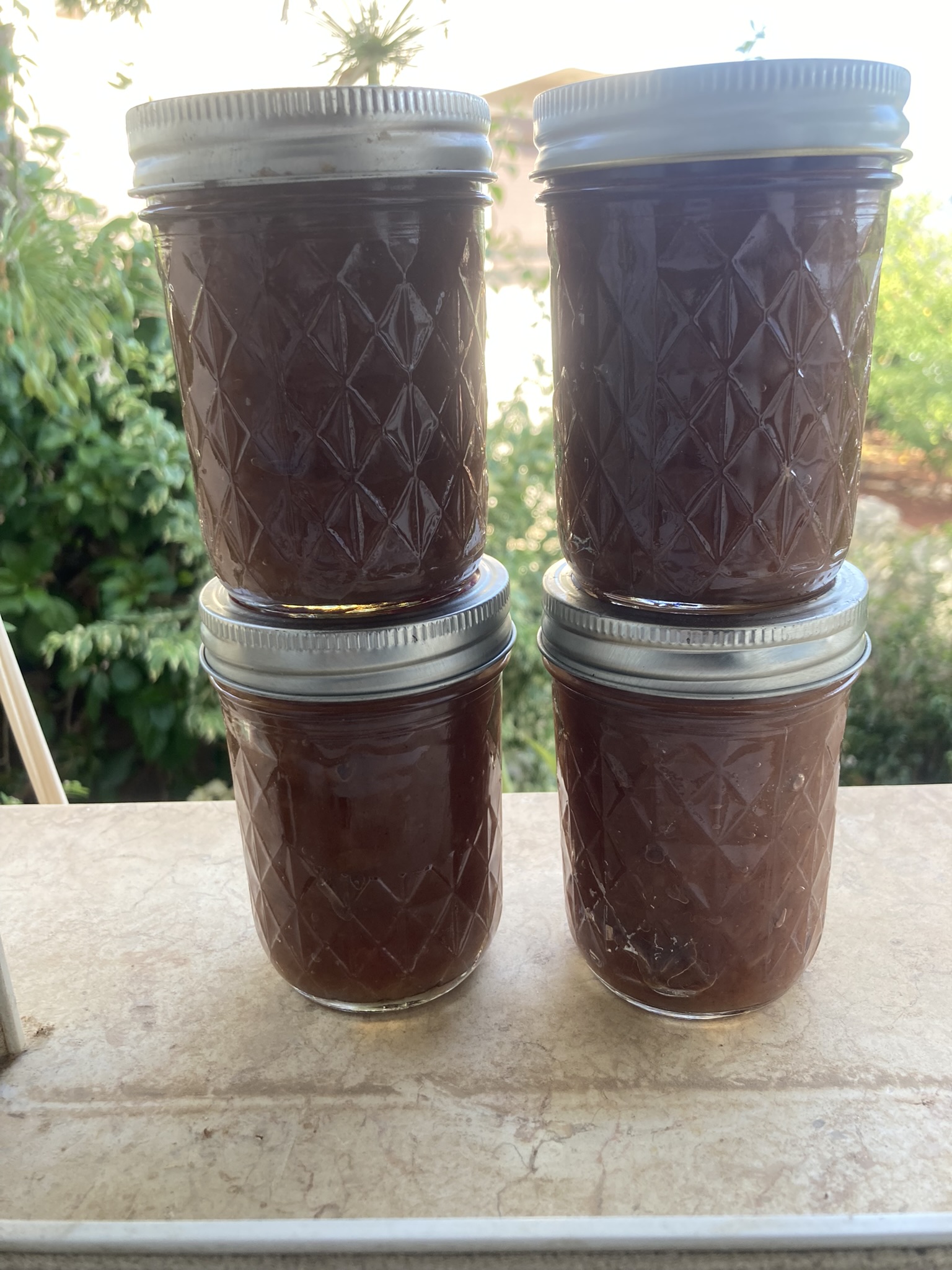
So I came home with my boxes and boxes and immediately set to work. I wanted to do things I could preserve or freeze for when we get back from our trip. So, here are two of my creations: Apple Butter and Apple Lukshen Kugel. Enjoy!

SPICED APPLE BUTTER

The apple butter works great with cream cheese and peanut butter on bread. Or just plain bread. Or stirred into oatmeal on a cold winter day.

Ingredients:

  • 5 pounds (2.5 kg) apples, unpeeled, washed and cut into chunks
  • 4 TBSP apple cider vinegar
  • juice of 2 lemons
  • 1/2 cup maple syrup
  • 1/2 cup packed dark brown sugar
  • 2 TBSP cinnamon
  • 1 tsp ground cloves
  • 1/2 tsp allspice
  • 1/2 tsp ginger
  • 1/2 tsp nutmeg
  • 1/4 cup bourbon, whiskey or brandy (optional)

Place all the above ingredients into a large pot and cook uncovered over medium heat. Stir occasionally. In about an hour the apples will have become very soft. Blend thoroughly using an immersion blender. Reduce the apple butter to lowest flame. In a separate pot, boil Mason jars (I use 1/2 pint jars) and lids (not screw-top bands) for 20 minutes to sterilize. Ladle the hot apple butter into the hot empty jars. Place lid on top. Then screw on the sealing ring band. You should get 7-8 jars per batch. Submerge filled jars in a hot water bath (not boiling- just a simmer) for 20 minutes. Remove jars and let cool. Keeps up to 1 year in dark pantry. Refrigerate after opening.

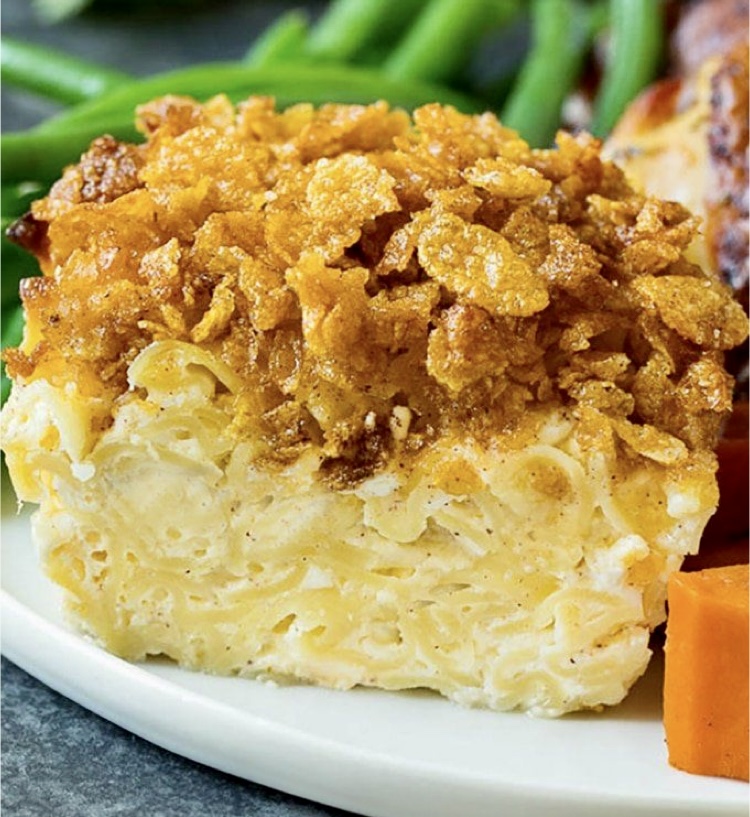
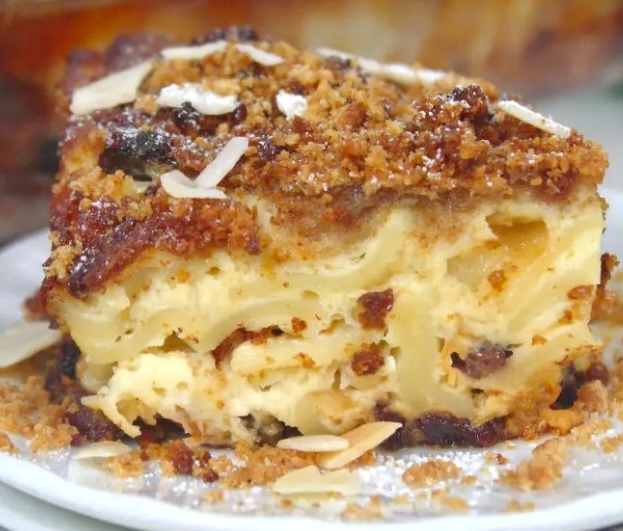
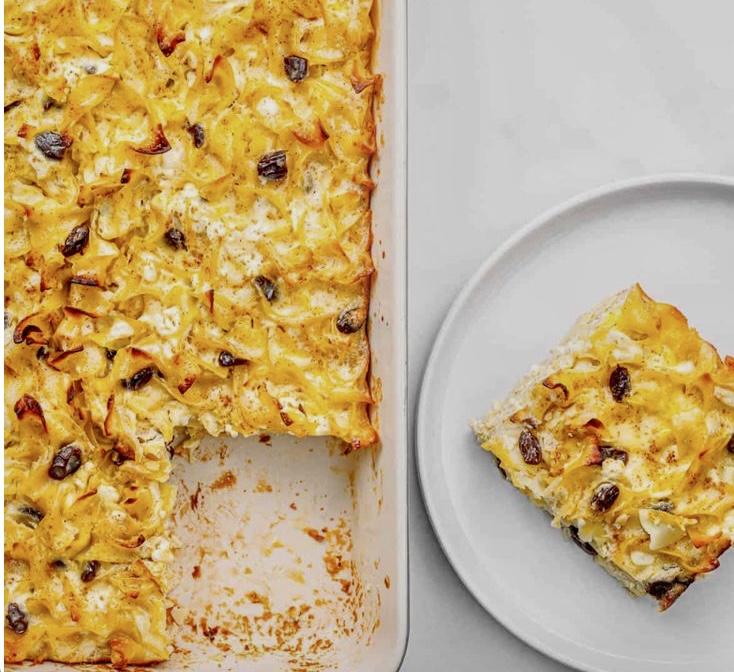
SWEET NOODLE PUDDING WITH APPLES: LUKSHEN KUGEL

This is THE quintessential dairy comfort food for Ashkenazi Jews. You can eat it hot or cold, for breakfast, lunch, dinner or snacks. It’s a main dish. it’s a side dish. It’s a dessert. But ask 5 Jewish mommas how they make it and what you’ll get is a headache: raisins or no raisins? Apples, pineapple, dried fruit or plain? Streusel crust, cornflake crust or plain? And then there’s the spices….oy vey! Is it a crime to use ginger and nutmeg or do we just tick to cinnamon? Full fat or low-fat. Everyone has their own opinion….and of course, mine is the best (wink wink). The best thing about it is that if you make a big batch, it freezes and defrosts incredibly well, so I do 3-4 at a time (and have a kugel to send back with the university kid).

This recipe makes 1 9X12 inch (23X30cm) baking dish which cuts to 12 generous pieces.

Ingredients:

  • 1 12 ounce package extra wide egg noodles
  • 4 eggs
  • 1 cup sour cream or plain yogurt
  • 4 ounces (114 grams) cream cheese
  • 1 1/2 cups cottage cheese
  • 1/2 cup sugar (I prefer coconut sugar)
  • 6 TBSP butter
  • 1 tsp vanilla
  • 1/2 cup raisins
  • 3 small apples, peeled and sliced thinly
  • 1 cup cornflakes

Boil noodles in salted, boiling water for no longer than six minutes. They should be al dente, not mushy. Drain noodles and rinse well. Return the noodles to the pot along with 3 TBSP of the butter. keep heat on low flame just to melt the butter. Stir noodles until coated. Preheat oven to 350*F/170*C. Grease the Pyrex baking dish. In a very large mixing bowl, combine the cream cheese and sugar until smooth. Add in eggs, sour cream or yogurt, cottage cheese, spices and vanilla. Mix thoroughly. Fold in noodles, then raisins and apple slices. Pour into prepared baking dish. In separate bowl, lightly crush the cornflakes. Add 3 TBSP melted butter, 1/4 cup (coconut) sugar and 1 tsp cinnamon. Mix well and spoon over noodle pudding. Bake for about an hour or until the kugel is firm and crispy on the top. A cake tester should come out clean- Delicious!

I’d now like to introduce you to a very special young lady. Batya Deltoff is 16 years old. We became friends with the Deltoff family because we moved to Israel around the same time and the Deltoff kids played Little League baseball on my husband’s team. That was over 7 years ago. Batya is from Toronto, Ontario, Canada. This straight-A student hopes to be a anesthesiologist one day, but until then she’s happy to hang with her girlfriends. And cook. Cooking is her creative outlet. She has this intuitive sense of what goes with what and is both experimental and fearless. Ethnic foods from Asian to Middle Eastern specialties are the most exciting for Batya to prepare. And she doesn’t use a recipe! It’s all done from memory of what she’s eaten and enjoyed and from taste. She cooks regularly for her parents and 3 siblings – “but they pay the fee of cleaning up after me,” she jokes. I had the good fortune of watching her and cleaning up after her last week.

This recipe has Iraqi origins and is called Kubbe. It’s a hearty soup or stew and can be eaten by itself as an appetizer or meal or served over couscous. The kubbe makes a huge pot and it freezes well. Man, is this delicious. perfect for the holidays, especially the cooler nights of Sukkot.

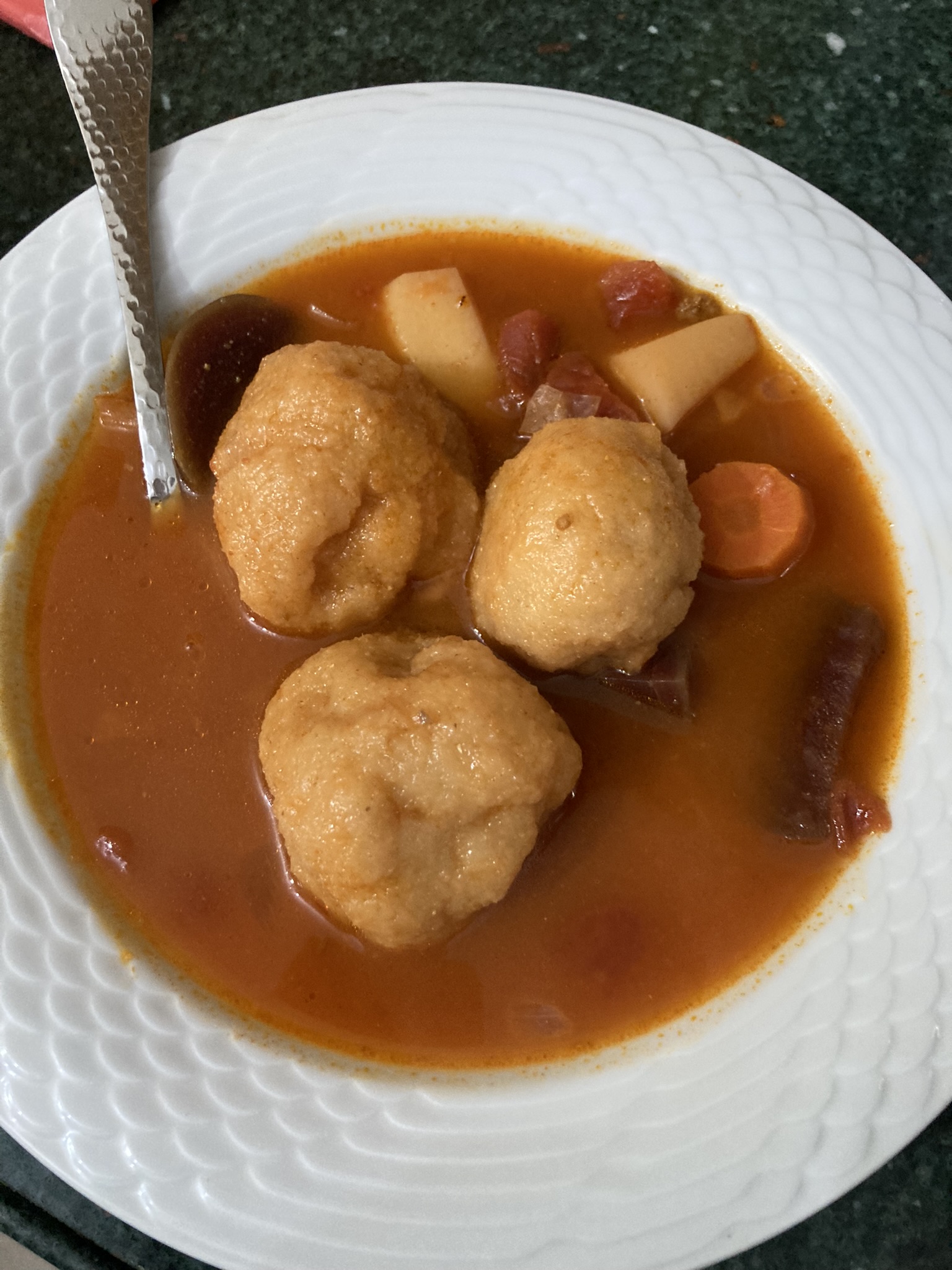
To me Batya’s Kubbe tasted like a hybrid Jewish-Mexican style borscht. It has lovely vegetable chunks in a tomato-beet broth. Then there are these dumplings that look just like matzah balls. One bite into the balls gives a meaty taste explosion because they are stuffed with a magnificent ground meat mixture. It’s delish and healthy and oh-so-satisfying. I was worried that it would be too spicy for me, but the range of spices complement the soup. And you can always add sriracha or Tabasco for added heat.

BATYA DELTOFF’S AMAZING KUBBE

Ingredients:
SOUP-

  • 1 large yellow or white onion
  • 3 large carrots, peeled
  • 3 medium potatoes, peeled
  • 1/2 large cabbage or 1 small cabbage
  • 4 medium roasted, peeled beets or 1 large prepackaged cooked beets
  • 2 TBSP olive oil, plus extra for oiling hands
  • 200 grams canned chopped tomatoes in juice
  • 6 cups water
  • 4 tsp sweet paprika
  • 1 tsp ground black pepper
  • 3-4 tsp cumin
  • 2 squeezed lemons, pips removed
  • 1 TBSP slat
  • 1 TBSP sugar

MEATBALL DUMPLINGS-

  • 1.5 lb ground beef (3/4 kg)
  • 2 TBSP sweet paprika
  • 2 tsp cumin
  • 1/4 onion, minced fine
  • 2 cloves garlic, crushed
  • 1/2 tsp salt
  • 1/2 tsp ground black pepper
  • 1/2 tsp ginger

DOUGH FOR THE KUBBE BALLS-

  • 3 cups white semolina
  • 1 tsp salt
  • 1 1/2 cups very warm water

Instructions:
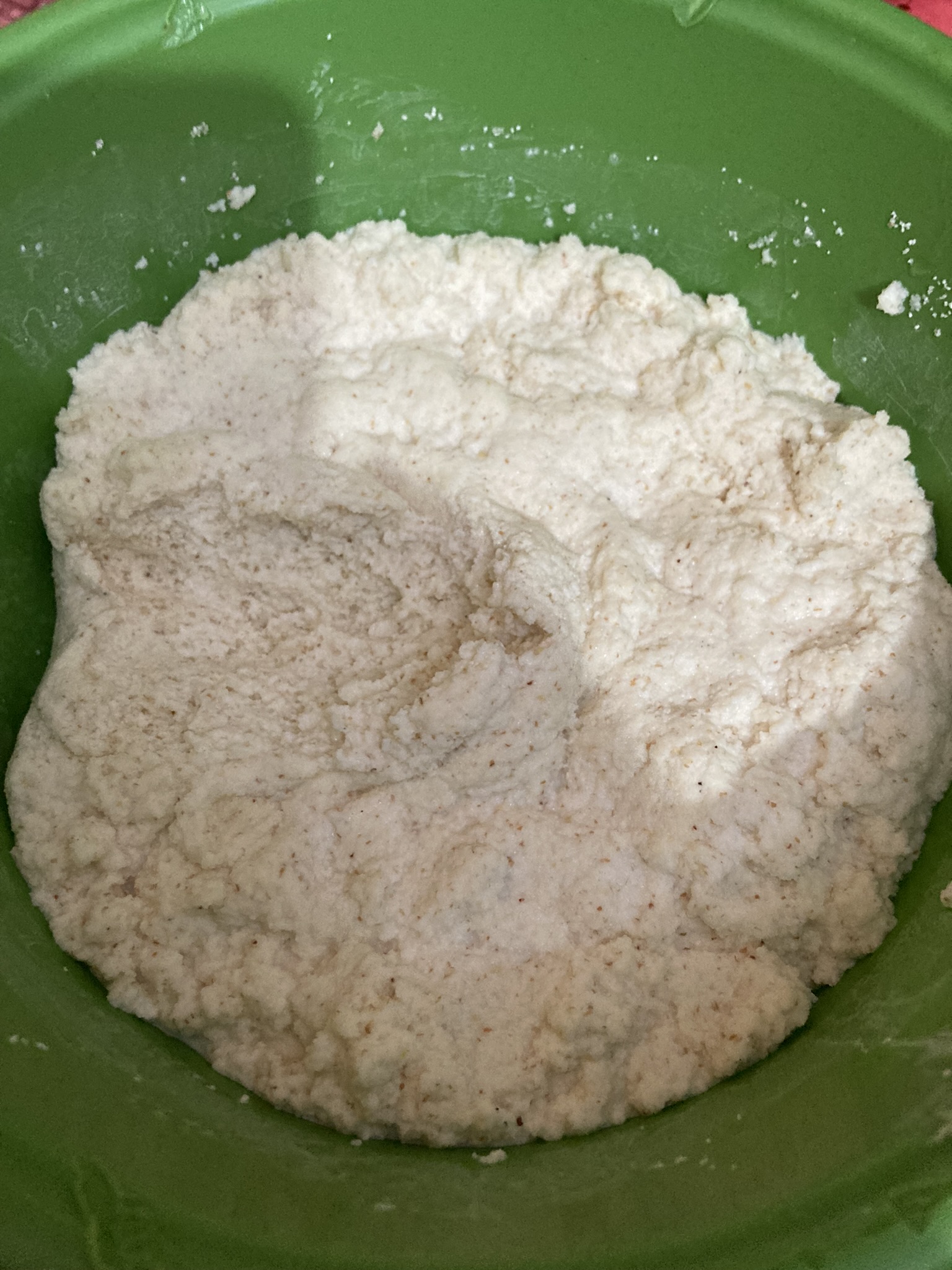
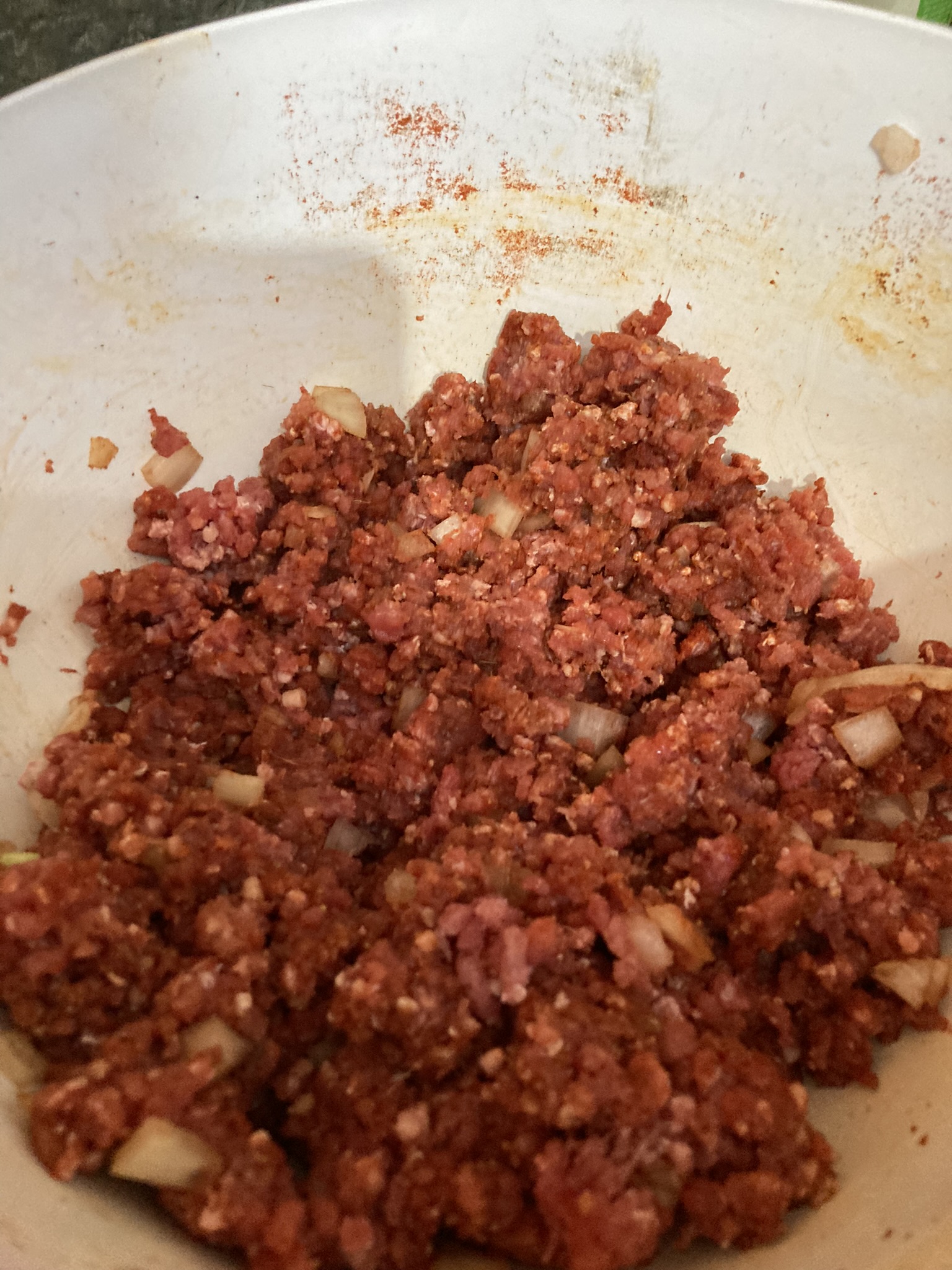
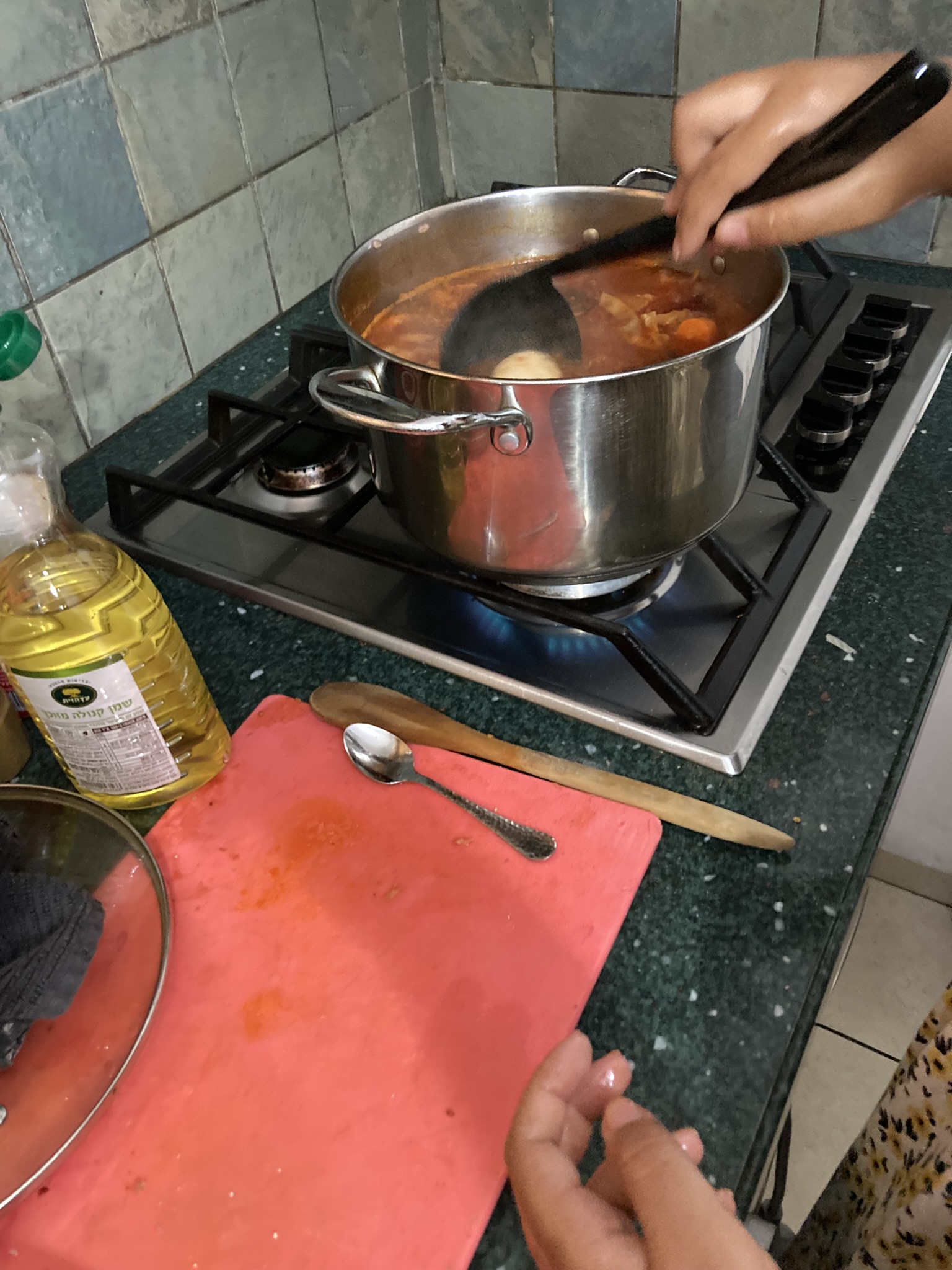
Peel and cut carrot and potatoes into bite sized chunks. Slice cabbage. Peel onion. Reserve 1/4 onion, and cut the rest into bite sized pieces. In a large stock pot, heat up the olive oil and when shimmery add the above veggies. Cook over medium heat to soften. Add in the cooked beets, also cut into bite size cubes. Pour in the canned tomatoes with the juice. Add enough water to completely cover the veggies (about 6 cups). Stir in the spices. Let come to a boil, then after 3 minutes, turn the flame down to medium low. Begin the dough: in a large mixing bowl, add the semolina and salt. Mix to incorporate. Add in 1 1/2 cups of very warm water, stirring as you go. Let sit for about 10 minutes. It will set up to be a granular gooey paste. To make the meatballs: in another large bowl add the ground beef, onion, garlic and spices. Mix well.

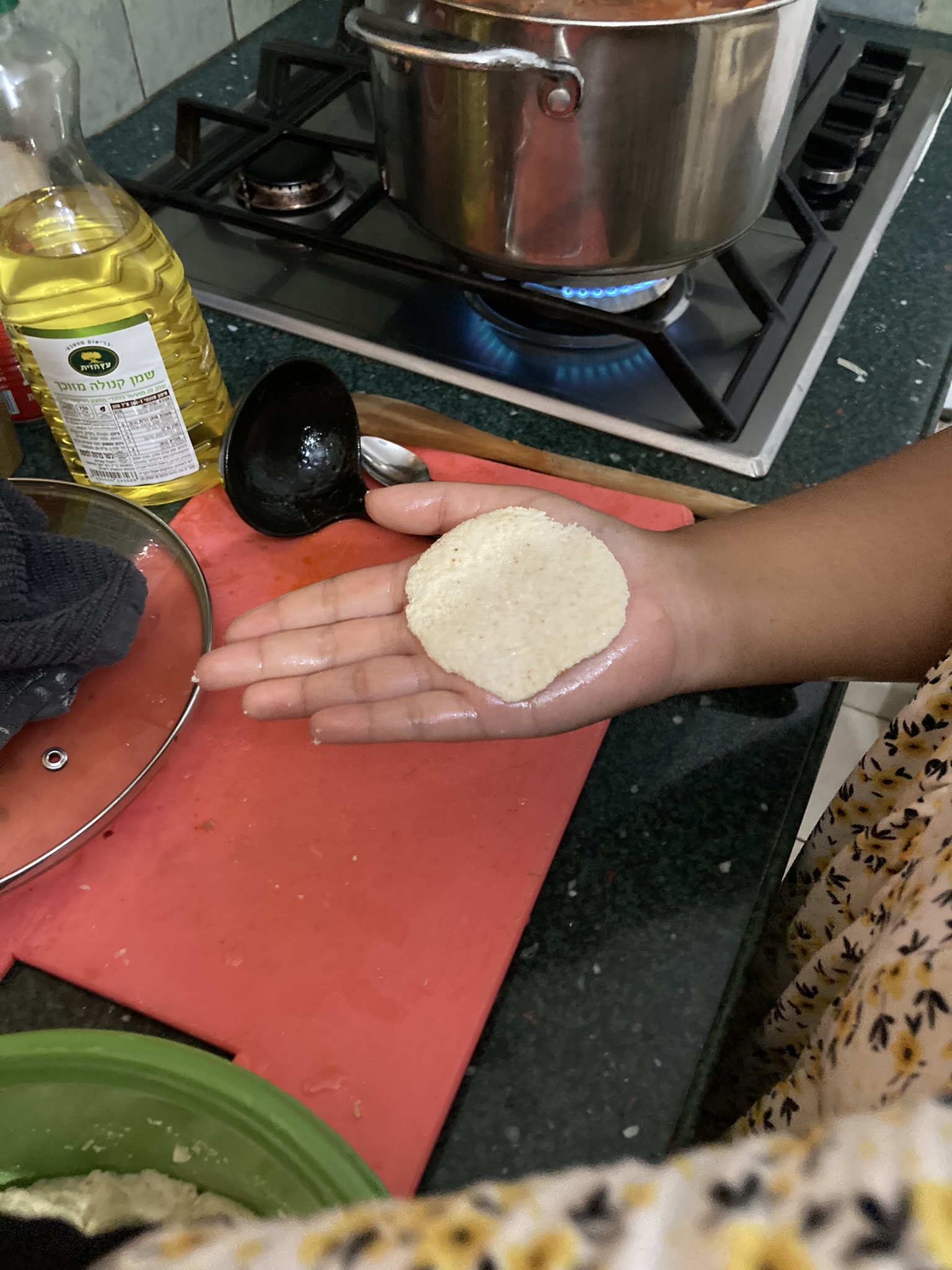
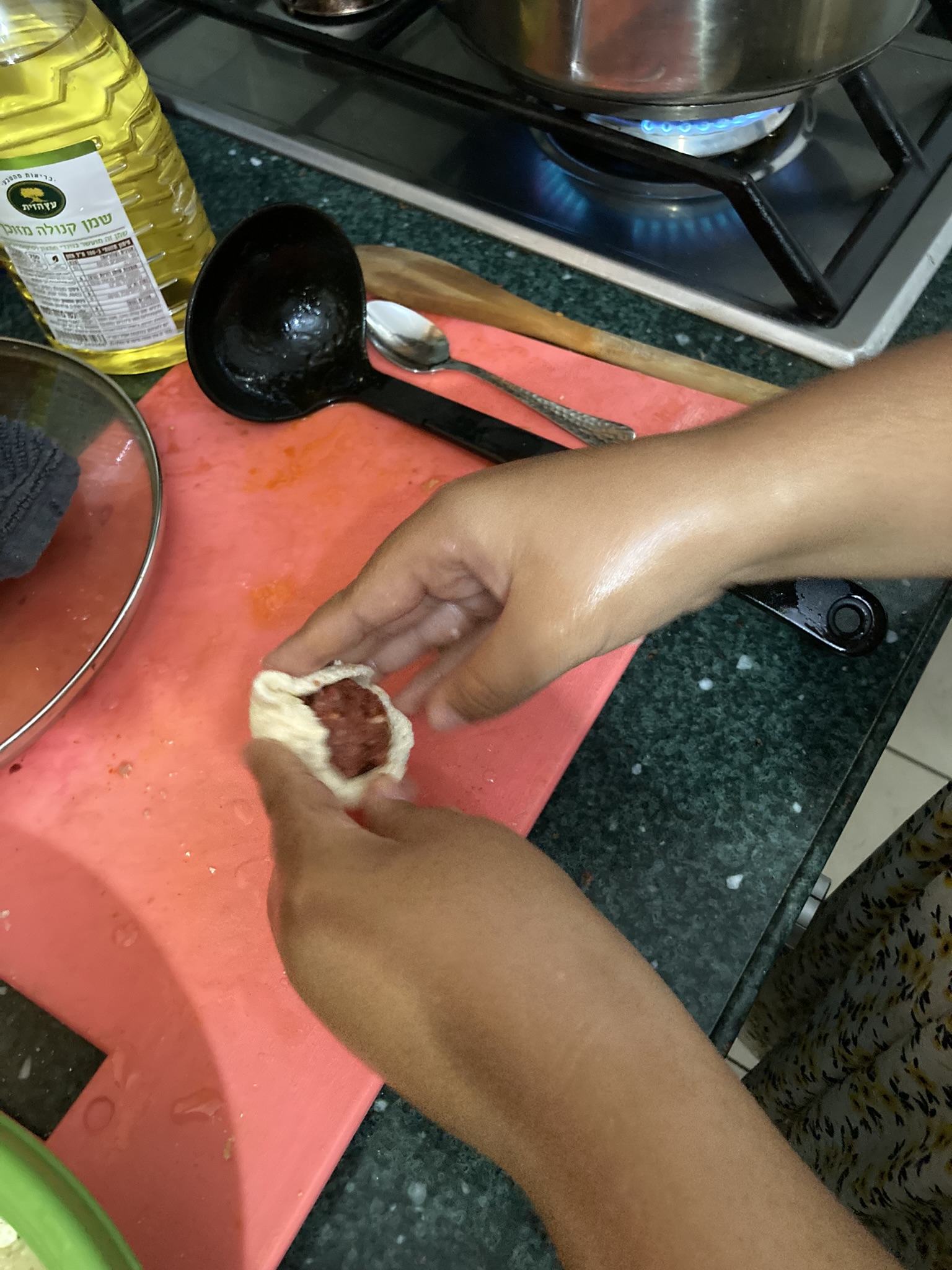
To make the Kubbe balls, oil your hands and a ladle well with olive oil. Pinch a golf-ball sized piece of dough and flatten in the palm of your hand, making special care to flatten out the edges. Place a nice ball of the ground meat mixture in the center of the dough (in your hand). Pull the ends of the dough up to cover, and pinch off the ball at the top, completely surrounding the meat. Make sure there are no holes. Place kubbe in a greased ladle and lower it down into the hot soup. Continue for the rest of the balls. You can also put in plain meatballs without the dumpling coat. See photos-

Let the soup come back to a slow boil, then reduce heat to simmer and cover. Let cook about an hour on low. This is best eaten the next day, and makes a great Shabbat lunch.

If you are keeping Kosher, serve it with a generous dollop of Tofutti imitation sour cream. If you are not worried about Kosher status, sour cream is a great add for the top.

It’s All About the ”Red Stuff!”

Middle Eastern Red Lentil Stew (vegan!)

Yaakov (Jacob) simmered a stew, and Esav (Esau) came in from the field, and he was exhausted. Esav said to Yaakov, ‘Pour into me now some of that very red stuff for I am exhausted.’(From then on they called him Edom) Yaakov said, ’Sell me today your birthright.’ And Esav said, ’ ’Look, I am going to die, so of what use to me is a birthright?’ Yaakov said, ’ Swear to me this day;’ he swore to him and sold his entire inheritance to Yaakov. Yaakov gave Esav bread and lentil stew, and he ate and drank, and got up and left; thus, Esav spurned the birthright.

Each year we read through the Torah, the first five books of the Bible. I have always loved the story of the two brothers, Jacob and Esau, on so many levels. It’s so descriptive. And I’m a real foodie, so I appreciate that it centers around food – but to sell off my entire inheritance (Esav, the oldest brother was a son of Yitzhak (Isaac), and grandson of Father Abraham, the Patriarch: two incredibly wealthy men). He had to be mighty hangry!!! And that must have been some mighty delish stew!! Each year I try to test a new recipe for that ’red stuff,’ so now I’m going to share three of my favorites. So glad I had this blogpost in reserve to pull out for you all. This year’s trio is decidedly MiddleEastern, as I’m trying to be more authentic and historical. Next year, I’ll actually be up and able to make them… in the meantime, somebody bring some of that mejaddra!!

– Genesis 25:29-33

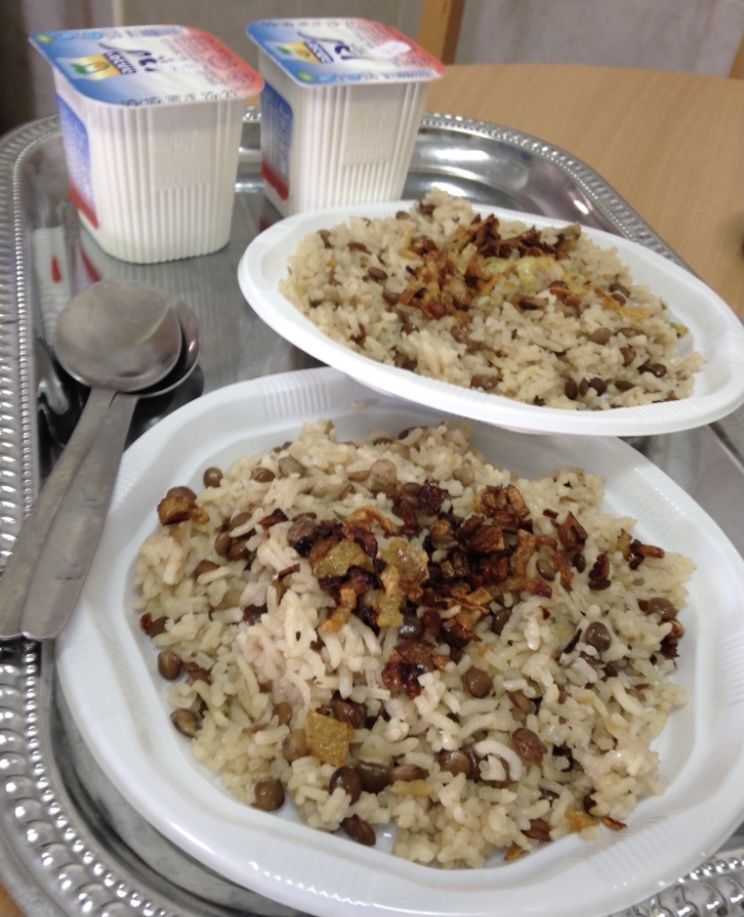
The first recipe is true Middle Eastern comfort food. I think my tastes are changing a bit from strictly Western to other things. I first had this on my pilot trip to Israel in 2014. I hadn’t really eaten much in a couple of days because I was so on the go, and I was starving. Like Esau. In the ancient city of Tsfat in the Upper Galilee, I met a native Israeli family who invited me in to their home for lunch. They served the most delicious dish: simple home cooking. The perfect, satisfying, filling, comfort food, and so easy to make. It’s not red stew, but a combination of rice, lentils and fried onions. We feasted on freshly-made cheeses, mejaddra, and yogurt. And afterwards the father brought out a carafe of strong Turkish coffee infused with cardamom, which we sipped from tiny demitasse cups while eating a little piece of halvah. It was the best, just an unforgettable moment of Israeli hospitality. So glad I snapped photos of it back then. What I wouldn’t give for this plate of mejaddra now…. I hope you enjoy!

Mejaddra

Ingredients:

  • 1/3 cup Extra Virgin Olive Oil
  • 3 large brown onions (the onions are the star of the show here)
  • 1 cup dried brown lentils (or 1 can lentils, liquid reserved)
  • 1/3 cup flour
  • 1 cup Basmati rice
  • 1 tsp cumin seeds
  • 1 tsp coriander seeds
  • 1 tsp powdered cumin
  • 1/2 tsp cinnamon
  • 1/2 tsp allspice
  • 1 tsp turmeric
  • 3 cups of water or vegetable stock, or if you are using dried lentils, the boiled lentil water)

In separate bowls, soak the rice and the lentils for a couple hours, straining out and changing the water twice. Next, drain off the lentil water and place the lentils in a medium sized pot. Cover the lentils completely with water with a good inch more over the top of the lentils. Add about a tsp salt and bring to a boil. Turn the heat down to simmer and cook about 20-30 minutes until the lentils are tender. NOT MUSHY! Drain off the lentils SAVING THE LENTIL WATER! (If you are opting for the quicker, canned lentils, drain, reserving the liquid.)

Thinly slice the onion. Place in a bowl and sprinkle with salt and flour. Toss to coat the onion in the flour. Heat the olive oil in a large saucepan or medium sized pot. When glistening, add the onion slices and fry up for 10-12 minutes until the onions are a crispy brown. DO NOT BURN!! Transfer out the crispy onions to a paper-towel lined plate. In the same heavy saucepan in which the onions were cooked, add the cumin and coriander seeds. It should become quite fragrant after heating for about a minute. Now add in the drained rice and the remaining powdered spices. Stir to coat the rice in the oil and spice. Add in the lentils and reserved lentil water. The liquid should measure 3 cups. If necessary, add in more water. Bring to a boil, then turn down to low and cover. Simmer for about 15 minutes. Uncover and fluff rice. season with salt to taste.

Spoon the rice-lentil mixture onto a large plate or bowl and top with the crispy fried onions. If you’d like, you can top it off with a small handful of chopped parsley or cilantro.

This next soup is more of an accurately Biblical lentil dish. the spices and the red lentils really bring out that glorious color:

Red Lentil Soup vegan

Now this red lentil soup is the real deal. The Red Stuff. Esav’s Bane. True flavors of the Levant. Israeli cooking, whatever that is. It’s fragrant, filling, flavorsome, fantastic. I think once Esav got a whiff of this soup, he was justified in saying, “Just pour it right down my throat, Bro!” Not only a lovely soup, but the lentils are just full of protein, so it is quite life-sustaining.

Jacob’s Big Boilin’ Pot of Red Stuff, aka Red Lentil Soup

Ingredients:

  • 2 cups red lentils
  • 5 cups vegetable broth (or water or a combo of both)
  • 1 large onion, diced
  • 5 cloves garlic, chopped
  • 2 large carrots, peeled and sliced
  • 1/2 tsp cumin
  • 1/2 tsp turmeric
  • 1/4 tsp cayenne or chili powder
  • 1/2 tsp smoked paprika
  • 2 Tbsp olive oil
  • 1 bay leaf
  • salt
  • 1 lemon, cut up
  • optional garnishes: chopped parsley or cilantro; yogurt; crumbled feta cheese bits (we’re keeping it Israeli)

In a large bowl, soak the lentils for about two hours, straining out and replacing the water at least once. Heat olive oil in a medium/large pot. When glistening, add in the garlic, onion, and bay leaf until the onion is soft and fragrant. Add in carrot slices and cook, stirring about 2-3 minutes. Mix in all the spices with about 1/4 cup of the veggie broth or water. It will be very rich in color and very fragrant. Add in drained lentils and 5 cups of veggie broth or water. Bring to a boil, then immediately reduce heat to a simmer and let gently cook on low heat for 20 minutes. The lentils should be tender/ slightly chewy, but not mushy.

I keep the soup chunky. It’s more rustic and has more of a Biblical feel to it that way, but feel free to puree it with an immersion blender. Add salt to taste, and garnish with the chopped herbs. Serve with a wedge of lemon on the side, which can be squeezed into the soup at table. You can also add crumbled (goat) on top. This is great served with light, fluffy Israeli pita and humus (NOT the American cardboard that passes as pita!!) or pieces of crusty, wholegrain bread.

But I like the idea of a red stew. A stick to your ribs kind of meal. Hearty and healthy.

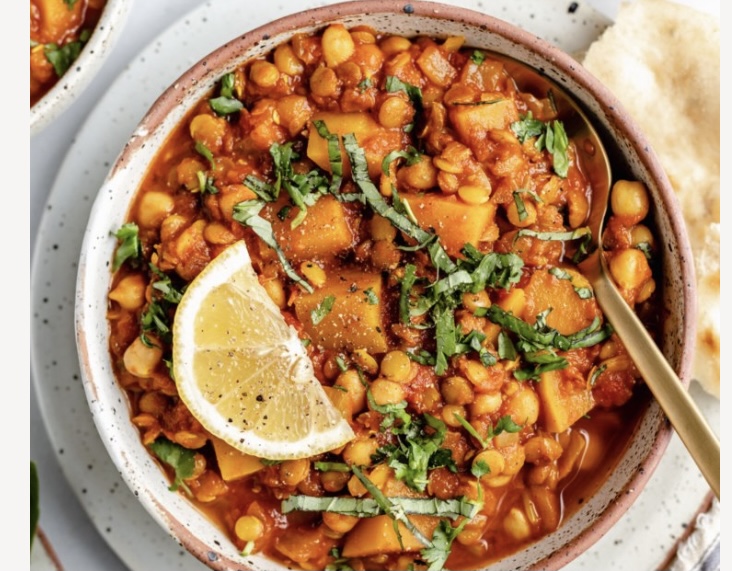
Hearty Red Lentil Stew with Chickpeas and Pumpkin vegan

This is the one! The lentil stew to sell a birthright for …. almost … not quite. But still, this is the one I was making all last winter that is, quite frankly, one of my favorites. It can be made in a crockpot for a Shabbat lunch (perfect for this weekend!). Great lefovers. Freezes well.

We have lots of pumpkin here. Big, huge, light brown monsters that are cut into wedges and sold fresh at the market. Our dlaat is a staple food here. As is the lentil. As is the humus. Not the paste, but the bean. The Hebrew and Arabic word for chickpea is actually humus, pronounced KHOO- moose. I’ve tried to keep this stew as authentically Biblical, using foods indigenous to this region. If you are a geeky homeschool mom (ME!!), then this is a perfect food to cook with the kids as a historical re-creation. Enjoy!!

HEARTY RED LENTIL STEW WITH CHICKPEAS AND PUMPKIN


Ingredients:

  • 1 1/5 cups red lentils
  • 1 can chickpeas, drained (15 ounce/ 425 g)
  • 1 kg/ 2 pounds of peeled, chopped pumpkin cubes or butternut squash cubes
  • 5 cloves garlic, minced
  • 1 large onion, chopped
  • 2 TBSP olive oil
  • 5 cups vegetable broth
  • 1 28 ounce/794 g can chopped tomatoes, with the liquid
  • 2 tsp cumin
  • 1 tsp cinnamon
  • 1 tsp turmeric
  • 1/4 tsp cayenne or chili powder
  • 1/2 tsp paprrika
  • 1/2 tsp cloves
  • 1/2 tsp allspice
  • salt, to taste
  • garnishes: lemon wedges; chopped herbs (parsley, cilantro, zaatar), grated nutmeg, (goat) yogurt

In a medium bowl, soak lentils in water for about two hours, changing the water at least once in the process. Heat olive oil on medium high heat until shimmering, then add the garlic and onion, sautéing until soft. Add in the spices and 1/2 cup of the broth to form a red, fragrant paste with the onions. Cook about 2 minutes. Now add the rest of the broth. Mix in uncooked squash or pumpkin cubes, the undrained canned tomatoes, and the drained lentils. Pour the chickpeas into a strainer, drain, and rinse under cold water. Let drain and add to pot. Stir until well mixed. Bring to a slight boil, then turn down heat to low and let simmer at least an hour. Add salt to taste. Cook low and slow, the longer the better, stirring the bottom and sides every half hour to prevent sticking.

Garnish with lemon wedges, chopped herbs, yogurt, or sour cream. Serve with soft, fluffy pita, or a hearty whole grain sourdough. Makes great leftovers. Freezes well. This is also a fantastic crockpot meal for Shabbat.

Recipes & Ideas for the Fall Feasts

IMG_2596

It’s a few days after the observance of Rosh HaShannah, the Jewish New Year – and I’m finally beginning to catch my breath. John & I had just returned from two weeks in Europe, and I was having five extra guests plus my son (on army leave) over for dinner. I wanted a really pretty table and menu with a minimum amount of hardship. Plus, we would be celebrating a traditional New Year Seder here in Israel.

For the centerpiece, I used my Rosh HaShannah seder plate which I got at Shalom House in Tarzana, California. Underneath I laid (silk) fall leaves with grapes and chestnuts (I picked off the ground in Geneva & will cook later) surrounding the plate. I decided to use my autumn colors tablecloth so I didn’t have to iron my good white damask one. Gold trimmed placemats, my autumn (meat dishes) china, and we were almost good to go. Hollowing out a few tiny acorn squash and inserting a tea light in each one was inexpensive, easy, and really lovely.  I put a hostess sized Tamar Gourmet Preserves or Chutney at each of the guests’ plates.

Now for the traditional foods and their meanings: the Seder Plate contains nine symbolic items, each associated with a blessing. The first is a pomegranate. I discussed the symbolism of the pomegranate in my last blog post. May the 613 arils remind us of the commandments in the Torah, so we  can have a holy year. Scallions or leeks are used to remind us of the whips of taskmasters and oppressors. May we never come under the rule of oppressive dictators and Pharaohs again. Amen! A gourd: may our good deeds in the coming year be as numerous as seeds of the pumpkin. The head of a fish (I use a paper one) so that we may always be the head and not the tail in the year ahead. A beet or carrot. Some of the words in Hebrew form the meanings or word play for the symbolism. They just don’t translate into English well. Also, each community has their own tradition – go with me on these. The beet (or carrot). May G-d in His mercy keep our enemies far away from us. A double Amen as we live in a very uncertain world these days. Black eyed peas: a few traditions on this food. One is that our enemies will be turned back; another is that the eyes of G-d, the angels and holy ones watch over us to guard us and guide us throughout the year. Dates. I discussed the significance of the date palm (tamar) last post, but may we bend under troubles and not break, as other less supple trees during storms.

I really love these sticky, sweet fruits for so many reasons. As an object lesson, think on the date palm. They bend: they give when pressure is applied. When an intense wind storm hits, they drop their fruits. I like to think of myself as being especially fruitful during a hard situation. Yes, sometimes I lash out and can be pretty miserable; but like the date palm, that’s when I want to be spreading the most help, the most cheer, the most optimism to others. Going with the flow, accepting what I have no control over, and being as positive as possible.

The next food, perhaps the most famous combo associated with Rosh HaShannah is apples and honey. May we have a sweet year. A year of health!!! A year of joy!!! A holy year. A year of prosperity. A year of peace!!! And lastly, the wine and the challah. From Rosh HaShannah through Simchat Torah we use a round bread, not the traditional braided one. The roundness is to remind us of many things – the cycle of the year and the cycle of life. The fact that G-d has no beginning or end. He was in the beginning, is now, and ever shall be. Also, the rounded loaf looks like a crown. During this season we crown Him King of our Lives.

I love the new round challah cover I just bought for the holidays in Budapest last week. It was made by a 93 year old woman who somehow survived during the Holocaust and now works at the Dohany St. Synagogue. She’s a lively, chatty old soul – but has had to slow down over the years due to her failing eyesight. She now uses a machine instead of sewing by hand, but either way, this is a beautiful piece I’ll treasure always. It says in Hebrew “Sabbath Peace and Holiday Happiness.”

During, the holidays, I try to keep to a healthy diet, using as many of the fall fruits and veggies – Israel’s Seven Species, and incorporating as many of the symbolic foods as possible. Because there is so much cooking this time of year, I also try to make things as simple as possible. Hope you can try a few of these as well during your fall feasts.

BLACK-EYED PEA SALAD, ITALIAN STYLE                      parve, serves 8

IMG_2599

Ingredients:

  • 2 cups uncooked black-eyed peas or 1 large package frozen peas
  • 1 red bell pepper
  • 1 orange bell pepper
  • 1 yellow bell pepper
  • 1 green bell pepper
  • 2 large stalk celery (or 6 tiny Israeli stalks)
  • 6 large scallions (green onions)
  • 1 small bunch flat, Italian parsley, minced
  • salt & pepper to taste
  •  Italian dressing (I make my own using 4 Tbsp red wine vinegar; 1/3 cup extra virgin olive oil; 1/4; 4 cloves smashed garlic; 1 tsp oregano; 1/4 tsp freshly ground black pepper; 1 tsp sea salt)

Soak the dried peas overnight, covering with boiling water. Drain, rinse, then cook in salted boiling water 15 minutes. Let simmer for 1-2 hours or until softened. Drain & rinse well. Drain again.                                        You can save yourself all the extra trouble by using defrosted frozen or drained & rinsed canned black eyed peas, if available.  Place peas in a large bowl. Cut up veggies into a small dice. Add to bowl. Pour the Italian dressing over top. Before serving, mix in the minced parsley leaves. Garnish with parsley leaf and the top of a pepper. Refrigerates and keeps well for leftovers. Can be served as a hearty salad lunch or as a side with either meat or dairy. Protein packed!!!

HARVEST QUINOA SALAD                                         parve   serves 6-8

I love quinoa. It’s gluten free and great for special needs diets; so versatile and easy to prepare!

IMG_2594

Ingredients:

  • 2 cups cooked, fluffed quinoa (cook according to package directions)
  • 1/3 cup dried sweet pitted cherries
  • 1/3 cup dried cranberries
  • 1/4 cup thinly sliced green onions (scallions)
  • 1’4 cup sliced almond pieces
  • 1/2 cup roasted butternut squash or pumpkin cubes
  • 1/2 cup dressing (if in US, Brianna’s Blush Wine Vinaigrette is amazing!!!!! If not, recipe follows…

Cook the quinoa according to package directions to yield 2 cups. Fluff and set aside to cool in large bowl. Halve and de-seed a butternut squash or small pumpkin. Place on baking sheet, drizzle with olive oil, salt & pepper. In  220*C/450 *F oven, roast the gourd for about 15-20 minutes until tender. Let cool. Add dried fruits, sliced scallions and almonds to quinoa. Mix gently to incorporate. Cube the flesh of the squash/pumpkin into small bite sized chunks and add to quinoa bowl. Mix gently. Pour dressing over top, and mix in. Can be served room temp or refrigerated. This makes tasty leftovers – if there are any!!!

Dressing: Blend well-

  • 1/4 cup canola oil
  • 1/4 cup water
  • 1/3 cup blush or rose wine
  • 2 Tbsp red onion juice (I use my garlic squeezer to juice my onion) and remaining pulp
  • 1/2 tsp salt
  • 1 tsp ground black pepper
  • 1 Tbsp honey or sugar
  • 1 tsp ginger juice (squeeze fresh) – optional
  • 1/4 tsp freshly grated nutmeg -optional


              ROASTED FIGS ON BABY GREENS                    parve      serves 6

Another easy one, that is raving delicious! I cook the figs with all the other items I’m roasting that day, running the oven only once….

On a foil-lined cookie sheet, halve washed figs. Drizzle with small amount of olive oil, salt & pepper. You can also add a tiny bit of balsamic vinegar, but only if it’s sweet (3-5 coins on packaging). Roast at 220*C/450*F oven for 10 minutes.  In large bowl, put pre-washed mesclun or baby green salad mix. Lay the roasted figs on top SAVE THE JUICE!!!!!! Add a few thinly sliced purple onions to the top, and sprinkle on some candied pecans.

Dressing: pour the reserved fig juice into a small bowl. Add a bit of olive oil, salt & pepper. Squeeze in 2 Tbsp onion juice (I use my garlic press) and pulp. Blend well & pour over salad just prior to serving.

SHOESTRING VEGGIES SALAD

This is also quick and easy. It’s very colorful and oh so good for you. Can be served at any meal. The veggies can be bought pre-prepared and mixed or you can run the fresh veggies through a food processor. I use my mandoline slicer –

IMG_2620


  • 3 medium red beets, peeled, raw, and julienned
  • 2 large carrots, peeled, raw, julienned
  • 1 large kohlrabi or jicama, peeled, raw, juilienned
  • 1/3 cup Brianna’s Blush Wine Salad Dressing if in the US. If not see recipe for the dressing above in the Quinoa Salad.

Enjoy, my friends. I hope your Fall Feasts are sweet – filled with family, friends, good food & good music. And in this holy season of introspection before Yom Kippur, the Day of Atoning:

IMG_2613

Food, Fall & Feasts

When I lived in California, I always had a big, beautiful and very productive garden in which I grew organic, heirloom vegetables. Our fruit trees provided us with plums, peaches, citrus, cherries and figs. It seemed sensible with five children and one steady income to supplement our grocery bill with healthy, garden-fresh produce. With super abundant yields, I learned home canning and preserving, making sauces, pickles, chutneys and jams to last us into winter. Living in earthquake country, it also seemed wise to have a store of food on hand in the event of emergency. And when I needed holiday or hostess gifts, I used what I had made to create some pretty fabulous gift baskets. There was always enough at hand to give to a new neighbor or friend in need.

Coming to Israel, not only was continuing an organic garden important to me, but making my (award winning in California) lines of preserves, chutneys, relishes and pickles would become my business – Tamar Gourmet. We were so blessed to rent a home with huge concrete planter boxes outside every window and surrounding our upstairs balcony. The first thing I did when we moved here was to plant.

IMG_1162

Herbs grow outside my kitchen window

IMG_1116

Red, Choggia & Golden Beets

images-1

Peach Blow Tomatoes

40d307e24b50e42c13608fa1a48b0f9b--patio-tomatoes-brandywine-tomato

Brandywines on the balcony

From the beginning of our Israeli adventure, the realization that there was more to Jewishness than the narrow Ashkenaz (European Jewish) culture than that which I was brought up in. This place is diverse in its mix of Jews from all over the world: the Spanish Sephardim, the Middle Eastern Mizrachi; the Ethiopian, Ugandan and Indian. They have all come here with their own palates creating a taste explosion of spices and food preparation styles, each with their own contribution to this remarkable land. What fun it’s been to get a sampling and learn from the different cultures!!! And for me, experimenting to create a fusion of the different flavors has been challenging, and many times yielding amazing results.

This time of year, late summer, is especially wonderful here, as everyone seems to be preparing for the great Fall Feasts!! From Rosh HaShannah, the Jewish New Year – to Yom Kippur, the Day of Atonement, Mercy & Forgiveness – to Sukkot, the Feast of the Harvest where we dwell for a week in tabernacles – to Simchat Torah, the rejoicing over the Five Books of Moses given to the Jewish people by G-d. And each holiday comes with its traditional foods (yes, even Yom Kippur, a fasting day, starts with a heavy meal before and ends in a sumptuous break fast).

I’d like to share with you some recipes incorporating these different cultures and traditions.

                     SWEET PEAR PICKLES                    

IMG_1462

I guess home preserving runs deep in my blood, because I remember my parents making pickled pears every year before Rosh HaShannah. Last year, I was going through some boxes and came across my dad’s recipe! So, I’m glad to be able to continue the family tradition. Totally Ashkenaz!

As my parents did, I use the tiny, brown Sekel pears. They are hard and sweet and stand up well to pickling, retaining their firmness without any mushiness. They keep really well for a year, and are delicious as a side dish or sliced up in a salad with blue cheese crumbles and walnuts. I’ve also used them on top of a cake with my Tamar Gourmet Vanilla Pear Conserves as a filling for the middle layers. Absolute heaven!


Ingredients: (makes 8 pints/4 quarts)

5 pounds Sekel Pears (2 1/2 kg)                             2 Tbsp freshly squeezed lemon juice                 3 cups spring water                                                  1 cup apple cider vinegar                                     2 cups sugar                                                               4 sticks cinnamon (broken in half for pint jars)                                                                               whole cloves                                                              24 whole peppercorns

Thoroughly wash the jars and lids. Submerge  them in a large pot filled with water so that they are completely covered. I use a wire rack underneath to insure water circulation. (If using Mason, Kerr, or Ball jars, sterilize lids only, not screw bands). Bring to boiling and let boil for 20 minutes while you prepare the pears and syrup.

Wash the pears and cut in half. No need to peel them. Core out the seeds. Place in large bowl of ice water with lemon juice to prevent browning.

For liquid –  Add vinegar, sugar and 3 cups spring water to a pot and heat on stove until sugar dissolves, stirring occasionally. Set aside.

Remove jars from water bath. Add 1/2 stick cinnamon, 8 cloves & 4 peppercorns to each PINT jar. Add 1 cinnamon stick, 16 cloves, 8 peppercorns to the QUART size.  Firmly pack in the halved pears. Ladle syrup over the top until there is 1/4 inch headspace. Place lids on top. Screw on the bands.

Place filled jars back into hot water bath and process (bring to boil) for 10 minutes to insure any germs are gone. Take out of bath and let cool on clean towel. The lids will make a slight popping sound as they seal, and should not feel springy when pressed on with finger. This could take up to half an hour. Store when room temperature. Refrigerate after opening.

                              CHUTNEYS

IMG_7803

Chutneys give limitless opportunity for experimentation. I make several varieties and use them on sandwiches, as part of an hors-d’oeuvre board with crackers and cheese, and even mixed into cooked rice as an accompaniment to meats. Especially yummy on burgers or with spices Indian food! I’ve  developed my own basic recipe, but really enjoy playing around with different veggie, fruit and spice combos to create the ultimate, perfectly balanced pickle.

The British set seem raving mad about their chutneys, each having their own opinion on the perfect combo. I’ve learned a few new twists from my Indian friends from B’nei Menashe. But ultimately, I rely on what I have at hand and my family’s taste preferences.

I start with a kilo (about 2 pounds) of vegetable – my last endeavor used up the beets in my garden. Sooo yummy! You can try cauliflower, eggplant, carrots, tomatoes, peppers… Into a very large pot, cut peeled veg into bite sized pieces. I always add 1 whole, peeled purple onion, cut up. Then add your fresh fruit: 2 cups cut up pears or apples, apricots, peaches, mangos, pineapple. Mix in a cup of dried fruit such as dates, raisins, cranberries, cherries, Add 1 cup apple cider vinegar to the mixture in the pot. Next stir in your sweetener, if you need it (to your taste. Often I leave out the sweetener as the fruits make it rich enough). You can add honey, brown sugar, silan – date syrup- or maple syrup. The spices can be as conventional or exotic as you wish. Powdered cloves, ginger, cardamom, pepper, nutmeg, cumin, curries, allspice, turmeric, chili, even espresso powder in small amounts or horseradish are interesting additions. Use the spices that best suit your flavor palate. Add a little at first and increase very, very gradually. The chutney flavors tend to intensify during cooking and in the week after. After bringing up the heat on the stove to a near-boil, I let the mixture simmer for a few hours, until the fruits and veggies are soft, and the fragrance in the house becomes irresistible. (Works great in a crock pot too!) Then I ladle the hot chutney mixture into sterilized jars, sealing the lids, and processing for 10 minutes in a boiling hot water bath. The chutney keeps for a year unopened, but can be stored in fridge for up to a month after opening.

PICKLED BEETS

IMG_1452

IMG_1460

My Choggia Beet harvest was pretty sweet last fall, so I made the most delicious – and easy pickled beets. They are soooo beautiful!! If Choggias aren’t available, golden or red beets will work as well. They’re pretty tempting straight from the jar, but my favorite is to place them on a bed of mixed greens with my pickled onions and feta cheese. I use a little of the juice as a dressing. Pretty amazing!!

Ingredients:   (3-4 pint jars)                                                         2 pounds (1 kilo) beets, peeled & sliced into circles                                                                           1/2 cup white (or champagne!!!!) vinegar         1  cup spring water                                            1/4 cup sugar                                                           1 /2 cinnamon stick per jar                                   8 whole cloves per jar                                             4 peppercorns per jar

Sterilize the jars and lids in boiling water bath 20 minutes. In large bowl, mix the vinegar, water & sugar, stirring until sugar is completely dissolved. Add the cloves and whole peppercorns to each jar. Pack in beet slices. Pour liquid over top. Add the cinnamon stick. Seal with lid and process in boiling water bath 10 minutes. Keeps for up to one year. Refrigerate after opening.

This summer, my basil has been out-of-control outrageous! I’ve trimmed it up numerous times for Caprese Salad (sliced tomatoes, fresh mozzarella slices, drizzled olive oil, balsamic, salt, pepper & basil leaves). It’s a tremendous add to my spaghetti sauces, pizzas and panzanella (stale bread cubes, tomato pieces, red onion cubes, and basil with an Italian dressing poured overtop).Lately, I’ve been making pesto, canning much, freezing some in ice cube trays, and stirring it into a 15% cream sauce with some grated Parmesan and Pecorino-Romano to serve atop pasta. Really delicious! So – here’s an easy Pesto Recipe that’s sure to delight! Pour it over roasted chicken for an awesome change of pace.

  PESTO

IMG_1160

3 cups fresh, washed basil leaves                       1/2 cup extra virgin olive oil                                    4 nice big pieces garlic                                          1/4 teaspoon sea salt

Place all of the ingredients in food processor or cup of an immersion blender and process until a thick paste forms. Can be used immediately; refrigerated; frozen in ice cube trays (stored in freezer baggies); or processed in glass canning jars.

Pickles are all very popular here in Israel – the Yemenite and Mizrachi Middle Eastern Variety. Pickled eggplants done up many ways, pickled cauliflower, turnips, olives, cucumbers, green tomato, carrots. Most are very vinegary and most are harif – very, very spicy for my family’s tastes. You will not find the usual Kosher, half, sour garlic dills here (although I have an old New York deli recipe that I’ve played around with). These assorted pickles can be found at any falafel stand and are often served at table before a meal.

Here, I will present 4 versions of pickled carrots, each representing the different cultures.

          SHABTAI’S CARROTS (HARIF!!!!!)

images-2

These are sure to knock your socks off!! Please adjust to your own taste-

Ingredients:

2 pounds very fresh, hard carrots, peeled & sliced into rounds (1 kilo)                                     5-10 small, green chilis, sliced into rounds (please don’t rub your eyes – and wear gloves. I did this with him, and it burned my skin for hours!!!!)                                                                  1 white or yellow onion, sliced and quartered                                                                1/2 Tbsp cumin seeds                                             1/2 Tbsp coriander seeds                                     1 tsp carraway seeds                                                  3 cups white vinegar                                                 1 cup water                                                             3/4 cup sugar                                                          1/4 cup salt

Shabtai didn’t bottle to sterilize his jars (I would). He recycled old mayo jars (I wouldn’t). I guess the peppers will kill almost anything…

In large bowl combine the veggies.

Toast the seeds over medium heat for 1-2 minutes to release fragrance. The seeds should just start popping, but not turn brown.

In another bowl add vinegar, water, sugar & salt. Mix well for sugar & salt to dissolve as much as possible. Pour over veggie mix and let sit for an hour. Ladle into jars. Put in fridge.

     ROLA’S EEMAH’S CARROT PICKLES

This is a Mizrachi family recipe. It’s more than possible that it came from the Persian Jews who immigrated to Israel to escape persecution and genocide in the 1970s, as did Rola and her parents.

Ingredients:

2 pounds fresh, hard carrots, scrubbed & sliced into strips                                                        1 small head cauliflower, washed, cut into bite sized pieces                                                     1 red bell pepper, washed, seeded & cut into thin strips                                                                1 Tbsp mustard seeds                                                1 Tbsp coriander seeds                                            1 Tbsp cumin seeds                                                 1 Tbsp whole cloves                                               1 Tbsp whole peppercorns                                   1 large bay leaf, crumbled                                   1/2 tsp curcuma (tumeric powder)                     10 cloves garlic, peeled, whole                                600 ml (2 1/2  cups) white wine vinegar              100 grams (1/2 cup) white sugar                         1 tsp salt for each jar made.

Cook the carrots and cauliflower in very salted boiling water 5 minutes to soften. Drain.  Toast seeds and bay leaf in large pot until it releases it’s fragrance, about 1-2 minutes on medium heat. To this, add vinegar and sugar and bring to a boil.

Arrange veggies and divided garlic cloves to each clean (sterilized) jar. Pour pickling liquid over top to cover the veggies completely. Add 1 tsp salt to each jar before sealing. I would place this in a boiling water bath for 10 minutes for safety reasons, but Rosa didn’t seem concerned. Let it sit for 2 weeks before serving at room temp.

               URI’S PICKLED CARROTS                          I really like Uri’s carrots. I  stayed with Uri during my pilot trip, and after a long day, I would come back and devour a bowl of these light and tasty carrots! He was born in Israel to Holocaust survivors of Eastern Europe. Uri fought in the 1967 War, and is an amazing vegan chef who still practices yoga and goes for long bike rides. This is his own recipe ( I added the sugar just to balance the tartness).

1 kilo (2 pounds) peeled carrots, sliced into rounds                                                                       3 green onions, cut into bits                                 1/2 tsp dry mustard powder                                 1/2 cup white vinegar                                               1/4 cup sugar                                                           1/2 tsp salt                                                              2-3 fresh dill sprigs

Cook the carrots in boiling, salted water for a few minutes to soften. Drain. Combine rest of the ingredients, minus green onions and mix well to dissolve. Pour over carrots. Stir in green onion. Place dill sprigs on top. Cover and refrigerate.

MY MOM’S  “COPPER PENNIES”IMG_4353-525x700

OK, so this was a staple in my house when I was growing up. My mother would give them out to friends and neighbors at holidays. Today, they remain a favorite item. John & the kids use the sauce to spoon over backed chicken or roast beef. They’re a  Shabbat table regular at our house. Years ago I “stole” her original clip out recipe… if she were alive today, I hope she’d feel honored…thanks, Mom!

copperpenny

(Note: here in Israel, I haven’t been able to find canned soups, so I’ve learned to make and store jars of my own – even tomato!!!!)

Next week’s post will have recipes using the Seven Species of produce grown here in Israel and their significance, both spiritually and culinary…. stay tuned!