
…a year of comfort to all who mourn in Zion…to give unto them beauty for ashes, the oil of joy for mourning, the garment of praise for the spirit of heaviness; that they may be called trees of righteousness, the planting of the L-rd, that He might be glorified. -Isaiah 61:3
Nations are not formed in a day. They are formed oftentimes with toil, tears and the blood of those who would defend their land. And so it is with the State of Israel. From the late 1800s with the first waves of Aliyah until today, the blood of the returned Jewish people has been shed in her defense and in numerous terror attacks.
Once again this year, from sunset on 29 April until sunset on 30 April, Israel will commemorate Yom haZikkaron, the Day of Remembrance. It is the official day set aside to mourn all fallen soldiers and all victims of terror: Jewish, Christian, Messianic, Druze, Muslim, native born Israeli and foreign born. Once again this year, the day will be especially poignant and incredibly difficult as Israel is still embroiled in a war for her survival on several fronts – in Gaza with Hamas; in Lebanon with Hezbollah; with the Houthis in Yemen; the Syrian rebels on the slopes of Mt. Hermon; the Palestinian faction in Judaea and Samaria; and the head of the snake, Iran.
Shortly after the sun sets this evening, a two minute siren will sound throughout the nation. Memorial candles will have been lit in memory of the deceased. The radio stations will all be playing soft, sad music throughout the next 24 hours, and the television programming will commemorate the lives of all those who have died in the past year in service to their country or in acts of terror.
On the Day of Remembrance, schools and governmental offices are closed. Public transportation is free in order to allow all those who wish to visit the grave of a loved one the opportunity to do so. All flags hang at half mast. In the morning, special services are held at Mount Herzl in Jerusalem, the national armed forces cemetery, and at other Israeli cemeteries. Floral wreaths are laid at the graves of fallen soldiers. The Yizkor prayer (praises to G-d) is recited numerous times as well as the El Malei Rachamim (All-Merciful G-d) and the Mourner’s Kaddish as is customary during times of mourning.
Again, at 11:00 am tomorrow morning, another two minute siren will sound throughout the land. This is especially heartbreaking and moving to witness firsthand as the entire nation comes to a complete standstill. Drivers stop their cars and busses and pull to the side of the streets and highways. Everyone gets out and stands at attention, heads bowed out of respect for the fallen from the founding of Israel to today. People gather on balconies and come out of the shops for two seemingly interminable minutes. All is silent except for the blare of the siren.
I have never seen anything like this anywhere else. Each city holds a memorial service to honor their local deceased in war and in terror attacks. The synagogues and churches all hold their own memorial services. Bonds of unity are strengthened as Israelis mourn together collectively. John and I will make a visit to our local cemetery where many fallen soldiers (I believe 9 from this war alone) and victims of terror lie.
The entire day, a pall is cast over the nation. This is the price paid for freedom. This is the price paid for the right of return. This is the price paid for being a tiny country, incredibly outnumbered and surrounded by hostile nations who wish to see her eradicated, her people thrown into the sea. Not only have soldiers fallen, but there have been thousands of victims who have perished in senseless terror attacks. The message of the day is that Israel owes its existence to all those who sacrificed their lives for their country.
As of this writing, there are still 59 hostages held captive by Hamas deep within the terror tunnels of Gaza. IDF soldiers are still battling there, giving their lives, and being severely wounded. In TelAviv’s now-famous “Hostage Square” there will be displays set up in honor of the hostages as well as prayers and demonstrations. The Gaza Envelope kibbutzim, those on the border, will be holding special memorial services in honor of all those that were killed 7 October, 2023.
Wednesday evening, with the setting of the sun on Yom haZikkaron, the citizens of Israel are expected to make a sharp turnabout as Yom haAtzmaut (Yome ha-ahtz-mah-OOT) Independence Day, begins. It is an absolute emotional rollercoaster as the heaviness of mourning is supposed to shift to celebration in a moment.
As the sun goes down, the Israeli flag is raised on Mount Herzl. This is followed by an invitation-only ceremonial lighting of 12 torches which represent the 12 tribes of Israel. It is a great honor to be selected as a torch bearer. It is televised throughout the country and dignitaries from the government, military, religious life and cultural, educational and technological/business sectors are all in attendance as special guests. This year’s torch bearers include singer Zehava Ben; 2 IDF officers who have shown extreme bravery and heroism; released hostages Emily Damari and Eli Sharabi and American Ben Shapiro. The service includes military band and parades, singing of HaTikvah (the national anthem) and poetry readings. Simultaneously, there will be festive prayers, singing and dancing at the Western Wall in the Old City of Jerusalem.
This year marks Israel’s 76th Independence Day. Ashes of grief turn into charcoal flames from barbecue grills. As night descends, the festivities begin in city amphitheaters. Usually, big name musical stars travel from large city to large city putting on concerts until the wee hours of the morning. There used to be large fireworks displays, but they have since been banned out of respect for those suffering from PTSD.
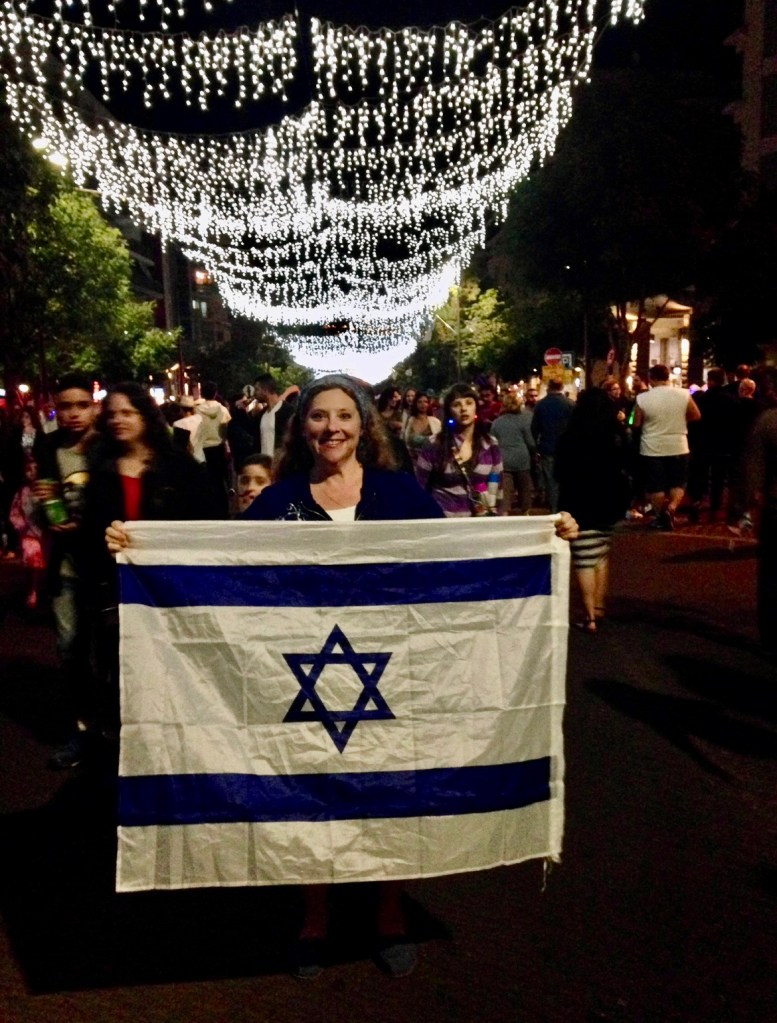
Again, most schools and businesses are closed for the day. During 1 May this year, many people head to the beach. There are picnics and parties. Israeli flags fly proudly from every home and many car windows. There are military aircraft flyovers from North to South led by fighter jets and Israel’s version of AirForce One. In the past (not during wartime), IDF military and Air Force bases have been open with static displays of tanks, armoured vehicles, artillery and jets. Museums are free to all.
The Biblical Zoo in Jerusalem has become one of the country’s leading family attractions, thanks to the large collection of animals. 200 species of marine life are on exhibit at the Israel Aquarium, offering another free of cost day for families. And there will be guided tours in English, Hebrew, Russian and Arabic at the newly opened Israel National Library. On display will be rare manuscripts, maps, historical photo albums, newspapers and posters. Tours of the battlegrounds of Israel, especially at Ammunition Hill, are given every hour from 9:00 to 16:00. Capping off Jerusalem festivities will be a special drone and laser light spectacular telling the history of Israel, with a story of peace and a prayer for harmony.
TelAviv transforms into a non-stop party zone for Independence Day. Spontaneous concerts and DJs will be hosting pop-up events throughout TA and Jaffa. Local artists will hold street fairs and the city’s best chefs will be lining Teddy Beach with hundreds of gourmet food trucks. The gorgeous beaches are sure to be jam packed all day long. There will be dance and theatre performances at HaBima Theatre with special events for families and children. The Israel Philharmonic will also be performing at the Opera House.
Many kibbutzim and towns hold special parades with bands and decorated floats. The parade routes and highways are all adorned with flags. People dress in blue and white, the national colors. Whole streets are cordoned off with bouncy houses and water slides for the children. There are booths set up with craftsmen, agricultural displays, food and wine tasting and family activities. Children hit each other over the head with huge blue and white inflatable hammers, although the reason why this tradition started remains unknown. Other annual events held on Independence Day include the International Bible Contest. Much like the American Spelling Bee, schoolchildren participate in this incredibly difficult recall of Bible trivia.
Instituted in 1953, Yom haAtzmaut is the time when the prestigious Israel Prize ceremony takes place. Similar to the Nobel Prize, this awards notable persons from fields of medicine, exact sciences, literature and the arts, humanitarian achievements, Jewish studies, agriculture, law, technology and education. The nation’s highest honor will be bestowed upon 10-15 exceptional individuals.
Due to the current war, and the changeable security situation, the entire nation of Israel will be placed under extremely high alert this year. The Muslims refer to it as Nakba Day or Day of the Great Calamity (in 1948, little newborn Israel won the war against 5 attacking Arab armies in a matter of weeks). Last year, because of the volatile nature of the fighting and incoming missile attacks, most concerts and large outdoor celebrations were shortened or canceled altogether. This year, the concert line-ups were announced just this Sunday and it seems all is a “go.”
I’m sure this year’s celebrations will be quite muted due to the current situation. May peace reign throughout the nation. And one day soon may our moly be turned to dancing.
 Israel Dreams
Beautiful description of Yom HaZikaron and Yom HaAtzmaut. It is unlike any other country’s memorials and celebrations. One small short sentence hit me as so typical of the Jewish people and Israelis -” Public transportation is free in order to allow all those who wish to visit the grave of a loved one the opportunity to do so. ” Just a small , simple gesture, but so meaningful. It is an awesome, holy and wonderful time in Israel. Thanks for the reminder and have a beautiful holiday!
LikeLike
In the shadow of the past, they twist and turn,
Revisionist tongues, where the embers burn.
“Genocide” they cry, as their hollowed refrain,
While December’s Tora diminishes in willful disdain.
Infamy cloaked in a selective veil,
As kingdoms of Judea fade, their stories pale.
Three crowns of defiance, in history’s grip,
While the Arab presence slips, a phantom’s trip.
Jordan’s grasp on Samaria, a name to erase,
“West Bank” they call it, a political face.
No state for the people, no dreams to ignite,
Just shadows of rulers who vanished from sight.
Egypt held Gaza, a fleeting charade,
Yet Nasser’s ambitions left nothing but shade.
Arafat’s embrace of a name, ’64 newly found,
In the wake of recapture, the truth’s tightly bound.
Revisionist whispers, like ghosts in the night,
Denying the horrors, distorting the light.
To compare Gaza as Holocaust, a vile, bitter jest,
In the theater of history, they fail the true test.
So let them rewrite, let them spin their tale,
But the weight of the truth will forever prevail.
For history’s not written by lies that deceive,
Though buried in Arab sands of deception & fraud,
Israel arises in Zion, on its own ancient National feet.
______________________________________
______________________________________
Israel Dreams, if you slap the term “genocide” onto Israel’s response to the Oct 7th Abomination War, then intellectual honesty demands you paste the same label on the Dec 7th, 1941 assault—the “day of infamy”—which launched America into World War II. Accusing Israel of genocide while excusing the Allies’ firebombing of Tokyo and atomic obliteration of Hiroshima and Nagasaki reveals either flagrant hypocrisy or ideological dishonesty.
Revisionist hacks whitewash the role Arab states played between 1948 and 1967, fabricating a myth in which a sovereign Palestine once flourished—until Israel supposedly destroyed it.
In truth, Jews rooted themselves in the land through three distinct political eras:
The united Twelve-Tribe Kingdom,
The Judean Republic under Persian suzerainty, and
The Hasmonean Dynasty, which threw off Greek-Syrian domination through armed revolt.
No Arab or Muslim polity ever ruled a sovereign state in the land now called Israel. Between 1948 and 1967, Jordan occupied Samaria—renaming it the “West Bank” in a rhetorical land grab—but never lifted a finger to forge a Palestinian state. The British Mandate for Palestine dissolved in 1948; no successor Arab government attempted to revive it.
Egypt, likewise, seized control of Gaza. Despite the 1950 UN condemnation (endorsed by every member state except England and Pakistan), Egypt’s monarch made no moves toward Palestinian statehood. Nasser later toppled that king, but Arafat didn’t even adopt the term “Palestine” until 1964—just three years before Israel’s recapture of both Gaza and Samaria. The PLO’s founding charter, penned under Arab occupation, refused to claim either territory; instead, it called for Israel’s destruction. Their silence about Gaza and the West Bank in 1964 screams louder than any later propaganda.
Revisionist history mimics Holocaust denial by distorting the record, concealing cause and context, and blaming the victim for surviving.
When Ben-Gurion and the Zionist leadership named the new state “Israel,” they didn’t merely select a name—they resurrected an identity. “Israel” evoked ancient sovereignty, tethered modern Jewish nationalism to ancestral roots, and announced a reborn nation. This name galvanized a people and reshaped geopolitics.
Had the Jews named the state “Palestine,” the identity landscape might have fractured. For centuries, “Palestine” referred to geography—not Arab nationality. During the British Mandate, the term “Palestinian” often denoted Jews, not Arabs. Arabs roundly rejected both the 1917 Balfour Declaration and the 1922 League of Nations Mandate, which carved out a Jewish National Home. That rejection didn’t spring from a desire for Palestinian independence—it flowed from opposition to Jewish statehood.
The Jerusalem Post bore the title Palestine Post during the Mandate, further underlining the term’s original association with Jews. The Zionist movement, founded on Herzl’s vision, drew legitimacy from the Balfour Declaration. Every Arab war against Israel traces back to Arab rejection of Jewish self-determination.
Foreign propaganda outfits often deploy the word “created” to smear Israel as artificial or illegitimate. But in 1947, two-thirds of the UN voted in favor of Jewish self-determination in the Middle East. Following Israel’s Declaration of Independence, both the U.S. and the Soviet Union immediately recognized the Jewish state. Yet Arab states categorically rejected the British-sponsored UN Resolution 181 and waged war to erase Israel from the map.
The emergence of a “Palestinian Arab” national identity didn’t arise in a cultural vacuum—it developed as a reaction to Zionism and the Jewish victory in the War of Independence. Jewish sovereignty forced clarity onto a region long trapped in imperial ambiguity.
We didn’t steal a land. We reclaimed a homeland—and we won our war of national survival. Arab propaganda still clings to the word “created” because it cannot stomach the truth: Israel wasn’t manufactured by foreigners. Jews rebuilt it. Fought for it. Bled for it. Secured it.
The Palestinian national identity emerged in opposition to Zionism, not as a longstanding expression of sovereignty. Historical facts—like the Jewish political presence across millennia, the origins of the term “Palestinian,” and the legitimacy of Israel’s statehood—have been distorted by propaganda.
LikeLike