
In just a couple days we will be celebrating the Jewish New Year. There will be no parties, no fireworks, no parades or popping of champagne corks. Instead there will be a festive meal followed by two intense days of prayer to G-d for forgiveness of our sins; prayers for our names to be written in the great Book of Life for the upcoming year, which will be 5784; a remembrance of the creation of the world and the creation of man; the crowning of G-d as King of the Universe; and on Sunday, the blowing of the shofar (ram’s horn). Whew!!!
Despite all that is going on in the world, I, personally, am looking forward to a sweet new year… new life in our families, (our daughter in the States just had her third child last night), new friends, new adventures, and much healing. Speaking of new friends, our neighborhood has undergone quite the change in the past year. We rent a villa in one of the oldest neighborhoods in our city. Many of the homes (including ours) really are in need of some tender care and radical facelifts. Several of these old homes have been sold over the last two years to young families who have been doing just that.
It’s customary to send gifts for the new year, usually sweets or baked goods containing apples, honey, dates or pomegranates. So last week, I made several different types of apple cake to deliver to our neighbors. I was so excited to try this first recipe. I saw it on Instagram and it looked easy and absolutely light and delicious.
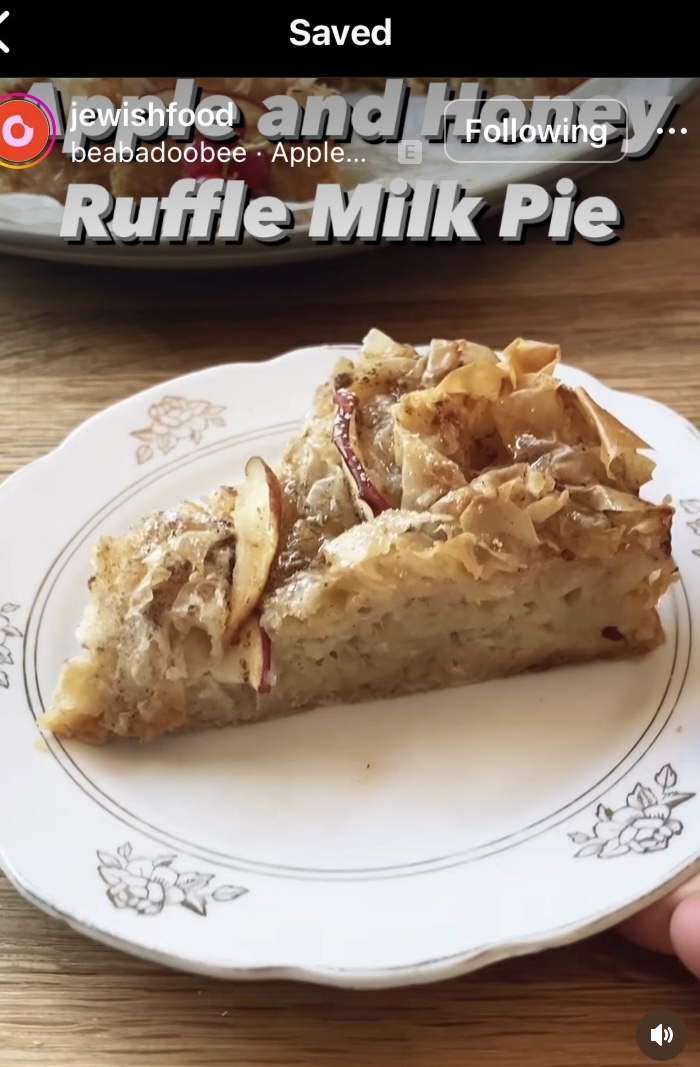
Doesn’t it look wonderful? Light, airy sheets of filo slathered with butter, apples wedged into the crevices and a light custard in between. I followed the directions for three cakes but it kept coming out thick and doughy, more like a kugel, but dense and inedible. On to the next new apple cake recipe. It, too, turned our heavy and dry for some reason, so I gave in and made my old standard apples and honey cake with yogurt. Finally!
I delivered my last cake to the new family four doors down. They were so nice! Karinne is from Paris and they had lived in our neighborhood for seven years, but bought this new house to completely gut and renovate it from the inside out. And what a magnificent job they did! So, to cut to the chase, Karinne invited me to a challah making class that I went to last night. All I can say is “wow!” It was incredible. 15 ladies from the neighborhood, all getting to know each other better, many already close friends. I was the only English speaker, so it was quite a challenge to keep up, but I managed to understand much. Liat, a lifestyle coach for women, led the class.
Liat spoke on the importance of the new year and how our attitudes and emotions shape a lot of what actually happens in our own environment – our families and our work. She said that especially as daughters, wives, mothers, women in the workplace, friends, we are often confronted with many different problems. Instead of viewing them as problems, view them as opportunities for growth that G-d gives us. Be bold to ask for help, both in prayer and from each other. Ask kindly, but specifically. Most people are more than willing to help, especially when they know exactly what you need athat you have their back as well.
As Karinne was beginning to make the challah bread, Liat took us through the symbolism of each step in the process. We start with warm water. The universe was formless and void except for the “waters of the deep.” Then the Spirit of G-d hovered over the waters – in goes the yeast. The waters were activated. G-d created the planets and the earth through pure love, an act of complete sweetness – add to the yeasty water, spoonfuls of sugar. Out of the dust of the ground, man was formed – flour was added and the dough begins to take shape. Salt and oil were also added (but I didn’t fully understand the comparisons that were made, so if anyone cares to chime in….)
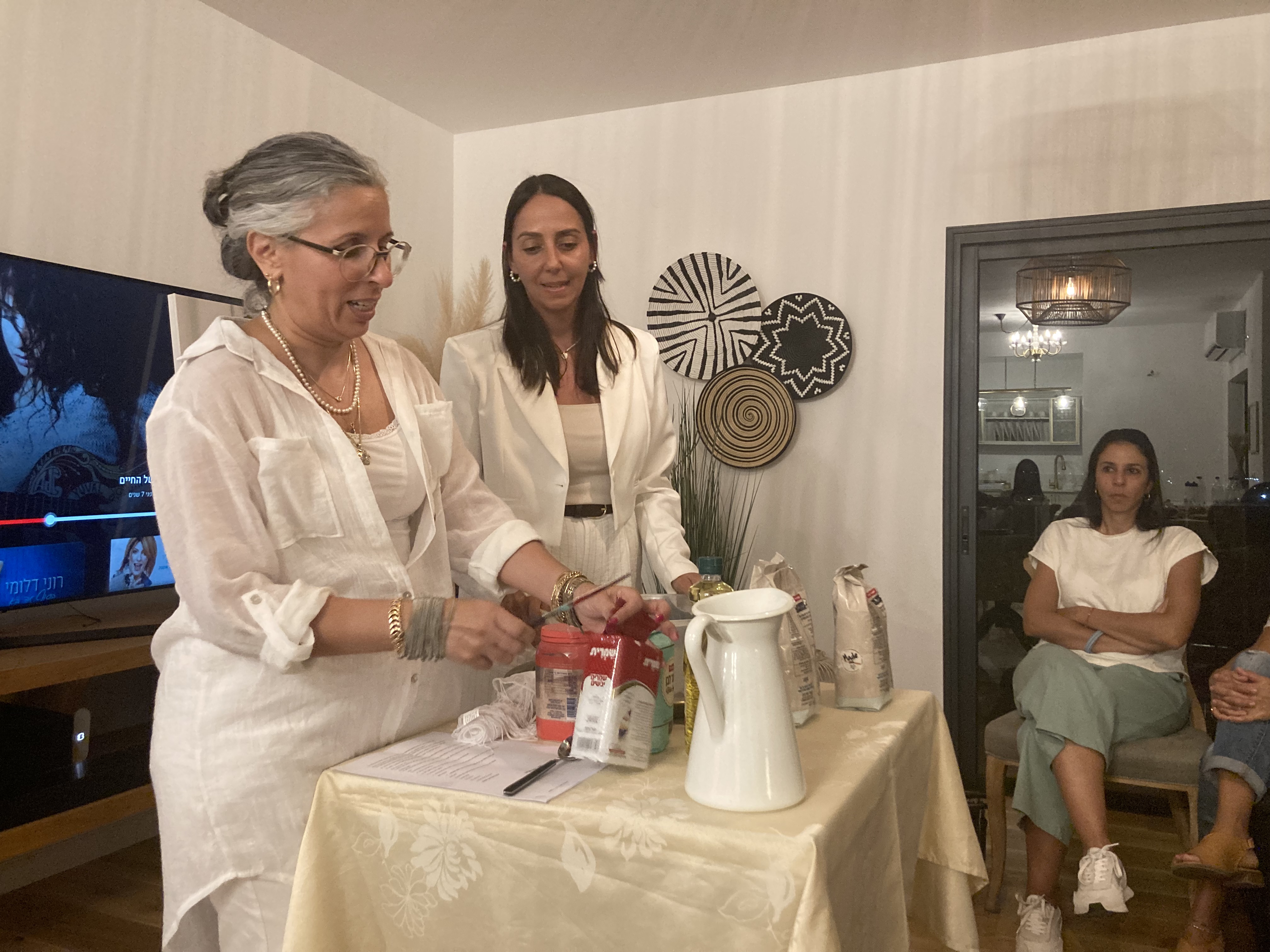

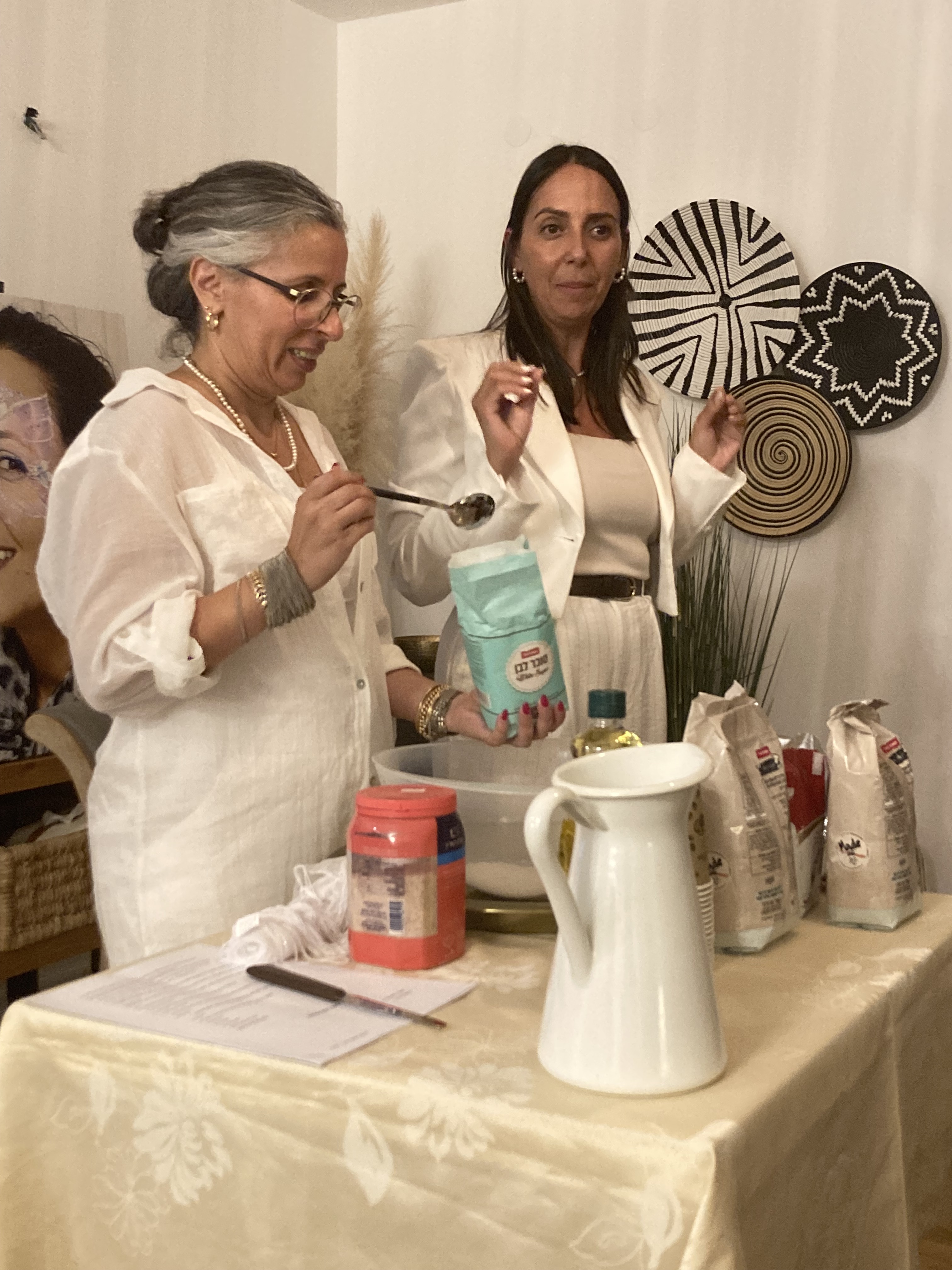


The last part was brilliant. G-d ceased from all His work on the seventh day and gave to man the Shabbat, a day of rest. We wait and let the dough rest for a half an hour. It gets covered, as during the Sabbath we’re are under a spiritual covering. As the dough rests, it begins to rise. Our spirits rise to meet our Creator when we keep the Sabbath. It was a beautiful comparison. Then the dough is ready to be kneaded. And after the final kneading, it is ready to become challah bread. But what makes challah different from all other bread?
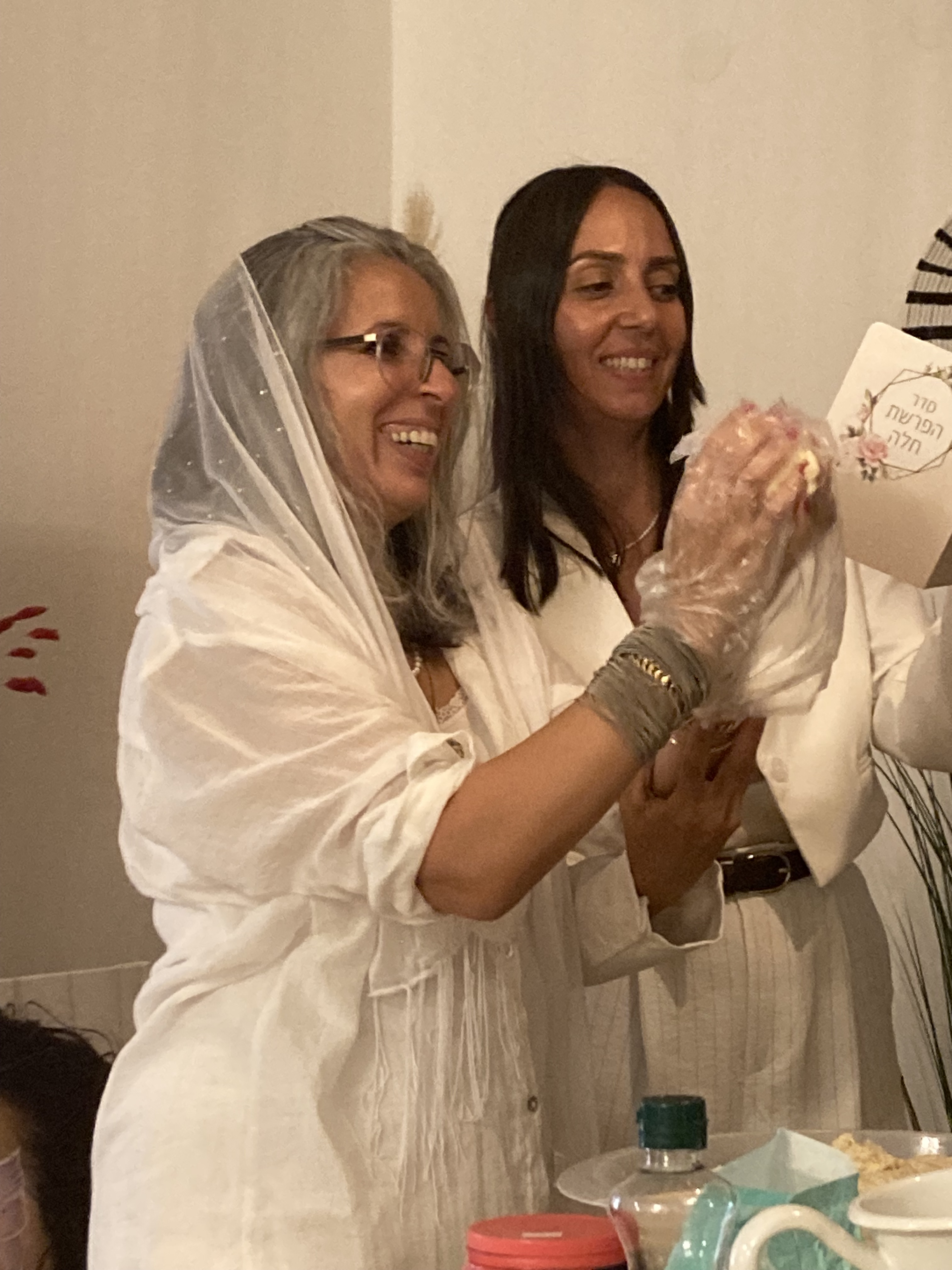
It is a special blessing for women to make the challah for Shabbat. After the dough has risen, the woman recites the blessing for separating the dough. Just as the man was alone, and G-d took from the side of Adam (man in Hebrew) to make Chavah (mother of all living, or Eve), the woman takes out or separates three pieces of the dough to set aside as an offering. At the time of the Temple worship, flour and oil were brought as a meal offering. Because there is no Temple, we take out lumps of dough and burn them in the oven. That separation makes the bread “challah.”
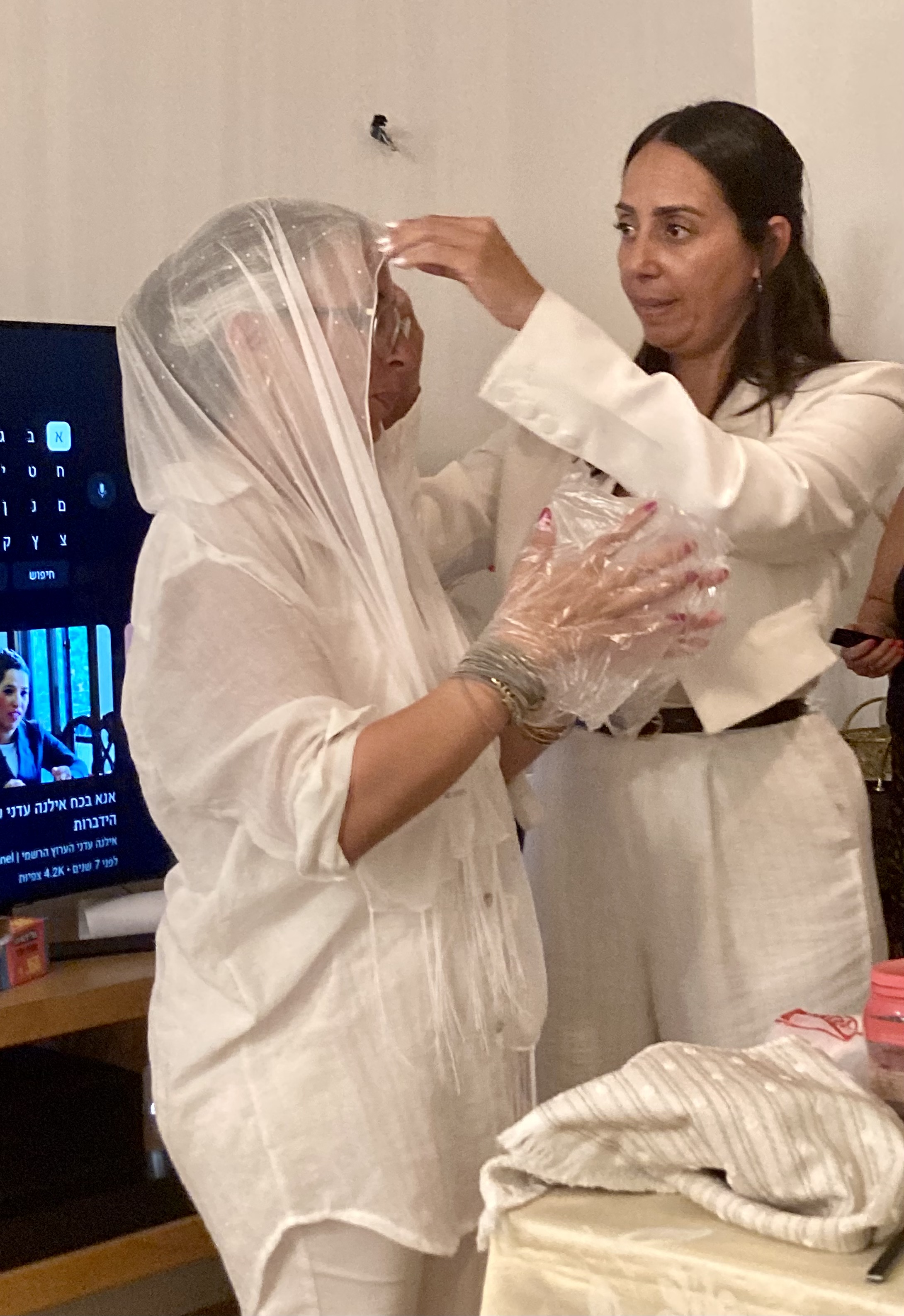
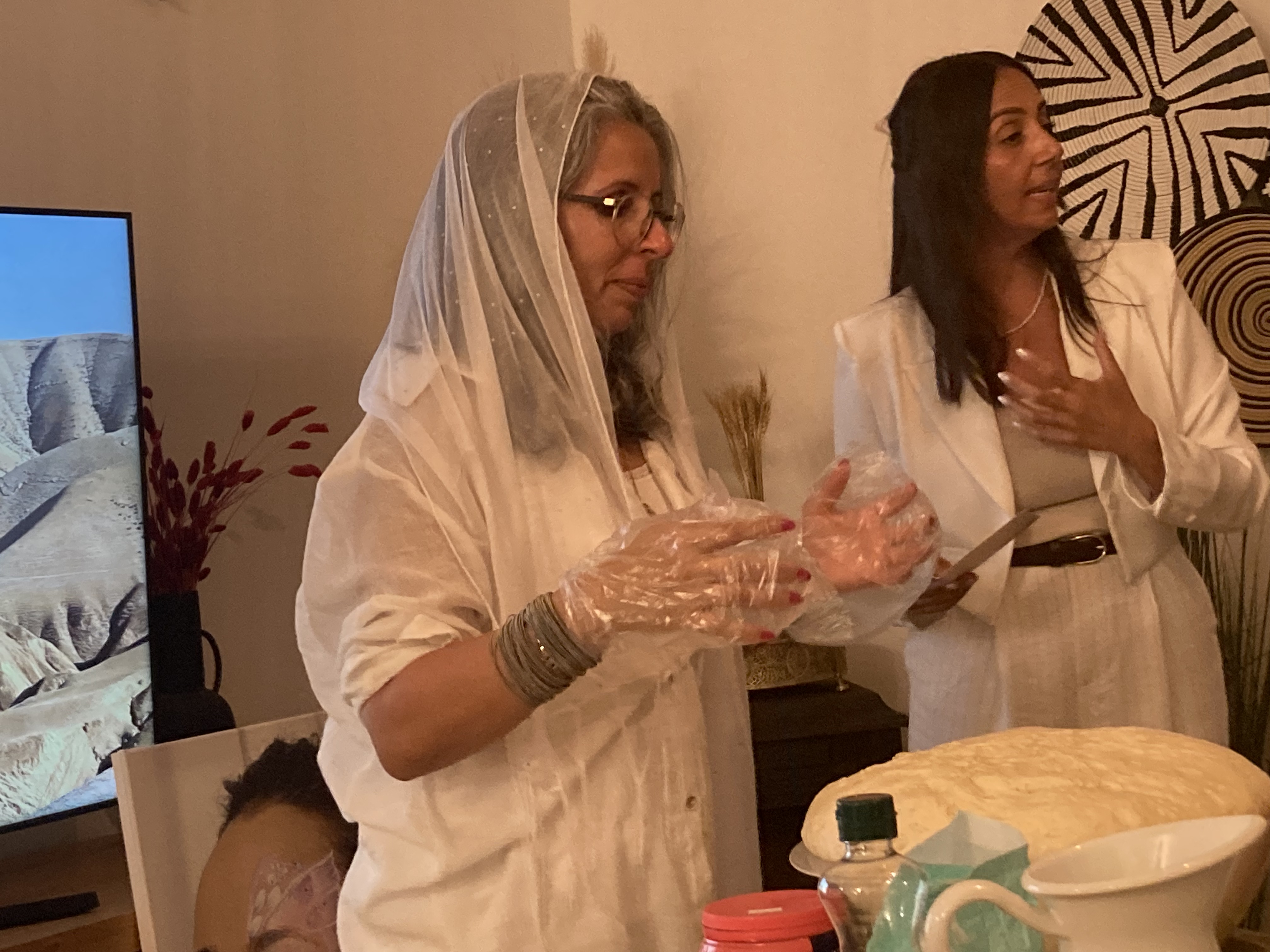
Just as the protein and gluten holds the dough together, the woman holds together the family. Because she has a nurturing nature and can see things in a different light, she is essential to the workplace. She is able to do many different tasks simultaneously. But when she is “placed in the oven” so to speak, if she does not watch out, it is easy for her to burn out. There were so many lessons to be learned from this women’s class. The most touching moment was when Karinne wrapped the challah (that separated lump) in foil, and said a personal prayer as she held it. She then passed it to me, to add my petitions to G-d, then pass it on to the next woman until all woman had attached their prayers to the ball of dough. Then it was placed on the bottom of the oven to be consumed by the heat.


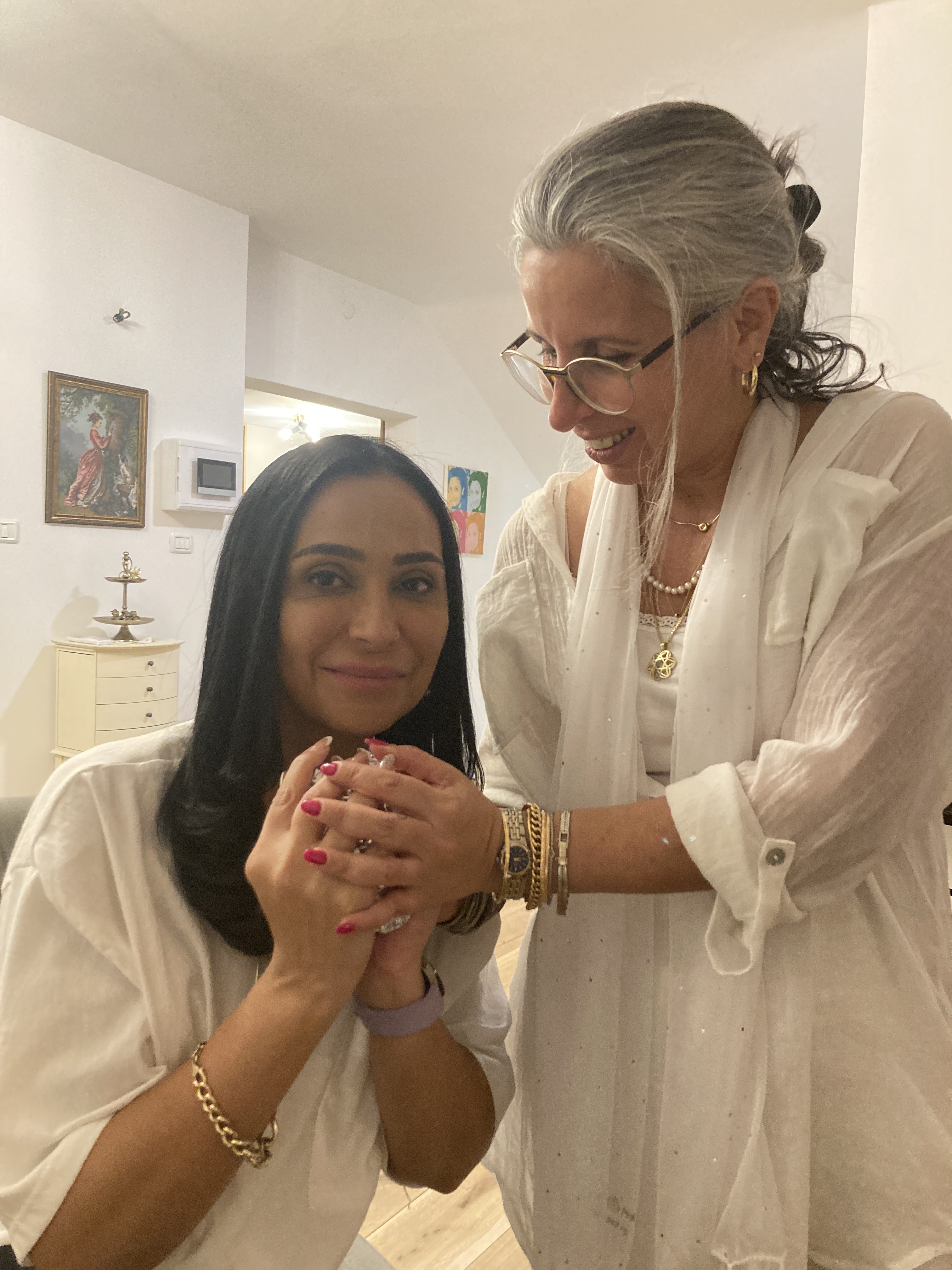


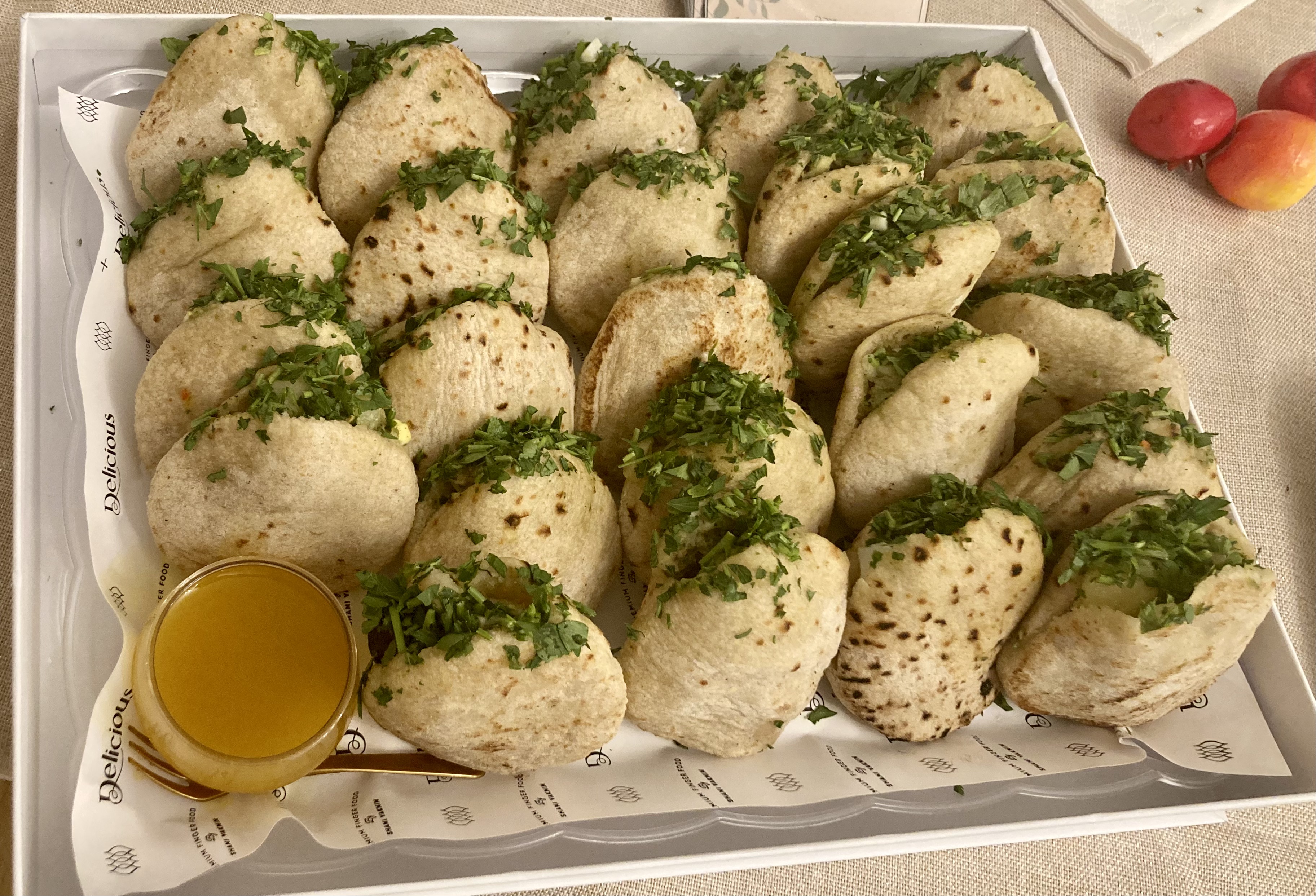
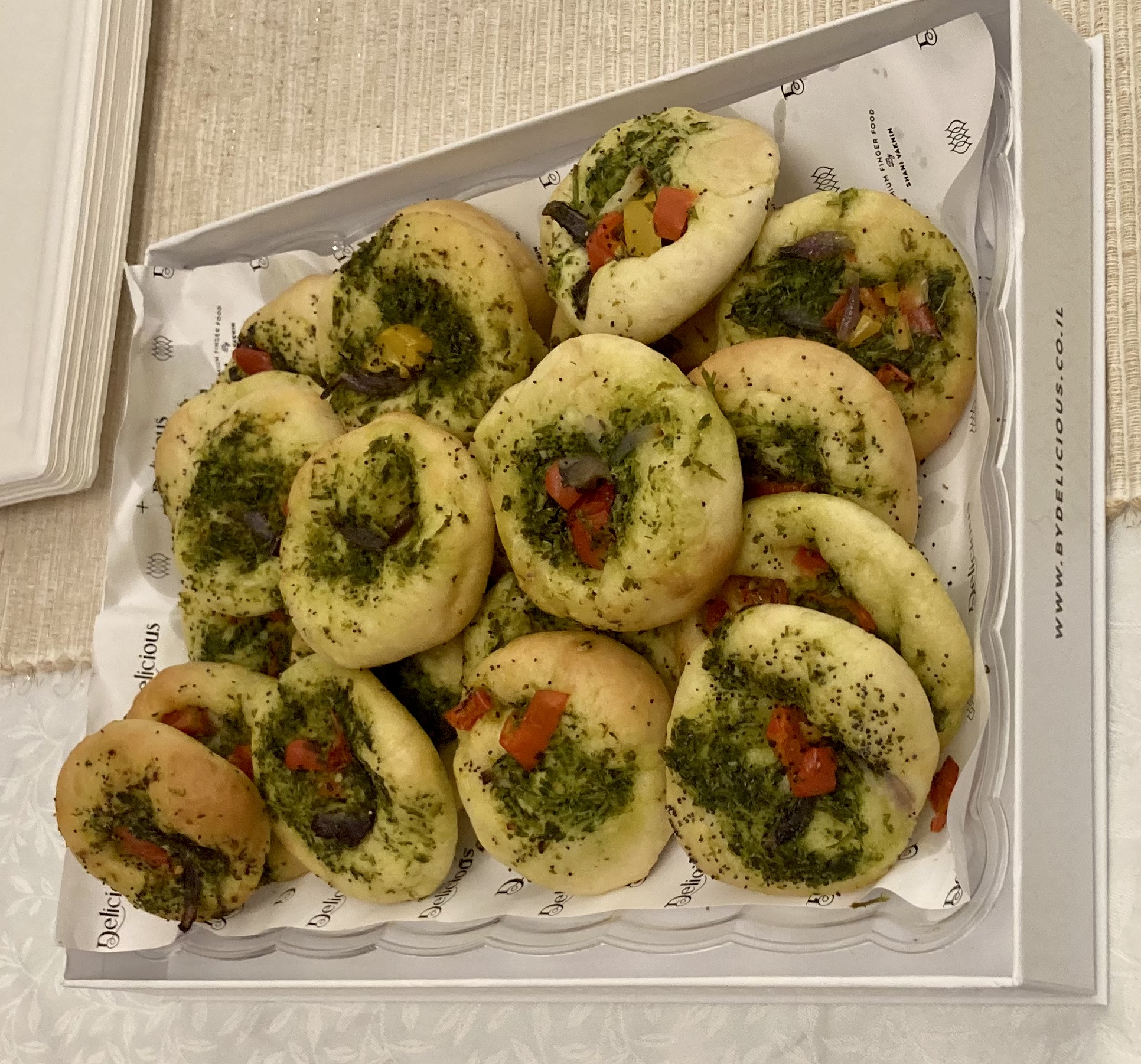
While our personal loaves rose, we were invited to partake of a lovely spread. Each woman was presented with a little packet containing a booklet on how to make challah, a lovely booklet with the challah blessings and a book of the prayers that are said first thing in the morning. Upon leaving, each woman lit a candle and spoke forth their dreams for the new year: dreams of an easy labor and healthy baby; dreams of peace; dreams of health or healing for a loved one; of national unity; for angelic protection during their child’s military service. I was amazed that none of the ladies’ prayers were for themselves. It was a most uplifting night.



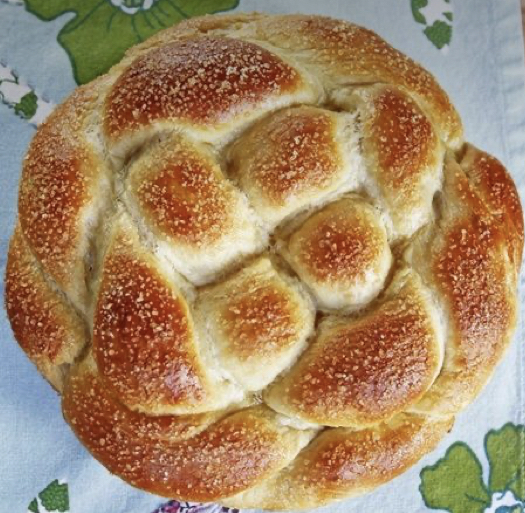
Simple Vegan Challah Bread (2 loaves)
Ingredients:
- 4 cups (485g) all purpose flour
- 3 tsp (10g) fast action Instant yeast
- 5 TBSP (16g) sugar
- 1 1/2 tsp salt
- 6 TBSP (90 ml) oil, vegetable or olive
- 1 cup and 2 TBSP (269ml) very warm water
- for glaze: 1 TBSP honey
- 1 TBSP water
- Sesame seeds or everything bagel seasoning
In a very large bowl, pour in the warm water. sprinkle yeast over the top and stir with a wooden spoon. Mix in the sugar. Let stand for about 10 minutes, or until the mixture is brown and bubbly. While the yeast is activating, say a blessing thanking G-d for your ability to provide for your family, and for His provision of food and blessing. Add in the flour and mix with your hand until flour is all incorporated. Add is salt and oil, and continue to knee pulling the dough from the bottom to the top. After about 10 minutes, the dough should be quite elastic and look glossy.and smooth.It should completely pull away from the sides of the bowl. Cover the dough with a plastic bag. Over the bag place a kitchen towel. Let stand in a warm place for about an hour (or two) until the bowl is doubled in size.
Come back and if you are truly making challah, say the blessing and separate out the three challah lumps of dough. Punch down the dough and divide into two balls. Take the first ball of dough and divide into three equal parts. Roll each ball into fairly long strands. Attach the strands at one end and tuck under. Then braid the dough strands like you are braiding hair. Tuck the little end piece under and place loaf on a slip at lined baking pan. do the same for the second lump. (For Rosh Hashanah, I fold the loaf around on itself to make a round, crown shape). Loosely cover the two loaves with a towel and let stand until doubled in size, about 1-2 hours. It should spring back when you touch it, but leave a small indent. Mix together the water and honey and brush over each loaf to glaze. Sprinkle your seeds on top. Set oven to 350*F/180*C. Bake for about 20 minutes or until loaves are golden brown on both top and bottom. If it looks like the tops are browning too quickly, you can cover with foil. This is the most basic, egg and honey free challah you can make. It is fairly quick and easy. leftovers make good French toast or bread pudding.
For so many reasons, this year I am scaling waaaay back for the holidays this year. Because Rosh Hashanah is a two-day holiday, and because it starts on the eve of Shabbat this year, no cooking will be done after sunset on Friday. Yet all meals must be prepared. Yikes! So, I’ll do this amazing Moroccan brisket in the crock pot. It will have lots of onions and tomatoes as well as apricots, raisins, kalamata olives, orange juice and spices.
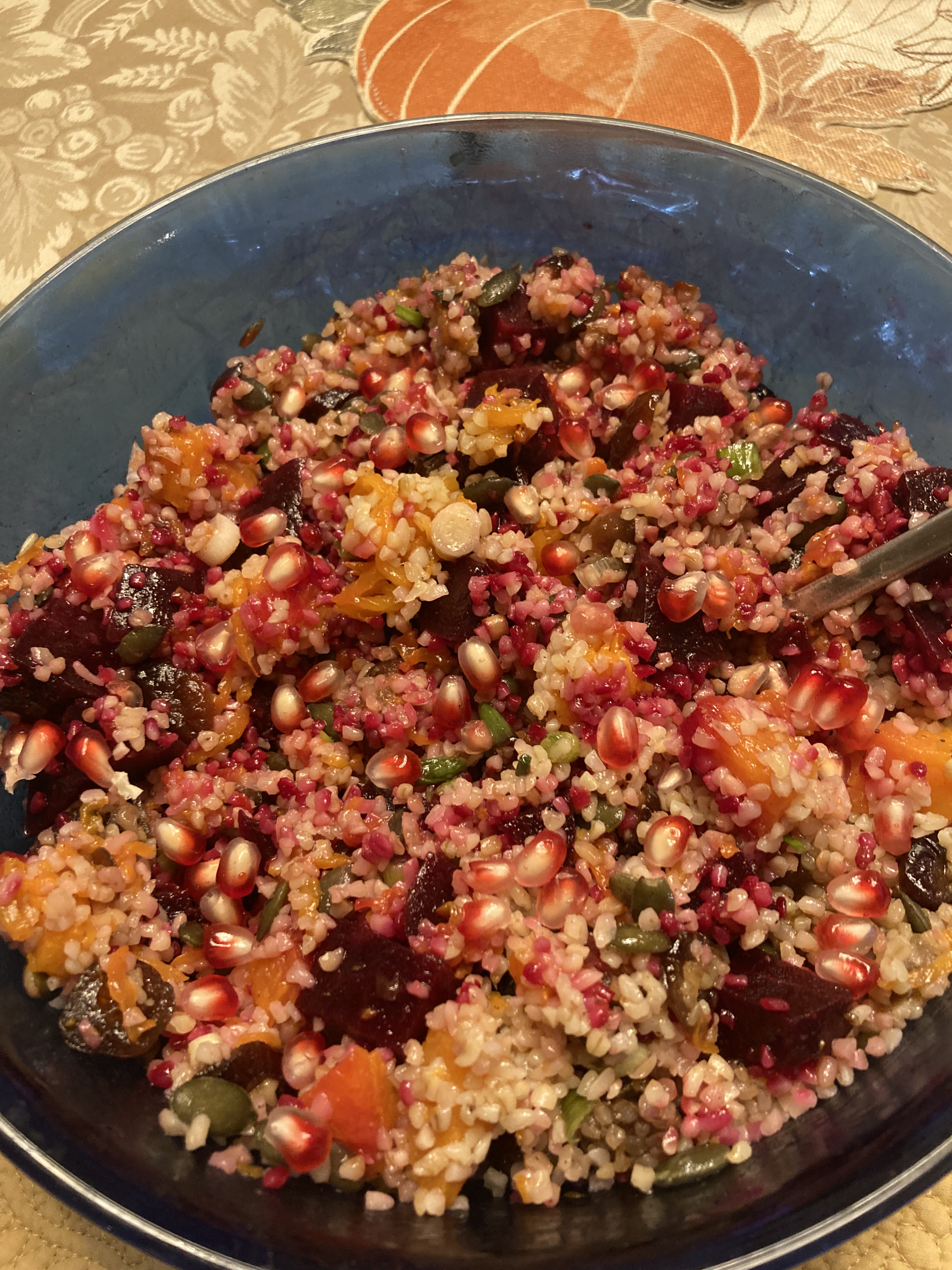
On the New Year, it is traditional to make blessings over several specific foods: pumpkin, pomegranate seeds, scallions, dates, beans, beets…each having special significance. This year I made the most delicious salad that I can’t wait to share with you. It can be served as a side dish with meat, warm or cold, or with dairy (throw in some feta or goat cheese!). And contains many of the simanim (,symbols).
Rosh HaShanah Bulgar Salad (serves 4-6)
Ingredients:
- 1 cup bulgur (coarse ground, grain)
- 1 1/2 cups boiling water
- 5 scallions chopped
- 6 dates, pitted and chopped
- 1 cup roasted, cubed pumpkin (or butternut squash) pieces
- 1 cup cubed roasted beets (1 large or 2 small beets)
- 1/4 cup dried cranberries
- 1/4 cup toasted pumpkin seeds
- 1/4 cup fresh pomegranate arils
- 1/2 cup Brianna’s Blush Wine Vinaigrette or or any sweet vinaigrette
Pour the dry bulgur groats in a bowl and pour the boiling water over the top. Let sit for about 10 minutes. When water has been absorbed, fluff the bulgur up with a fork. add in chopped scallions, chopped dates, chopped roasted pumpkin or squash, cranberries and pomegranate arils. In a small saucepan dry sauté the pumpkin seeds or add a little olive oil and fry them until they pop. Remove from heat and let cool. Add to bowl. Dress with Brianna’s Blush Wine Vinaigrette or a sweet vinaigrette. Add beets just before serving as their color spreads onto the other ingredients.
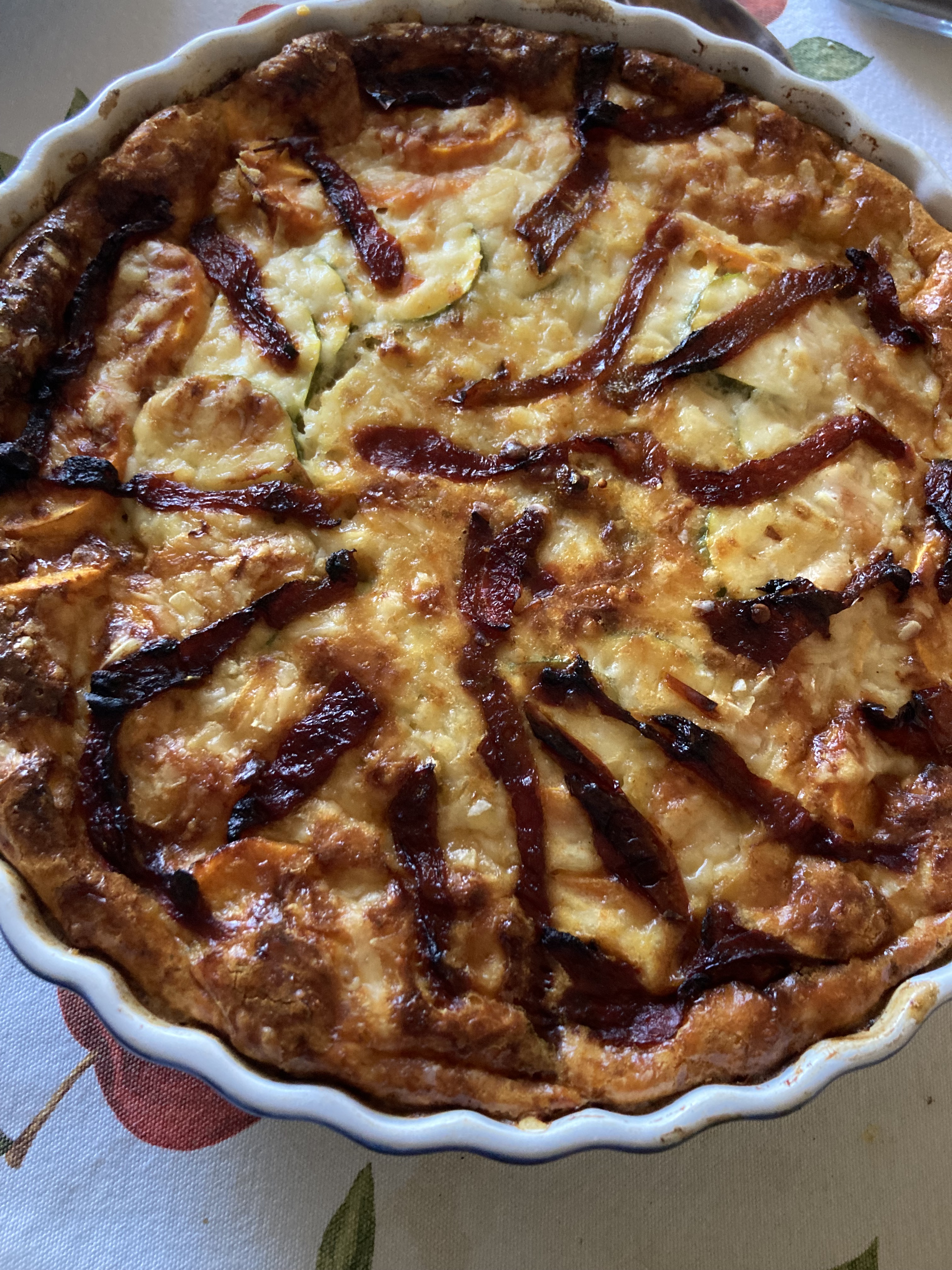
Holiday Pashtidah (8 servings)
So when I told my daughter I was making a pashtidah (pronounced posh tee DAH) for Sunday, she started laughing hysterically. I told her it was a crustless quiche served in Israel and everybody makes their own version. she said, “Oh, you mean a frittata.” No. No. A fritata just has eggs and is broiled until it browns on top. This has lots of veggies and a custard. She thought I made up the word. Whatever! It’s delicious, so enjoy-
Ingredients:
- 2 medium zucchini, sliced very thin
- 2 medium sweet potatoes, peeled, sliced very thin
- 1 large onion
- olive oil
- 1 cup shredded cheese (I use pesto Gouda)
- 1 cup shredded Parmesan or grana Padano cheese
- 6 eggs
- 1 cup heavy cream
- 1/4 cup chopped fresh herbs ( parsley, dill, thyme, basil…)
- 1 jar roasted red sweet peppers.
Preheat oven to 350*F/180*CGrease a large, flat, round baking dish with olive oil. Layer the zucchini and sweet potato slices in concentric circles. Sprinkle all the first cheese evenly on top. In a large skillet, heat olive oil and sauté onions until soft and carmelized. Spread evenly atop the cheese layer.


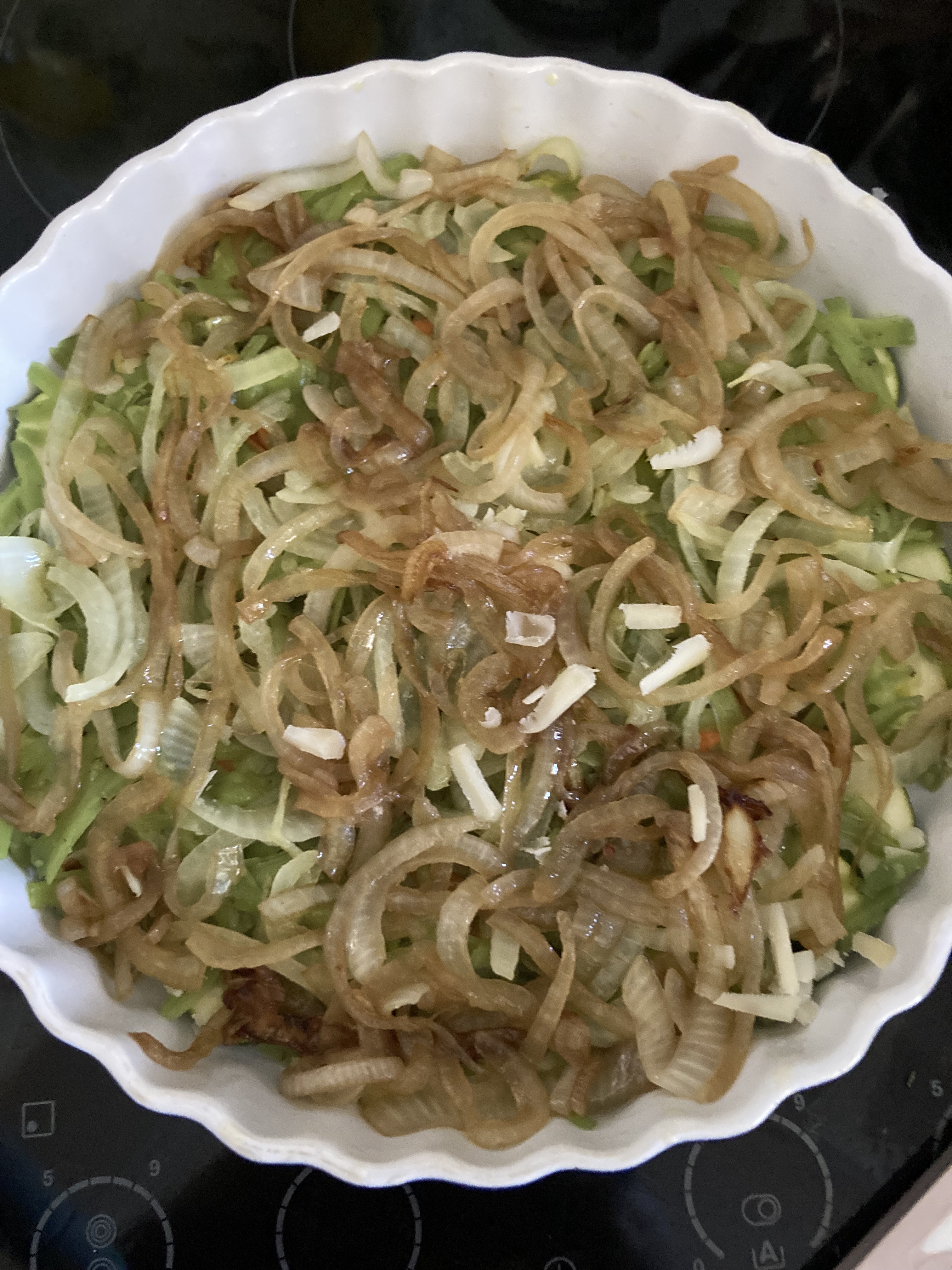
Add another layer of sweet potatoes and zucchini in concentric circles. Beat the eggs and cream. Stir in chopped herbs. You can add salt and pepper to taste at this point. Pour mixture slowly and evenly over veg layer. Top with shredded Parmesan. Slice roasted sweet peppers into thin strips and lay atop the pashtida. Place on baking sheet and into the oven. Let bake for about 30 minutes or until golden brown on top. The middle should not be jiggly. Can be served hot or cold, breakfast, lunch or dinner.


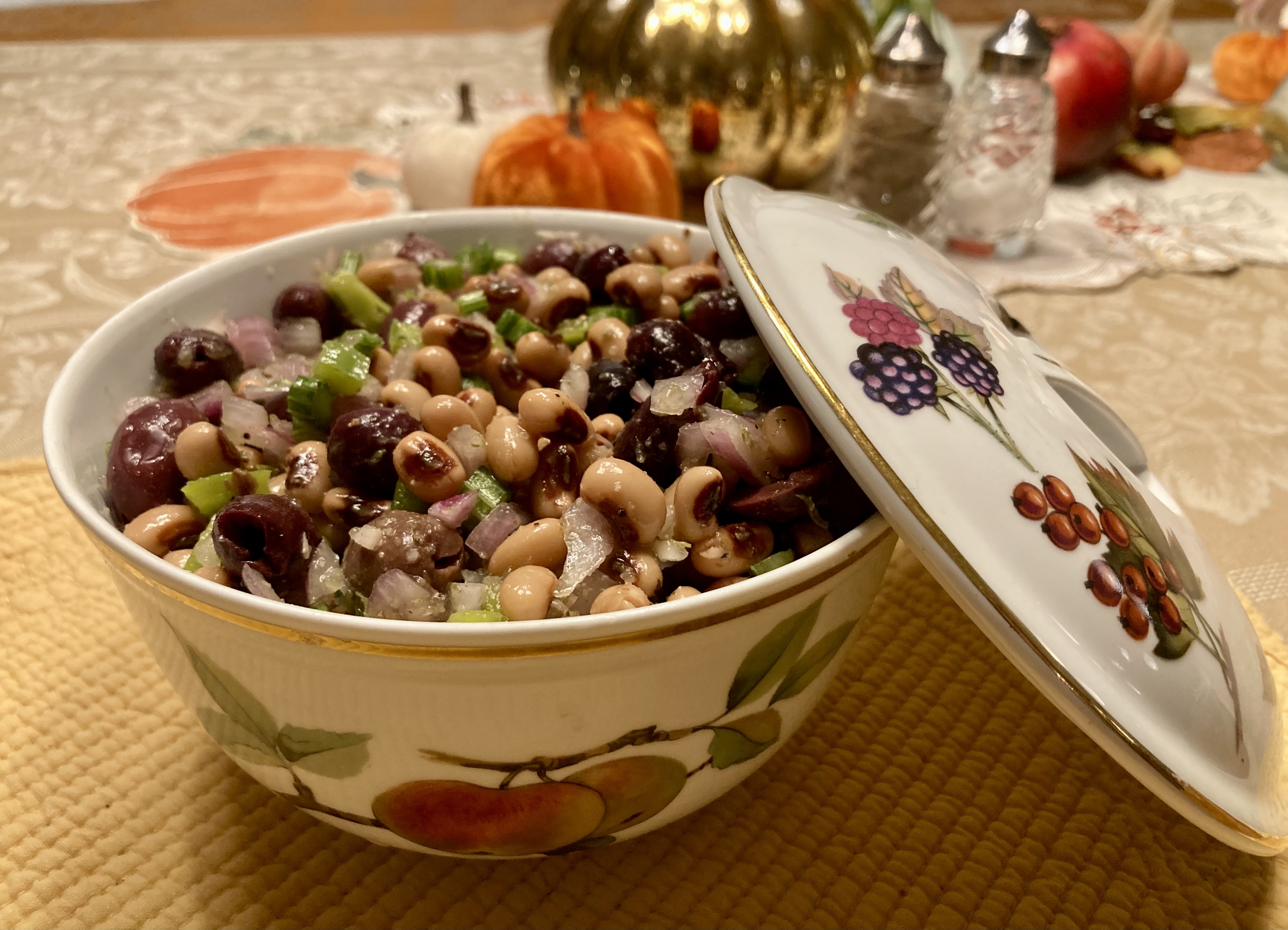
Black-eyed Peas Salad
Originating with the Jews of the MidEast, across North Africa and into Spain, many Jewish people throughout the world now celebrate Rosh haShannah Seders. After the candle lighting and the regular blessings over wine and bread, the blessings over the simanim are said. All blessings begin, “Mayit be Your will, O L-rd, forge new year, that….our merits will increase (over the beans); that we will never again be slaves as in Egypt (scallions – and the kids whip each other with the scallions like taskmasters under Pharaoah); that all who wish evil upon us shall depart (over the beets). It all makes sense when it’s said in Hebrew. Basically all the foods have puns attached. imagine a dad holding up a head of lettuce, saying “G-d, lettuce have a good, healthy year.”
Ingredients:
- 1 can black-eyed peas, drained
- 2 stalks celery, diced
- 1 small green pepper, diced
- 1 small red onion, diced
- 3 TBSP chopped, fresh parsley
- 1/4 cup kalamata or black olives, halved
- 1/4 cup Italian dressing, any variety
Mix all ingredients in a medium sized bowl. refrigerate at least one hour before serving.
For all those out there celebrating, A sweet new year with no bad news. may we have only good in our lives, and may we remain grateful for even the smallest blessings and acts of kindness.
 Israel Dreams
Praying for your safety. Love Della and Gino
LikeLiked by 1 person
Thank you for all your love and support. We send our love. If you can give me your email address through my personal email….I have no current contact for you. You remain in our nightly prayers.
LikeLike
Shalom
LikeLiked by 1 person
Yes. shalom my friend. Sending love to you and your family. Tamar
LikeLike